-
-
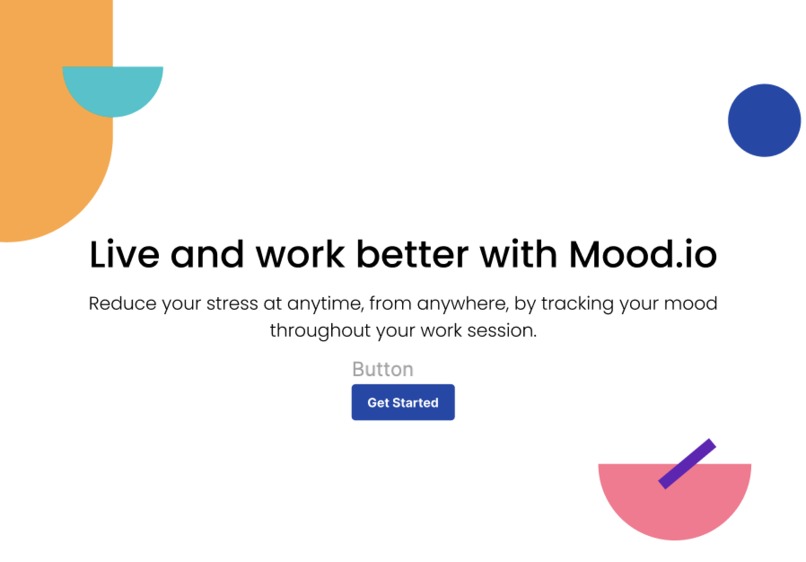
Landing Page
-
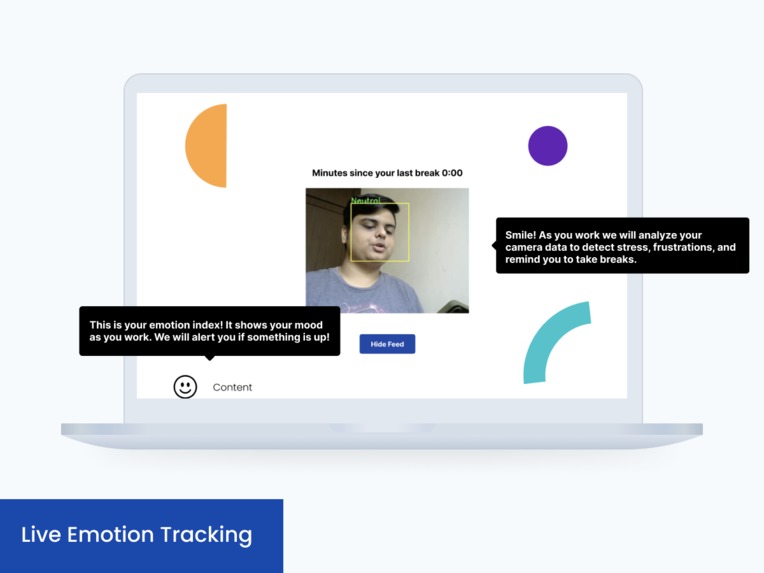
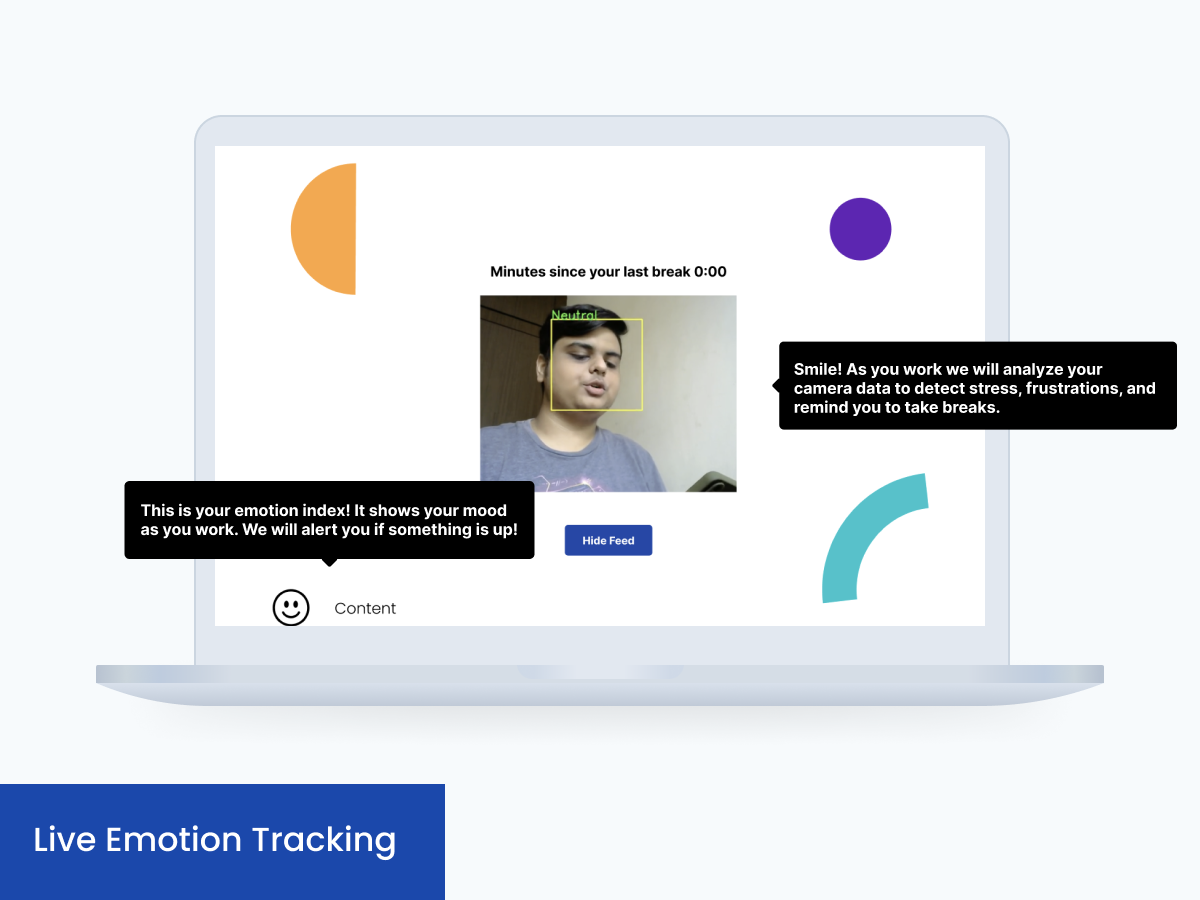
Live Emotion Tracking
-
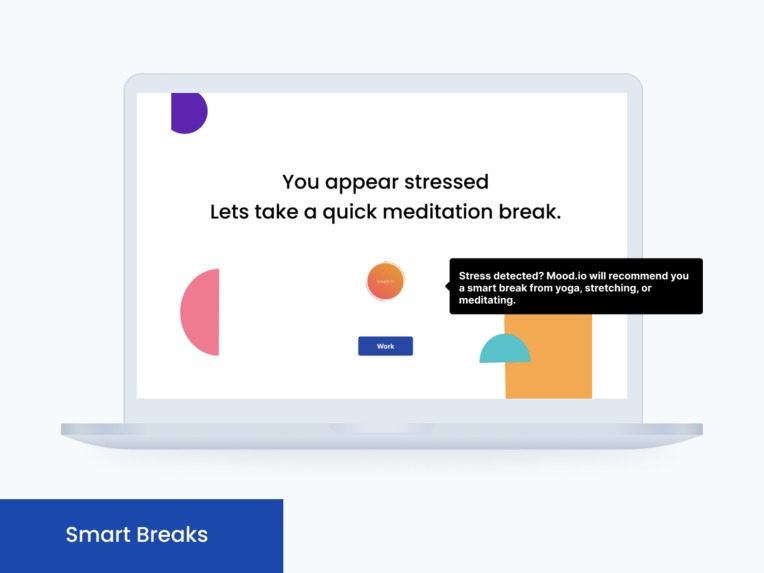
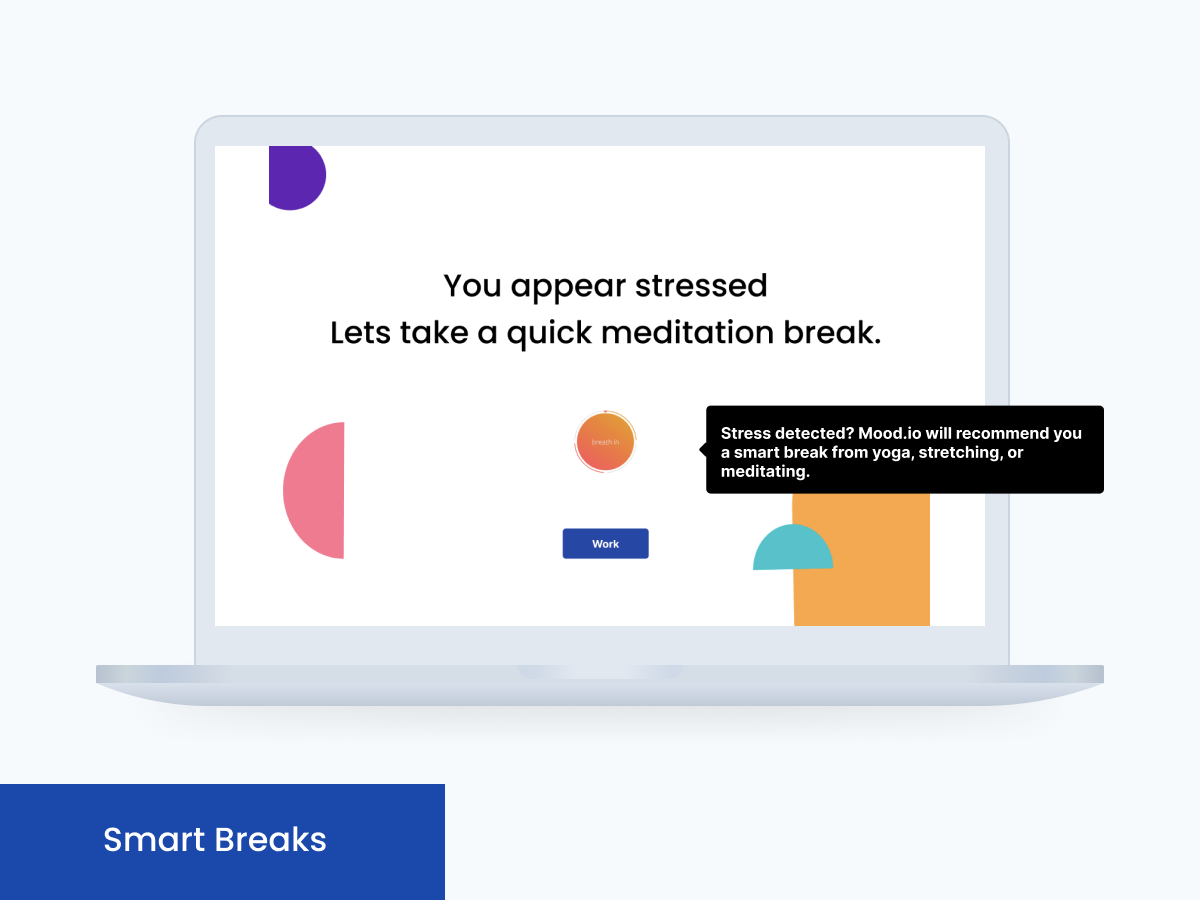
Smart Breaks
Inspiration
With the onset of COVID19 our education, work, and quality time with others have been moved to a virtual format increasing screen time globally. The truth is that we spend three hours and 23 minutes of our waking day staring at a screen. This has an impact on our mental and physical health. Screen time is linked to the rise in stress and anxiety. What if there was a way to prevent stress before it happens?
What it does
Mood.io is your personal assistant for your mood! It is compatible with any web browser and webcam, so it’s easy to use. Mood.io uses machine learning to detect when you are stressed and recommends what activities to do to reduce your stress. Mood.io is the easiest way to take care of your mental health!
How we built it
In this project we used ML libraries such as: - numpy, matplotlib and seaborn; for Deep Learning Keras; for image processing openCV and haarcascades for facial detection. We have used the FER-13 dataset for this model. So for the Convolutional Neural Networks (CNN) we have 4 layers and 2 fully connected layers and, i have imported the Adam optimizer to compute the CNN for this model. We initially set out with 48 epochs to train the model with the callback for early stopping to avoid fitting discrepancies in the model. Our final accuracy was recorded to be 69%. The model after implementing openCV's video capture function could take a live feed from the webcam and classify from the 7 trained emotions successfully.
Challenges we ran into
It was difficult to integrate our machine learning backend with the frontend website. We had some tricky problems with our integration and had to adapt. Additionally, we had a tough time finding a proper dataset even though FER-13 was the best visible option it took a good amount of time to finalize the dataset.
Accomplishments that we're proud of
With a group of beginners, we encountered many bugs and had to restart many times. Through that, we learned a lot about what is going on in the background of programming. We are most proud of not giving up, learning new things, and pushing this project forward.
What we learned
For this project, we got to explore the possibilities of machine learning in a browser. We got to work on a front-end web app and tried to use various libraries, such as React and D3.js. In addition to learning about machine learning and web development, we learned about the importance of staying up to date with new technologies.
What's next for Mood.io
We hope to be able to offer a wide range of features that will allow our users to track and analyze their mental health. We want to be able to offer a better understanding of the root causes of stress and help them manage it. Together, we can change one person's life at a time.


Log in or sign up for Devpost to join the conversation.