-
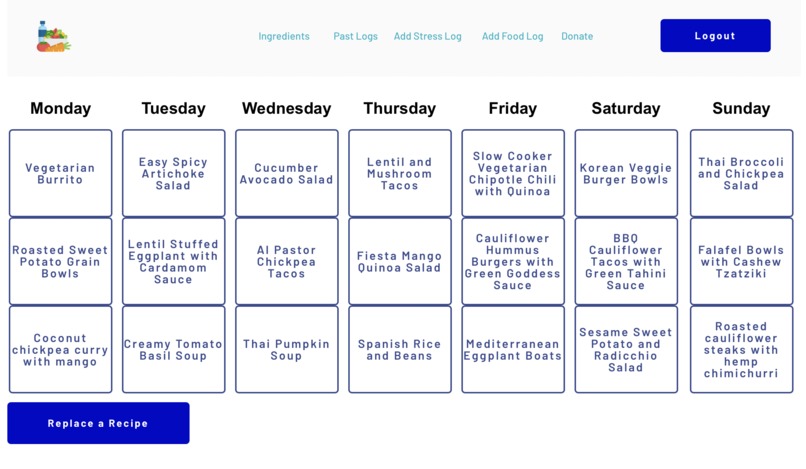
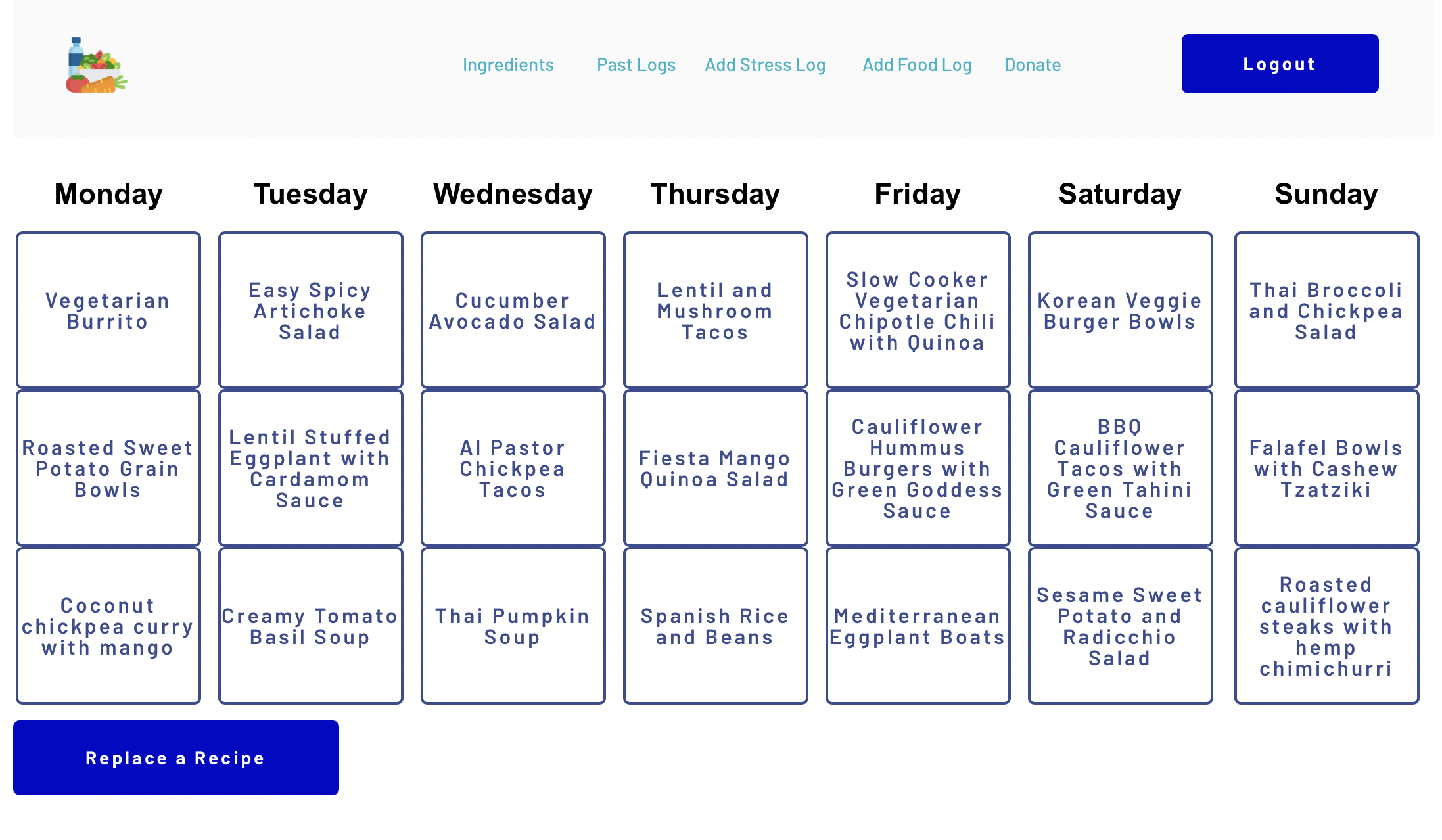
View our recipe suggestions for your week and replace unwanted recipes with new ones.
-
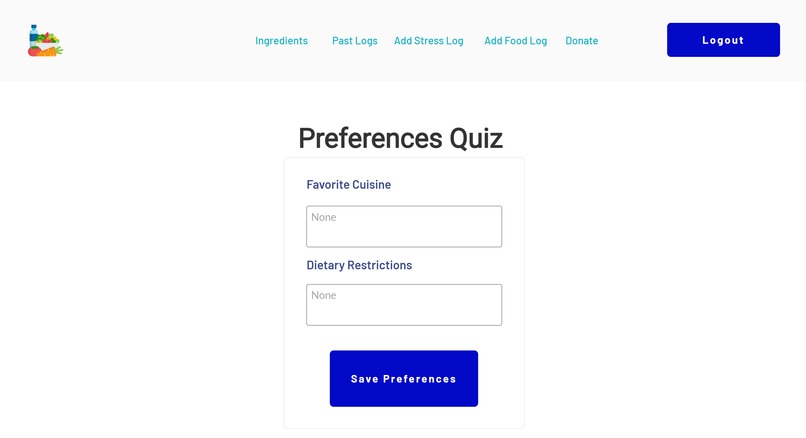
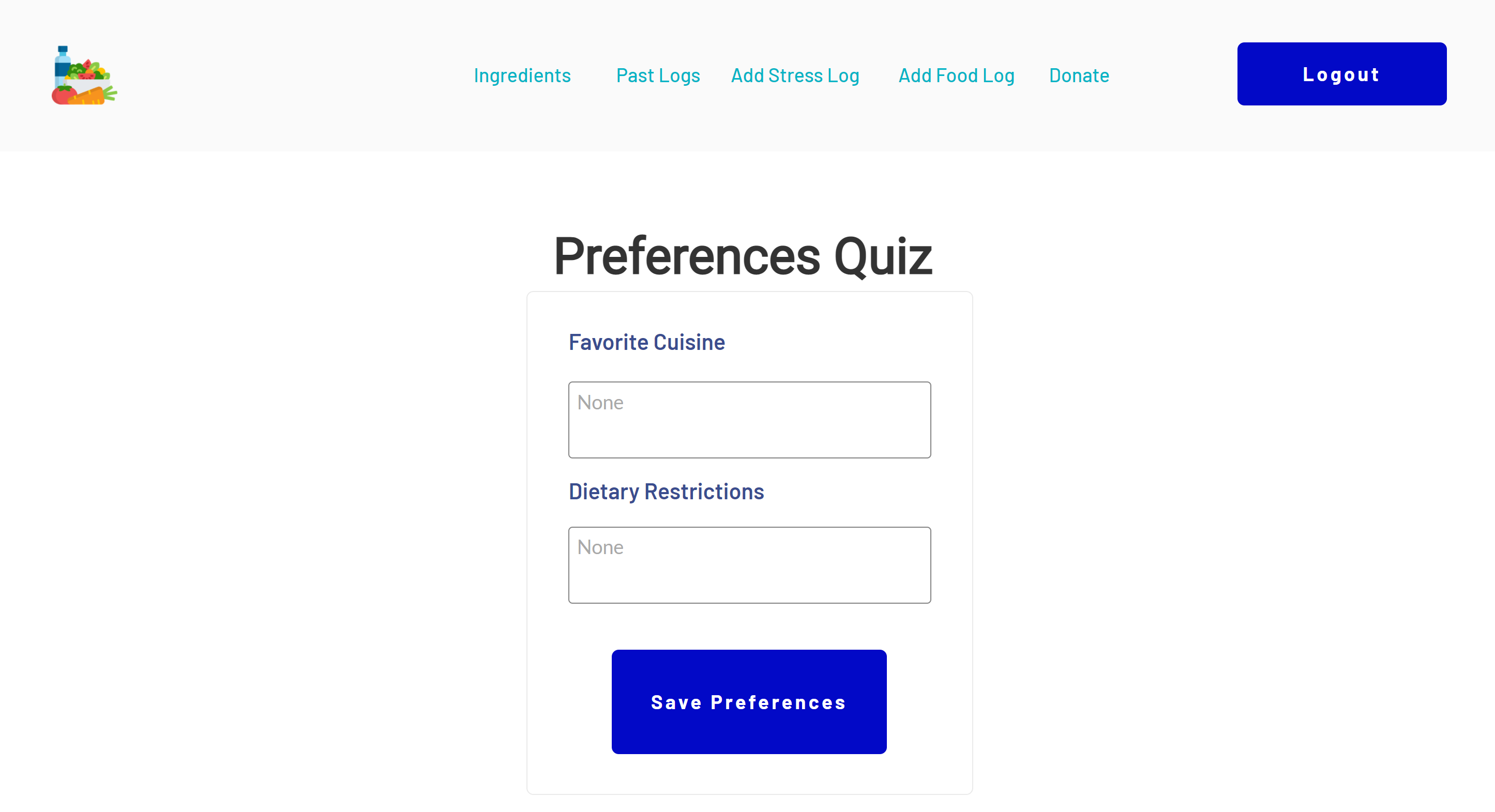
Personalized preferences quiz ensures that recipe recommendations are tailored to each user's individual tastes.
-
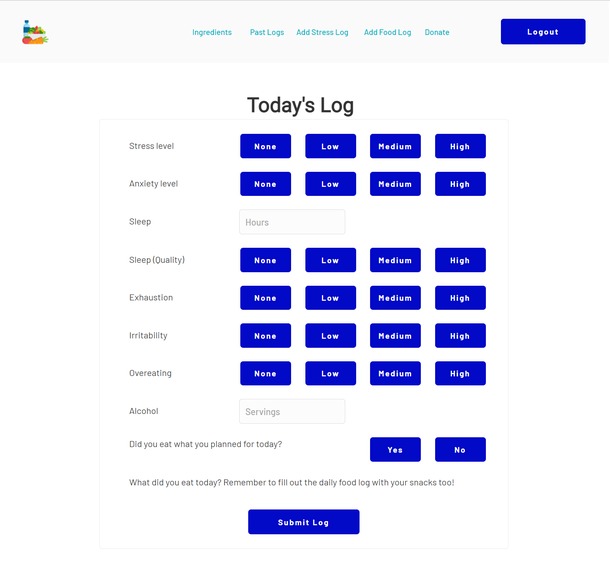
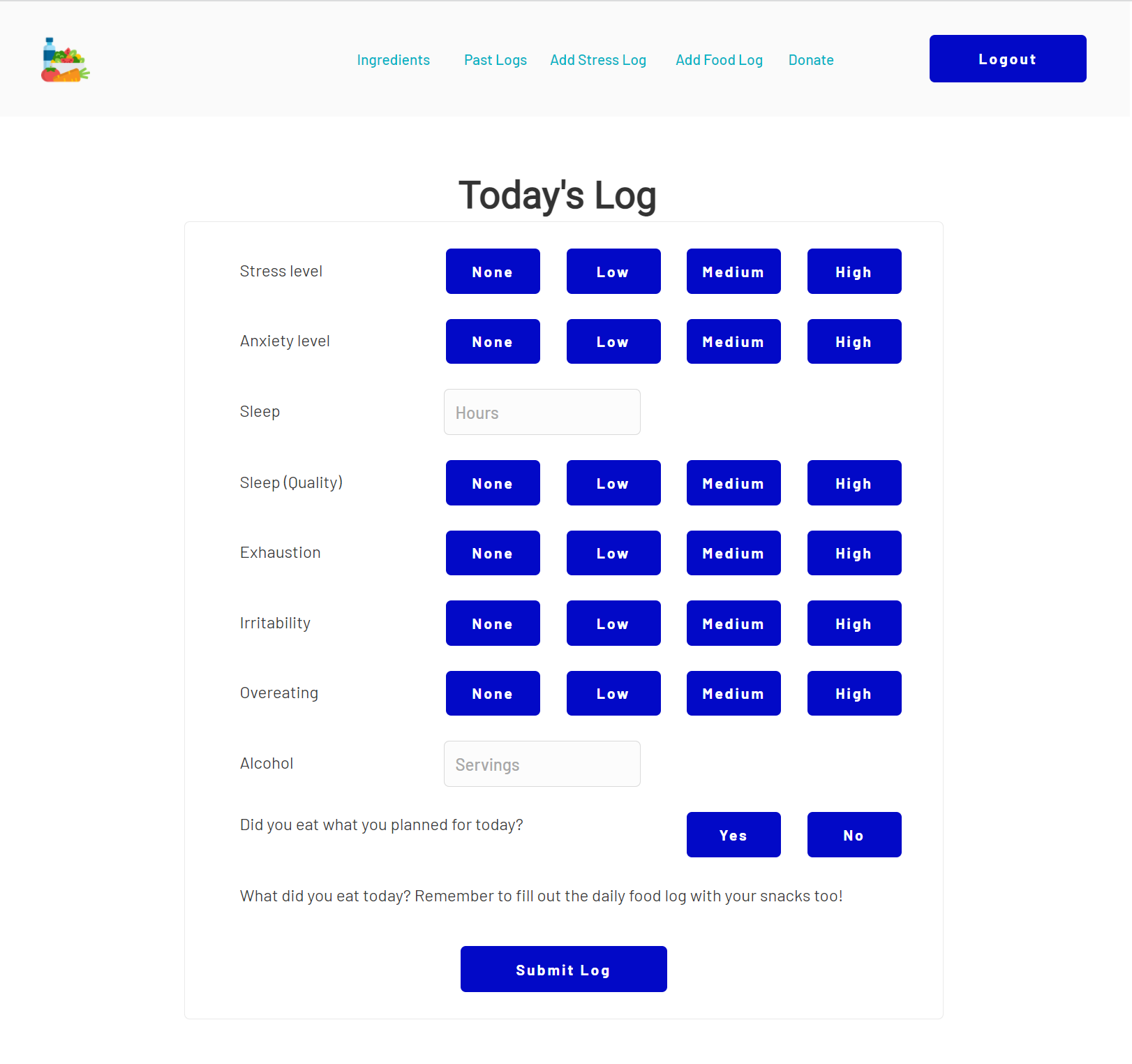
Log your stress and stress indicator levels every day to personalize your meal recommendations to foods that destress you.
-
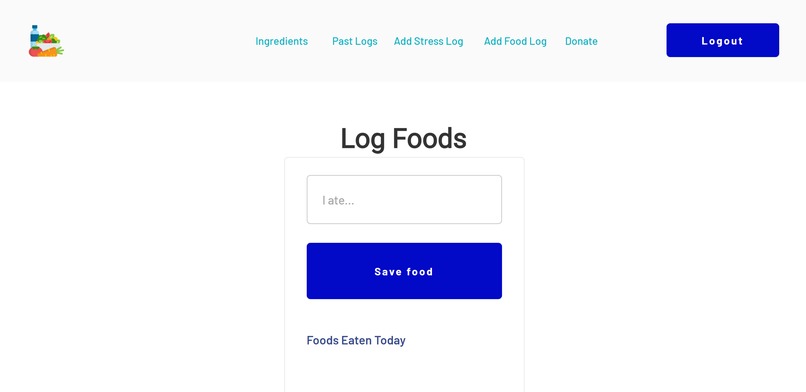
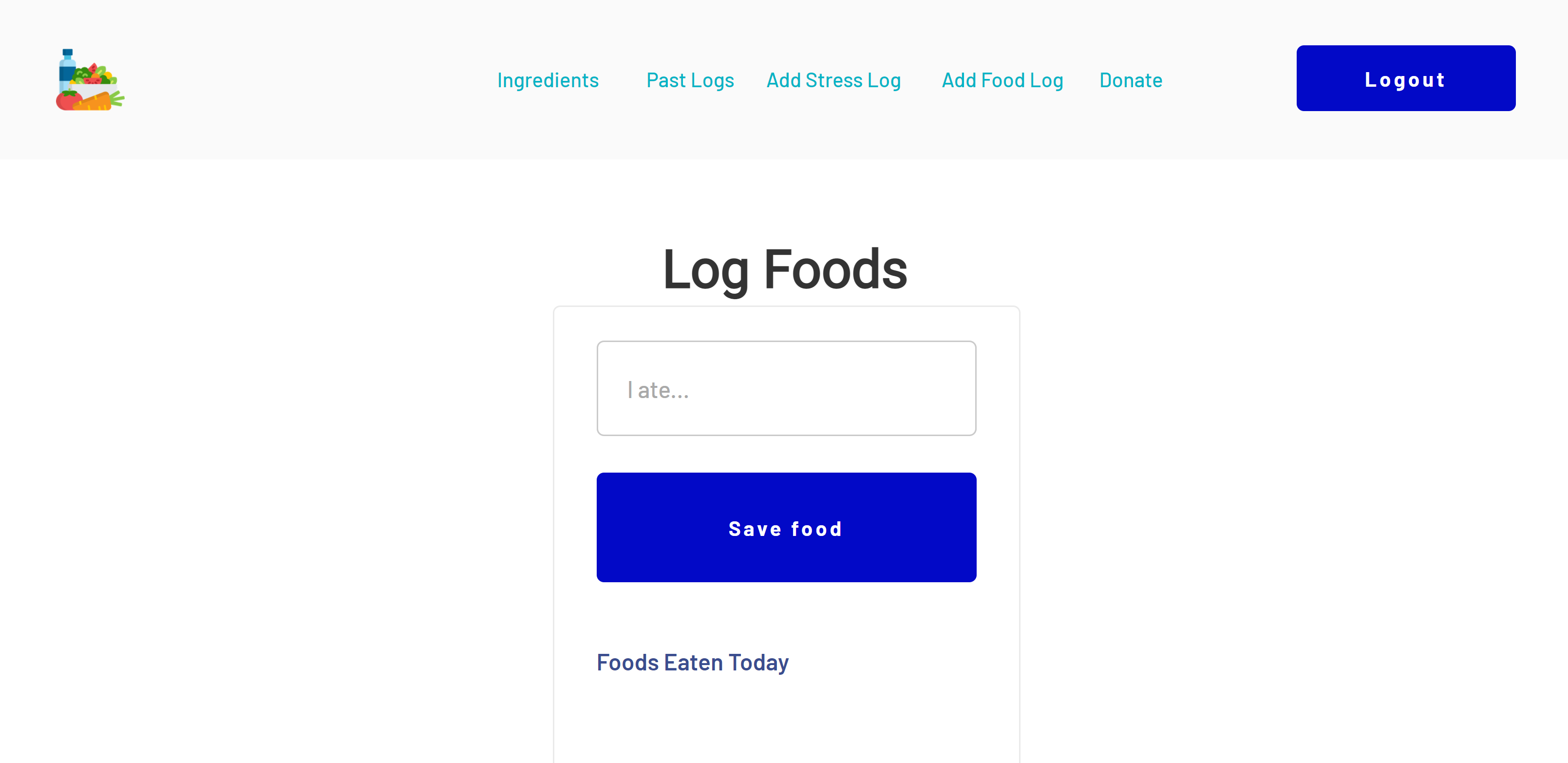
Log the foods you ate each day. The log will auto-populate with the ingredients from the recipes you selected for the day.
-
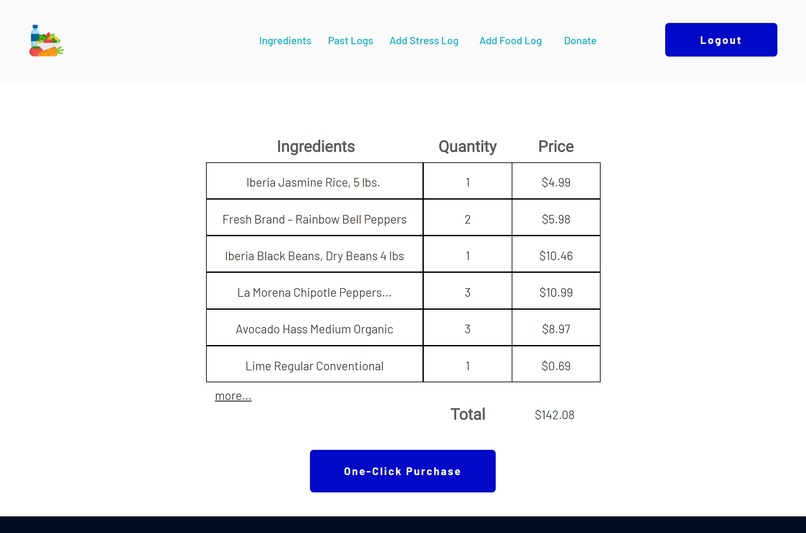
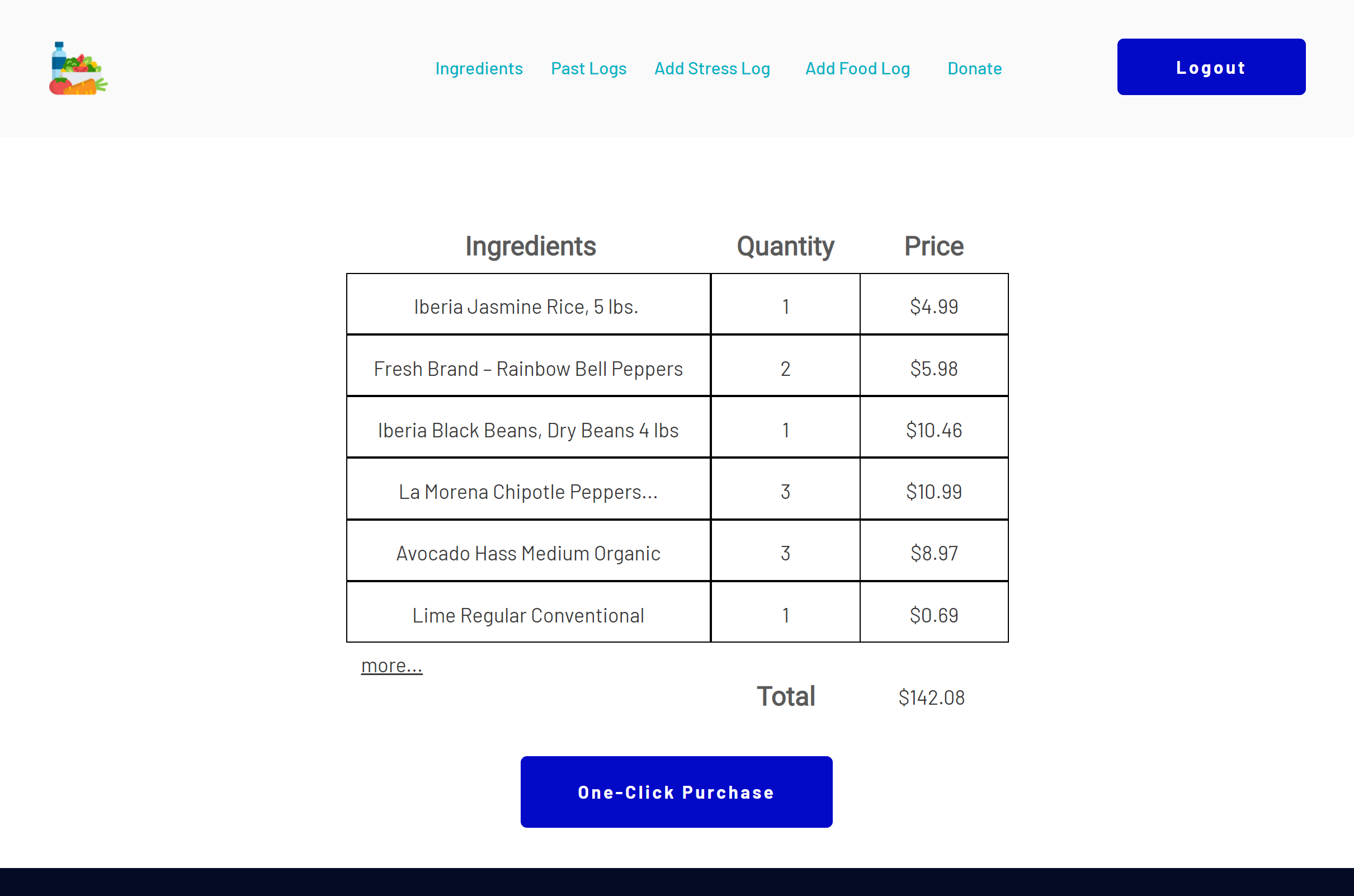
List of ingredients needed for planned recipes, total cost of everything, and option to purchase on Amazon using Checkbook API.
-
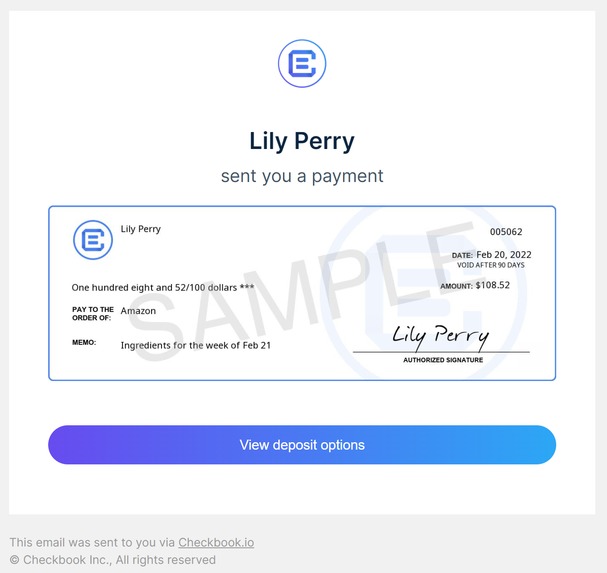
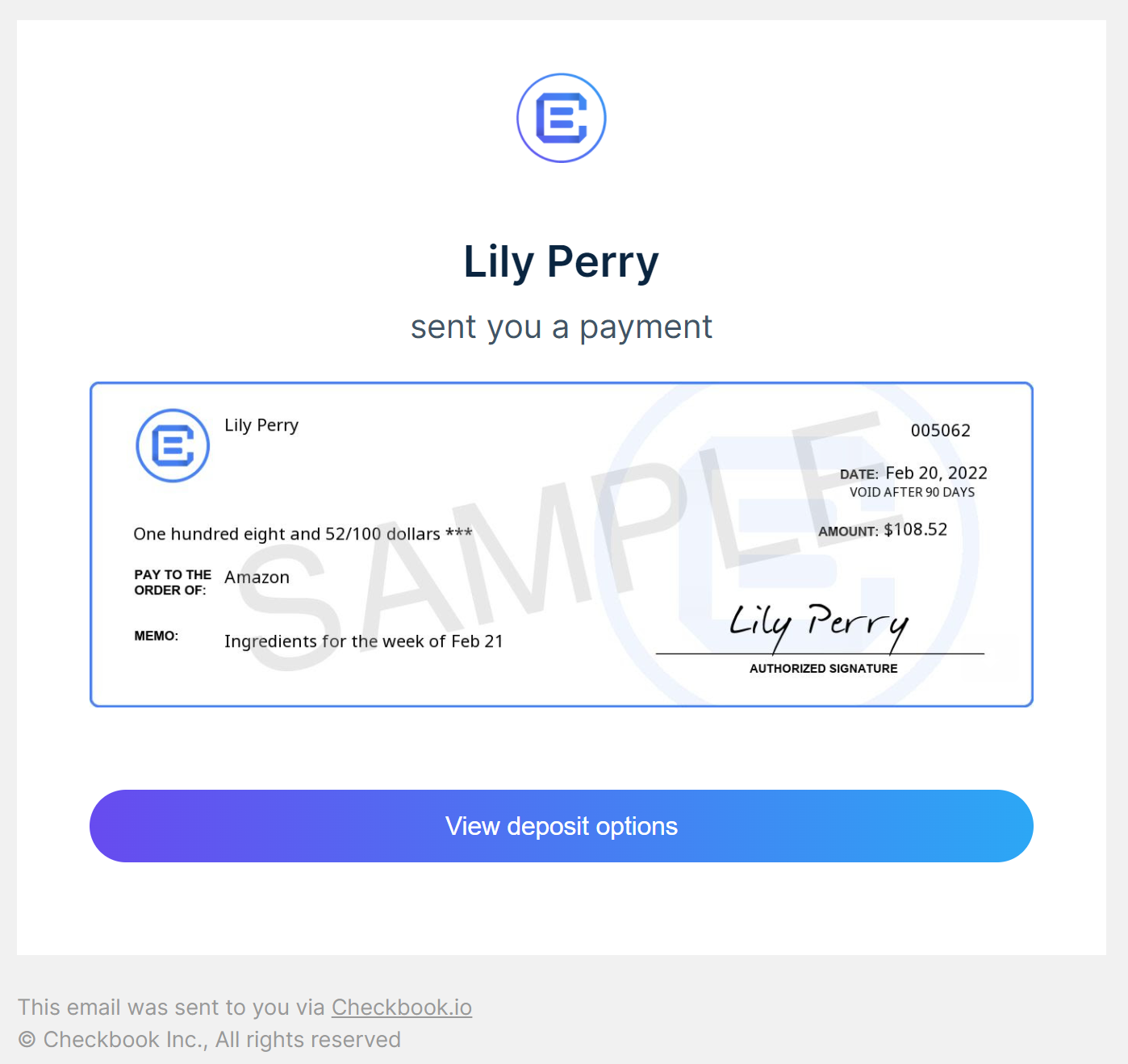
Purchase the upcoming week of ingredients via Amazon using the Checkbook API.
-
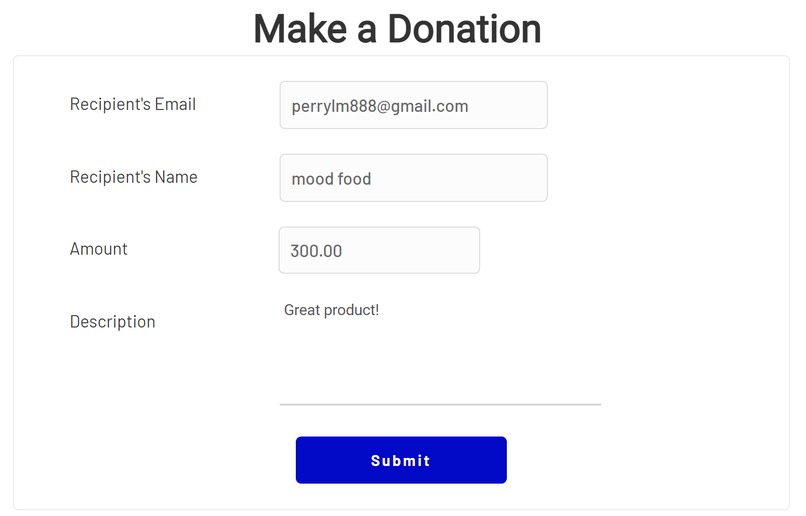
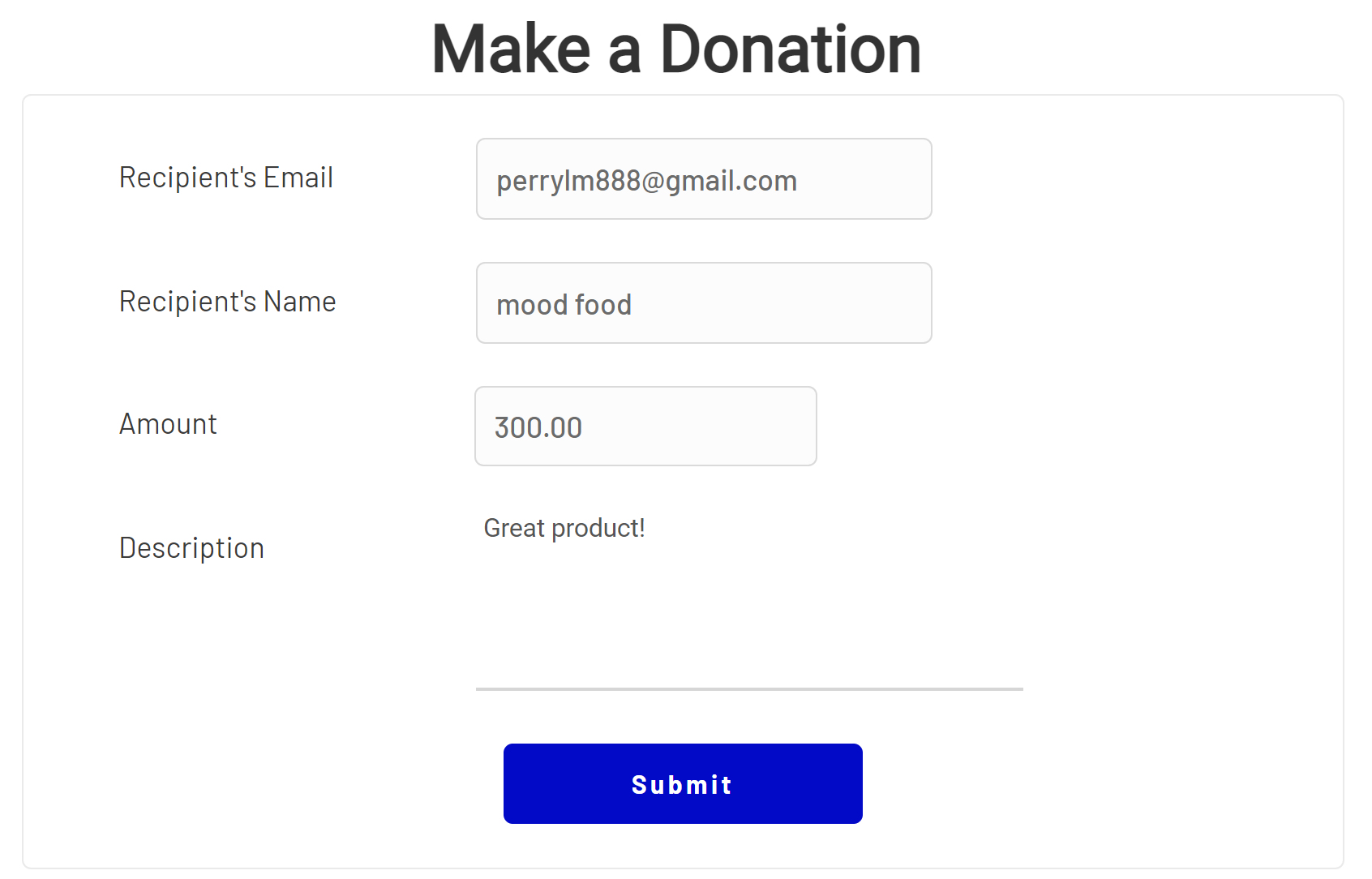
Navigate to our donation page that uses the Checkbook API to handle transactions.
-
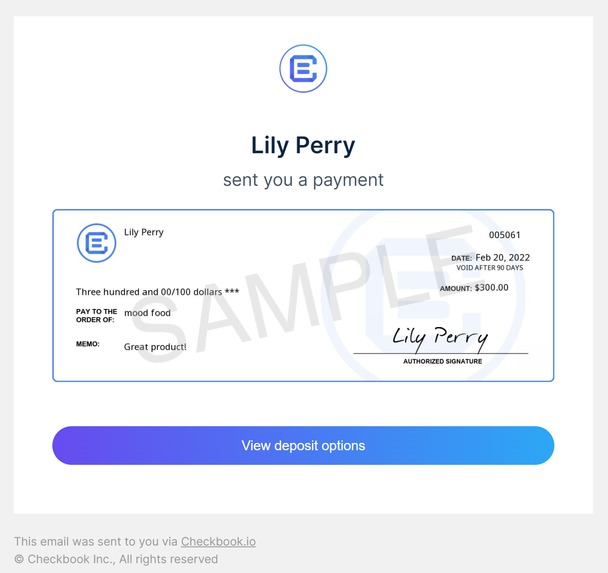
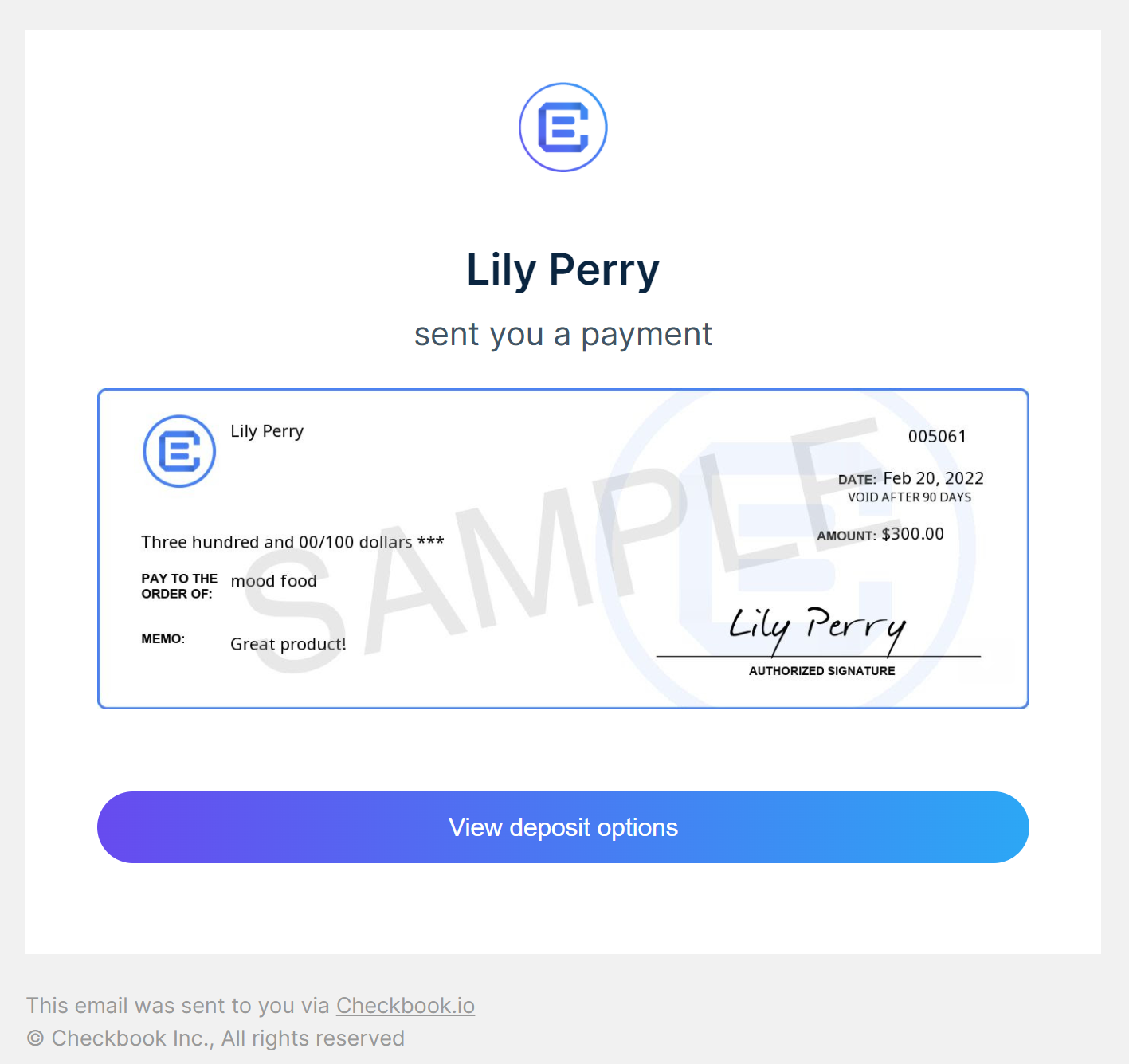
Donate to our company to support our progress.
-
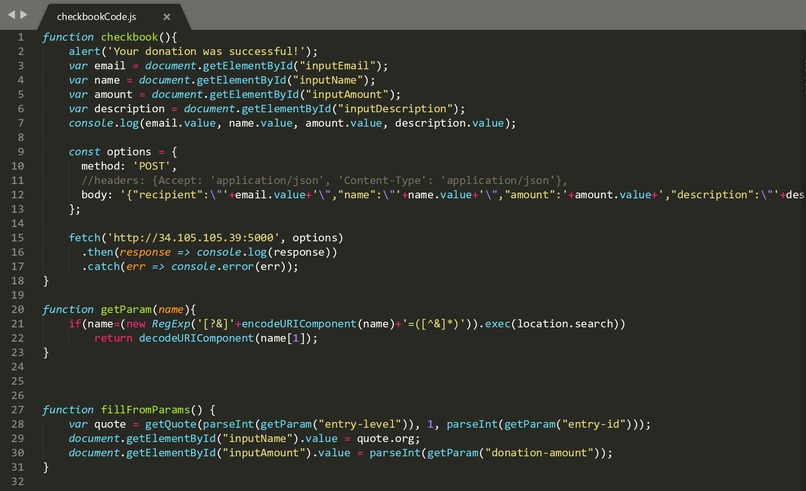
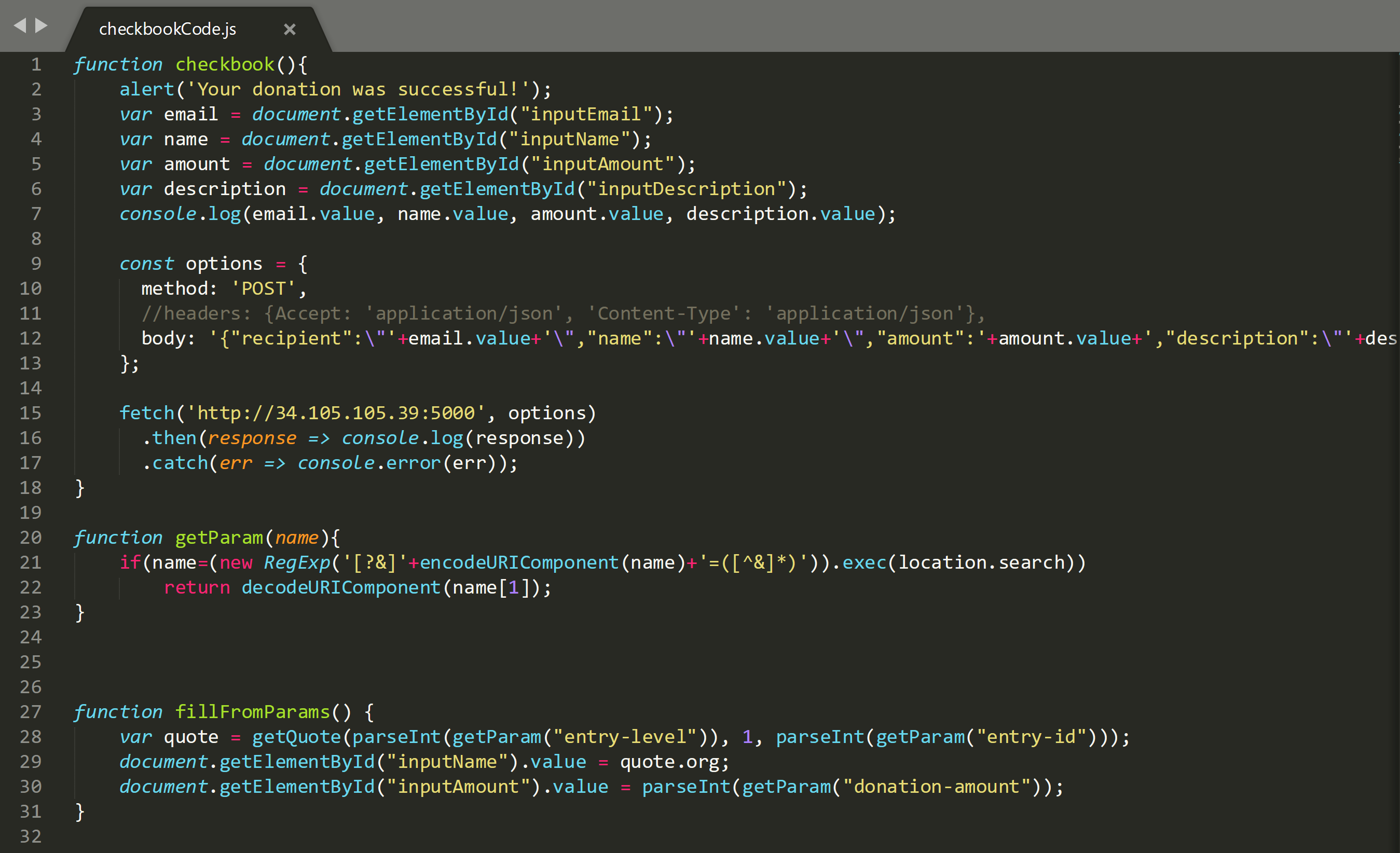
Code snippet written to implement usage for the Checkbook API.
-
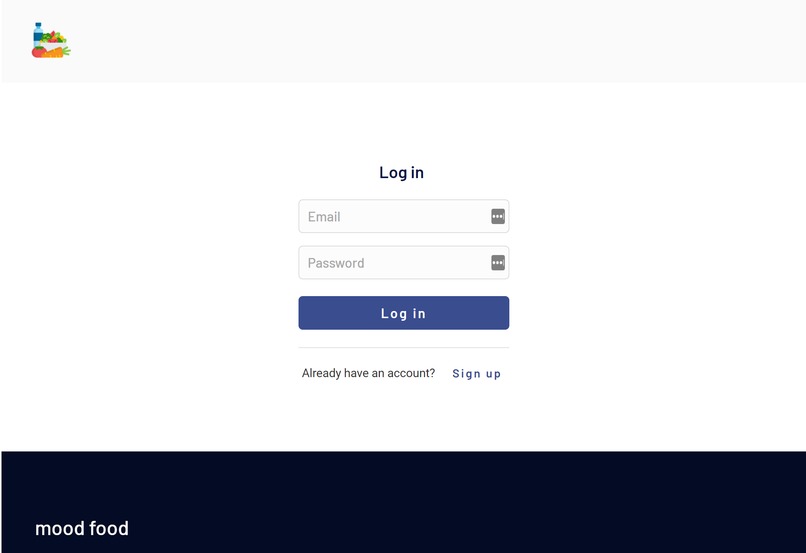
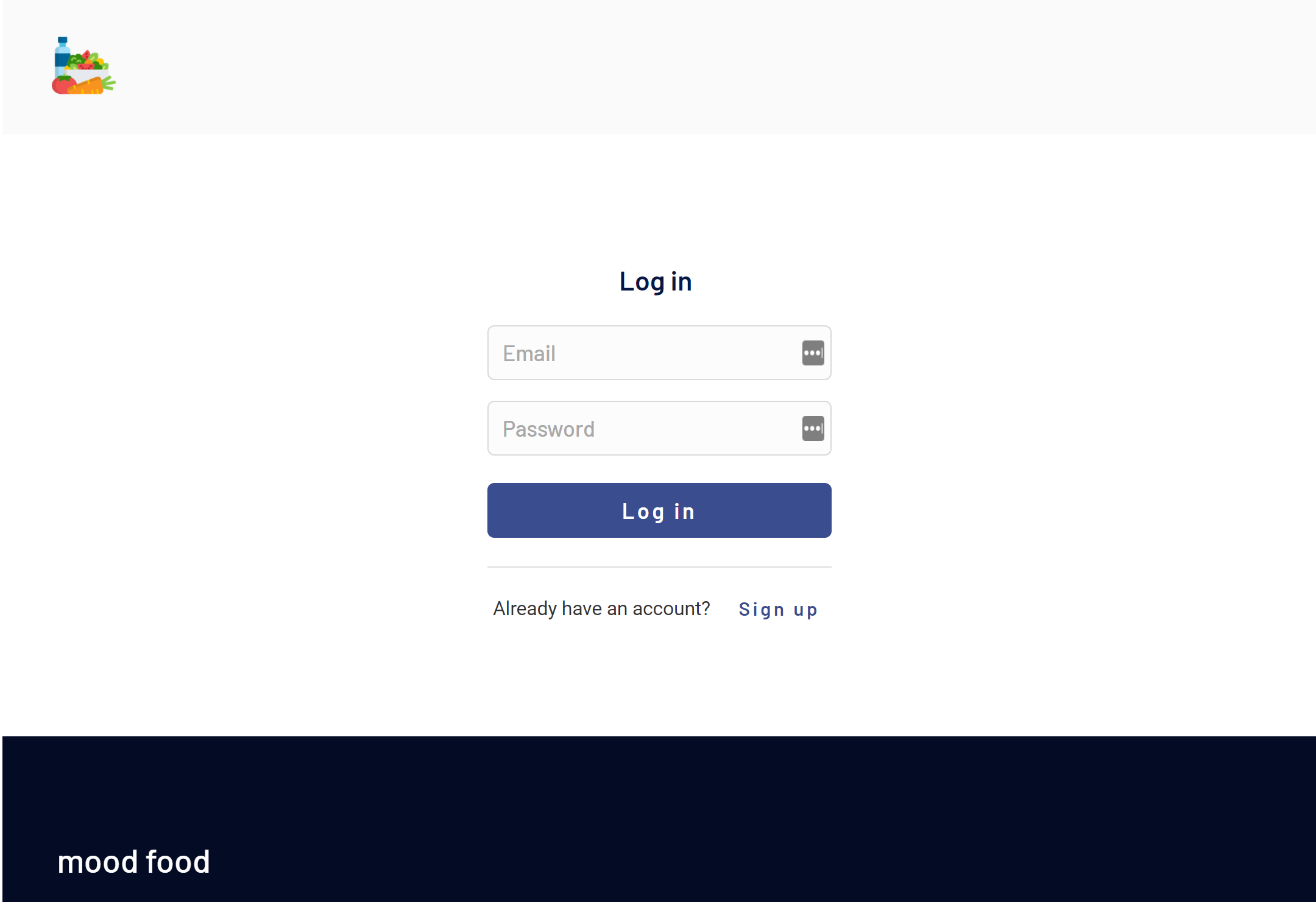
Login page, made using Bubble.
-
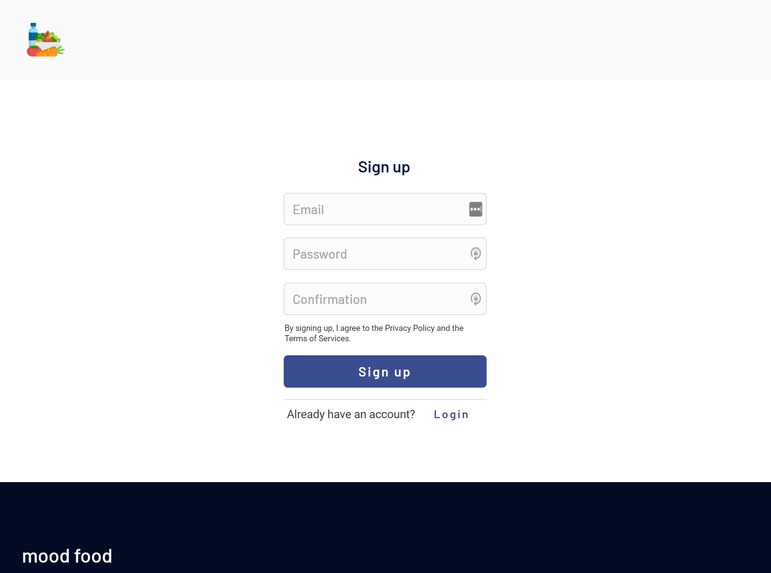
Signup page, made using Bubble.

Inspiration
Using “nutrition” as a keyword in the Otsuka valuenex visualization tool, we found that there is a cluster of companies creating personalized nutrition and fitness plans. But when we used the “and” function to try to find intersections with mental wellness, we found that none of those companies that offer a personalized plan really focused on either stress or mental health. This inspired us to create a service where we use a data-driven, personalized, nutritional approach to reduce stress.
What it does
We offer healthy recipe recommendations that are likely to reduce stress. We do this by looking at how the nutrients in the users’ past diets contributed to changes in stress. We combine this with their personal information to generate a model of which nutrients are likely to improve their mental wellness and recommend recipes that contain those nutrients. Most people do want to eat healthier, but they don’t because it is inconvenient and perceived to be less delicious. Our service makes it easy and convenient to eat delicious healthy food by making the recipe selection and ingredient collection processes simpler.
To personally tailor each user's recipe suggestions to their stress history, we have users save food items to their food log and fill out a daily questionnaire with common stress indicators. We then use the USDA food database to view the specific nutrients each food item has and use this data to calculate the relationship between the user's stress and the specific nutrients they consumed. Finally, we use this model to suggest future recipes that contain nutrients likely to reduce stress for that user.
In order to proactively reduce user's stress, we offer a simple interface to plan meals in advance for your entire week, an auto-generated ingredients list based on selected recipes for the week, and a seamless way to order and pay for the ingredients using the Checkbook API service. To make it easier for users, the food log will automatically populate each day with the ingredients from the recipes the user selected to eat for that day.
How we built it
We used Bubble to build a no-code front end by dragging and dropping the design elements we needed. We used Bubble's USDA plugin to let users search for and enter foods that they consumed. The USDA food database is also used to determine the nutrients present in each of the foods the user reports consuming. We also used Bubble's Toolbox plugin to write Javascript code that allows us to run the Checkbook API. We use the Spoonacular API to get the recipe suggestions based on the user's personalized preference quiz answers where they give the types of cuisines they like and their dietary restrictions. We use a linear regression model to suggest future recipes for users based on the nutrients that are likely to reduce their stress.
Challenges we ran into
One challenge for us was using Bubble. Only one team member had previous design experience, but everyone on the team wanted to contribute to building the front-end, so we faced a huge learning curve for all members of the team to learn about good design principles and how to space elements out on Bubble. Grouping elements together was sometimes weird on Bubble and caused issues with parts of our header not lining up the way we wanted it to. Elements would sometimes disappear under other elements and it would become hard to get them out. Formatting was weird because our laptops had different aspect ratios, so what looked good on one person's laptop looked bad on another person's laptop. We were debugging Bubble until the end of the hackathon.
Accomplishments that we're proud of
Our team had little to no front-end design experience coming into this hackathon. We are proud of how much we all learned about front-end design through Bubble. We feel that moving forward, we can create better front-end designs for our future projects.
We are also proud of finding and figuring out how to use the Spoonacular API to get recipe recommendations. This API had very thorough documentation, so it was relatively easy to pick it up and figure out how to implement it.
What we learned
The first thing we learned was how to use the Otsuka valuenex visualization tool for ideation. We found this tool to be extremely helpful with our brainstorming process and when coming up with our idea.
We learned how to use Bubble to create a front-end without needing to write code. Despite the struggles we initially faced, we grew to find Bubble more intuitive and fun to use with more practice and managed to create a pretty nice front-end for our service. We hosted our server on Bubble.
We also learned how to use the Checkbook API to seamlessly send and receive payments.
Finally, we learned how to use the Spoonacular API to generate recipe recommendations based on a set of parameters that includes preferred types of cuisines, dietary restrictions, and nutrients present in each dish.
What's next for mood food
We feel very passionate about exploring this project in more depth by applying more complex machine learning models to determine better recipe recommendations for users. We would also like to have the opportunity to deploy this service to collect real data to analyze.
Thanks
Thank you very much to Koji Yamada from Otsuka for meeting up with our team to discuss our idea and offer us feedback. We are very grateful to you for offering our team support in this form.
Thank you to the amazing TreeHacks organizers for putting together this awesome event. Everyone on our team learned a lot and had fun.
Built With
- bubble
- checkbook
- checkbook-nyc
- food
- java
- javascript
- mental-health
- otsuka-valuenex
- python
- spoonacular
- usda-nutrition-data





Log in or sign up for Devpost to join the conversation.