-
-
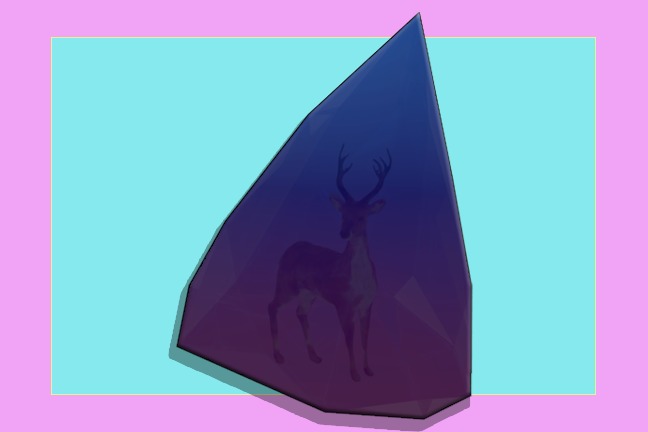
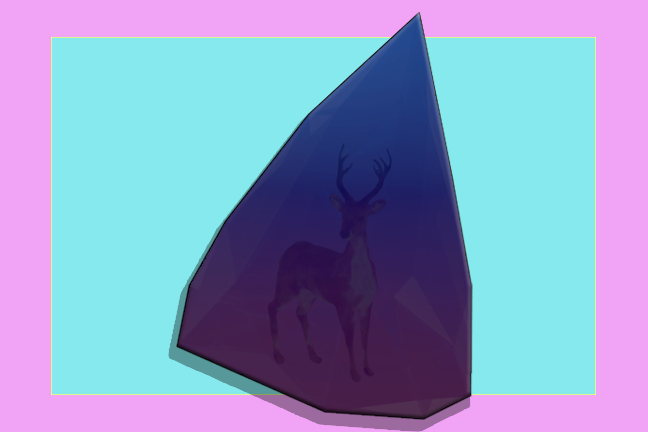
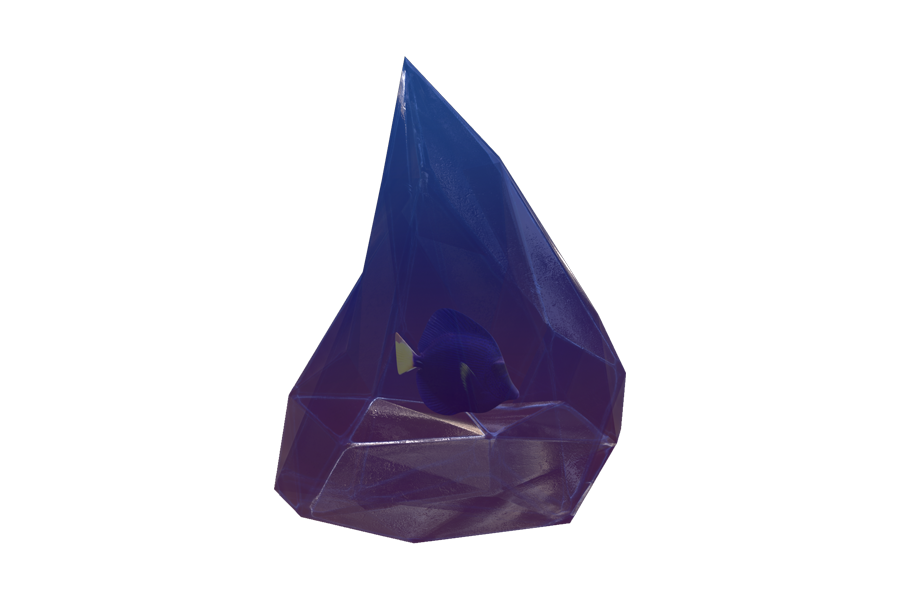
An example of a shard NFT, which represents a fractional ownership in the evolving public monument.
-
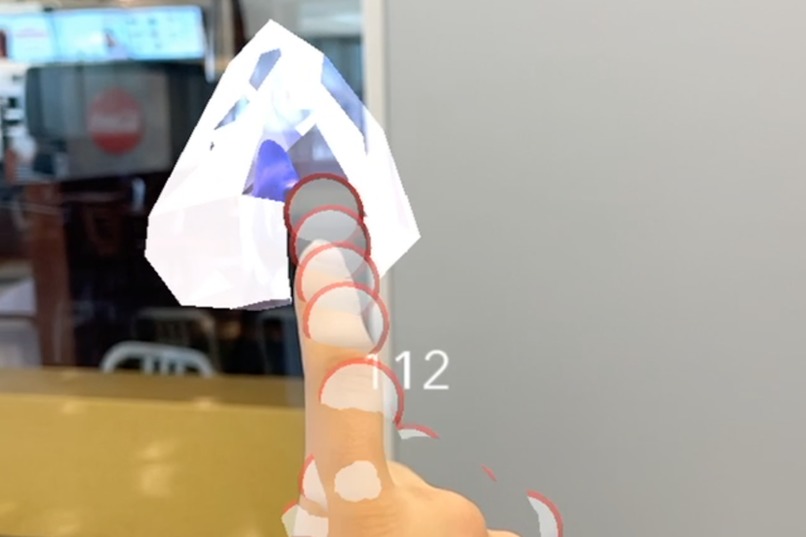
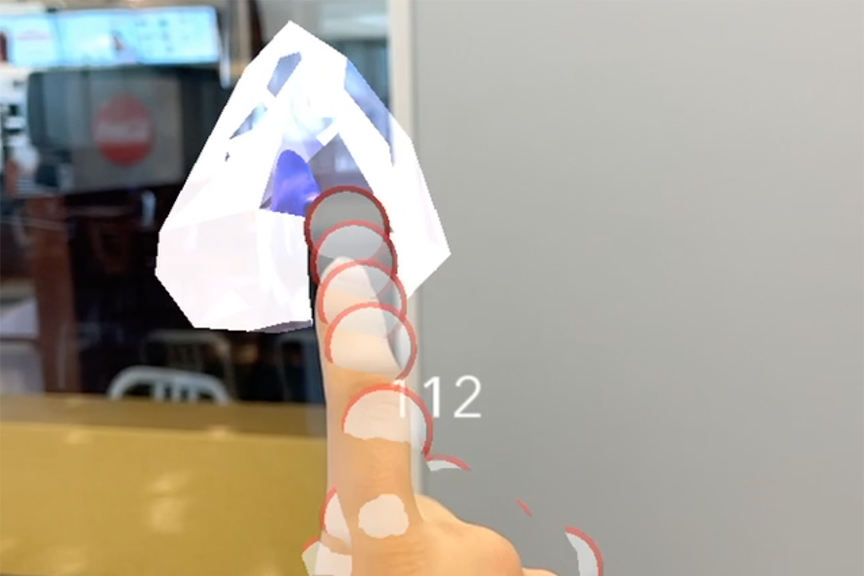
Finding a shard in the public space
-
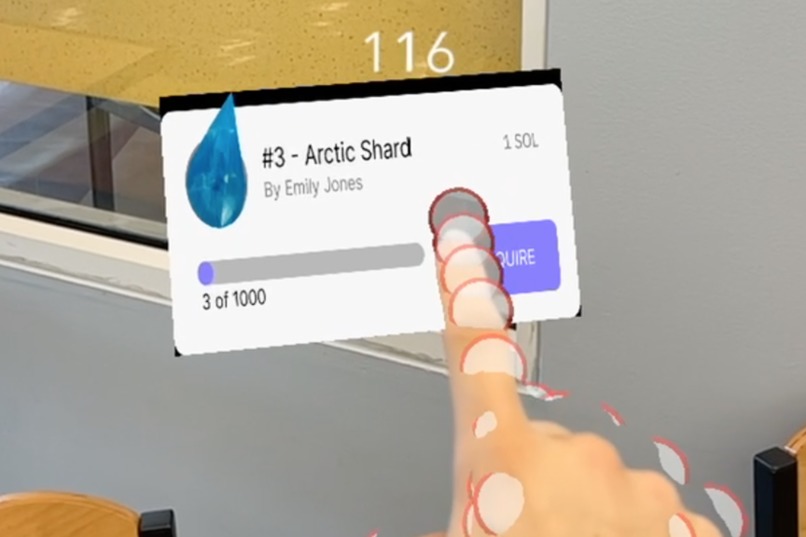
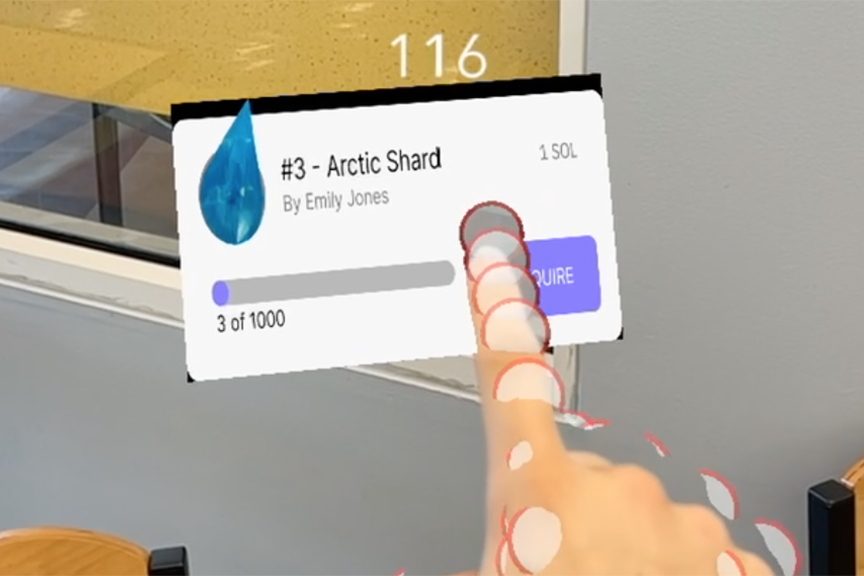
Purchasing a shard, fractional ownership in the evolving public monument
-
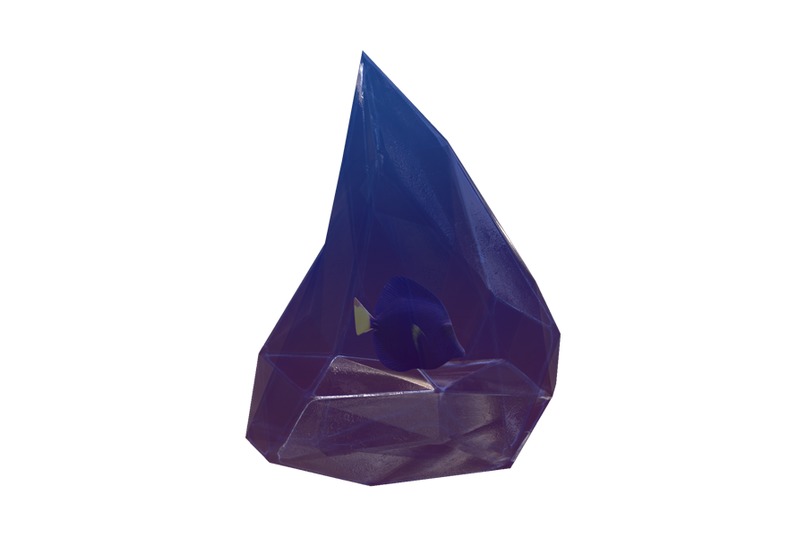
Another example of a shard.
-
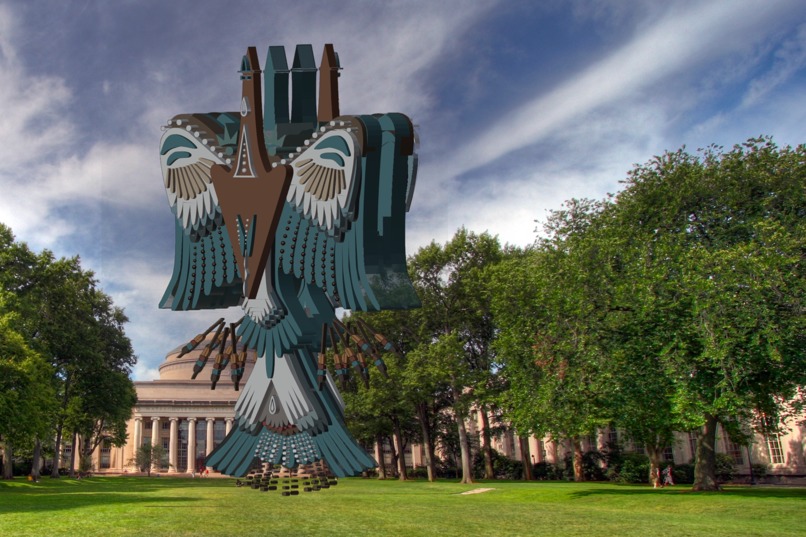
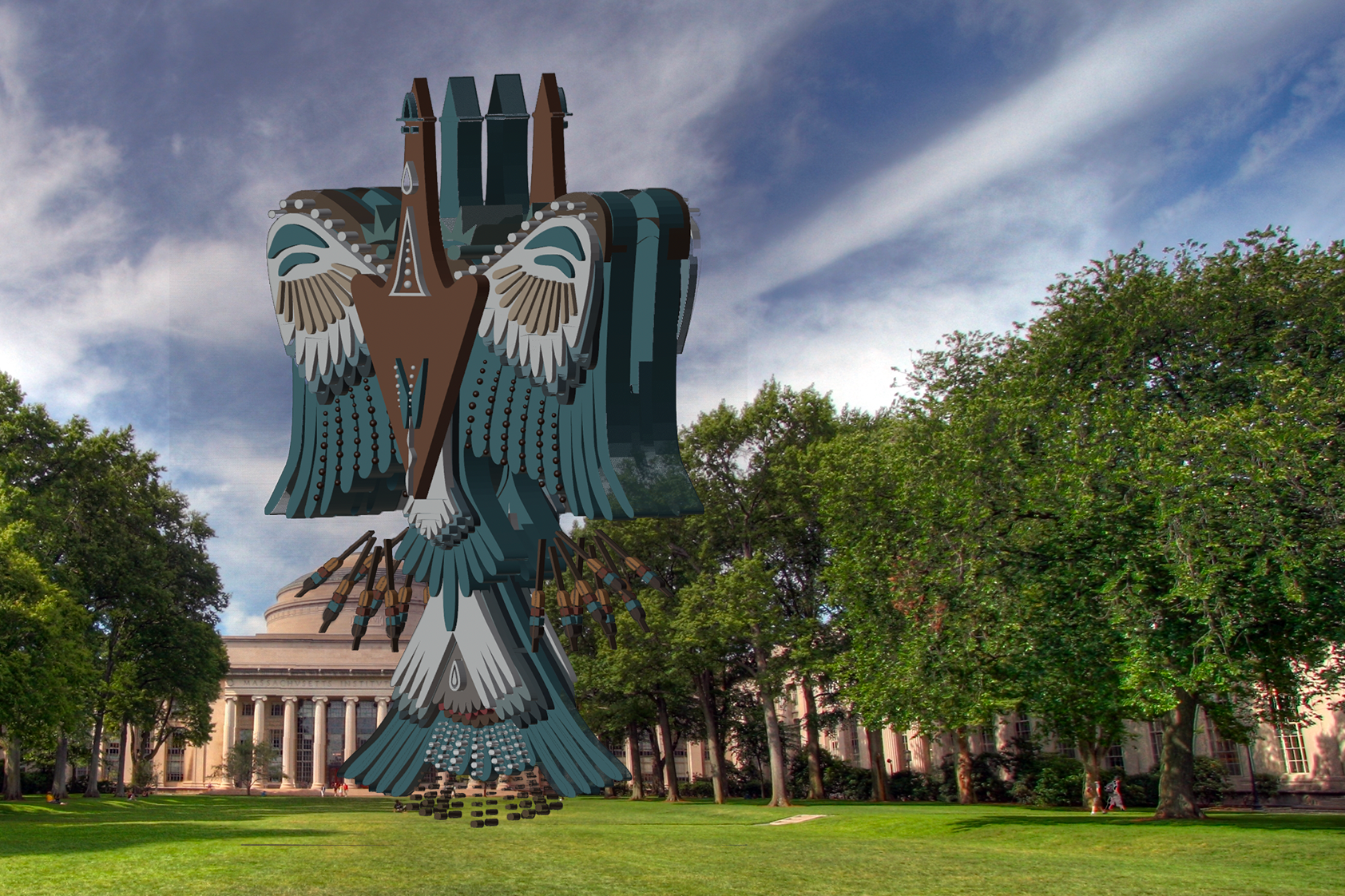
A simulation of the final form of the evolving public monument in place
Inspiration
We are inspired by the concept of land acknowledgment, which many seem to believe is a final destination of honoring the displacement of Indigenous people-- but we know more can be possible. Restorative justice must go beyond words and performance.
We engaged with Nina DeAgrela, MIT's Assistant Dean of Intercultural Affairs, to get her perspective on what the university has done-- and still has yet to do-- to honor the university's existence on Indigenous land.
We visited Harvard's Peabody Museum to get further perspective on how local university's engage with and propagate conversation and imagery of Indigenous culture.
One of our team members has been researching the history of their indigenous ancestors, their relation to their land and how it was taken from them, and contemporary movements to reclaim their place and culture. The visuals in our project represent the cultural traditions of this member’s ancestors, the Coahuiltecan people of what is now South Texas.
What it does
This project brings restorative justice to Indigenous people and other historically marginalized communities by inviting the public to find and acquire digital “fusion crystal“ shards, digital art objects minted as NFTs which represent fractional investments designed to activate the construction of massive augmented reality monuments. The funds collected directly benefit descendants of the original stewards of the land where the monument is located. As each shard is purchased, the monument takes form. Once a full set of shards have been acquired, the monument is activated, emerging from a geolocated quilt of these shards and appearing in it’s full and final form.
For this demonstration, our team has created the initial monument. In the next iteration, some of the shards and evolving central monuments will be created in partnership with Indigenous contemporary artists of the tribe associated with the land where they are installed.
How we built it
We used Blender to create 3D models of AR fusion crystal NFTs, AR monuments, and animations of these elements to display on Looking Glass devices. We used ARitize Maps to give each asset a geolocation. We explored ways to use Unity to create interactions with the objects displayed on Looking Glass. We used Snap Lens Studio to create interactions and placements. We used Looking Glass to demonstrate one way users can proudly display the shards they acquire and view the evolution of the community monument. We used software from Moog Music to create ethereal background music and sound effects.
Challenges we ran into
We took on a lot! One of the biggest challenges was figuring out where we could pair our project down in order to have something to demonstrate.
When we started, we were collaborating with another group that is creating a project with similar themes. Ultimately, we had some communication breakdowns and realized that we have fundamentally different perspectives on the solution for a similar problem, how to properly acknowledge/celebrate an oppressed group.
Accomplishments that we're proud of
We are proud that we were able to retool and regroup, despite the organizational challenges we faced. There was magic in the recovery, and we have formed close bonds and created the start of something really cool!
We learned a lot! There was a lot of trial and error and frustration and failure. But we ultimately formed community and created a prototype for something really interesting and cool that could also be a model for restorative justice in the form of financial compensation and virtual monuments for oppressed groups.
What we learned
We learned that 3 days isn't enough time to save the world! But it is enough time to take the first step, and it's the perfect amount of time to make new friends and form bonds that will last far beyond these 3 days.
We learned that sometimes fewer folks is more power, that too many voices can crowd a project, and that sometimes you just have to break down to break through.
What's next for Monumental Restoration
What we have created here is merely a prototype-- but we'd like to bring it into the real world. We hope to take this project beyond the hack, to form relationships with contemporary Indigenous artists to create shards and evolving monuments that can be installed in a prominent location of that individual's community.
Built With
- aritize-maps
- blender
- looking-glass
- snap-lens-studio
- snap-spectacles
- solana


Log in or sign up for Devpost to join the conversation.