Inspiration
Industrial robotics training should be accessible, practical, and safe. Learning how to diagnose a robotic system often requires expensive equipment, specialised facilities, and supervised access.
MONTEMOLIN XR Industrial Copilot was conceived to explore a different approach: using immersive virtual reality to let people practise industrial troubleshooting through direct, intuitive interaction.
The project is inspired by the intersection of industrial automation, workforce development, immersive computing, and human-centred technology.
What it does
MONTEMOLIN XR Industrial Copilot is designed as a hands-first immersive training experience for Meta Quest.
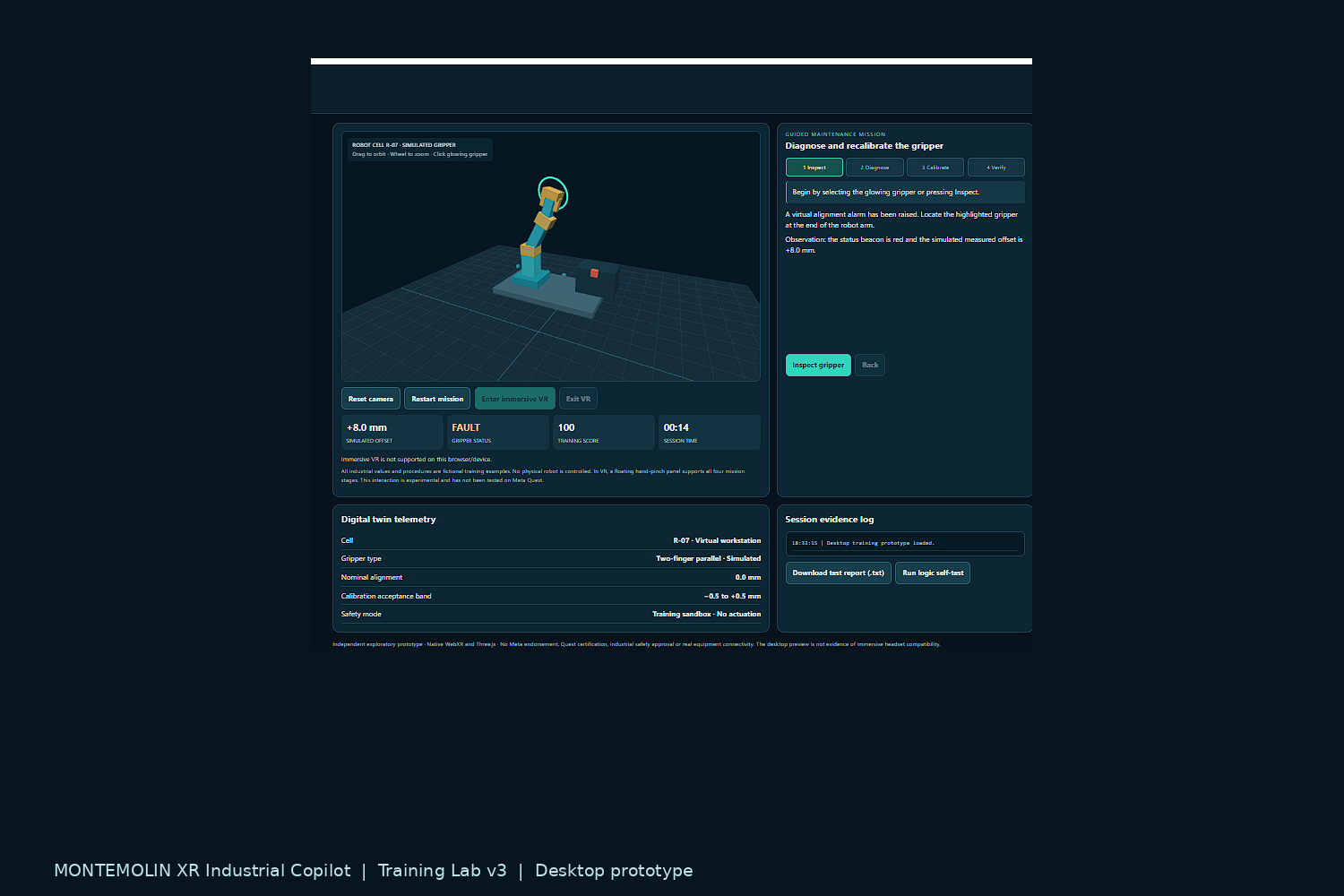
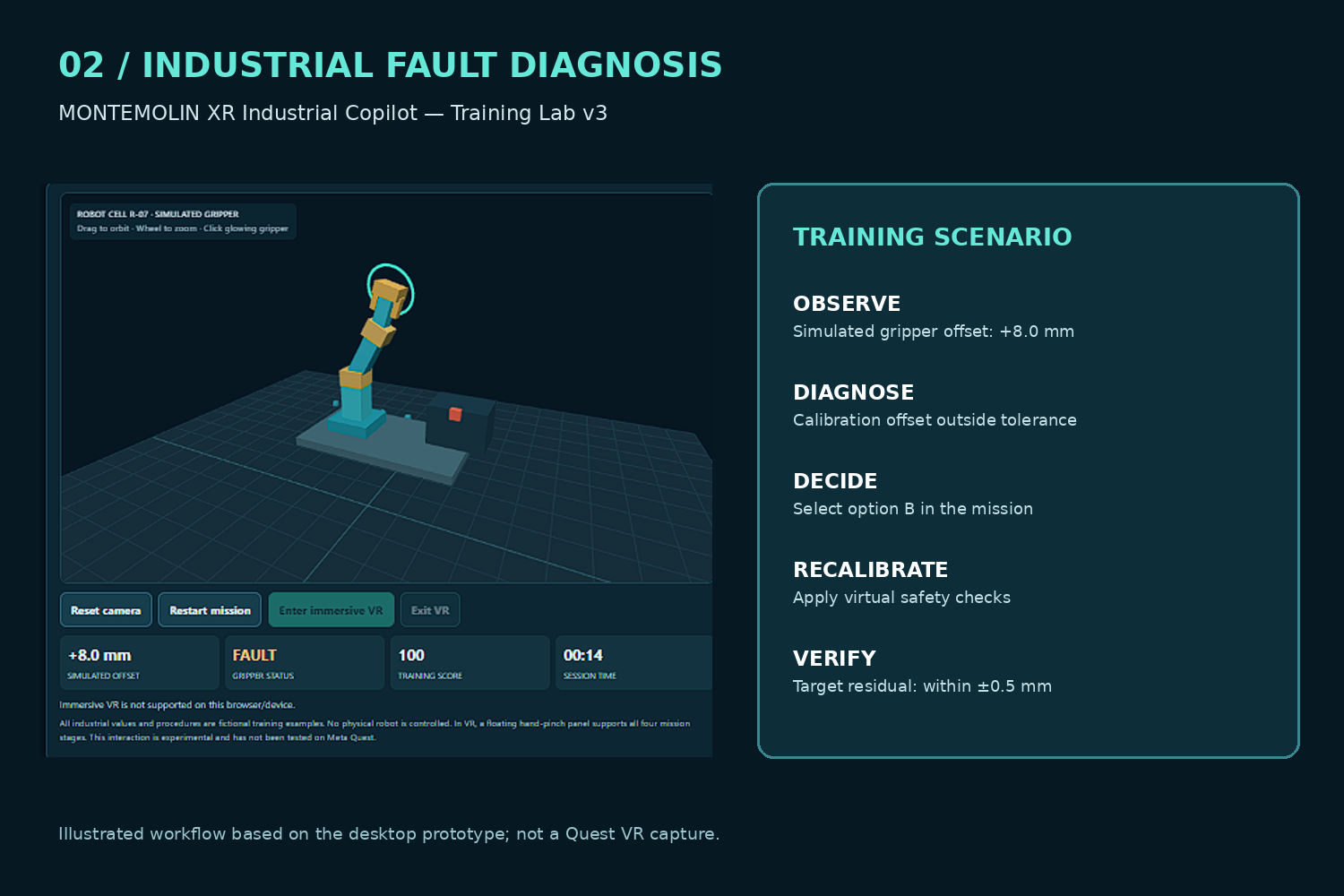
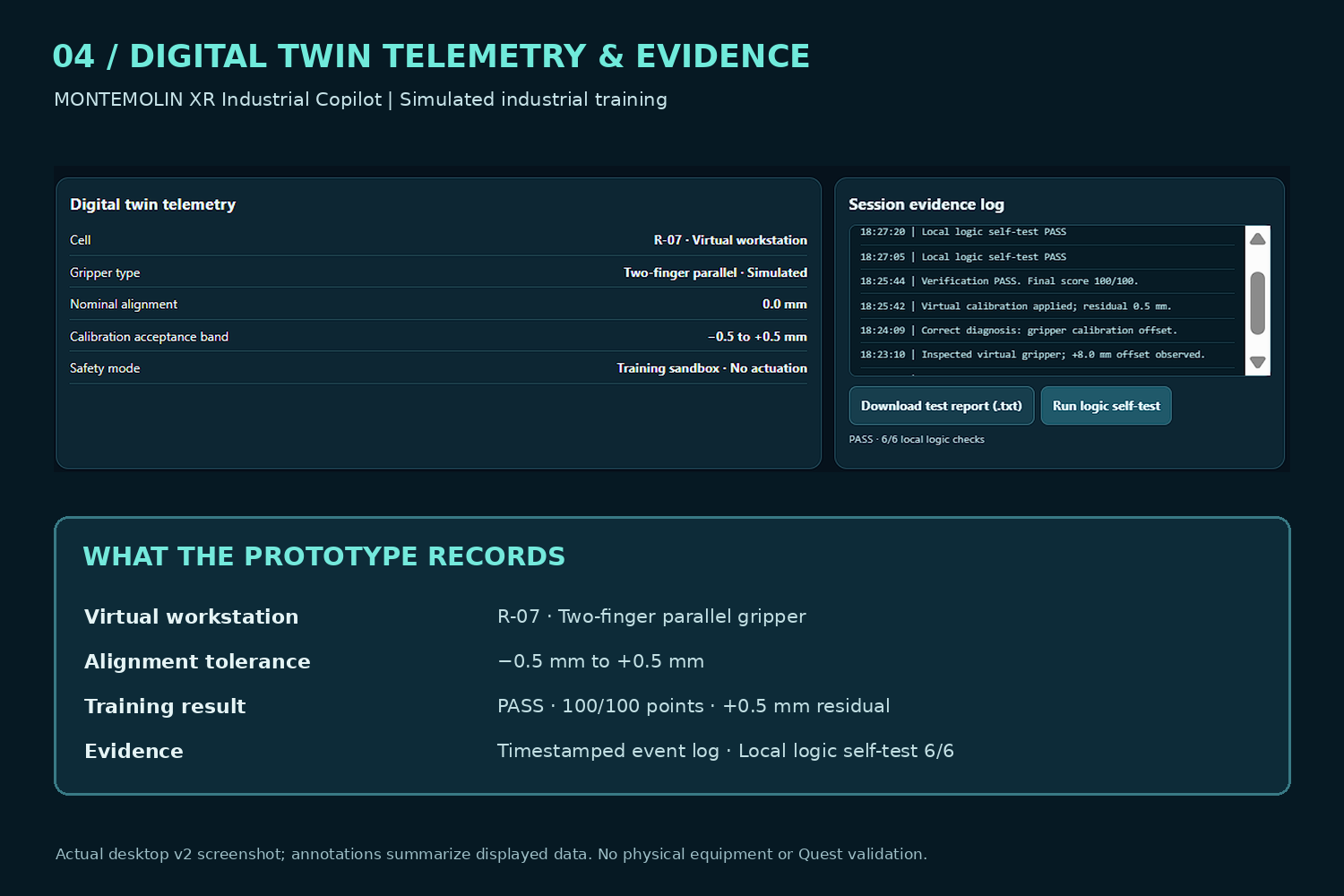
The user enters a virtual industrial workstation and follows a guided diagnostic exercise involving a simulated robotic component.
The intended experience includes:
- Inspecting a virtual industrial workstation.
- Selecting interactive components using hand gestures.
- Identifying a simulated calibration fault.
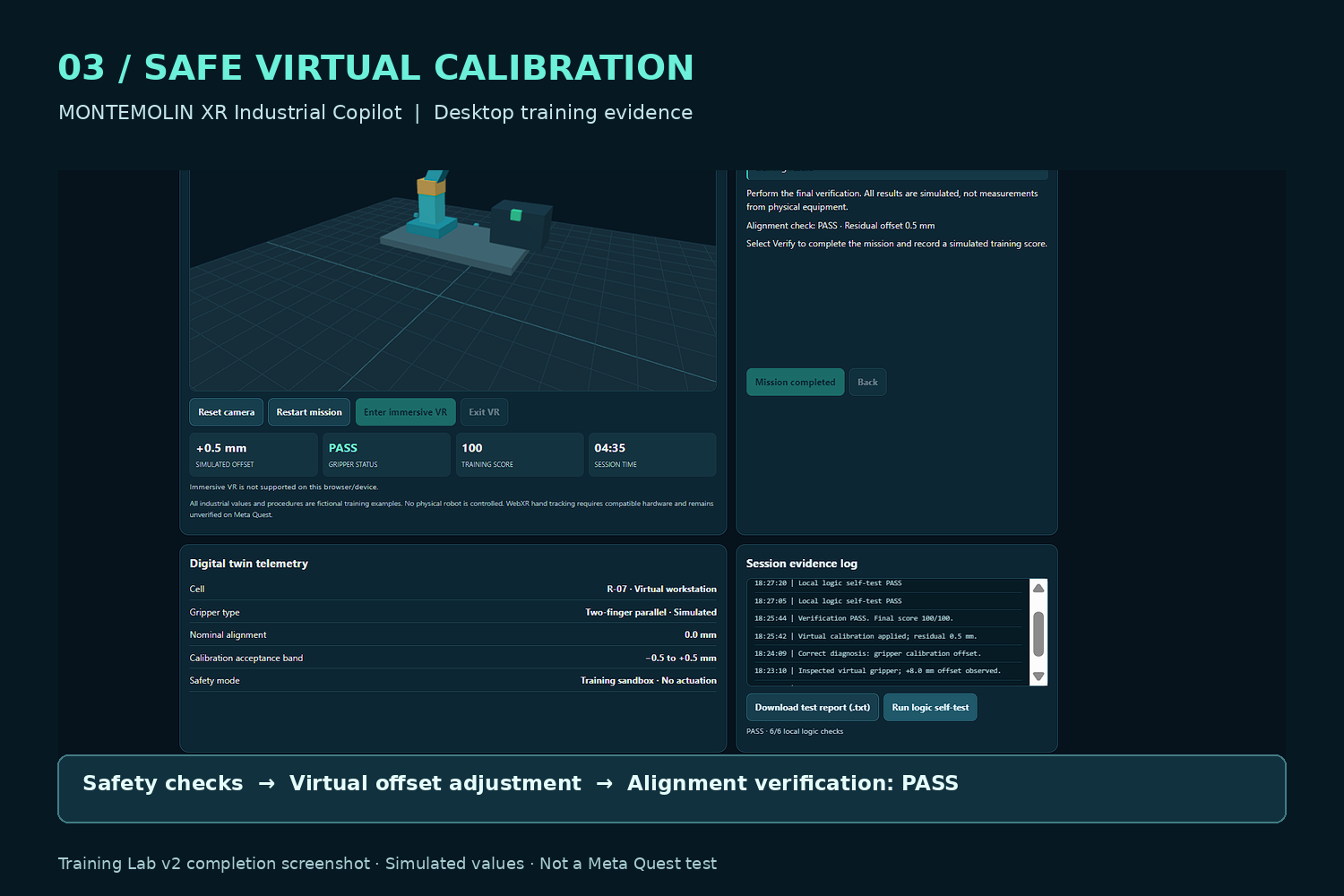
- Choosing a corrective procedure.
- Receiving visual feedback.
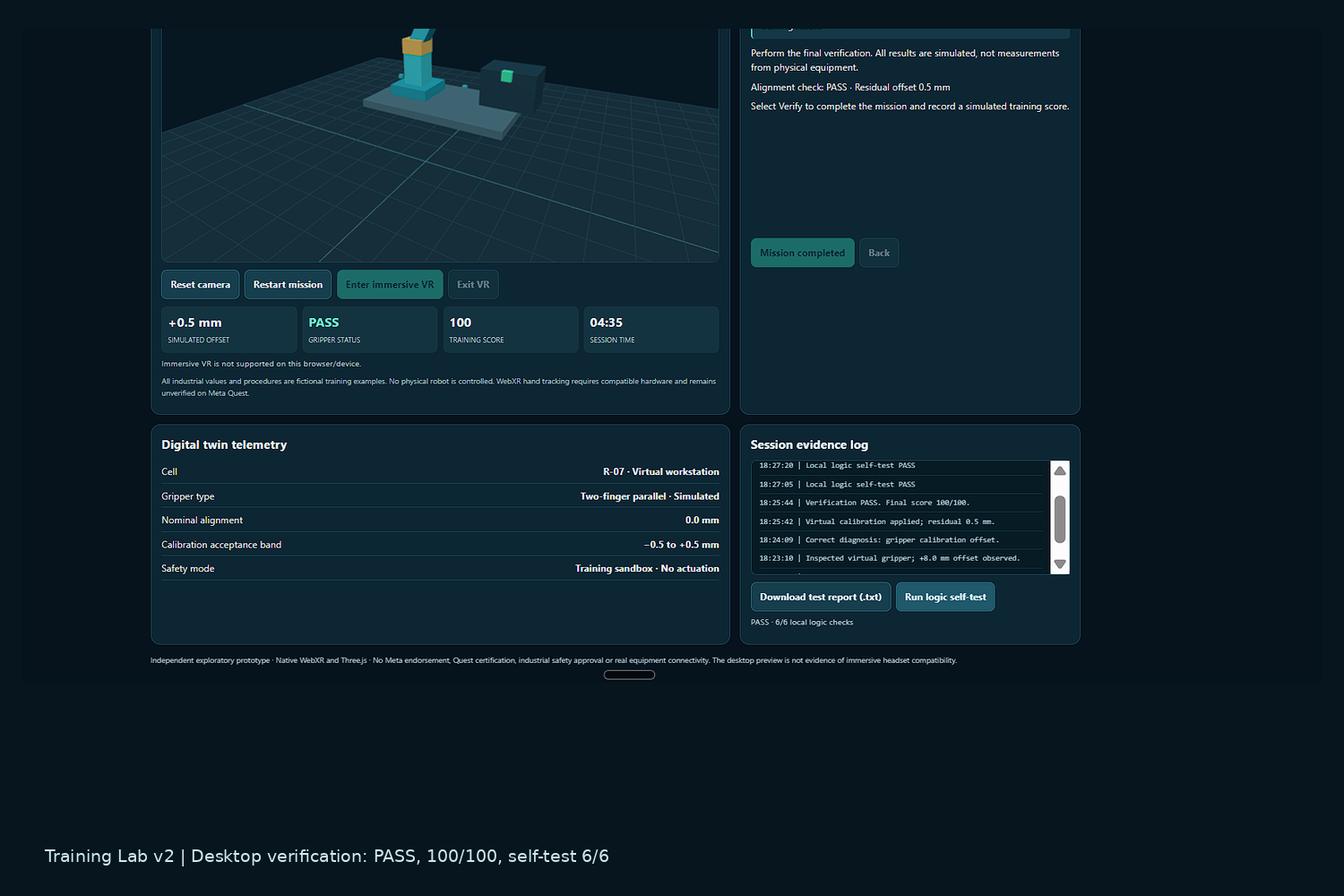
- Completing the exercise with a training assessment.
The training scenario uses simulated information. It does not control real industrial machinery or claim to reproduce a certified safety-training procedure.
How we built it
The project follows a web-based immersive development approach using WebXR and Meta's Immersive Web SDK (IWSDK).
The architecture is designed around three elements:
- Immersive interaction: a spatial environment with hand-based controls.
- Training simulation: a structured industrial diagnostic scenario with defined actions and outcomes.
- Learning feedback: contextual instructions and a completion assessment.
The web-based approach is intended to make the experience easier to distribute, maintain, and demonstrate through a secure HTTPS deployment.
The final technical stack, hardware testing results, and implementation details should be documented from the actual source code and deployment before submission.
Challenges we ran into
The main design challenges concern translating an industrial diagnostic workflow into an intuitive immersive experience.
These include:
- Making spatial controls easy to understand.
- Supporting interaction without relying on handheld controllers.
- Keeping the experience comfortable for seated users.
- Presenting technical information clearly in a three-dimensional environment.
- Balancing visual detail with performance on standalone VR hardware.
- Distinguishing educational simulation from real industrial operating procedures.
These challenges inform the design and validation of the experience.
Accomplishments that we're proud of
The project brings together an industrial training concept and a focused immersive user journey.
Its main design accomplishments are:
- A clearly defined industrial troubleshooting scenario.
- A hands-first interaction approach.
- A compact learning experience with a beginning, a task, and an outcome.
- A web-based architecture intended for accessible distribution.
- A foundation for exploring immersive industrial skills development.
Specific implementation achievements and measured performance will be reported only after they have been verified in the working application.
What we learned
Designing for immersive training requires more than placing traditional interfaces inside a virtual environment.
Every interaction must have a clear purpose. Instructions need to be visible at the right moment, virtual controls must be reachable, and the learner should understand the consequences of each action.
We also learned the importance of defining a small, complete experience before introducing additional complexity such as conversational AI or advanced robotic physics.
What's next for MONTEMOLIN XR Industrial Copilot
Our proposed next steps are:
- Expand the library of simulated industrial faults.
- Introduce additional robotic components and training exercises.
- Improve accessibility and multilingual guidance.
- Explore optional AI-assisted explanations.
- Evaluate learning outcomes with real users.
- Investigate potential collaboration with industrial training and robotics organisations.
The long-term vision is an immersive training platform that helps people develop practical industrial skills in a safe, repeatable, and measurable environment.
Built With
- css3
- hand-tracking
- html5
- immersive-training
- industrial-robotics
- interactive-simulation
- javascript
- meta-immersive-web-sdk-(iwsdk)
- meta-quest
- three.js
- typescript
- virtual-reality-(vr)
- vite
- webxr


Log in or sign up for Devpost to join the conversation.