-
-
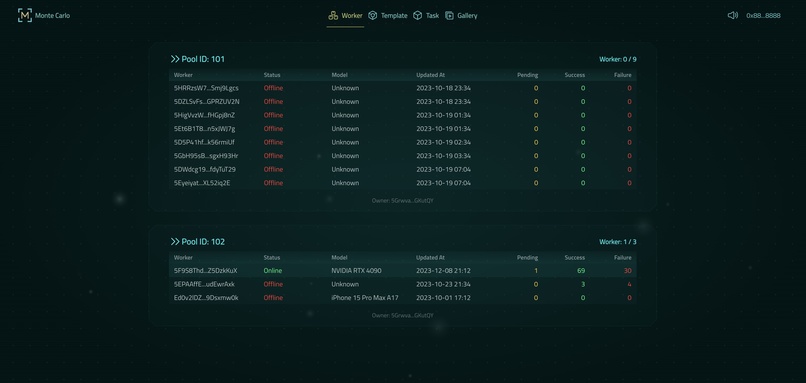
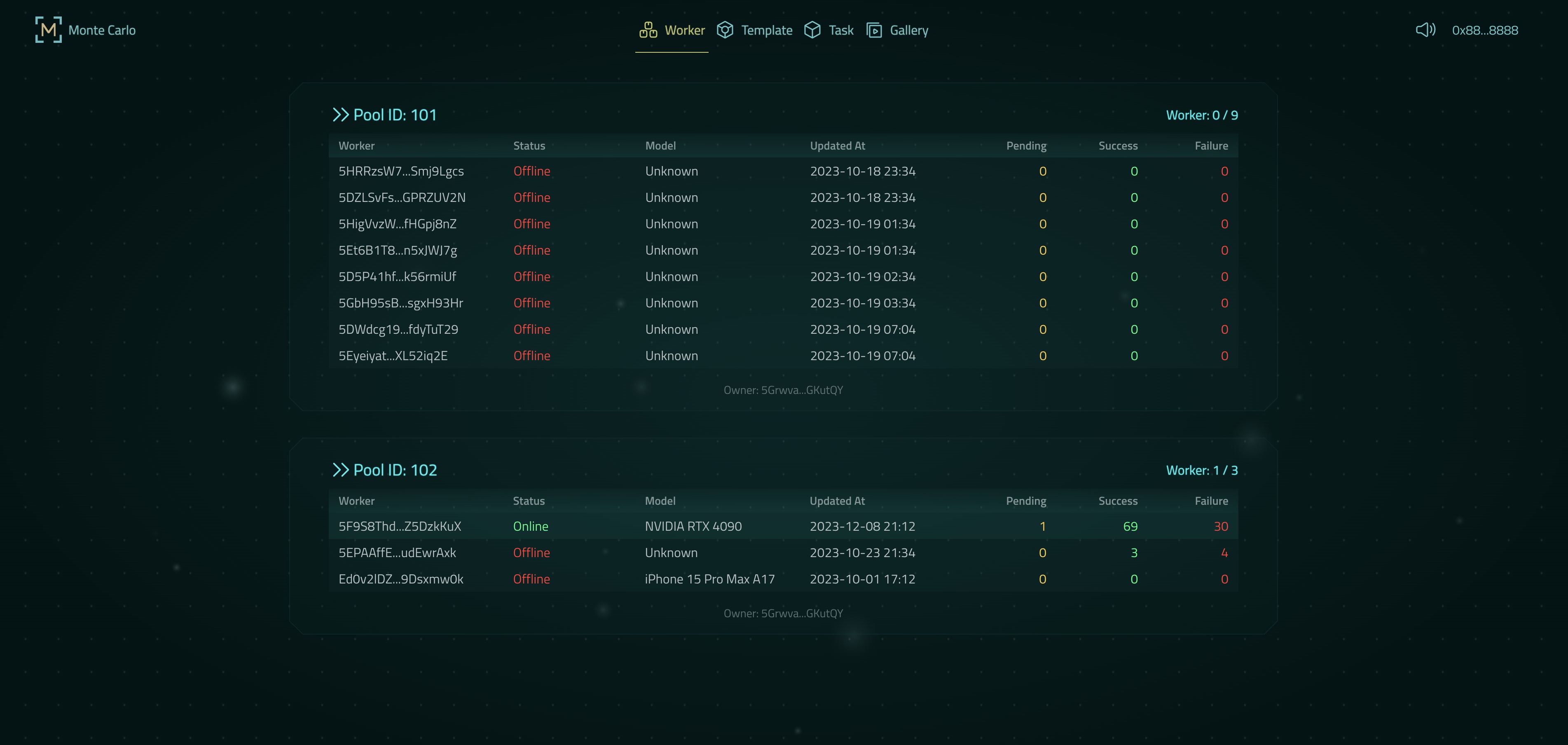
Worker list which will pick up the tasks amd execute offchain
-
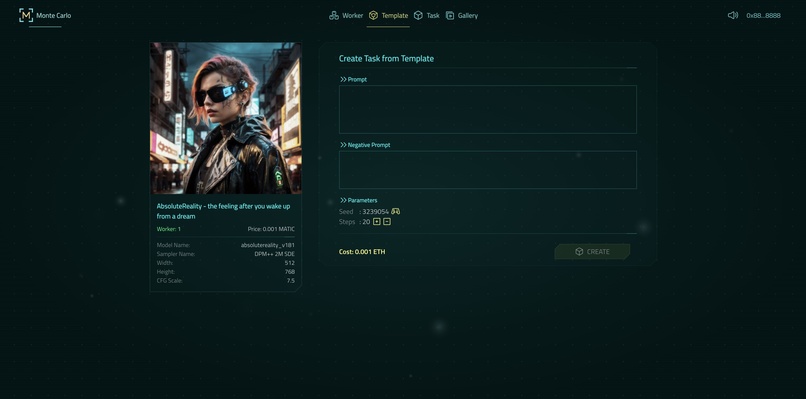
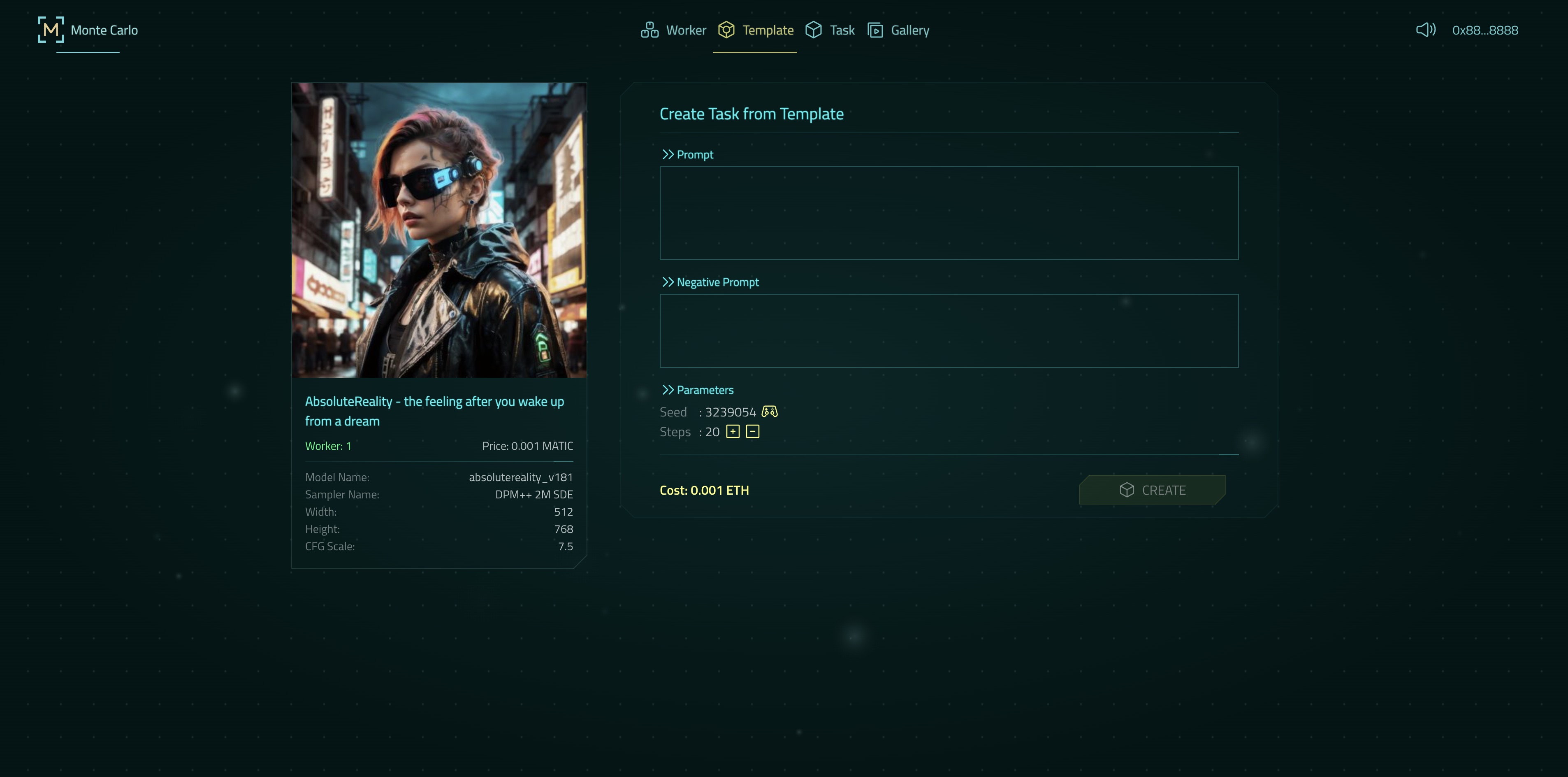
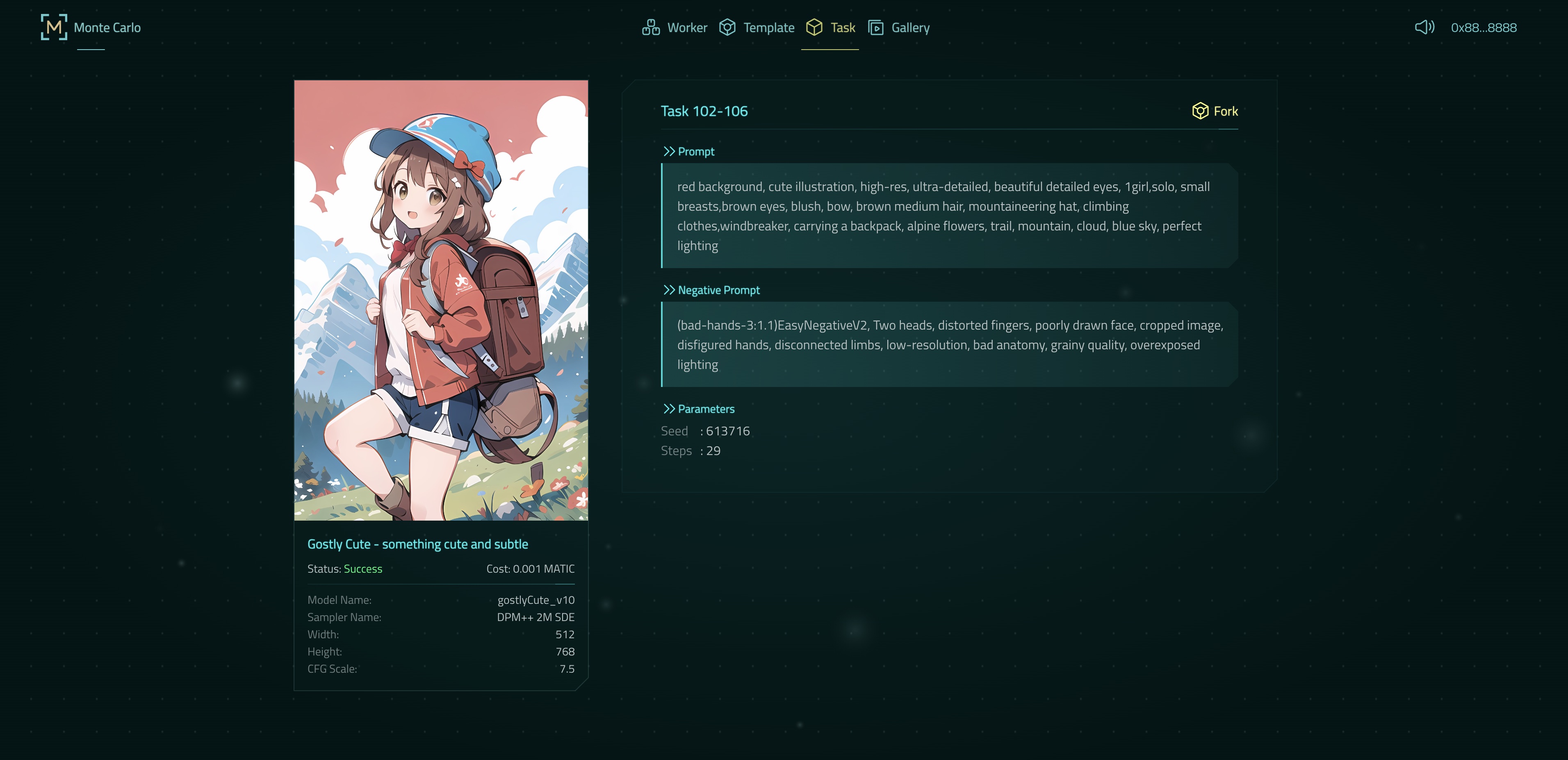
Template detail page, with predefined parameters
-
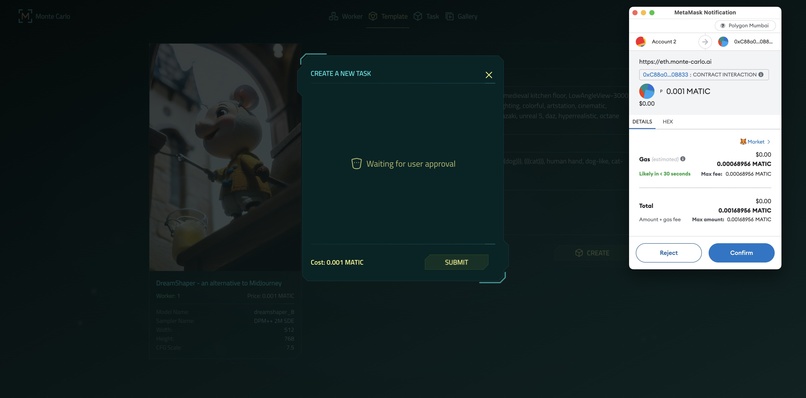
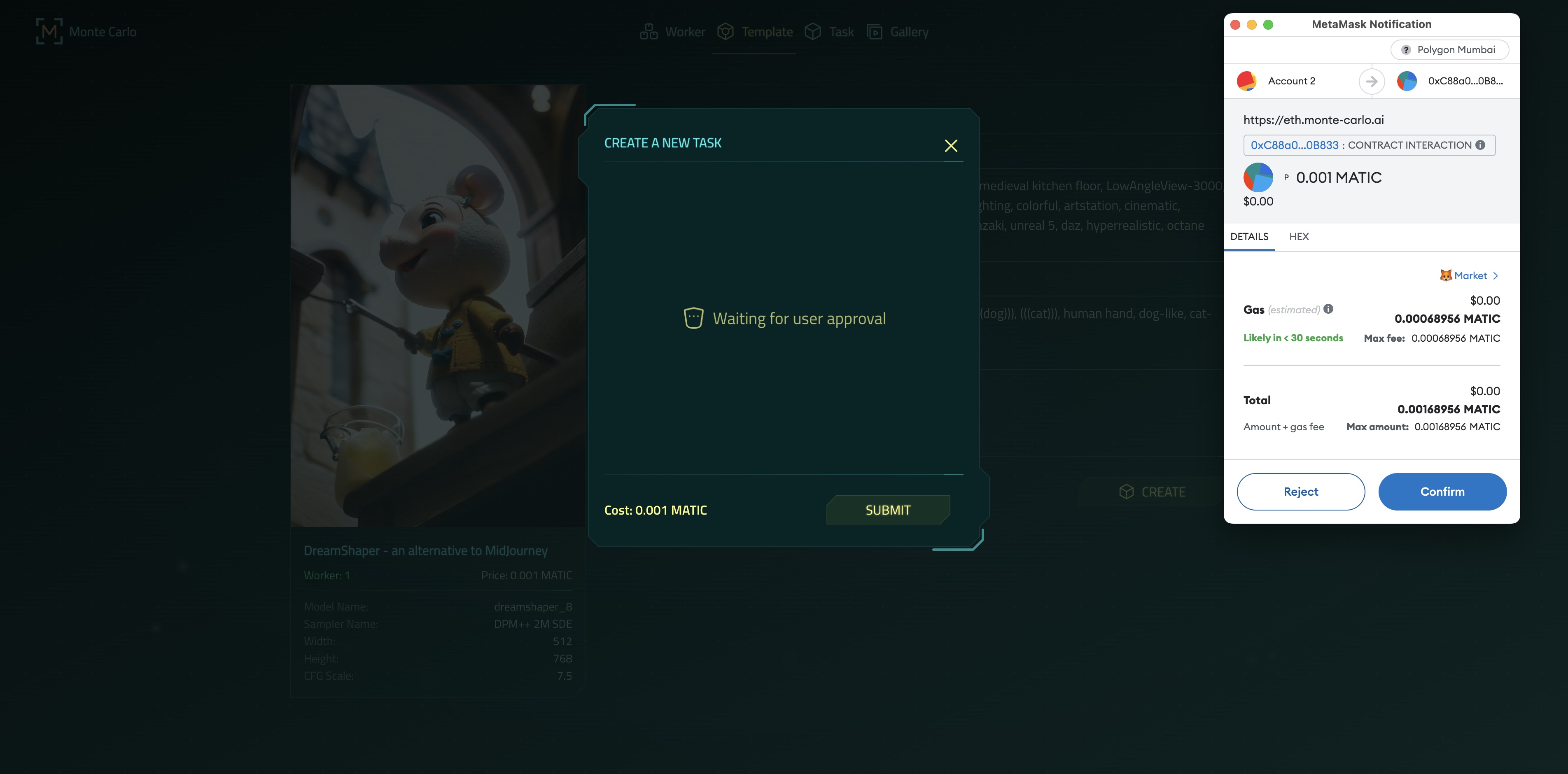
After click submit, the wallet will pop up to ask user to approve the fee transaction
-
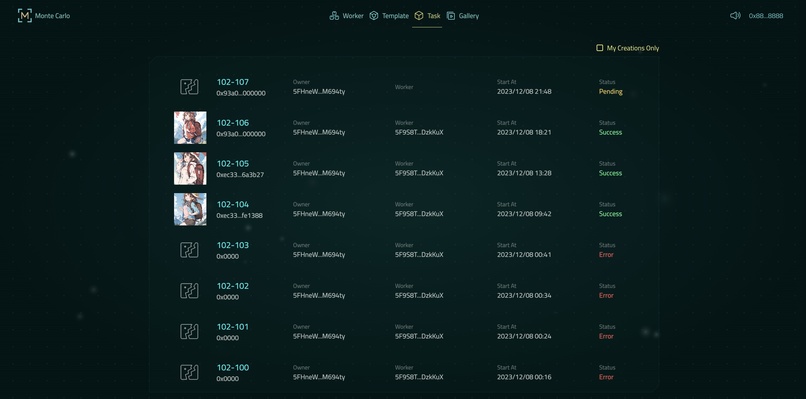
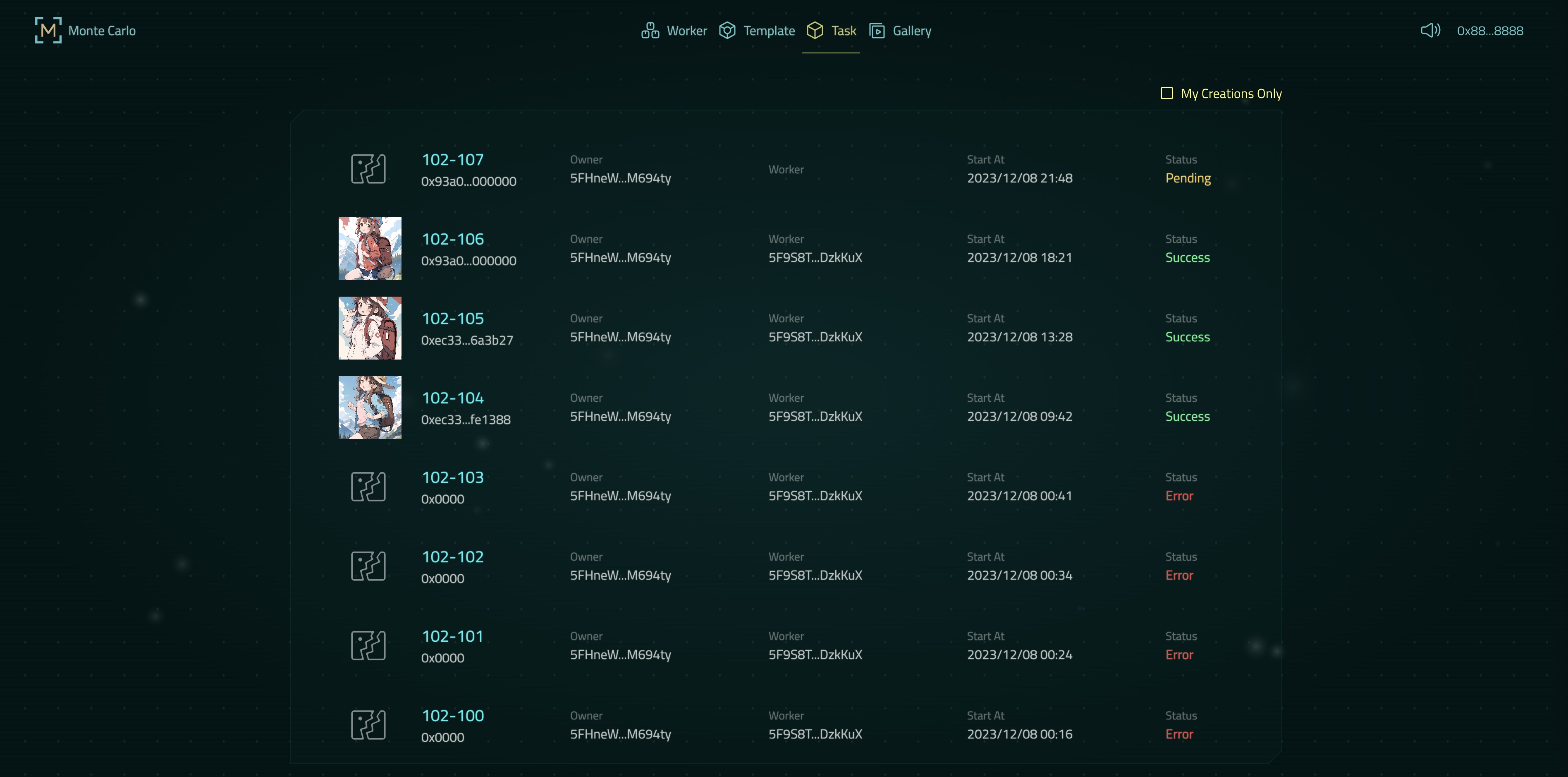
After approval, the task will be available in the task history page
-
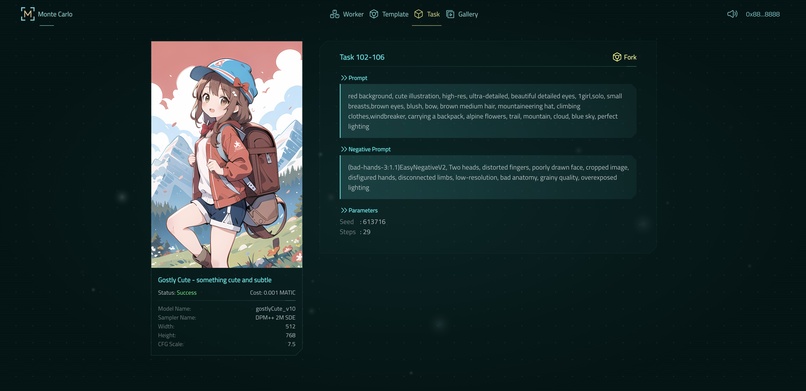
Template detail page, user input their own prompt to create image
-
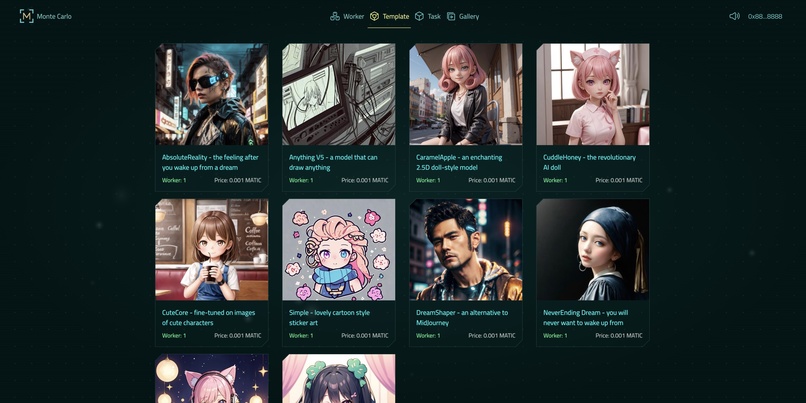
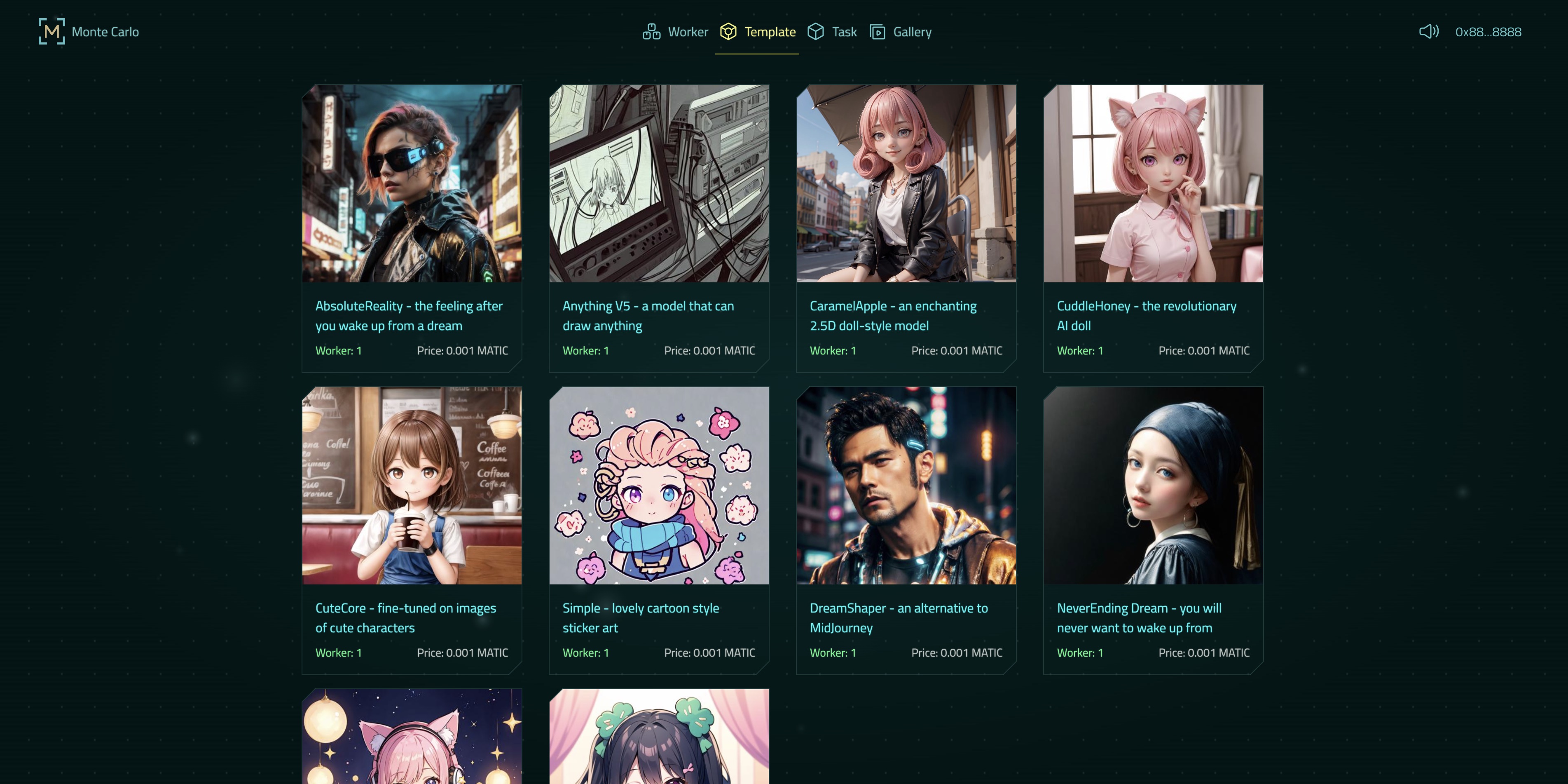
Template list that users can choose one to create their own image
-
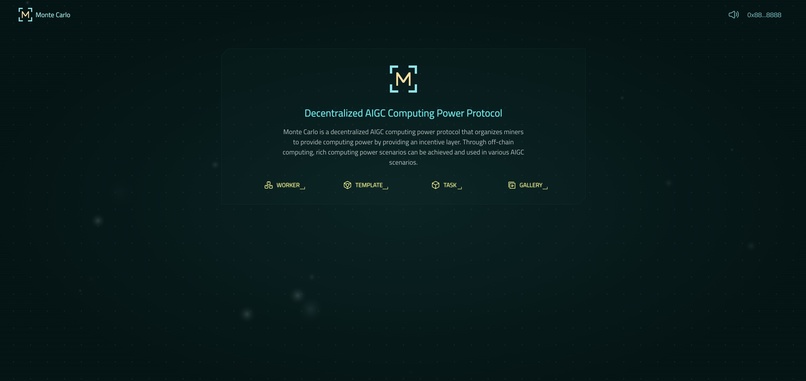
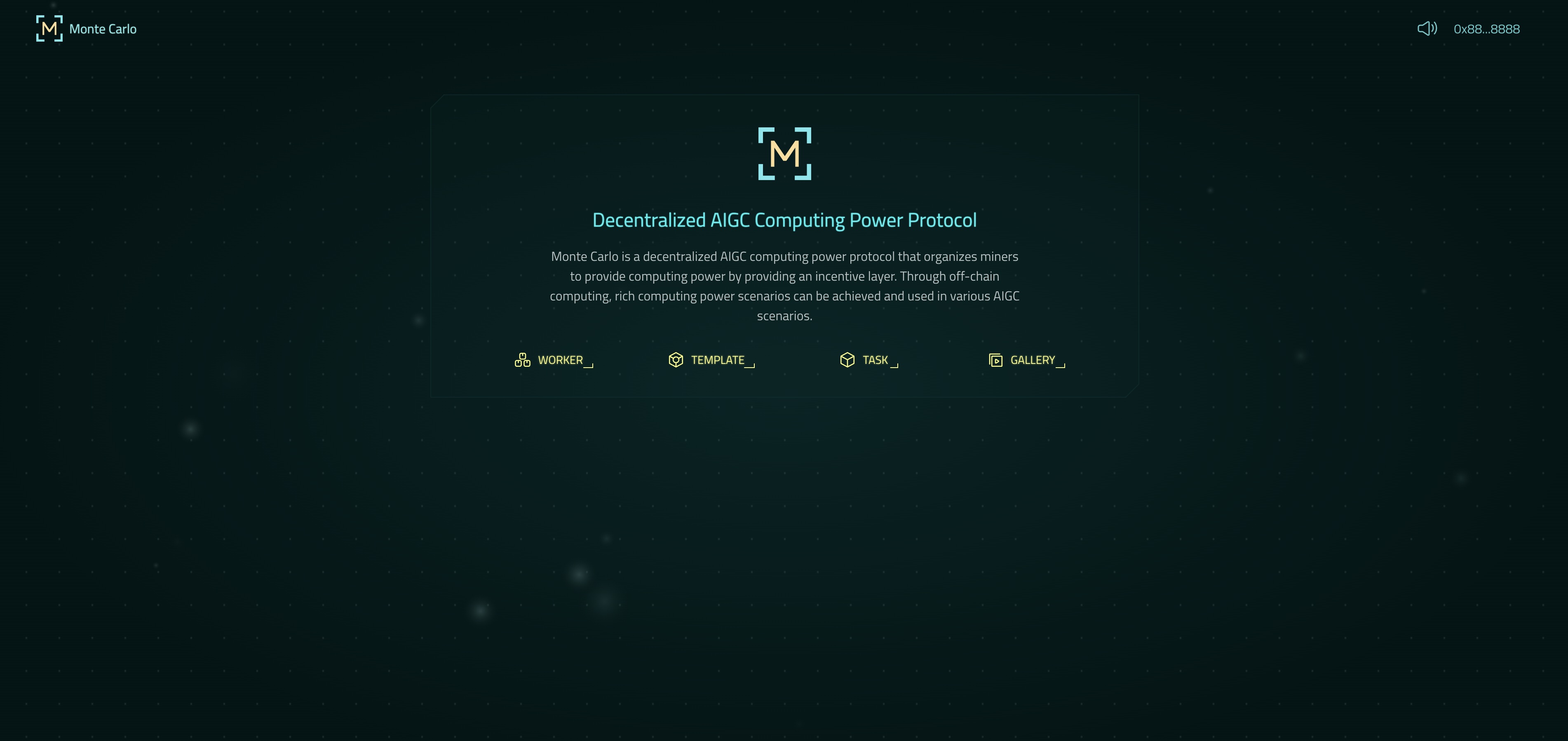
Homepage
-

Galarry page of generated high quality images by the community

Inspiration
Many builders are trying adopting on-chain-analytics + LLM, NFT + AIGC or blockchain-based games + AI agent. But no practical Web3-native AI infra to support them yet. Web3-native AI infrastructure holds significant potential in revolutionizing the way artificial intelligence operates and interacts. The primary benefits are centered around composability - with Web3, different AI tools can be seamlessly combined for better functionality, creating a more cohesive and multi-dimensional system. Also, it offers better verifiability, ensuring the transparency and reliability of AI operations. Importantly, Web3-native AI respects authentic rights of invention, providing the option to share benefits from any derivable concepts, leading to a fairer and more inclusive creation landscape. It also promises cost-efficiency and could be pivotal in aiding AI startups, particularly by providing easy access to GPU computing powers. Harnessing the power of Web3 tokenomics, such infrastructure could incentivize global GPU resource contributions, building a vibrant, worldwide community. Additionally, by making high-end AI technology more accessible and understandable for the broader public, it could help in popularizing these advanced concepts, thereby fostering an environment of innovation and inclusivity.
What it does
Monte Carlo is a decentralized AIGC computing power protocol. Users can pay with cryptocurrency to access AI computing resources for AIGC-related tasks and communicate and use it directly on the chain. Take NFT generation as an example: The content provided by AIGC can be utilized to mint NFTs and allowing the selection of high-quality items. The worker providers will get royalties from the generation fee.
How we built it
When a user creates a new task, we will forward the user’s request to our relay bridge through the chainlink function. After completing the AIGC task off-chain, we will synchronize the computation results to the chain, and the computation results are verifiable and traceable. The underlying off-chain computing system is powered by a side chain called Cybros Network developed by us which focuses on serving decentralized jobs queue. More details can be found in our slides attached.
Challenges we ran into
Ensuring that tasks are smoothly scheduled and executed asynchronously is a complex matter, for which we have independently developed a side chain. The reason for independently developing the side chain is that we hope to have full control over the data and execution of this chain. Our original plan is embedding a light client inside the ChainLink function, unfortunately, we find it is impossible for now, so we have to made a simple relayer. Requests from other public chains will be forwarded to this side chain specifically used for executing asynchronous tasks through the relayer.
Accomplishments that we're proud of
We have already integrated a few popular models on stable diffusion and invited SD users to experience them. They have given very positive feedback because previously, such tasks required buying video cards worth tens of thousands to execute. Also, our images can be directly uploaded to AR/IPFS, which is very friendly for NFT issuers.
What we learned
In many scenarios, it is not that there is no demand, but traditional thinking limits everyone. For example, AI is just AI, and web3 is just web3. When the pioneers have achieved it, everyone realizes: it turns out this is also possible. For AI and Web3, we hope to be these pioneers.
What's next for Monte Carlo
An open AIGC platform for everyone to deploy and use their own AI models. Just like a HuggingFace in Web3 world. We are building a prototype, the builder submits the AI script of HuggingFace, and the decentralized network will execute and upload the results. Combined with the workflow capabilities of the Cybros Network, the builder can combine multiple AI scripts to form a pipeline to meet complex AI needs. The most popular SD webui is implemented in this way. We will also further support the processing ability of text content, and gradually transform the generation of simple image texts into a universal DeFi AI Agent. By utilizing distributed AI resources, we assist users in interacting more simply with on-chain assets and DeFi protocols, providing more intelligent and high-yield composite investment plans.
Built With
- chainlink
- rust
- substrate
- typescript

Log in or sign up for Devpost to join the conversation.