-
-
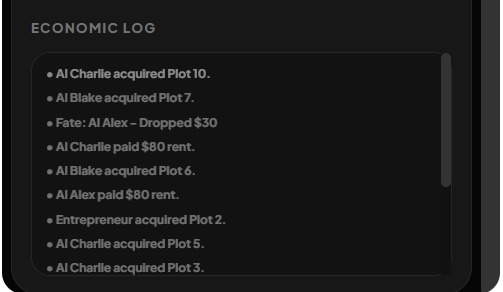
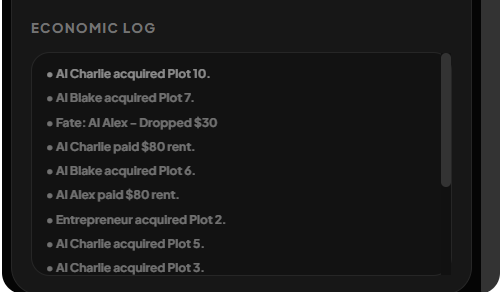
ecnomic log
-
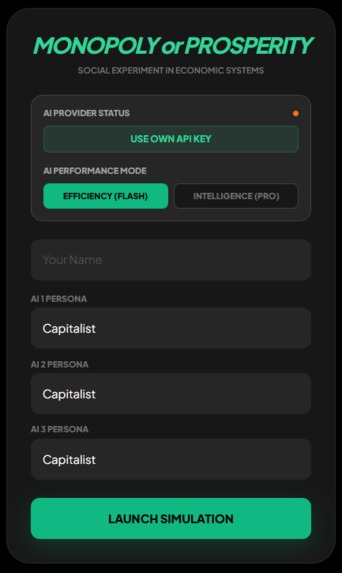
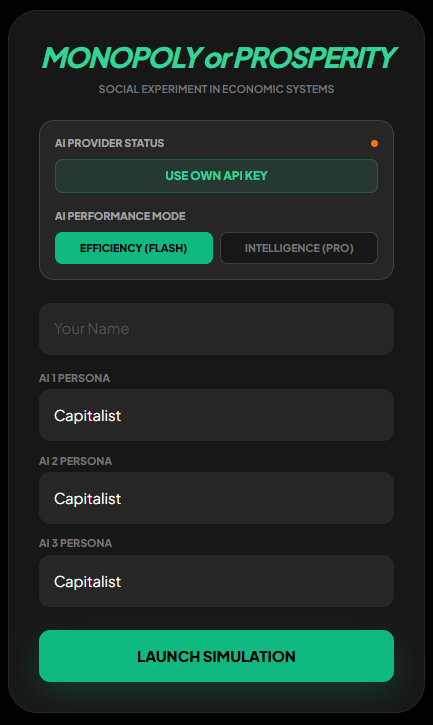
choosing dashboard
-
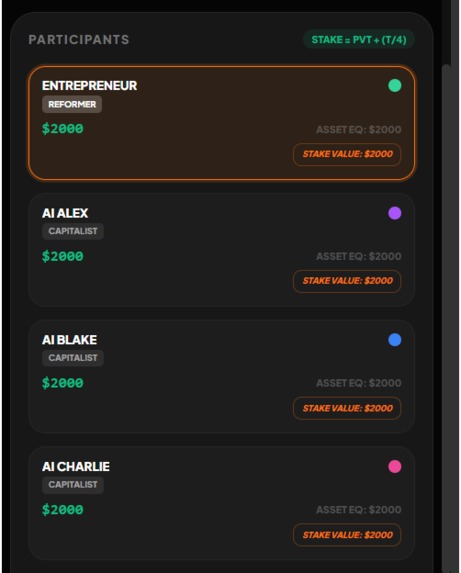
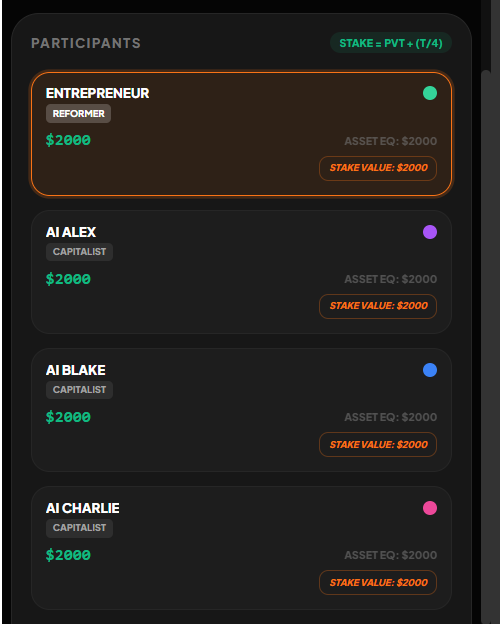
participants
-
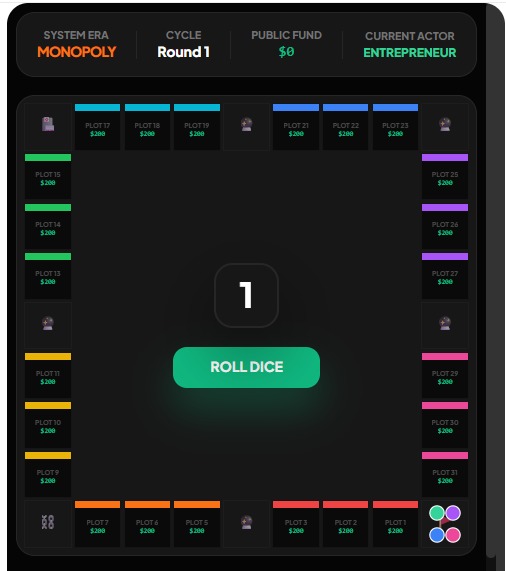
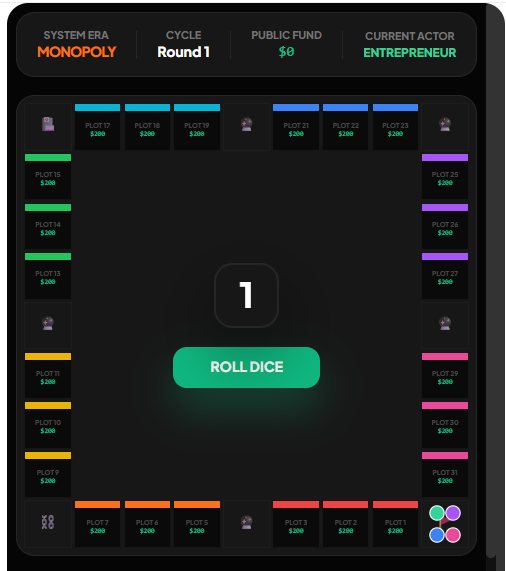
board
Inspiration
Inspired by the dual rules designed by Elizabeth Maggie, the original creator of The Landlord's Game. She also created 'The Landlord's Game and prosperity' in 1932 (the Monopolist rule demonstrates how wealth concentration leads to inequality, while the Prosperity rule uses land value tax and sharing mechanisms to achieve prosperity without anyone being eliminated). We created this game with two main goals in mind:
- To highlight and honor Elizabeth Maggie’s original genius behind The Landlord’s Game, giving proper recognition to her contribution
- To spark public reflection and discussion about the fundamental differences between capitalism and cooperative/shared economic systems
What it does
A browser-based turn-based strategy game with 1 human + 3 AI players. Starts in Monopoly Mode (first to 5000 assets wins – pure competition). Can vote to switch irreversibly to Prosperity Mode (collective treasury win when all reach ≥3000 – shared welfare, public rents, treasury dividends).
How we built it
The current version is a fully client-side single-page application. Frontend
- TypeScript + React 19 (hooks-based)
- Tailwind CSS (via CDN)
- 9×9 grid board, real-time animations, responsive design
- SPA architecture with components for board, players, modals, and interactions
- State fully managed with React hooks (useState, useEffect, useCallback)
Backend
- No traditional server — everything runs in the browser
- All game logic, rules, calculations, and state live in memory
- Built & developed with Vite
AI (Gemini 3 API)
- Direct frontend calls to Google Gemini 3 (gemini-3-flash-preview default + pro option)
- Integrated via @google/genai package
- Personality-driven decisions (CAPITALIST, BUILDER, REFORMER)
- Supports multiple contexts: landing, voting, prison, rent waiver, selling assets
- Strong fallback system using personality-weighted heuristics when API fails
Challenges we ran into
- Making Prosperity Mode feel engaging and rewarding instead of turning into a “boring welfare simulator”
- Crafting effective AI prompts that maintain consistent personality while allowing strategic flexibility
- Creating clear, multi-dimensional contrast between the two modes so players can really feel the difference
What we learned
- Competitive mode naturally generates tension and elimination pressure; cooperative mode brings safety but easily loses drive and excitement
- Large language models have enormous potential for simulating “personality-based economic decision-making”, but prompt engineering and robust fallback logic are critical
- Players have very different needs regarding “fairness” vs. “personal achievement” — collective prosperity rewards need careful tuning
- The greatest strength of educational games is letting players experience and discover the consequences of different systems themselves
What's next
- Add real online multiplayer (4 real players or hybrid human+AI)
- Introduce more customizable rule packs (radical public ownership, environmental taxes, universal basic income experiments, etc.)
- Expand Prosperity Mode endgame with more social features (avatars, badges, profile showcases)
- Improve visual & audio experience (better art, background music, polished animations)
- Add detailed battle records, statistics, and shareable game summaries

Log in or sign up for Devpost to join the conversation.