-
-
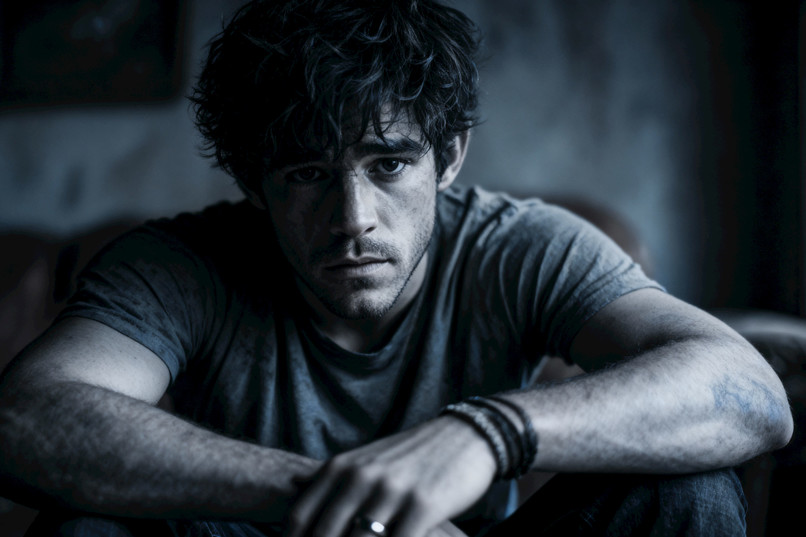
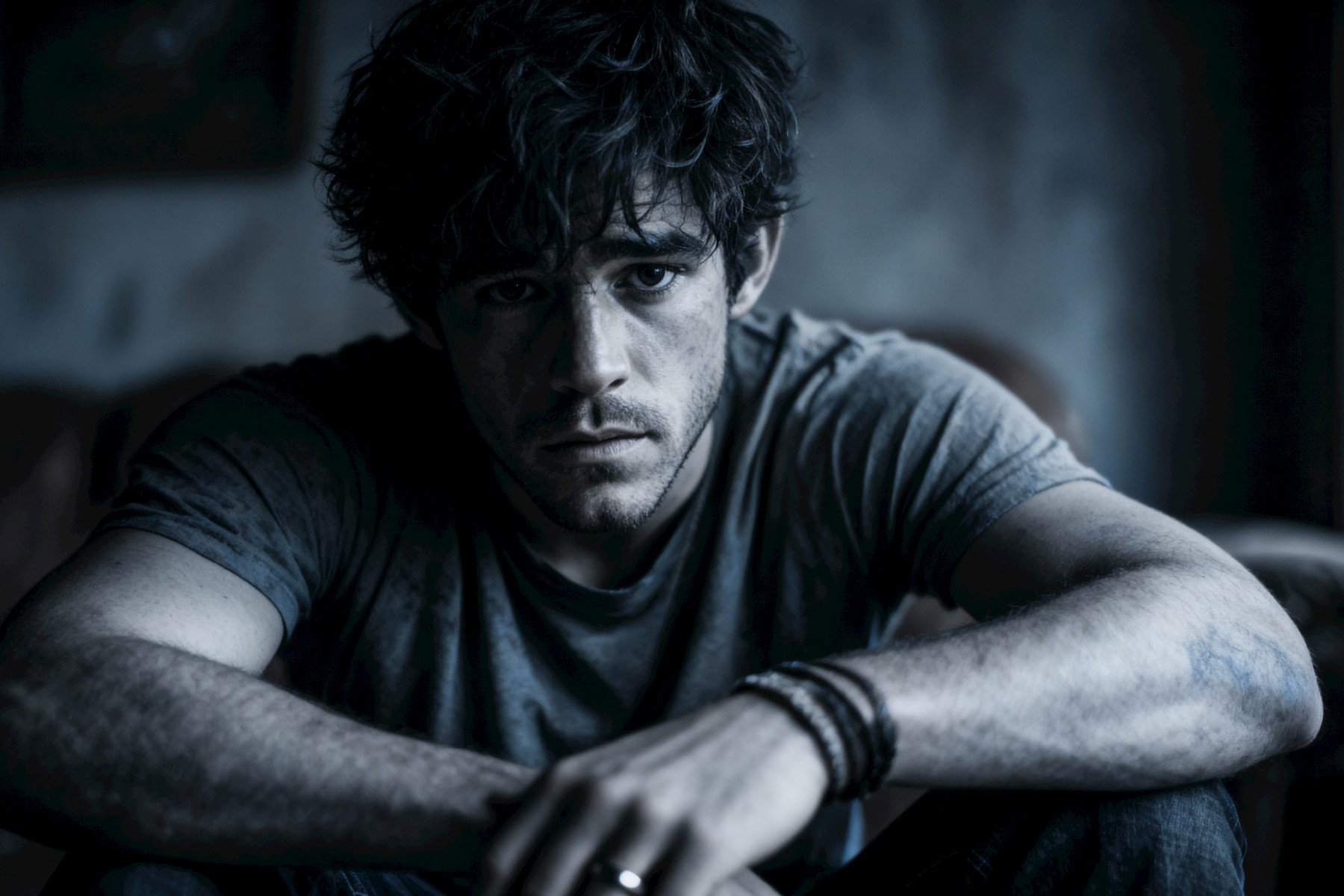
Alex sits in a dim room, hunched forward, blue-tinted and exhausted, staring ahead as if the weight of everything just hit him.
-
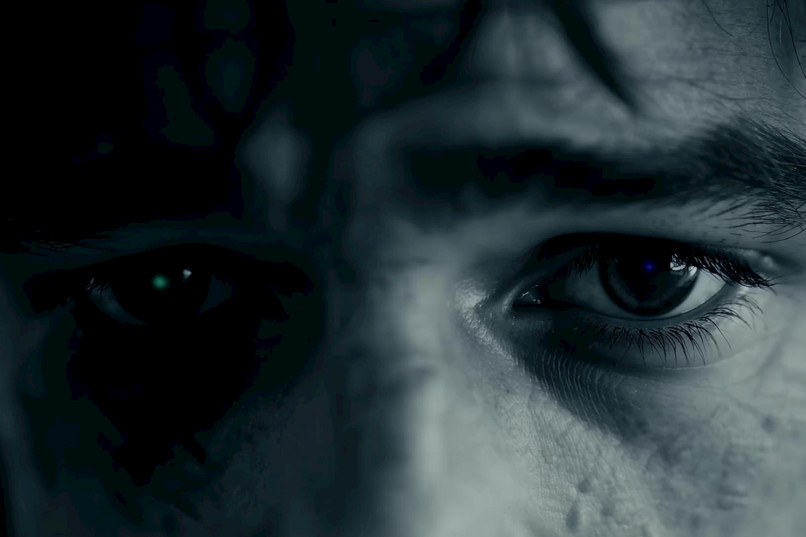
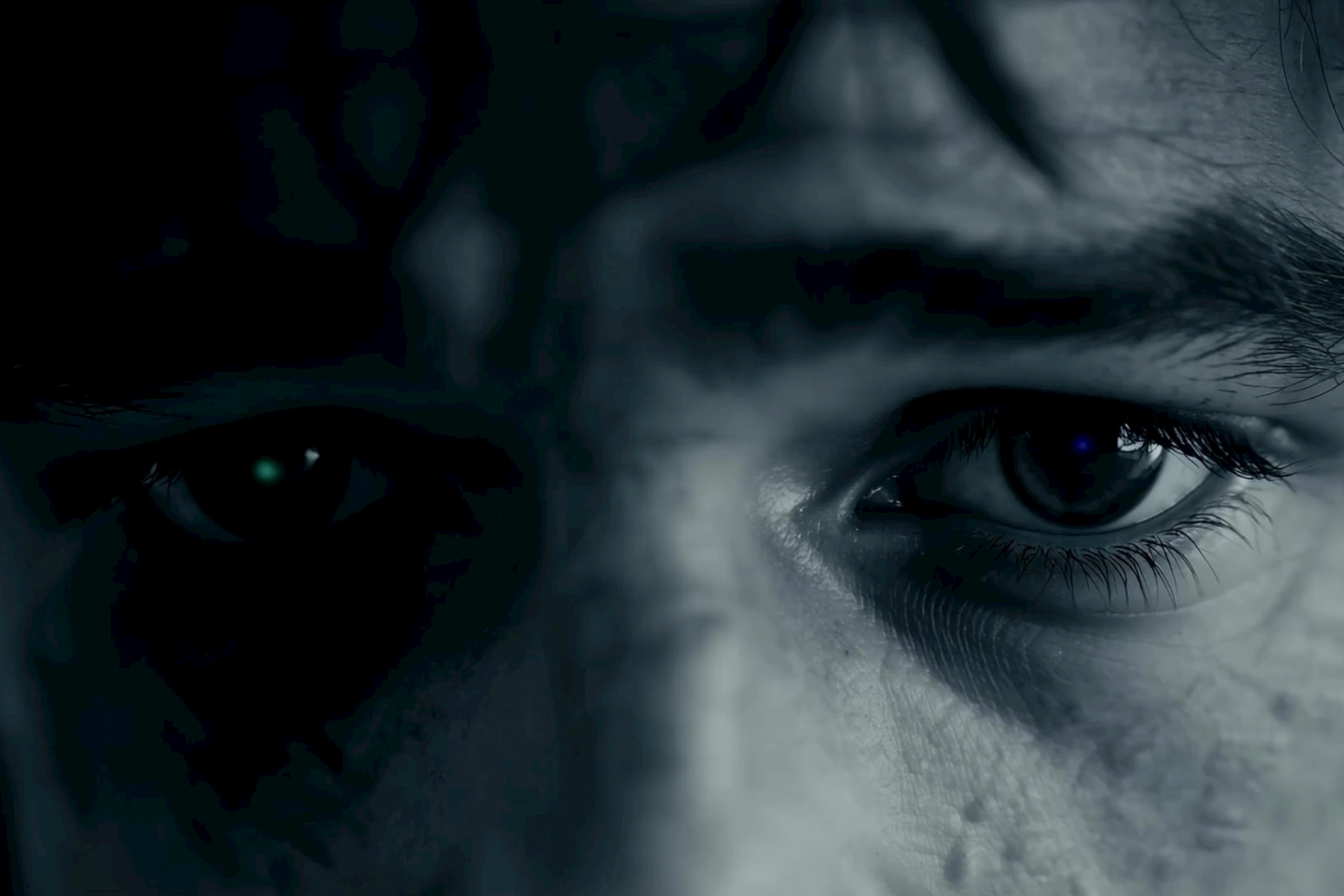
Extreme close-up of Alex’s tired eyes in cold blue light, staring into the dark with quiet, haunted intensity.
-
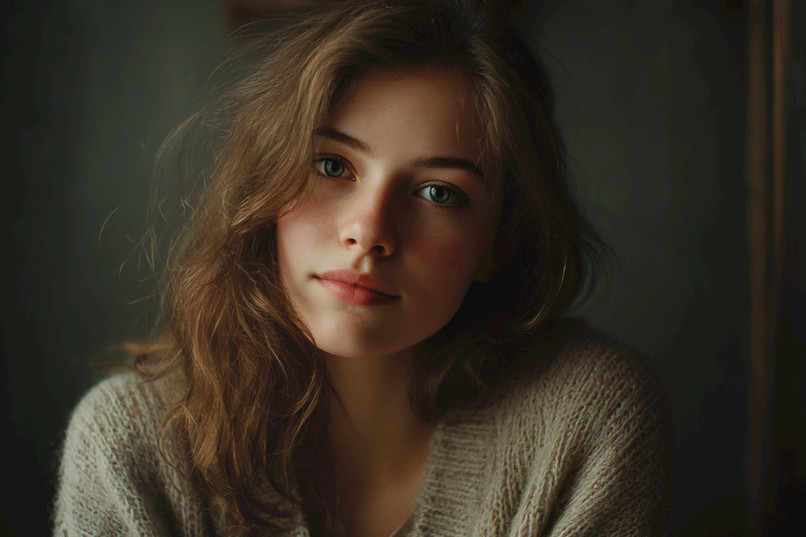
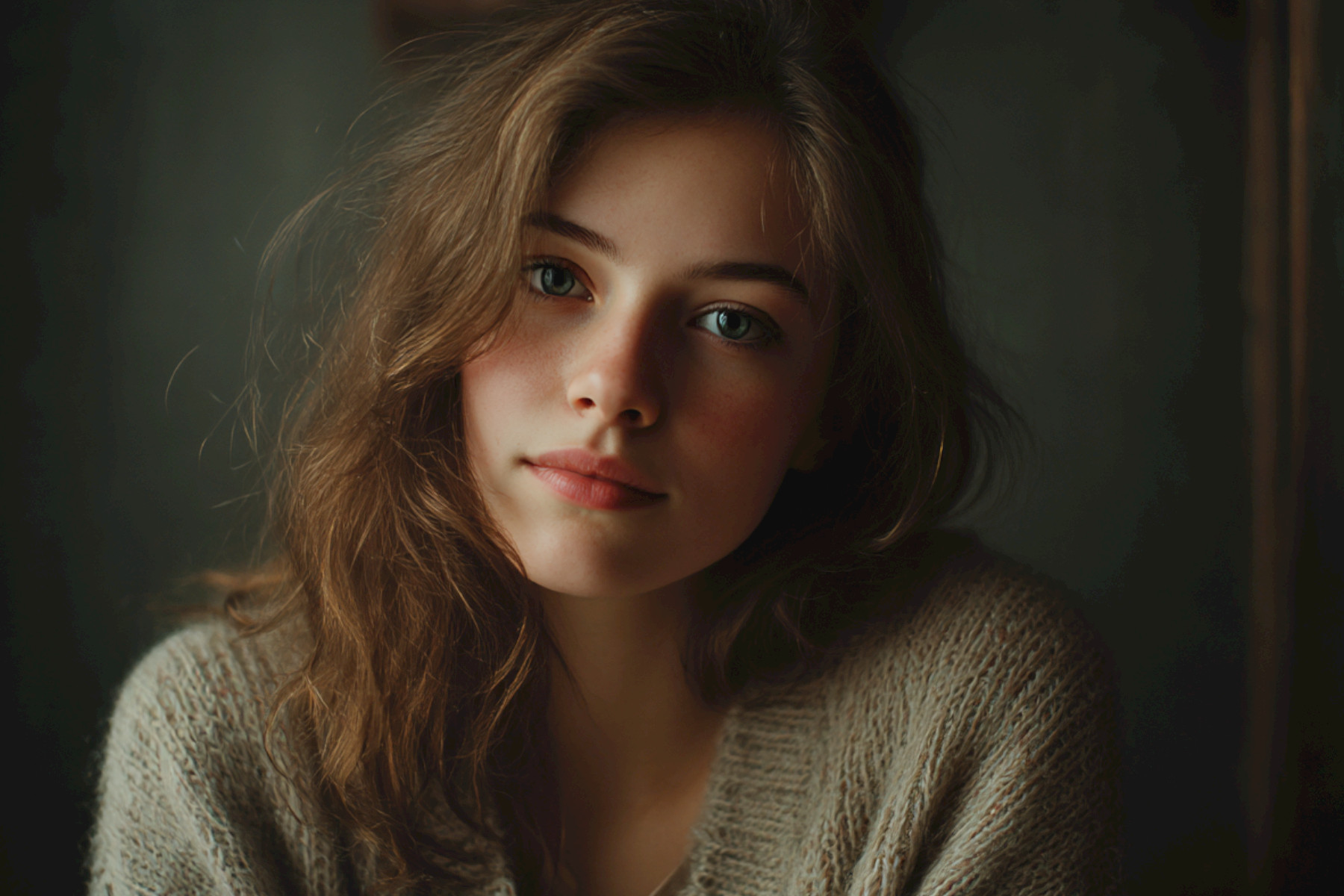
Soft portrait of his ex: a young woman in warm light, gentle eyes meeting the camera with quiet, fragile tenderness.
-
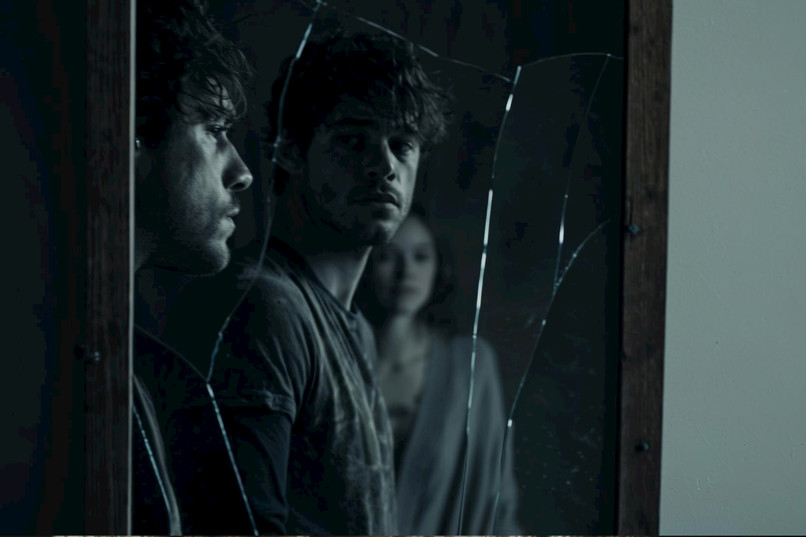
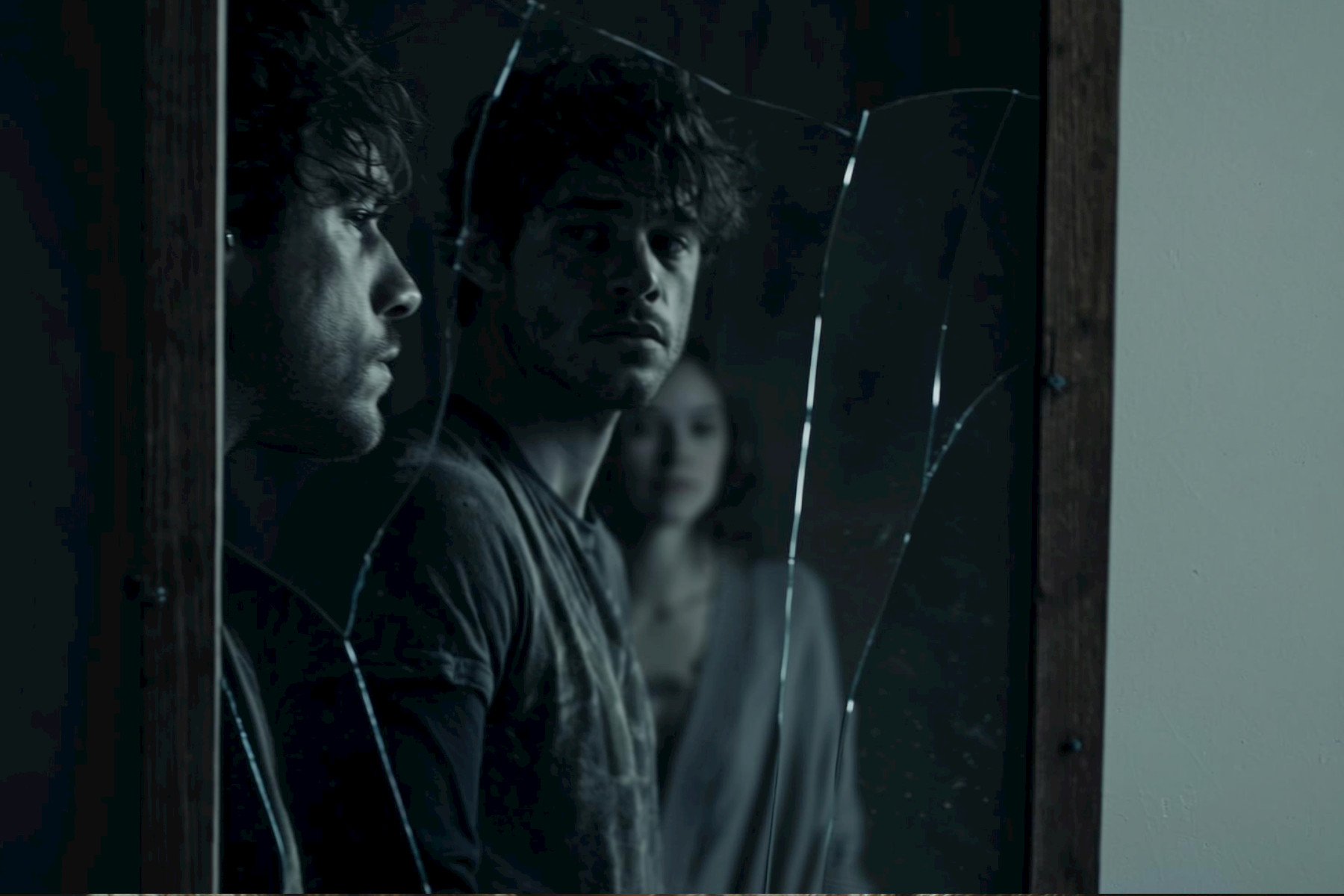
Alex stares into a cracked mirror, his reflection split while a blurred figure of his ex lingers behind him like a ghost.
Inspiration
“Monochrome Heart” was inspired by that very specific, quiet kind of heartbreak where the world doesn’t explode, it just slowly loses its color. The line “this monochrome heart is paying the price” became the core image: someone stuck in emotional numbness after a breakup, living in black and white. I was also inspired by intimate, piano-driven performances and ghostly, minimalist films where memory feels as real as the present. I wanted to turn the familiar breakup story into a visual poem about color, absence, and the fear of feeling again.
What it does
The project is a music video that follows Alex, a young man who lives in a world that has turned monochrome after a breakup. His ex appears only as a ghost-like presence – in reflections, in a cracked mirror, at the end of a hallway, and behind him at the piano – until she finally fades away when color slowly starts to return. Color itself behaves like a character: it hides in his eyes, runs down the wall when he paints a sky, flashes through blue window light and green morning dew, and only becomes stable in the final chorus. The video translates the emotional arc of the song into a visual journey from numbness, through haunting memories, to the first fragile traces of healing.
How we built it
I started by breaking the song into a detailed timeline and mapping specific lines of lyrics to specific shots. Then I designed the two main characters, Alex and his ex, with consistent visual descriptions (age, posture, clothing, mood, lighting) so they would stay recognizable and coherent across all scenes. I wrote a shot-by-shot storyboard in text form, including framing, camera movement, emotional intention, and the “rules” of when color appears or disappears. Using this as a blueprint, I generated and refined the visuals with AI-assisted video tools, iterating on prompts until the style, lighting, and mood matched from shot to shot. Finally, I cut and synced the shots to the music, aligning key visual beats (the ghost, the fall, the cracks, the final close-up) with musical climaxes.
Challenges we ran into
The biggest challenge was keeping visual continuity while working with generative tools. Small changes in wording can produce very different shots, so I had to be extremely consistent with character and lighting descriptions. Another challenge was balancing subtlety and drama: the ex had to feel like a real, painful memory, not a clichéd horror ghost, and the color effects needed to serve the story rather than distract from it. Timing was also tricky: fitting a full emotional arc (ghost, color, cracks, final fade) into precise musical sections meant constantly adjusting shot length and pacing without losing clarity.
Accomplishments that we're proud of
I’m proud that the video feels like a single, coherent world: same Alex, same room, same mood, evolving shot by shot. The ghost of the ex and the behavior of color create a clear, readable metaphor without needing any dialogue. I’m also happy with how tightly the visuals are married to the lyrics – for example, the cracked mirror, the dripping painted sky, the blue and green in the bridge, and the moment when her ghost disappears exactly as color finally starts to stay. On a technical level, I’m proud of managing a complex, multi-shot AI workflow while still keeping the end result intimate and emotionally grounded.
What we learned
I learned how important consistency is when directing with generative tools: repeating the same character and lighting language in every prompt is almost like building a digital “cast and set.” I also learned a lot about using color as storytelling, not decoration – deciding where it must be absent, where it may flicker, and where it has to finally stay. Structurally, the process forced me to think like both a director and an editor from the start: designing shots with the final cut in mind, so that emotion flows from scene to scene rather than living in isolated moments.
What's next for Monochrome Heart
Next, I’d like to refine the edit based on feedback, polish transitions, and explore a hybrid version that mixes these AI-generated visuals with live-action performance. I also see “Monochrome Heart” as a template for a small series of visual songs about emotional states represented as physical worlds (color, gravity, time). In the short term, the plan is to finish a festival-ready cut, create a few key “hero shots” as standalone visuals, and possibly develop an acoustic or live piano version that visually revisits the same story from a slightly different perspective.
Built With
- capcut
- freepik
- hailuo
- higgsfield
- kling
- suno
- veo

Log in or sign up for Devpost to join the conversation.