-
-

LOGO
-
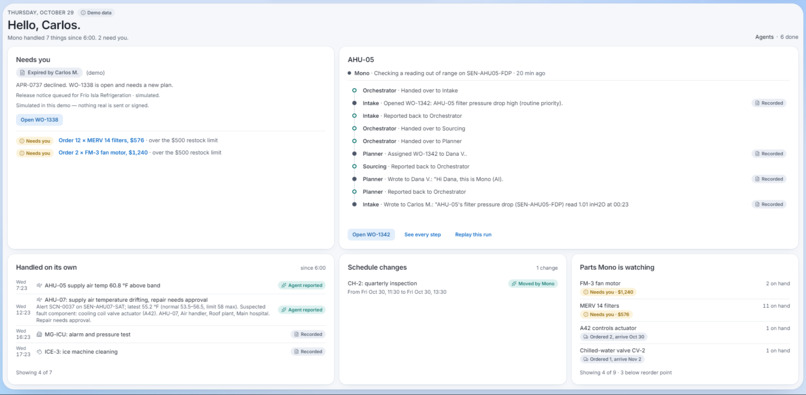
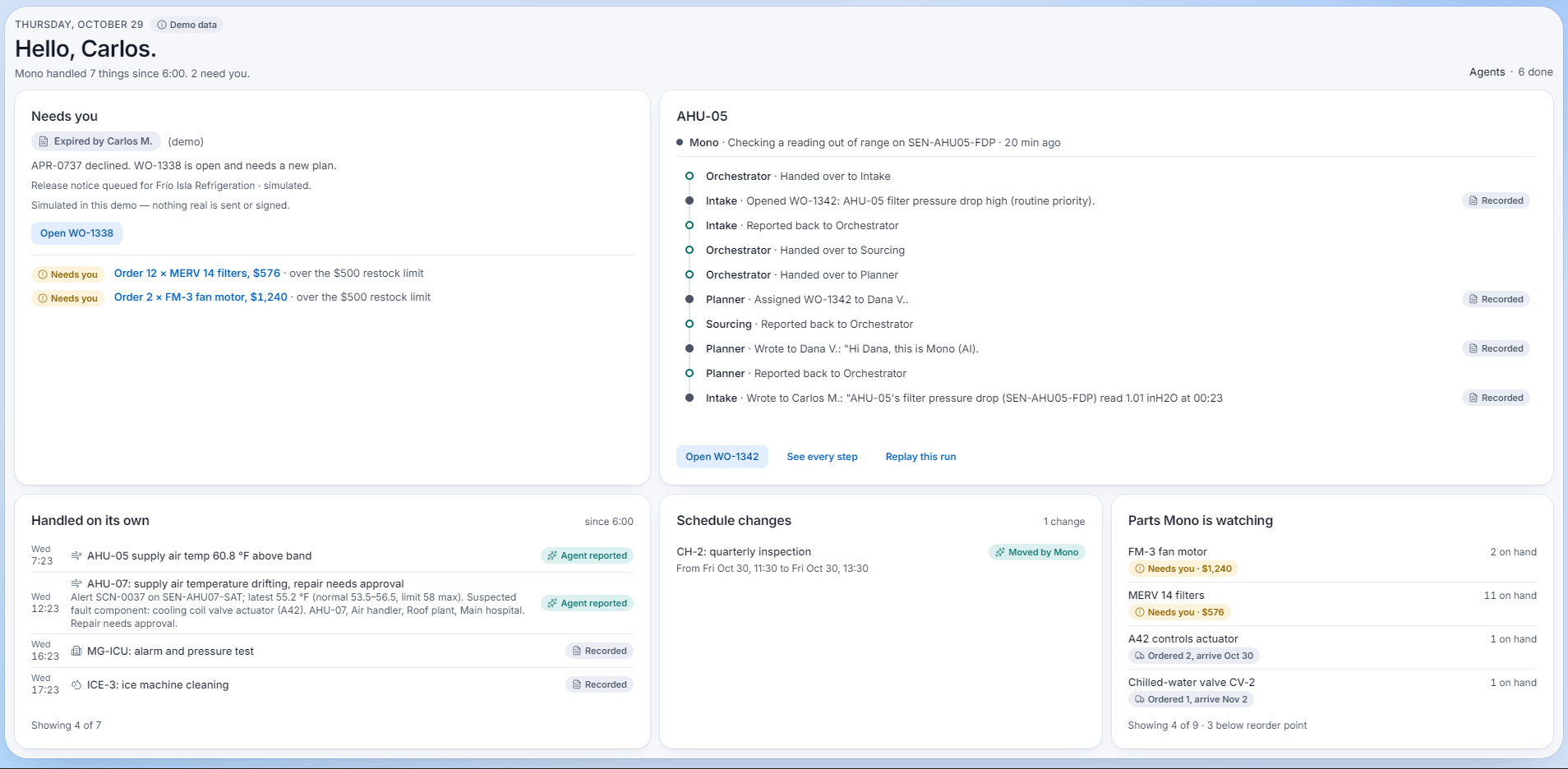
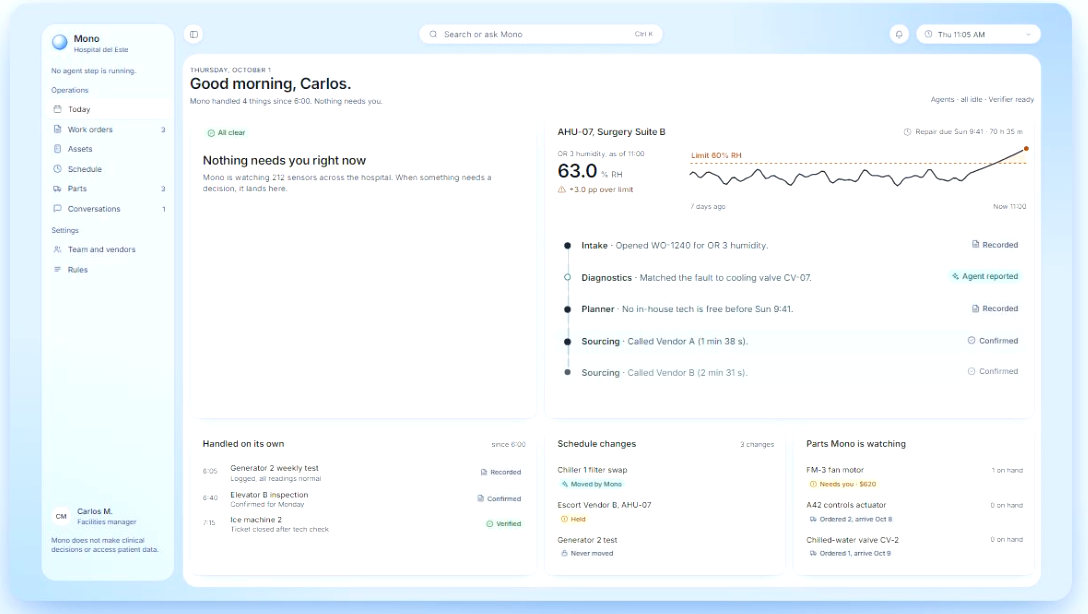
Updated MONO Dashboard (Final Implementation)
-
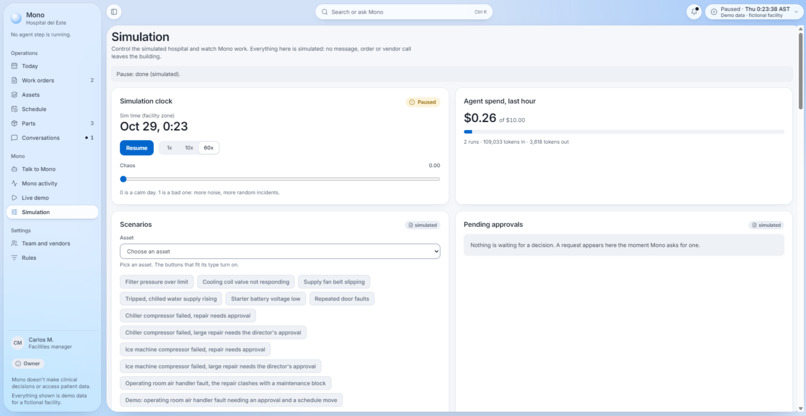
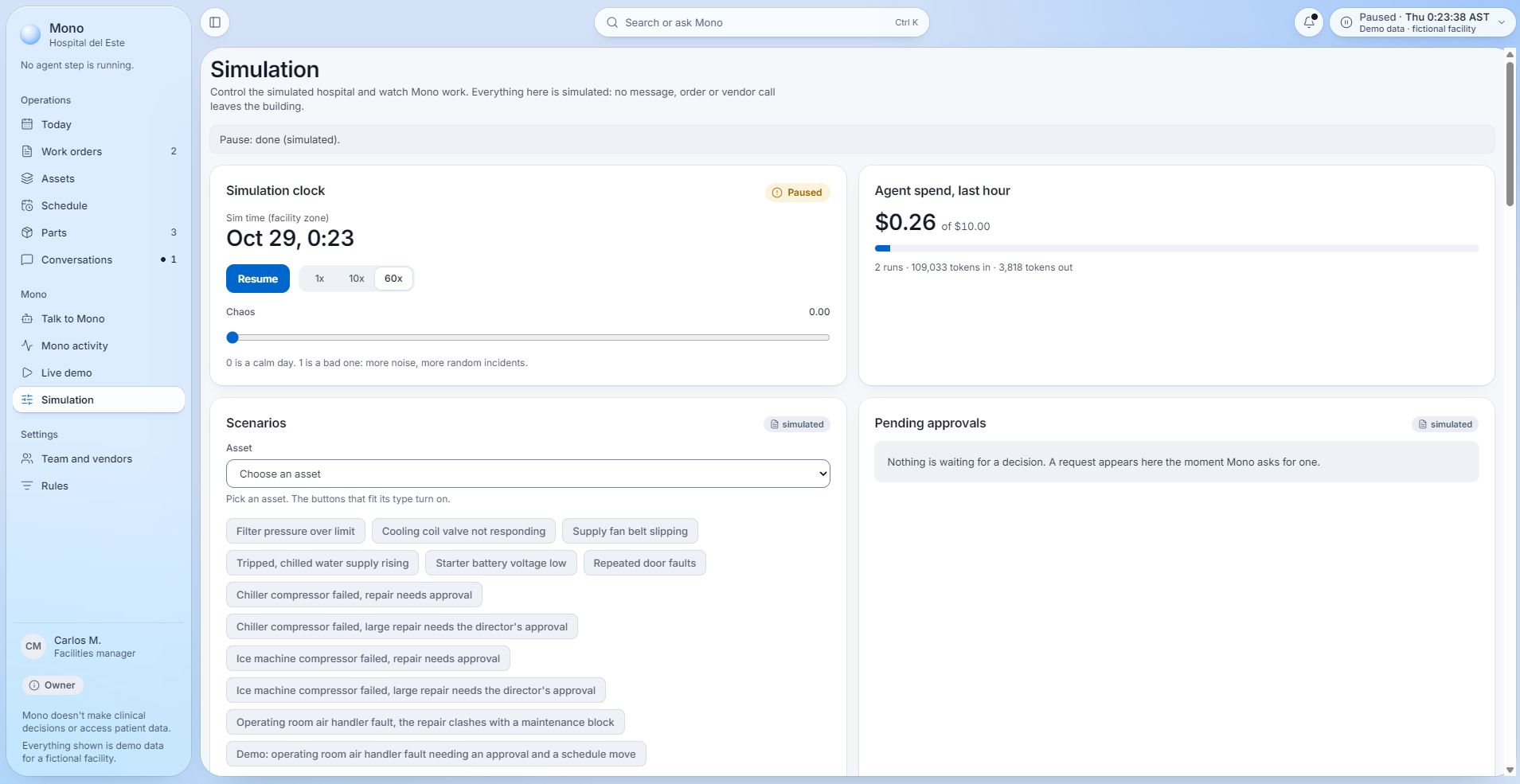
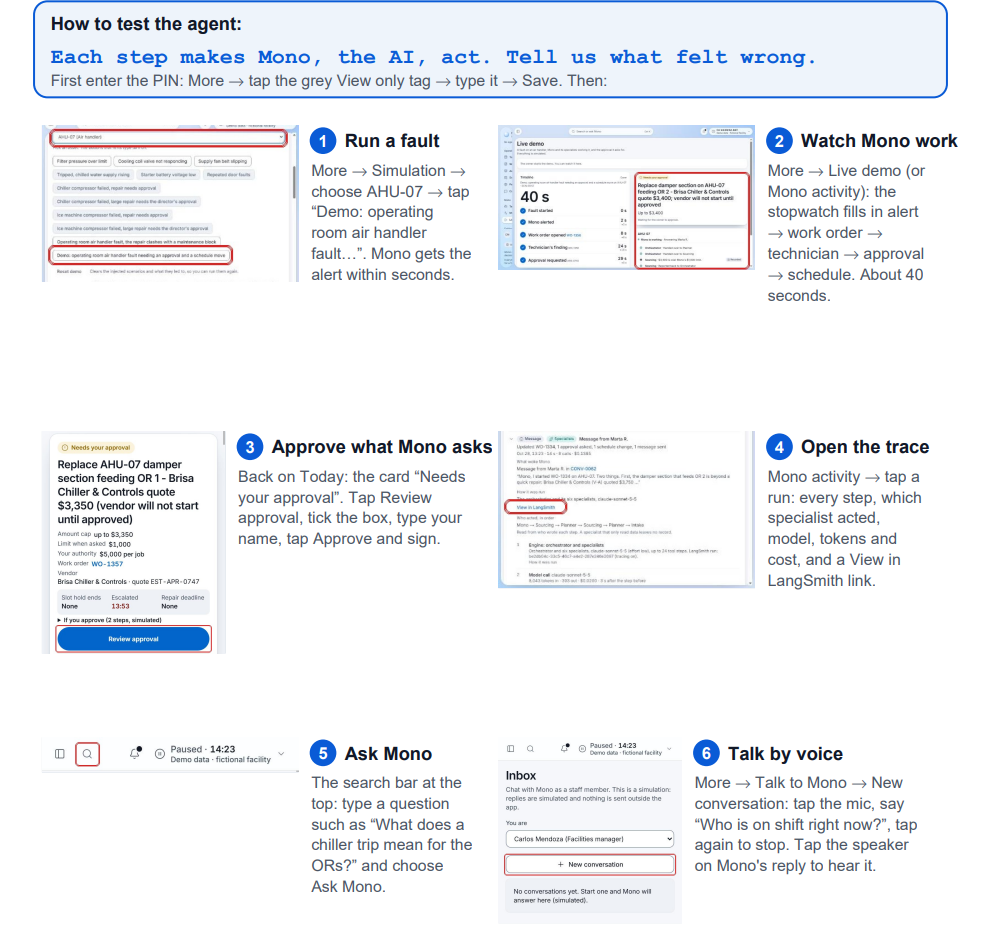
Admin Simulation Panel for simulation engine
-
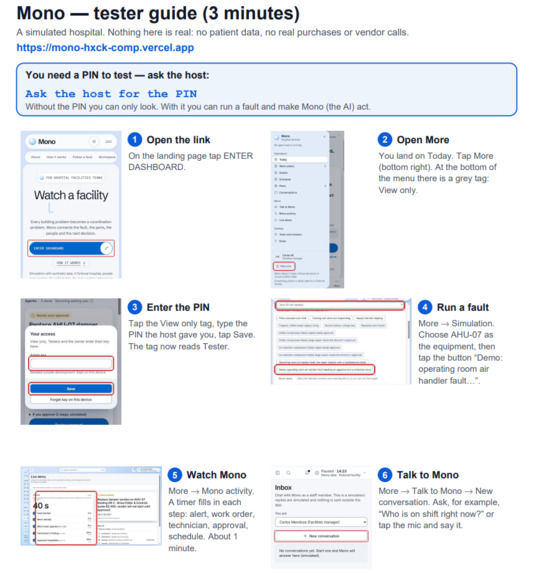
Every Mono answer costs real money: one fault at a time, and press Cancel on it in Simulation when you are done.
-
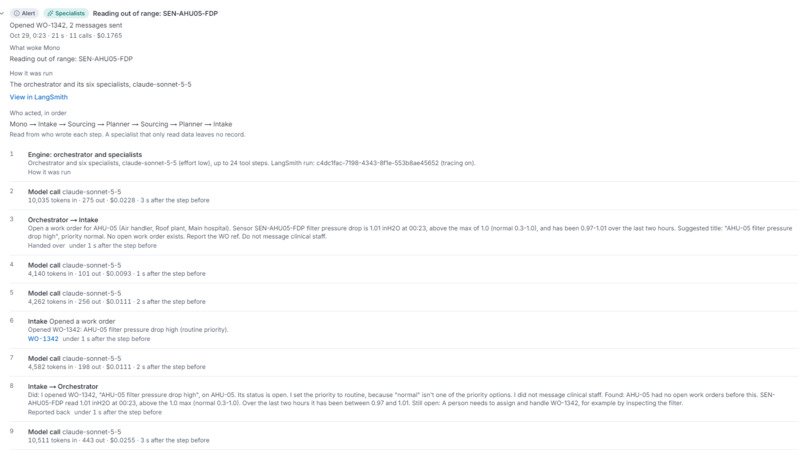
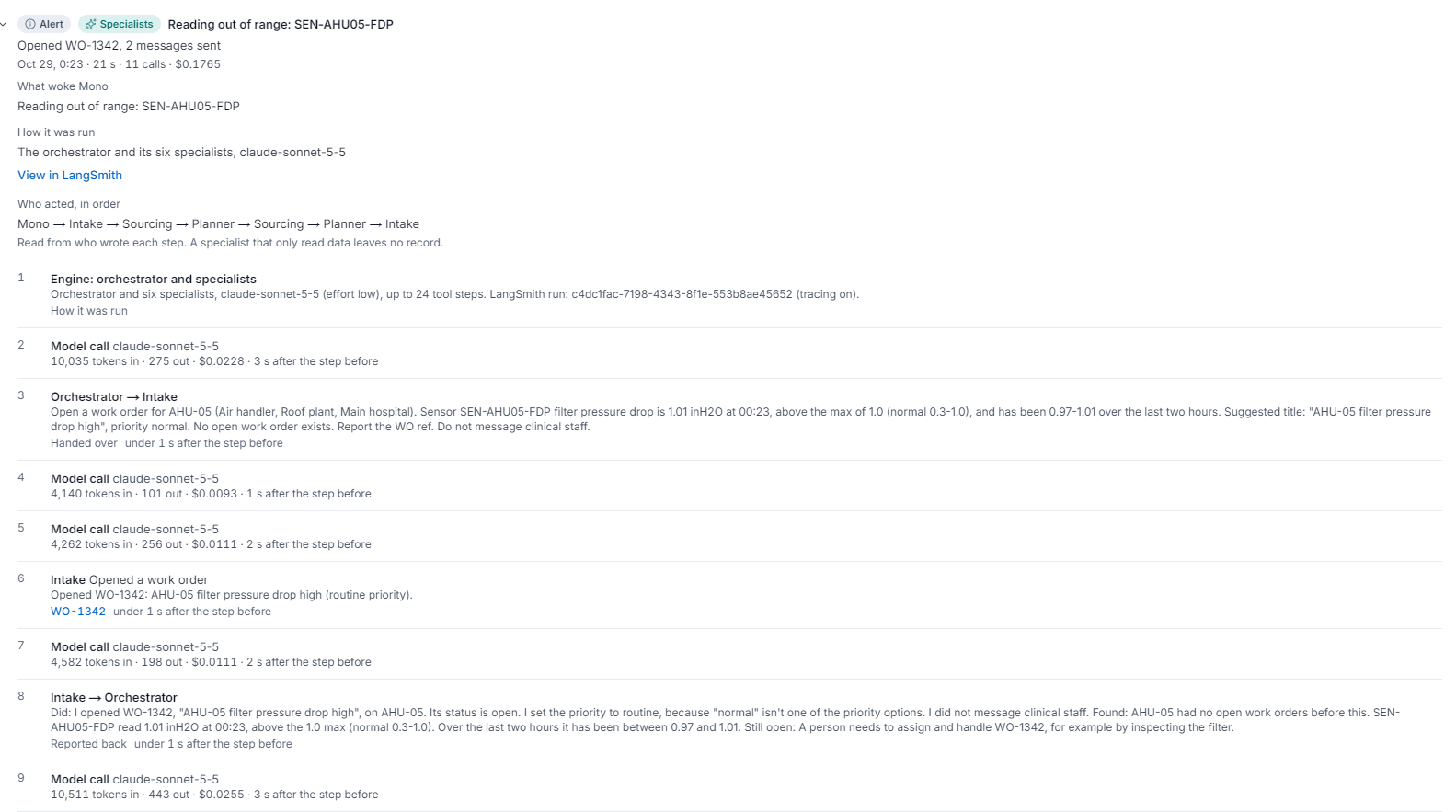
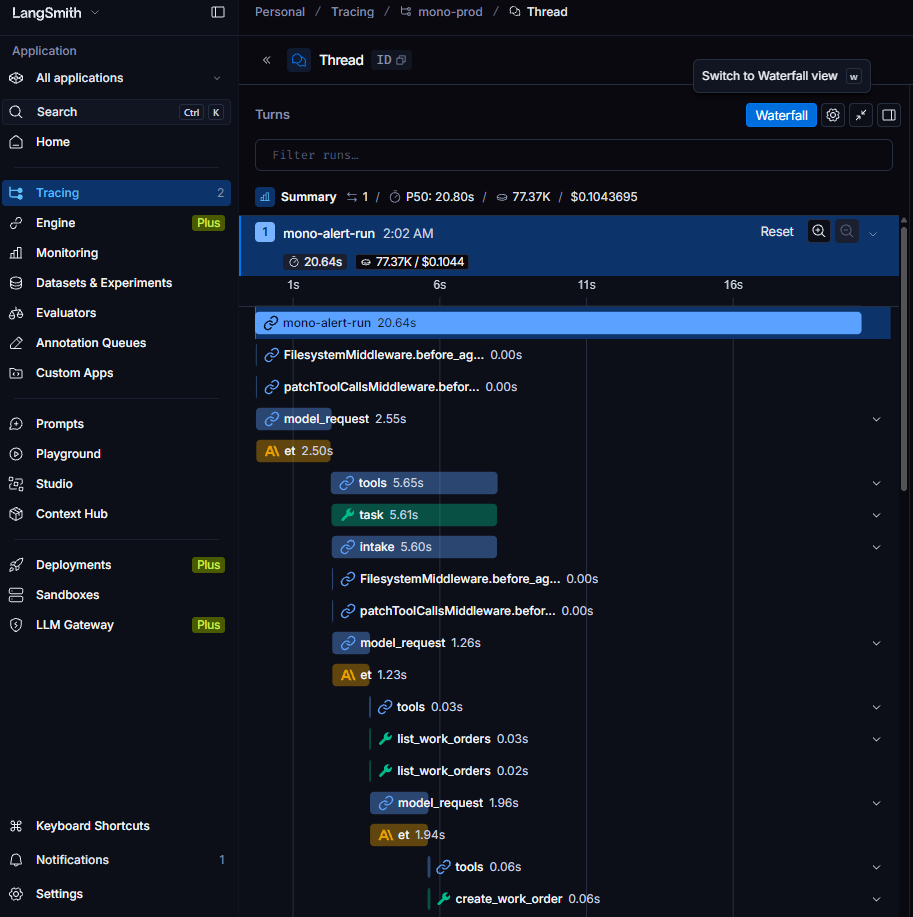
MONO AI Tracing for Deep Agent Orchestration
-
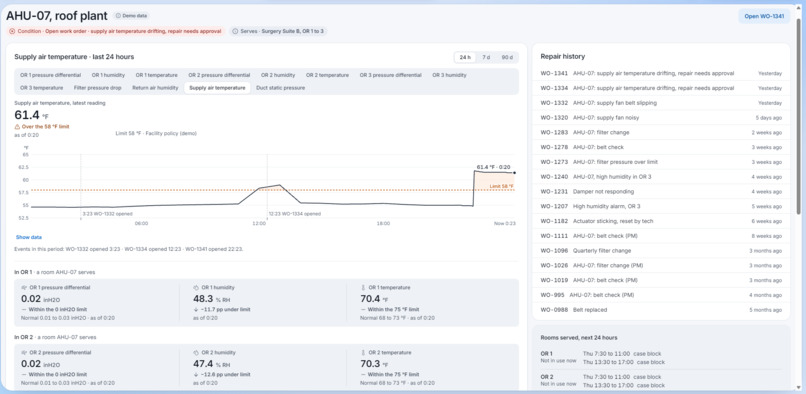
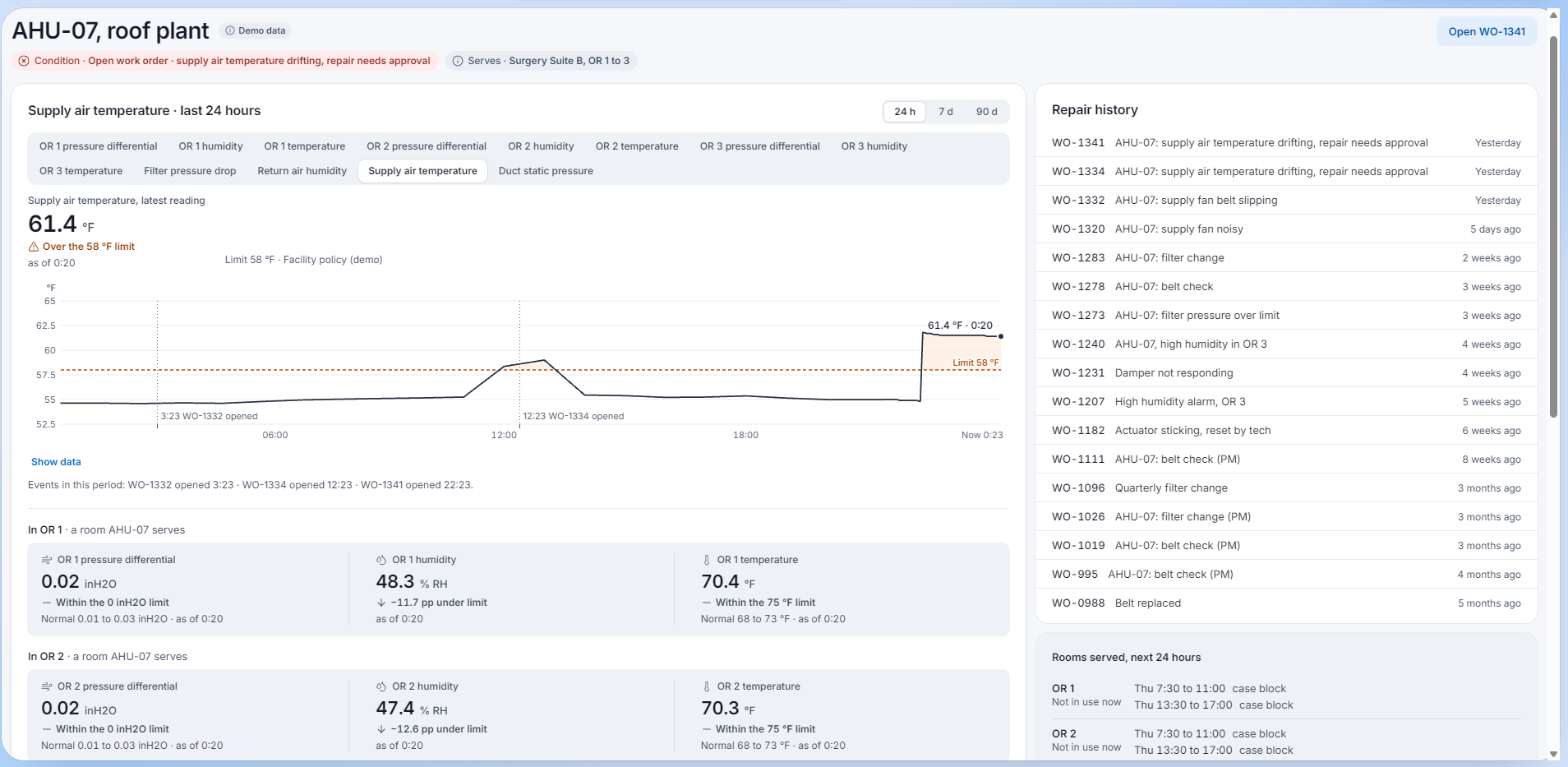
MONO Asset Page (Air Handler)
-
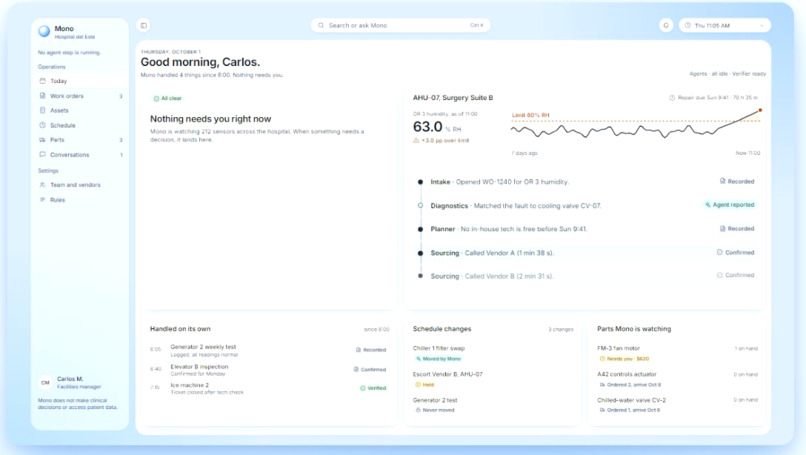
Early concept for the MONO Dashboard
-
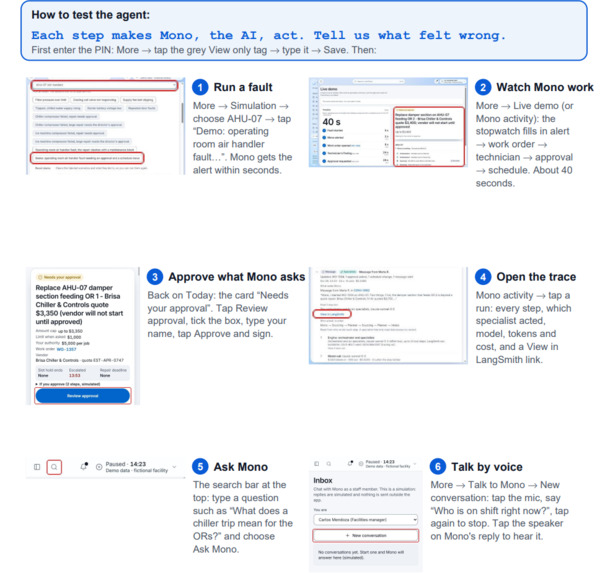
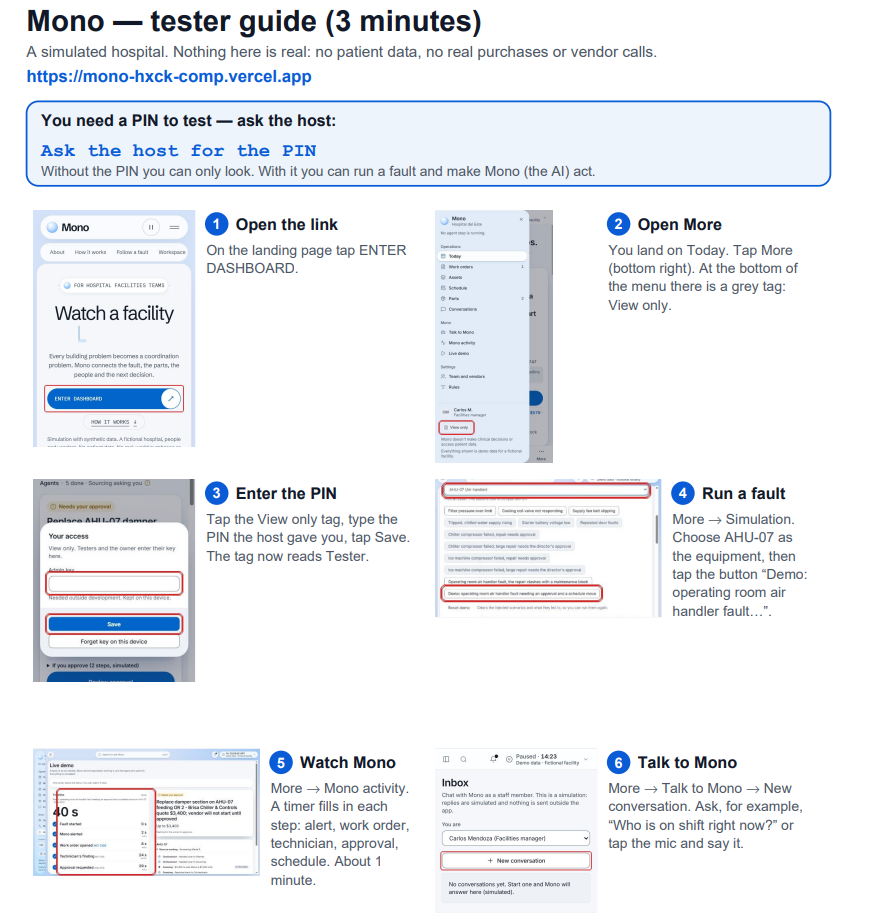
How to test the agent guide
-
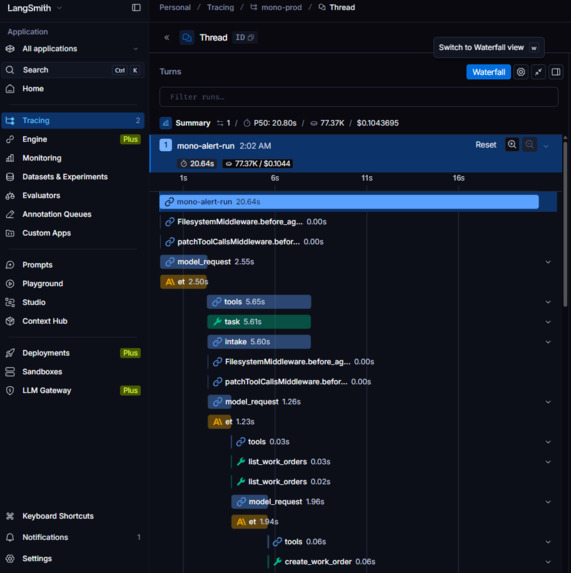
Internal Lang Smith Tracing
-
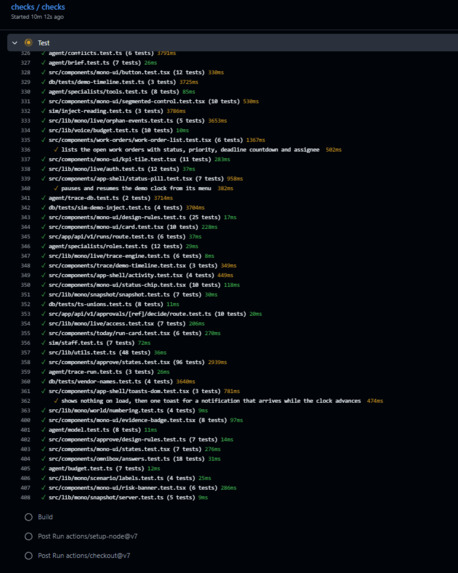
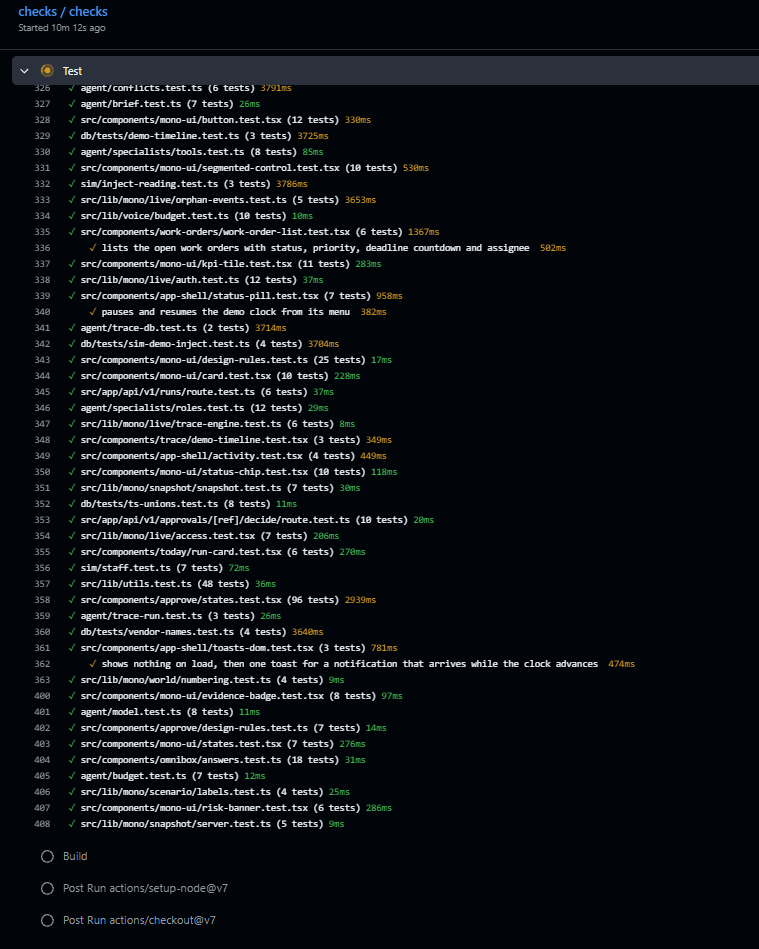
CI/CD Pipeline
-

Twitter Meme


How I and Claude, Built MONO in 48 Hours
A completely reasonable guide to building an AI healthcare startup.
1. Start with Twitter (X)
Search “AI healthcare.” Spend two hours looking at what YC startups are building. Realize everyone is building on the same layer.
Decide to build one layer below.
2. Go back to Twitter
Watch more SaaS demos. Realize hospitals have problems beyond patient care: infrastructure, maintenance, and operations.
Boom. We have an idea.
3. Make it look like Apple
Hospitals = clean, modern, sterile.
Read Apple’s design guidelines. Have Claude turn them into a Markdown file with design criteria. Follow those criteria religiously, with a little spice.
Back to Twitter for landing page inspiration.
We like blue. Twitter likes blue.
Blue and white it is.
4. Pick the stack
Vercel, Supabase, Claude, LangGraph, and ElevenLabs.
Simple, right?
5. Realize we’re missing two things
To build an AI that coordinates hospital infrastructure, we need:
- A hospital.
- An AI orchestration agent.
We have neither.
So naturally, spend 12 hours building an entire simulated hospital: sensors, equipment, maintenance staff, vendors, inventory, work orders, and a simulation engine connected to Supabase.
Now we have a hospital. A fictional one, but its coordination problems are very real.
6. Turn Claude into an engineering department
One coordination session. Five working sessions.
Opus for heavy thinking. Sonnet 4.5 for building.
Set up CI/CD. Push to main. Deploy. Break things. Fix things.
Repeat approximately forever.
7. Give the hospital a brain
Build the orchestration system with LangGraph.
Connect the agent to the simulation, tools, database, and maintenance workflows so it can investigate failures, find people and parts, plan repairs, and execute the coordination work.
Add ElevenLabs because apparently our AI also needs a voice.
8. Accidentally create two AI best friends
Redeem $25 in Claude API credits.
Forget to close an agent-to-agent communication loop.
Watch two agents spend an hour talking to each other.
Goodbye, $25.
Hello, another $100 in credits.
9. Fight the infrastructure
Supabase connection issues. CI/CD problems. Testing environments breaking.
Move testing to AWS. Fix the data. Redeploy.
It’s now Saturday, 1:45 AM.
Something else breaks.
Of course.
10. Remember we need a presentation
Ask Claude to make slides.
Horrible.
Five prompts later: acceptable.
Boom. Pitch deck.
11. Remember we also need a video
It’s 2:35 AM.
Go back to Twitter. Find video inspiration. Use Motion for editing and ElevenLabs for the voice.
Somehow, we have a promotional video.
12. Ship MONO
After 48 hours, we have:
- A simulated hospital with equipment, sensors, staff, vendors, and inventory.
- An AI orchestration system connected to maintenance workflows.
- A voice integration.
- A website.
- A pitch deck.
- A promotional video.
And a significantly less reasonable sleep schedule.
What Did We Learn?
- 20% engineering.
- 20% Claude.
- 20% debugging.
- 40% Twitter.
Percentages are scientifically unverified.
MONO helps hospitals keep their infrastructure running so patient care doesn’t stop.
Built for the Caribbean AI Summit Hackathon in Puerto Rico.
Powered by AI, questionable sleep schedules, and an unreasonable amount of Twitter (X).
WATCH THE FULL APPLICATION DEMO
The first video is MONO’s promotional ad. For a step-by-step walkthrough of the application and its maintenance workflow, watch the full demo through the YouTube link below.
Built With
- aws-free-mirror-service
- claude
- codex
- elevenlabs
- github
- github-actions
- langgraph
- next.js
- postgresql
- react
- supabase
- tailwind/css
- typescript
- vercel


Log in or sign up for Devpost to join the conversation.