-
-
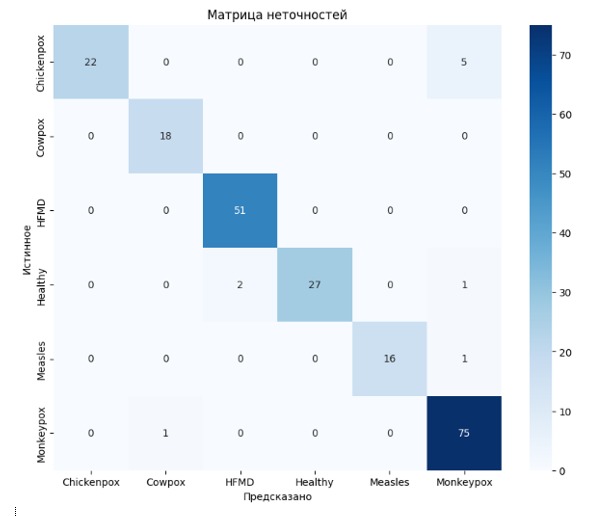
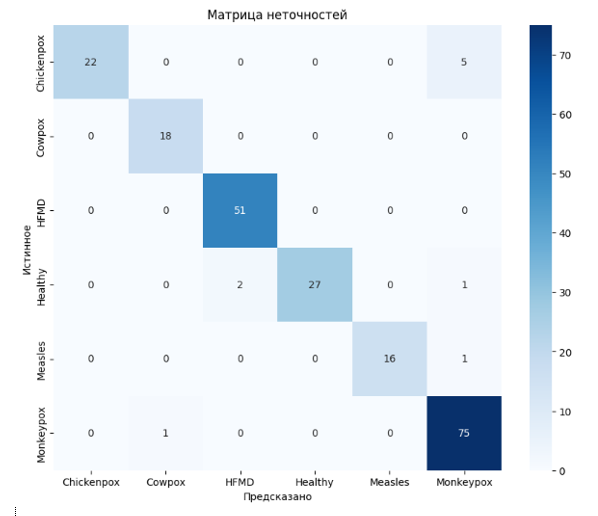
matrix of mistakes
-
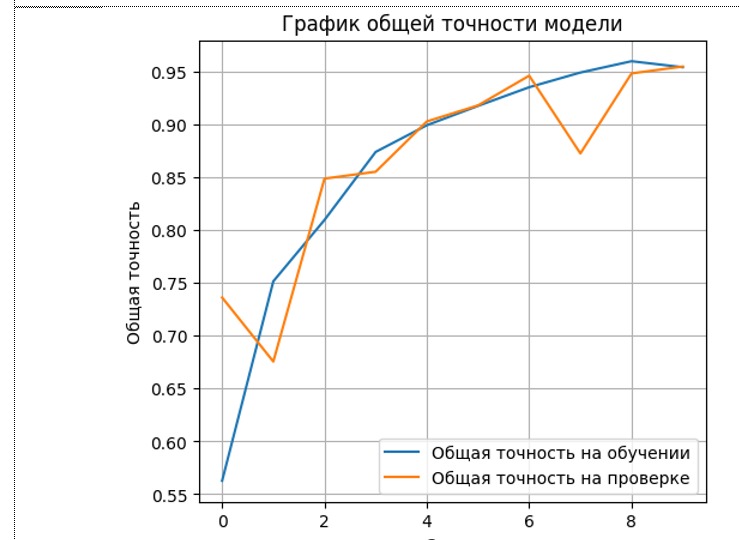
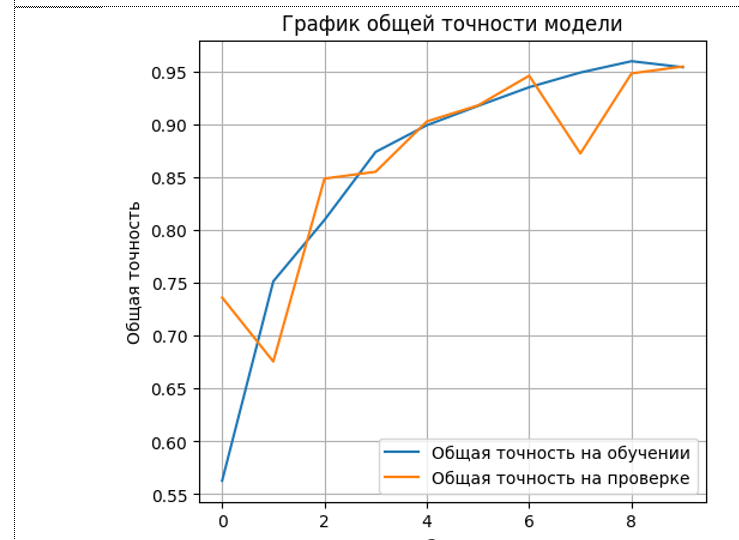
Graph of model acuracy with difrent epoches
-
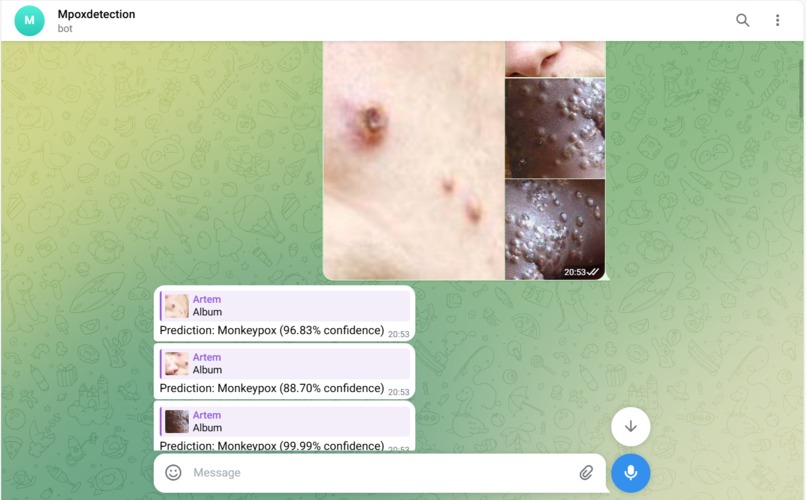
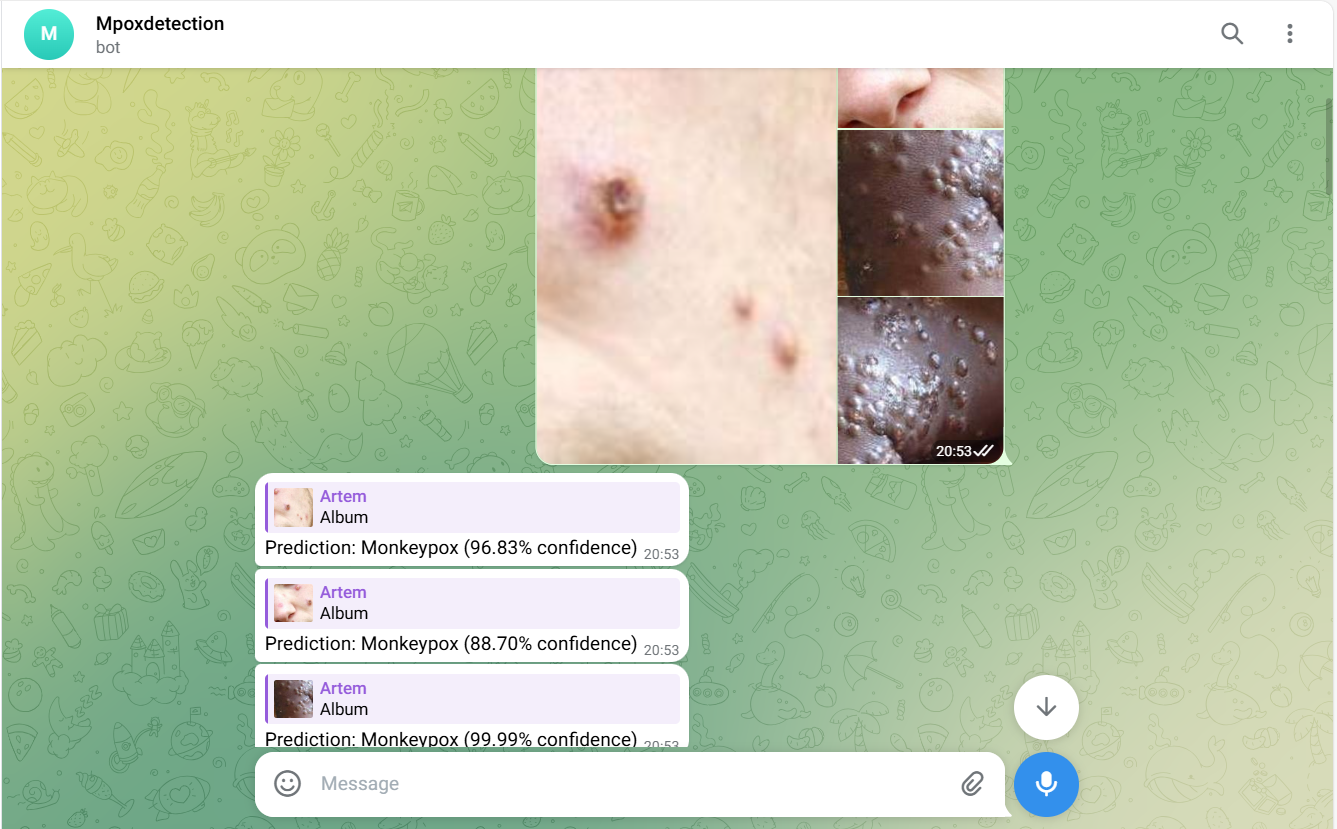
how is it looks from users perspective
The global outbreak of monkeypox (mpox) declared a Public Health Emergency by the WHO in 2022 highlighted the urgent need for effective and accessible diagnostic tools. Inspired by the power of AI in medical imaging, I set out to create an accurate and accessible solution to aid healthcare providers in diagnosing mpox and related skin diseases.
This project aims to address challenges in public health, particularly in regions with limited medical resources. I developed the model using the Keras and TensorFlow libraries, training it on the MSLD v2.0 dataset, which contains over 2500 images across six categories of skin conditions. The VGG16 model was fine-tuned by freezing the first 12 layers and training the last four convolutional layers and fully connected layers. To address data limitations and improve generalization, data augmentation techniques such as rotation, scaling, and flipping were applied. Performance metrics such as precision, recall, F1-score, and accuracy were used to evaluate the model, achieving an overall accuracy of 95%.
Challenges
Some categories in the dataset had significantly fewer samples, leading to potential biases. I mitigated this by applying synthetic data augmentation techniques.
Balancing model complexity and computational efficiency while maintaining high accuracy posed challenges, especially for deployment in low-resource settings.
Achivements
- Achieving 95% accuracy for a complex multi-class classification problem.
- Publishing my research in the Vestnik Nauki scientific journal, recognized as a significant contribution to AI in healthcare. link
- Receiving 1st place in the National Scientific Project Competition, demonstrating the project’s societal and technical impact.
- Developed a Telegram chatbot for real-world use, making the diagnostic tool accessible to a broader audience.
Through this project, I gained hands-on experience in training convolutional neural networks, fine-tuning pre-trained models, and applying advanced data augmentation techniques. I also learned how to overcome challenges related to dataset limitations and deploy AI solutions in practical scenarios. This project deepened my understanding of how AI can address public health issues and inspired me to pursue further research in this field.
Future plans
- Expanding the dataset to include more diverse samples across demographics and skin types to enhance model generalization.
2.Complementing the Telegram chatbot with a web portal for greater accessibility. - Incorporating additional skin conditions to make the tool more comprehensive.
4.Partnering with clinics and NGOs to test and refine the tool in real-world healthcare settings.
Built With
- keras
- msldv2.0
- numpy
- python
- scikit-learn
- seaborn
- telegram
- tensorflow


Log in or sign up for Devpost to join the conversation.