-
-
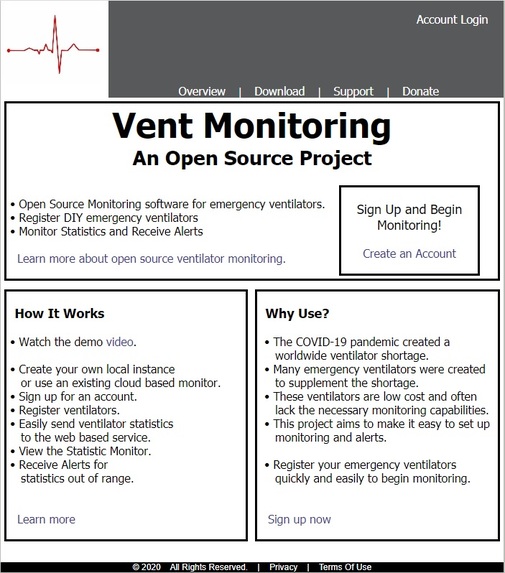
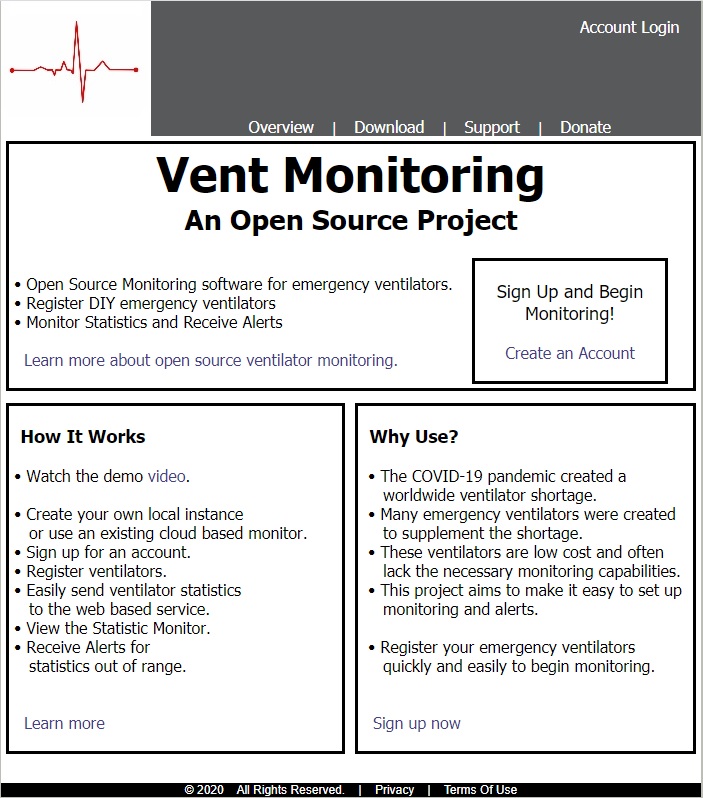
Main Page
-
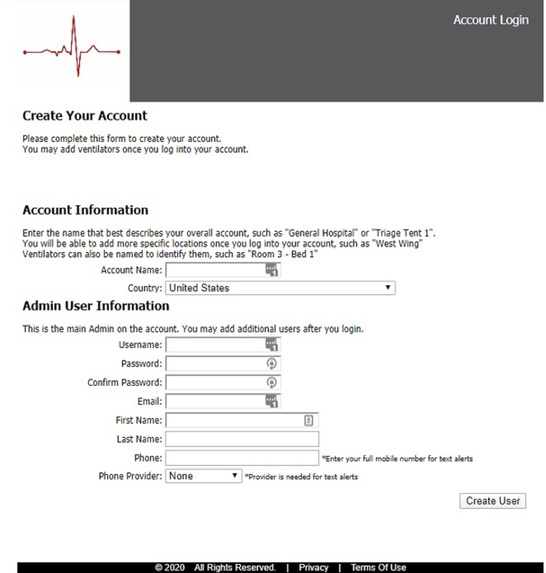
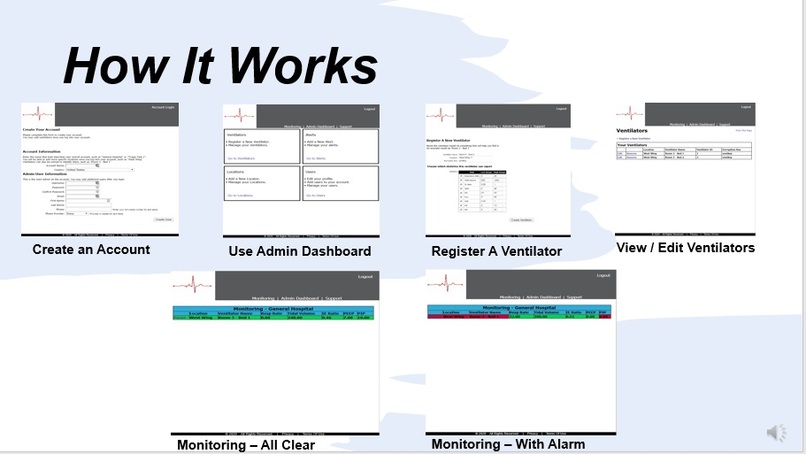
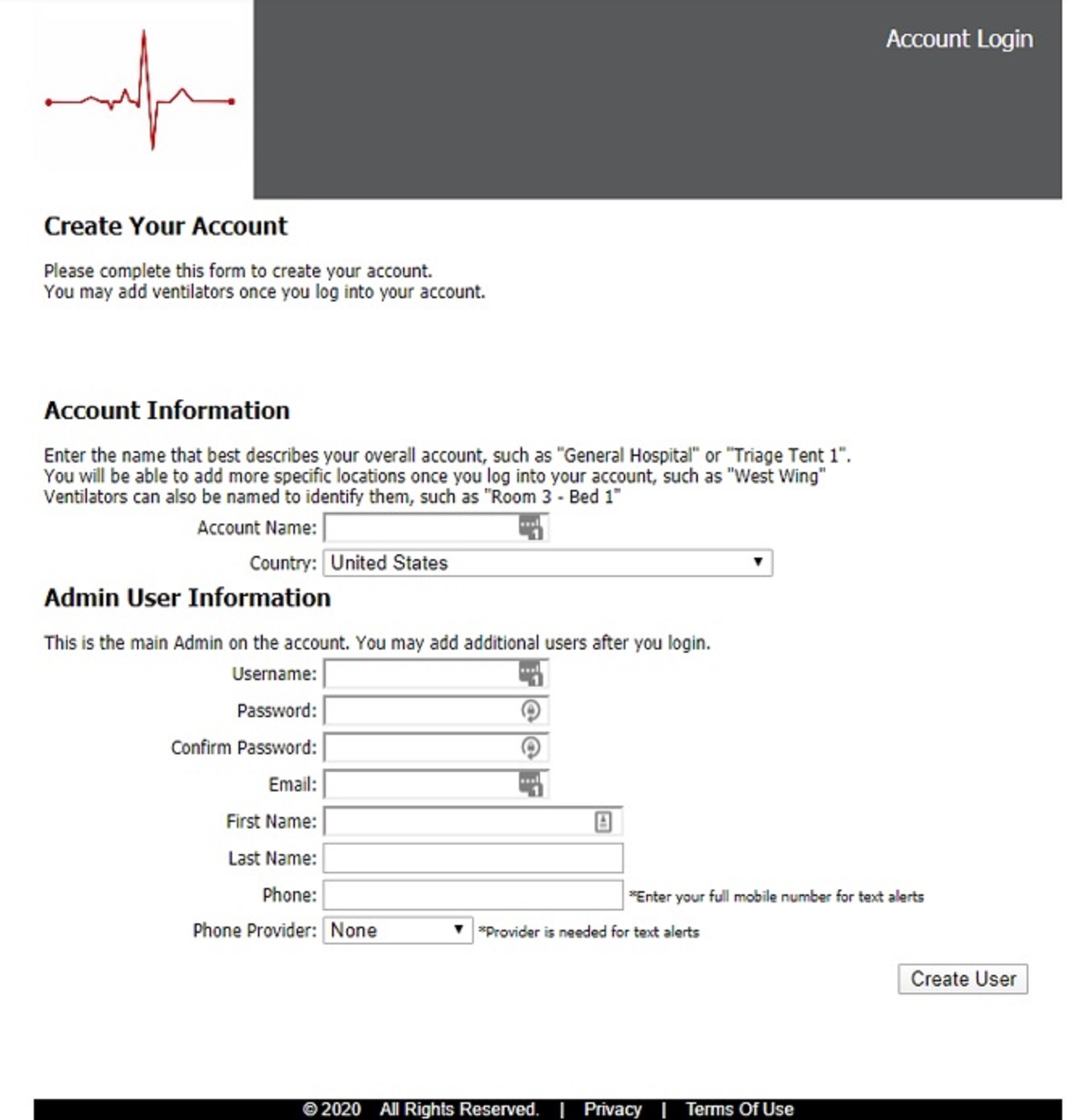
Create An Account
-
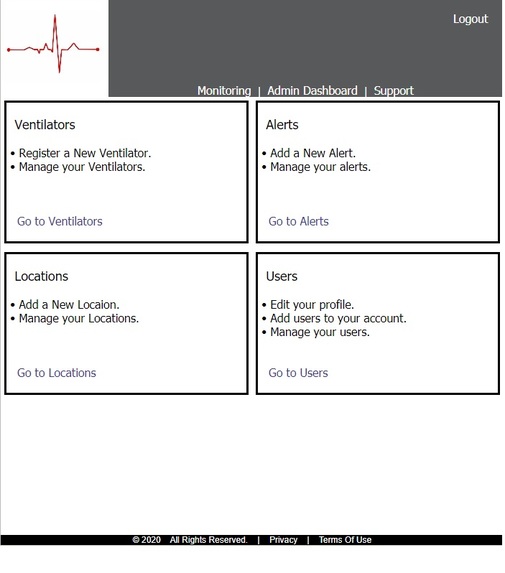
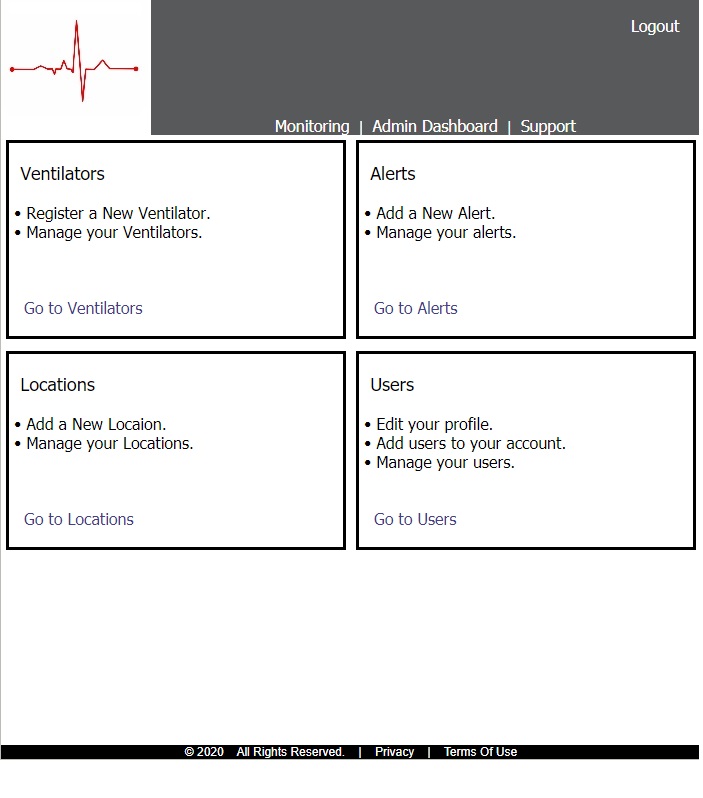
Administrator Dashboard
-
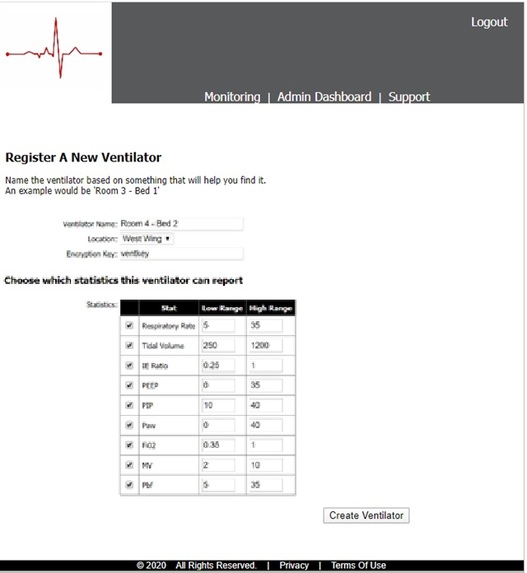
Register A Ventilator
-
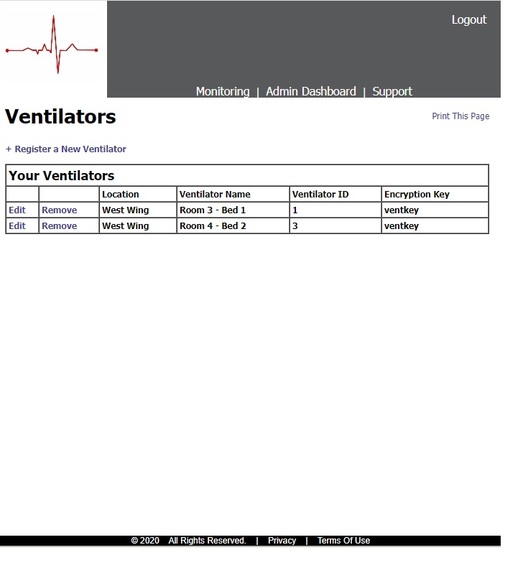
View Ventilators
-
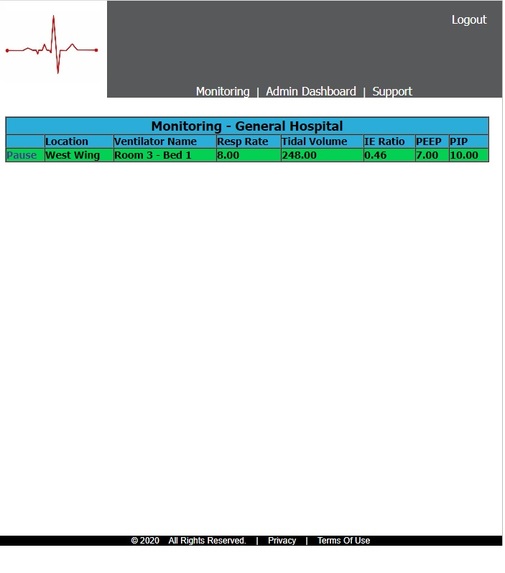
Monitoring Service - All Clear
-
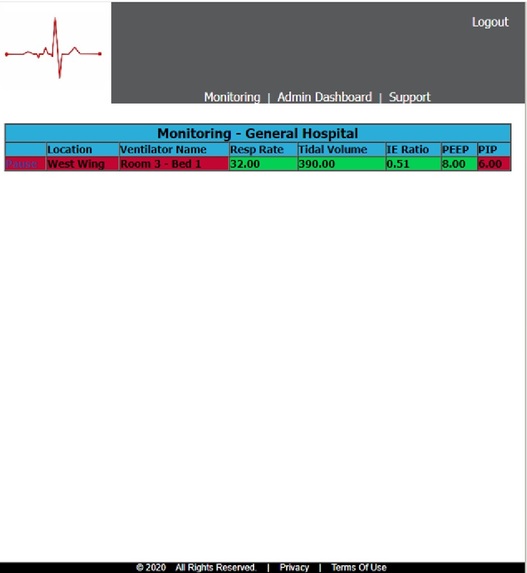
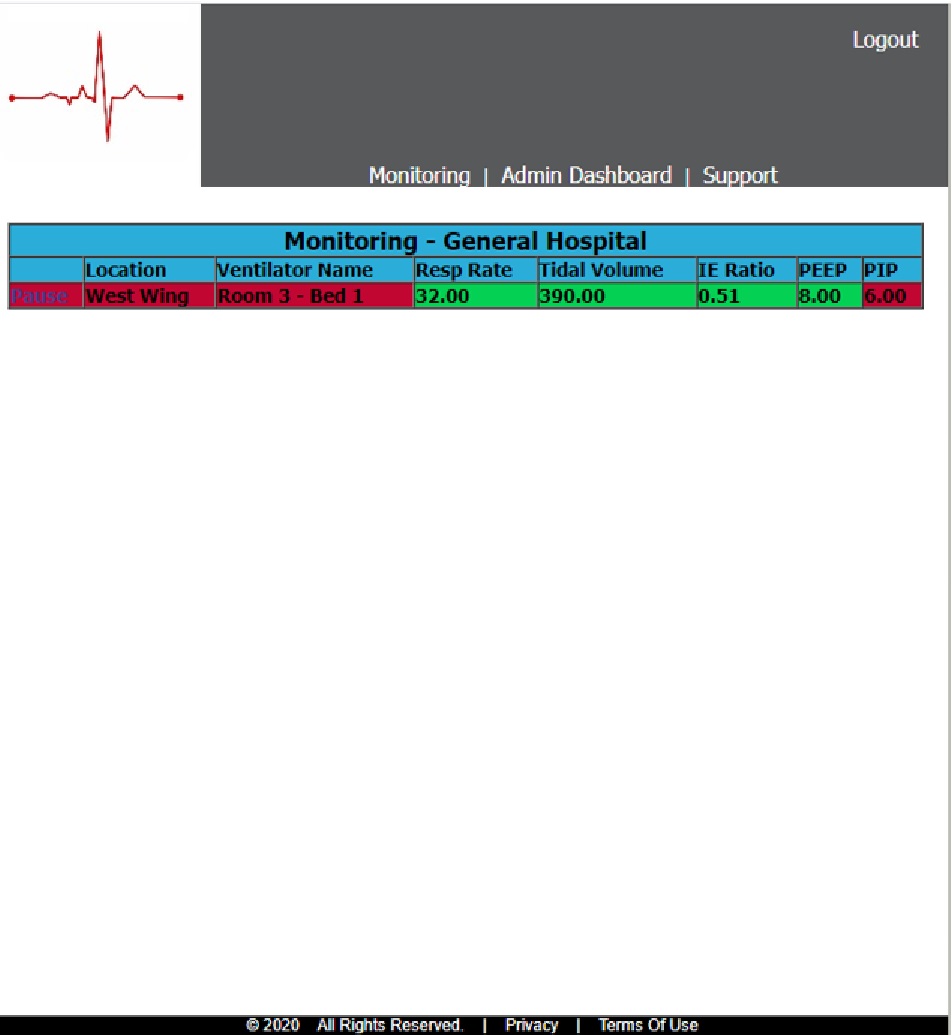
Monitoring Service - Active Alarm
-
Welcome
-
The Problem
-
The Solution
-
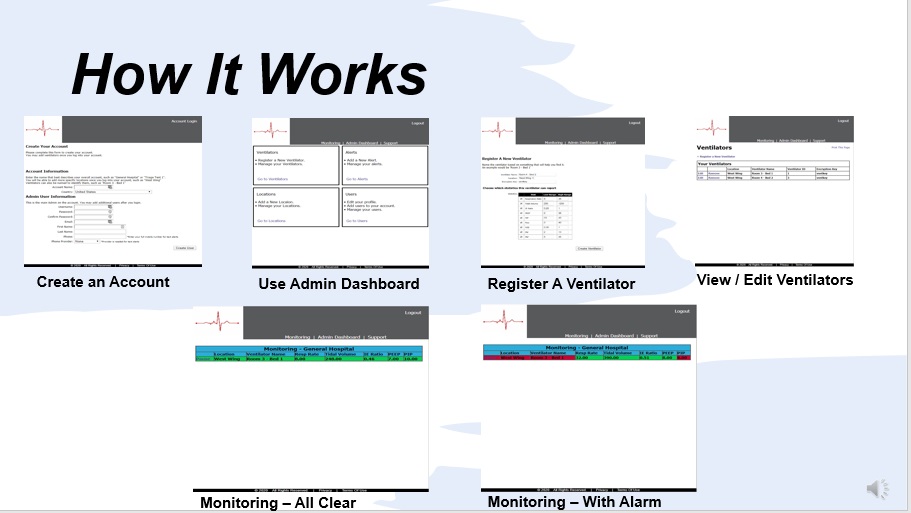
How It Works
-
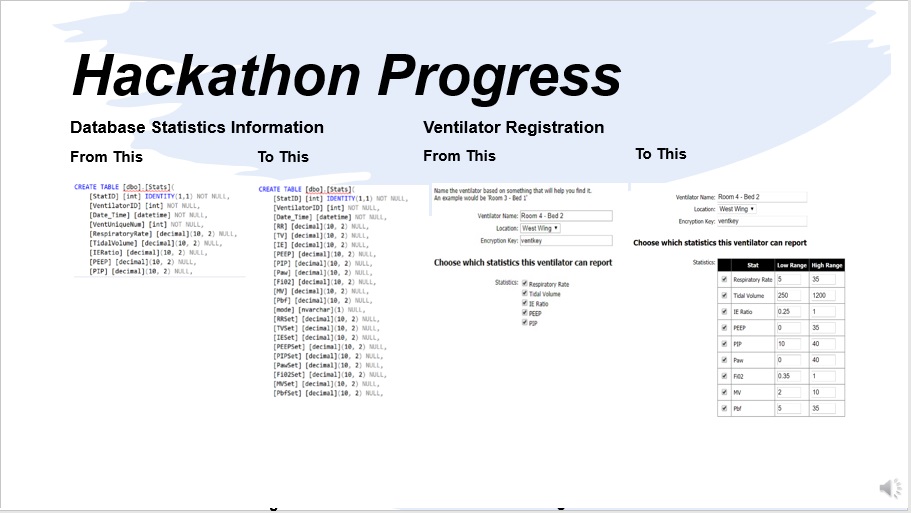
Hackathon Progress
-
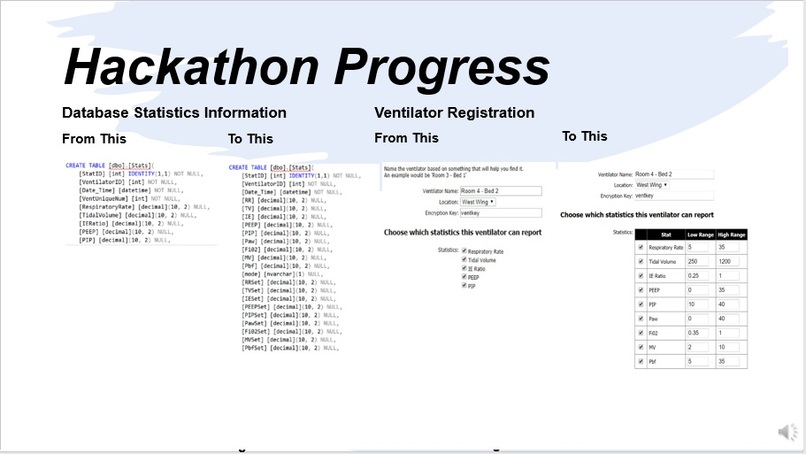
Hackathon Progress
-
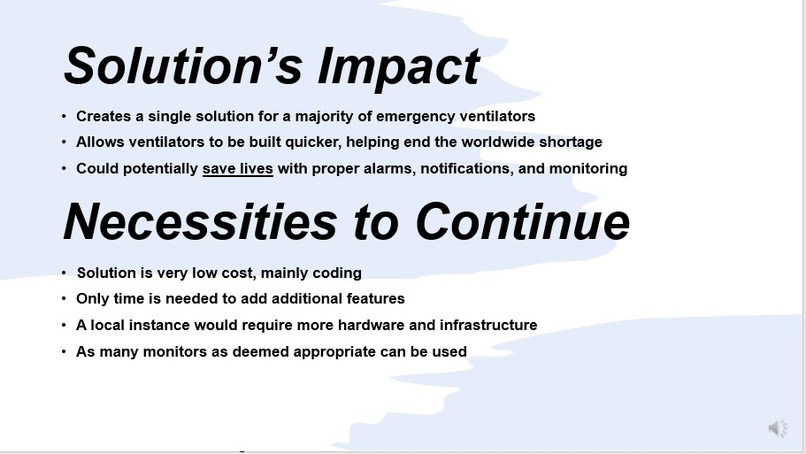
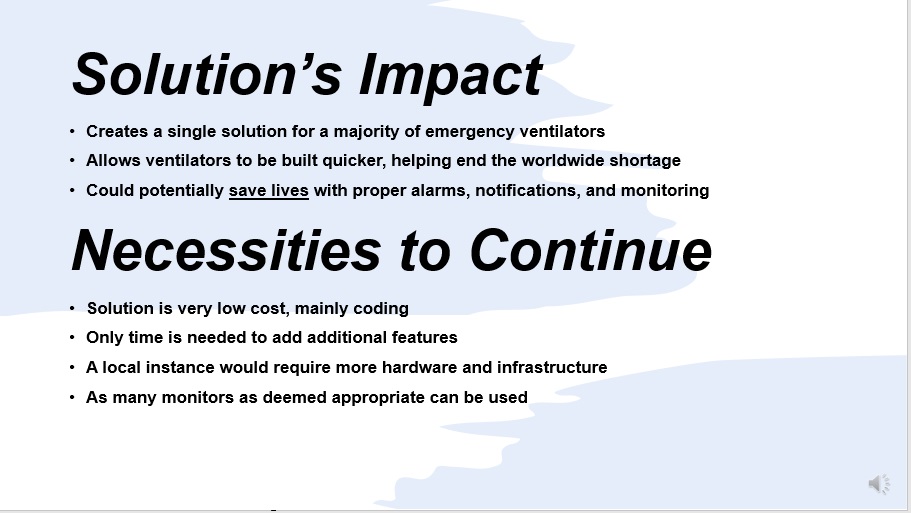
Solution's Impact and Necessities to Continue
-
Thank You!


Inspiration
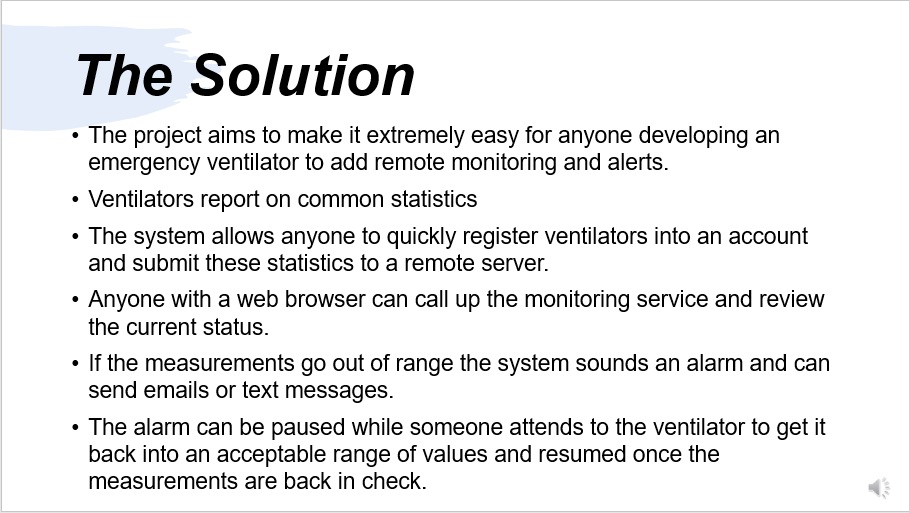
As news first hit about the impact of covid19 in the initial wave of reported cases and how the shortage of ventilators cost lives, the call was sent out to the world for anyone who could make a ventilator to get on the task. The world responded and began developing low cost, emergency ventilators.
All of these ventilators have common requirements and one aspect of that is to enable a monitoring and alert system. Should someone need an emergency ventilator it is not practical to have someone standing next to that person at all times. There needs to be a method to enable remote monitoring and send alerts when the ventilator needs adjusting.
What it does
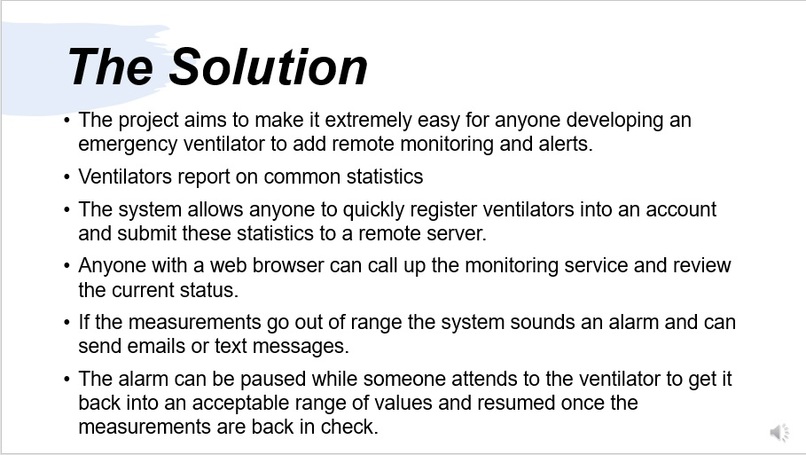
This project aims to make it extremely easy for anyone developing an emergency ventilator to add remote monitoring and alerts. Ventilators report on common statistics such as Respiratory Rate, Tidal Volume, IE Ratio, PEEP, and PIP. The system allows anyone to quickly register ventilators and submit these statistics to a remote server. Anyone with a web browser can call up the monitoring service and review the current status of a ventilator registered to their account.
If the measurements go out of range the system sounds an alarm and can send emails or text messages. At the same time the monitoring service changes colors to show exactly which measurement needs attention. The alarm can be paused while someone attends to the ventilator to get it back into an acceptable range of values and resumed once the measurements are back in check.
How I built it
Many ventilators use an Arduino based PCB as a controller. There is sample code available so someone can add the necessary code to their Arduino .Ino file and begin sending statistics to the backend system. Very similar code can be added for other types of controllers. The backend can be either cloud based or a local instance. It's an ASP.Net project using VB and an SQL Server database.
Challenges I ran into
Locally the system will work because there is inherent security running a local system that nobody else can access. The cloud based system needs additional security in the form of a secure connection. Certain SMTP email servers work better than others for sending alerts and text messages.
Accomplishments that I'm proud of
The system works. When key ventilator measurements go out of range the system sends the statistics to the monitoring site and an alarm is immediately sounded. The user can pause the alarm, get the ventilator back in check, and then resume the alarm.
What I learned
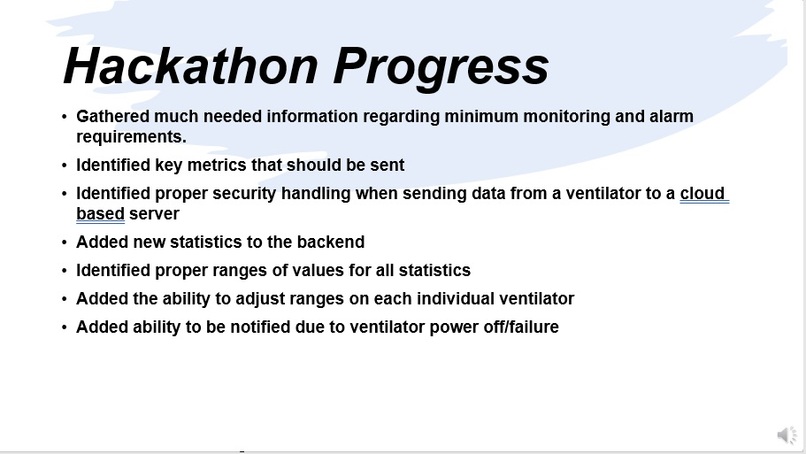
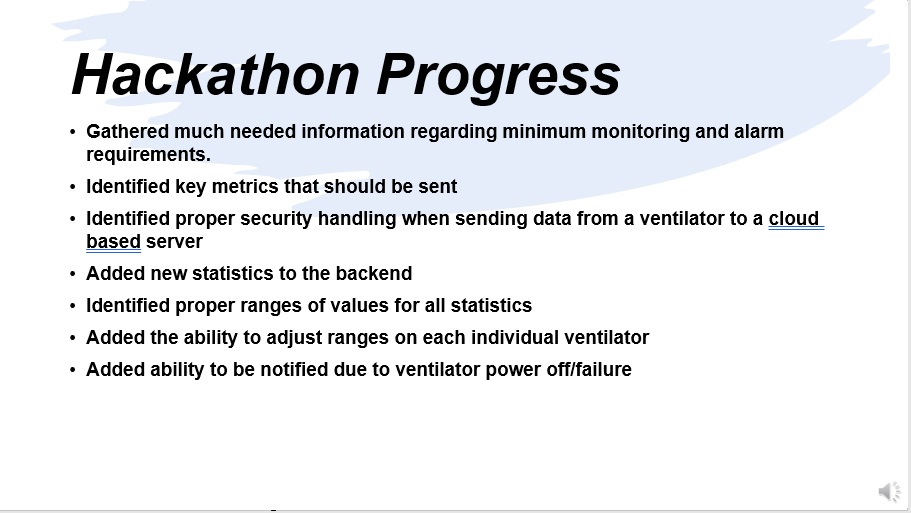
Emergency ventilators cannot be simple devices that do not have any metrics to show they are operating correctly. There are set requirements that they all need to support. There are many additional statistics required to make the system useful. Those statistics should also display the currently set targeted value. Mentors were extremely helpful in identifying all statistics requirements and the range of possible values for each. A better method for secure communication between ventilator and server was also identified with mentor assistance.
What's next for Monitoring and Alerts System for Emergency Ventilators
Additional features can be added such as the cloud based encryption requirement, adjusting the ranges of acceptable values per ventilator (not every person will fall into a default range), sort the monitoring service by location or narrow down by ventilator, add additional alert types, show a history of statistical values per ventilator, show a more detailed view of statistics per ventilator, and better email/text handling.




Log in or sign up for Devpost to join the conversation.