Inspiration
As developers, we love how easy MongoDB makes it to build applications. Its flexible schema, scalability, and developer-friendly experience make it one of the most popular databases in the world. However, as applications grow, managing a MongoDB database becomes increasingly difficult. During development, everything works smoothly. But once an application reaches production, new challenges start appearing. Queries become slower, indexes become outdated, storage costs increase, collections grow unexpectedly, and developers often spend hours trying to understand what is happening inside their database. The problem is not a lack of data. Modern database platforms provide plenty of metrics, logs, and dashboards. The real challenge is turning all of that information into meaningful decisions.
We realized that developers spend too much time asking questions such as:
- Why is this query suddenly slow?
- Which collection is causing performance issues?
- Do I need a new index?
- Will my database handle future growth?
- How can I optimize costs without affecting performance?
Most existing tools tell developers what is happening. Very few help them understand why it is happening and what they should do next.
That observation inspired MongoSense AI.
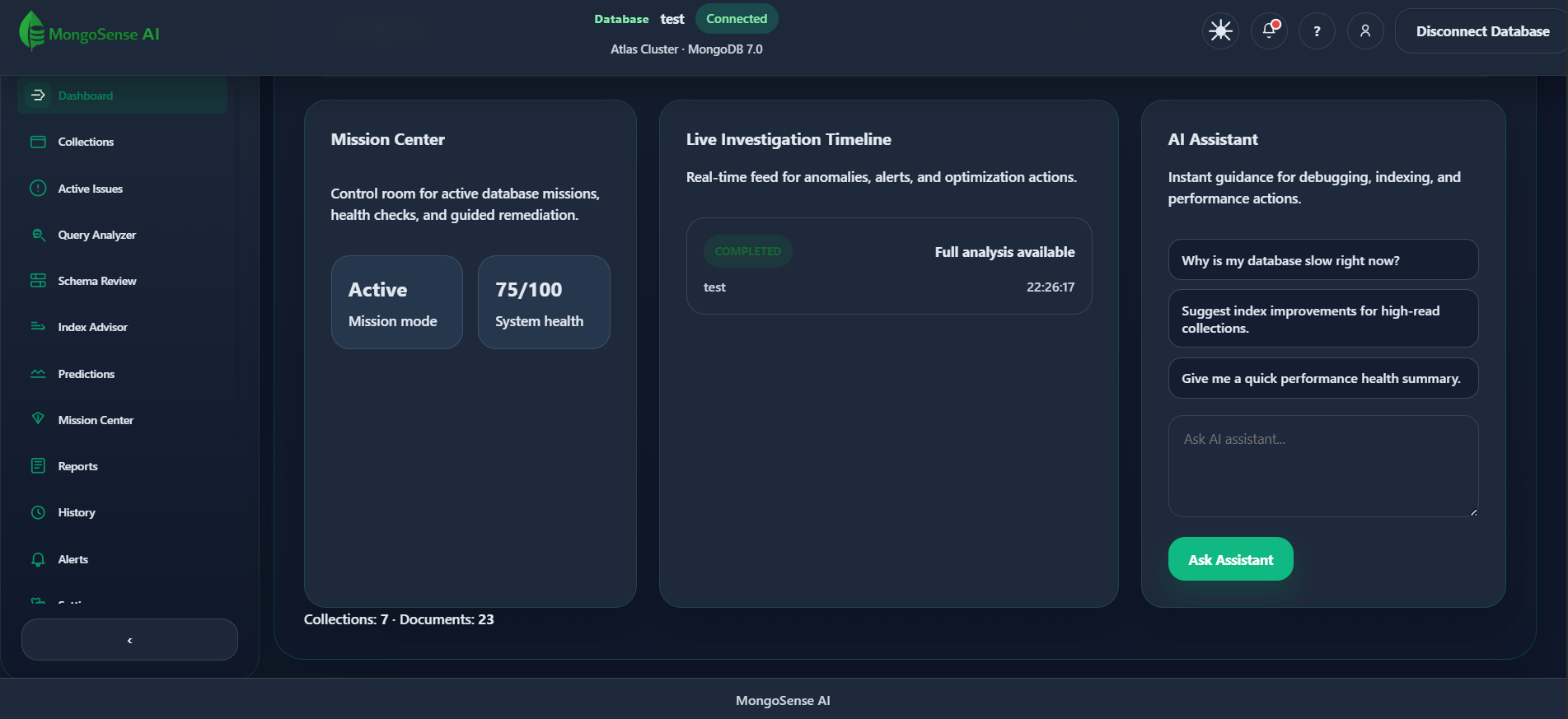
Our goal was to build something that feels less like a monitoring dashboard and more like an intelligent database companion. We wanted an agent that could continuously observe MongoDB environments, reason about performance, identify risks, and guide developers toward better decisions before problems become expensive. Instead of creating another chatbot, we wanted to create an AI agent that actively helps developers manage MongoDB databases.
What it does
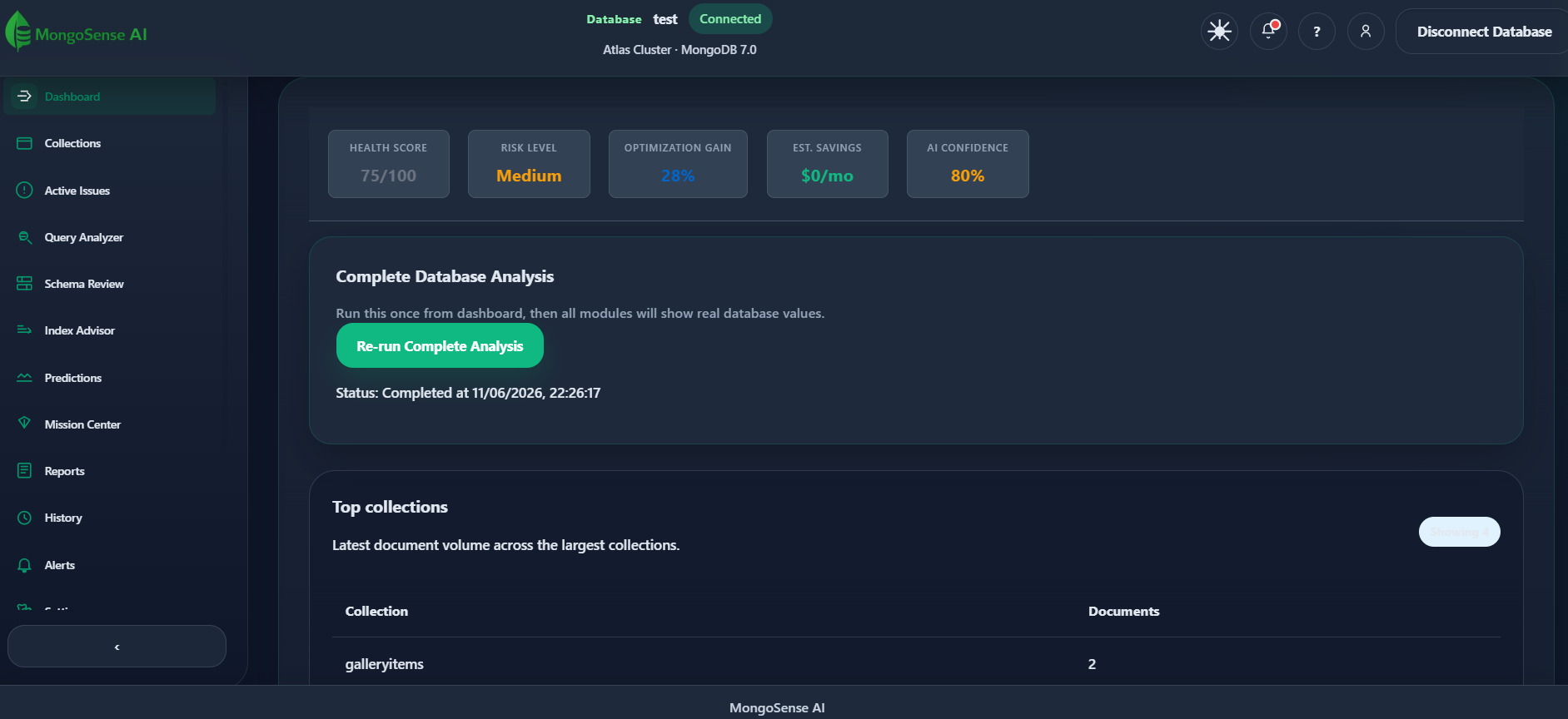
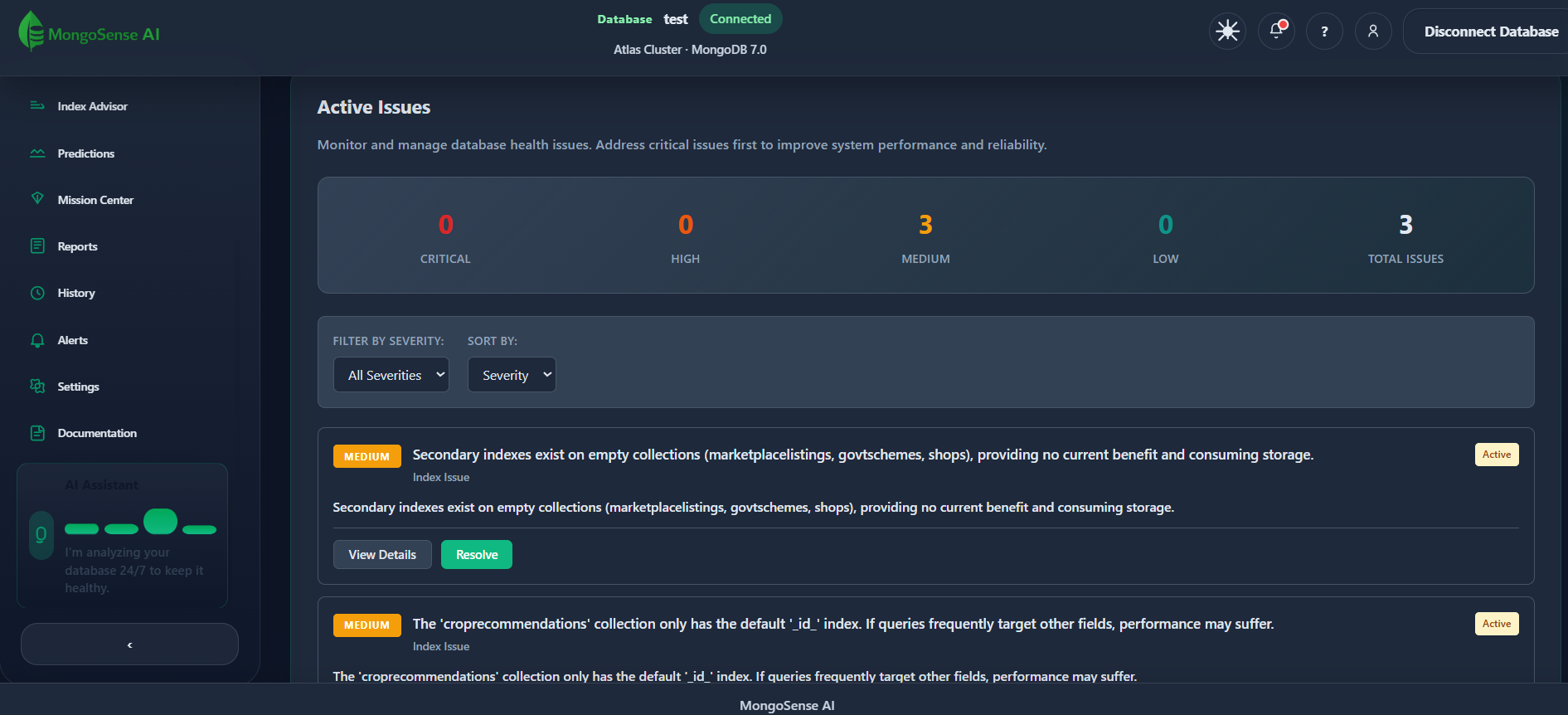
MongoSense AI is an autonomous MongoDB intelligence and optimization agent. Its purpose is to help developers understand, improve, and scale their databases without requiring them to manually investigate every performance issue. The agent continuously analyzes database activity and converts technical signals into actionable recommendations. For example, MongoSense AI can:
- Analyze database workloads and usage patterns
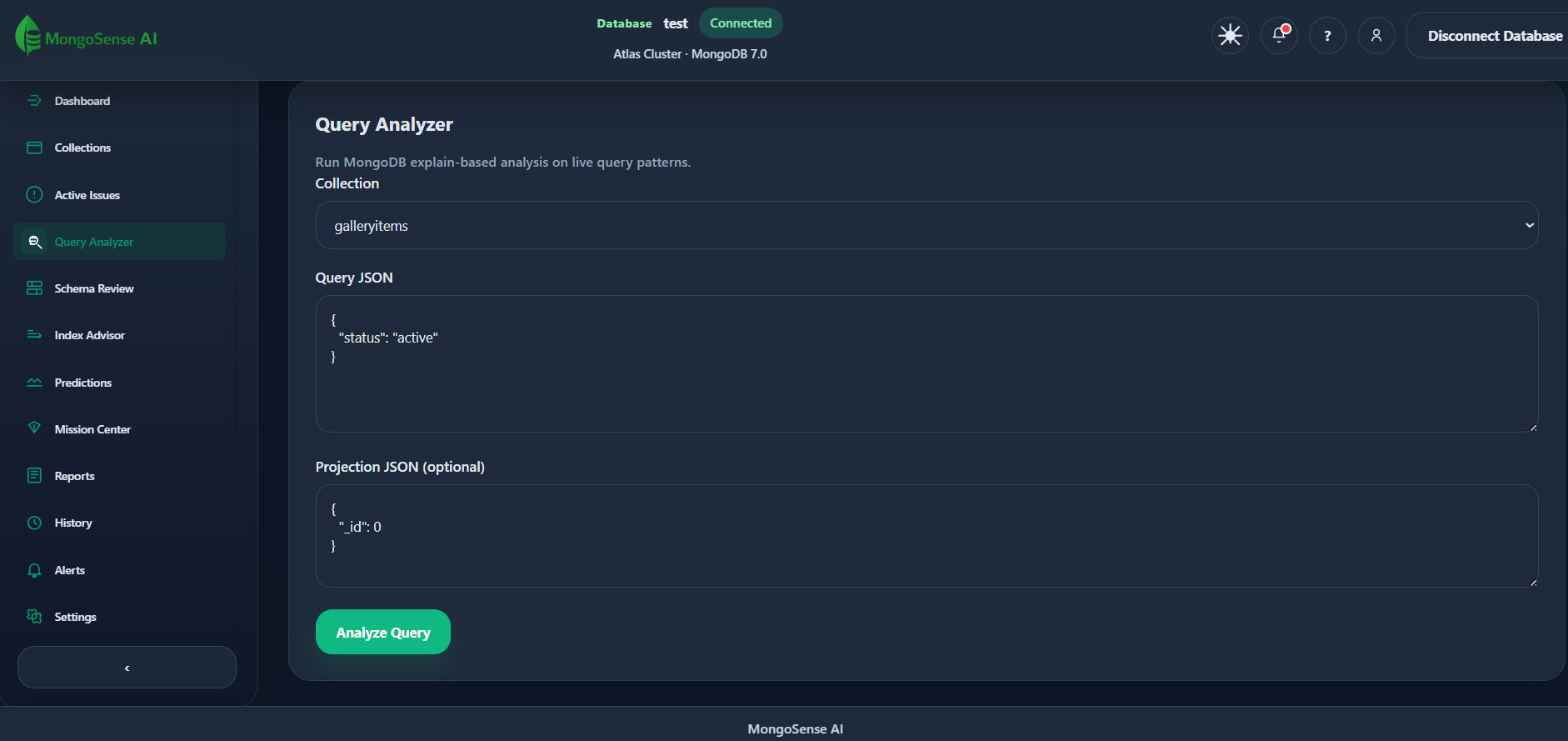
- Detect slow or inefficient queries
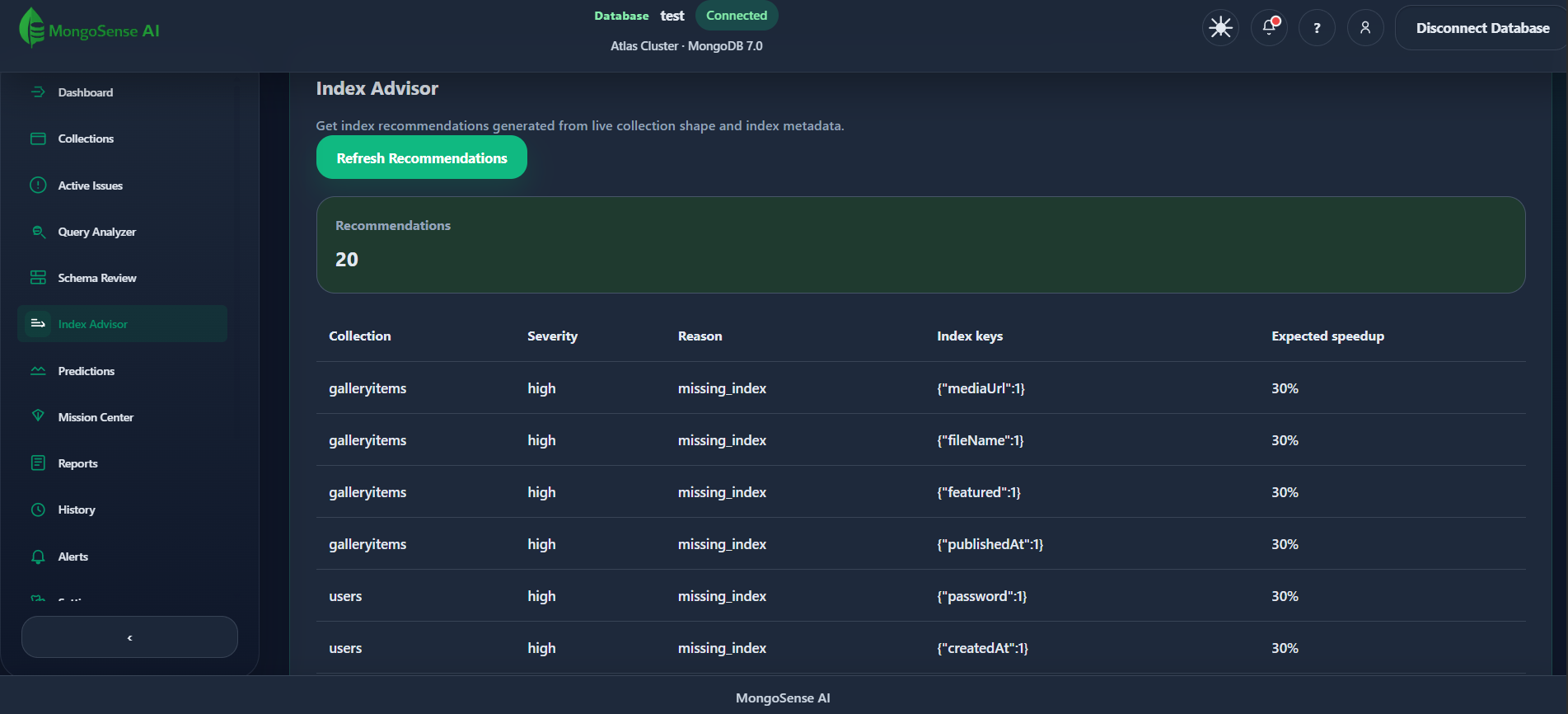
- Identify missing indexes
- Find schema inconsistencies
- Monitor storage growth trends
- Predict future scalability challenges
- Recommend optimization strategies
- Track database health over time
Imagine a developer managing an application that has grown from a few hundred users to several thousand users. Normally, they would need to review dashboards, inspect query logs, analyze indexes, and manually determine what changes should be made. With MongoSense AI, the agent performs this analysis automatically. Instead of presenting hundreds of metrics, it provides insights such as: "Your Orders collection is growing rapidly. Based on current growth patterns, query performance may degrade within the next two months. Consider adding a compound index and archiving inactive records." Or: "This aggregation pipeline is responsible for most of your database load. Refactoring it could reduce query execution time by approximately 40%."
The goal is to move developers from reactive database management to proactive database intelligence.
How we built it
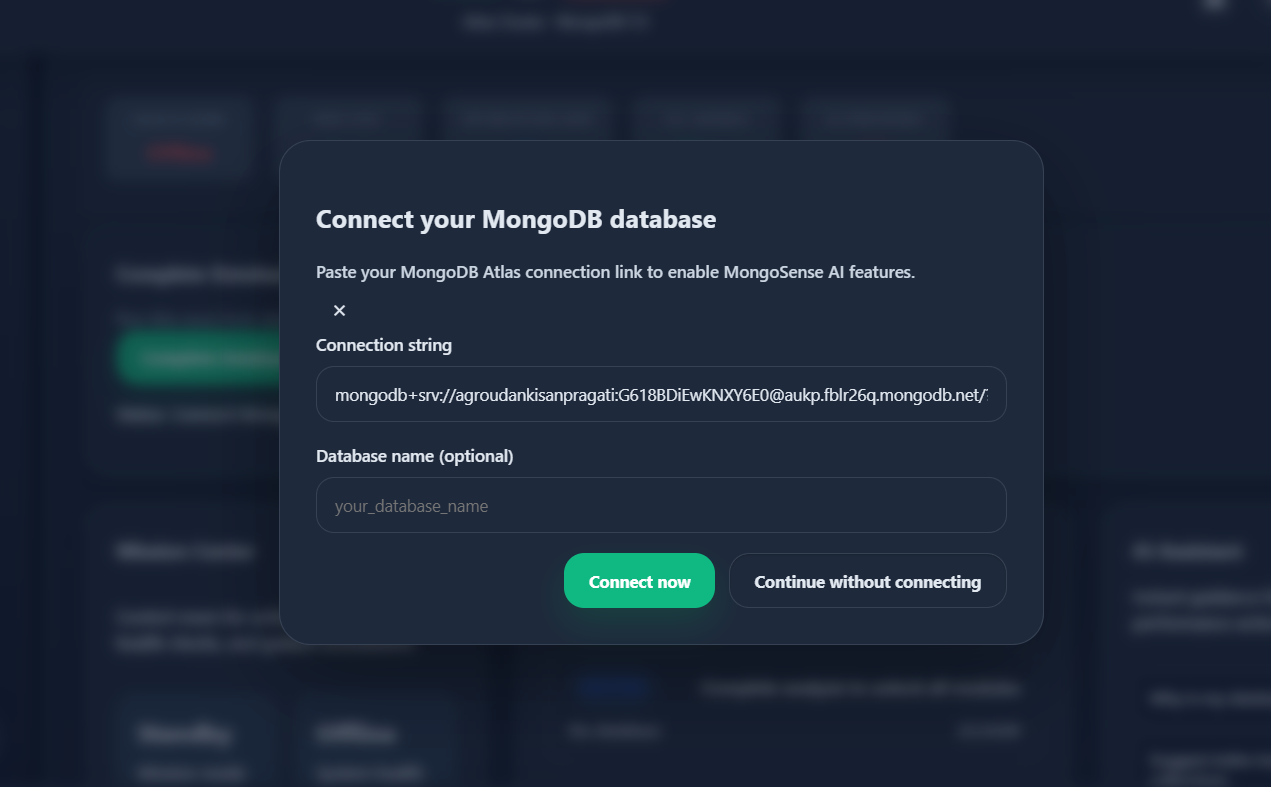
MongoSense AI was built using a combination of Google Cloud Agent Builder, Gemini, MongoDB Atlas, and MongoDB MCP. We designed the system around an agentic workflow rather than a traditional question-and-answer model. The workflow begins when the agent connects to a MongoDB environment through the MongoDB MCP server.
Once connected, the agent gathers information such as:
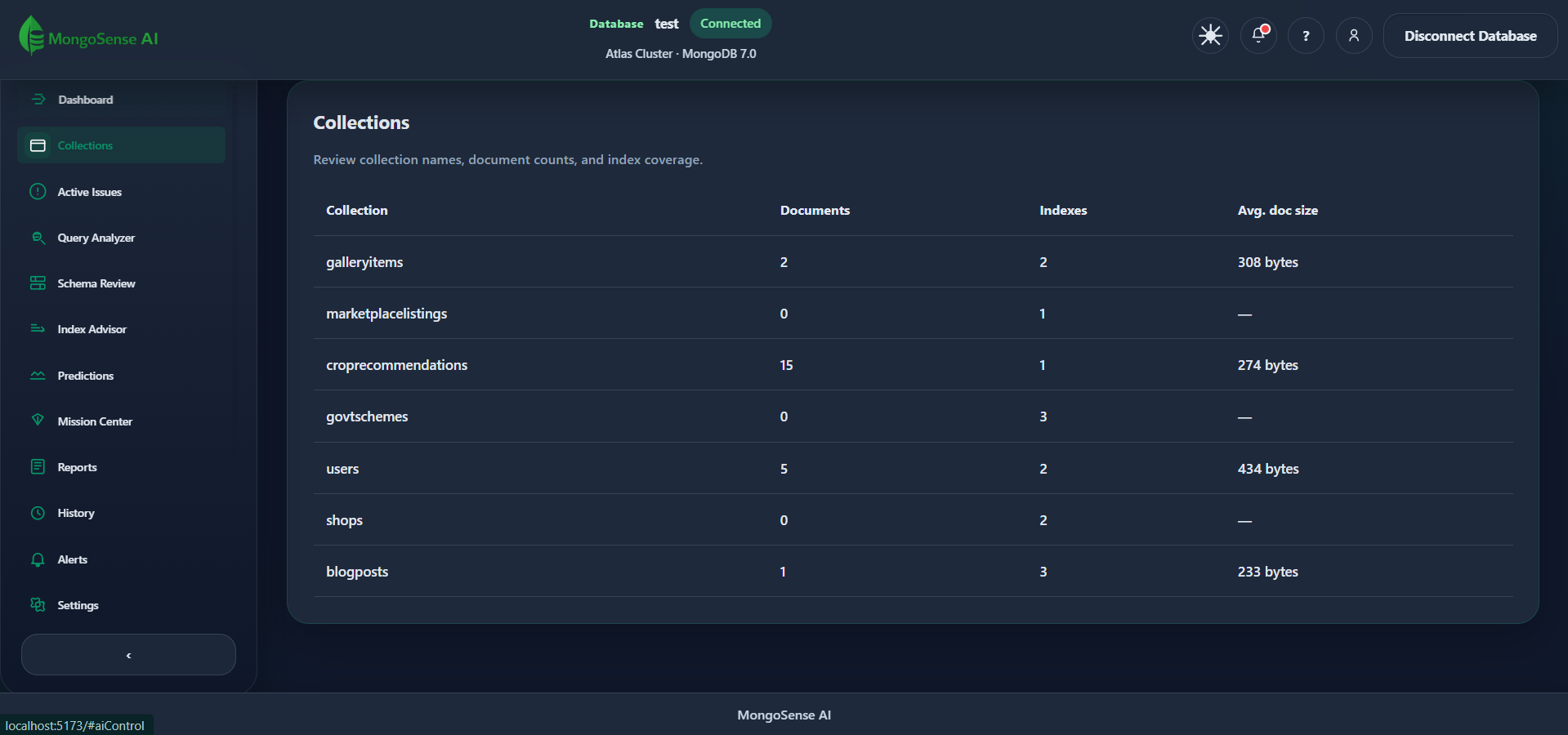
- Collection statistics
- Query patterns
- Index information
- Storage utilization
- Database growth metrics
- Performance indicators
This information is then passed to Gemini, which acts as the reasoning engine.
Gemini analyzes the collected data and looks for patterns that may indicate performance issues, inefficient architecture decisions, or future scalability concerns. The agent then creates structured recommendations and presents them through a simple interface that developers can easily understand. One of the most important design decisions was maintaining historical intelligence. Instead of analyzing the database once, MongoSense AI keeps track of previous observations and recommendations. This allows the system to identify trends over time and generate more accurate insights. For the frontend, we focused on creating a clean dashboard that prioritizes clarity rather than overwhelming users with technical information. The result is an experience where developers can quickly understand the health of their database and know exactly what actions to take.
Challenges we ran into
One of the biggest challenges was defining what makes an AI agent truly useful. It is easy to build a chatbot that answers questions about MongoDB. It is much harder to build an agent that can independently analyze a database, identify problems, and generate recommendations that developers actually trust. We spent significant time thinking about the difference between information and action. A monitoring tool might show that query latency increased by 25%. MongoSense AI should be able to explain why it increased, what caused it, and what actions should be taken. Another challenge was avoiding generic recommendations. Developers do not want vague suggestions like "optimize your database." They need context-specific guidance based on their unique workloads, schemas, and growth patterns. Building this level of contextual reasoning required careful prompt design and workflow planning. We also faced challenges balancing autonomy with control.
Our vision was never to replace developers. Instead, we wanted to build a system that acts like a trusted database advisor while keeping humans in control of important decisions.
Accomplishments that we're proud of
The accomplishment we are most proud of is creating something that feels like a natural extension of the MongoDB ecosystem rather than just another AI application. MongoSense AI demonstrates how AI agents can provide real value to developers by transforming complex database metrics into actionable insights.
We are proud that the system:
- Goes beyond traditional chatbot interactions
- Uses MongoDB in a meaningful way
- Demonstrates agentic reasoning and planning
- Provides proactive recommendations instead of reactive analysis
- Focuses on solving a real developer pain point
Most importantly, we are proud that the project aligns with a future where databases become more intelligent and actively help developers build better applications.
What we learned
Building MongoSense AI taught us a lot about AI agents, databases, and developer workflows. We learned that the most effective AI systems are not necessarily the ones that generate the most information. They are the ones that help users make better decisions.
We gained practical experience with:
- Agentic application design
- Gemini reasoning workflows
- MongoDB MCP integration
- Database performance analysis
- Human-centered developer tools
We also learned how important context is.
A recommendation that is useful for one database may be completely wrong for another. This reinforced the importance of combining AI reasoning with real operational data. Perhaps the biggest lesson was realizing that the future of software tools will not be defined by automation alone. It will be defined by intelligent systems that collaborate with humans.
What's next for MongoSense AI
This project represents the first step toward a much larger vision. In the future, we want MongoSense AI to become a fully autonomous database intelligence platform.
Some of the features we plan to explore include:
- Automated optimization execution with developer approval
- Predictive cost analysis and budgeting
- Intelligent sharding recommendations
- Database migration assistance
- Capacity forecasting
- Multi-cluster monitoring
- AI-powered architecture reviews
- Self-healing database workflows
Our long-term vision is simple:
We believe databases should do more than store data. They should actively help developers understand their systems, prevent problems, and make smarter decisions. MongoSense AI is our attempt to imagine what the future of MongoDB could look like when AI becomes a core part of the developer experience.
Built With
- ai-agents
- express.js
- gemini-3
- github
- google-cloud-agent-builder
- javascript
- mongodb-atlas
- mongodb-mcp-server
- node.js
- react.js
- rest-apis
- vector-search


Log in or sign up for Devpost to join the conversation.