-
-

-
-
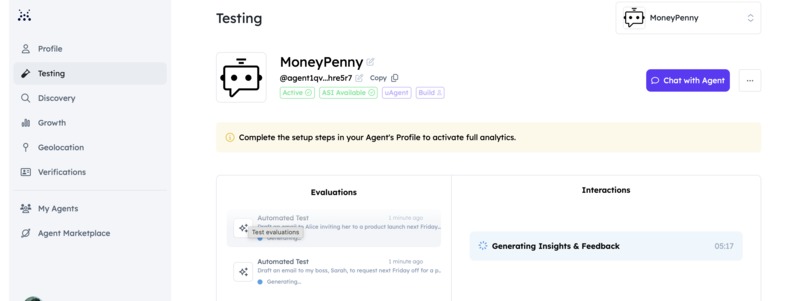
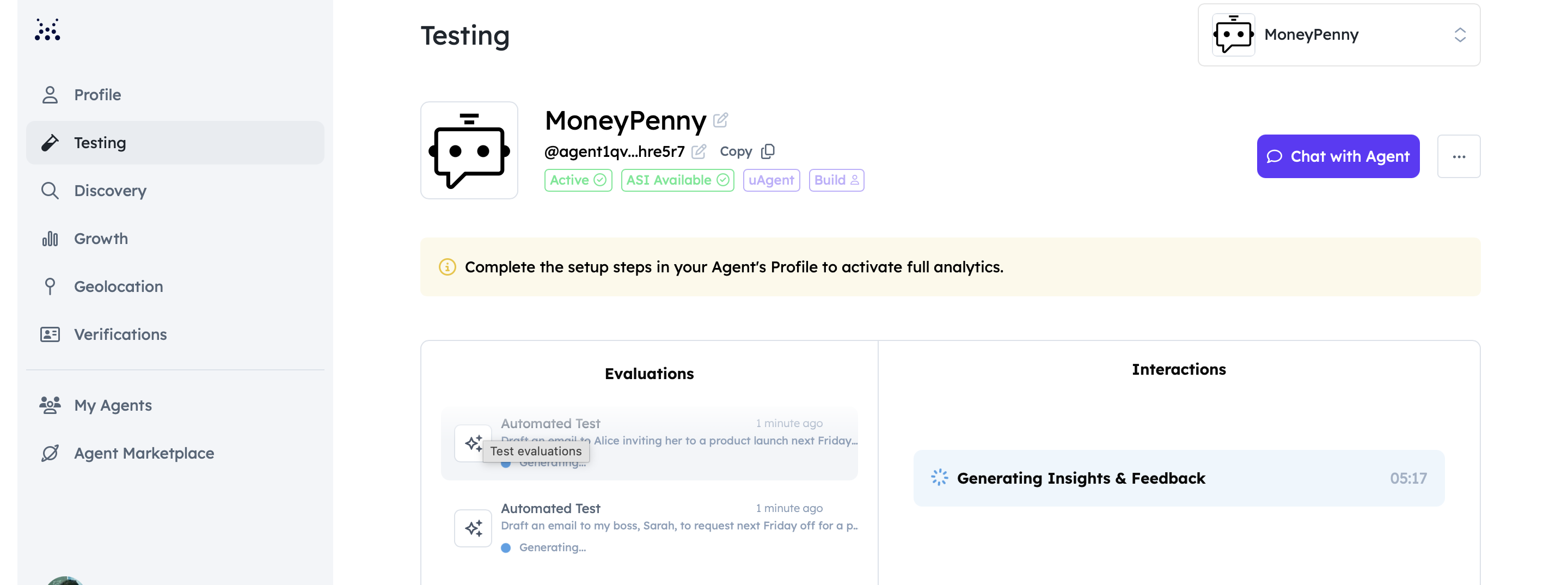
MoneyPenny is deployed on Agentverse
-



Ethical AI, Privacy, and Human Oversight
MoneyPenny was built around a simple belief: the future of AI should not be measured solely by how autonomous an agent can become, but by how trustworthy, transparent, and accountable it remains while acting on behalf of people.
From the beginning, we made a deliberate decision not to pursue fully autonomous agent architectures. While modern agent ecosystems continue to push the boundaries of autonomous execution and self-directed behavior, they also introduce significant concerns around security, privacy, accountability, and the broader societal impact of increasingly powerful AI systems. Rather than maximizing autonomy, we chose to maximize human control.
This philosophy shaped every technical decision in MoneyPenny. Our system is built as a multi-agent architecture with clearly defined responsibilities, strict delegation rules, and controlled communication channels between agents. Each agent specializes in a specific domain—email, scheduling, memory, communication, knowledge retrieval, or coordination—while a central orchestrator routes tasks and enforces system-wide safety policies. By limiting agent authority and clearly defining operational boundaries, we reduce the risks associated with unrestricted autonomous behavior.
At the core of the system is PydanticAI, which powers both the orchestrator and specialist agents. We chose PydanticAI because of its strong support for typed, structured outputs and deterministic tool execution. Rather than allowing language models to directly invoke external tools, agents emit validated ProposedAction objects that are subsequently reviewed and classified by code-defined policies. In this architecture, the model proposes actions, but it never decides whether those actions are allowed to execute.
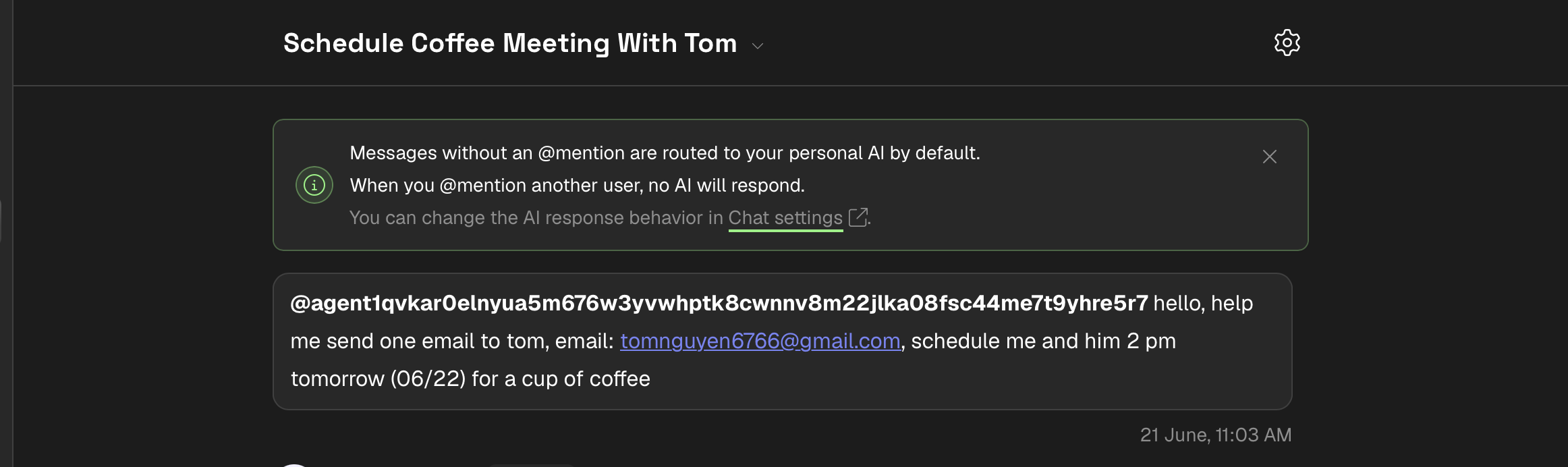
To support collaboration beyond a single user, MoneyPenny is deployed on Fetch.ai Agentverse and is accessible through ASI:ONE. Through Fetch.ai's agent ecosystem, MoneyPenny agents can discover, communicate with, and coordinate with other agents using standardized protocols. This enables scenarios such as two personal assistants negotiating meeting times on behalf of their owners or hiring specialized agents from an open marketplace to perform tasks outside their own capabilities.
However, regardless of where a request originates or which agent generates a response, every interaction is routed through our Consent and Governance Layer. This layer acts as a bidirectional safety mechanism that continuously evaluates communication between users and agents.
On the input side, the layer analyzes user requests for unsafe, malicious, or potentially harmful use of AI capabilities. On the output side, it reviews agent-generated responses and proposed actions against predefined safety, privacy, and compliance policies. Every consequential action—sending emails, modifying calendars, sharing files, contacting other agents, or performing transactions—must pass through this validation process before execution.
The enforcement mechanism is implemented through a hard-coded consent gate. Every side-effecting action requires explicit approval from the user and receives a single-use consent token before execution. Even if an agent attempts to bypass the approval process, execution wrappers verify the presence and validity of the consent token before any external action can occur. If validation fails, the system fails closed and no action is performed.
To make consent auditable rather than merely procedural, every approval, denial, revision, and execution outcome is recorded in an append-only consent ledger backed by Redis. This ledger provides a verifiable history of user decisions and enables continuous auditing of agent behavior. MoneyPenny evaluates its own execution traces against this ledger to ensure that no action was performed without corresponding user approval.
Our design philosophy can be summarized as keeping humans over the loop, not merely in the loop. Humans retain ultimate authority over what agents are allowed to do, how they collaborate, and when real-world actions occur. Agents can negotiate, coordinate, and reason autonomously, but they cannot independently commit users to consequential actions.
By combining structured multi-agent orchestration through PydanticAI, open agent communication through Fetch.ai, and a comprehensive consent and governance framework, MoneyPenny demonstrates that advanced AI systems can be both powerful and responsible. Privacy, security, transparency, and ethical AI are not features added after the fact; they are foundational principles embedded directly into the architecture of the system.


Log in or sign up for Devpost to join the conversation.