-
-
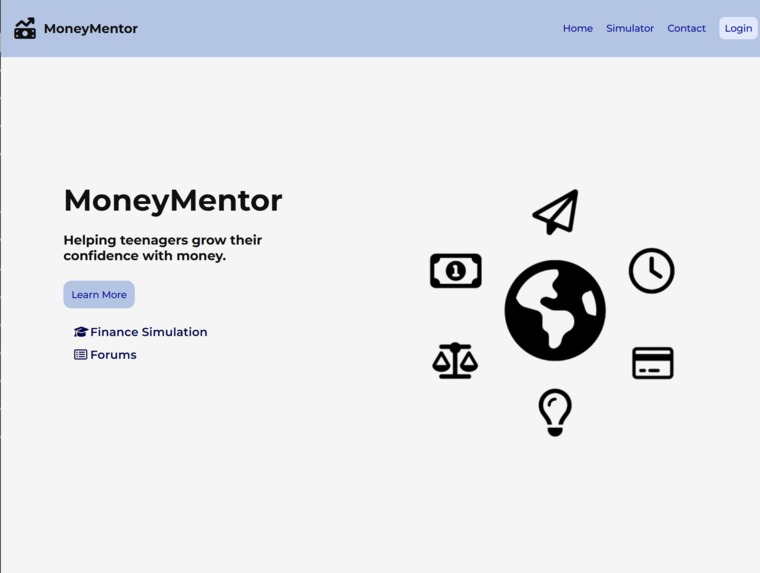
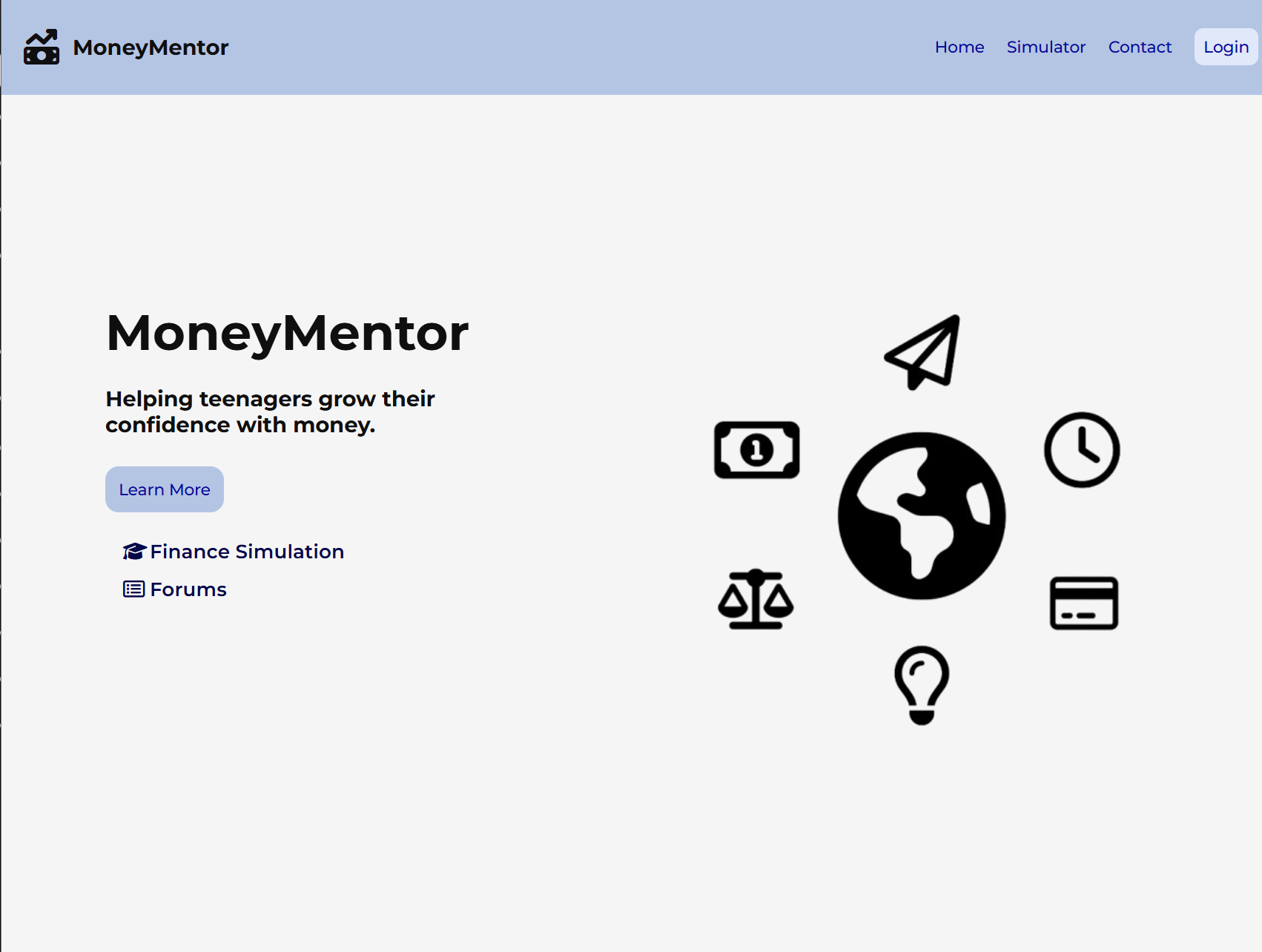
Main page
-
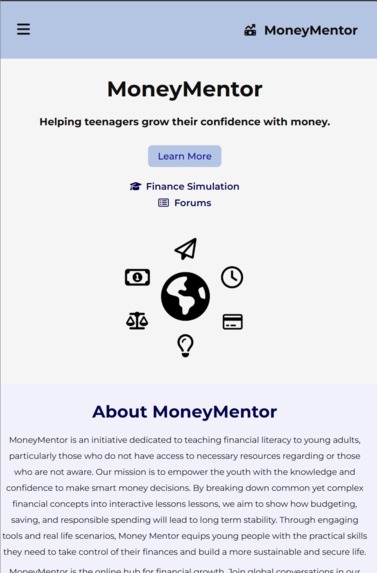
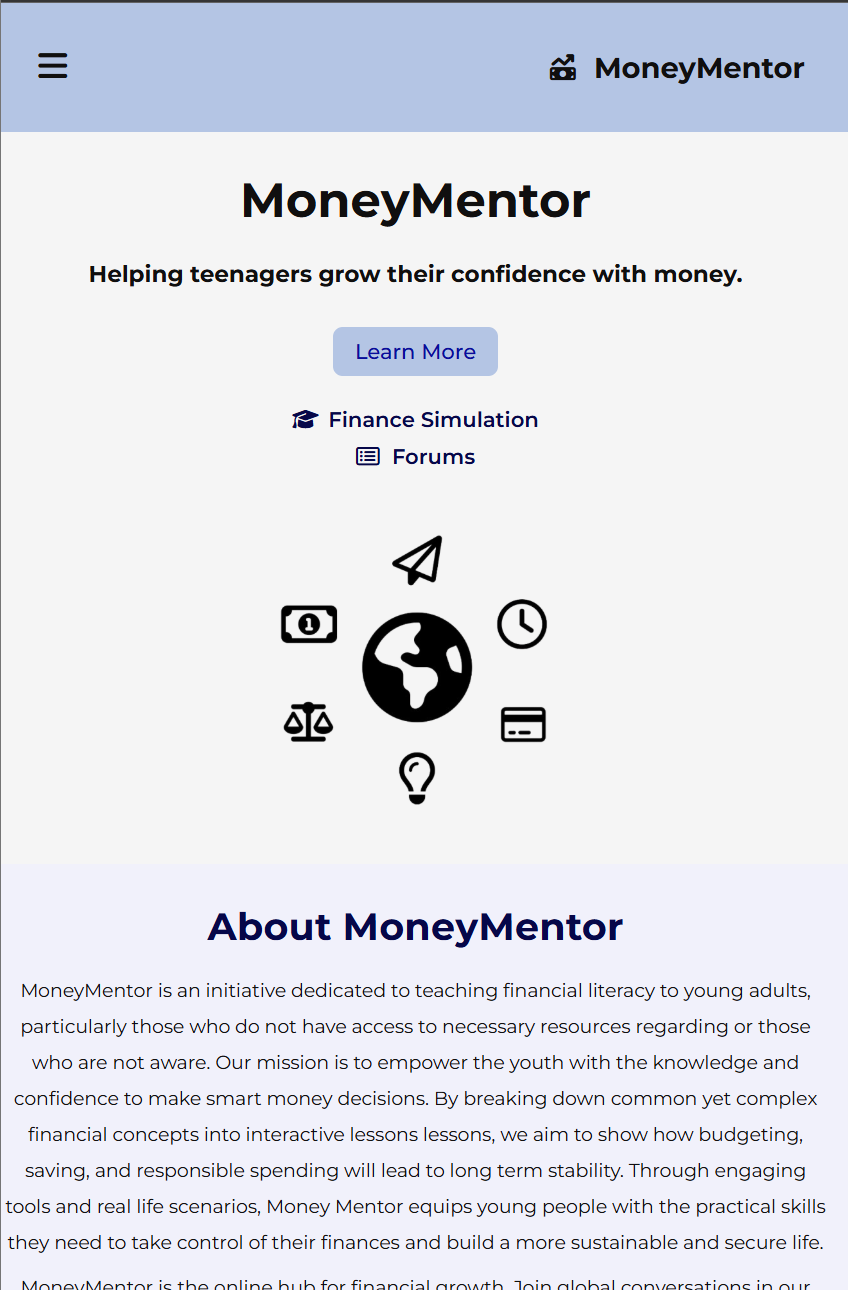
Main page (mobile)
-
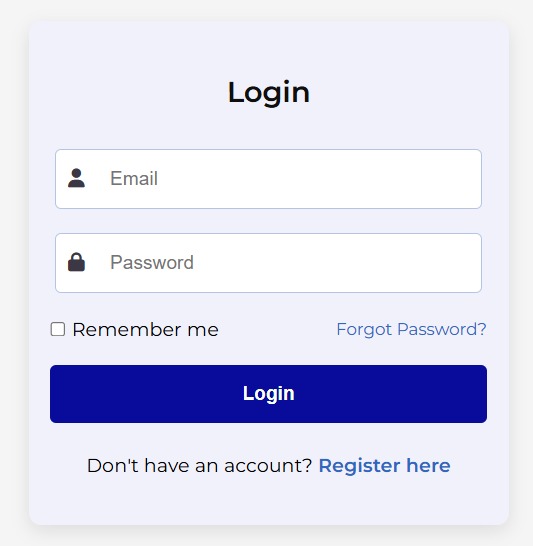
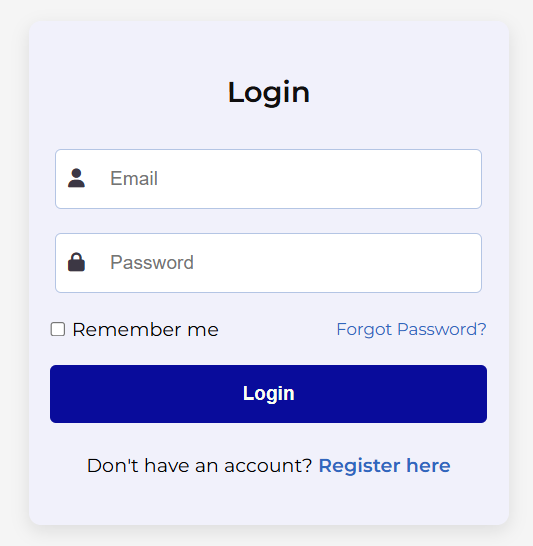
Login page
-
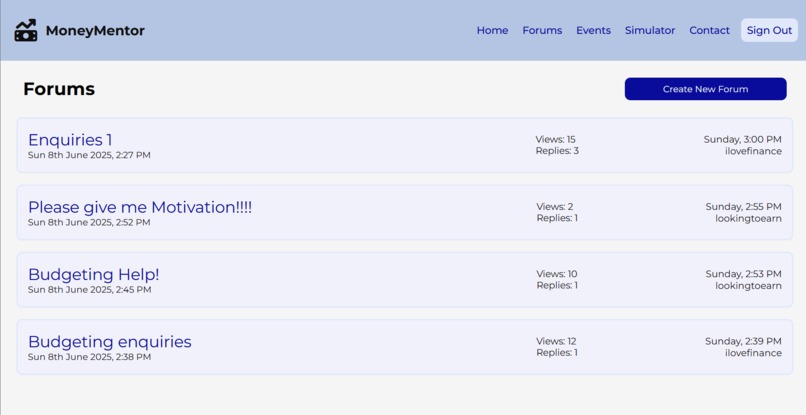
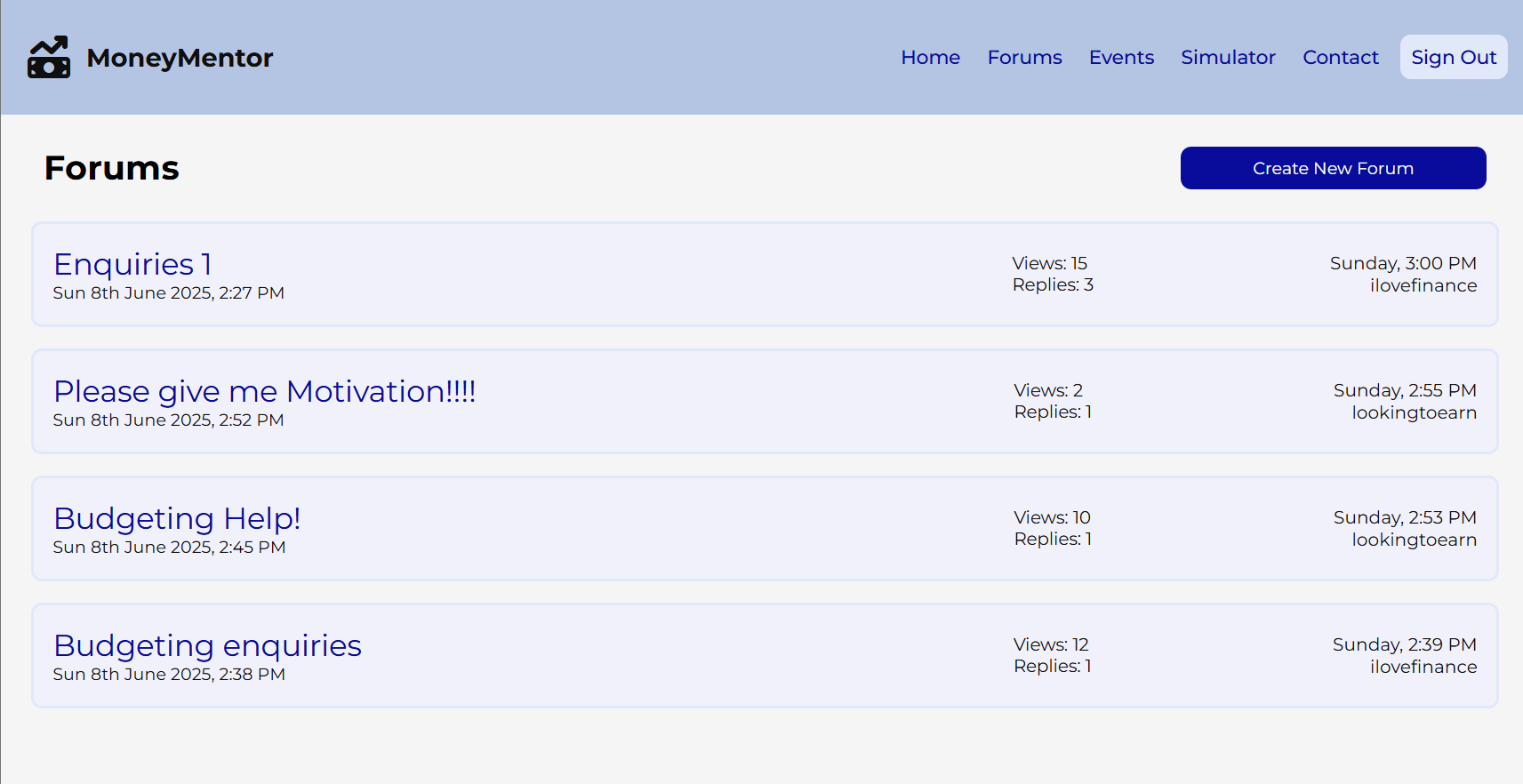
Forums page
-
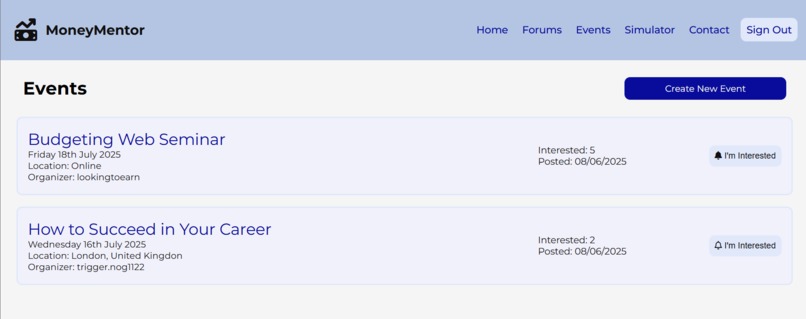
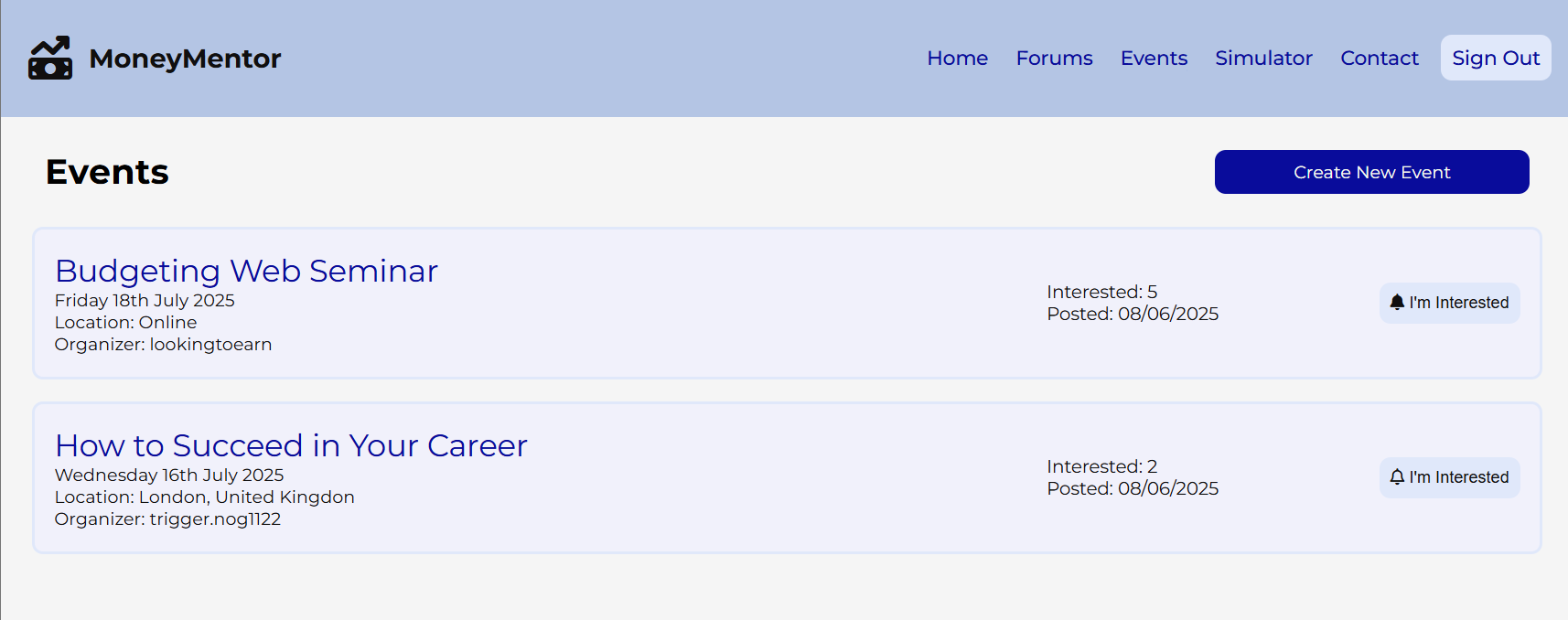
Events page
-
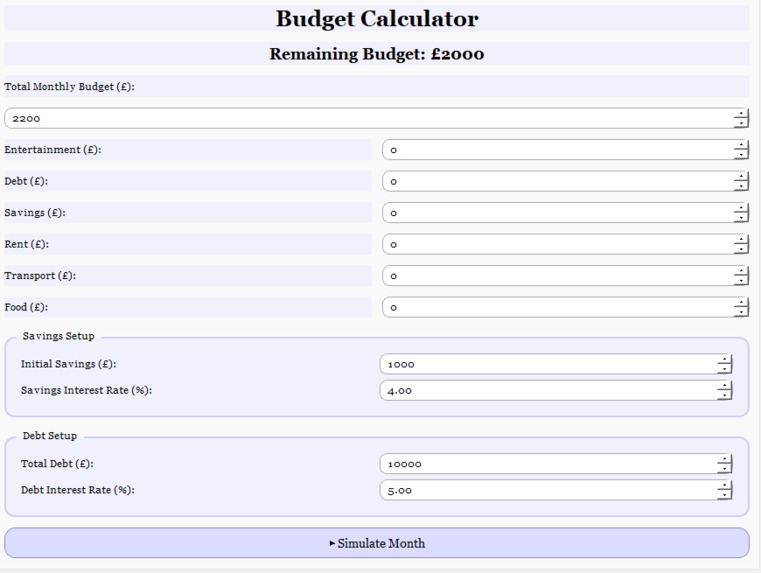
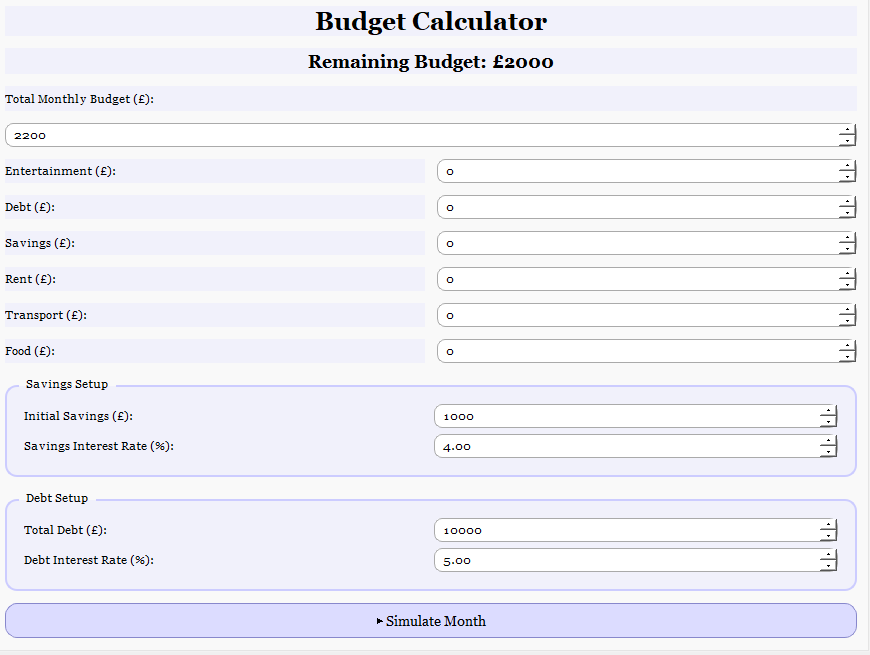
MoneyMentor simulator
-
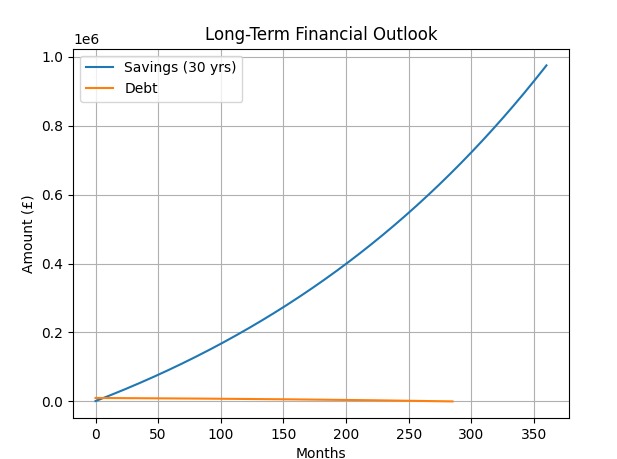
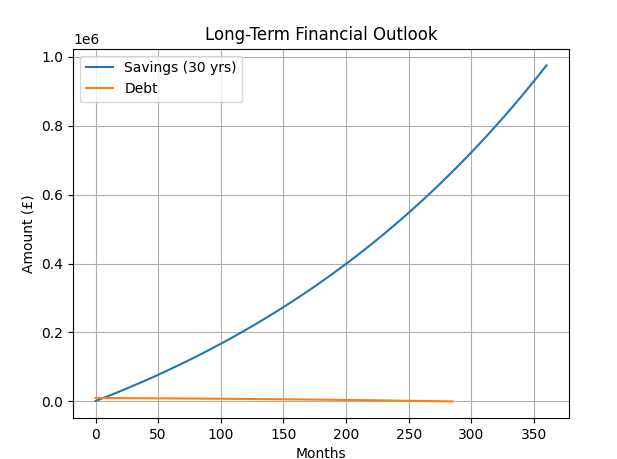
Simulator Graphing capabilities
-
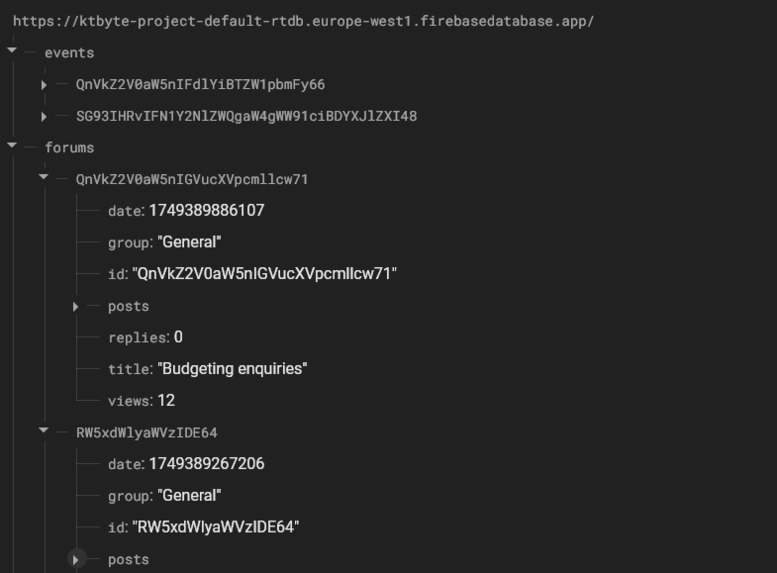
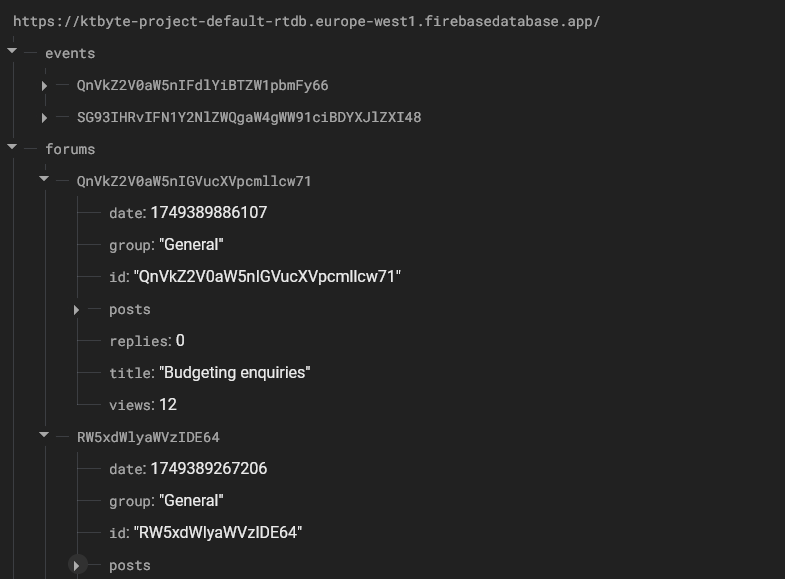
Firebase Backend
What is our project?
MoneyMentor is an initiative dedicated to teaching financial literacy to young adults, particularly those who do not have access to necessary resources or those who are simply unaware. Our mission is to empower the youth with the knowledge and confidence to make smart money decisions. By breaking down common yet complex financial concepts into interactive lessons, we aim to show how budgeting, saving, and responsible spending will lead to long-term stability. Through engaging tools and real-life scenarios, MoneyMentor equips young people with the practical skills they need to take control of their finances and build a more sustainable and secure life.
MoneyMentor is the online hub for financial growth. Join global conversations in our community forum, explore and host financial events and build smart habits through our interactive finance simulator, where you can learn and practice how to make better financial decisions. MoneyMentor is everything you need in one place, to learn, connect, and grow.
What inspired us?
As a group of students getting ready to head off to university, we realised something important. None of us had really been taught how to manage money. Things like budgeting, saving, or even how interest works just hadn’t been covered in school. And it wasn’t just one of us. We all came from different schools, yet every one of us felt the same gap. That’s when we started thinking. Maybe this was a much bigger issue. If we all missed out on it, then young people all over the world probably had too. Since our theme this year was "social impact", we knew this could actually matter. Not just to us, but to other people our age. It felt meaningful, and that gave us the motivation to build something that could help.
How did we build it?
At first, we didn’t know exactly what to build. We just knew we wanted to do something about financial literacy. After a few chats, we decided to split into two subteams based on our strengths. Two of us had more experience with Python, while the other two were stronger at web design and that kind of shaped the whole direction of our project.
For the website, we used JavaScript, HTML and CSS to build the main pages, with a firebase backend. This let us create a clean, easy-to-use design and structure for everything, from the forum to the events section. On the Python side, we used PyQt to build the user interface. Both of us working on that had learned PyQt at school, so it made sense to use something we already understood and could build with quickly.
We decided to create a web app where people could learn and support each other. That’s where the forum came in. A space where users can ask questions, share tips, and talk openly about money. The idea was to make it feel like a community. We then added an events section, where people can post events (either online or in person) so others know what’s happening and when. This makes the site more active and gives users a reason to keep coming back.
Then we started building our first simulator. This one focused on budgeting and savings. You enter your monthly income and expenses, and it shows you how much you’d save long-term. It’s a simple idea, but powerful. We also added random events such as gifts, bonuses, or sudden expenses in order to make it feel more like real life. It’s a reminder that unexpected things happen, so having emergency savings is key.
Later on, we built a second simulator since we felt the first one was educational but could be more fun so this one was more like a game. You live a month as a 21-year-old and make daily choices about your lifestyle. We chose 21 as that is a common age when young people officially step out of education. What kind of food do you eat? Do you pay for gym? How much do you go out? Every decision affects your budget, your savings, and your happiness. At the end, you see how much you’d need to earn to live that lifestyle and whether it’s financially realistic.
But we didn’t want it to be just about money because being smart with your finances is important, but so is enjoying life. So we added a happiness scale. This tracks how your decisions affect how fulfilled you’d feel and not just how much you save.
We then spent time improving the user experience too. We added colour feedback - red if you go over budget, green if you’re under. We also styled everything with CSS to make it look cleaner and easier to use. And every time someone plays the financial life simulator, they get a short money tip which is a quick, practical reminder that’s easy to remember.
Challenges we encountered:
One of the first problems we faced was finding a platform where our whole team could work together. We tried several, but none supported all of us at once. We solved this by running the code locally and using a shared IDE for collaboration.
On the website side one challenge was making the website UI work well on both desktop and mobile and it took some debugging but we figured it out. Also implementing the reaction system for posts took a while as we had to make sure updates to the database showed up for all users, which required more backend work than we expected. The same issue came up with new forum posts - we had to ensure they displayed in real time for everyone.
For the Python simulator, a big challenge was figuring out what kind of simulation would be both useful and fun. Moreover, making it visually appealing also took work, especially since PyQt styling isn’t identical to HTML/CSS so it took a lot of research and effort in order to style the UI in a nice way. Toward the end, we also struggled a bit with linking the simulator to the website since embedding it directly in HTML didn’t work, but we found a way around this by turning the Python code into an executable file and linking to it instead.
Our Accomplishments:
One of our biggest accomplishments was quickly settling on a meaningful topic and staying motivated throughout. We worked really well together as a team, always building on each other’s strengths. On the website side, we were especially proud of building a fully functioning forum in a short amount of time. It’s not a simple feature, but we got it working smoothly and made it scalable so we can easily add more in the future. We also made the site user-friendly, added example threads and events, and focused on making it look clean and complete.
On the Python side, creating two working simulators was a huge achievement. Moreover, apart from making it work we also focused on the small details like colour changes, error validation, and remaining day/budget counters that greatly enhanced the user experience. We were really happy with how much we were able to build and polish in the time we had.
What did we Learn?
One of the most important things we learned was how to work on a coding project as a team. Before this, most of us had only done programming individually, so collaborating on a shared project really helped us develop our communication and project management skills. We held regular check-ins, which occurred once an hour, to track progress and make sure everyone was on the same page and we were moving in the right direction.
For the web team, one big takeaway was learning how to properly handle errors and server requests. One of us also picked up JQuery along the way. On the Python side, we got better at using CSS within PyQt to improve the look and feel of the simulators and we also learned how much small design touches can really boost user experience.
What’s next for Money Mentor?
We designed the Python simulators to be expandable from the start, using a tab-based structure so we could easily add more over time. Right now, we’ve built two, but we’ve already started brainstorming more. In the future, we want to create simulators which represent different stages in life, like budgeting at university, buying a first car, or moving out. Since these are all key moments in a young person’s transition into adulthood, we think having realistic tools to prepare for them would be very useful.
We also want to improve the interactability of the entire project. One idea is to let users build their own simulations using a drag/drop tool. That way, they can create personalised scenarios that reflect their own lives. Another future idea is to expand the website to support multiple languages and region-specific versions, since things like taxes, student loans, and living costs are different across countries. This would make the platform more inclusive and relevant to people around the world.
In the longer term, we hope to bring in AI. For example, we could use a chatbot to give financial tips, answer forum questions, or help moderate the community in a safe and supportive way and it could also help with other aims such as letting the website support multiple languages. As a team, our goal is to keep growing this project into something that can make a difference and reach even more people, wherever they are.
Built With
- css
- firebase
- font-awesome
- html5
- javascript
- jquery
- matplotlib
- pyqt
- python


Log in or sign up for Devpost to join the conversation.