Inspiration
Our project, MoneyLife, was inspired by the fact that most kids and teens enter adulthood with little understanding of money. Traditional approaches, including books and lectures, often fail to engage them, so we created an interactive simulation where players navigate real-life financial situations, learning the consequences of their choices in a make-believe environment.
What it does
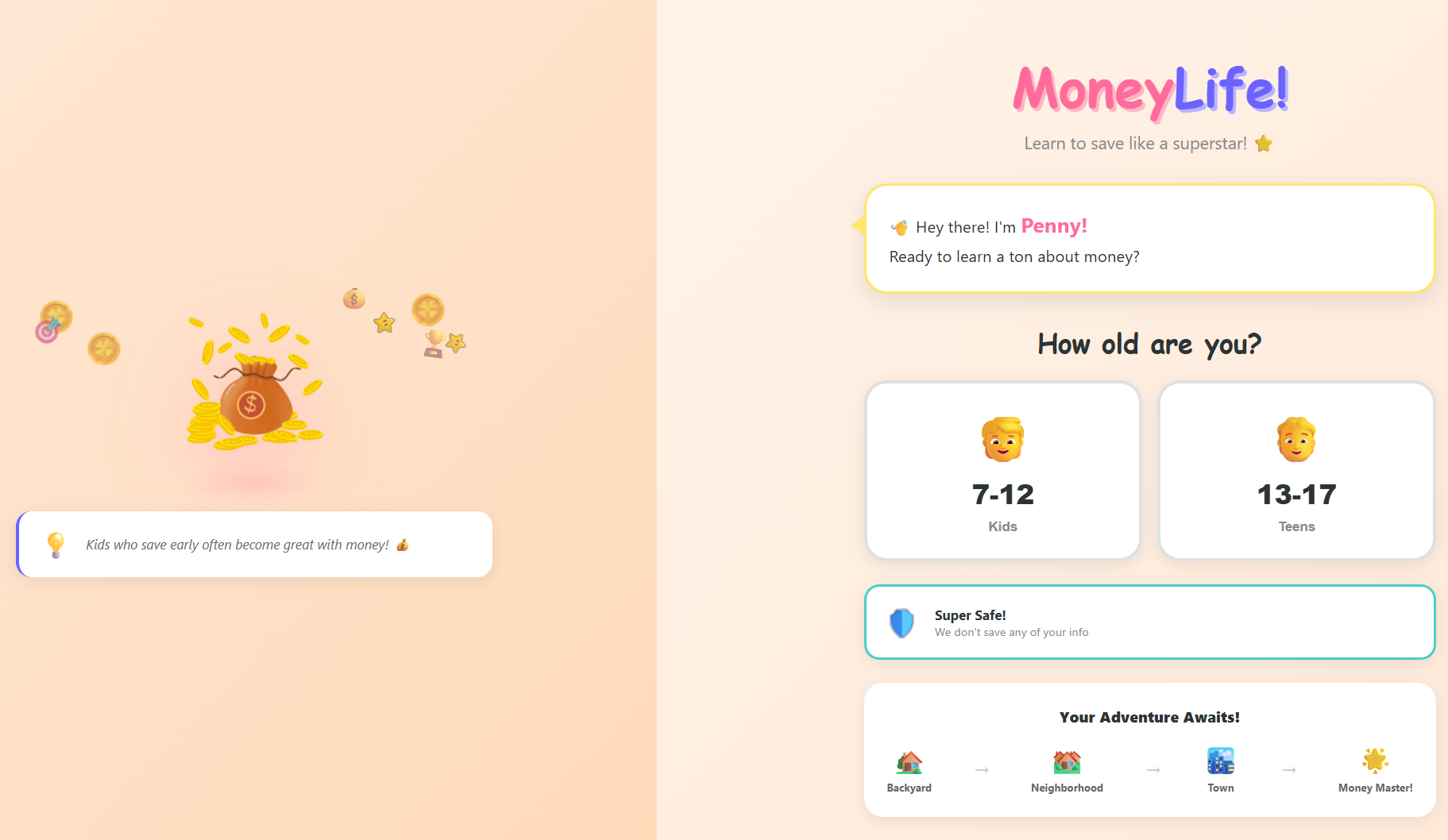
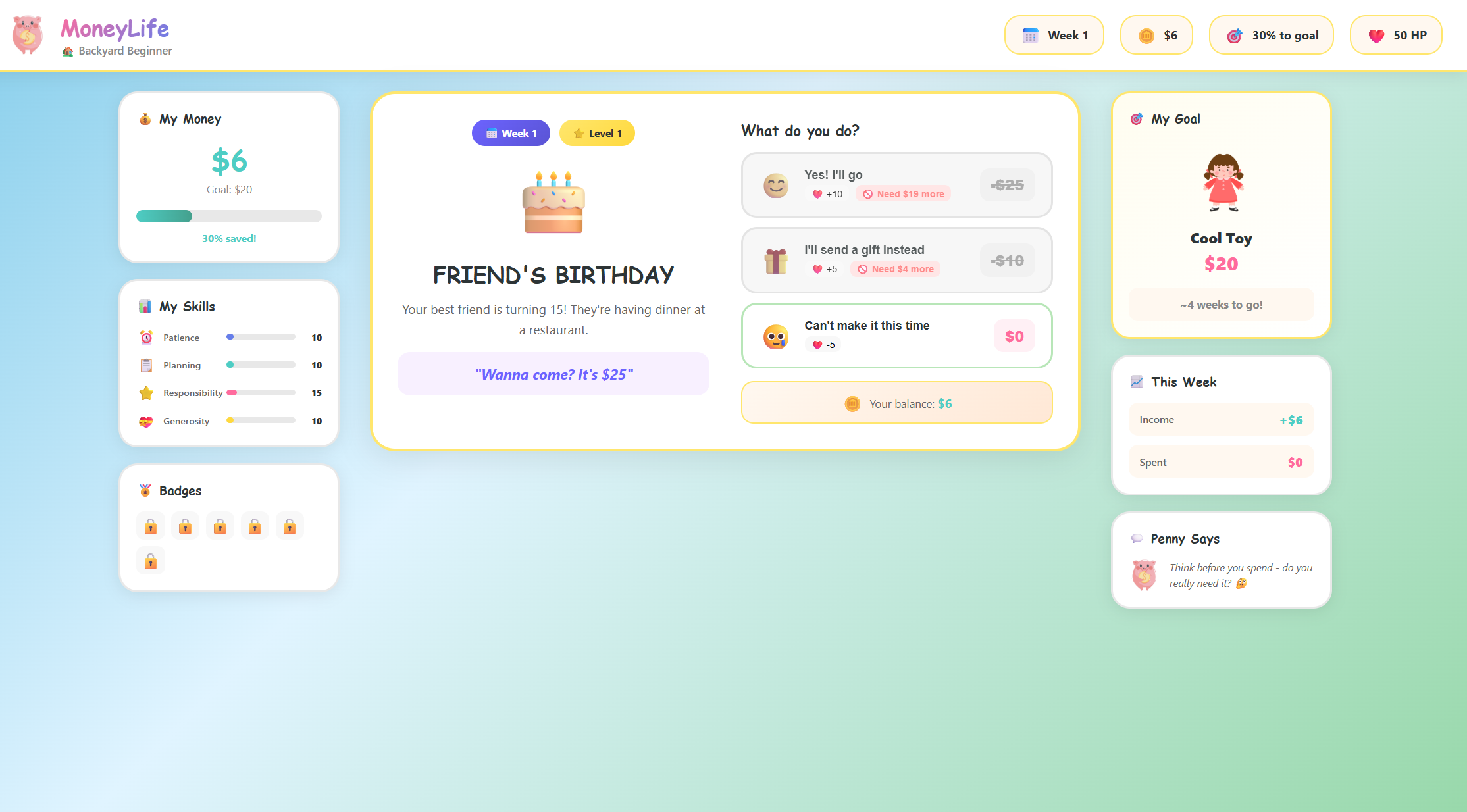
The app has two modes: Kid and Teen, each with age-appropriate scenarios. Kids deal with allowances, spending temptations, and saving small amounts, while teens face more complex situations like budgeting, debt, and investing. The app uses different life scenarios with dynamic feedback to make decisions meaningful. Each level introduces a new topic with a goal to achieve, so users learn valuable lessons while staying engaged and trying to win.
How we built it
We built the app using Vue.js for the frontend and Pinia for state management. Scenarios were designed as modular life events to allow easy updates and expansion. We implemented financial logic such as budgeting, interest calculation, and reward/penalty systems to make the simulation realistic while keeping it fun and approachable.
Challenges we ran into
Along the way, we faced several challenges. From countless bugs in the UI to stubborn backend logic crashes, every problem tested our patience. One major hurdle was implementing the two separate models; the kid and teen. Initially, we wrote them together, and attempts to separate them caused crashes. We had to completely refactor the project structure to support distinct game behaviors for each mode.
Accomplishments that we're proud of
We’re proud of successfully creating a dual-mode system with meaningful, age-appropriate scenarios. The app’s dynamic feedback and modular design make it scalable and easy to expand. We also became proficient in Git, mastering branching, merge conflicts, and collaborative workflows. Finally, we combined gamification with education to make complex financial concepts like budgeting, debt, and investing engaging and fun for young learners.
What we learned
This project taught us the importance of iterative design, testing, and planning. We learned to balance realism with engagement, design for different age groups, and anticipate challenges in both frontend and backend development. We also gained valuable experience in version control and collaboration, which will be crucial for future projects.
What's next for MoneyLife
Looking forward, we plan to expand MoneyLife with more diverse scenarios and topics to cover a wider range of financial concepts, from entrepreneurship to long-term investing. We want to add personalized progress tracking, so players and parents can see improvements and areas to focus on. Also we want to start social or multiplayer features a plan that allows kids and teens to collaborate, compete, and learn from each other. Finally, we aim to improve accessibility and engagement through animations, storytelling, and adaptive difficulty, making financial education even more immersive and effective for all age groups.
Built With
- gemini
- javascript
- vite
- vue

Log in or sign up for Devpost to join the conversation.