-
-
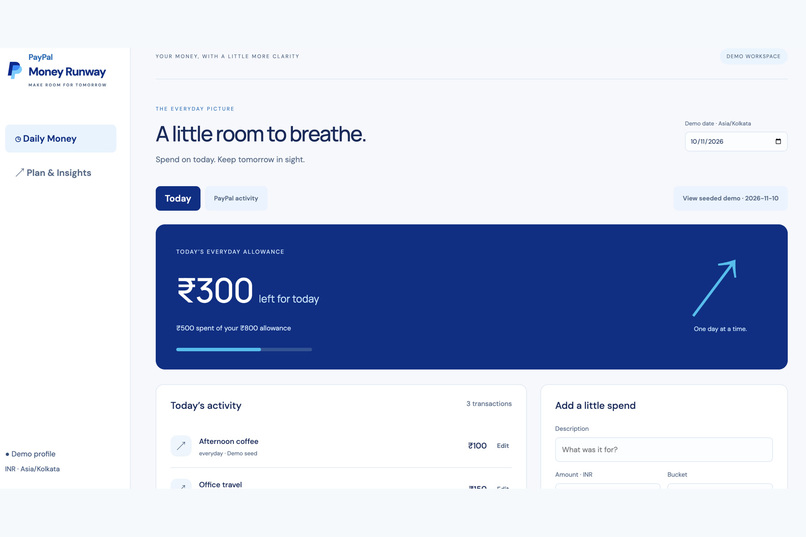
Daily spending
-
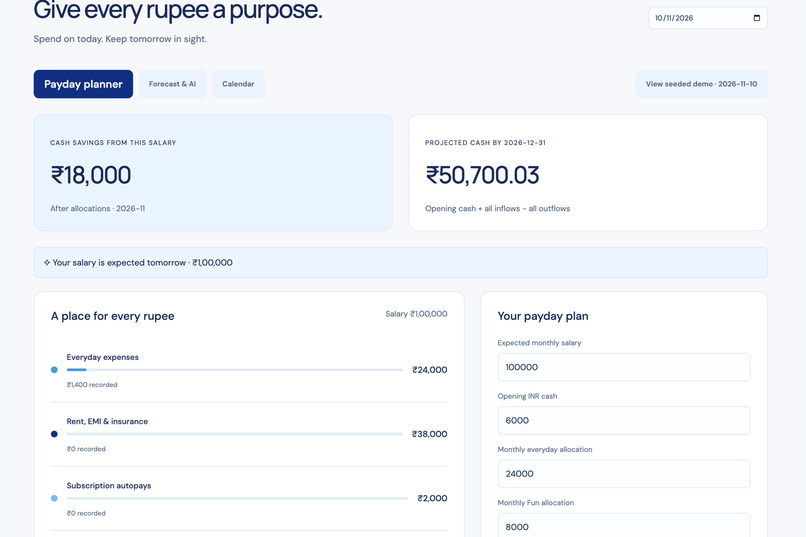
Payday planner
-
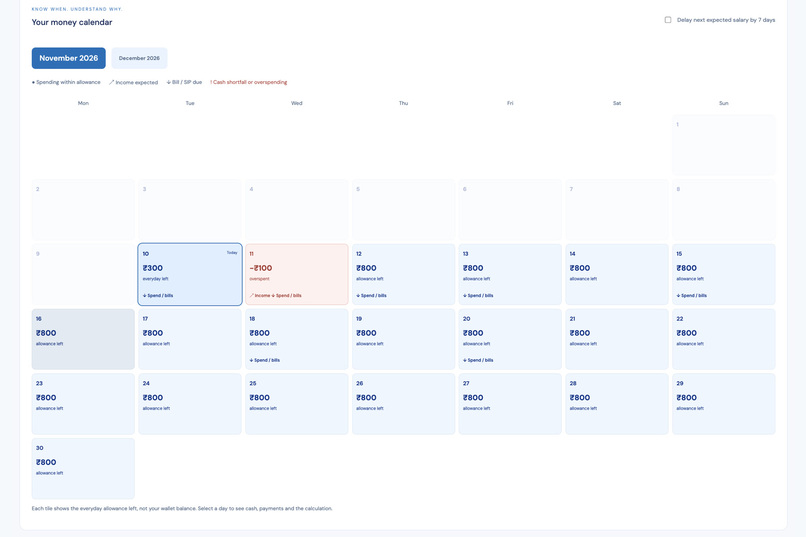
Money calendar
-
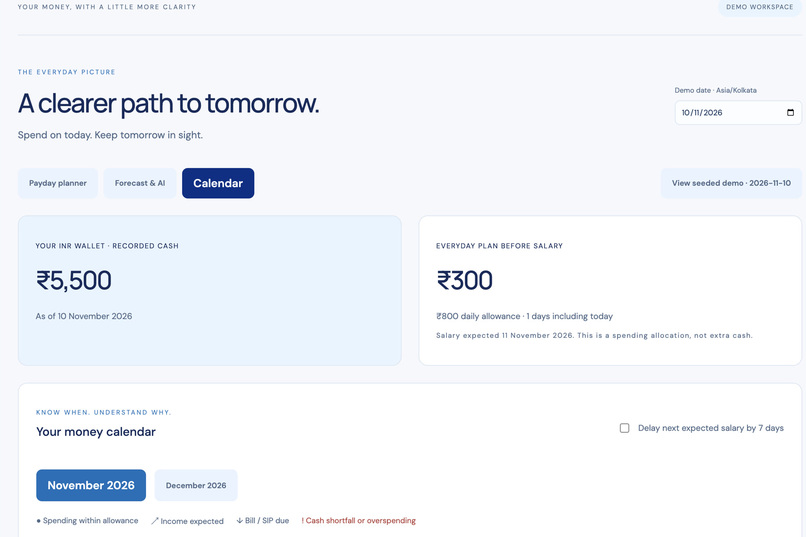
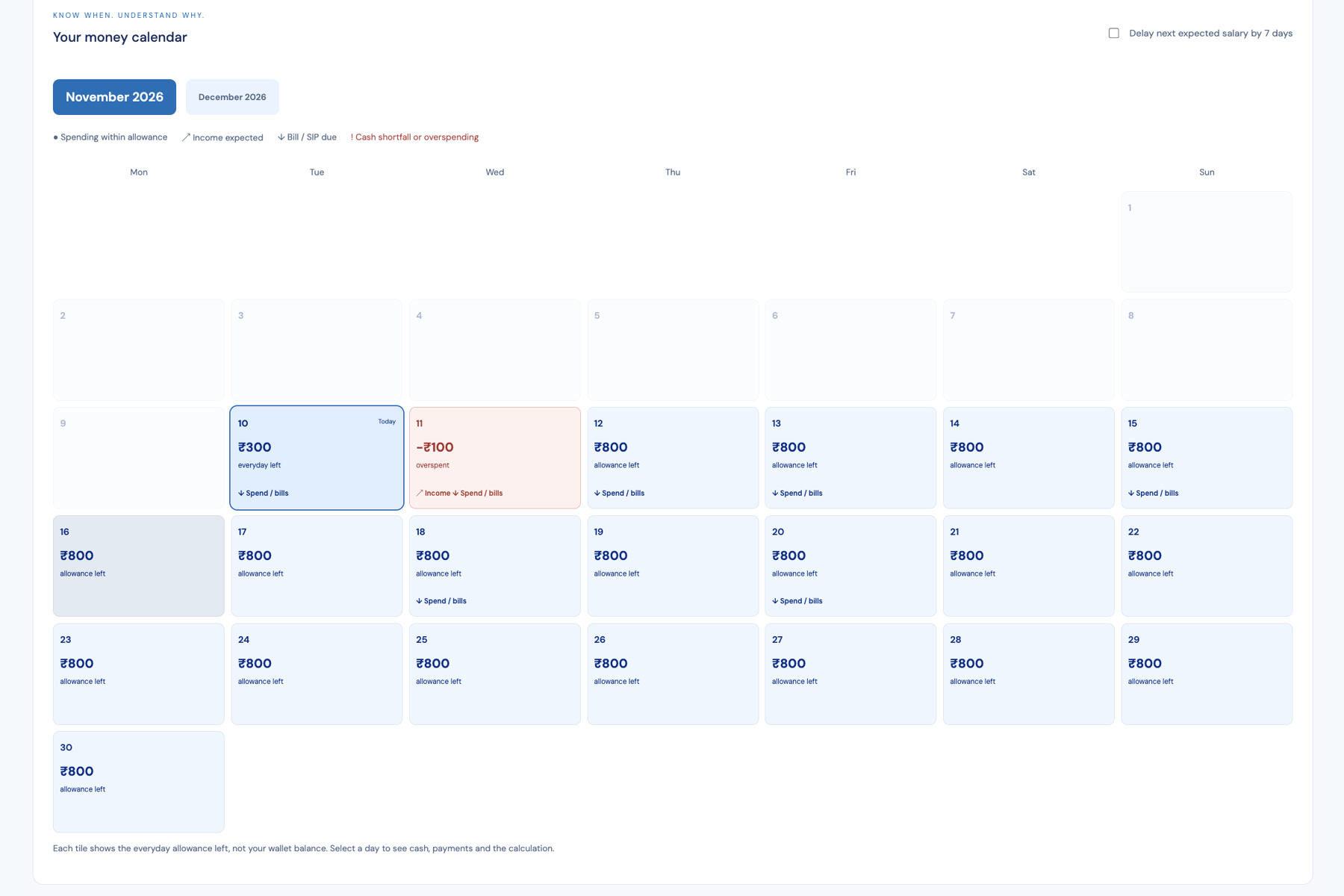
Calendar overview
-
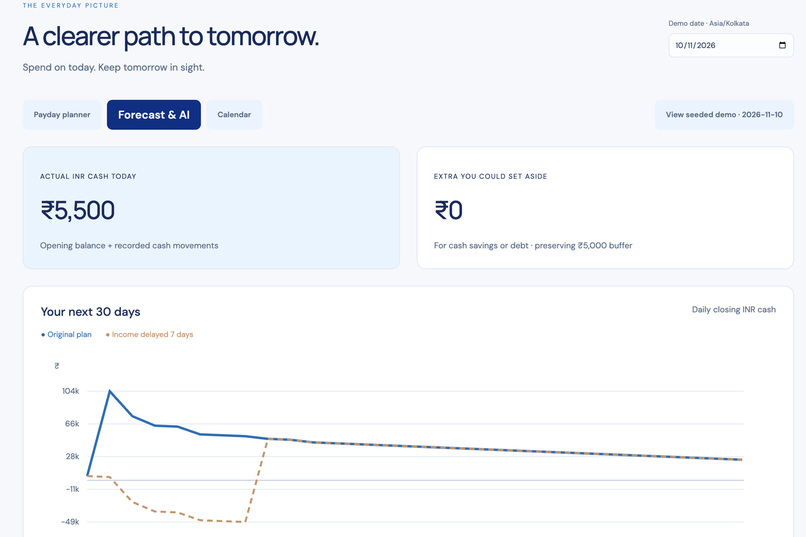
30-day cash forecast
Inspiration
Knowing your bank balance does not tell you how much you can safely spend. Rent, subscriptions and everyday expenses may already have a claim on that money.
I wanted to build a tool that answers two practical questions: “What can I spend today?” and “Will my cash last until payday?”
What it does
Money Runway brings daily spending and future cash commitments into one place.
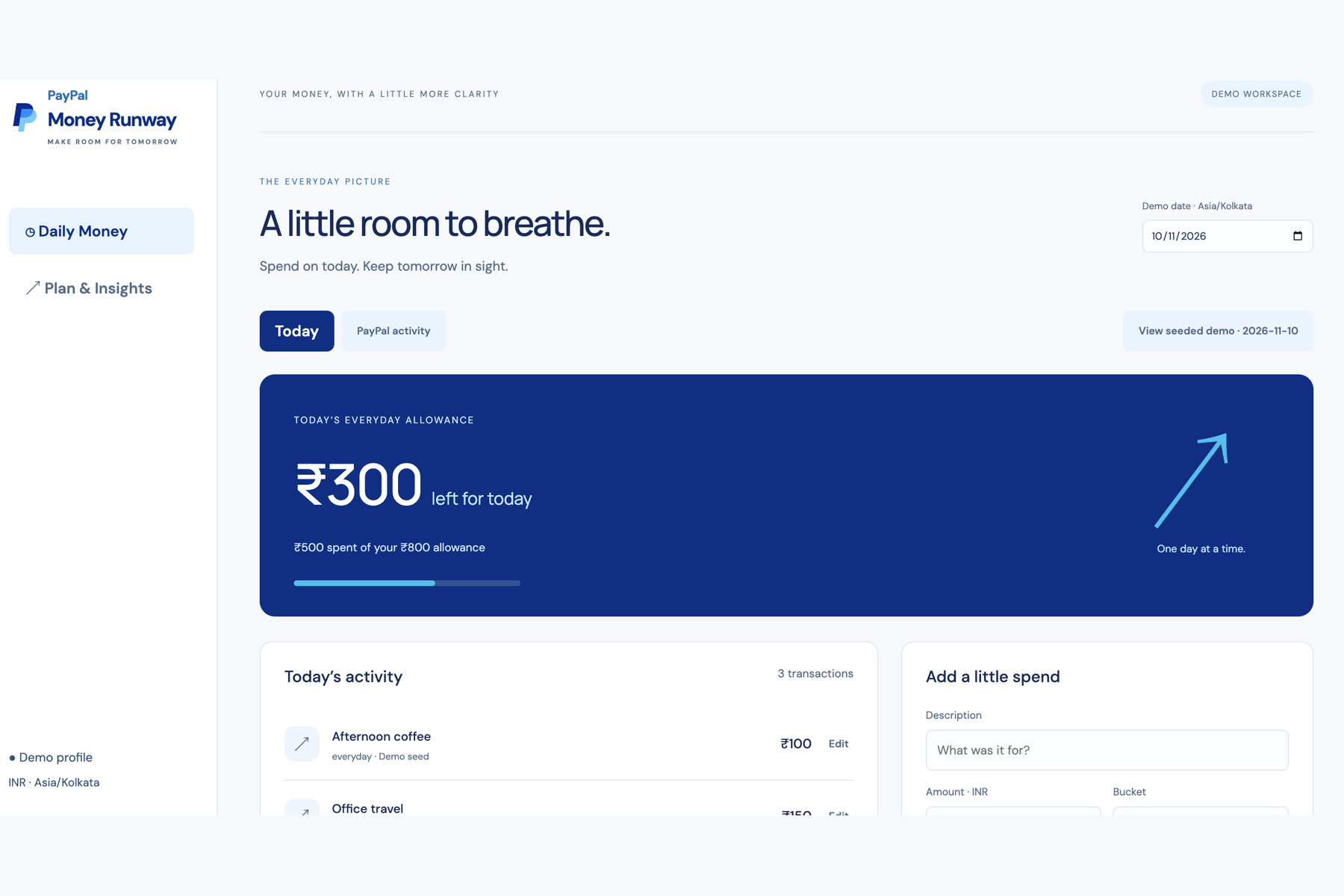
- Tracks everyday expenses with a separate Fun bucket.
- Supports adding, editing and importing sample INR bank/UPI transactions.
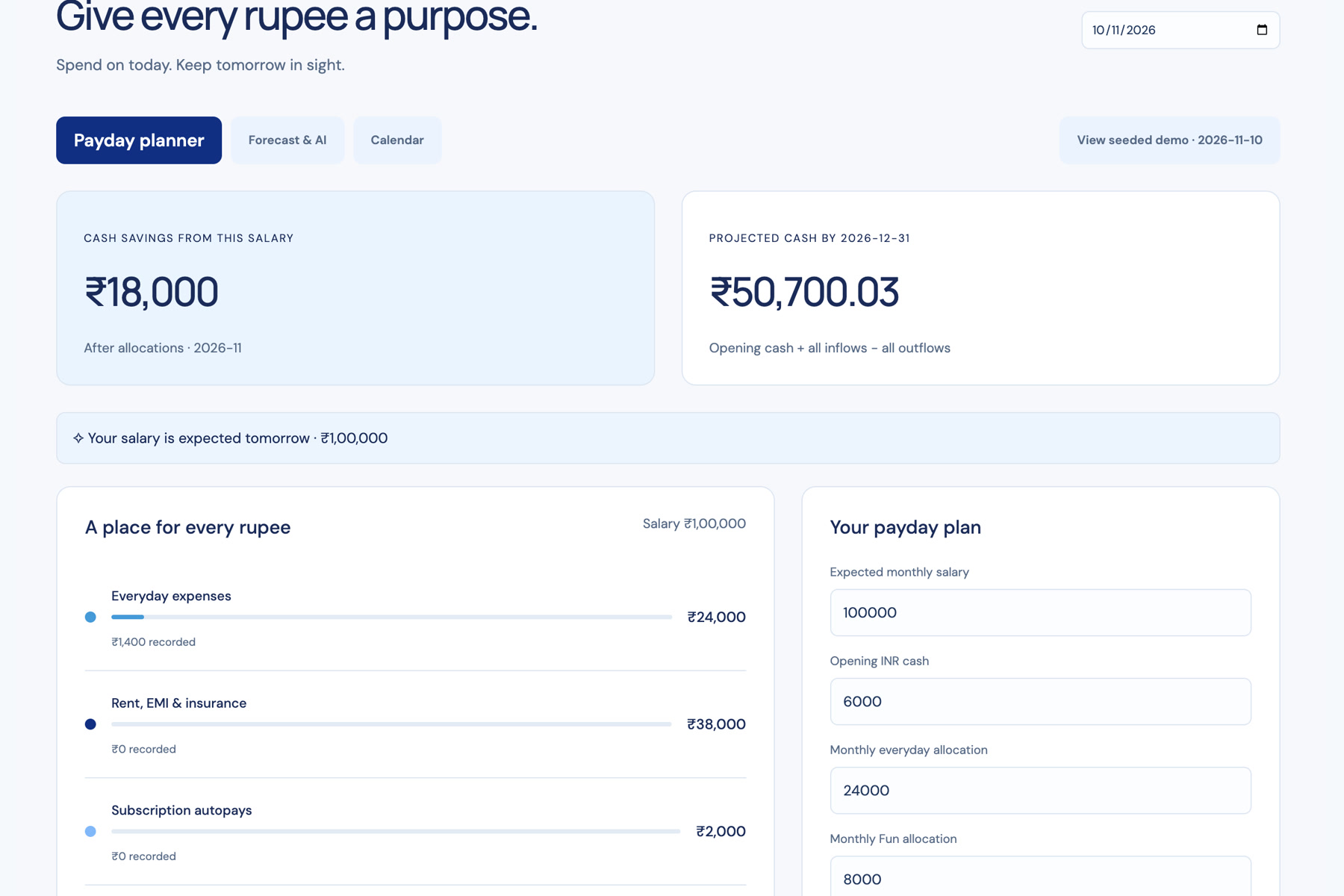
- Plans salary allocations, recurring bills, debt minimums and SIPs.
- Shows cash savings from the salary separately from projected cash.
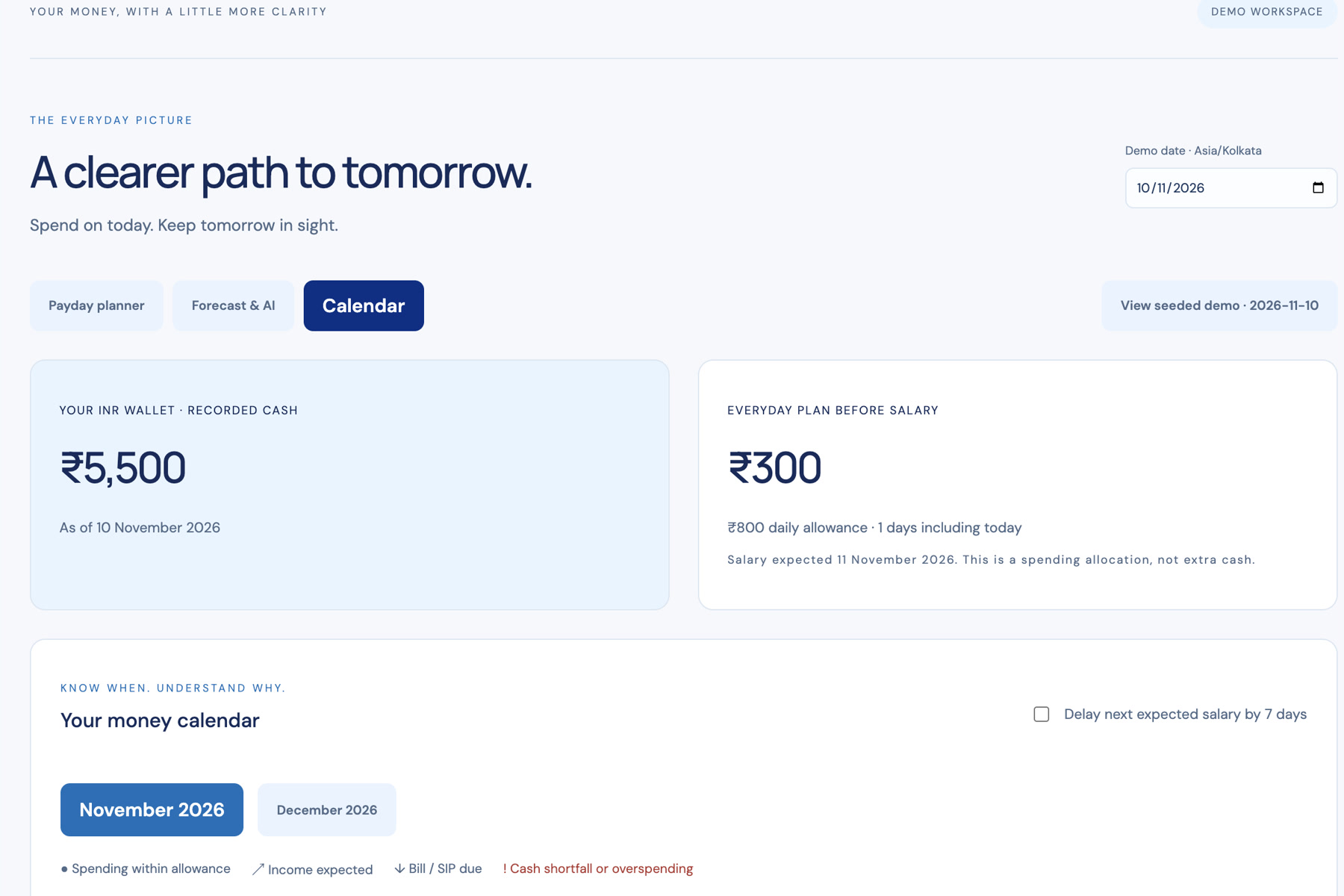
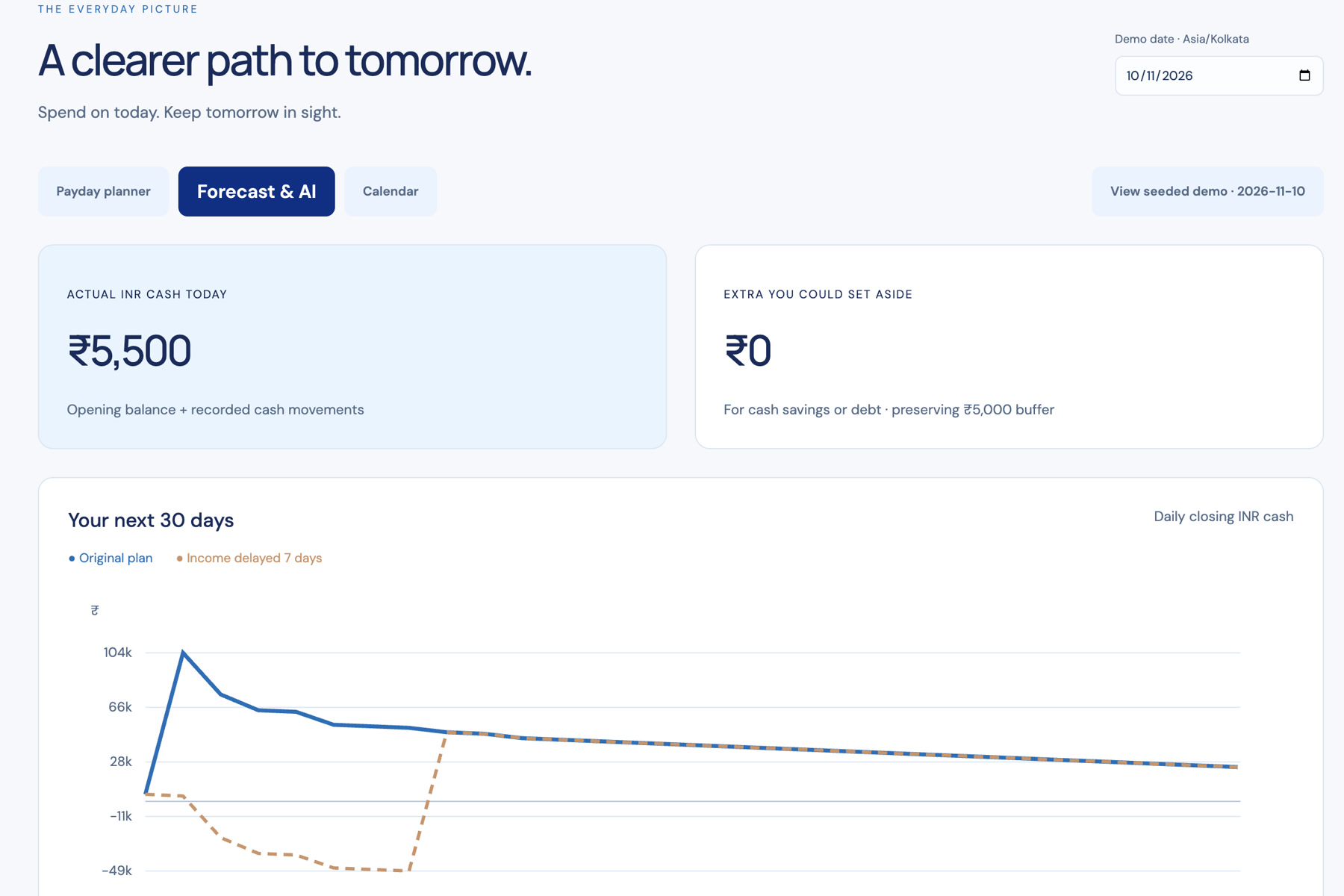
- Displays a money calendar and a 30-day cash forecast.
- Compares the original plan with income delayed by seven days.
- Imports real PayPal Sandbox activity without duplicating records.
- Uses Gemini to explain budget facts, suggest categories and draft an editable subscription review message.
The seeded example starts with an ₹800 allowance and ₹500 in expenses, leaving ₹300. Its ₹1,00,000 salary allocation leaves ₹18,000 in cash savings.
How I built it
The frontend uses React and Vite. The backend uses Node.js and Express, with SQLite for persistent storage.
Money is stored as integer minor units. The INR budget uses Asia/Kolkata dates.
The backend obtains its own PayPal Sandbox OAuth token and imports paginated Transaction Search results. Transactions retain their original currencies. The USD 5,000 T1900 initial balance is treated as an opening balance and excluded from income, spending and INR budget totals.
Forecast calculations run deterministically in the backend. Gemini receives redacted descriptions and computed facts. Its output is validated before display, and fallback guidance keeps the app usable when AI is unavailable.
Challenges
The main challenges were avoiding duplicate PayPal imports, counting matched planned and actual payments only once, handling dates consistently, and keeping foreign-currency activity separate from the INR budget.
AI access also required handling quota limits, timeouts and permission errors without interrupting the core budget.
Accomplishments
- Verified real PayPal Sandbox sync and zero new imports on repeat sync.
- Verified real Gemini output through the app.
- Passed 19 automated tests and the production build.
- Demonstrated expense recalculation and persistence after refresh.
- Demonstrated a projected shortfall when expected income is delayed.
What I learned
A useful budgeting experience needs clear assumptions and reliable calculations. AI can help explain results, while the backend remains responsible for the numbers and users remain in control of changes.
What's next
Future improvements include spending estimates informed by history, recurring-payment suggestions for user confirmation, and deployment for easier access.
The current project is a working local, single-profile demo. The public repository includes setup instructions, demo data, tests and an MIT license. The seeded budget runs without credentials; live PayPal and Gemini features require the user's own keys.
