-
-
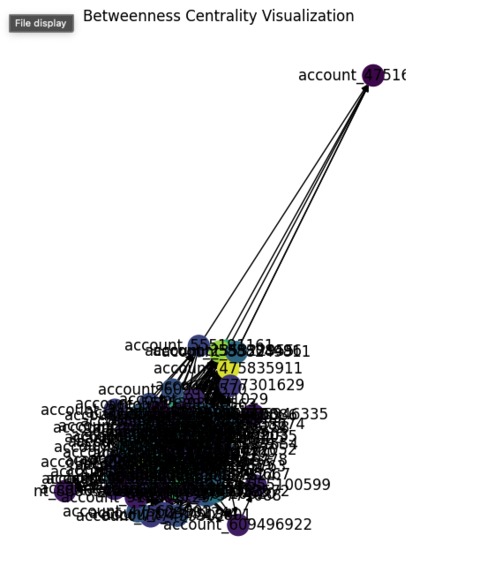
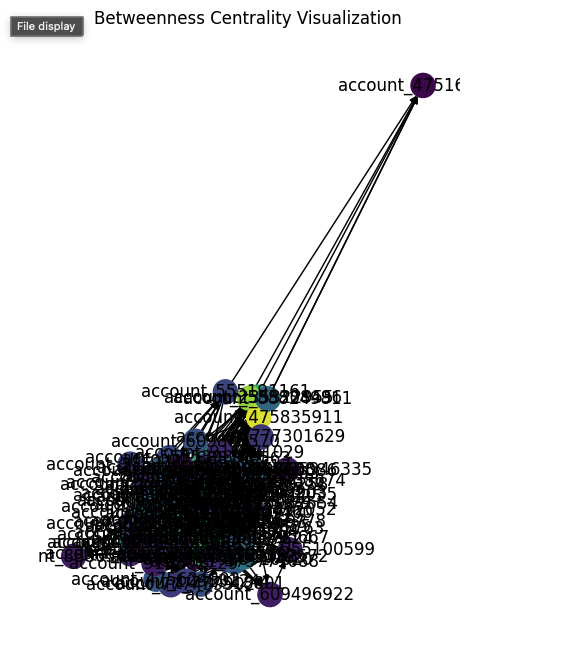
Betweenness centrality visualisation
-
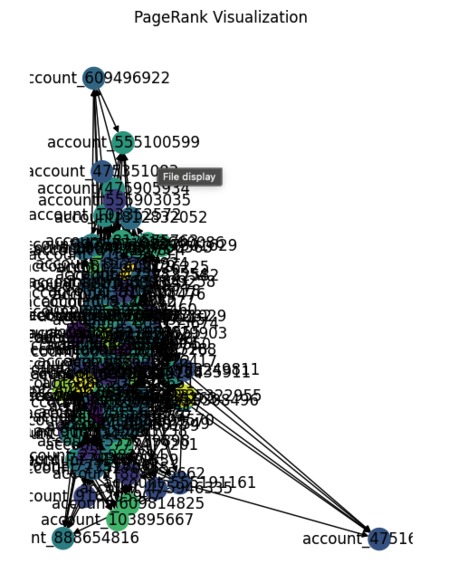
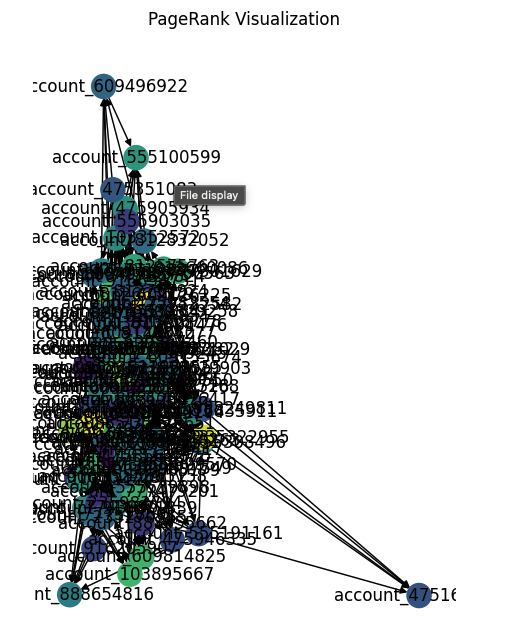
Pagerank visualisation
-
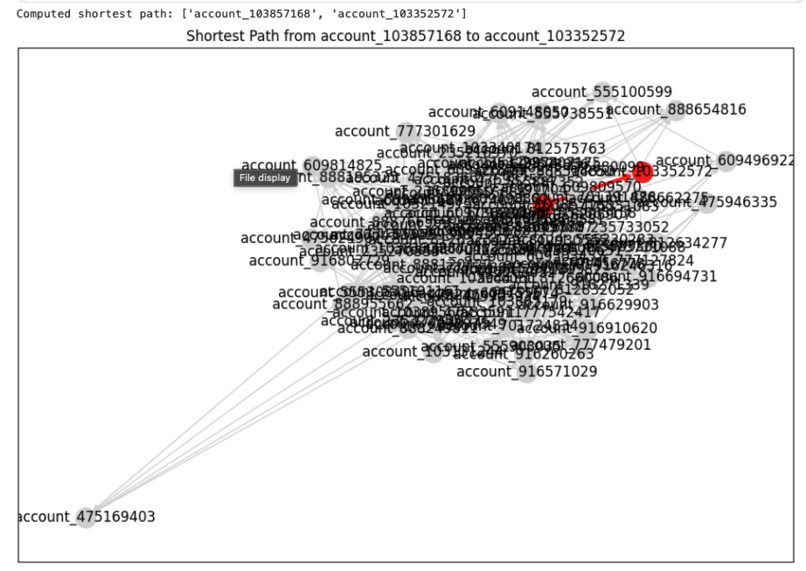
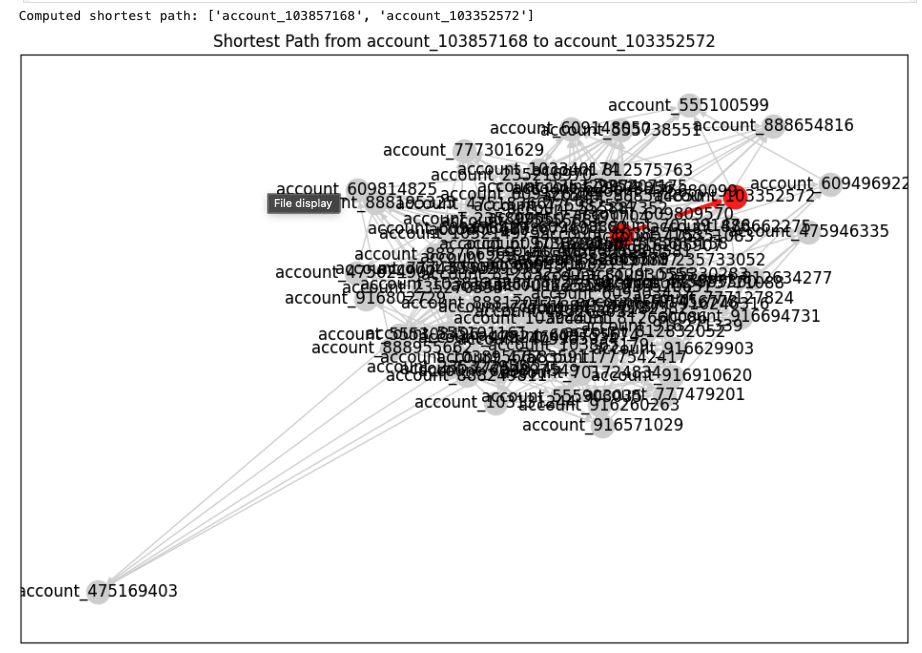
Shortest path from account A to account B
-
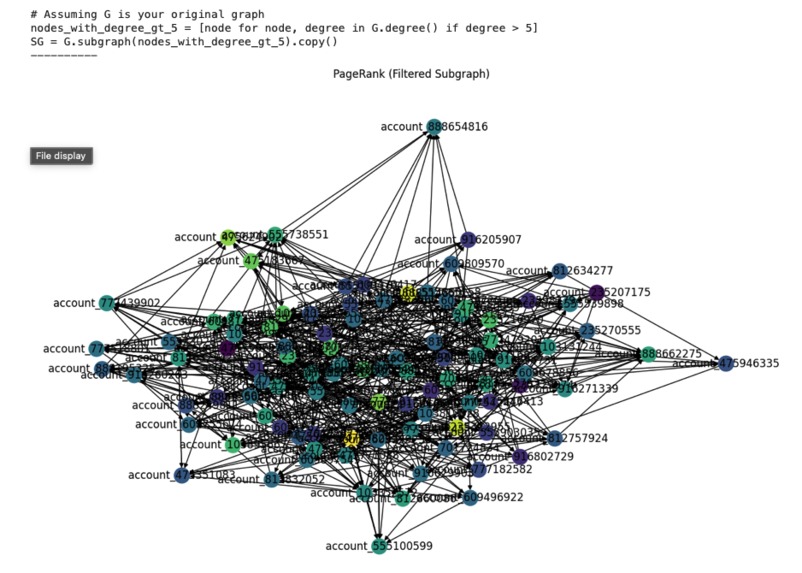
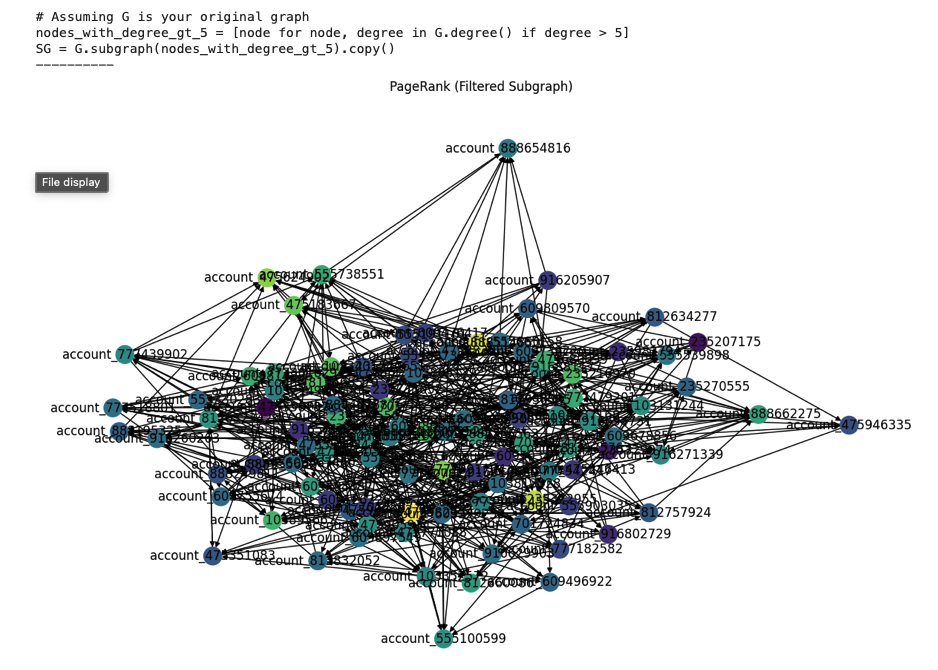
Pagerank (filtered subgraph) [degree > 5]
-
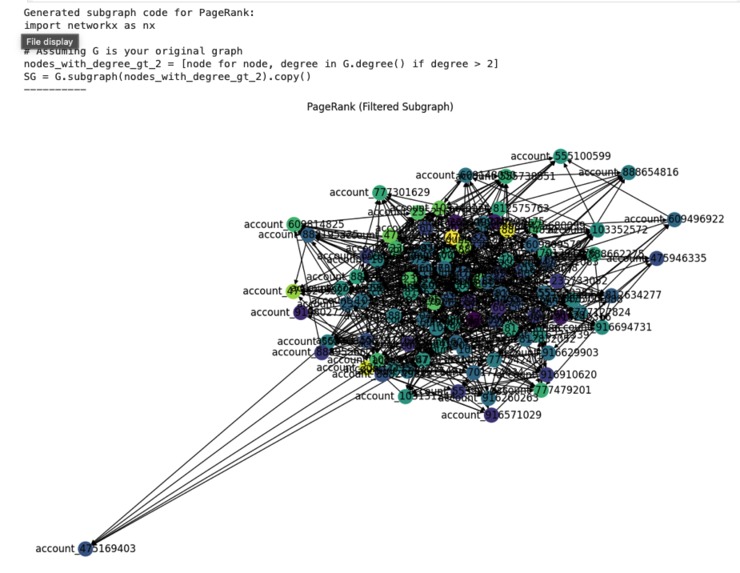
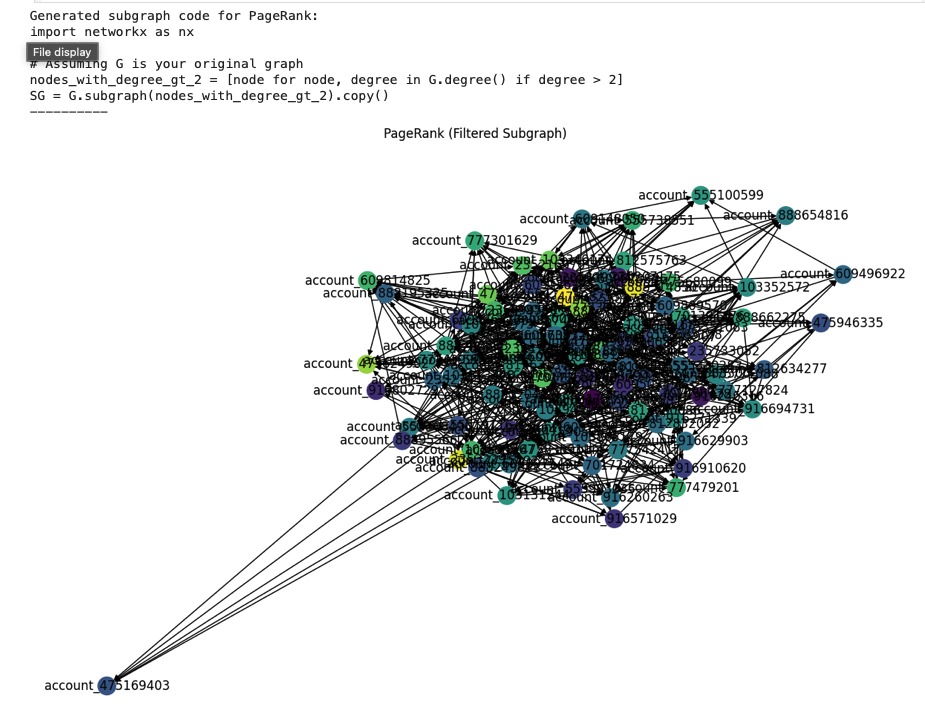
Pagerank (filtered subgraph) [degree > 2]
-
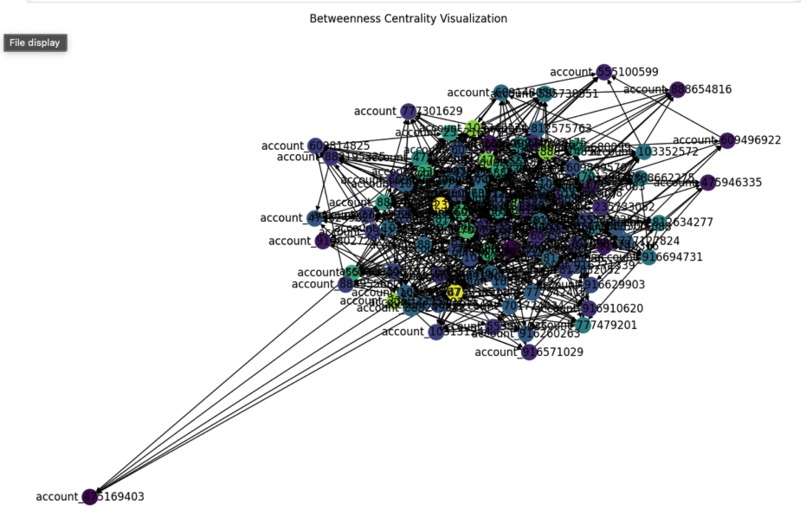
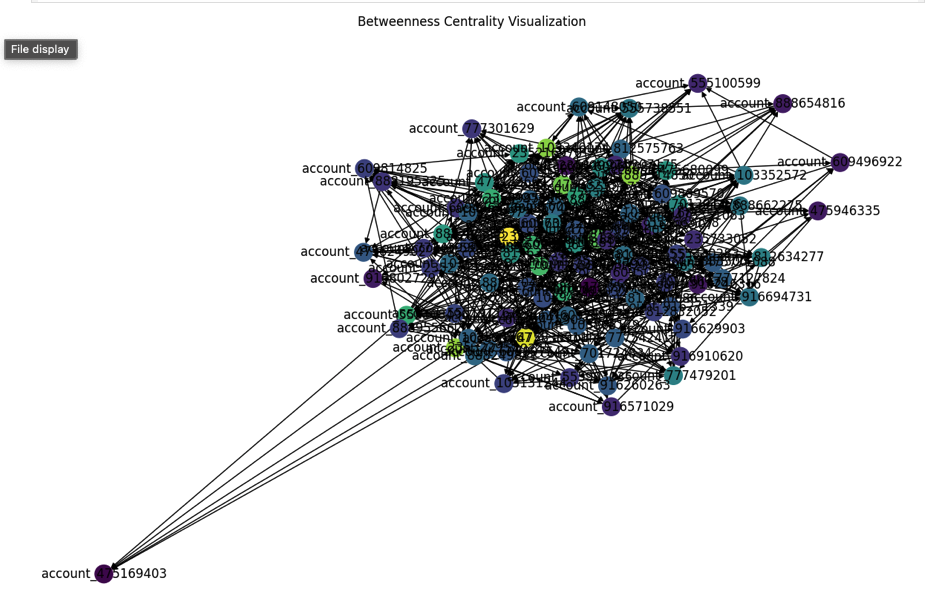
Betweenness centrality visualisation
Inspiration
Our project was sparked by a troubling statistic: despite billions spent on compliance, less than 1% of laundered money is ever caught. Traditional systems drown analysts in false alerts while sophisticated criminals slip through. We envisioned a different approach—viewing money laundering not as isolated transactions but as network patterns that AI can detect. This Colab demonstration aims to democratize advanced financial crime detection, making powerful graph-based analysis accessible to institutions of all sizes. We believe technology should make money laundering harder, not just compliance easier.
What it does
How we built it
We built this solution by first generating synthetic transaction data that mimics real-world money laundering patterns. The core of our approach converts this data into a graph structure where accounts are nodes and transactions are edges. We implemented this using NetworkX for initial modeling, then leveraged NVIDIA's CuGraph to accelerate processing on GPU infrastructure. For persistent storage and querying, we integrated ArangoDB, a native graph database. The detection engine combines traditional graph algorithms with custom LLM prompts that analyze transaction patterns and flag suspicious structures. Everything is packaged in a Google Colab notebook, making the entire pipeline accessible with minimal setup requirements—allowing users to experiment with the technology using just a browser.
Challenges we ran into
We ran into some problem setting up arangoDB.
Accomplishments that we're proud of
We're proud of creating a solution that bridges sophisticated graph theory with practical financial crime detection in an accessible format. Our synthetic data generator produces realistic money laundering patterns while maintaining privacy compliance. The seamless integration between CuGraph's processing power and ArangoDB's storage capabilities demonstrates how specialized tools can work together in the AML space. Most significantly, we've shown how large language models can interpret complex financial networks in human-understandable terms, effectively turning transaction data into narratives that explain suspicious behaviors. All this packaged in a Google Colab that democratizes advanced AML technology for anyone to explore and build upon.
What we learned
Building this project taught us that financial crime detection is as much about pattern recognition as it is about transaction analysis. We discovered the power of graph databases in revealing hidden relationships that traditional row-and-column approaches miss. Implementing CuGraph showed us how GPU acceleration can transform processing time for large transaction networks from hours to minutes. Working with large language models revealed their surprising effectiveness in explaining complex network behaviors in human terms. Perhaps most importantly, we learned that synthetic data generation is its own art form—creating realistic financial crime patterns without inadvertently revealing actual criminal methodologies requires careful balancing. Finally, we gained appreciation for how democratizing these tools through platforms like Colab can potentially transform an entire industry's approach to a critical problem.
What's next for Money Laundering Investigator
Our immediate roadmap includes expanding the pattern recognition capabilities to detect more sophisticated laundering techniques like trade-based schemes and crypto-mixing. We're working on an explainability module that provides investigators with reasoning chains for each alert, reducing investigation time. Integration with real-time transaction streams is a priority to enable proactive prevention rather than retroactive detection. We plan to develop a collaborative feedback loop where investigators' insights improve the model's accuracy over time. Longer-term, we envision creating a community-contributed database of anonymized laundering patterns to strengthen defenses across the financial ecosystem. Ultimately, we aim to package this solution as an accessible API that financial institutions of all sizes can implement without extensive data science resources.
Built With
- arangodb
- graphrag
- llm
- networkx
- python

Log in or sign up for Devpost to join the conversation.