Inspiration
Most people are owed money they never claim. A shop drops its price the week after you buy. A takeaway charges you twice. A cab takes the long way. A free trial quietly becomes a monthly payment. The rules that would get the money back exist, but they are scattered across store policies, tariffs and help pages, and claiming takes time nobody has. Your PayPal activity already holds the evidence, so I built an agent that reads it and does the claiming for you.
What it does
Money Back reads a person's PayPal activity and turns it into money back:
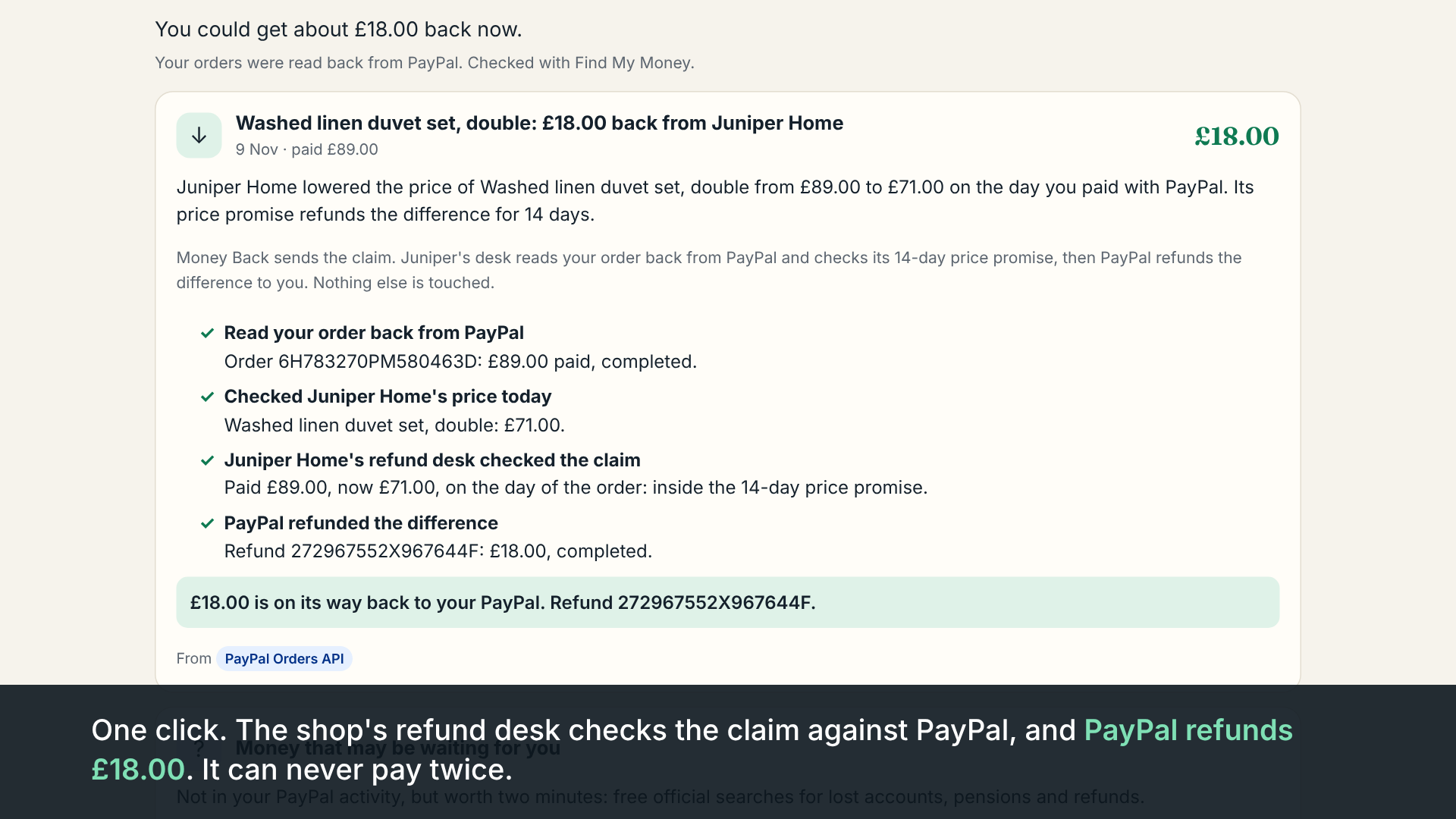
- Price drops at shops on PayPal, refunded automatically. Money Back reads the order back from PayPal, sees the shop has lowered its price inside its price promise, and, when you press Claim, sends the claim to the shop's refund desk. The desk checks the claim against the PayPal order itself (completed, inside the window, the same shopper, nothing refunded yet) and PayPal refunds the difference. One click, real money movement, never twice.
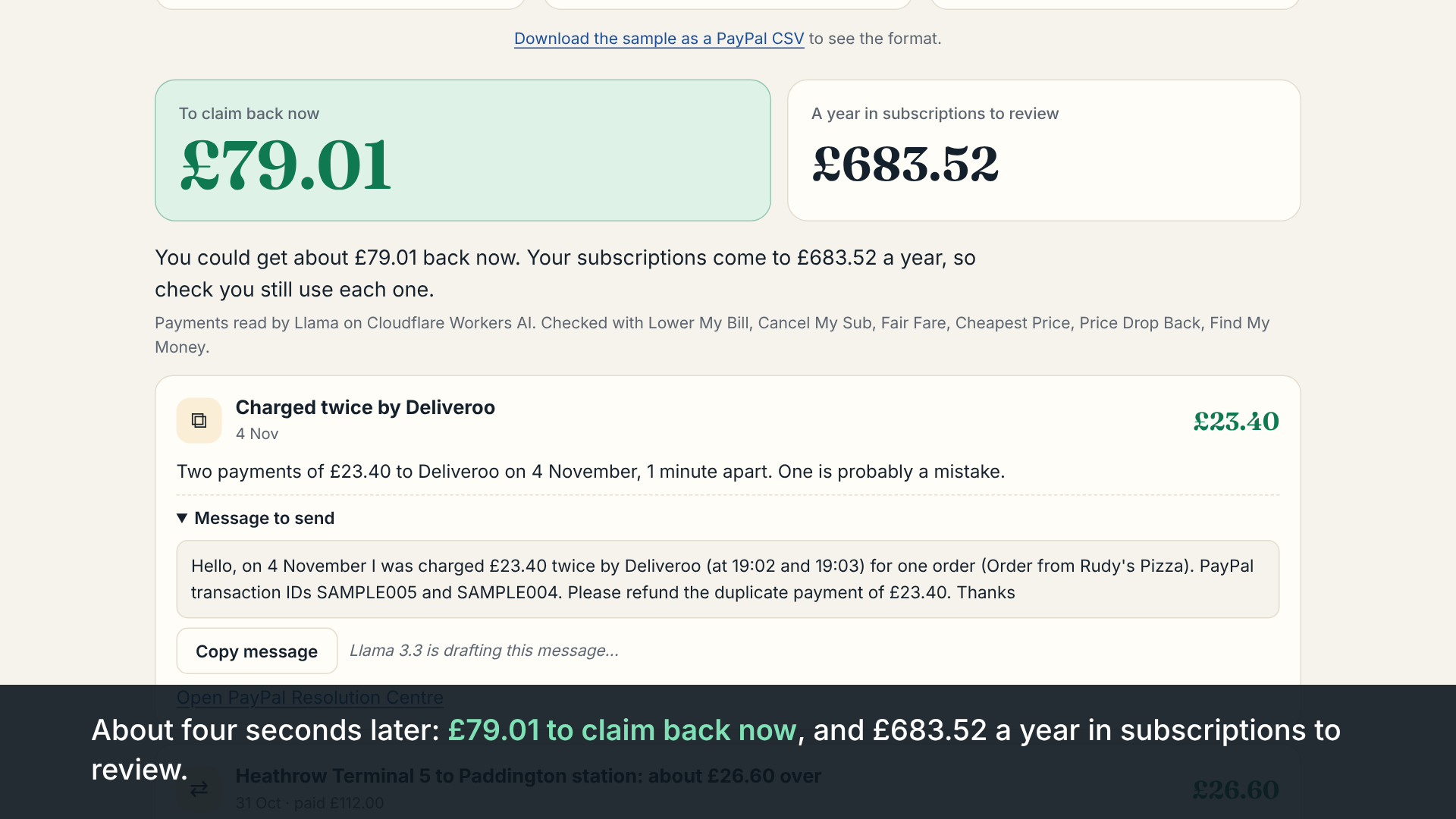
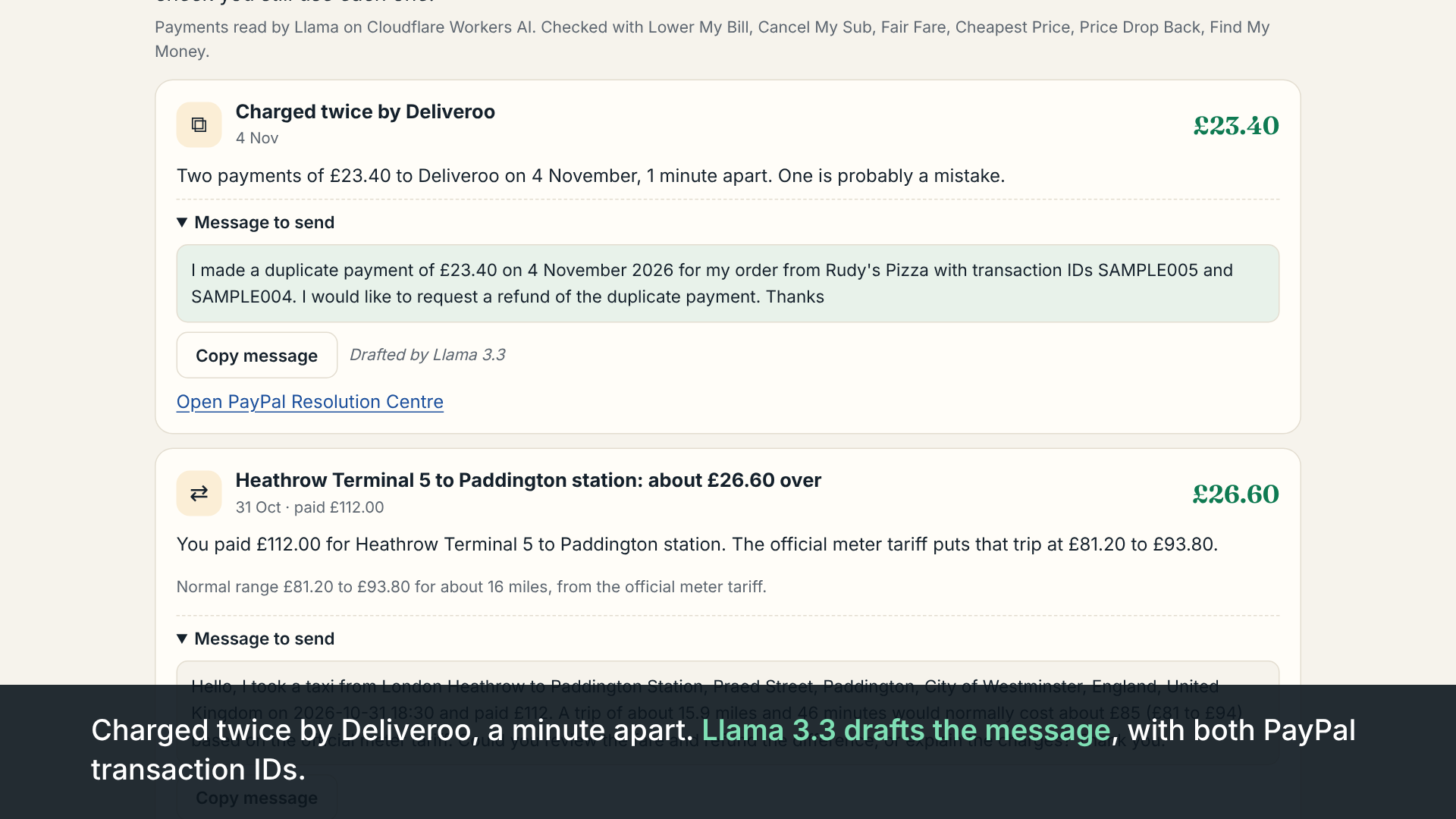
- Double charges: the same amount to the same merchant minutes apart, with a ready message quoting both PayPal transaction IDs.
- Cheaper now elsewhere: today's price for what you bought, and the store's own price-match rules, with the claim written for you.
- Overpriced cabs: the fair fare for the trip from the official meter tariff, and the complaint to send.
- Forgotten subscriptions: the real cancel steps, the catches, a cheaper option, and a calendar reminder before the next charge.
- Bills: what to say to get a better deal.
- Money waiting elsewhere: free official searches for lost accounts, pensions and refunds.
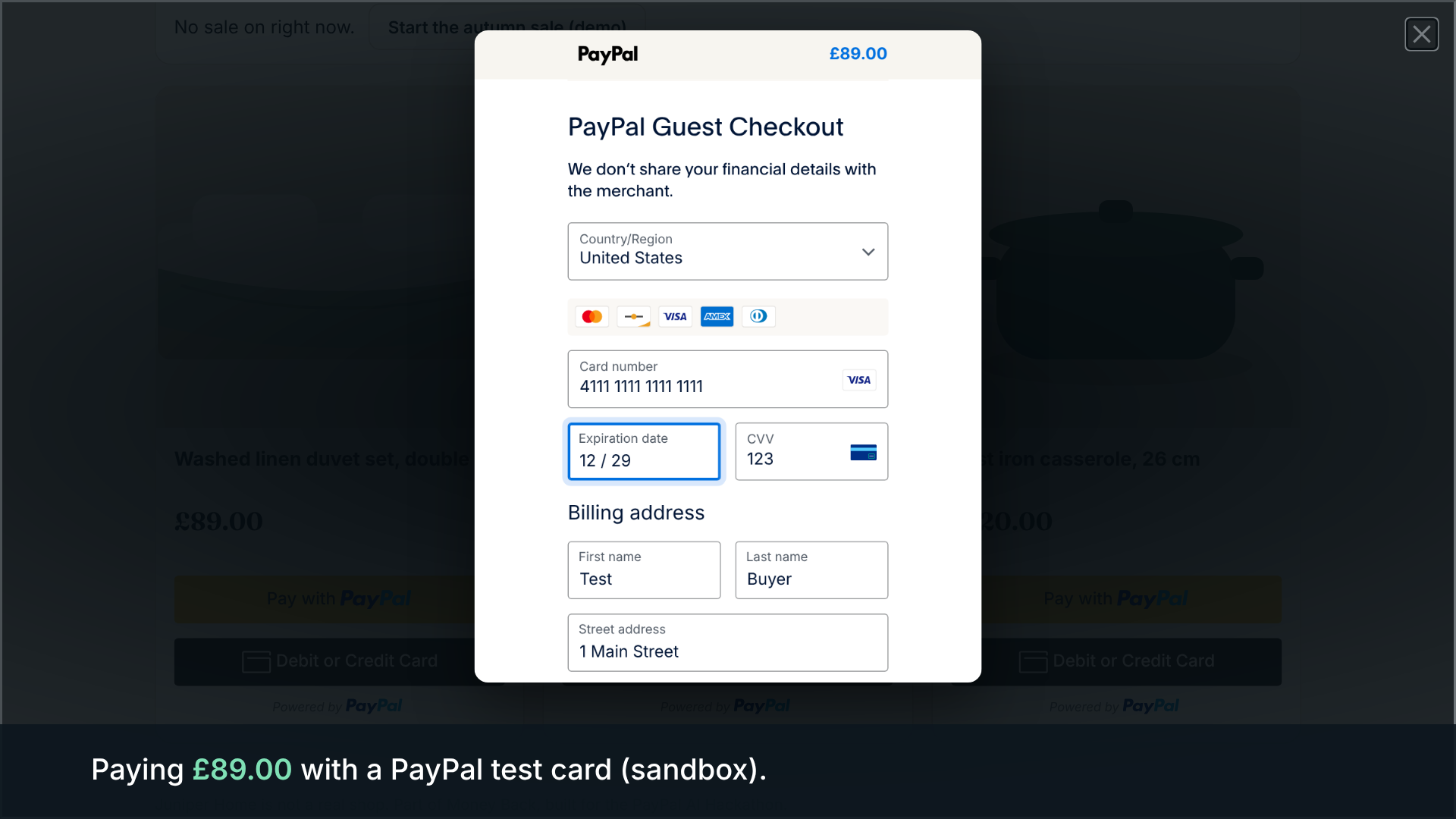
Three ways in: a sample account (one click), your own PayPal activity download (read in memory, never stored), or Juniper Home, a made-up shop on PayPal sandbox where you can make a real sandbox payment, start a sale and watch Money Back get the difference back.
How I built it
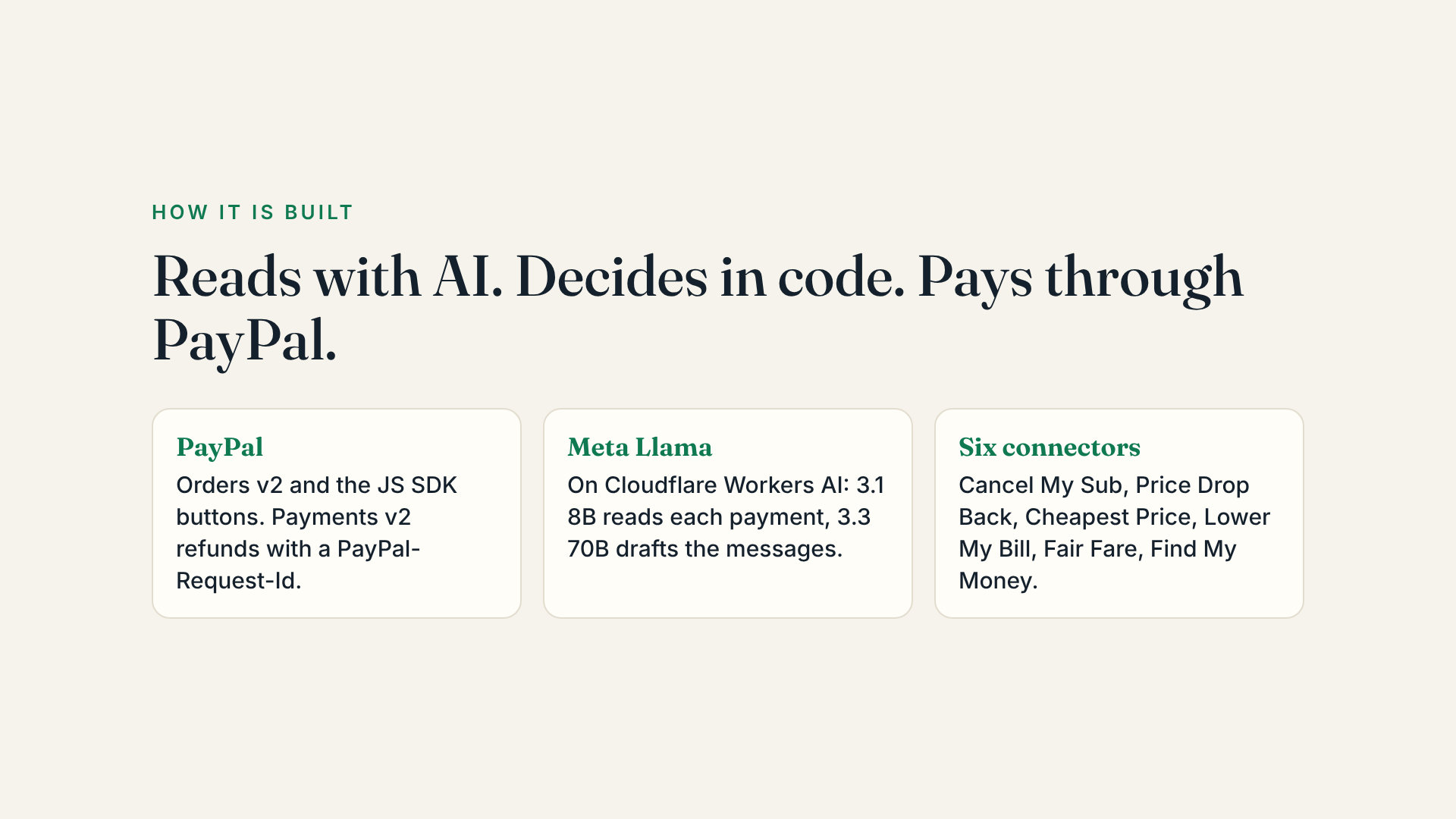
- PayPal: Orders v2 with the JavaScript SDK buttons for checkout (create, capture, read back), and Payments v2 refunds with a PayPal-Request-Id so a claim can only ever pay once. The refund desk never trusts our own notes: it reads every order back from PayPal before refunding.
- AI: Meta Llama on Cloudflare Workers AI, with JSON schemas. Llama 3.1 8B labels each distinct payment line in seconds (merchant, subscription or bill or purchase or ride, the product, the route of a cab), and Llama 3.3 70B drafts the claim messages once the results are on screen. Every amount is worked out in code, every label is checked against a fixed list, and payment text is treated as data, never instructions, so the AI cannot move money.
- Specialist knowledge: six live APIs I built earlier (Cancel My Sub, Price Drop Back, Cheapest Price, Lower My Bill, Fair Fare and Find My Money), each asked only about the finds it knows.
- Runtime: one Cloudflare Worker with static assets and KV, on the free plan.
- New for this hackathon: all of Money Back's code (the app, the PayPal integration, the AI reading and writing, the demo shop and its refund desk) was written during the submission period. The six connectors existed before and are used only through their public APIs.
- Tests: 14 tests with stand-ins for PayPal, Workers AI and the connectors, covering every kind of find, refunds paid exactly once, other shoppers locked out, the AI being down or slow, and the connectors being down.
Challenges I ran into
- Making the agent safe to let near money: the AI drafts and labels, while code and PayPal's own records decide every refund.
- Telling a real price drop from bait: listings far below what was paid are usually parts or scams, so they are left out.
- PayPal's activity download writes UK and US dates differently; Money Back works out which from the file itself.
Accomplishments that I'm proud of
- A real round trip through PayPal: pay, price drops, claim, refund, all in the sandbox, checked against PayPal at every step.
- One scan of the sample account finds money in seven different ways, from six specialists, in about four seconds.
- It keeps working when the AI or a connector is busy, with plain rules and templates taking over.
What I learned
Agents that act on money need two layers: a model for reading and writing, and plain code holding the rules. PayPal's idempotent refunds and order read-backs make the second layer simple.
What's next for Money Back
Opening it up to more shops and more of the places people pay.
Built With
- cloudflare-kv
- cloudflare-workers
- javascript
- llama
- paypal
- paypal-orders-api
- workers-ai
