Inspiration
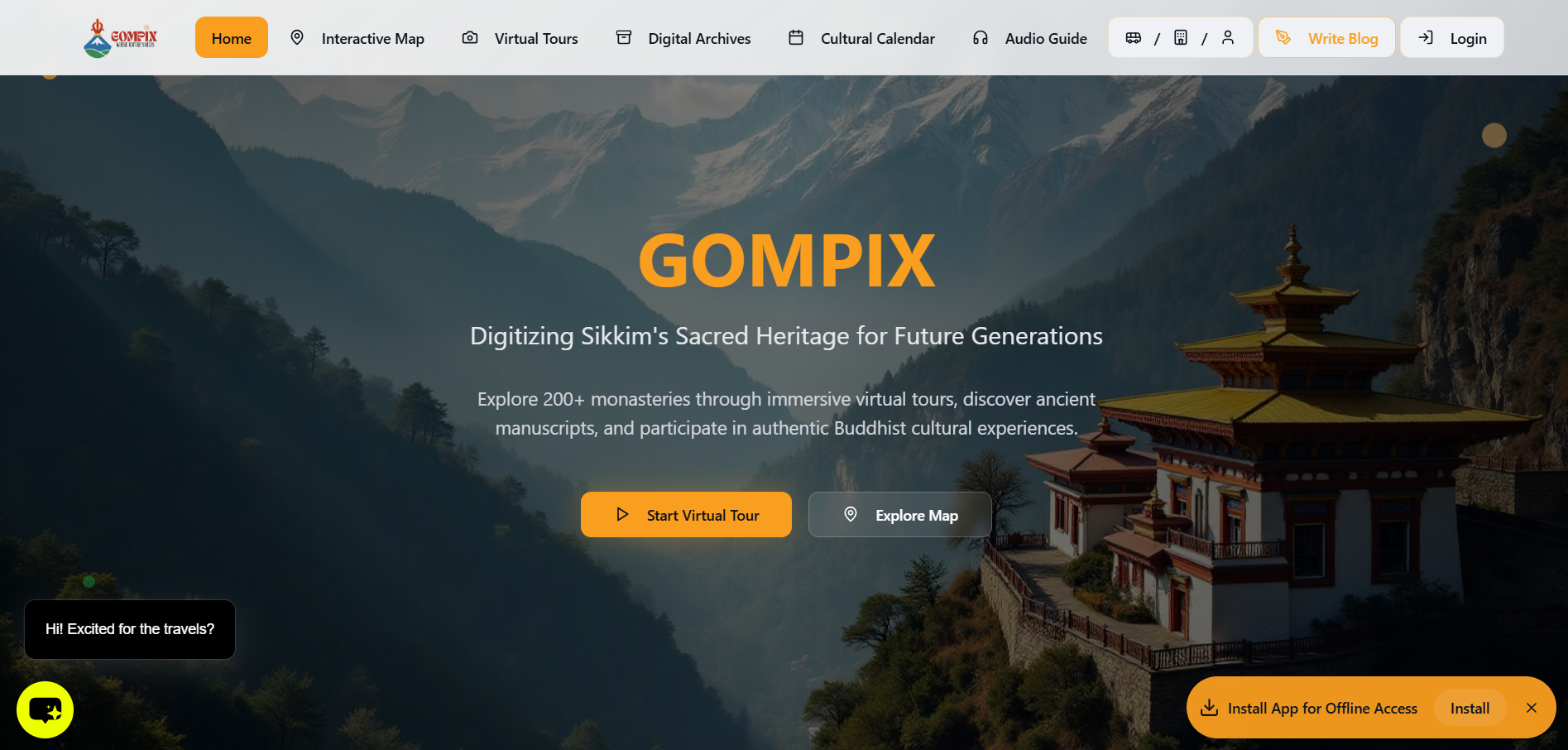
The inspiration for GOMPIX came from the realization that many of Sikkim’s monasteries are located in remote regions, making them difficult to access for tourists and researchers. Additionally, the cultural and historical richness of these monasteries is at risk of being under-documented or lost over time.
We wanted to create a solution that not only promotes tourism but also preserves cultural heritage digitally. The idea was to allow anyone, from anywhere in the world, to explore these monasteries as if they were physically present, while also helping travelers plan their visits efficiently.
Role of Google-Gemini
- AI Chatbot (Core Feature)
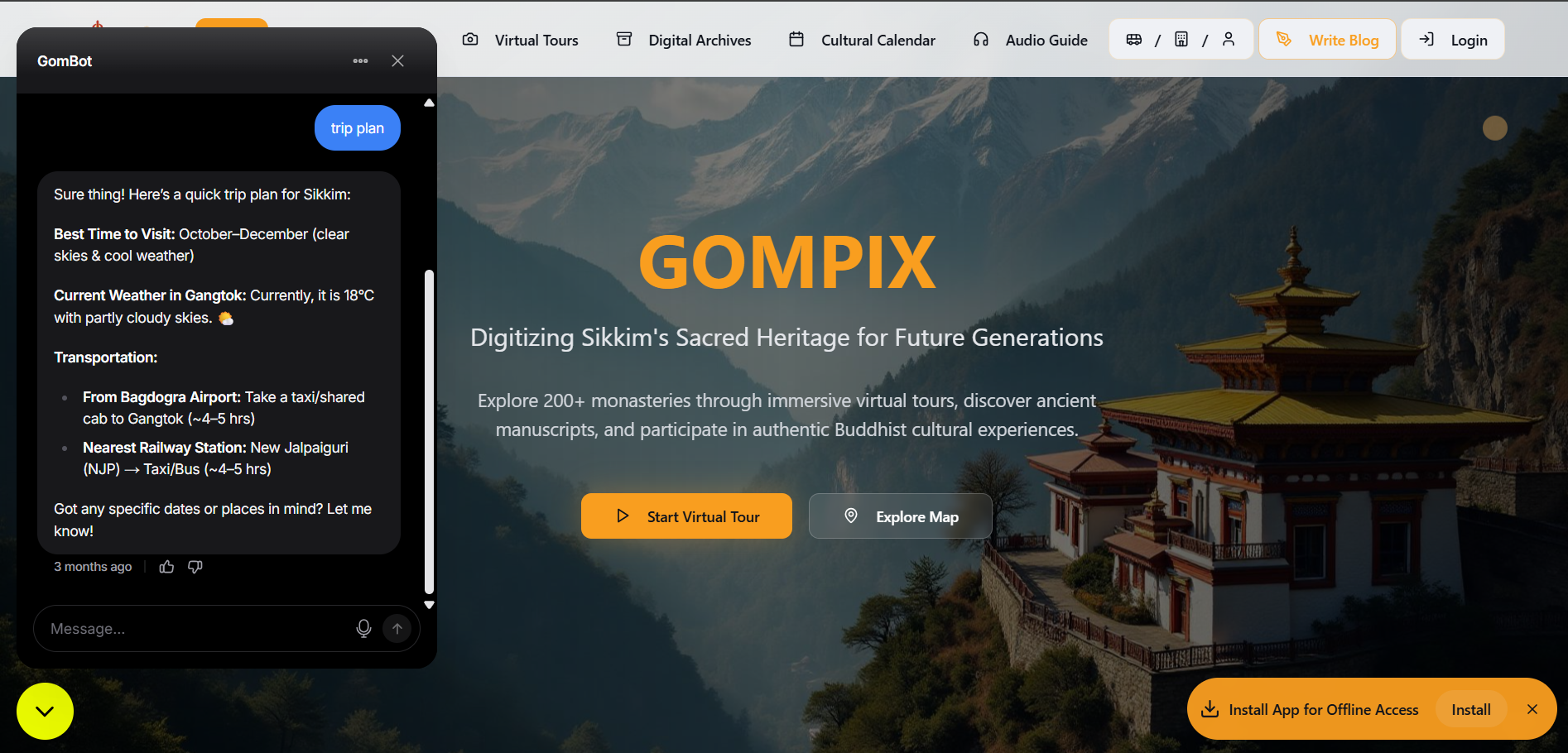
Gemini powers the chatbot to provide instant, conversational responses Answers queries like: Monastery history Cultural traditions Travel tips Festival details Makes interaction feel natural and human-like
- Smart Content Generation Automatically generates: Descriptions of monasteries Cultural stories and historical summaries Helps build the Digital Archive faster without manual writing
How we built it
GOMPIX was developed using a full-stack approach:
Frontend: Designed using modern web technologies (HTML, CSS, JavaScript, React) to create an intuitive and visually engaging user interface. Backend: Built with Node.js / Django (depending on your stack) to manage data, user interactions, and APIs. Database: Used MongoDB/MySQL to store cultural data, user information, and booking details. 360° Integration: Virtual tours were created using panoramic imaging tools and integrated into the platform. AI Chatbot: Implemented using NLP techniques to provide intelligent and context-aware responses. Offline Functionality: Achieved through caching and progressive web app (PWA) techniques.
Challenges we ran into
Data Collection: Gathering authentic and accurate cultural and historical data was time-consuming. Remote Accessibility: Designing features that work efficiently in low-network areas required careful planning. 360° Integration: Ensuring smooth and immersive virtual tours without performance issues was technically challenging. Multilingual Support: Implementing accurate translations and narration across languages. System Integration: Combining multiple features like booking, maps, chatbot, and archives into one seamless platform.
Accomplishments that we're proud of
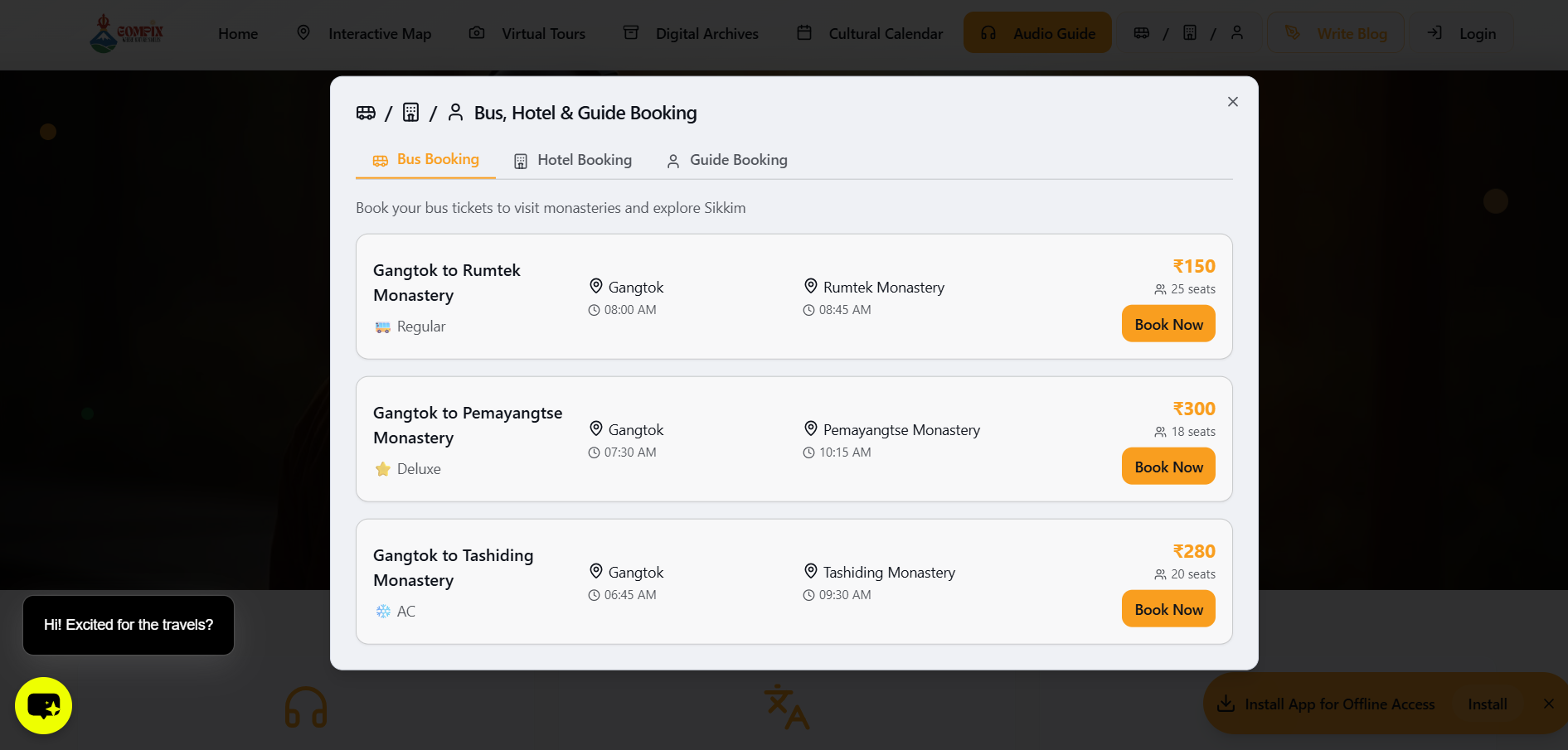
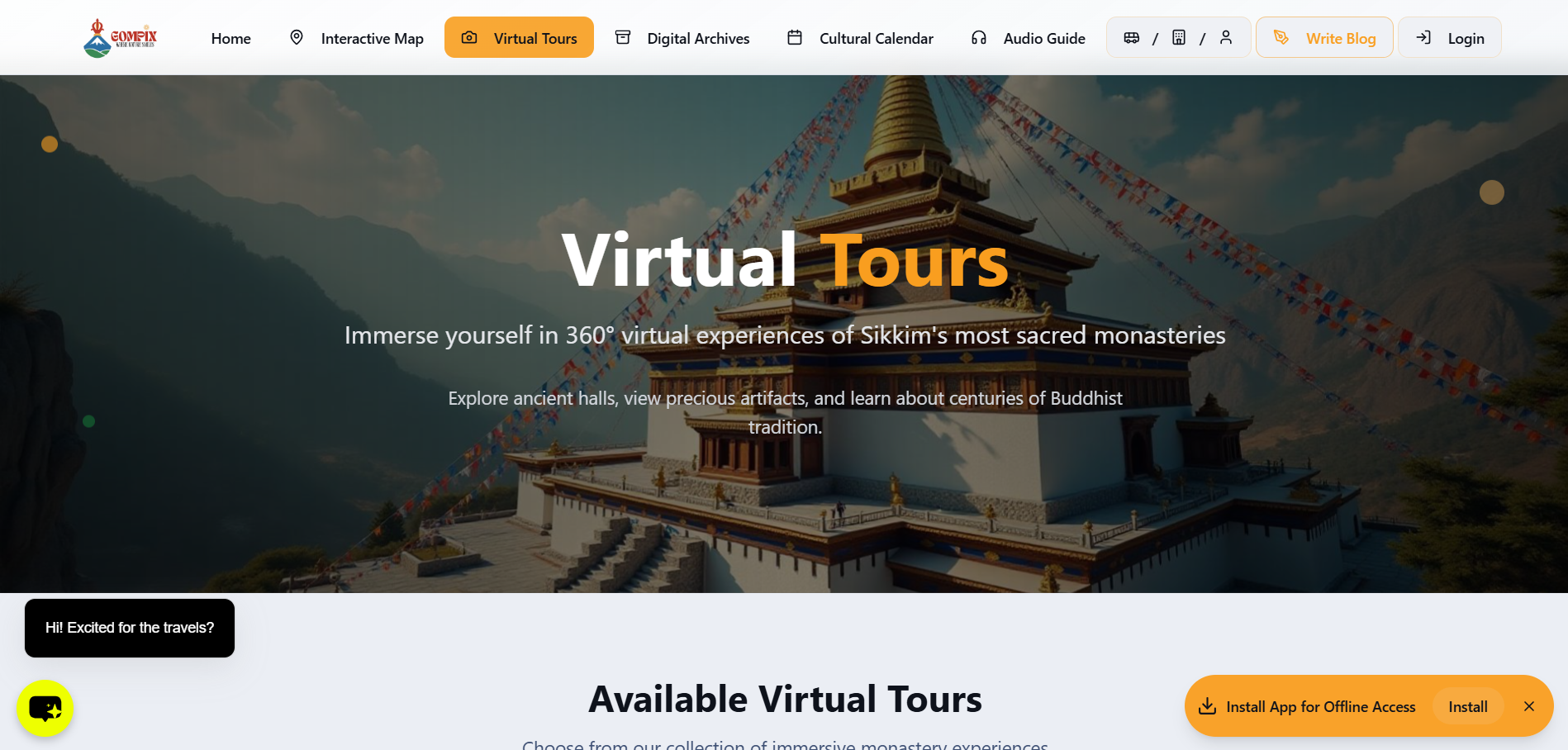
360° Virtual Tours Users can experience monasteries in a highly immersive way, offering a realistic sense of presence without physically being there. Interactive Maps & Smart Audio Guides Available both online and offline, these features enhance navigation and engagement, especially in low-network areas. Real-time climate and weather updates add extra convenience. AI Chatbot Assistance A conversational chatbot provides instant information about monasteries, cultural traditions, historical facts, travel tips, and events. Cultural Calendar Highlights important festivals, rituals, and monastery-related events, helping tourists plan their visits around cultural experiences. Digital Archive A repository of historical records, high-resolution images, and cultural data aimed at education and preservation. Smart Booking System Integrated booking for buses, hotels, and guided tours ensures a seamless travel experience. Offline Mode Pre-downloaded content ensures uninterrupted access to maps, tours, and guides even in remote areas. Multilingual Narration Breaks language barriers and makes cultural stories accessible to a global audience.
What we learned
How to integrate technology with cultural preservation in a meaningful way Building scalable full-stack applications with real-world use cases Implementing AI-driven features like chatbots for user interaction Designing for accessibility and offline usability Understanding the importance of user experience in tourism platforms
What's next for MONASTO
GOMPIX can grow from a regional project into a global digital heritage platform, blending AI, immersive tech, and cultural preservation to redefine how people explore and connect with history.

Log in or sign up for Devpost to join the conversation.