-
-
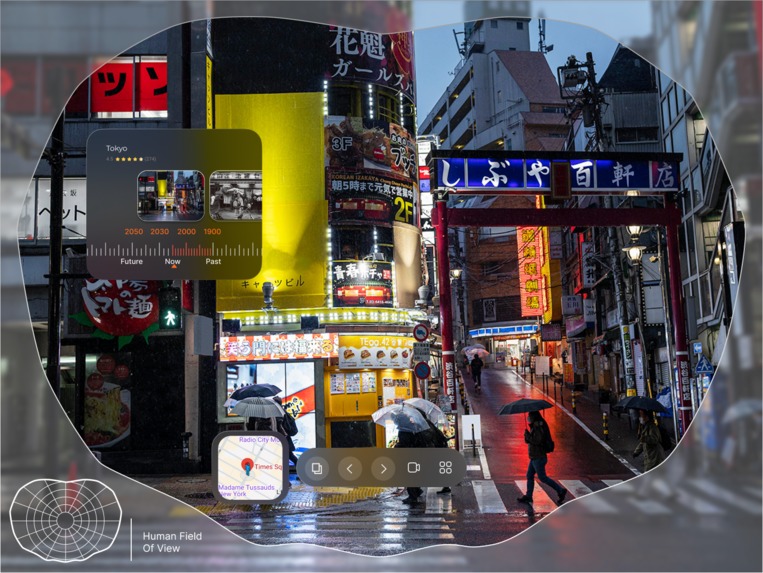
field of view present
-
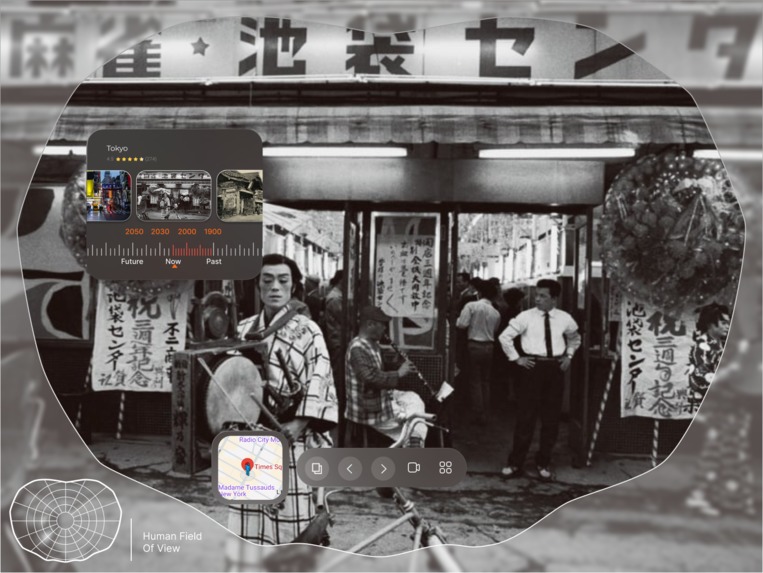
field of view past


Inspiration
Our inspiration for Time Machine came from Google Time Machine AI. This concept of accessing and exploring historical data in an interactive format motivated us to create an experience where users could go beyond static images or timelines. We envisioned a VR tool that would allow people to truly immerse themselves in the past, exploring locations as they once were and gaining insights into historical lifestyles, beliefs, and technological advances.
What it does
Time Machine is a revolutionary VR experience that allows users to explore history in an immersive, interactive way. Imagine choosing a location on a global map, anchoring yourself there, and stepping back in time to experience the environment as it was in past eras. Through Time Machine, you can visually explore iconic locations and everyday settings alike, gaining insights into how people lived, worked, and viewed the world at different points in history. The VR environment reconstructs scenes from the past, while an AI historian provides answers to your questions! With Time Machine, users can ask about anything—from the types of technology available to people’s cognition of the world and what their daily routines entailed. We envision the project opens doors to a deeper understanding of history and helps bridge the gap between past and present.
How we built it
To bring Time Machine to life, we combined the strengths of both ShapesXR and Figma, creating a seamless workflow for designing, prototyping, and iterating on our immersive VR experience. We started with Figma to design the core user interface and interaction flows in 2D. This allowed us to map out the user journey, refine UI components, and organize historical information displays in a way that would be both intuitive and accessible. Once we had a solid foundation, we imported the Figma files into ShapesXR, where we transformed these 2D designs into interactive 3D elements that users could engage with within the VR environment. ShapesXR was the main tool for our 3D and spatial prototyping. It allowed us to work collaboratively in a virtual space, where team members could join from anywhere, brainstorm ideas, and co-edit in real time. Using ShapesXR’s intuitive, no-code design environment, we imported not only our Figma assets but also additional files like 3D models and sound files. This helped create a rich, immersive experience that included visuals and audio for each historical location.
Challenges we ran into
Creating Time Machine has come with unique challenges. We used ShapesXR to animate our earth map, enabling a seamless zoom-in and location anchoring experience. However, the platform currently lacks support for adding equirectangular images as materials on spherical objects, which we intended to use to reconstruct historical environments. Additionally, while we planned to use Google Time Machine AI to enhance historical accuracy, the API is not yet publicly available, limiting our access to certain data layers.
Accomplishments that we're proud of
We’re especially proud of creating an interactive and educational VR experience that brings historical exploration to life. Despite technical challenges, we achieved a seamless user journey that allows people to engage with history in a hands-on way. Using ShapesXR and Figma, we successfully developed an intuitive interface and immersive world map, enabling users to select locations and travel back in time to explore historical scenes.
What we learned
Through this project, we gained valuable experience in designing VR interactions with ShapesXR and crafting user-friendly interfaces with Figma. We learned how to adapt and innovate around platform limitations, developing alternative approaches to achieve our vision of a historical exploration tool. The project also deepened our understanding of integrating educational content into interactive media, balancing historical accuracy with engaging, accessible experiences. Lastly, we learned the importance of future-proofing our design, making it adaptable for the anticipated integration of emerging technologies like Google Time Machine AI.
What's next for Momo
Looking ahead, we envision expanding Time Machine’s capabilities by integrating Google Maps API for enhanced location tracking and a future release of Google Time Machine AI for rich, AI-generated historical scenes and context. With these enhancements, Time Machine will provide a more dynamic and engaging way to connect users with history, making the past accessible in ways never before possible.
Built With
- metaquest3
- shapesxr

Log in or sign up for Devpost to join the conversation.