Inspiration
What if every fact against you was true, but the conclusion was wrong? That question became FALSE POSITIVE. We wanted the player to feel the pressure of explaining a night they barely remember, with another person sitting close enough to make silence uncomfortable.
What it does
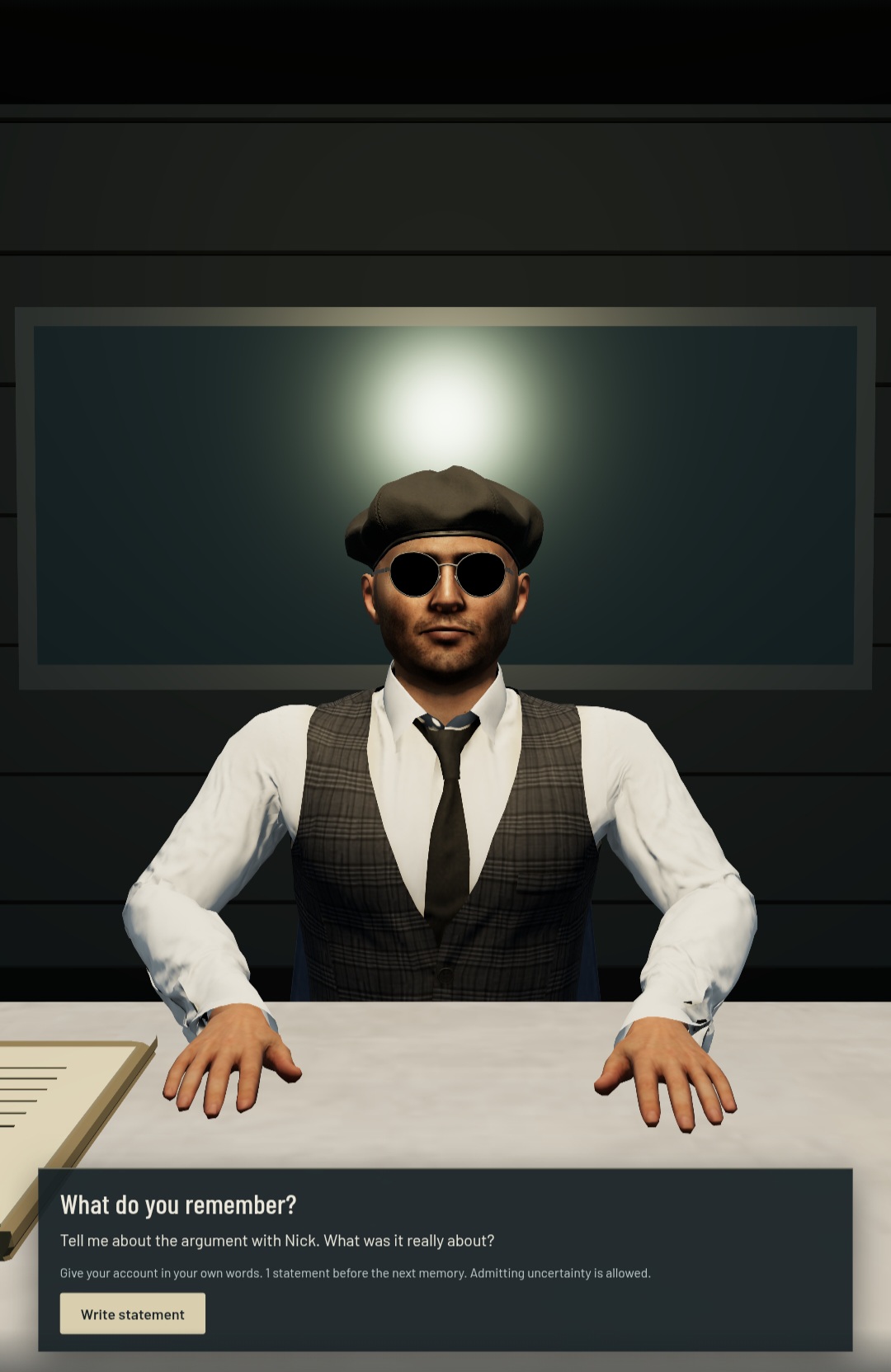
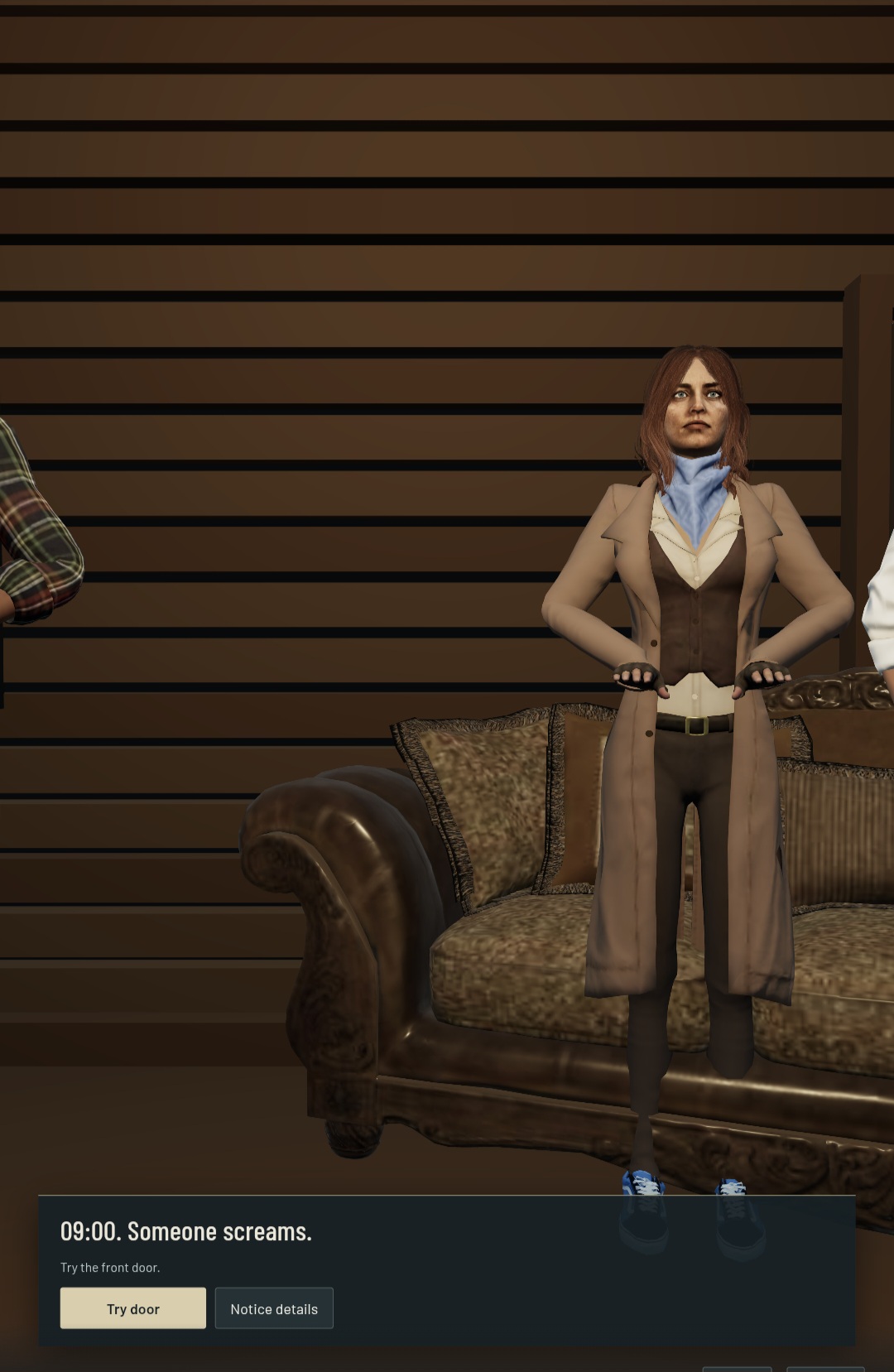
You play David. Nick is dead. Officer Spassky has already heard from your friends, and now he wants your account. You return to fragments of the cabin, notice details, and decide what you can honestly say. The clock, the coats, a locked door and a key each matter. Your testimony can lead to four different endings. The facts of the night stay the same.
This is a seated WebXR mystery built around hand interaction. Players can select spatial controls and use an in-world keyboard; optional Live AI mode also accepts spoken or typed answers. Scripted mode uses fixed authored responses and remains playable when the live service is unavailable. The two modes are clearly labelled.
How we built it
We adapted our existing Unity story into Meta Immersive Web SDK, using JavaScript, Three.js and WebXR. The browser build reuses our characters, recorded dialogue and story assets. Native 3D performances stage the memories and all four endings. A reconstruction after the verdict explains what David could not have witnessed, without feeding that knowledge into his earlier testimony.
The frontend is hosted on Vercel. A Python backend on Google Cloud Run handles the optional interview service, speech input and Google-generated speech. Authored recordings play directly, so those scenes do not depend on our former ElevenLabs account.
Challenges and what we learned
Our hardest problems were continuity and trust. A detective who gets cut off by a flashback breaks the scene. A hand floating over the table breaks the room. A player who cannot reach an ending loses the story entirely. We added speech-completion gates, bounded interview turns, audio timeouts, pause, skip and restart recovery, then checked all four ending routes. We also measured character contact against the actual models.
We do not own Quest hardware. Development footage uses the Meta IWER Quest 3 emulator; physical-device comfort and performance testing remain a next step.
What comes next
We see room for compact, replayable VR mysteries: short cases that rely on attention and conversation, with more stories, richer performances and feedback from Quest players. We are submitting to explore how much tension a small team can create across one table.
Created by Gabriel Marcel Danandjaja, Giorgio Remiel Pohar and Bharath Rajeev.
Built With
- google-cloud
- javascript
- python
- three.js
- vercel
- webxr
