-
-
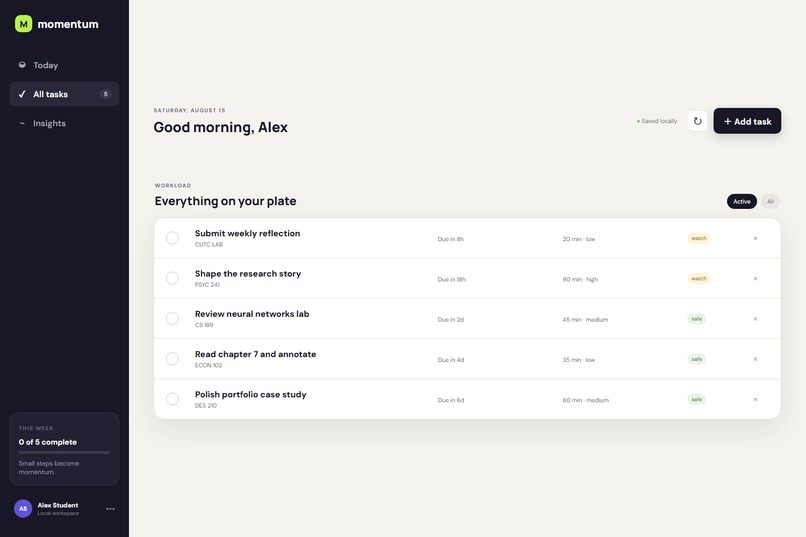
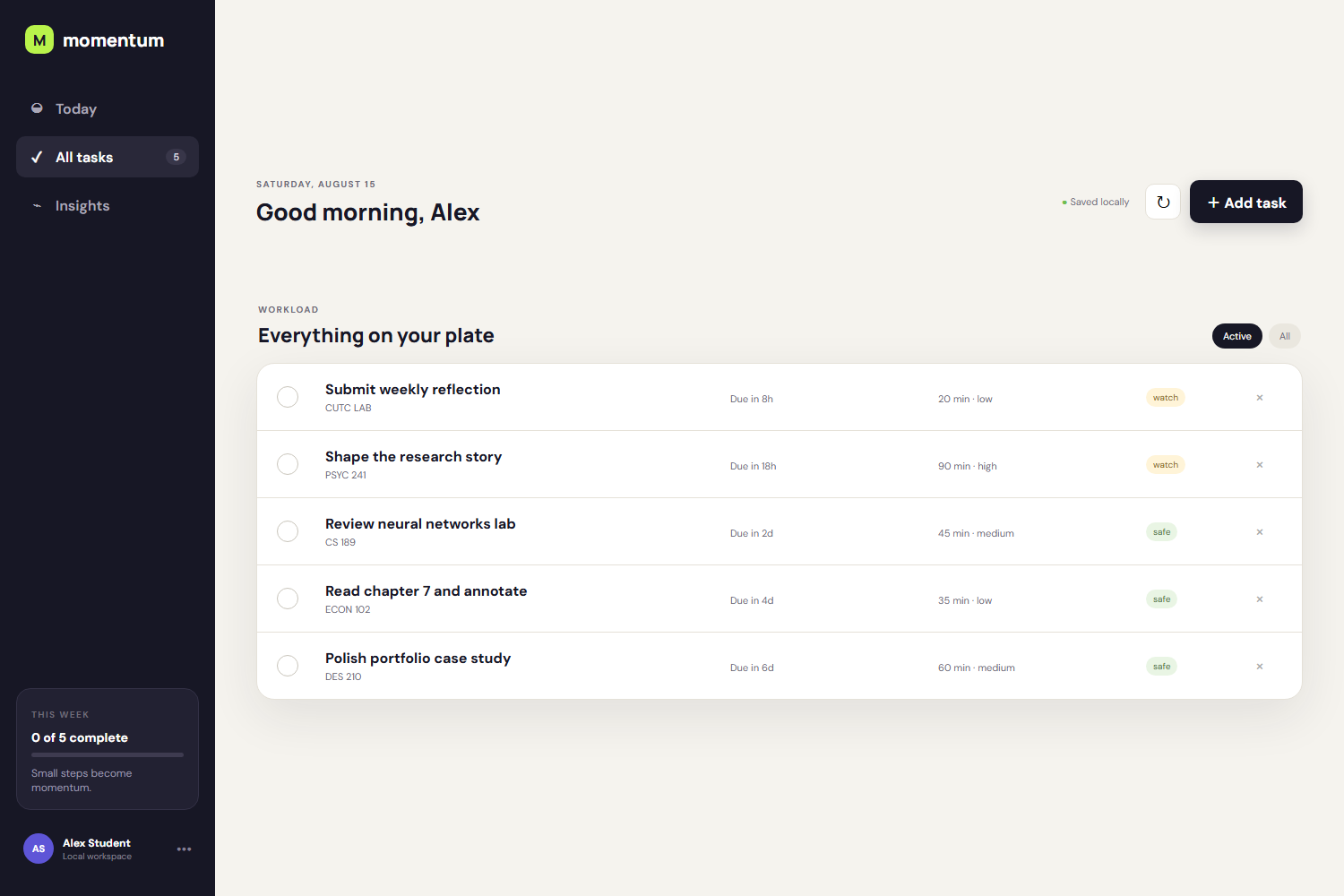
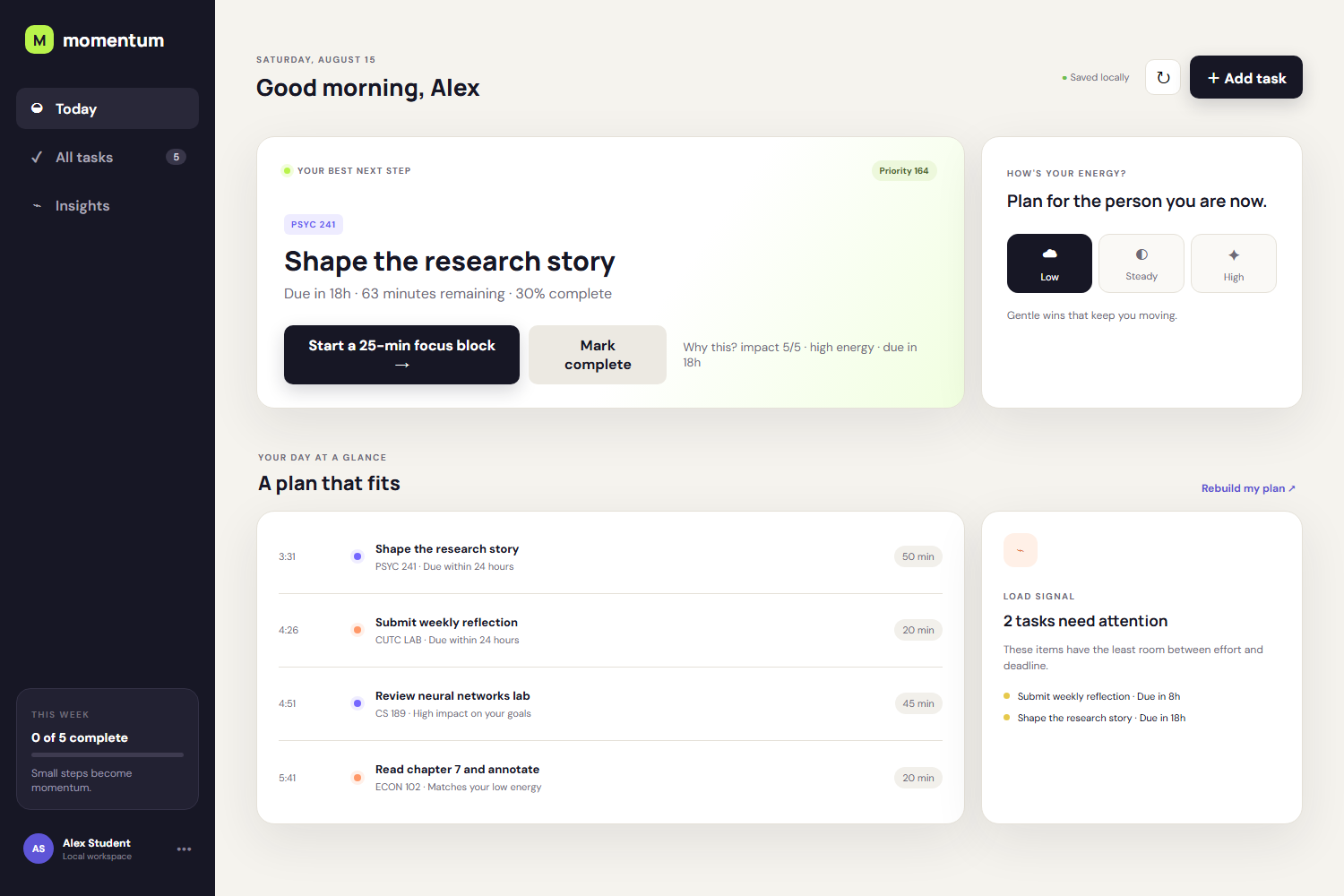
A clear view of workload, deadlines, and risk
-
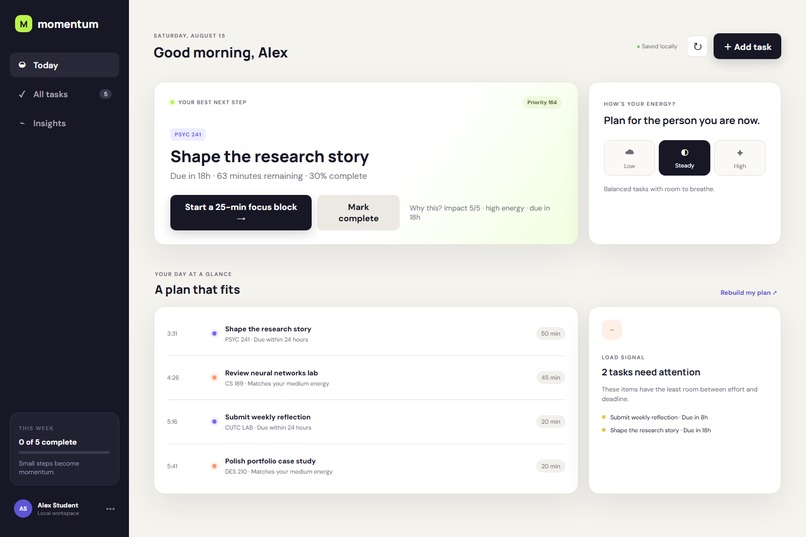
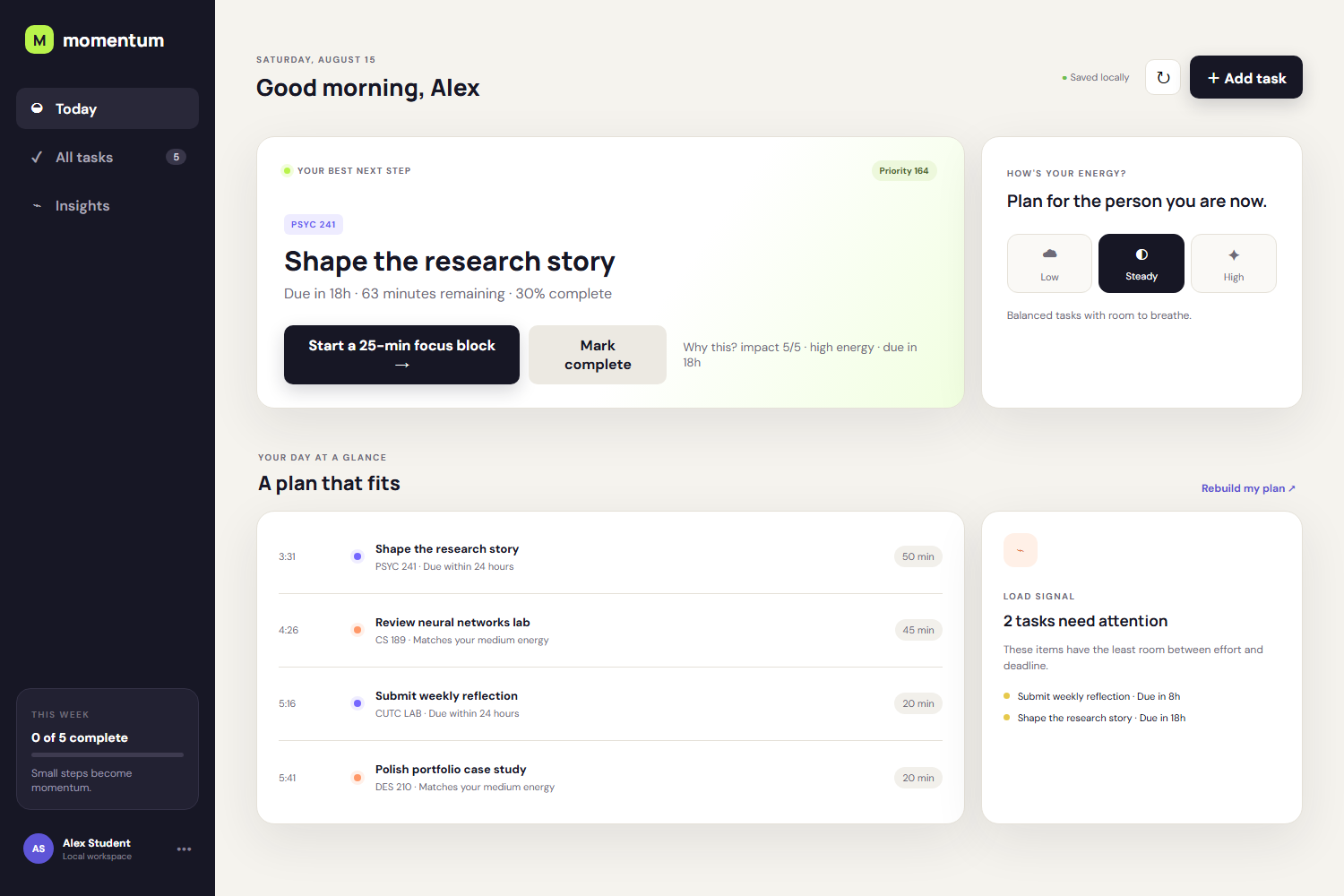
Momentum’s energy-aware student dashboard
-
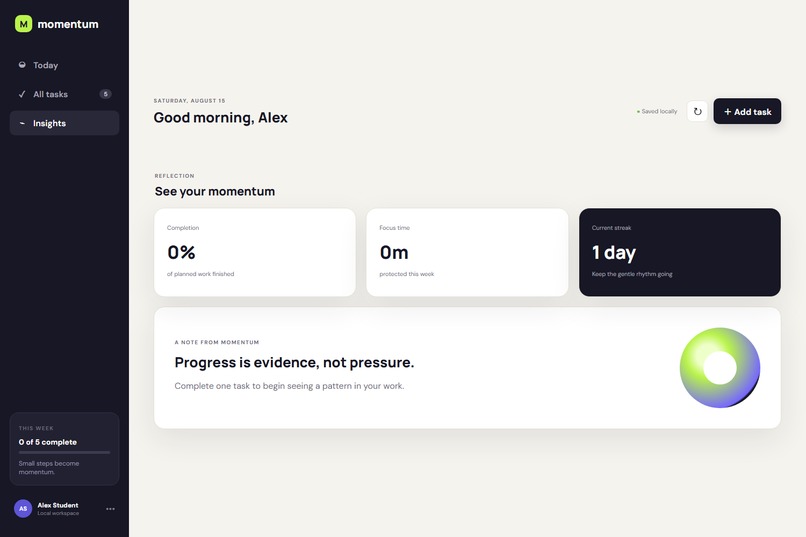
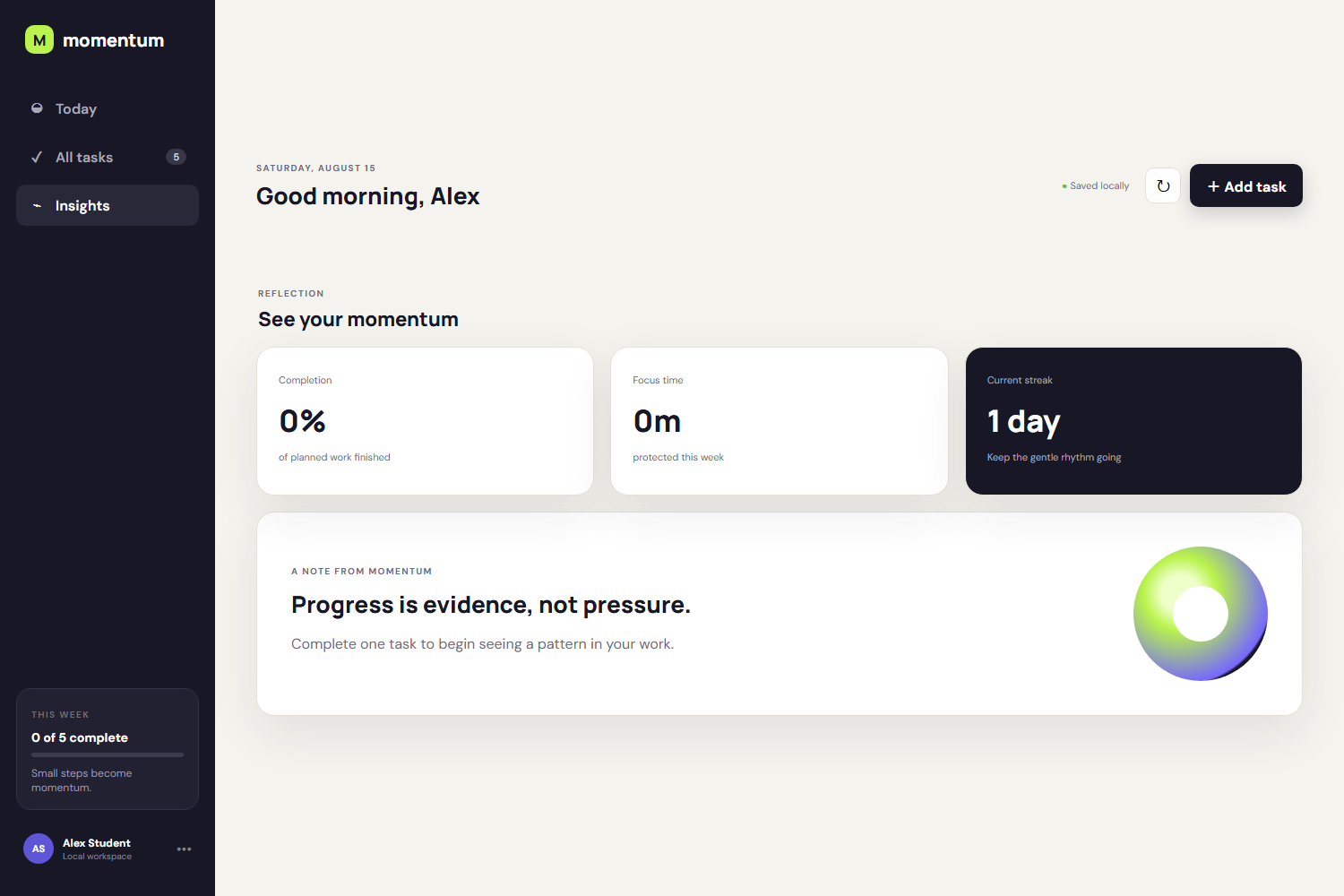
Gentle progress insights without pressure
-
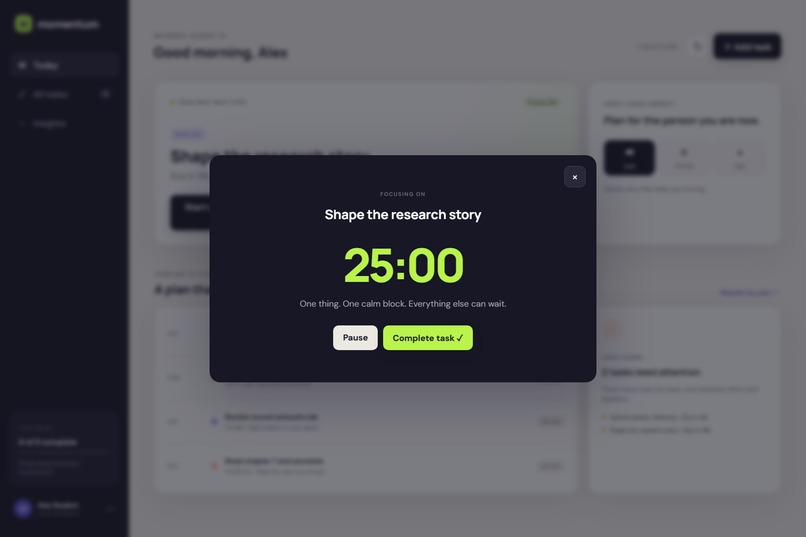
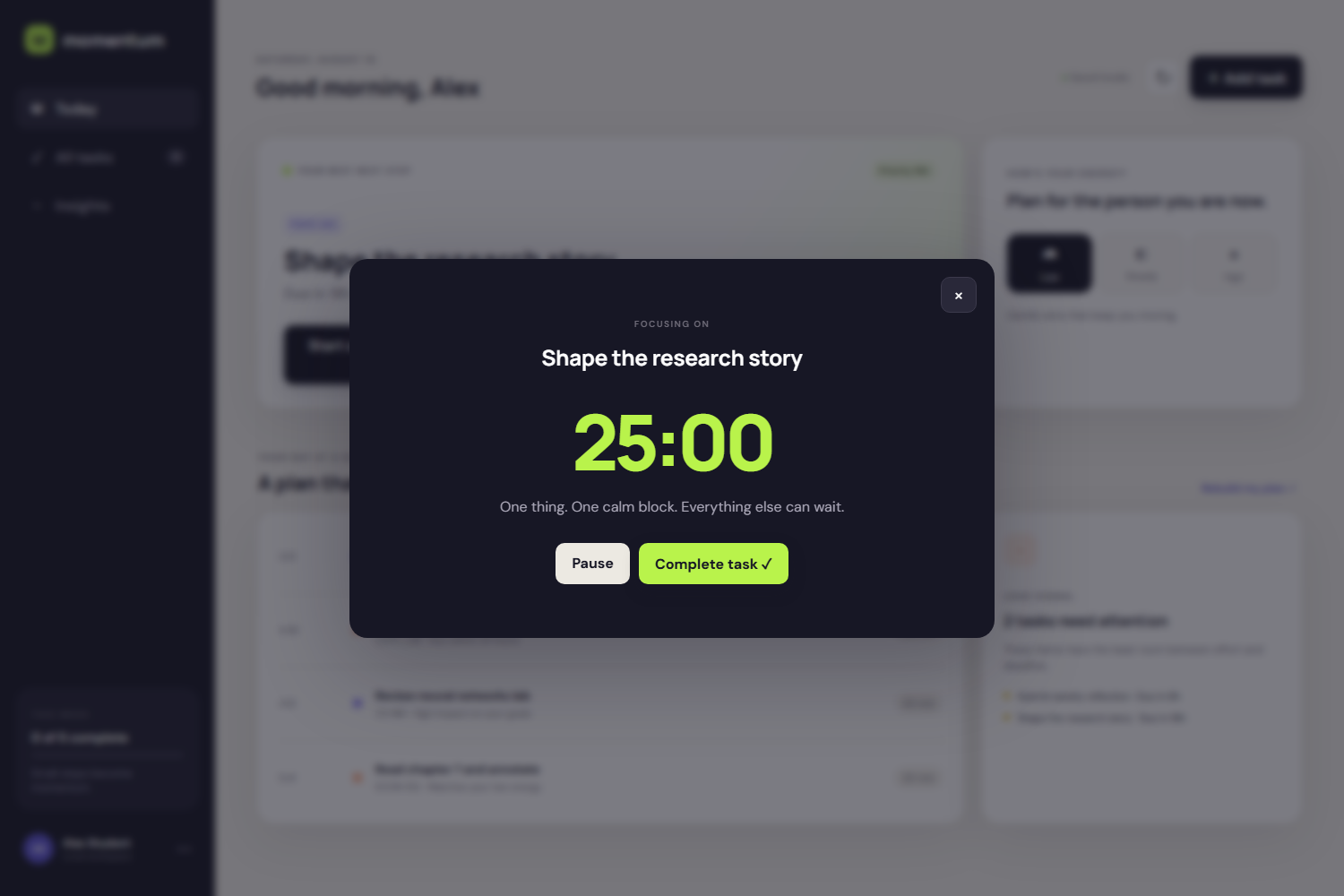
A distraction-free 25-minute focus session
-
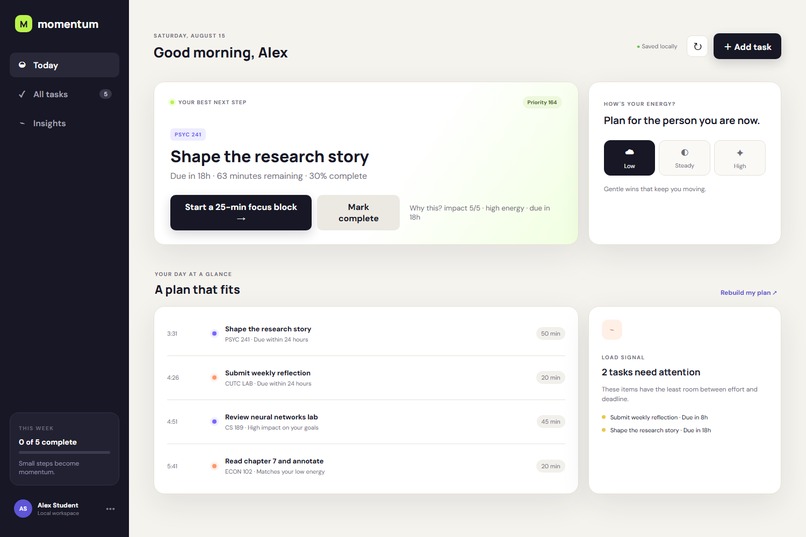
The daily plan adapts to the student’s current energy
Inspiration
Students rarely struggle because they do not know what they need to complete. They struggle because every assignment competes for attention at once, making it difficult to decide what to do next. Traditional planners record deadlines but usually ignore two realities: students have limited time, and their energy changes throughout the day. We created Momentum to turn an overwhelming workload into one calm, achievable next step.
What it does
Momentum is an offline-first, energy-aware workload navigator for students. Students add assignments with their deadline, estimated duration, importance, progress, and required energy level. Momentum then: Recommends the best next task and explains why Adapts recommendations to low, steady, or high energy Creates realistic focus blocks within the available time Detects assignments at risk of becoming impossible to finish Provides a distraction-free 25-minute focus timer Tracks completion and protected focus time Works offline and stores coursework locally on the device Its transparent priority model combines five signals: [P = U + I + D + E + G]where (U) is deadline urgency, (I) is academic impact, (D) is duration fit, (E) is energy fit, and (G) is a progress-based completion boost. Priority and workload risk are calculated separately. This prevents a useful recommendation from hiding an unrealistic deadline.
How we built it
We built Momentum as a lightweight Progressive Web App using semantic HTML, modern CSS, and dependency-free JavaScript. The architecture separates the product into two main layers: A deterministic planning engine that ranks tasks, evaluates workload risk, and builds time-boxed schedules An interface layer that manages local state, interactions, responsive rendering, and focus sessions Browser localStorage keeps coursework private, while a service worker caches the application so it remains available offline. No account, backend, paid API, or external AI service is required. We used Node.js’s built-in test runner to verify urgency ranking, completed-task filtering, time-budget enforcement, and overload detection. We also ran automated browser checks at desktop and mobile sizes. The demonstration video was produced with HyperFrames and includes a real recording of the functioning application rather than a static mockup.
Challenges we ran into
The hardest challenge was balancing urgency with human capacity. Sorting only by deadline constantly recommends the nearest assignment. Prioritizing only short tasks encourages easy work while important projects are neglected. Energy matching alone can overlook an approaching crisis. We addressed this by combining several interpretable signals while keeping workload risk independent from priority. Momentum can therefore recommend the most valuable next action while separately warning that another assignment needs attention. We also had to decide what not to build. Productivity products often depend on notifications, guilt-driven streaks, or excessive gamification. We intentionally used calm language, transparent recommendations, and achievable work blocks to support agency instead of pressure.
Accomplishments that we're proud of
Recommendations change immediately when the student’s energy changes Every recommendation includes understandable supporting evidence Generated plans never exceed the student’s available time Workload risks are surfaced before deadlines become emergencies The complete application works offline without an account or API key The interface is responsive, keyboard accessible, and supports reduced motion All core planning tests and browser checks pass The project includes an open-source license, complete documentation, automated CI, and a polished 72-second demonstration video
What we learned
We learned that good student software is not merely an optimization problem—it is a trust problem. Students need to understand why software is directing their attention, retain the ability to disagree, and feel confident that sensitive coursework is not being monitored. Explainability, privacy, and emotional tone became central product features rather than technical details. We also learned that priority and risk answer different questions: “What should I do next?” is not the same as “What could become a crisis?” Separating them made Momentum substantially more useful.
What's next for Momentum — Your Next Step, Made Clear
Next, we plan to add: Student-controlled calendar and ICS import Optional on-device syllabus extraction Private study-group availability matching Personalized work-window suggestions based on energy patterns Better estimation using completed focus sessions Cross-device synchronization with end-to-end encryption Our long-term goal is to make Momentum a trusted layer between a student’s workload and their attention—helping them move forward without creating more pressure.

Log in or sign up for Devpost to join the conversation.