-
-

Leaderboard
-
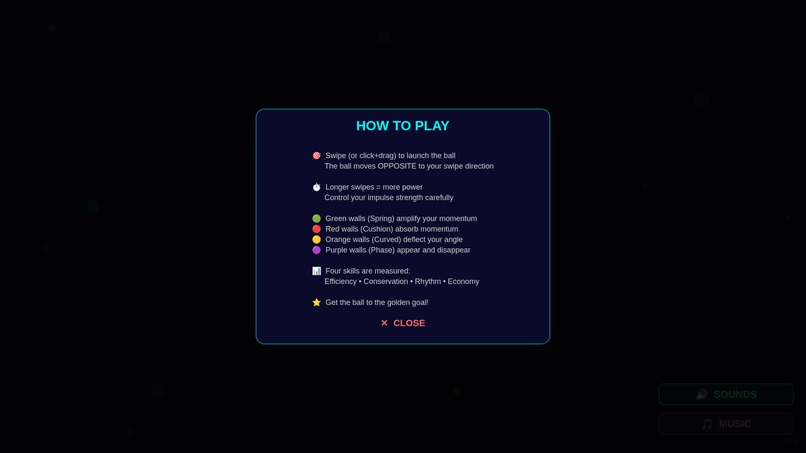
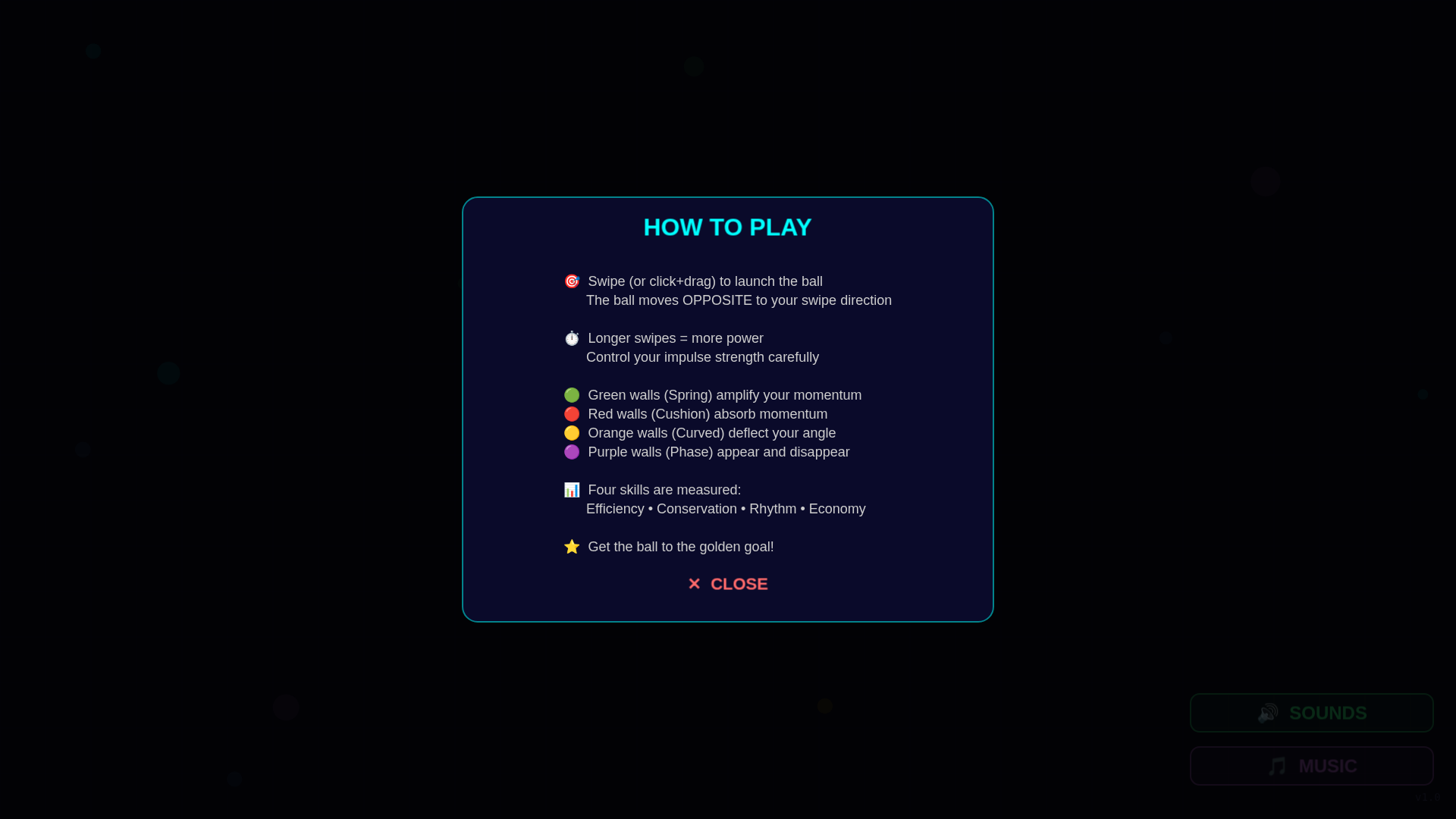
How to play
-
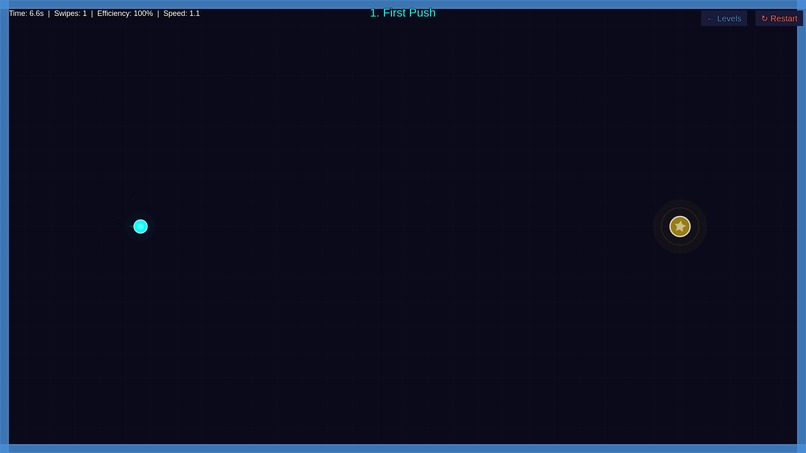
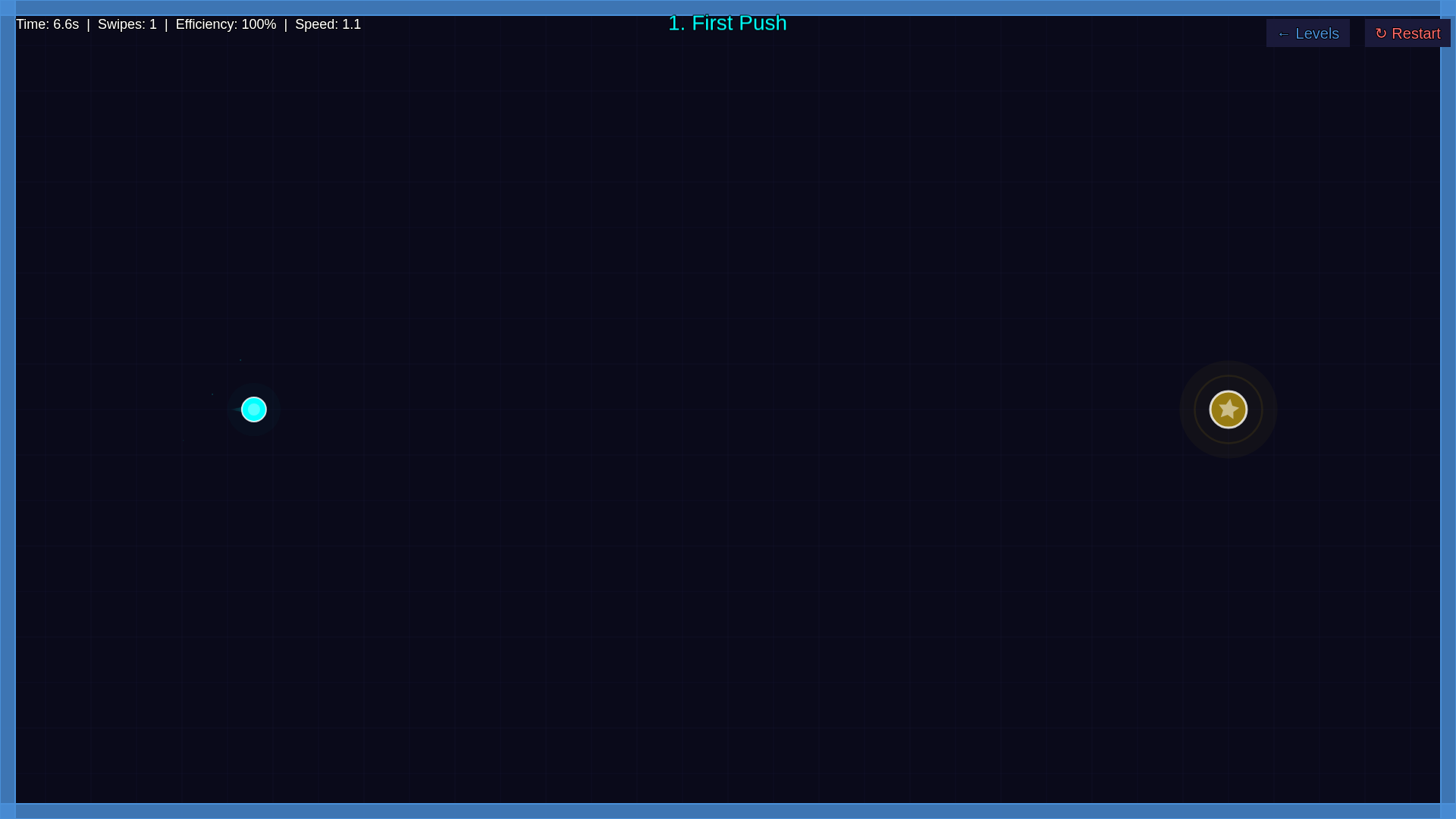
level 1
-
menu
-
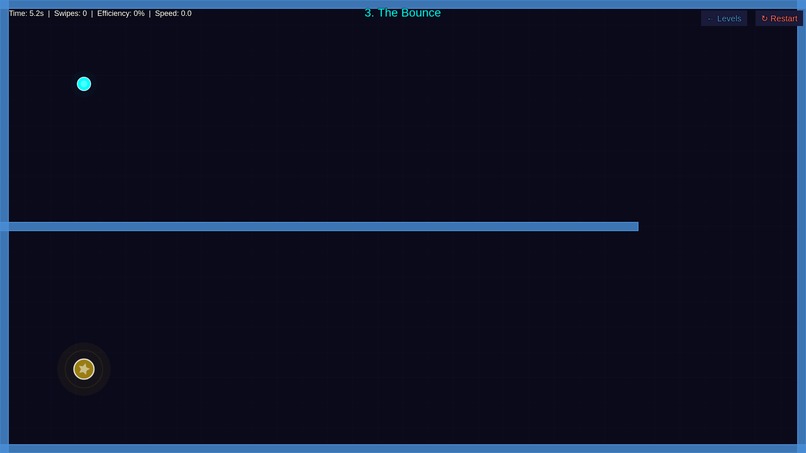
level 3
-
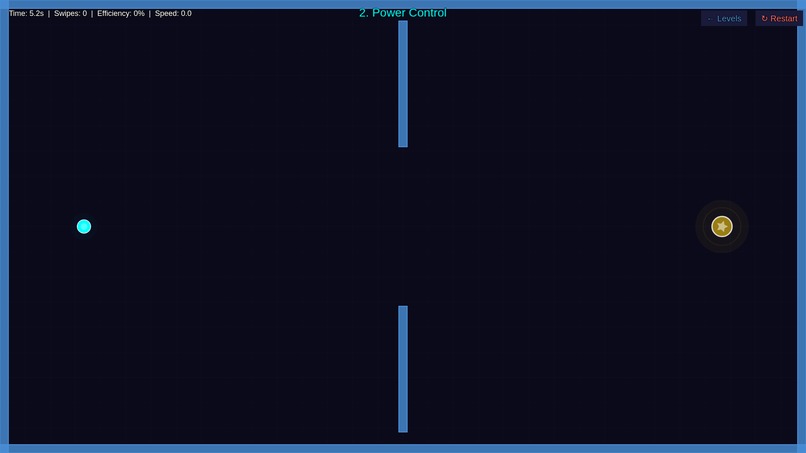
level 2
-
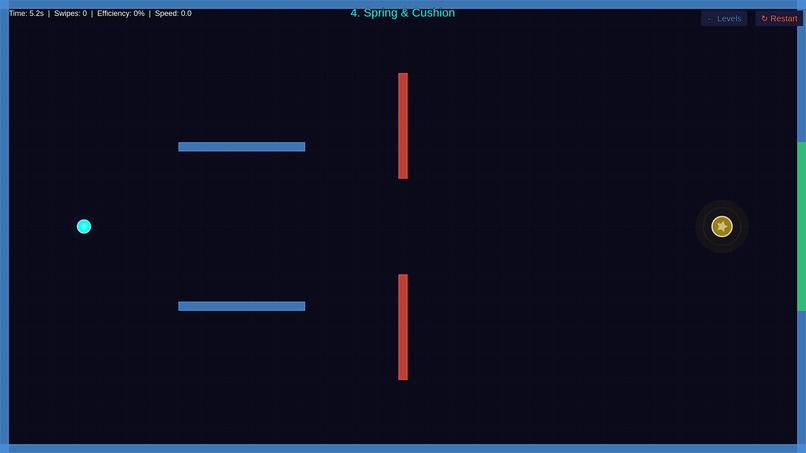
level 4
-
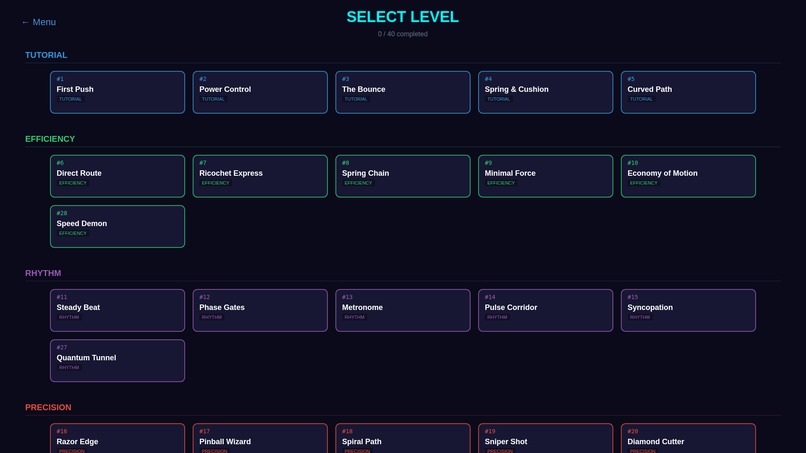
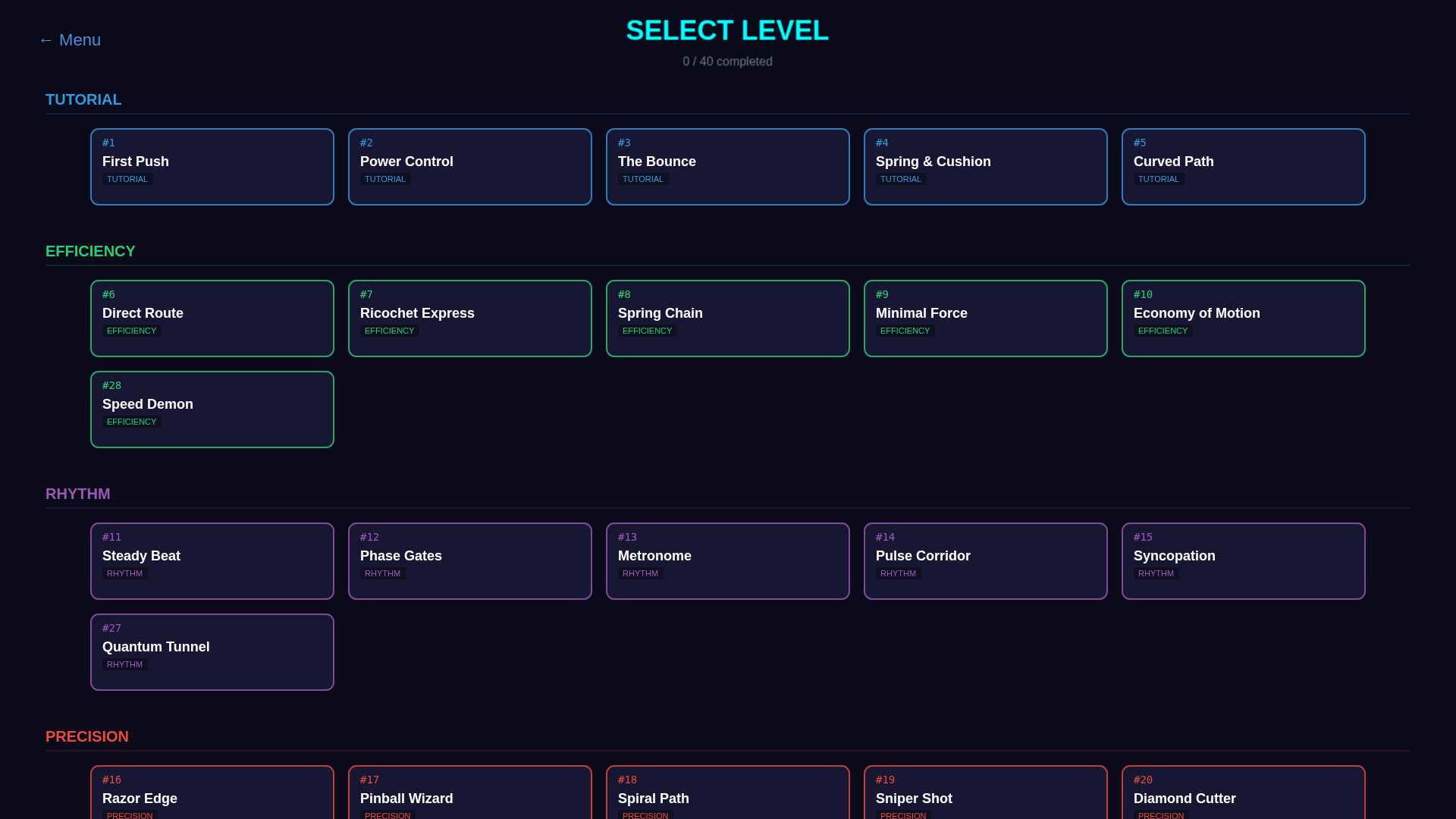
level select
-
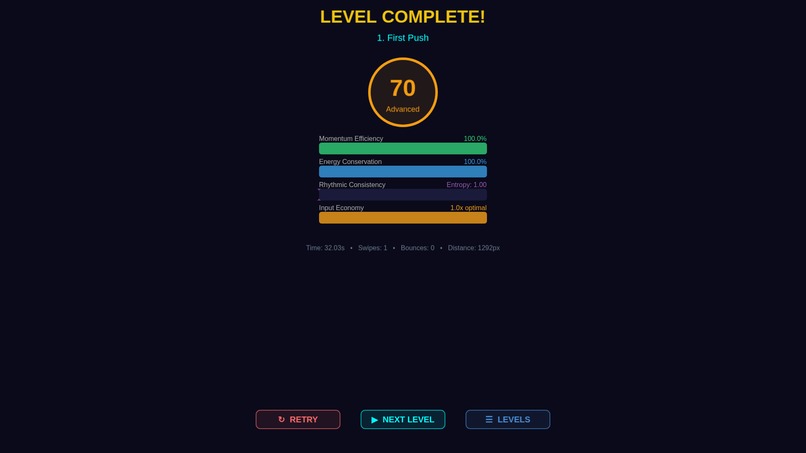
Completion
-
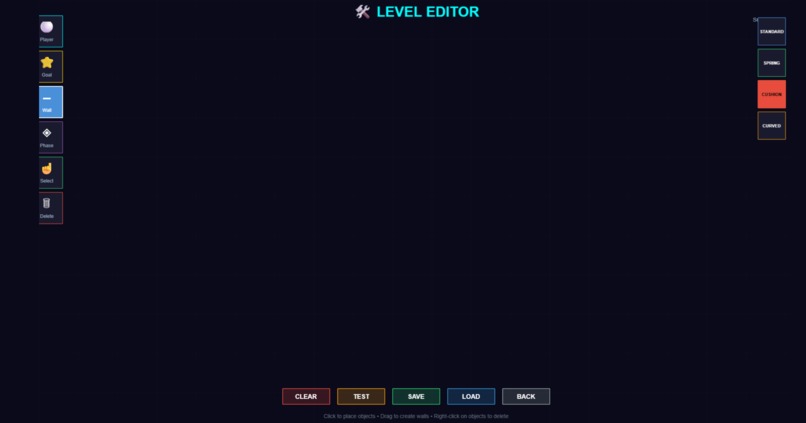
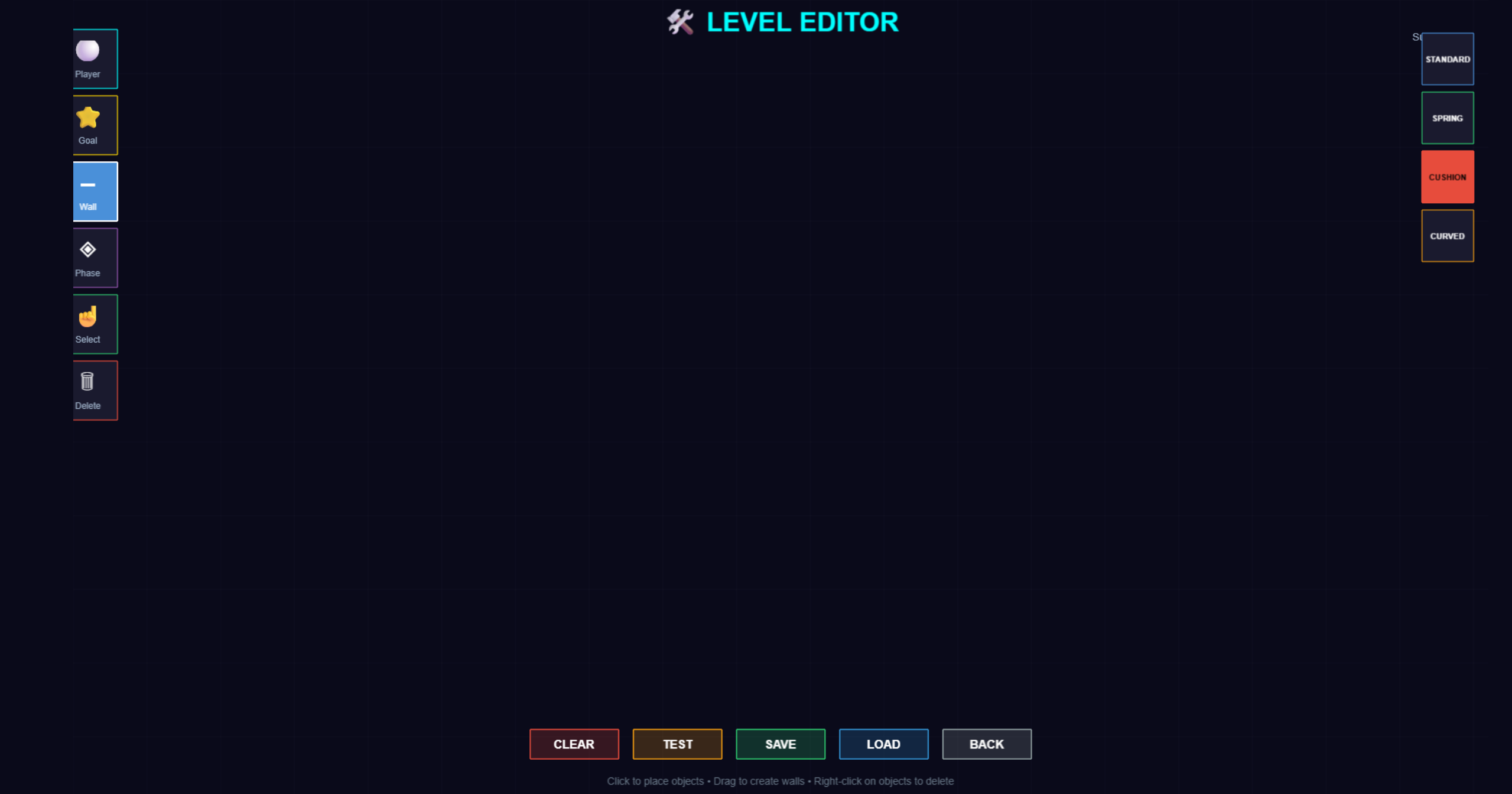
Level maker
-

achievements
-
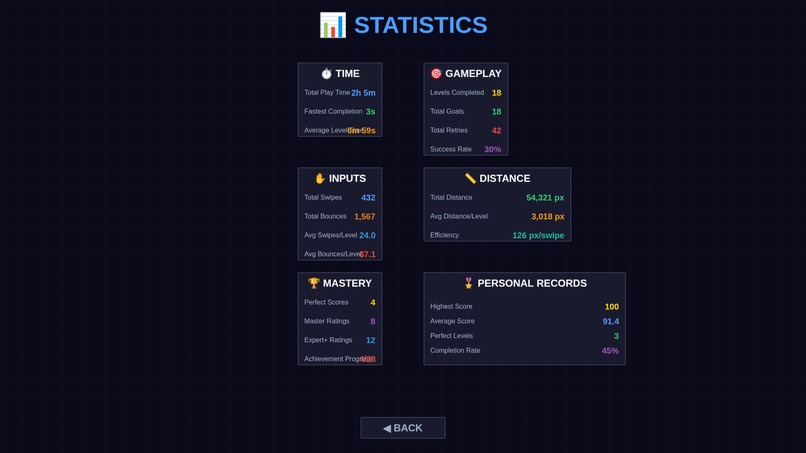
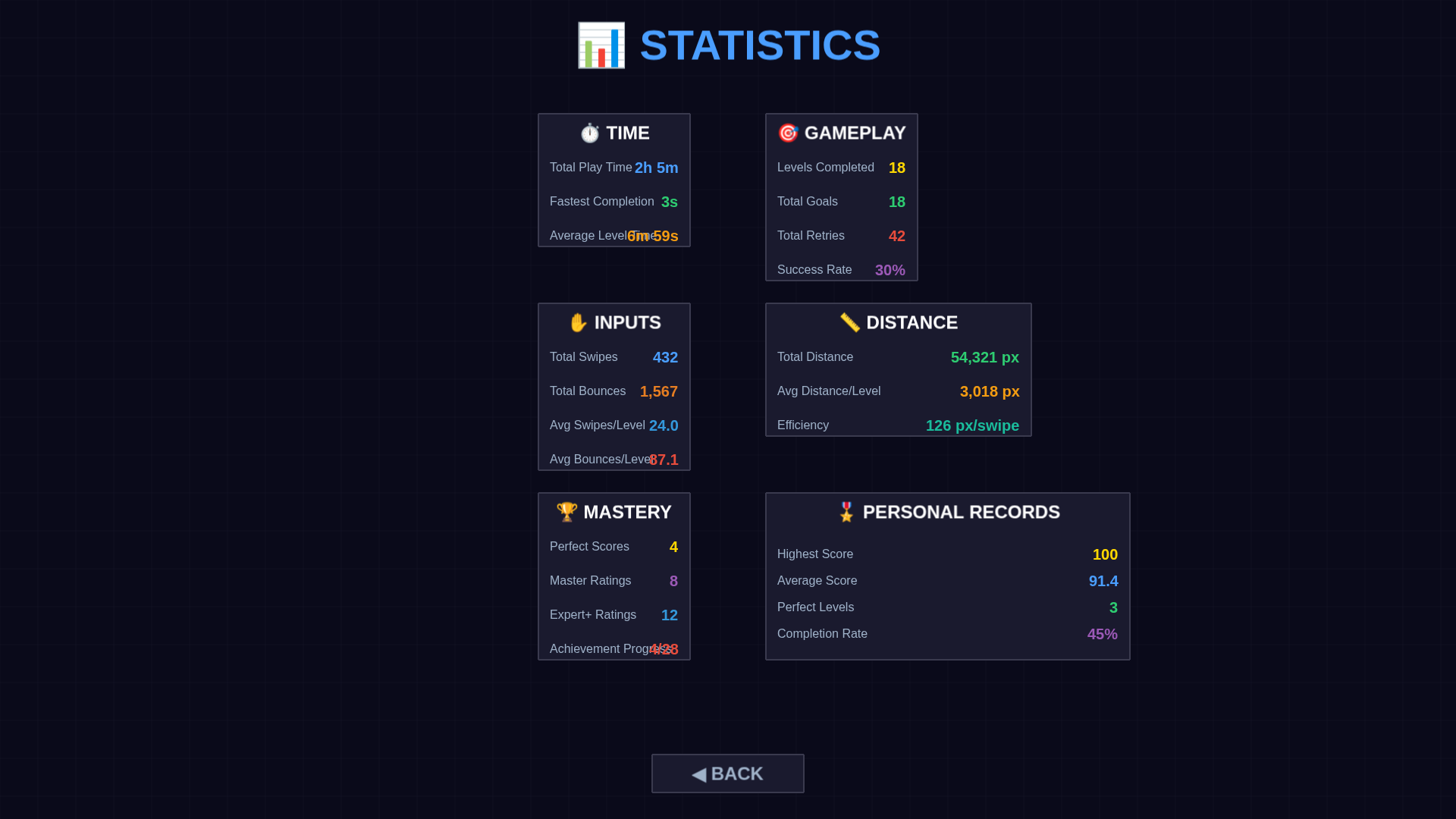
statistics


Inspiration
Most games reward decisions. Very few reward control.
Momentum Mirror started as an experiment: can a game be built where skill is not defined by winning, but by compression—fewer inputs, less wasted energy, lower entropy? I wanted a mechanic where improvement is physically felt and mathematically measurable.
The core question was simple:
Can an automated agent distinguish a skilled player from a lucky one without human judgment?
What the Project Is
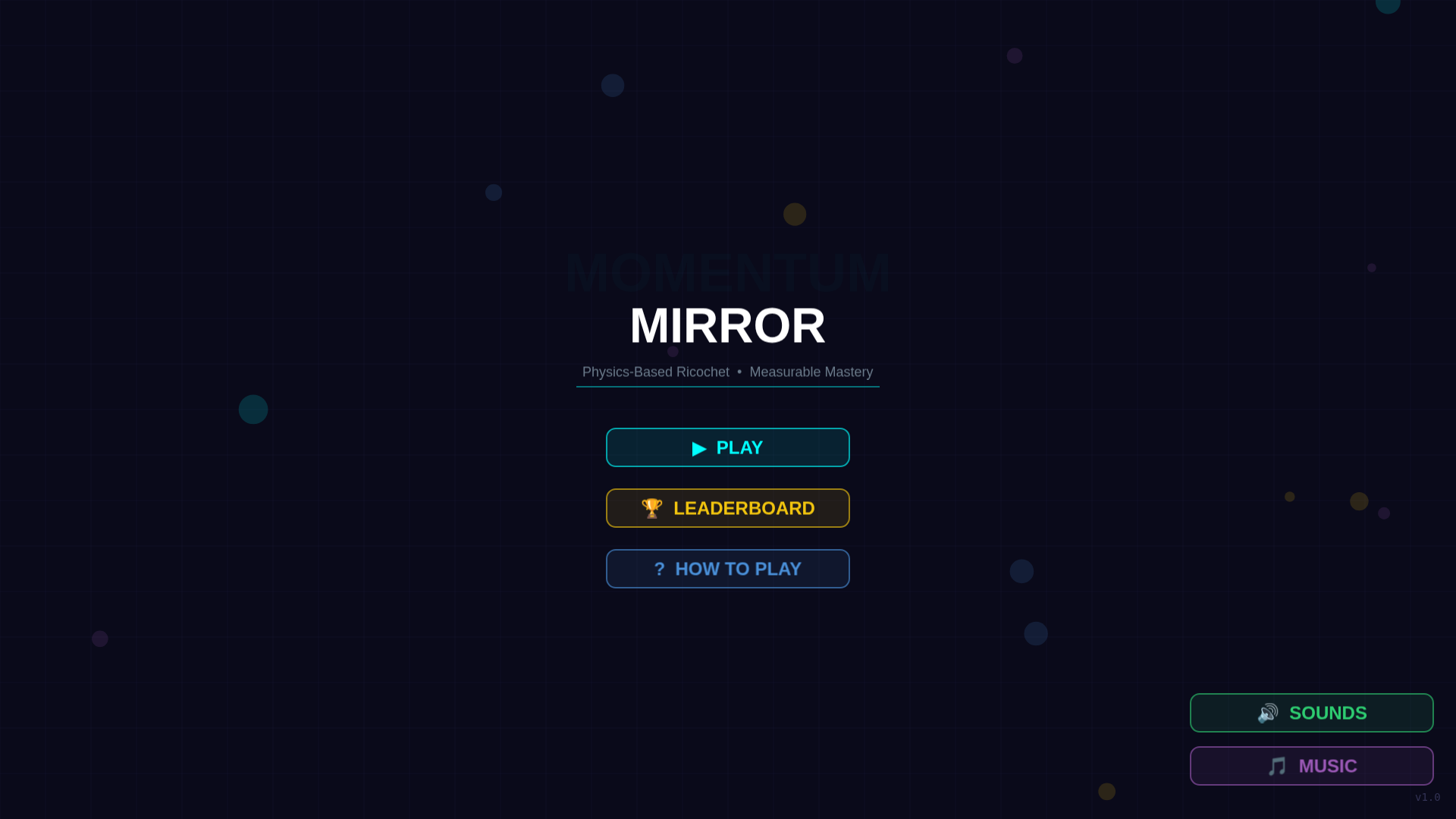
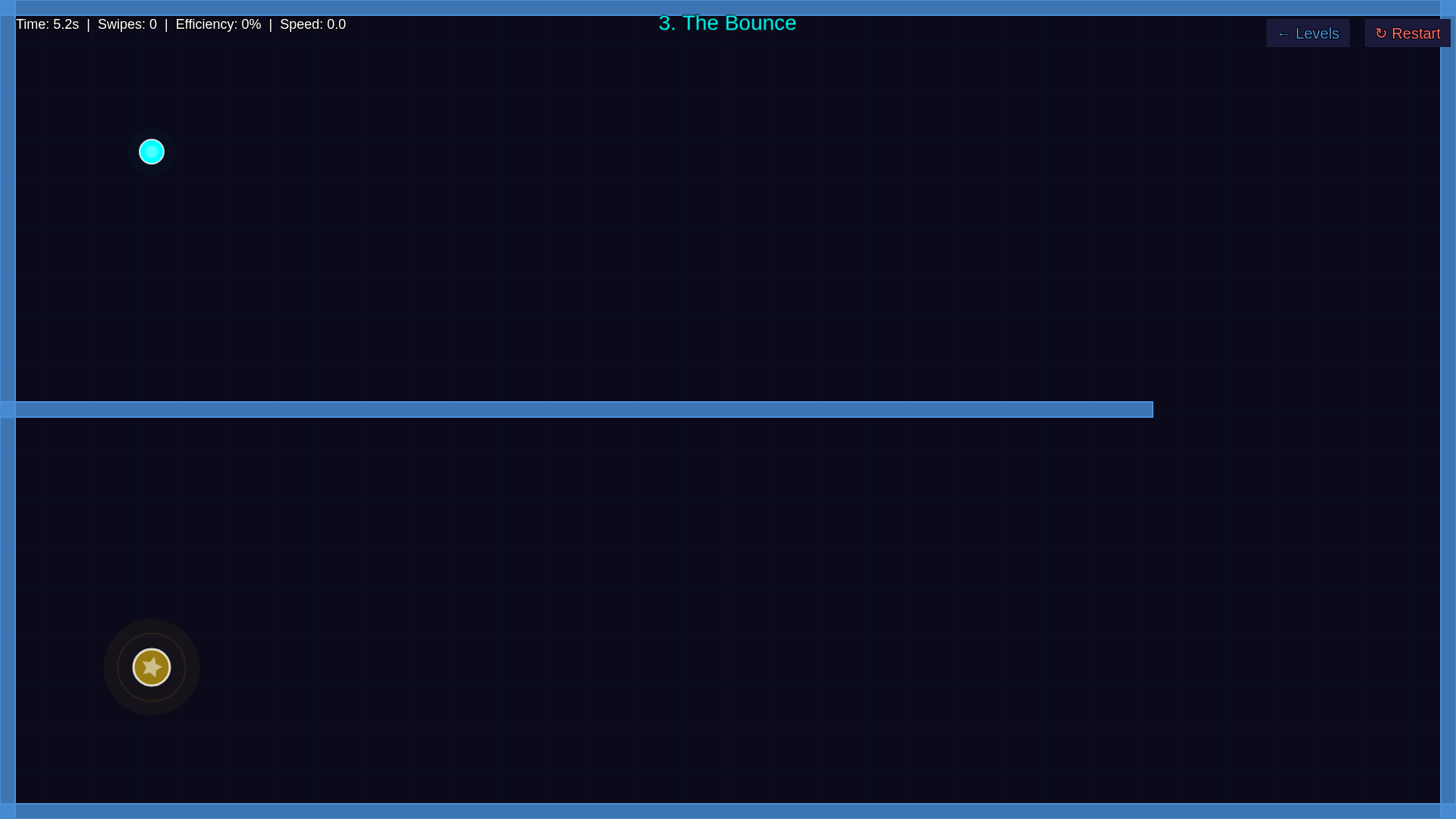
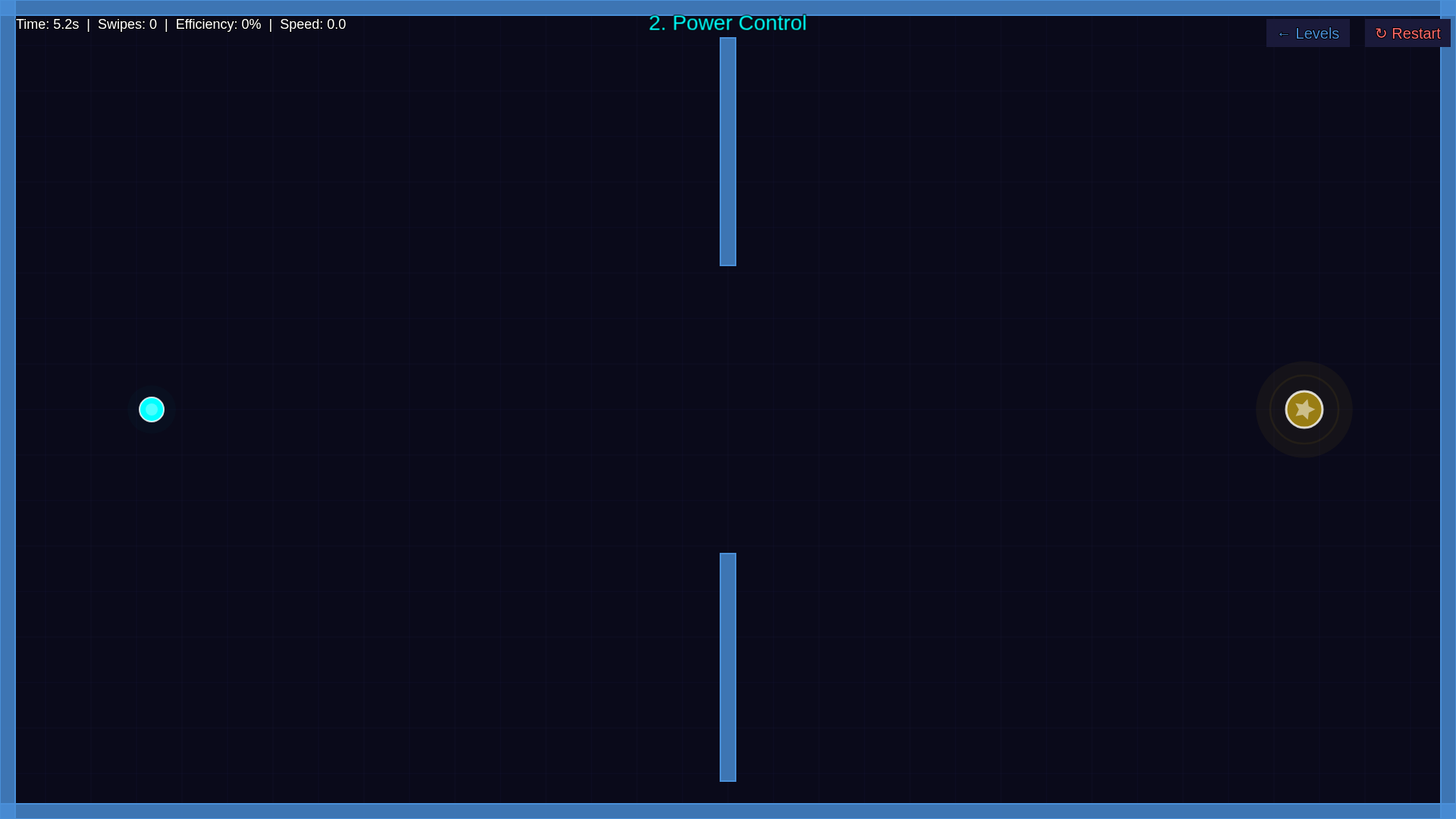
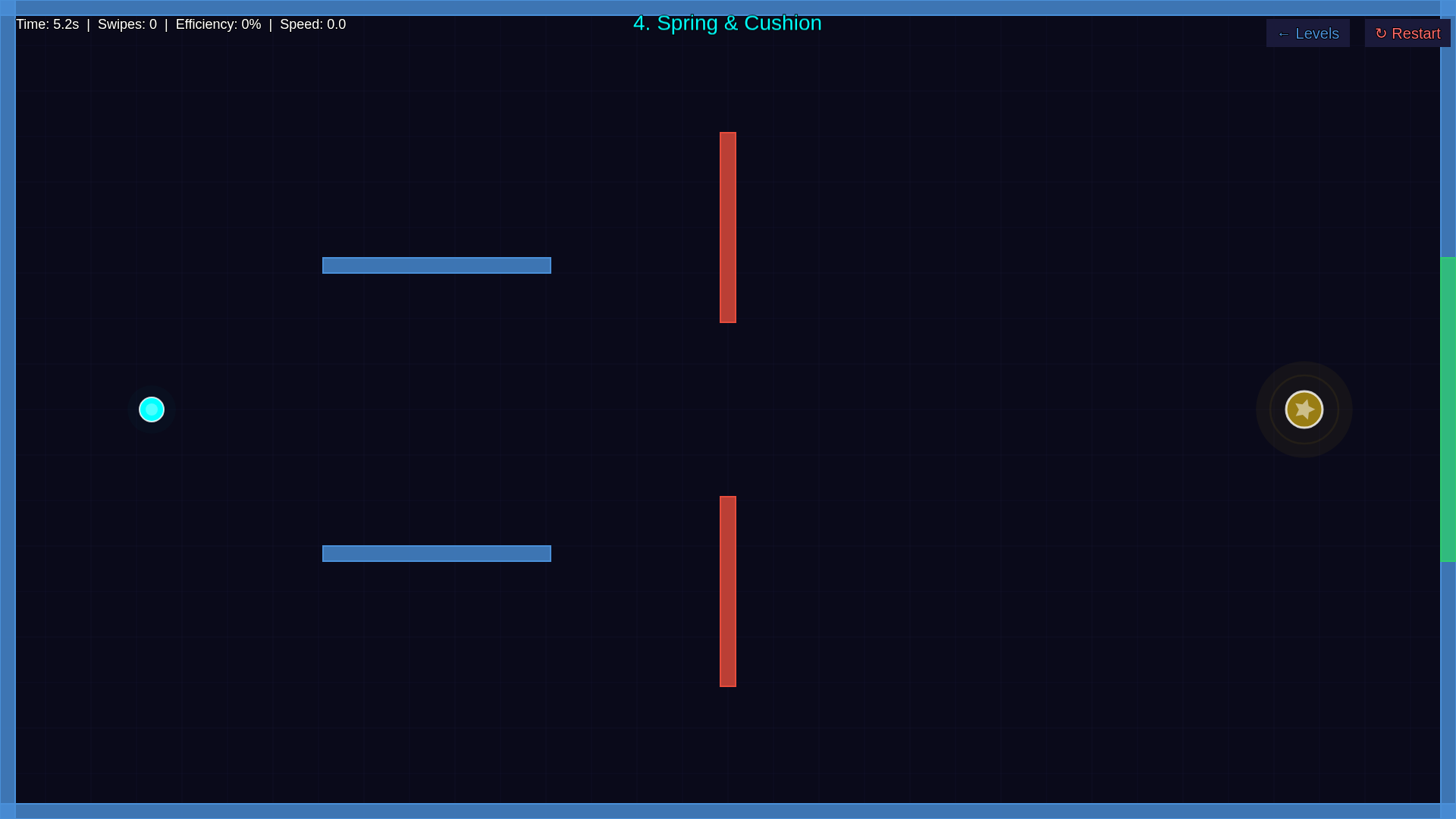
Momentum Mirror is a physics-based skill game where the player cannot stop movement once initiated. Every swipe applies irreversible momentum. You must navigate space through ricochets, timing, and controlled impulse.
There is no braking. There is no undo. Every input is a commitment.
Core Mechanic
Player input is a swipe with three degrees of freedom:
- Direction
- Duration
- Velocity
The physics engine converts this into impulse. Momentum persists, decays, and transfers through collisions. The player succeeds not by planning a path once, but by learning motor control over time.
Skill as Compression
The game does not just track completion. It emits raw physics signals after every input:
- Impulse applied
- Distance gained toward the goal
- Energy lost per collision
- Timing between inputs
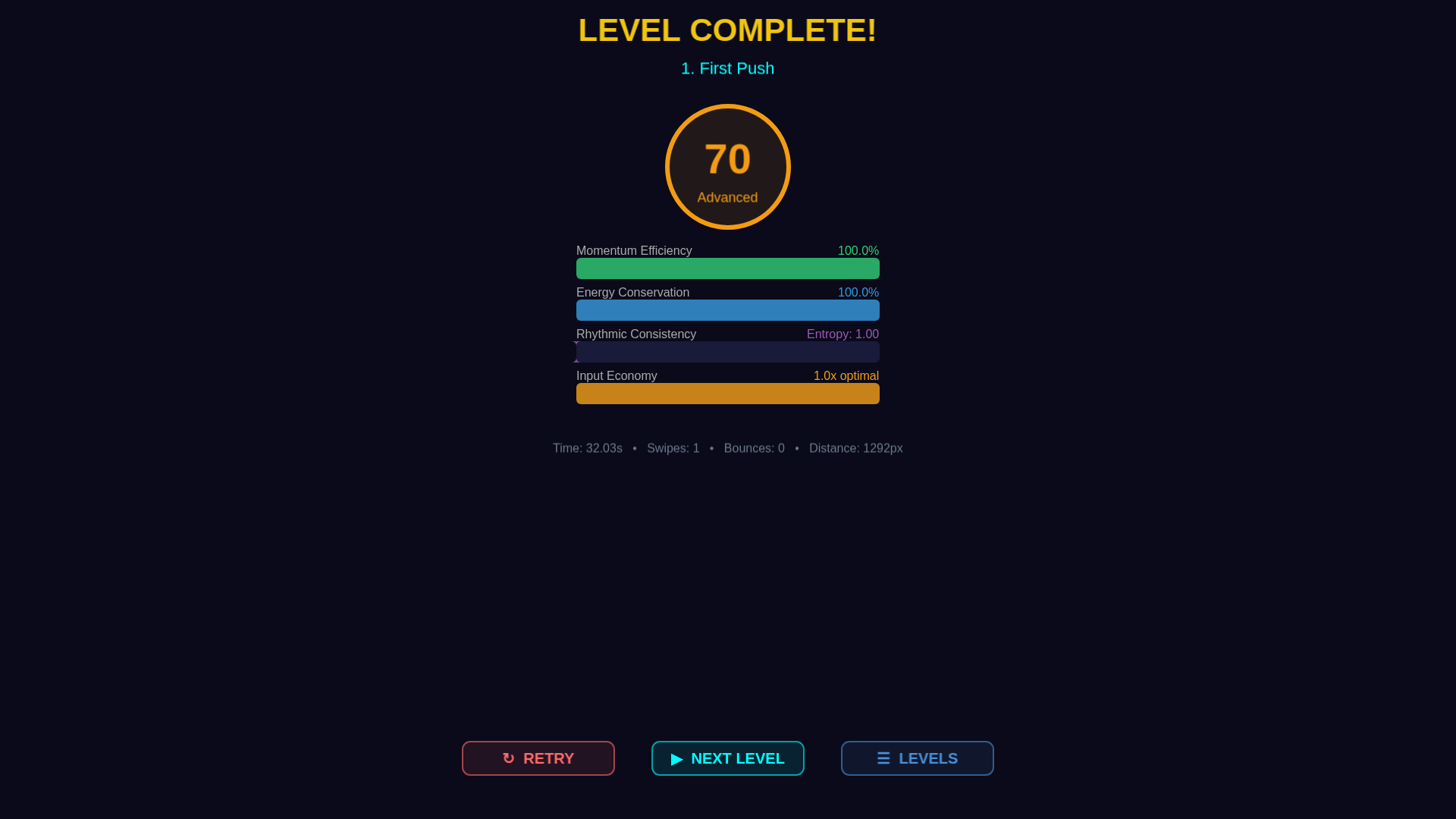
From these, the system derives skill metrics:
Momentum Efficiency
\[ \text{Efficiency} = \frac{\text{Distance Toward Goal}}{\text{Total Impulse Applied}} \]Energy Conservation
Temporal Consistency (Rhythm Entropy)
Input Economy
As skill increases, these metrics compress. Fewer swipes. Less waste. Lower variance.
This allows both humans and automated agents to observe mastery directly.
How It Was Built
The game is built as a browser-based physics system with deterministic simulation. Input handling, collision response, and metric emission are tightly coupled so that gameplay and measurement are inseparable.
Automation support was a design constraint from day one. The project is fully testable via scripted input (e.g. Playwright), allowing an agent to:
- Inject varied swipe patterns
- Run repeated trials
- Detect learning curves
- Verify skill compression over time
Challenges
The hardest problem was not physics or rendering.
It was designing metrics that cannot be gamed.
Early versions allowed degenerate strategies—slow crawling, safe loops, or rhythm exploitation. The final system required coupling efficiency, risk, and precision so that optimization always demanded better control, not safer behavior.
What I Learned
- A mechanic is incomplete until mastery is observable.
- “Fun” without measurement collapses under automation.
- Skill-based games must leave numerical fingerprints.
- If an AI can’t tell who is good, the design is lying.
Momentum Mirror is the result of treating game design as a learnable system, not a content vehicle.

Log in or sign up for Devpost to join the conversation.