-
-
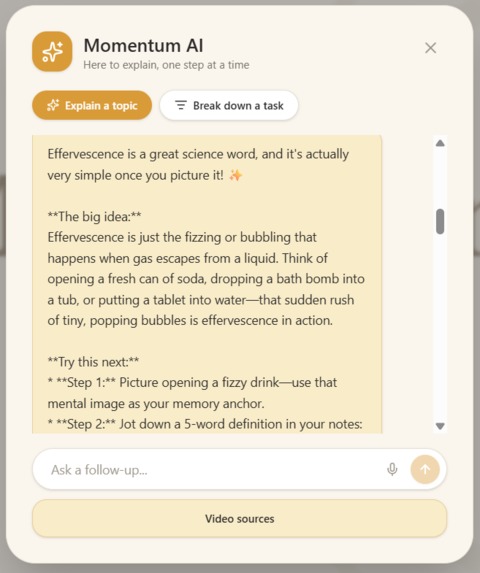
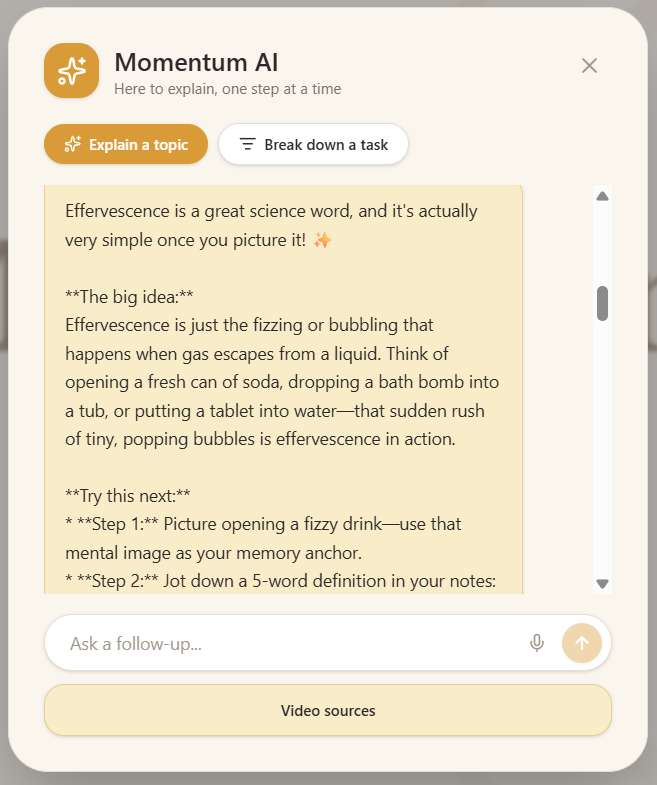
AI that breaks down topic explanation.
-
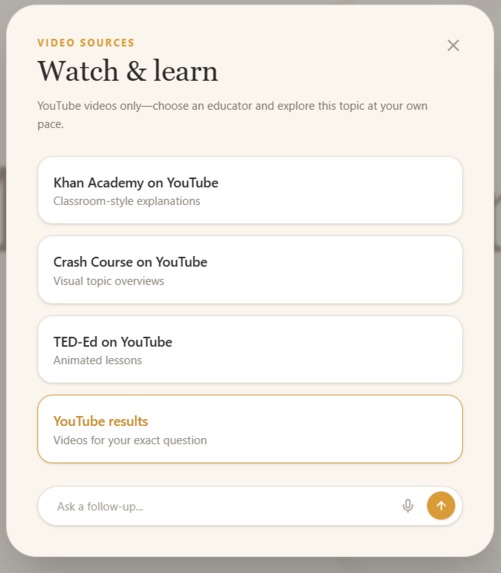
Concept video suggestions
-
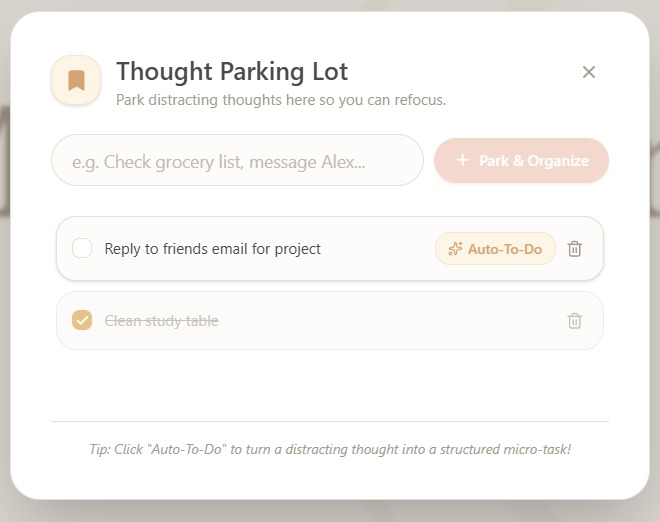
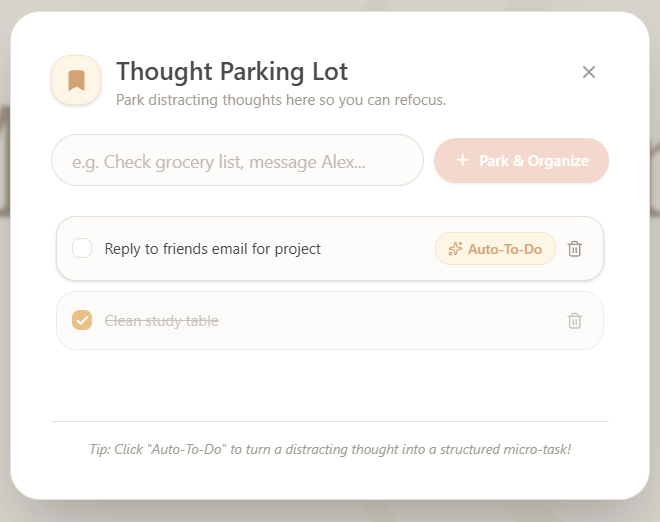
Write down distracting thoughts
-
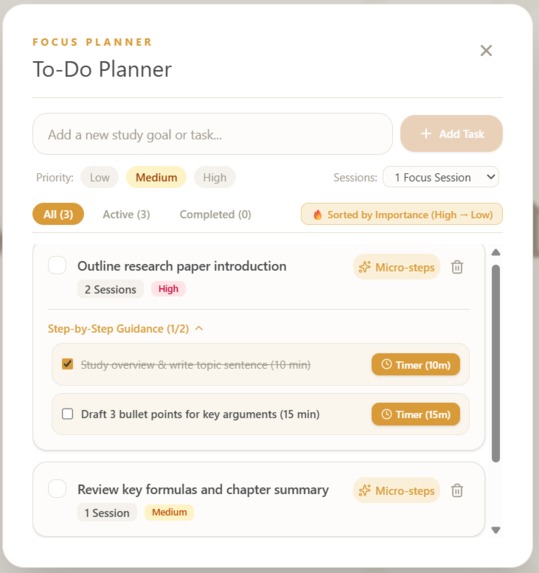
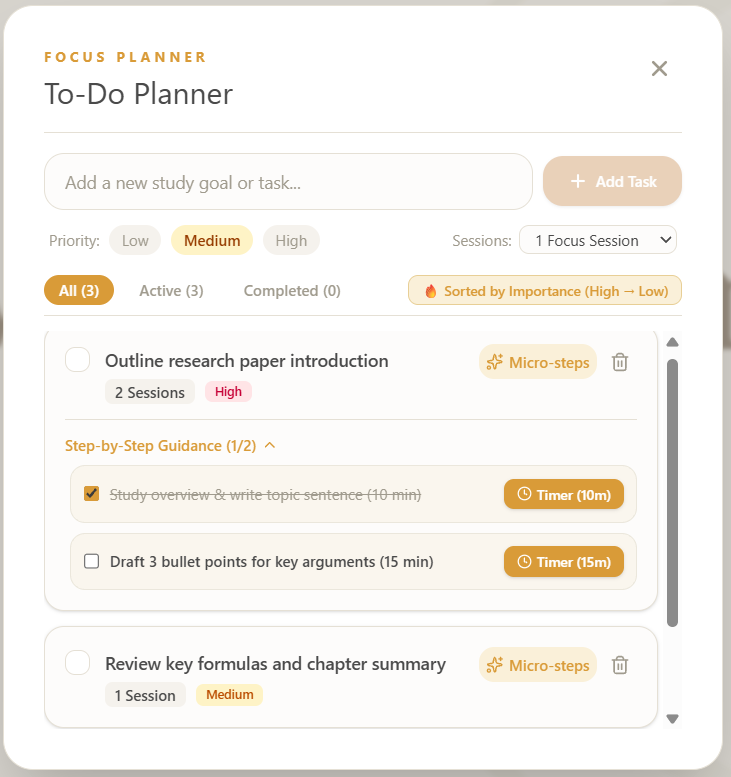
Todo planner with micro-steps
-
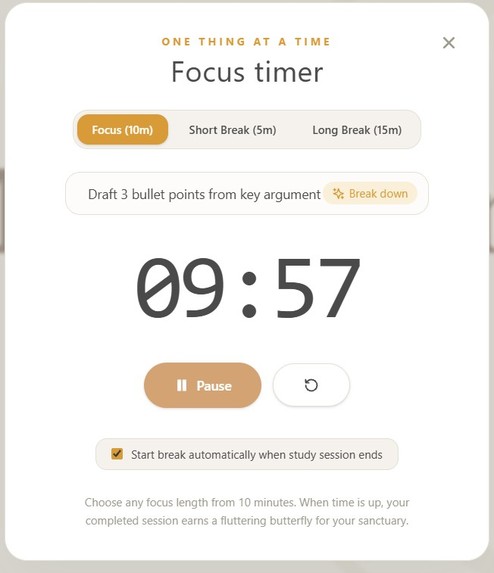
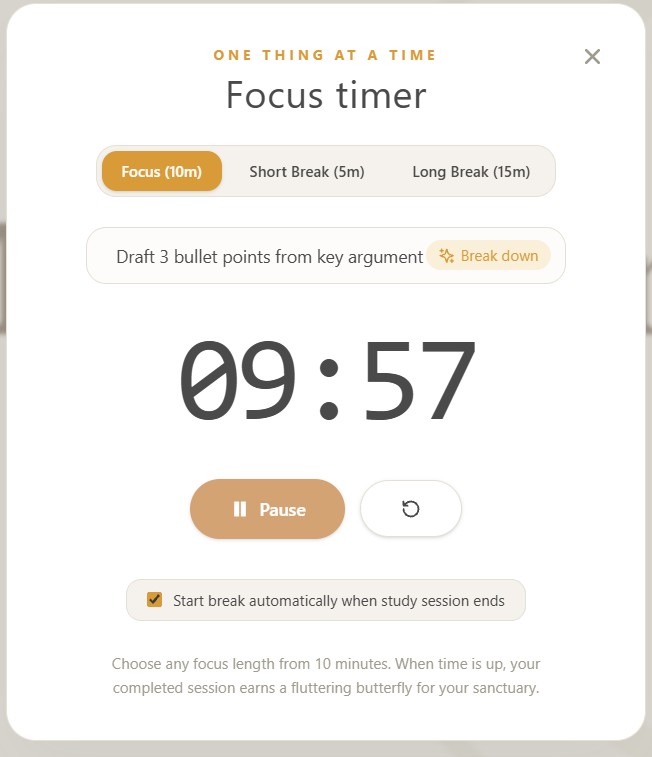
Focus pomodoro timer
-
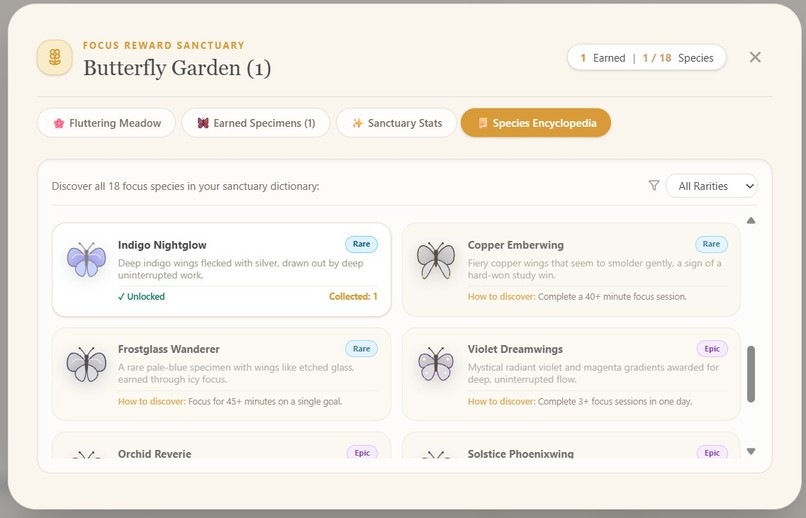
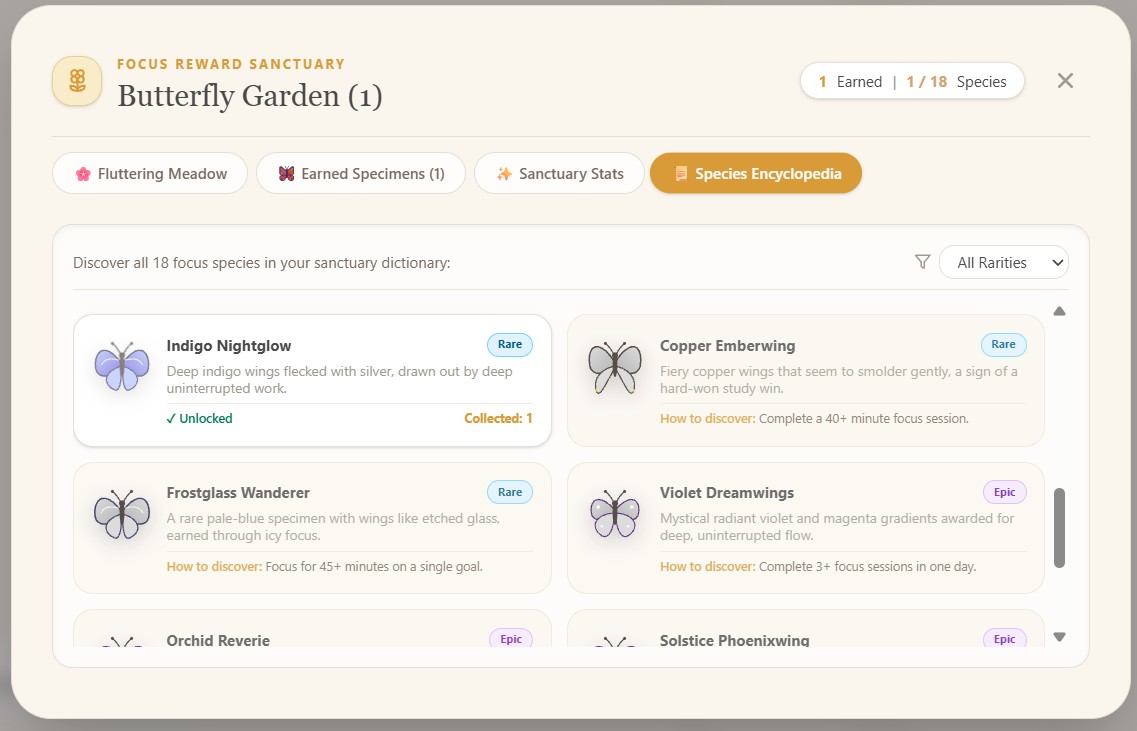
Enclyclopedia: Collect butterflies on doing tasks
-
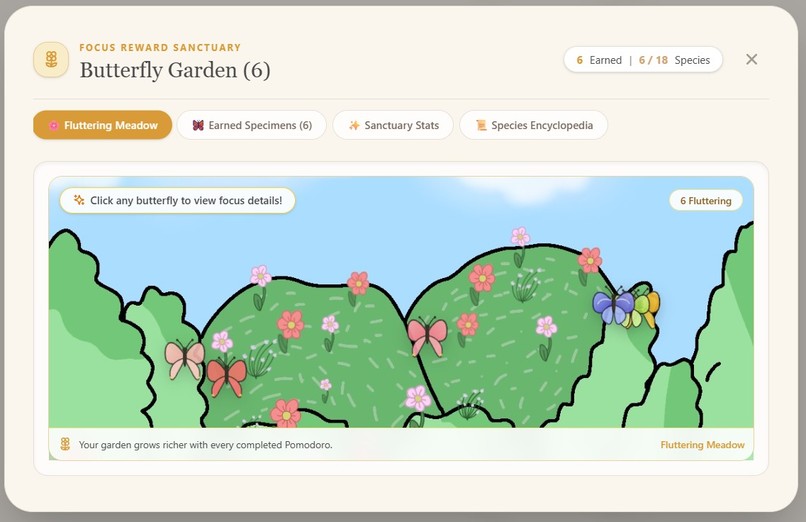
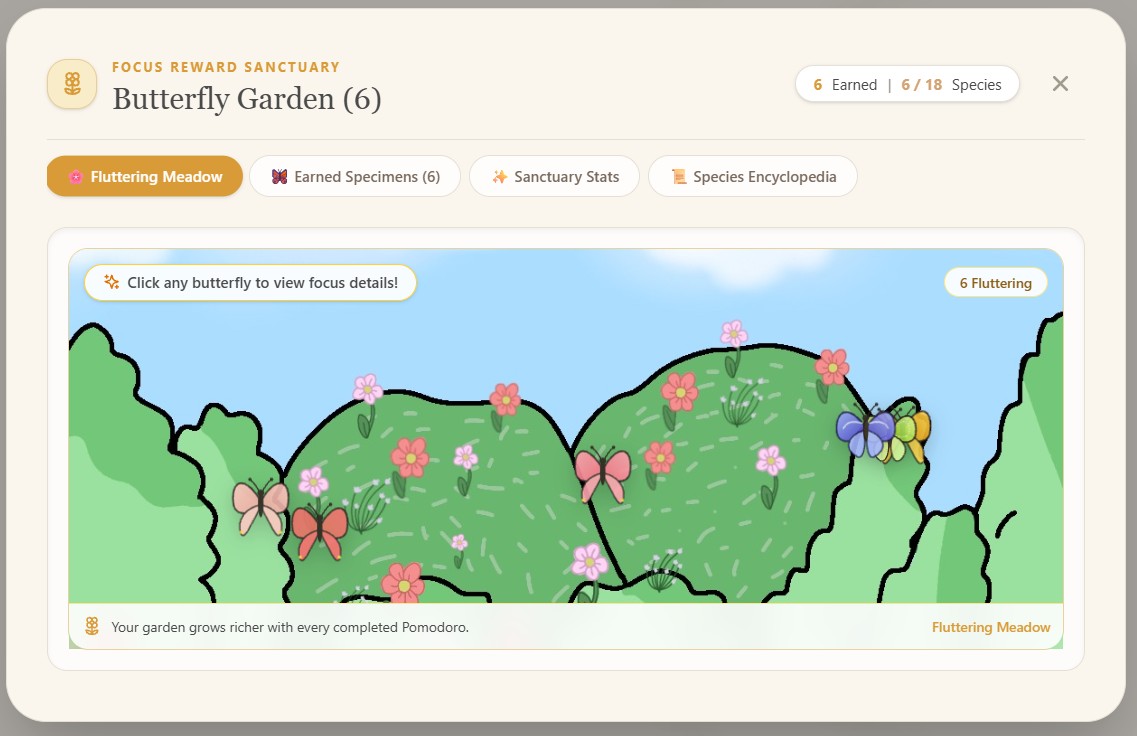
Butterfly garden: For tasks completed
-
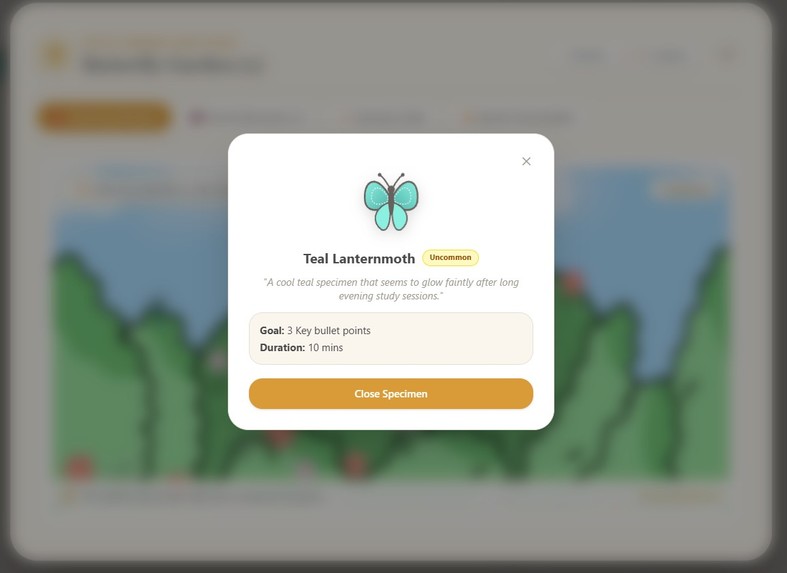
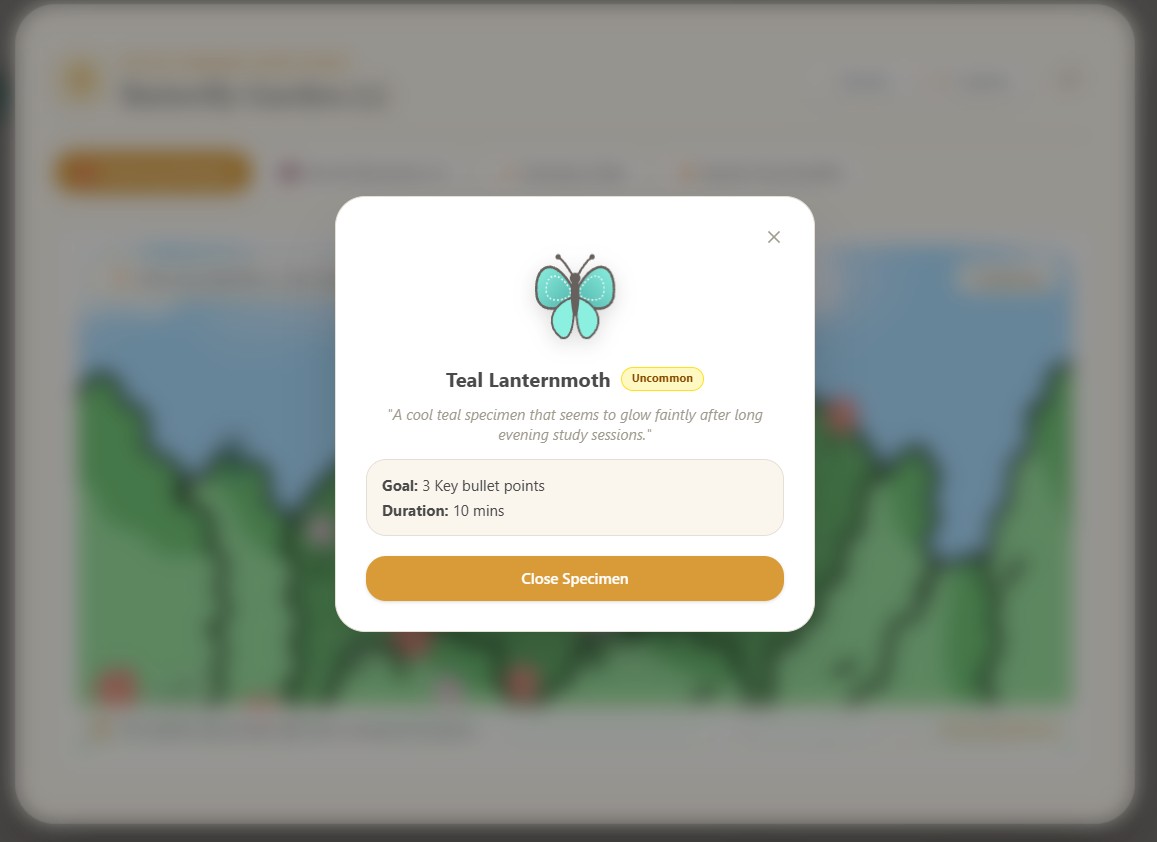
Butterflies with information about focus session
-
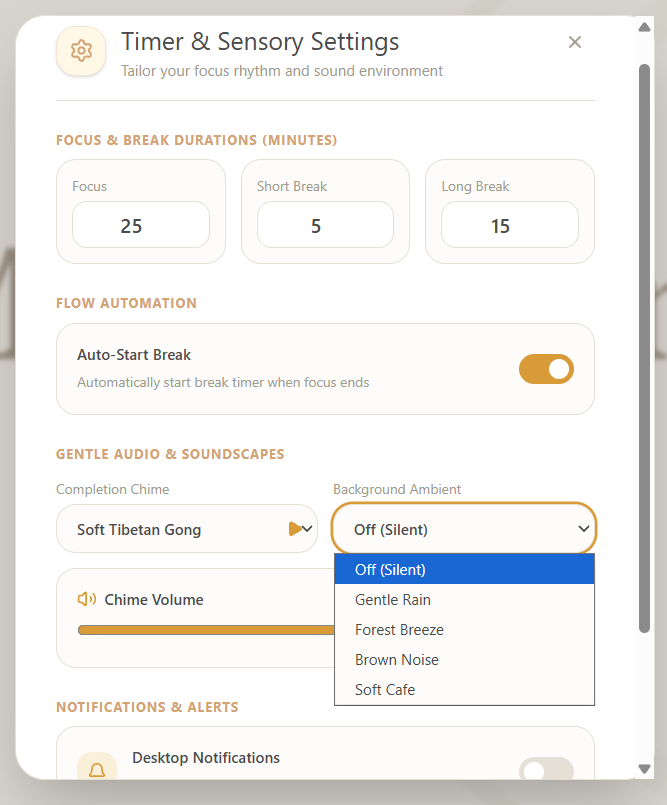
Settings

Inspiration
We built Momentum around a simple observation: ADHD is often not about knowing what needs to be done — it’s about being able to start, stay with it, and transition between tasks.
Traditional productivity apps often assume that users can consistently estimate time, break down their own tasks, ignore distractions, and stay motivated by long-term rewards. For someone with ADHD, those are often exactly the things that require the most effort.
We wanted to build something that doesn't simply tell users to “be more productive.” Instead, Momentum acts as a calm space that works with different ways of thinking, rather than expecting everyone to work the same way.— helping make time visible, reducing the friction of starting, providing a place for distracting thoughts, and creating immediate visual rewards for making progress.
The goal wasn't to build another checklist. It was to build a focus environment that works with the user's brain rather than asking their brain to work differently.
Because sometimes, you don't need more motivation. You just need a little Momentum.

What it does
Momentum is a focus companion designed around the specific friction points of ADHD.
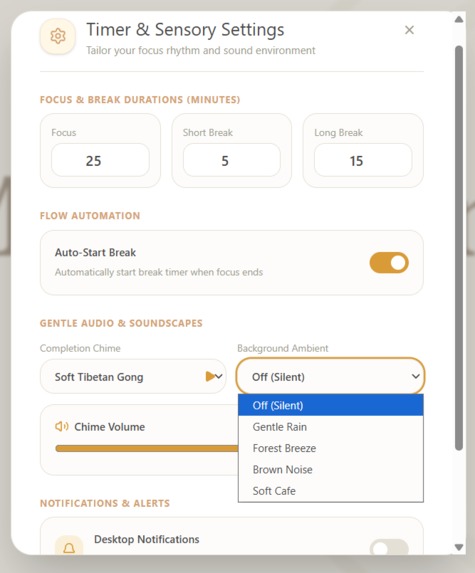
⤷Focus Timer: Provides externally-paced focus, short-break, and long-break sessions with configurable durations and auto-start options, helping make the passage of time more tangible.
⤷AI Assistant: An in-app Gemini-powered assistant that can help users plan tasks, think through problems, break down overwhelming goals, and figure out what to do when they're stuck.
⤷Micro-step To-Do List: Tasks can have priorities, estimated Pomodoros, and smaller actionable steps, turning “do my assignment” into something much easier to begin. Thought Parking Lot: Users can quickly capture a stray thought during a focus session without abandoning what they're currently doing.
⤷Garden & Butterflies:Completing focus sessions earns butterflies that become part of a growing visual garden, giving users an immediate and tangible sense of progress.
⤷Ambient Sound & Completion Chimes:Optional sounds create a clearer boundary around focus sessions and help signal transitions between working and resting.
Together, these features turn Momentum from a timer or task manager into a focus support system.
How we built it
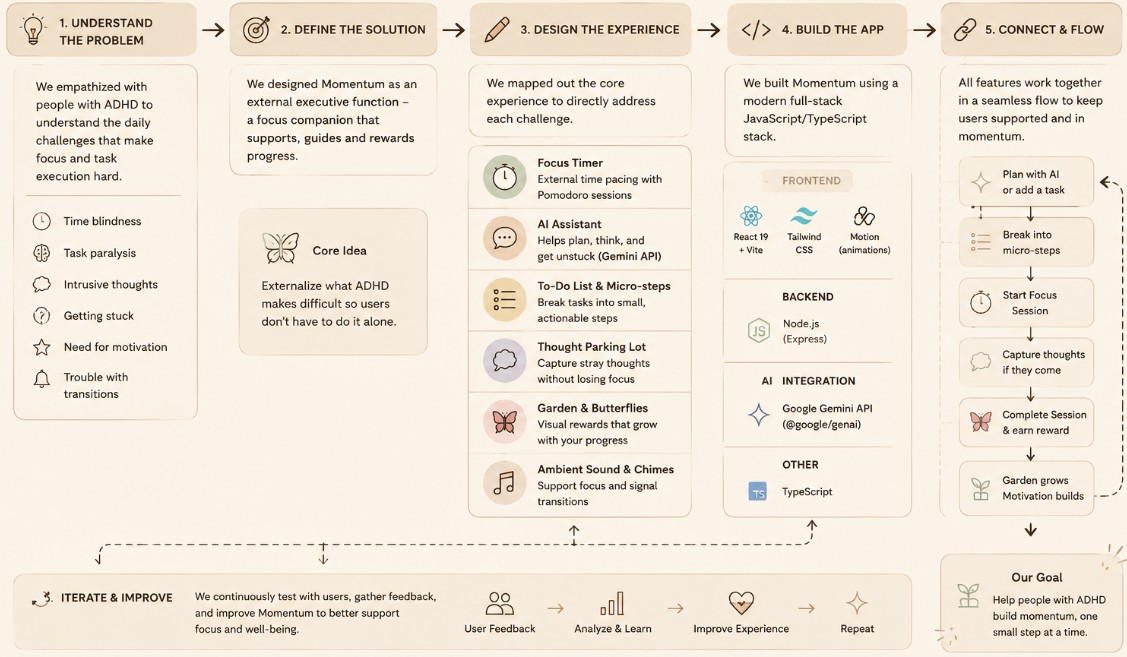
Momentum is built as a React + TypeScript web application using React 19, Vite, Tailwind CSS, Express, Motion, and Google's Gemini API through @google/genai.
We designed the experience around the idea that every feature should address a specific ADHD-related friction point.
The frontend manages the core focus experience — timers, tasks, micro-steps, thought parking, animations, rewards, and the garden. The Express server handles the backend side of the application, while Gemini powers the AI assistant for planning and getting unstuck.
We also paid particular attention to the visual feedback loop. Completing a focus session doesn't just mark something as "done"; it creates a reward through the butterfly and garden system. Motion and animation make progress feel visible rather than leaving it as another item disappearing into a checklist.
Challenges we ran into
One of our biggest challenges was figuring out how to make the app feel supportive rather than overwhelming.
There is a temptation when building an ADHD-focused product to keep adding features because there are so many different challenges that could be addressed. We had to constantly ask ourselves whether a feature actually reduced cognitive load or simply created another thing for the user to manage.
We also had technical challenges integrating the AI functionality while keeping the application responsive and making sure the AI was useful beyond simply acting as a chatbot. The goal was for it to function as an external thinking partner — helping users turn vague or overwhelming intentions into concrete next steps.
Another challenge was making rewards meaningful without turning productivity into a pressure system. We wanted the garden and butterflies to make progress satisfying without making users feel punished for taking breaks or having an unproductive day.
Accomplishments that we're proud of
We're proud that Momentum isn't just a collection of productivity features — the features work together around a single problem.
A task can be broken into micro-steps, started through the focus timer, supported by the AI when the user gets stuck, protected from distractions through the Thought Parking Lot, and finally rewarded through the garden and butterfly system.
We're especially proud of the idea of externalizing executive function. Instead of asking the user to remember everything, estimate time, decide the next step, resist every distraction, and motivate themselves, Momentum takes some of that cognitive work off their plate.
We're also proud of the visual reward system. The garden gives users something that grows over time as a representation of their effort — making progress something they can actually see.
What we learned
We learned that designing for accessibility isn't just about making something technically accessible. It's about understanding the cognitive experience of the person using it.
A feature that looks helpful on paper can actually create more friction if it requires too many decisions. Small details — how a timer communicates time, how many steps a task is broken into, how quickly a thought can be captured, or what happens when someone gets stuck — can completely change the experience.
We also learned that AI is most useful here when it reduces cognitive load rather than adding another interface to interact with. A good AI assistant shouldn't just answer questions; it should help someone move from “I don't know where to start” to “Here's my next step.”
Most importantly, we learned that productivity shouldn't necessarily mean doing more. For Momentum, it means making it easier to do the thing that matters right now.
What's next for Momentum
We want Momentum to become increasingly adaptive to each user's individual focus patterns.
Future versions could learn things like when users tend to focus best, which session lengths work best for them, what kinds of tasks they struggle to start, and when they are likely to get stuck — then use that information to personalize the experience.
We also want to expand the AI beyond a chat interface into a more proactive focus companion: helping restructure tasks when someone repeatedly gets stuck, suggesting breaks, adjusting session difficulty, and helping users reflect on what strategies actually worked for them.
On the reward side, we'd like to expand the garden into a richer progression system while keeping it supportive rather than competitive.
Ultimately, our vision is for Momentum to become more than a productivity app. We want it to be an external layer of support that helps people turn intention into action — one small step at a time.



Log in or sign up for Devpost to join the conversation.