-
-
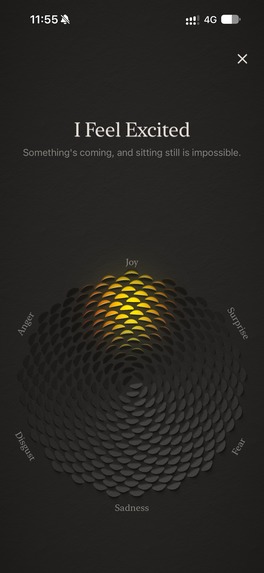
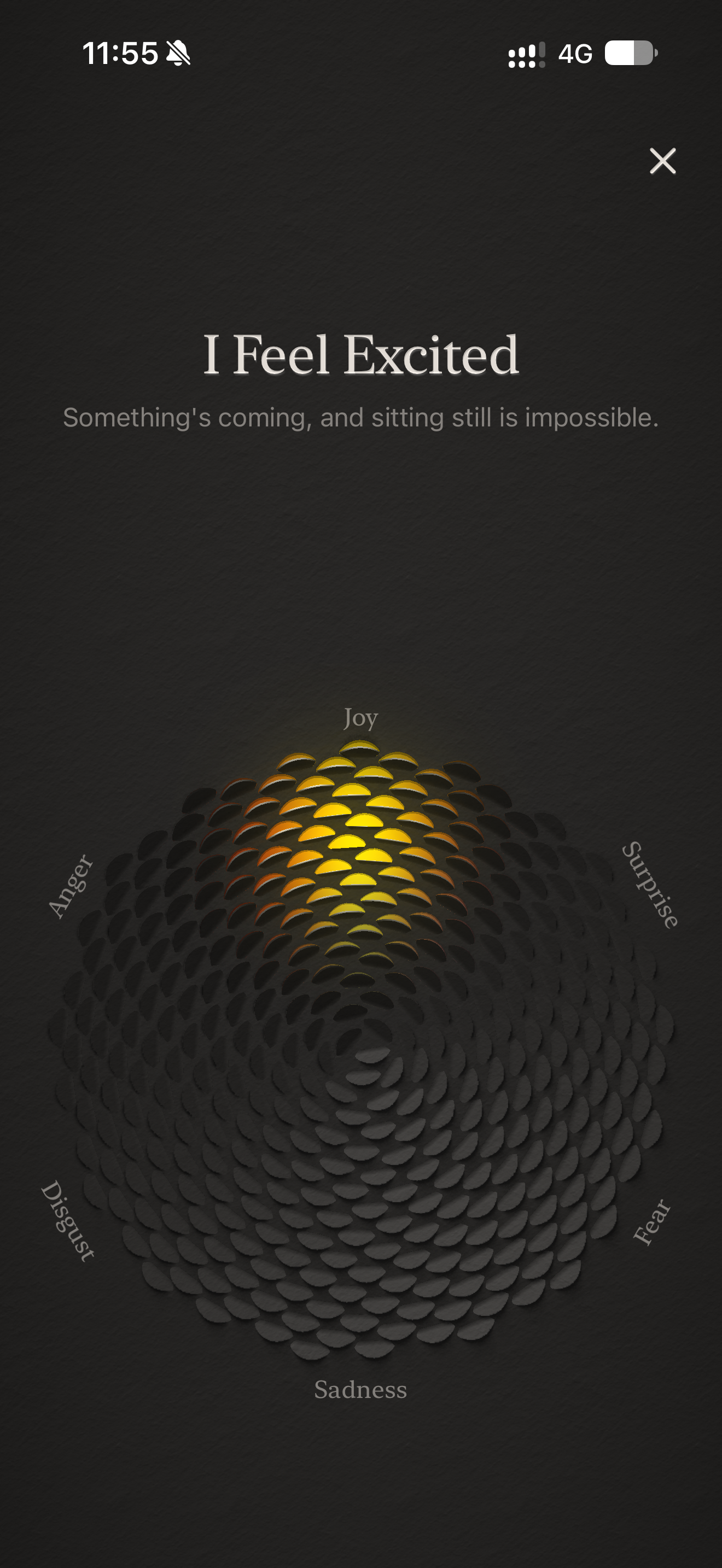
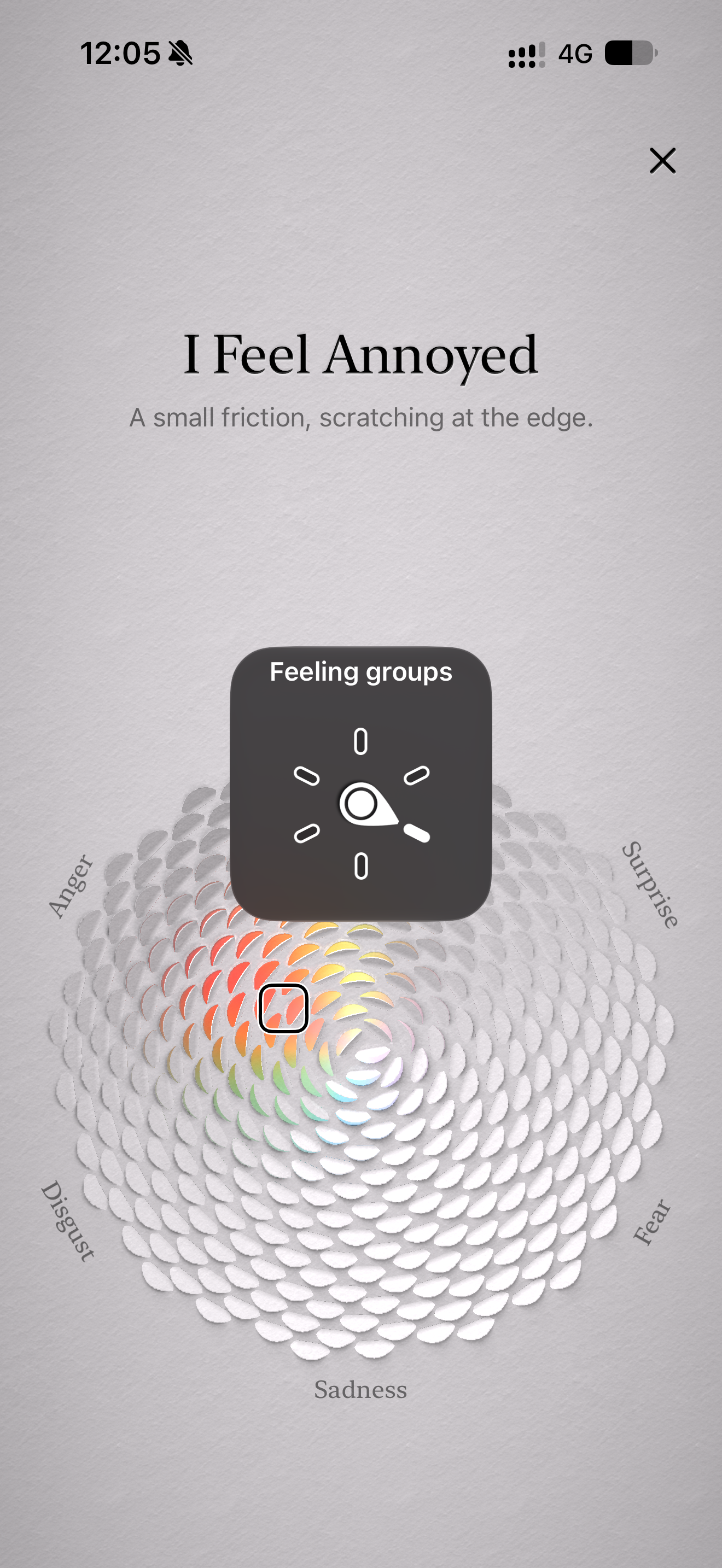
Capture Feeling, Dark Mode – Find words for the darker days.
-
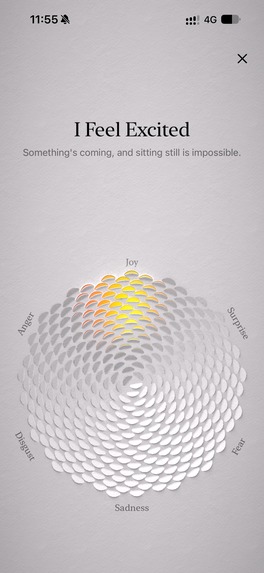
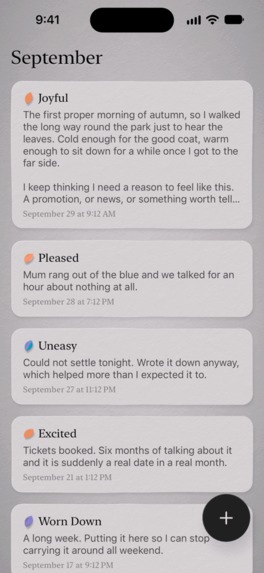
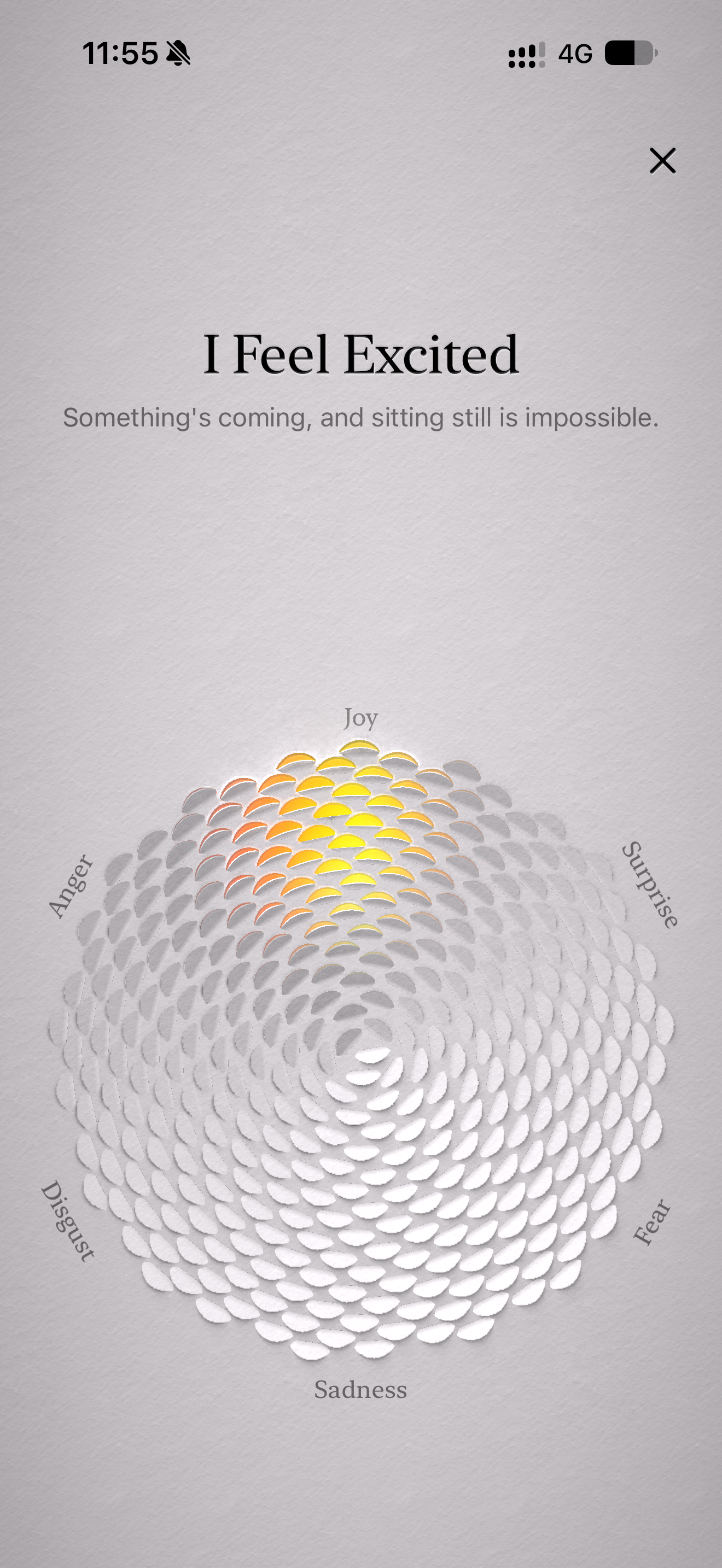
Capture Feeling, Light Mode – Hold on to the brighter moments
-
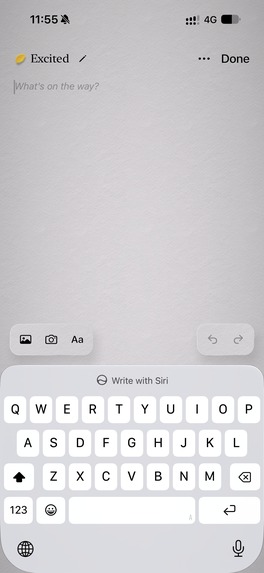
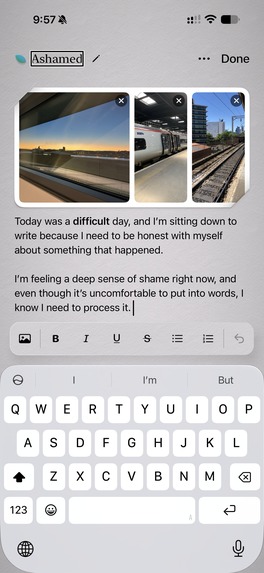
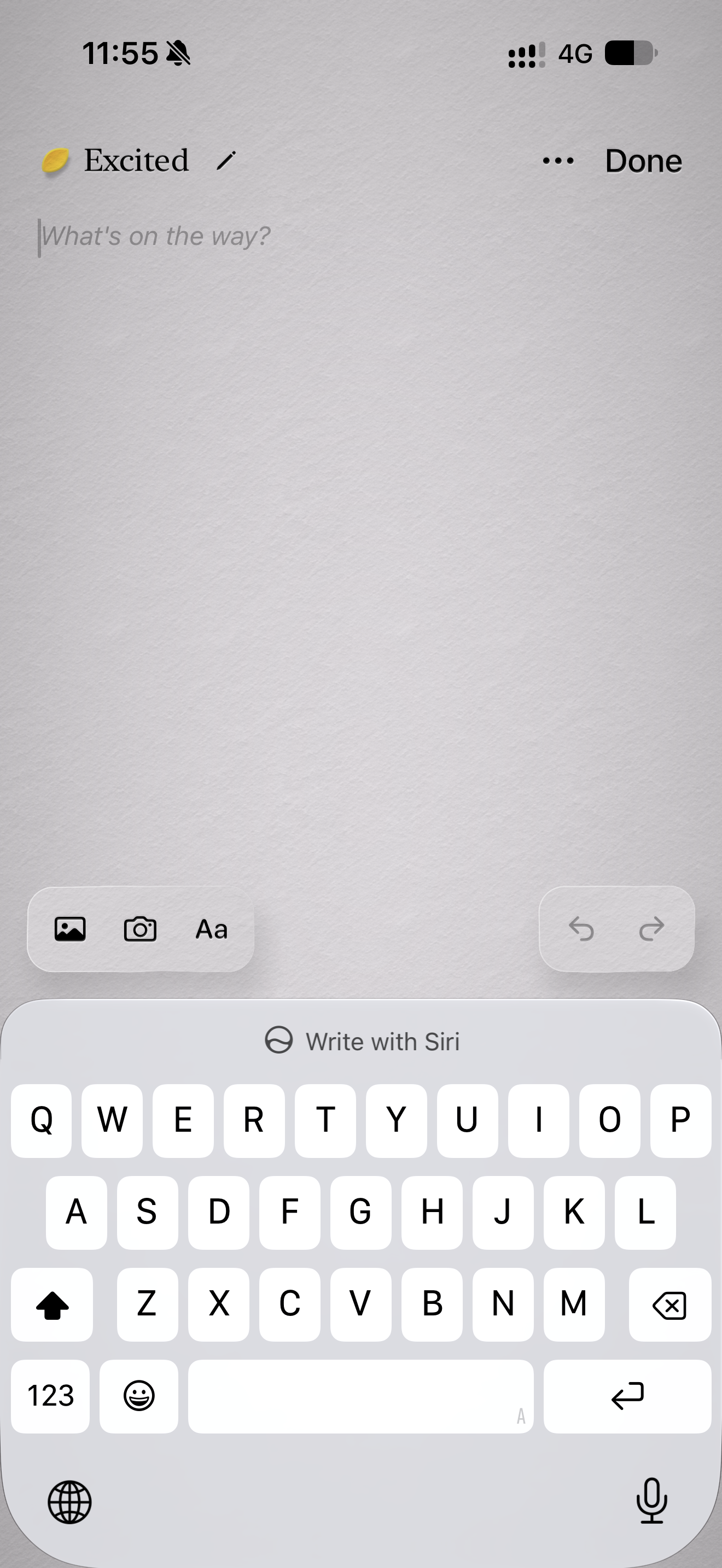
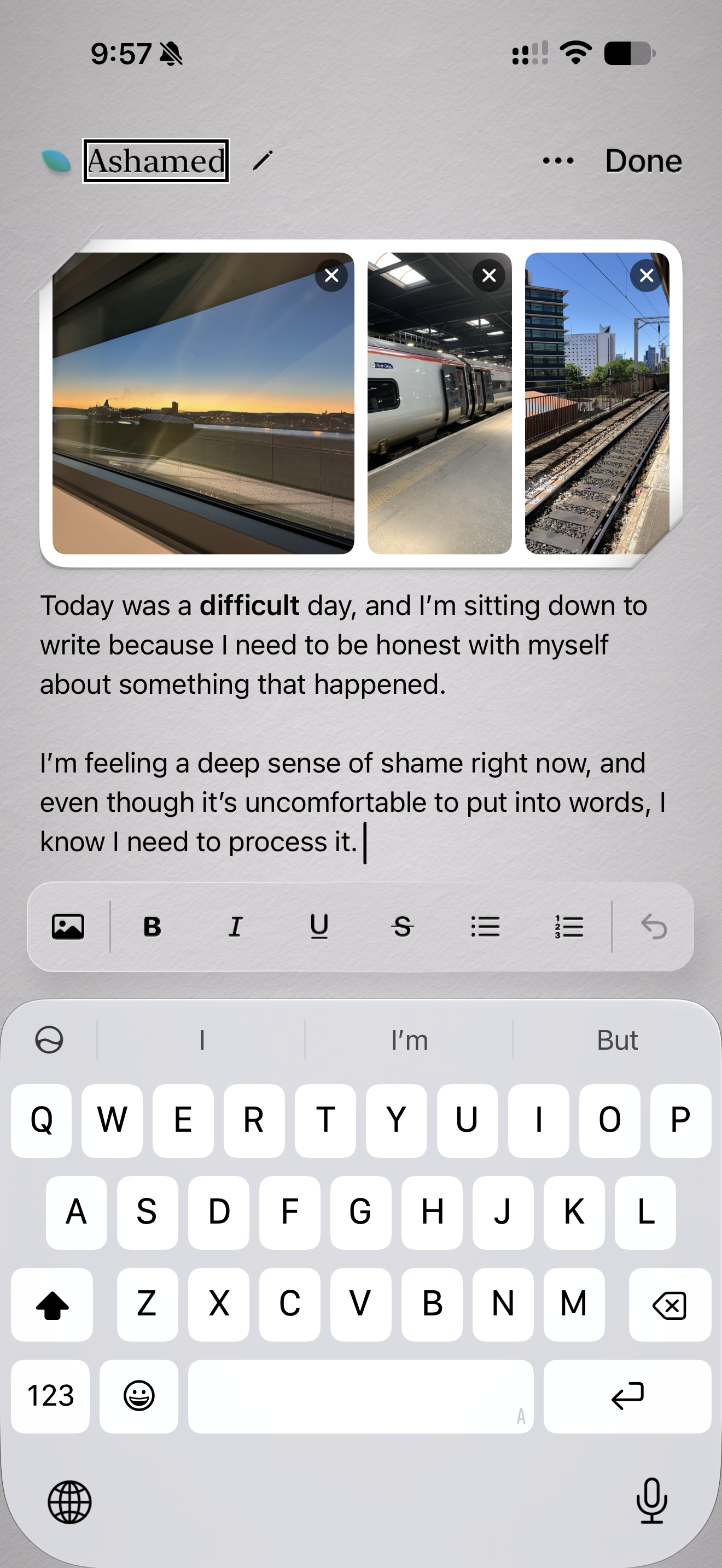
Editor – Write it down, your way
-
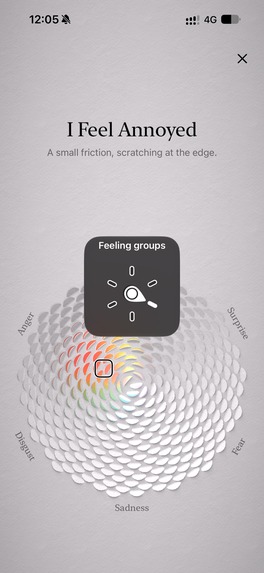
Accessibility – Rotors (VoiceOver)
-
Accessibility – VoiceOver
-
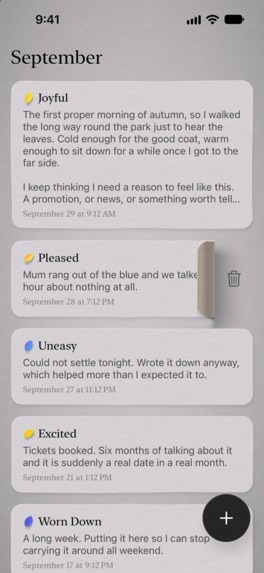
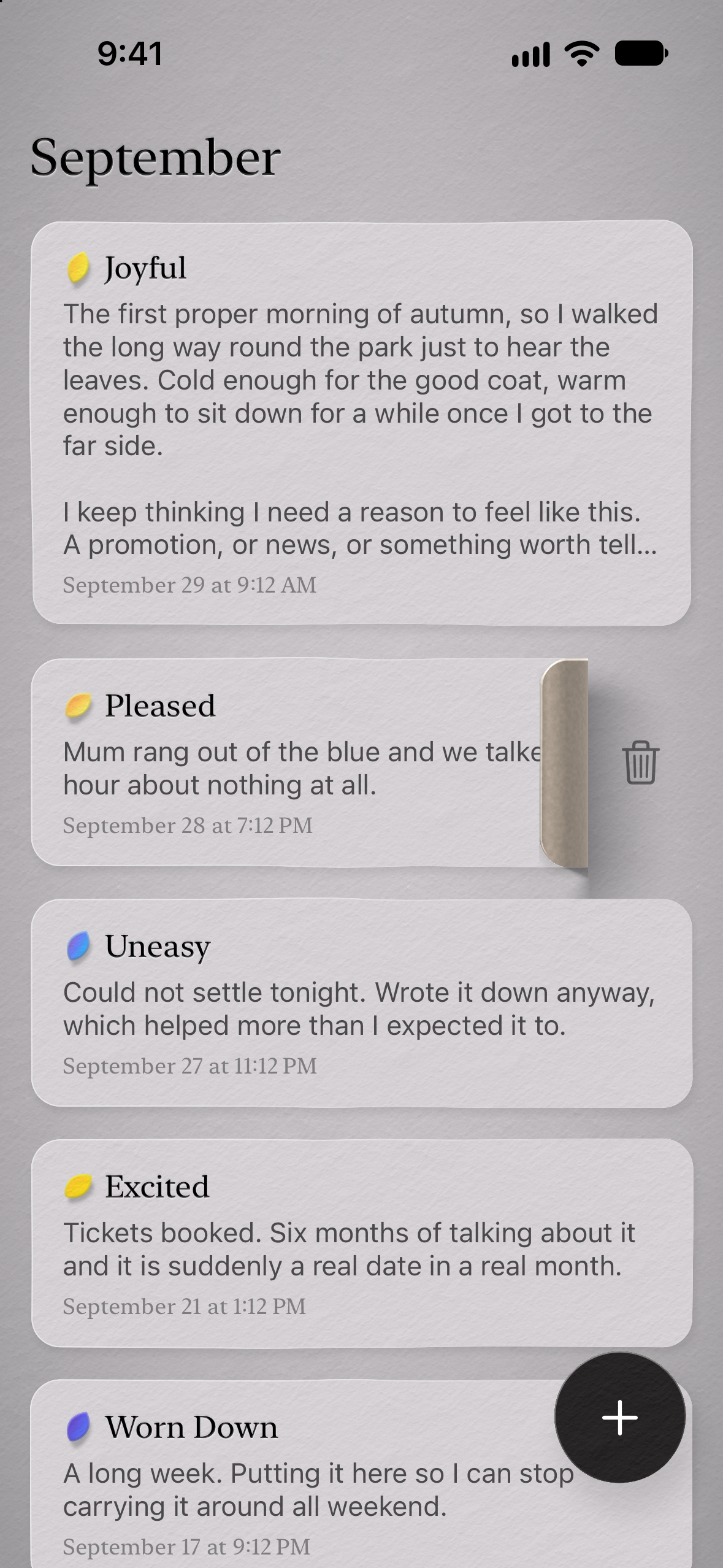
Delete – Tear it away, paper-style
-
 GIF
GIF
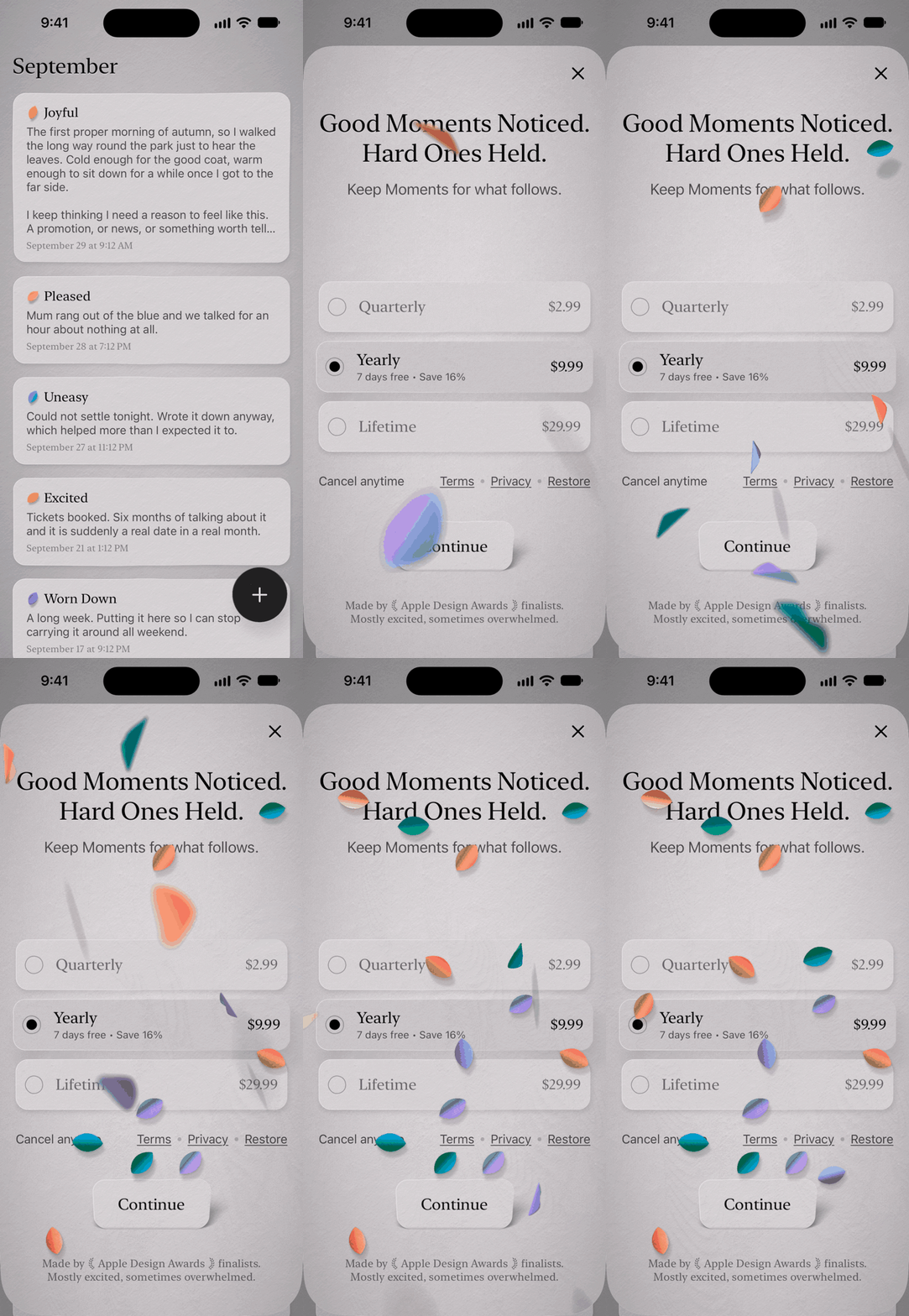
Paywall animation – Unlock more feelings to explore
-
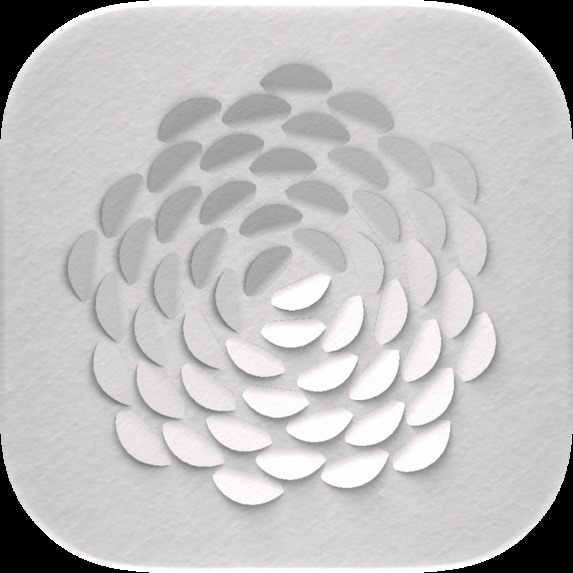
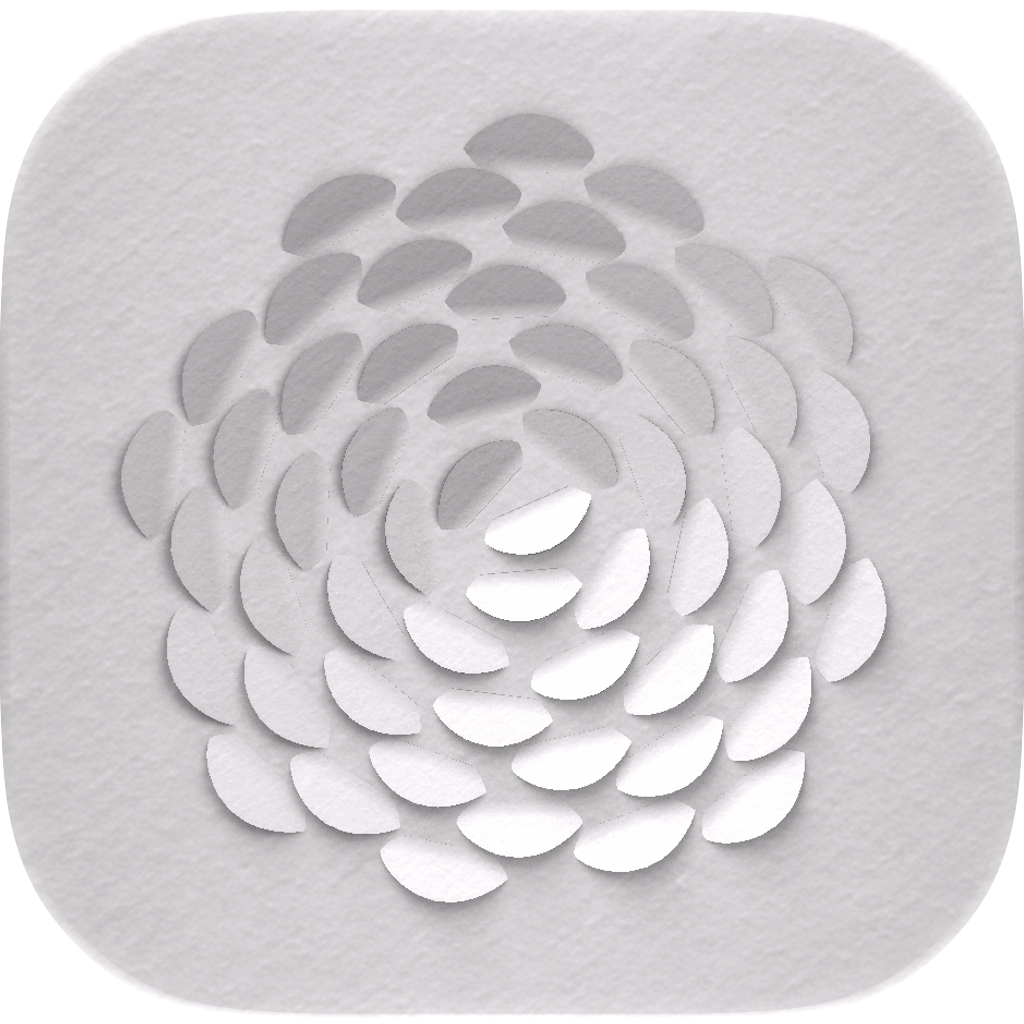
App Icon – A little flower of feelings.
-
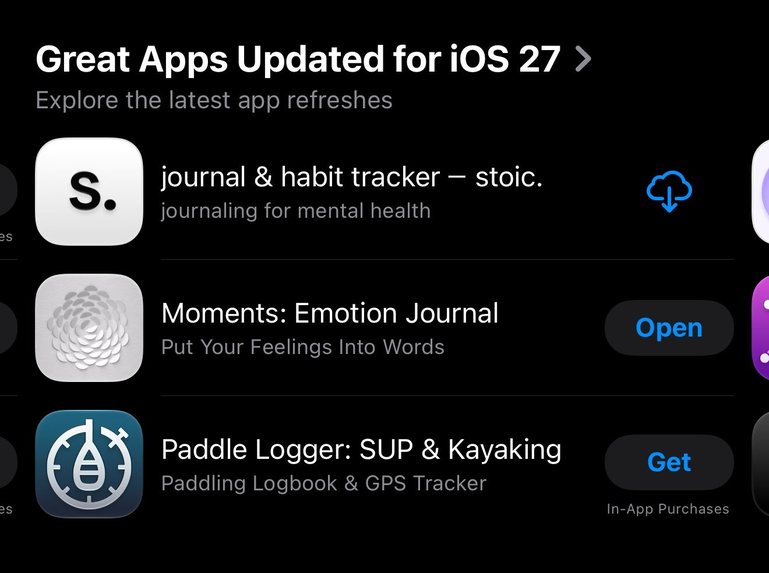
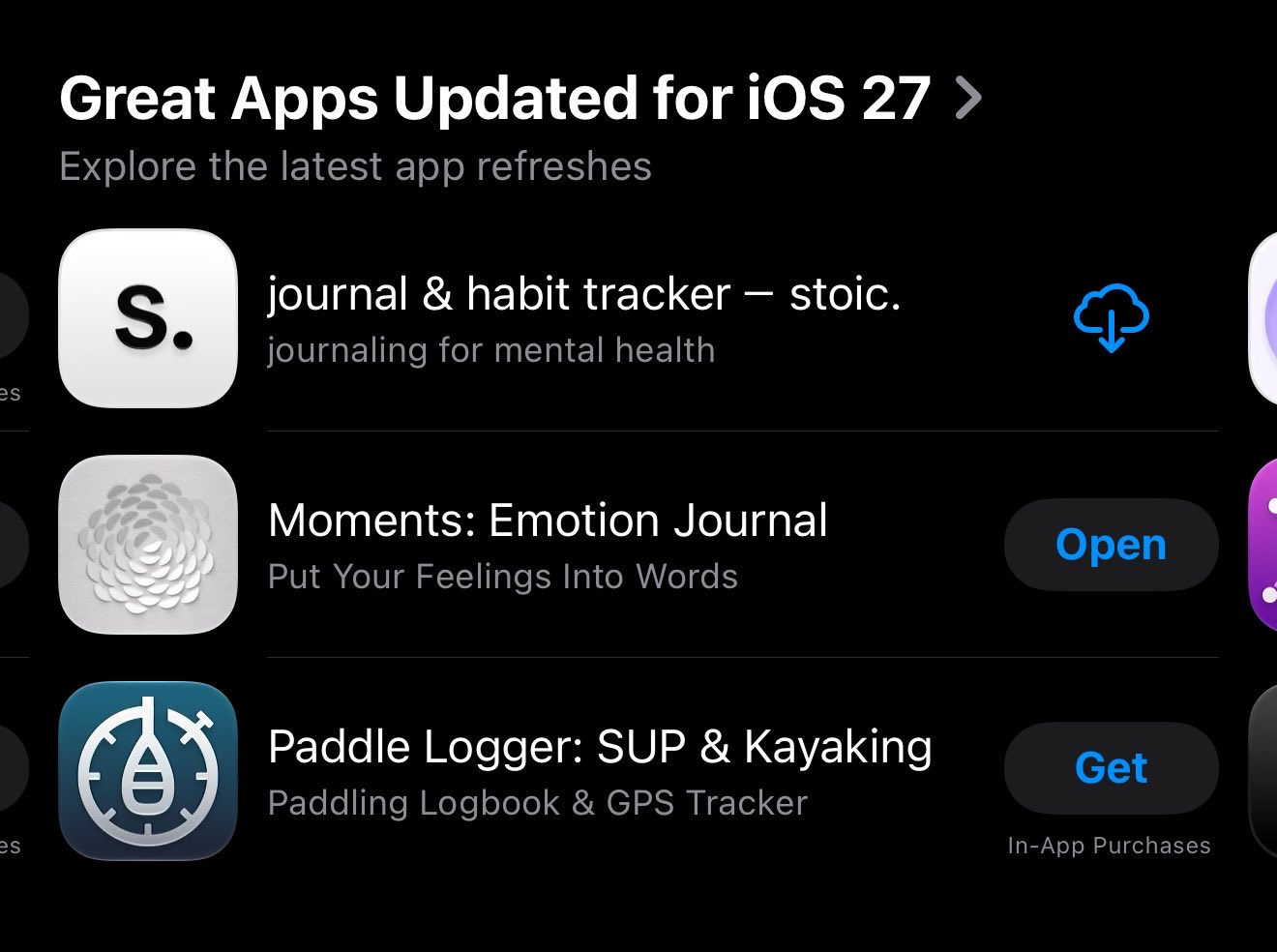
App Store Featured Moment!
Inspiration
We started with a simple question:
What happens when you know how you feel, but can't quite find the words for it?
Most mood journals start with a blank page, a scale, or a handful of emojis. We wanted to explore something different: helping people discover the feeling first, then giving them a place to capture that moment.
That led us down a much deeper rabbit hole than we expected.
For months, our team researched different models of emotion, including Paul Ekman's work on basic emotions, emotion wheels, and other psychological frameworks. We looked at how emotions can move from broad categories into much more nuanced feelings, and explored how these ideas have also found their way into popular culture, such as Pixar's Inside Out.
We sketched, debated, researched, prototyped, and started over.
We didn't want to simply put an emotion wheel on a screen. We wanted the process of finding a feeling to feel natural.
What it does
Moments is a visual journal that helps you find the right words for how you feel, then gives you a quiet place to capture that moment.
Instead of opening to a blank page, you start with a broad feeling and move through the emotion space until something feels right.
The heart of the experience is a field of cutout paper petals. Move your finger through them and they gently respond, revealing more precise feelings as you explore.
Once you find a word that fits, that feeling becomes the beginning of your moment. You can write, add a photo, or simply leave it as it is.
Over time, those moments become a private collection of how you've been feeling.
How we built it
We built Moments natively for iOS with Swift, SwiftUI, and Metal, with much of the experience centred around touch, motion and physicality rather than traditional screens.
The cutout paper petals became the foundation of the interaction. We created custom paper textures, grain, shadows and layered surfaces to make them feel like real pieces of paper sitting on top of one another.
Then we brought them to life with physics.
Each petal responds to your touch and settles naturally as you move through the emotions. We spent a lot of time tuning the movement and haptic feedback intensity so the interaction feels tactile without becoming distracting.
We prototyped countless versions of the picker, from grids and wheels to completely different gestures and visual metaphors, before arriving at the petals.
The rest of the interface follows the same physical language. Buttons feel like they lift from the page, photos feel tucked into an album, and animations are deliberately soft and unhurried.
We also designed Moments to be private by default, using on-device processing wherever possible so personal reflections don't need to leave the device.
Challenges we ran into
The hardest part was probably knowing when to stop.
We had plenty of ideas that were technically interesting or visually beautiful, but didn't necessarily make the experience better.
We kept coming back to one question:
Does this help someone understand their moment, or is it just decoration?
That became our filter.
One good example was our idea for a paper camera. It looked beautiful and fit the visual language perfectly, but ultimately didn't help someone capture a moment any better. So we left it out of the first release.
The emotion picker also presented a unique challenge. Its personality comes from touch, physics and animation, but those can't be the only ways to experience it.
We spent a lot of time making the interaction accessible while keeping its character, including VoiceOver, Rotor navigation, Switch Control, Dynamic Type and Reduce Motion.
Getting the balance right between something beautiful, tactile and accessible took a lot of iteration.
Accomplishments that we're proud of
We're proud that something which looks simple on the surface took so much thought underneath.
The emotion picker went through months of research and prototyping before becoming the interaction it is today.
We're especially proud of the small details that make Moments feel like a physical object rather than another digital journal: the custom paper textures, cutout petals, subtle shadows, physics, haptics, and the way photos are tucked into your collection of moments.
We're also proud that accessibility wasn't treated as a separate layer. The same emotion wheel remains the experience whether you're exploring it visually, with touch, or through assistive technologies.
Most importantly, we're proud that Moments feels calm.
There is no feed to scroll, no streak to maintain, and no pressure to write the perfect entry.
It's just a small space to pause and notice how you feel.
What we learned
Our biggest lesson was that the interface itself can become part of the reflection process.
We originally thought we were building a better way to record feelings. Along the way, we realised the process of finding a feeling could itself be meaningful.
A gentle interaction can give someone permission to slow down.
That changed how we approached almost every decision, from the speed of an animation to the intensity of a haptic, the texture of a paper surface, and even how a moment disappears when you swipe it away.
We also learned that simplicity is surprisingly hard.
The final experience looks simple because we spent a lot of time removing things that didn't belong.
What's next for Moments Journal
We want Moments to become something you can turn to wherever a feeling happens, not just when you sit down to journal.
That means expanding to more platforms, including Apple Watch, so capturing a moment can happen right when you're feeling it.
But bringing Moments to a smaller screen isn't as simple as shrinking the iPhone experience. The interaction that works beautifully with a large field of paper petals needs to be rethought for a watch. We're still exploring what capturing a feeling should feel like when you only have a few seconds, a tiny screen, and a very different kind of interaction.
We're also exploring ways to help you see the bigger picture over time. Not just individual journal entries, but an overview of your emotions, helping you notice patterns, recognise how you've been feeling, and become a little more aware of yourself.
And there is much more we're excited to explore, from new ways to capture moments to deeper reflection and on-device intelligence, while keeping the same principles at the heart of Moments: private, calm, personal, and human.
We're excited to see where it goes next.
Built With
- metal
- revenuecat
- swift
- swiftui


Log in or sign up for Devpost to join the conversation.