Inspiration
The purpose of our work at Quantilytix is to bring state-of-the-art intelligence to informal markets, breaking down the barriers of financial literacy and credit exclusion by turning everyday business activities and physical assets into verifiable trust. Across Sub-Saharan Africa, livestock is one of the dominant asset classes powering the informal economy. This reality is particularly pronounced in Zimbabwe, underscored by the passing of the 2017 Movable Property Security Interests Act, which lets farmers pledge livestock for a loan, and the Reserve Bank's collateral registry being online since 2022.
A lender needs three answers before it lends against a cow: which animal it is, what it weighs, and that it exists at all. Police recorded 11,313 stock theft cases in 2023. In the United States, the Easterday fraud collected over $244 million for more than 265,000 cattle that never existed. A livestock officer's phone can answer all three questions when the evidence holds up.
What it does
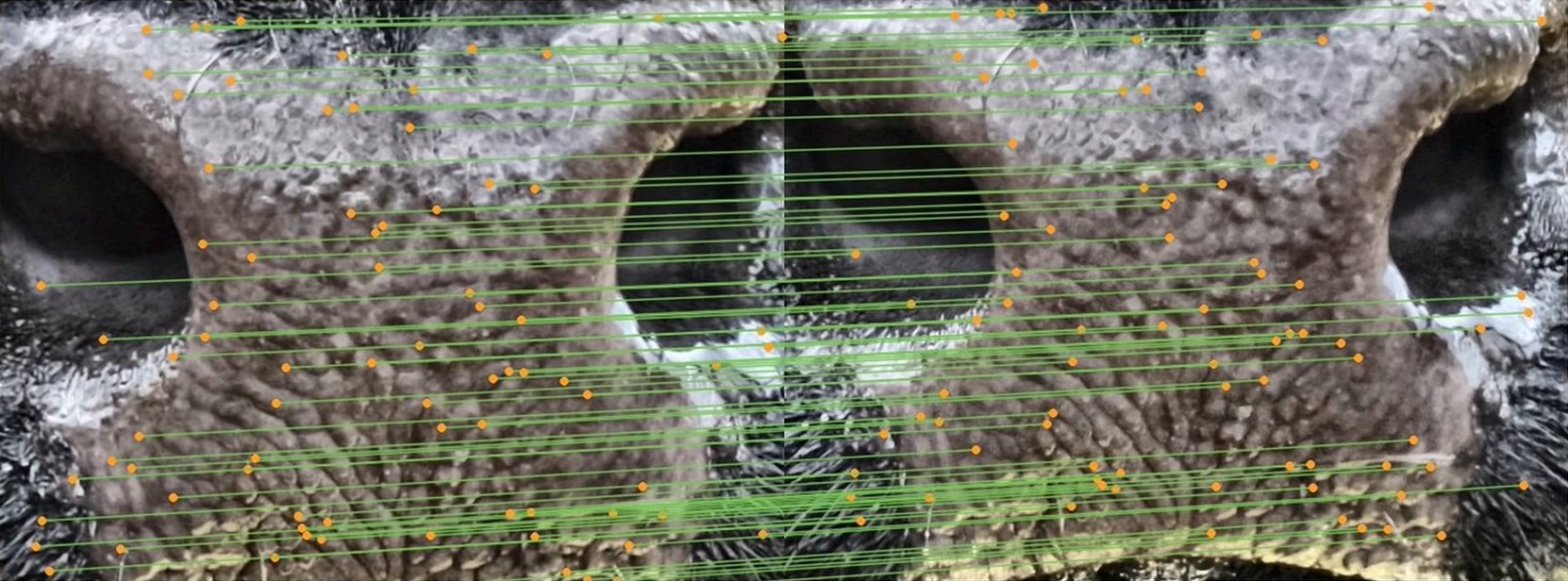
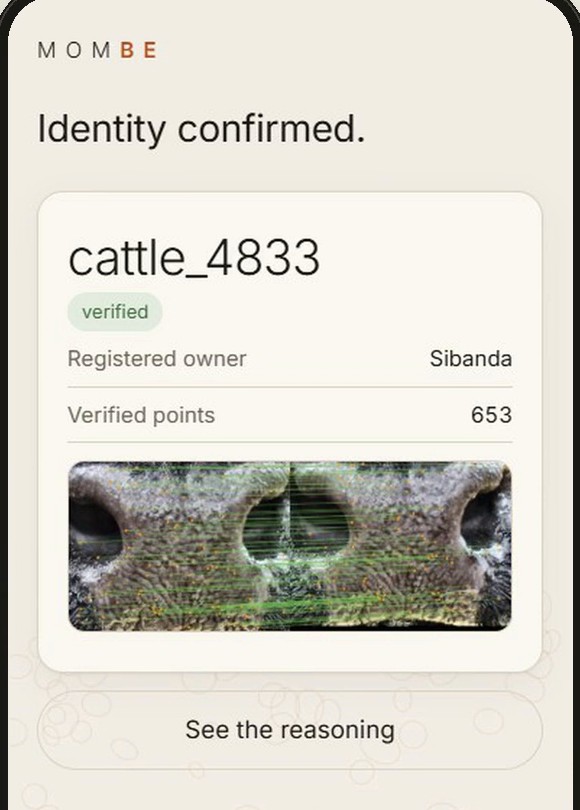
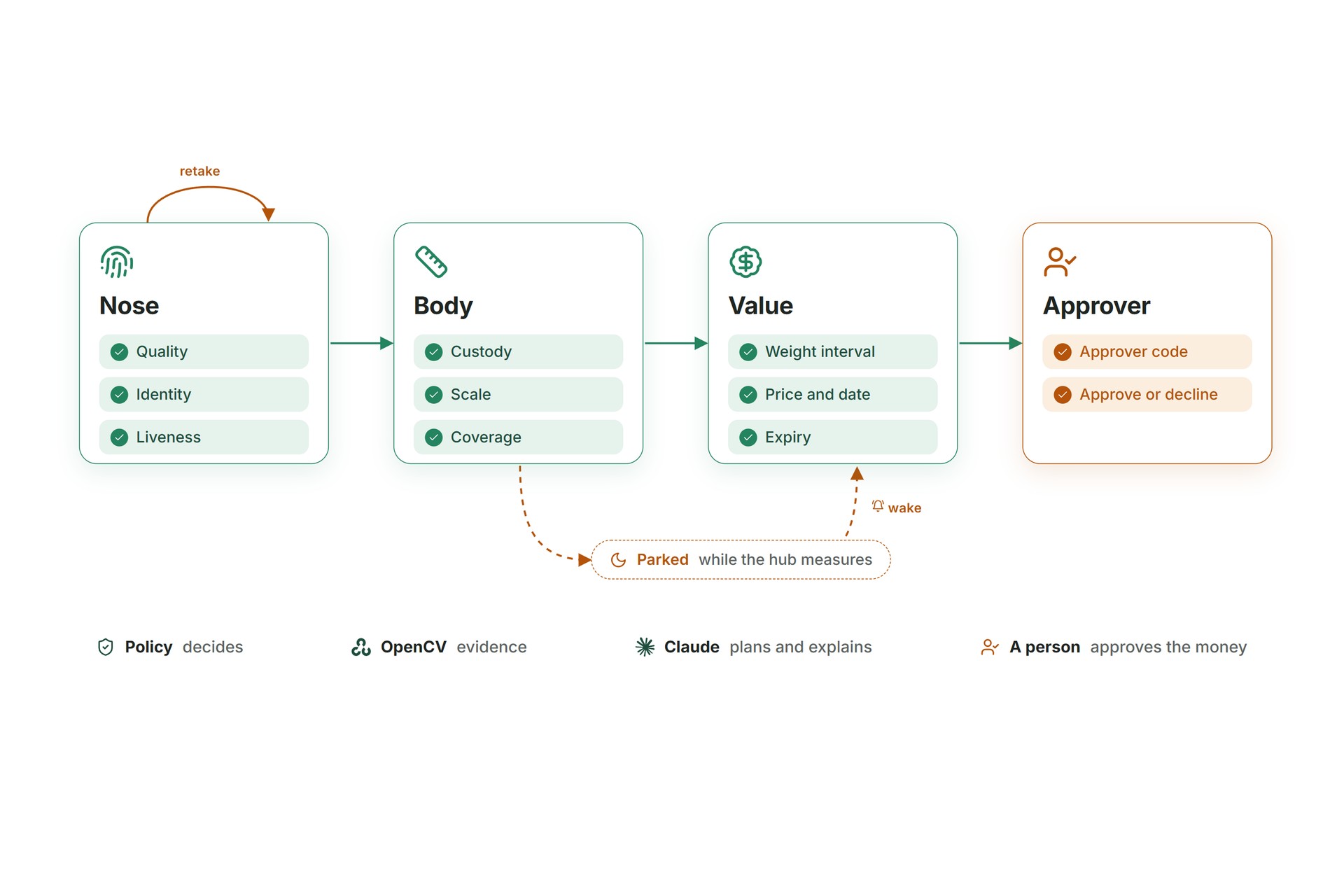
An officer opens the application on a mobile device and captures a photograph of the animal's muzzle. Mombe analyses the image, verifies live tissue presence, and matches the unique noseprint to identify the subject.
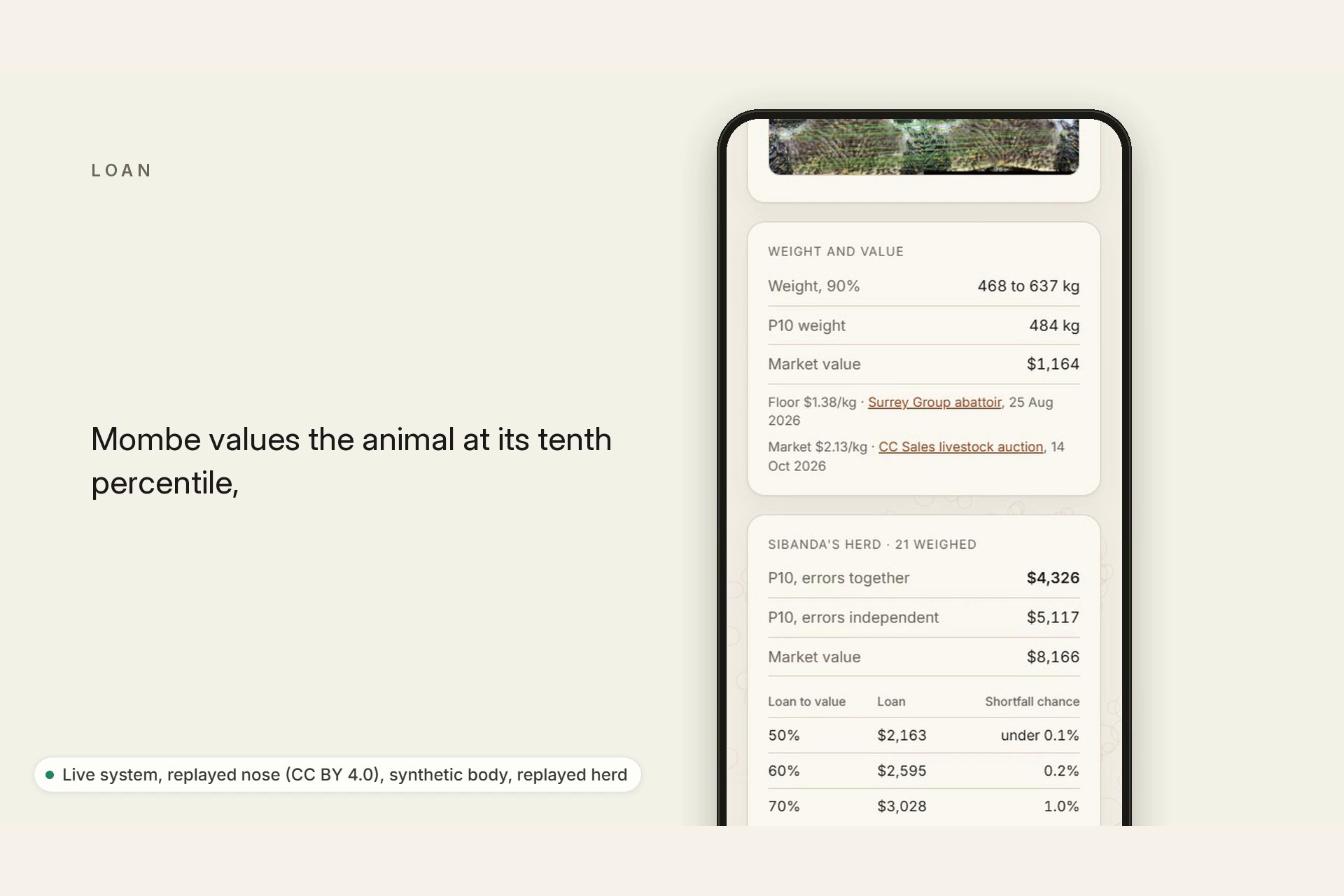
For loan underwriting, the officer carries a calibrated reference board around the animal. The core system reconstructs the subject's 3D spatial geometry, extracts heart girth and total length measurements, and calculates a statistical weight range. Mombe assigns a dollar value using the tenth-percentile weight estimate, binding the figure directly to current market pricing data, execution timestamps, and an explicit loan expiration window.
The system automatically generates a formatted loan request, routing it directly to an authorised manager for credentialed approval.
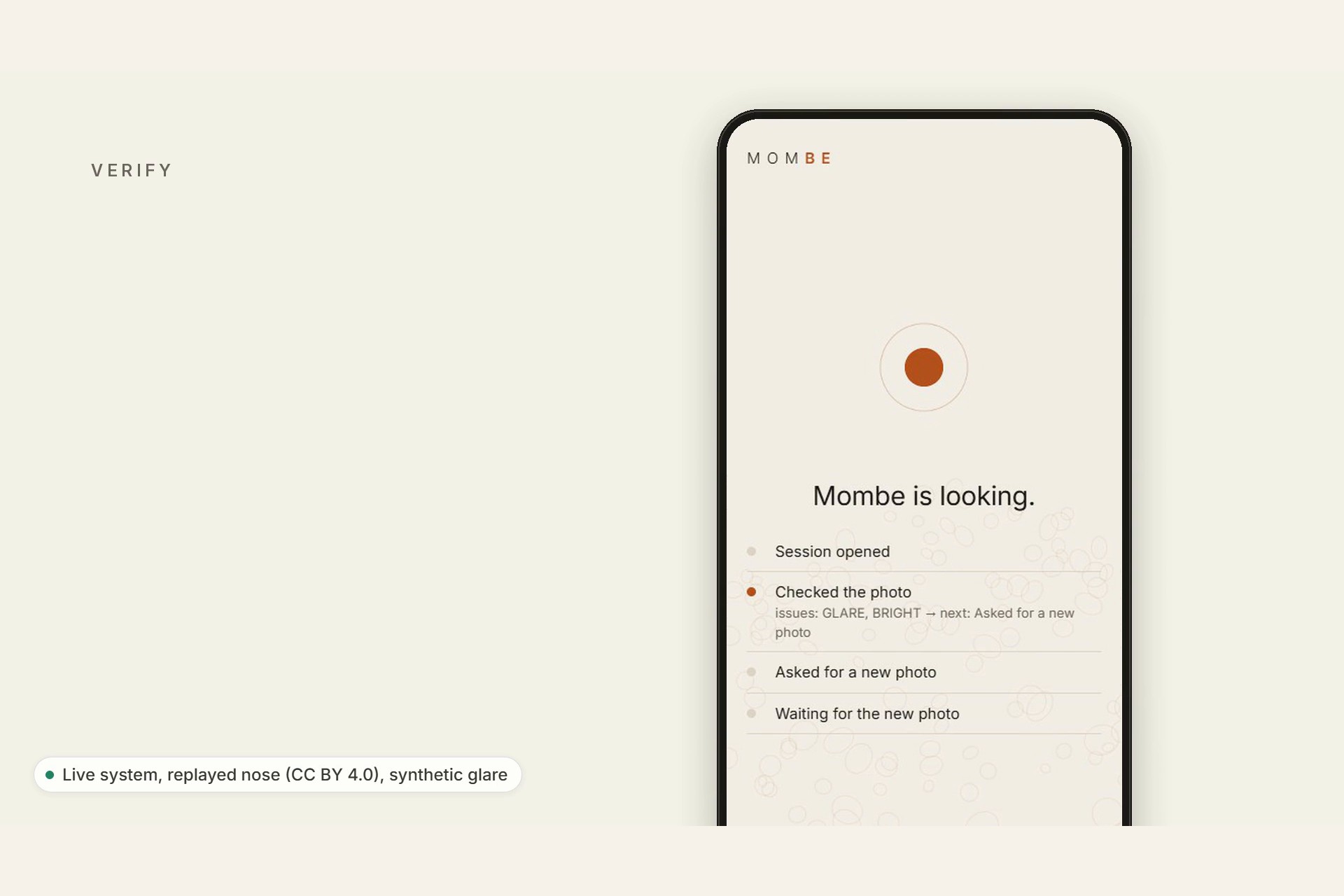
At every step, the policy decides what is allowed, OpenCV supplies the evidence, Claude plans the next capture and writes the officer's instructions in English and Shona, and a person approves the money. When the evidence is insufficient, the next action changes: a retake in the shade, a second angle, a live photo, a crouching pass under the belly, another walk around. The session parks while the hub measures and wakes when the result lands. Each change is traced.
How we built it
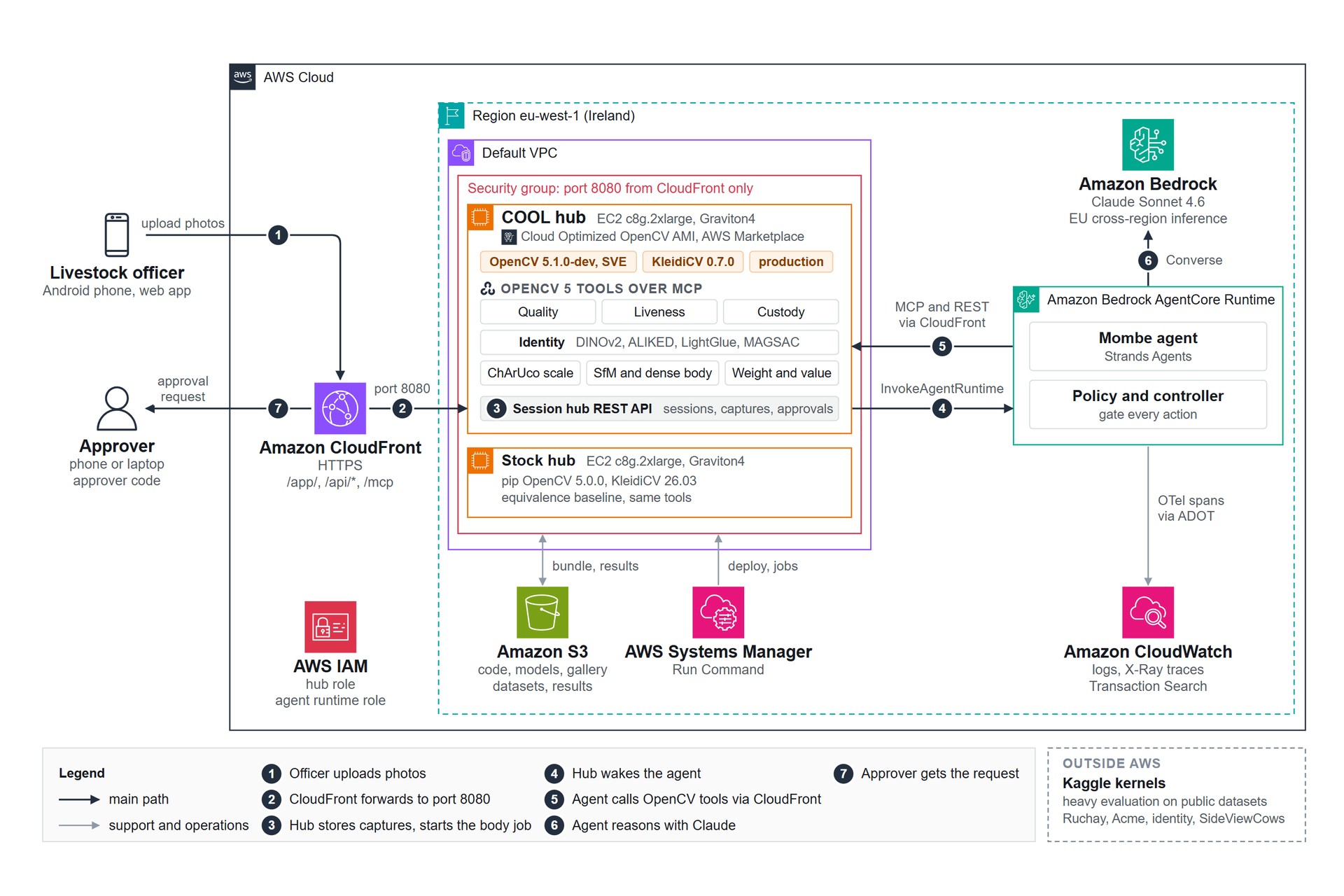
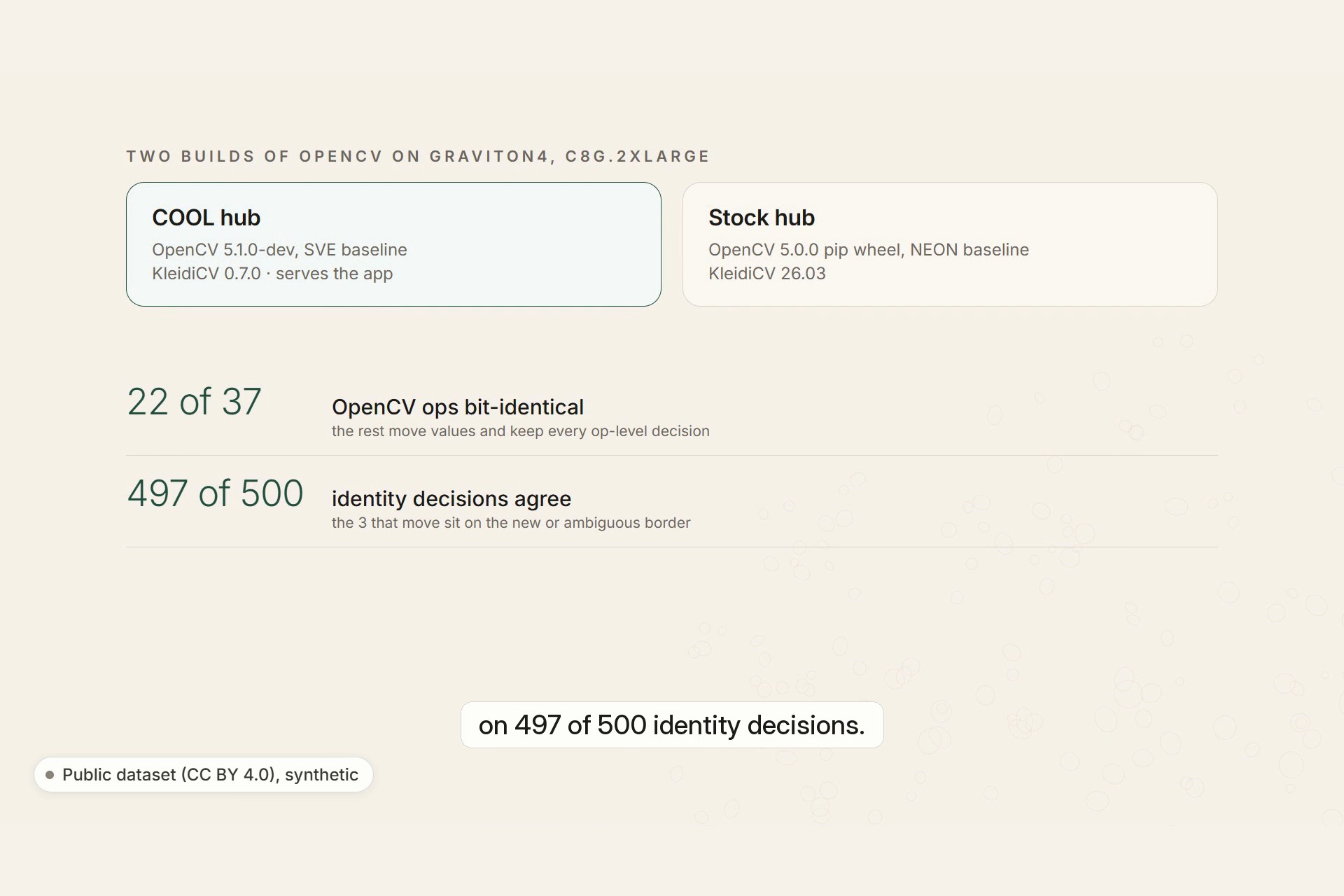
- Vision hub: OpenCV 5 on Amazon EC2 c8g.2xlarge (Graviton4) from the Cloud Optimized OpenCV (COOL) AMI: OpenCV 5.1.0-dev with SVE and KleidiCV 0.7.0. A second hub runs the stock OpenCV 5.0.0 wheel as the baseline.
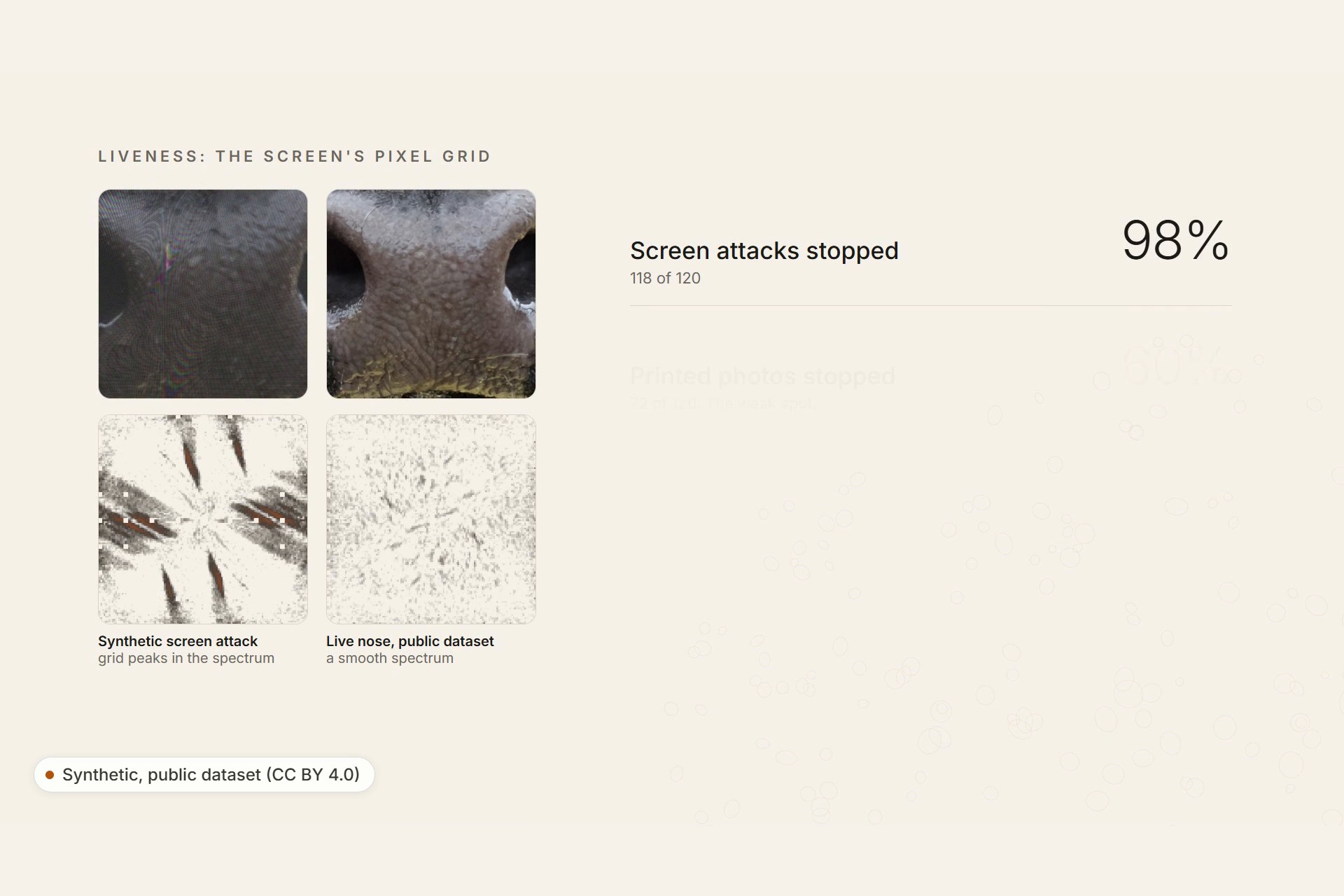
- OpenCV 5 tools over MCP: capture quality; liveness (plane against parallax with USAC_MAGSAC and GRIC, a pixel replay test with findTransformECC, screen moire with cv2.dft, glint and tonal range); identity (DINOv2 shortlist, ALIKED keypoints and LightGlue on the OpenCV 5 DNN engine, MAGSAC verification); chain of custody (LK optical flow from nose to board); metric body (CharucoDetector and calibrateCamera, incremental SfM with bundle adjustment, board corners as scale tracks, StereoSGBM dense fusion, girth and length); weight with calibrated intervals; valuation.
- Agent: Strands Agents with Claude Sonnet 4.6 on Amazon Bedrock, deployed on Amazon Bedrock AgentCore Runtime. A controller checks every action the model proposes against the evidence policy and records each refusal.
- Front door: Amazon CloudFront serves the phone web app, the REST API and MCP. The MCP tools answer to the hub key alone; approvals need an approver code; officer passcodes are revocable; uploads are rate-limited; registry reads land in an audit log.
- Operations: Amazon S3 for code, models and results; AWS Systems Manager for deploys and benchmark jobs; Amazon CloudWatch for logs and traces. Heavy evaluation ran on Kaggle kernels.
Results
For every number there are two labels. Input: R real data, S synthetic. Truth: P physical (tape, scale, clock), L a dataset label, G generated.
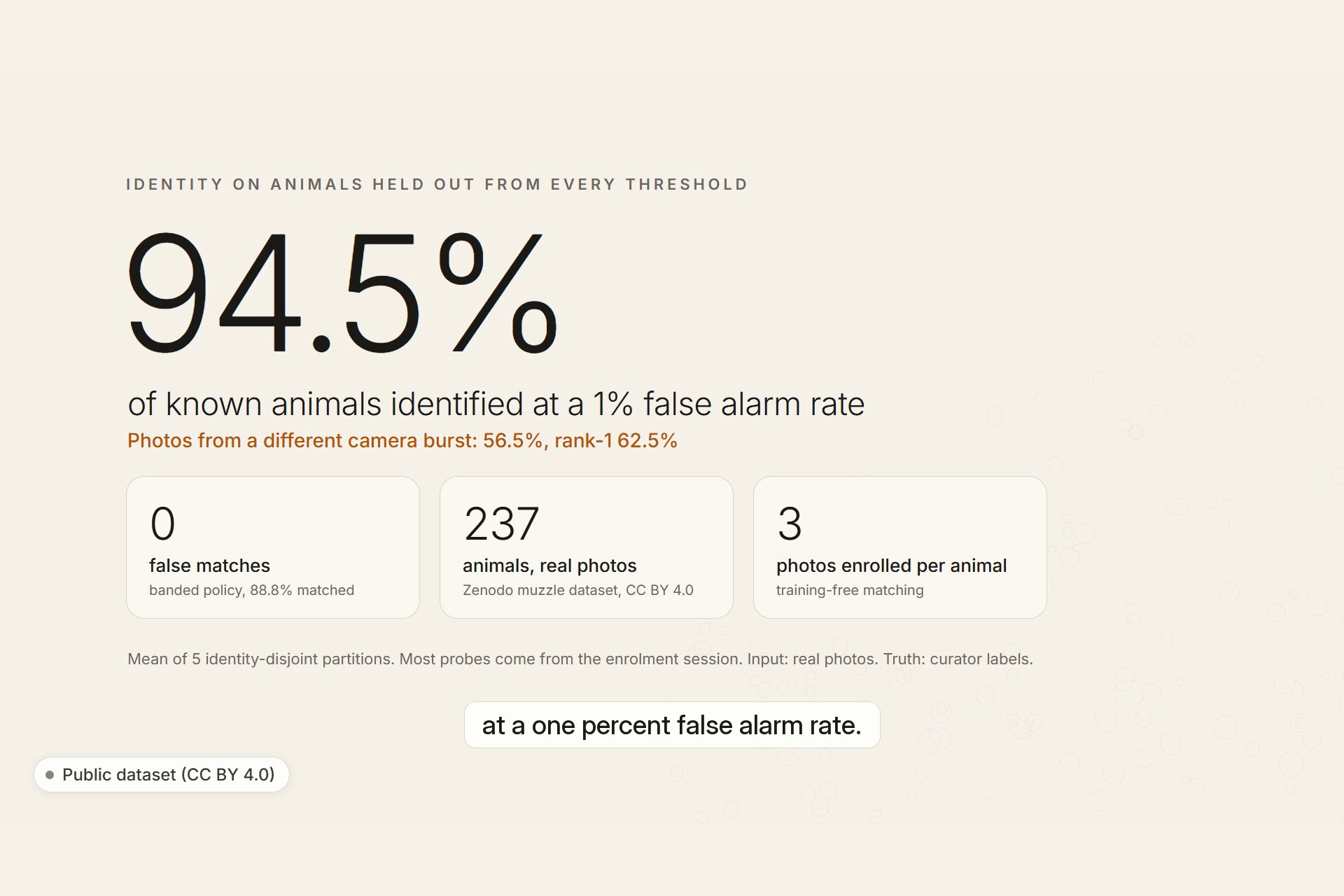
- Identity on held-out animals (BC et al. 2026 open-set protocol, 5 identity-disjoint partitions, R/L): 94.55% of known animals identified at a 1% false alarm rate. At Mombe's decision bands, 0.00% false matches for known and unknown animals. Across camera bursts, rank-1 falls to 62.55%: field captures across sessions need their own test.
- The agent loop (S/G, one tagged commit, 46 field sessions): Claude and the policy alone each end 43 sessions correctly; a single pass with the policy removed ends 16 correctly and accepts 6 of 8 attacks.
- Liveness (ISO/IEC 30107-3 metrics, synthetic attacks on held-out identities): screen attacks pass 1.7% of the time, replays 10.8%, prints 40%; 14% of live animals get asked for one more look.
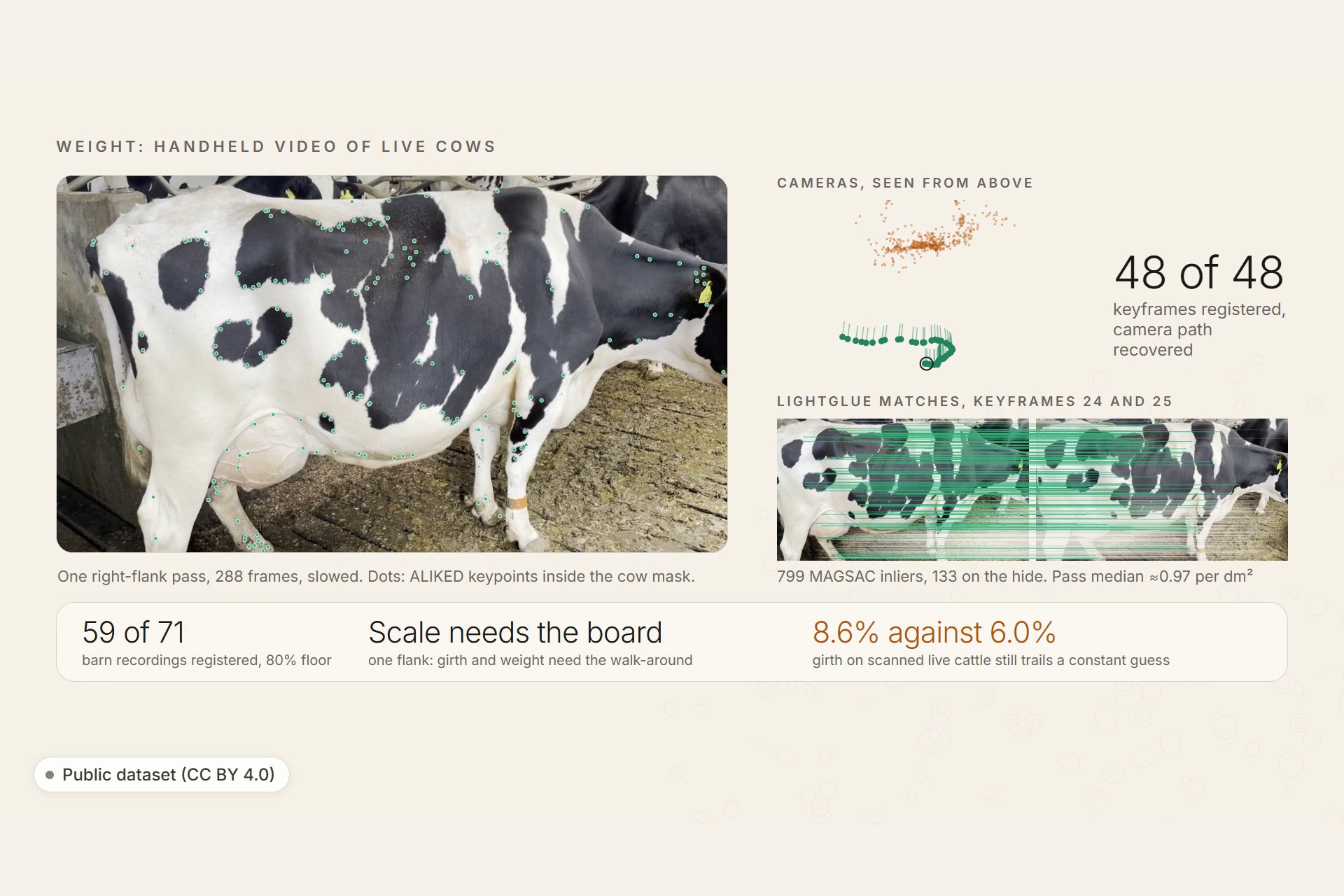
- Body on cattle (Ruchay et al. Hereford scans with tape, R/P): the deployed measurement reads heart girth at 10.88% error against 5.48% for a constant guess and 5.21% for Bao et al. 2023. Version two reaches 8.62% on held-out animals, still above the constant guess. Body measurement on live cattle is the open problem, and the numbers say so.
- Weight from two photos (Acme AI, Bangladeshi cattle, R/L): 13.3% error within a batch; 20.2% against 23.8% for a constant guess when a whole batch is held out; batch B2 loses to the constant guess.
- Video front end (SideViewCows2026, 71 handheld barn recordings, R): 59 of 71 clear the registration floor.
COOL on Graviton4
Both hubs run on c8g.2xlarge in eu-west-1. On 300 images, 22 of 37 OpenCV operations give bit-identical results on COOL and the stock wheel, and all six operations that carry a decision keep it. identify() returns the same decision on 497 of 500 probes. The same stock wheel is bit-identical on both machines, so every difference belongs to the build: KleidiCV, Arm Performance Libraries and SVE code generation. COOL runs CLAHE 1.65 times faster, and the continuity check 1.18 times faster; the DNN stages tie. One synthetic walk-around failed on COOL. A one-part-in-ten-billion nudge to the focal length makes it fail on either build, so the fragility lives in the pipeline. Mombe now reruns each scan with the focal nudged and refuses a scan whose orbit moves by more than 2%.
Challenges we ran into
We had no farm and no scale, so every cow in our evaluation comes from public research data. The first body measurement looked solid on synthetic animals and failed on chute cattle: the girth line followed the legs, and in a chute the legs merge. The COOL accuracy gap turned out to be pipeline fragility, which changed the fix to testing every scan.
Accomplishments that we're proud of
A controller that holds the line for every model: the policy decides, and the agent works inside it. Failures sit in the same tables as the passes. The whole system runs live on AWS today.
What we learned
For the weight task, generations of farming wisdom still outperform the computational baseline. To beat centuries of instinct, we will have to collect higher-quality data and implement sharper algorithms and the challenge is worthwhile.
What's next
Collect a bigger cow dataset for SOTA modelling of weight to standardise livestock asset value.
A field session with a scale and a tape on live animals; live muzzle bursts to train liveness on field attacks; on-device checks on the officer's phone so only hard cases travel to Graviton, with Bantu speech synthesis starting with Shona and a pilot with a lender against the collateral registry.
Built With
- amazon-bedrock
- amazon-bedrock-agentcore
- amazon-cloudfront
- amazon-cloudwatch
- amazon-ec2
- amazon-web-services
- aws-graviton
- aws-systems-manager
- claude
- cloud-optimized-opencv
- kaggle
- model-context-protocol
- numpy
- opencv
- python
- strands-agents

Log in or sign up for Devpost to join the conversation.