-
-
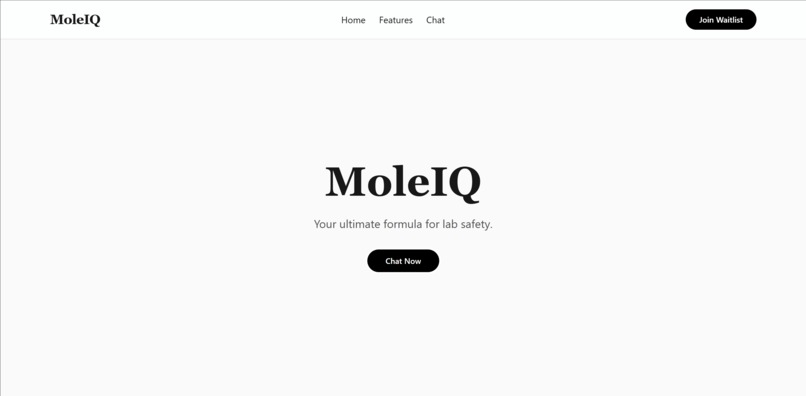
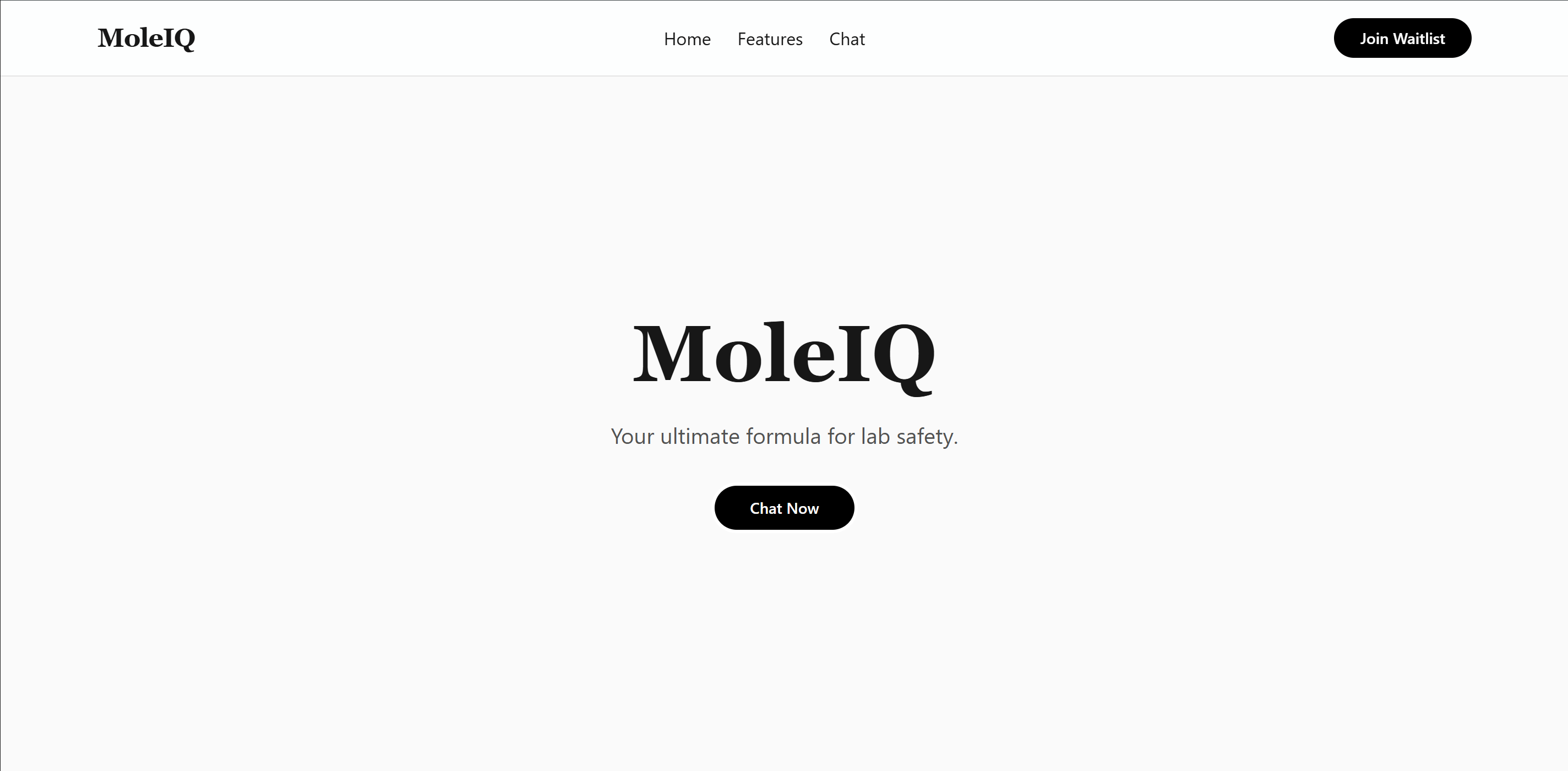
Home Page
-
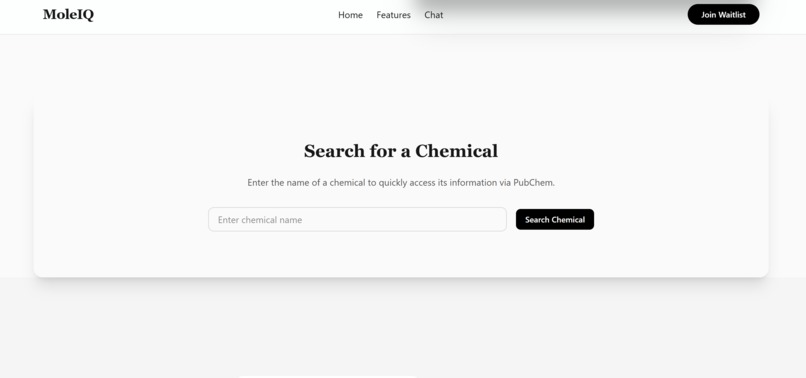
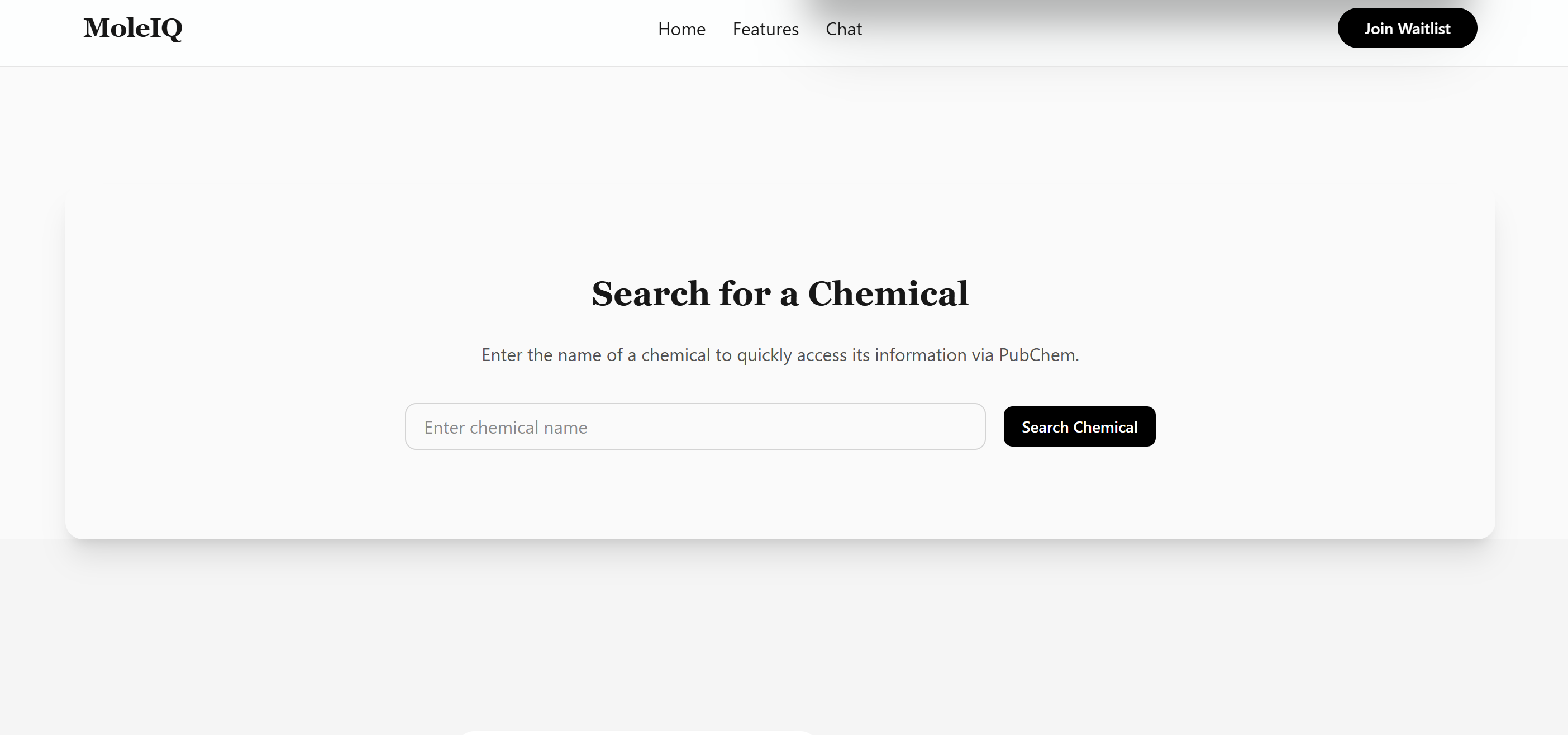
Chemical Search
-
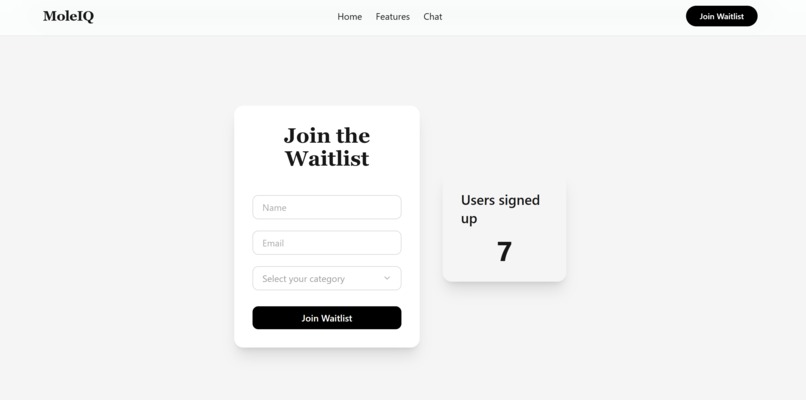
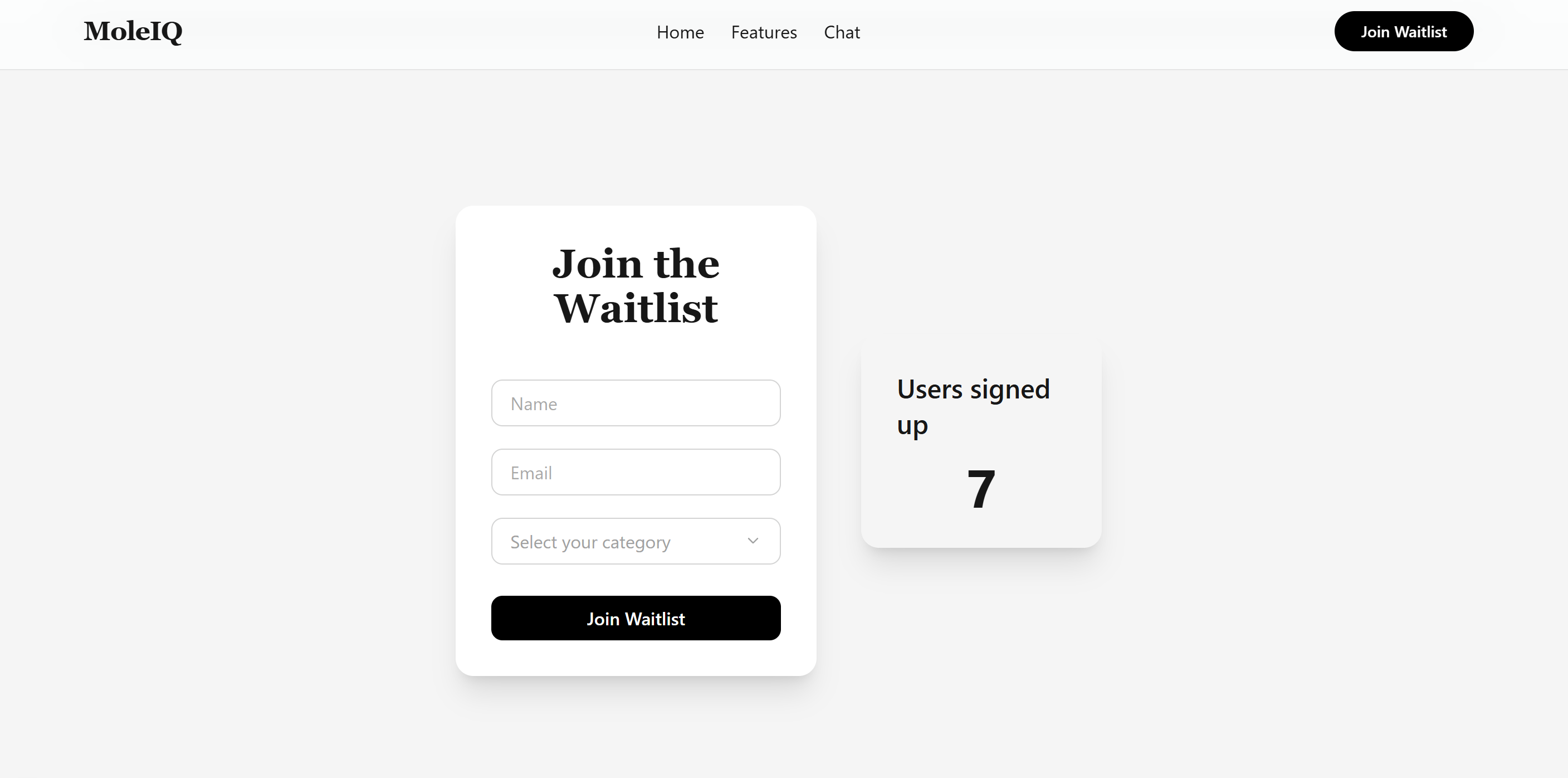
Waitlist Form
-
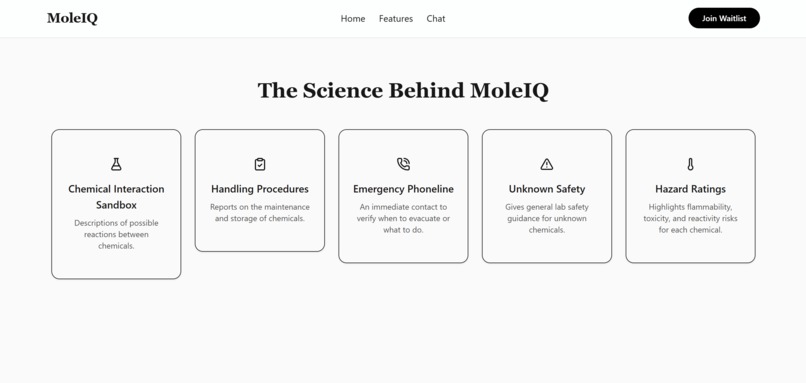
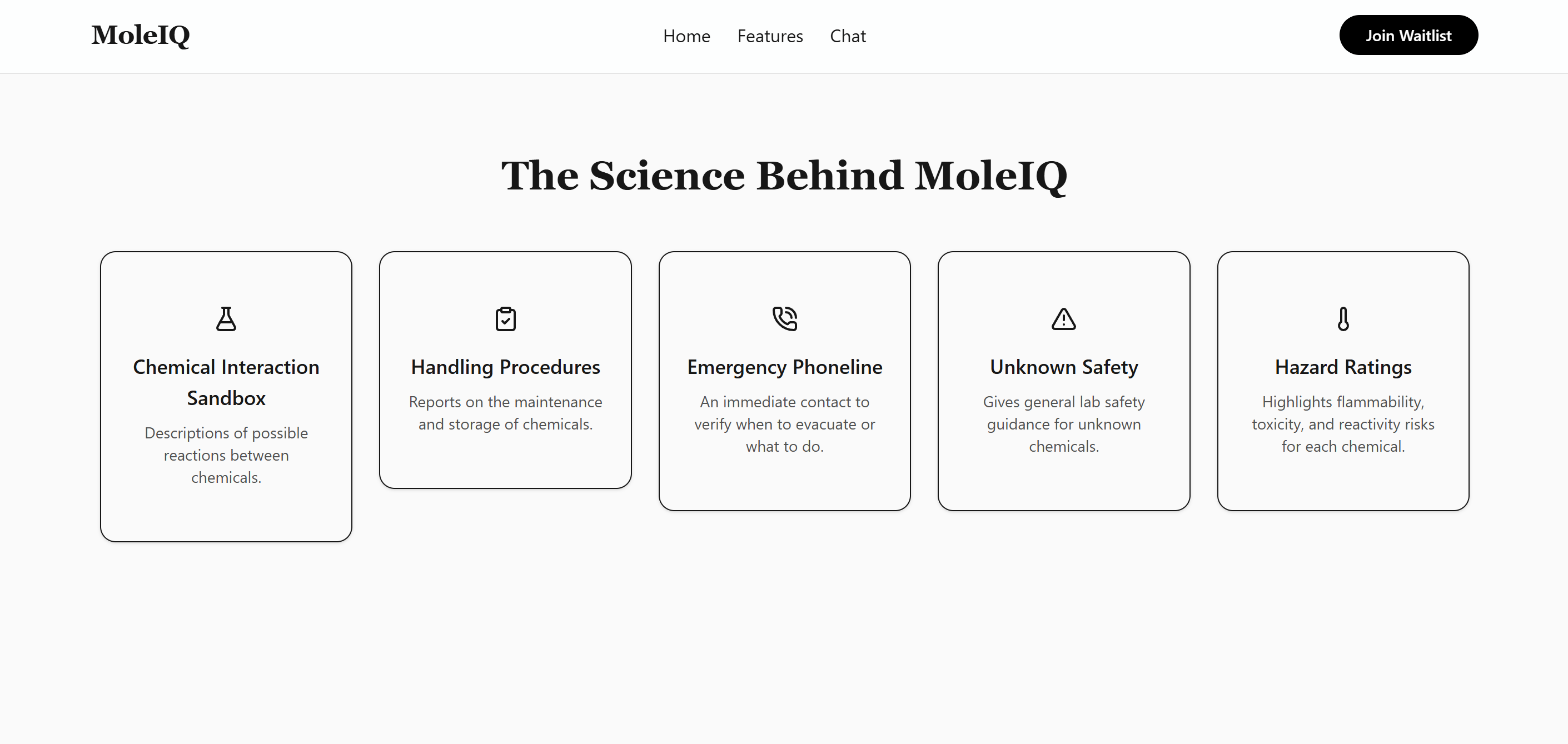
Features
Inspiration
Our project stemmed from the experiences of our group members who are currently engaged in chemistry labs this semester. During our lab sessions, we noticed a recurring theme: students are confused on how to handle chemicals properly. This lack of understanding significantly impacts students’ confidence and safety when working with potentially hazardous materials. Recognizing this gap, we aimed to develop an application that not only informs students about the risks associated with various chemicals but also enhances their understanding of safe practices in a lab environment. Our goal is to empower students to handle chemicals with greater assurance, ultimately fostering a culture of safety and responsibility in the laboratory.
What it does:
The primary function of our application is to provide students with comprehensive information regarding chemical hazards, significantly improving their confidence and competence when conducting experiments. By leveraging a conversational AI chatbot, the application serves as an interactive resource for students, allowing them to inquire about specific chemicals, understand their risks, and learn safe handling procedures. This immediate access to information enhances their readiness to work in a laboratory setting, reducing the likelihood of accidents and promoting responsible practices. Ultimately, our application aims to bridge the gap in education about chemical safety, making it easier for students to navigate complex lab environments with confidence.
How we built it:
To create our application, we utilized Node.js as our backend server. React was employed as the frontend framework, allowing us to build a dynamic and interactive user interface that responds to user inputs seamlessly. We incorporated TypeScript to enhance our code quality with static typing, which streamlines collaboration and debugging processes, especially in a complex React application. For styling, we relied on Tailwind CSS, a utility-first framework that enabled us to design our application rapidly using reusable CSS classes. The conversational logic was powered by Langchain.js, which managed natural language processing and response generation for our chatbot. To enrich the user experience, we integrated Framer Motion to add smooth animations, ensuring engaging transitions within the chat interface. Lastly, we utilized JSON as our data format to record JWTs to record data points for our waitlist.
Challenges we ran into
During the development process, we encountered significant challenges while trying to integrate Python with JavaScript using Flask for our backend framework. This task proved to be quite complex and daunting, as we struggled with various compatibility and performance issues. Realizing the need for a more straightforward approach, we made the strategic decision to switch to Langchain.js. This shift not only simplified our development process but also allowed us to focus on enhancing the chatbot's capabilities without the unnecessary overhead of bridging two different programming languages. This experience taught us valuable lessons in adaptability and the importance of choosing the right tools for specific project requirements.
Accomplishments that we're proud of:
We take great pride in our successful integration of multiple technologies, particularly combining Node.js, React, and Langchain.js to construct a fully responsive application. This accomplishment highlights our ability to leverage modern development tools effectively and create a cohesive user experience. Additionally, by employing Framer Motion and Tailwind CSS, we were able to design an engaging and visually appealing user interface that enhances user interaction. This experience not only solidified our technical skills but also fostered a strong teamwork dynamic, enabling us to complete the project efficiently and cohesively. We are also proud of the expert custom bot optimized on Langchain.js.
What we learned
Throughout this project, we gained invaluable insights into the intricacies of idea coordination and the collaborative process. We faced the challenge of rapidly generating new concepts and executing them within a limited timeframe. This experience pushed us to explore innovative ideas while maintaining a focused commitment to bringing our vision to life. The process of working together required persistence and effective communication, essential components that facilitated our progress. Ultimately, we emerged with a deeper understanding of collaboration dynamics, which will undoubtedly benefit our future projects.
What's next for MoleIQ
Looking ahead, we plan to enhance our application by adding several quality of life features that will improve user experience even further. One of our proposed features is integrating functionality that allows students to message professors from specific chemistry departments directly through the app. This would facilitate better communication and support for students seeking clarification on chemical handling procedures or safety protocols. We also aim to expand the chatbot's knowledge base and interactivity to provide a more comprehensive resource for students. By continually refining our application, we hope to better serve the educational needs of chemistry students and promote a culture of safety in the laboratory.
Built With
- css
- framer.js
- json
- langchain.js
- node.js
- react
- tailwind.js
- typescript

Log in or sign up for Devpost to join the conversation.