Inspiration
The Molecule Design Assistant was inspired by the need to bridge the gap between experimental and computational chemistry. Challenges in automating molecule synthesis and optimization motivated us to create an AI-powered solution that leverages multi-agent collaboration and cutting-edge tools to streamline drug discovery and molecular design.
What It Does
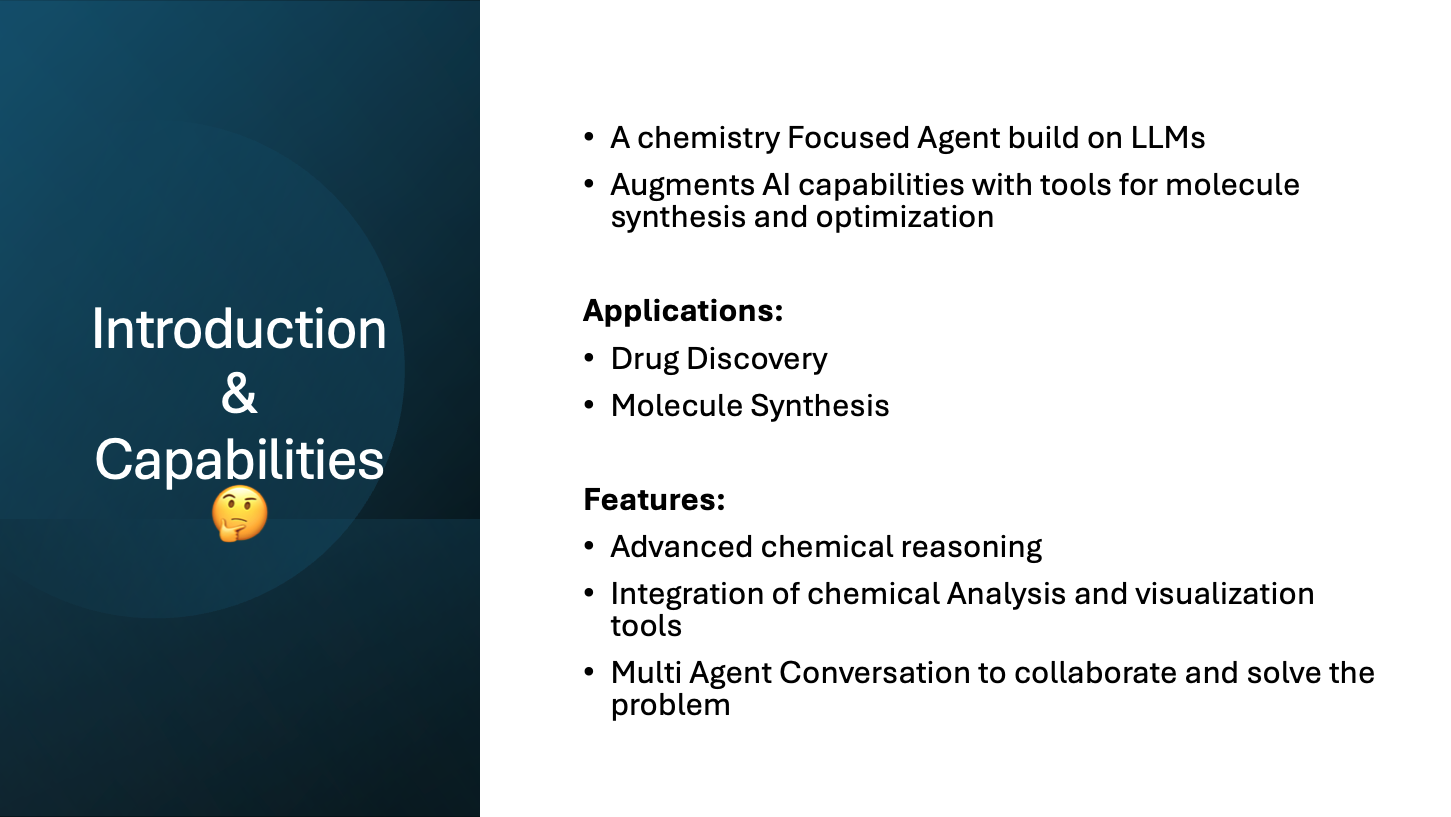
The Molecule Design Assistant is an AI-powered platform that:
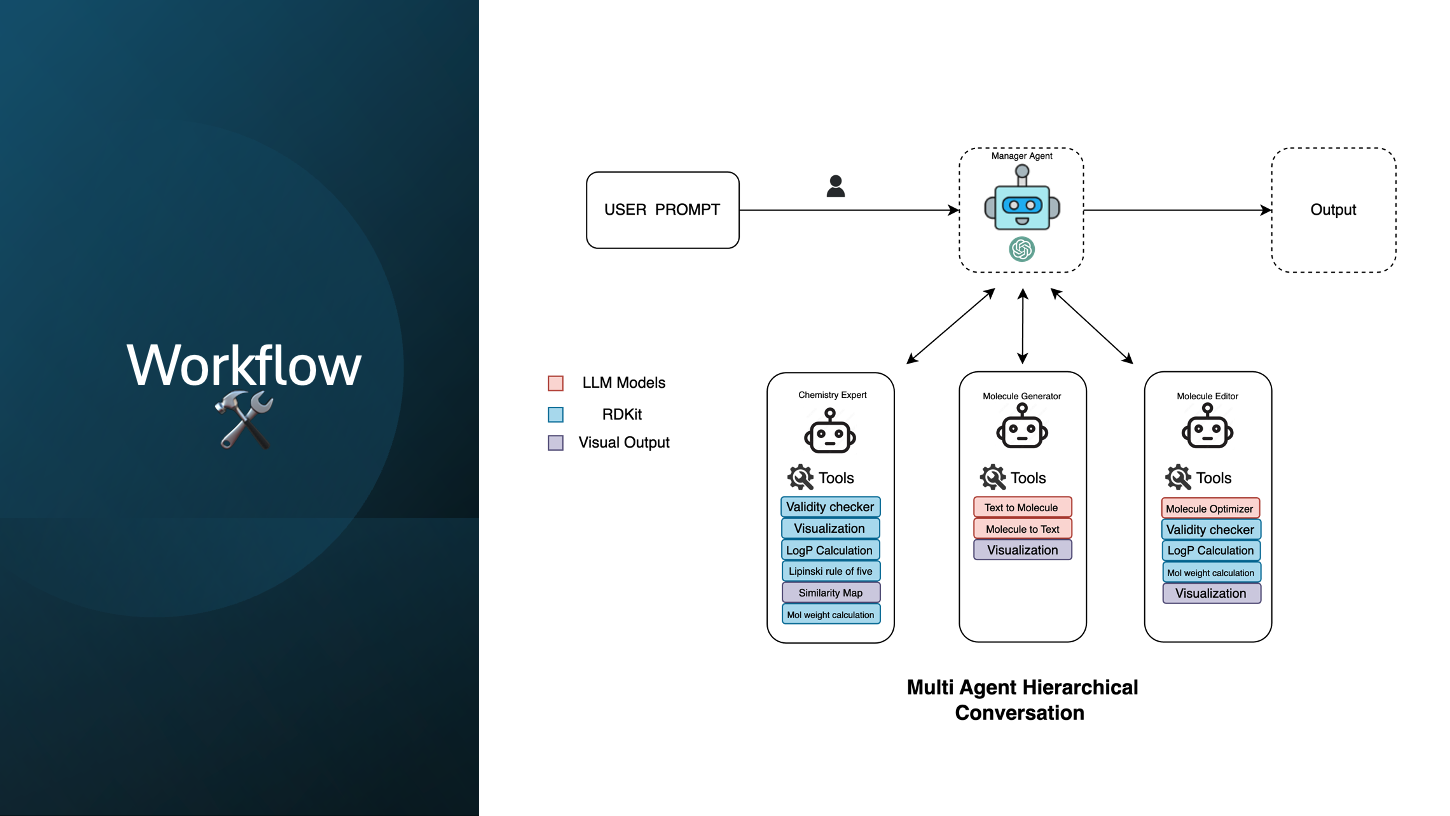
Facilitates multi-agent collaboration to analyze, optimize, and visualize molecules.
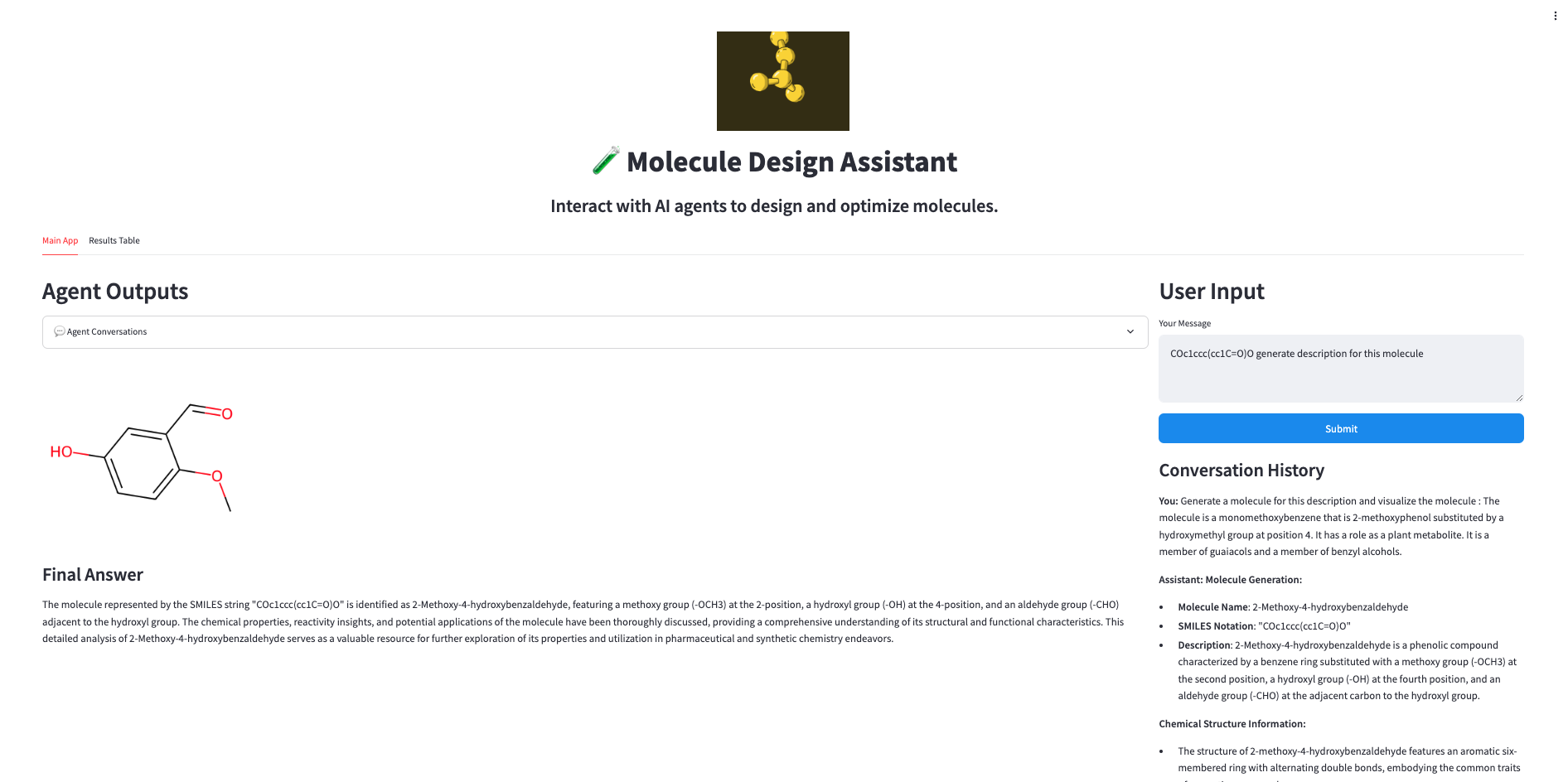
Converts text descriptions into molecular structures and vice versa.
Validates and optimizes molecules based on desired properties using advanced tools like RDKit and Molecule Generator(transformer).
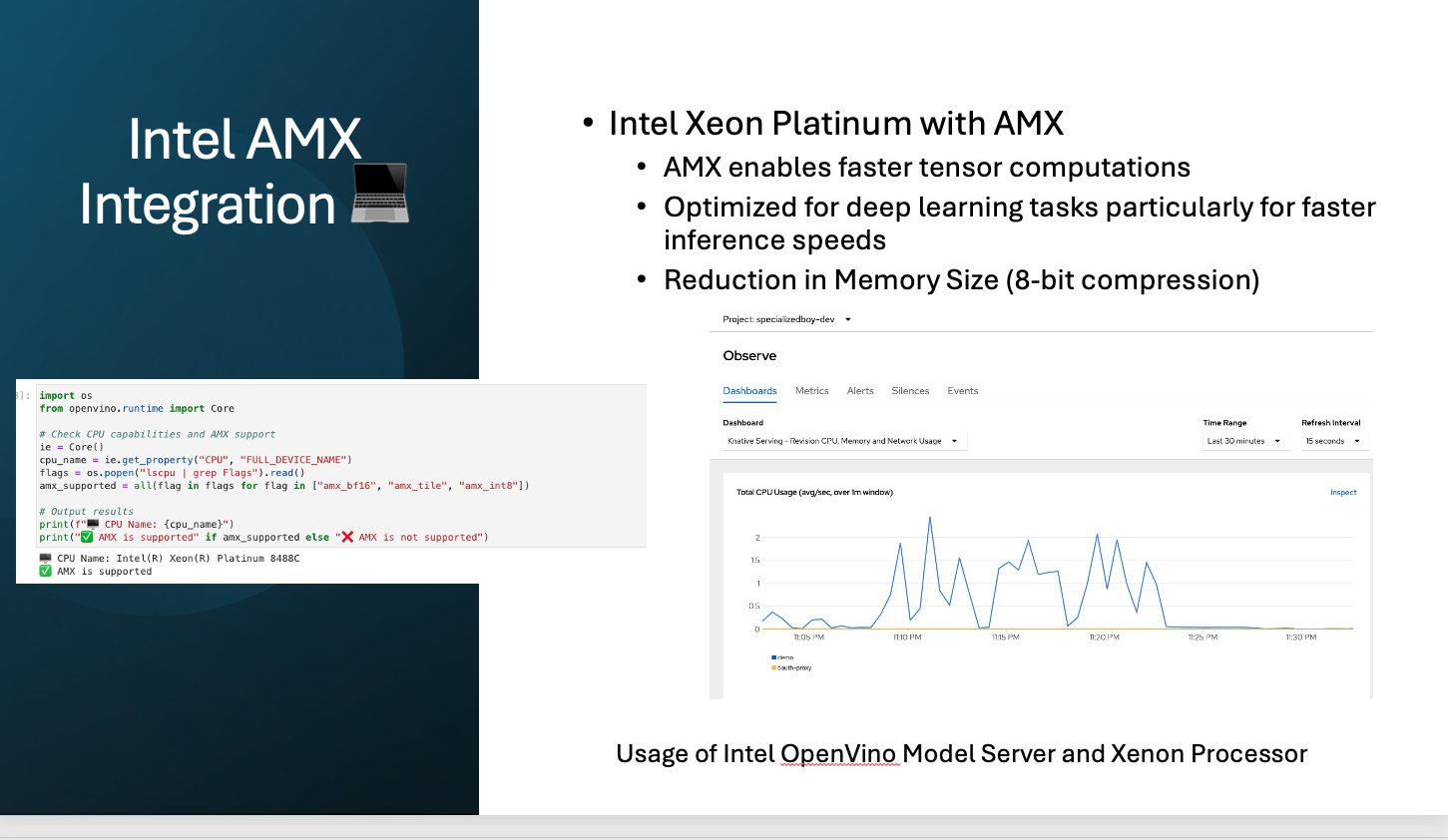
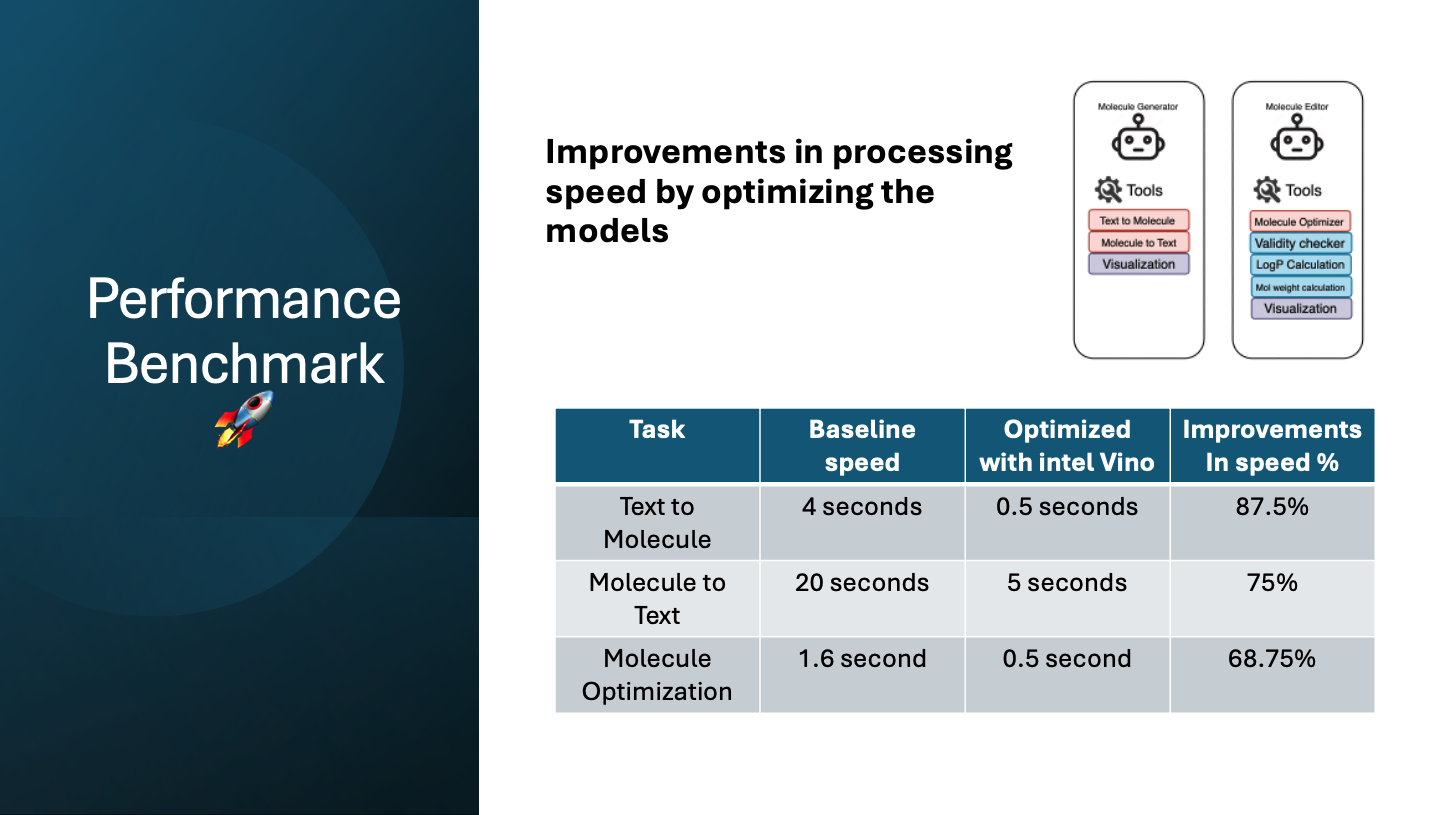
Enhances workflow efficiency with Intel AMX and OpenVINO optimizations for real-time performance.
How We Built It
Architecture: Multi-agent framework built on large language models (LLMs) augmented with chemistry-specific tools.
Technologies and Tools Used
RDKit: A collection of cheminformatics and machine learning tools for molecular design and optimization.
Intel OpenVINO: A toolkit for optimizing and deploying deep learning models on Intel hardware.
Intel Xeon Processors: Leveraging Advanced Matrix Extensions (AMX) for acceleration in molecular computations.
Python: The programming language used for building and deploying the application.
CrewAI: A framework for integrating tools and automation in AI-driven workflows.
Streamlit: An open-source framework for creating web applications to visualize and interact with machine learning models.
Hugging Face: A library for state-of-the-art NLP and molecular generation models.
Optimizations: 8-bit dynamic quantization for faster inference and reduced memory usage.
Challenges We Ran Into
Integration: Ensuring seamless collaboration between AI agents and chemistry tools.
Optimization: Adapting models to Intel AMX while maintaining accuracy.
Scalability: Balancing performance across diverse tasks like molecule generation and visualization.
Debugging Complex Pipelines: Identifying and fixing bottlenecks in multi-agent workflows.
Accomplishments That We're Proud Of
Improved Inference Speeds: Achieved over 50% faster processing through Intel AMX and OpenVINO optimizations.
Real-Time Collaboration: Enabled multi-agent problem-solving for molecule design. Practical Applications: Demonstrated use cases in drug discovery and molecular synthesis. Successfully bridged the gap between experimental and computational chemistry.
What We Learned
The value of multi-agent collaboration for tackling complex scientific challenges. How Intel AMX and OpenVINO optimizations can drastically improve performance. Insights into balancing scalability, performance, and accuracy in AI-powered workflows.
What’s Next for Molecule Design Assistant
Expanding Capabilities: Adding support for advanced chemical synthesis predictions.
Broader Integration: Incorporating additional tools for material science and sustainable chemistry.
Real-World Deployment: Partnering with pharmaceutical companies to implement the assistant in drug discovery pipelines.
Enhanced Scalability: Leveraging cloud-based multi-agent systems for large-scale projects.
Built With
- crewai
- hugginface
- huggingface
- openvino
- python
- streamlit

Log in or sign up for Devpost to join the conversation.