-
-
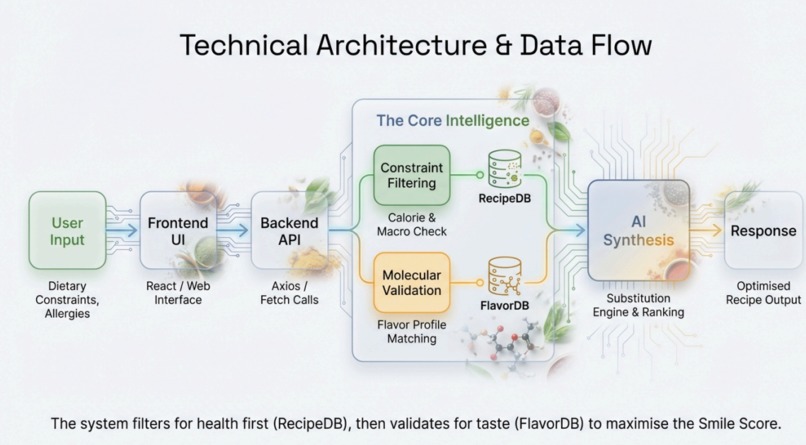
architecture
-
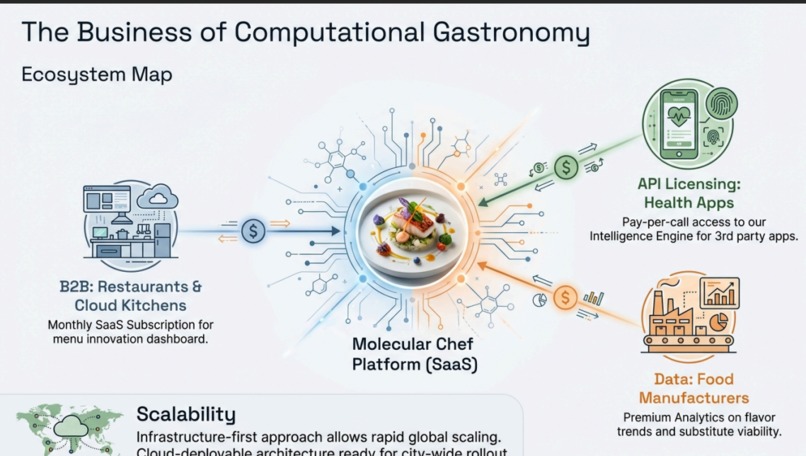
-
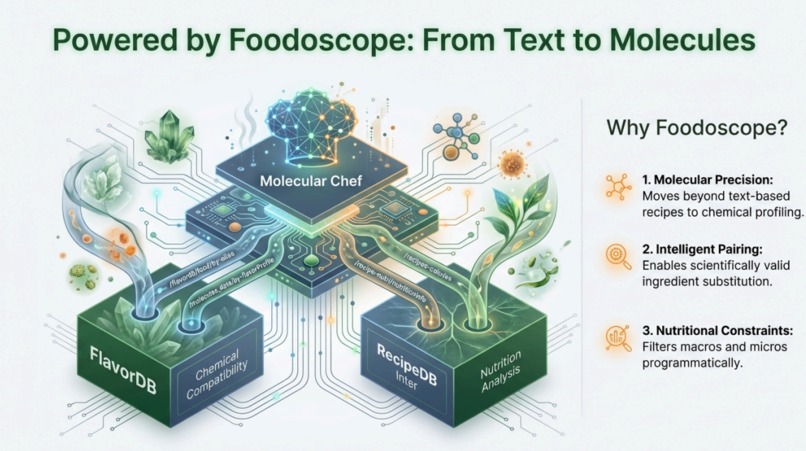
solution
-
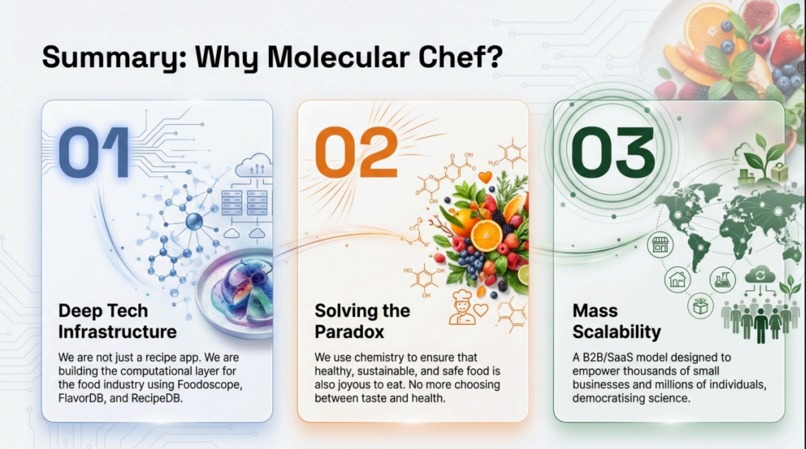
-
-
-
problem
Inspiration
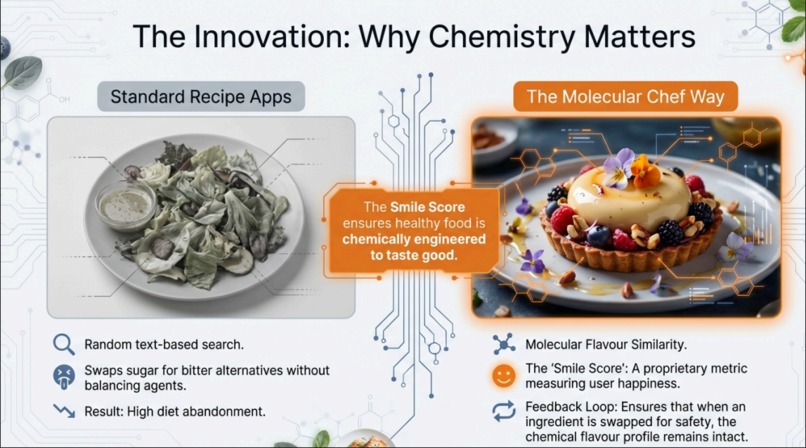
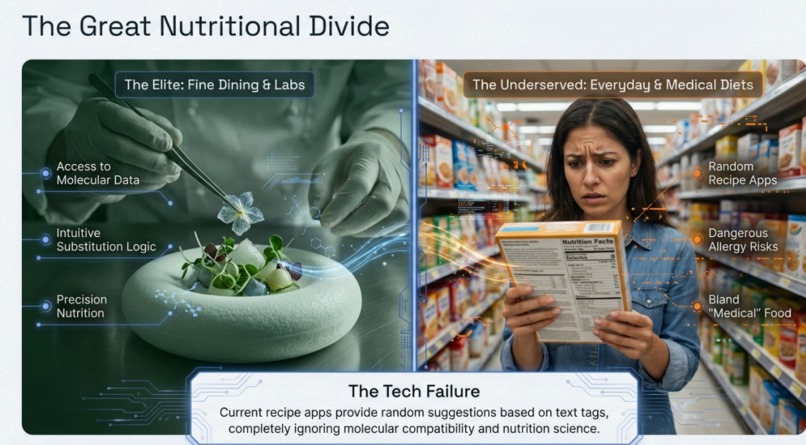
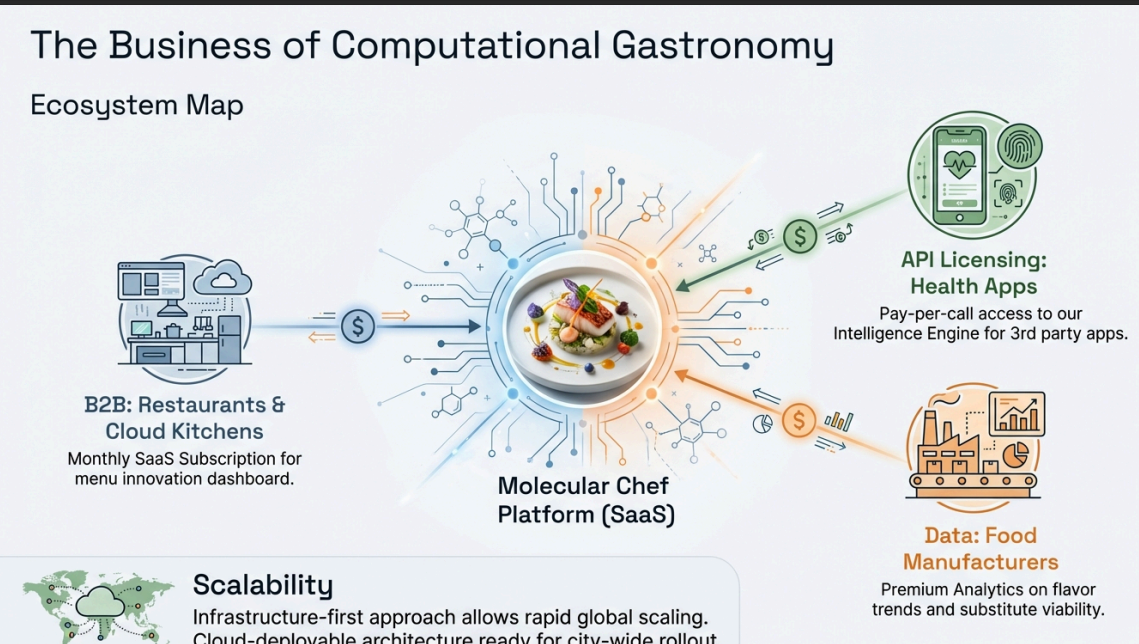
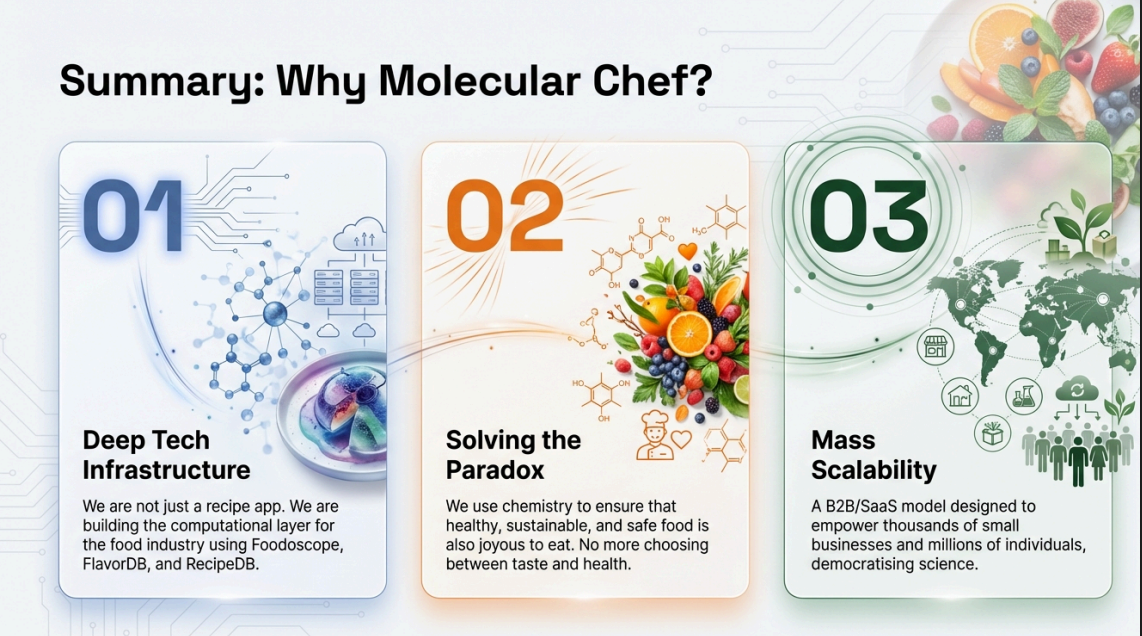
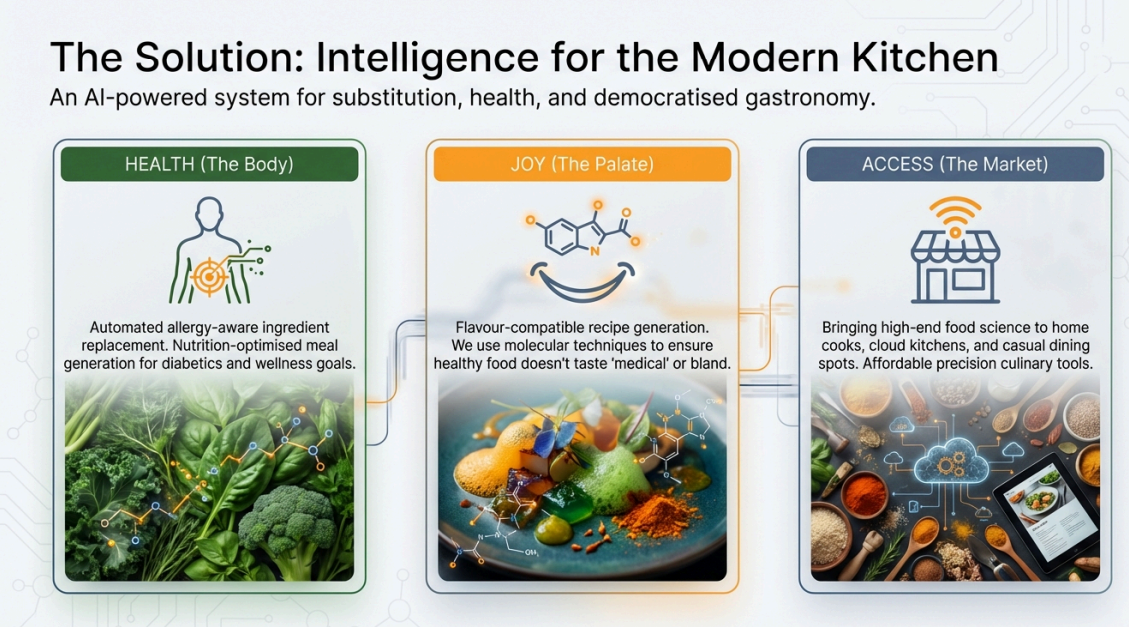
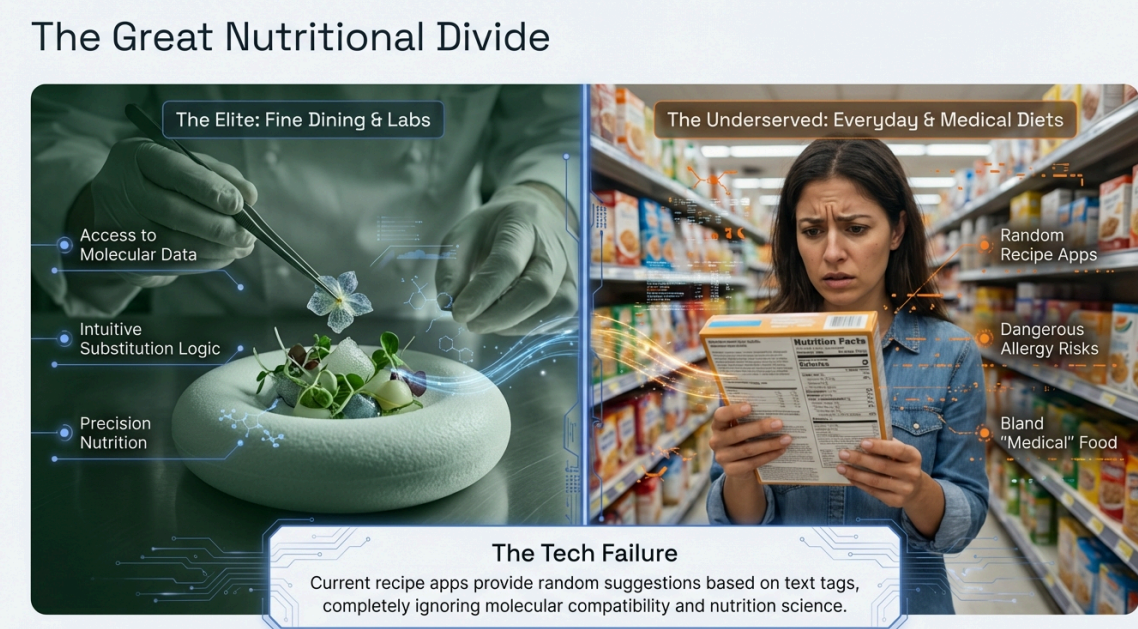
The inspiration for MolecularChef came from a simple observation: healthy and sustainable food is either expensive, boring, or inaccessible to most people, while molecular gastronomy and food science are limited to luxury restaurants. We wanted to bridge this gap by using AI and computational gastronomy to bring smart, science-backed cooking to everyday users and small restaurants. The idea was to democratize food innovation—making nutrition, flavor optimization, and sustainability practical and affordable.
What it does
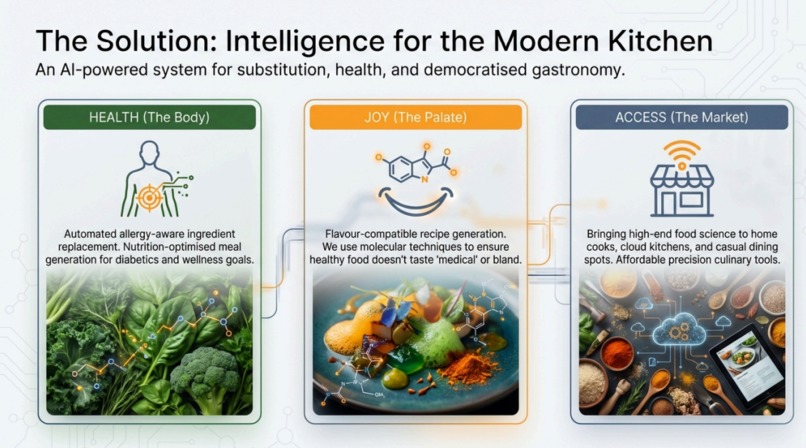
MolecularChef is an AI-powered ingredient replacement and recipe optimization engine. It helps users and restaurants:
Find healthier ingredient substitutes
Get allergy-safe and veg/non-veg alternatives
Optimize recipes for nutrition, taste, and sustainability
Apply molecular gastronomy techniques in casual dining
Users can input dietary constraints, health goals, and preferences, and MolecularChef generates optimized recipe suggestions and ingredient replacements.
How we built it
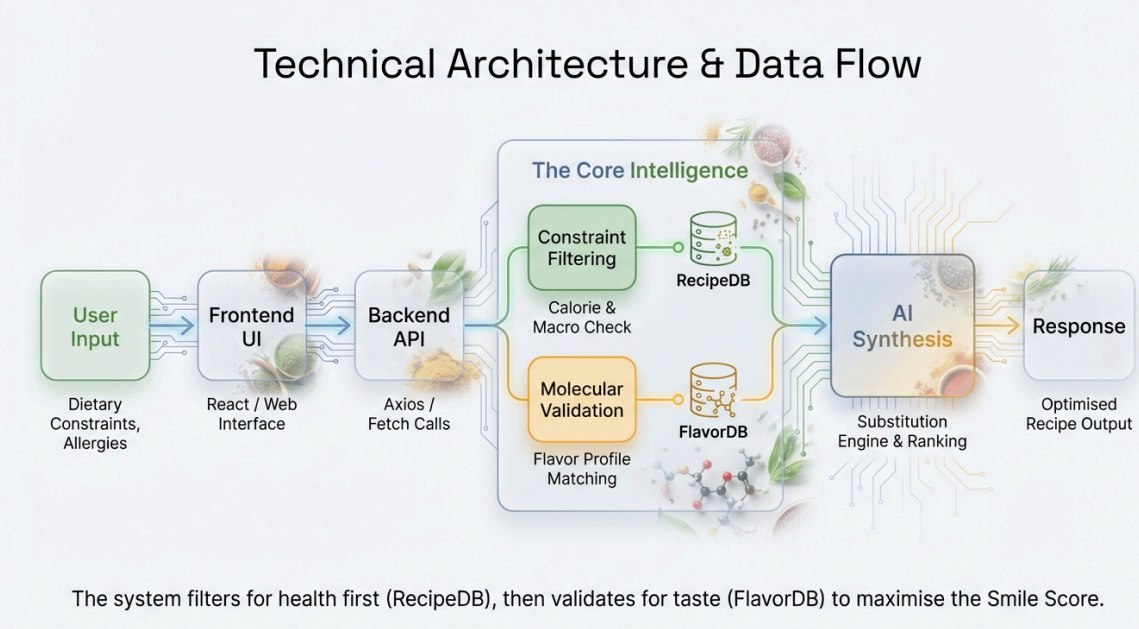
We built MolecularChef as a modular, data-driven system:
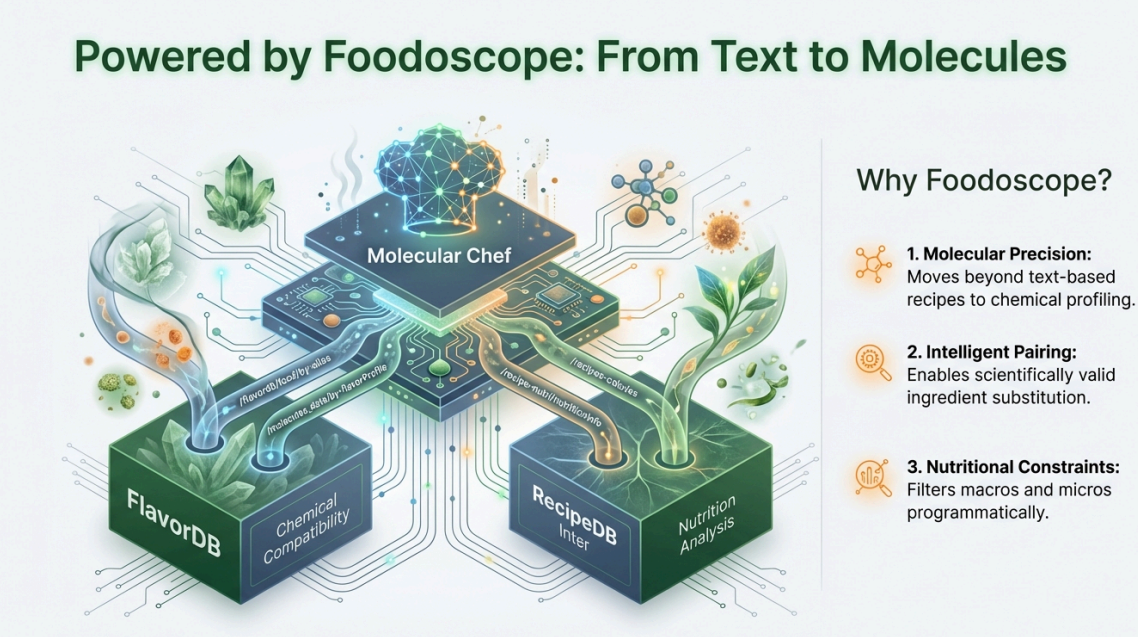
Integrated food, nutrition, and flavor APIs to fetch real-world ingredient data
Structured ingredient information using JSON-based pipelines
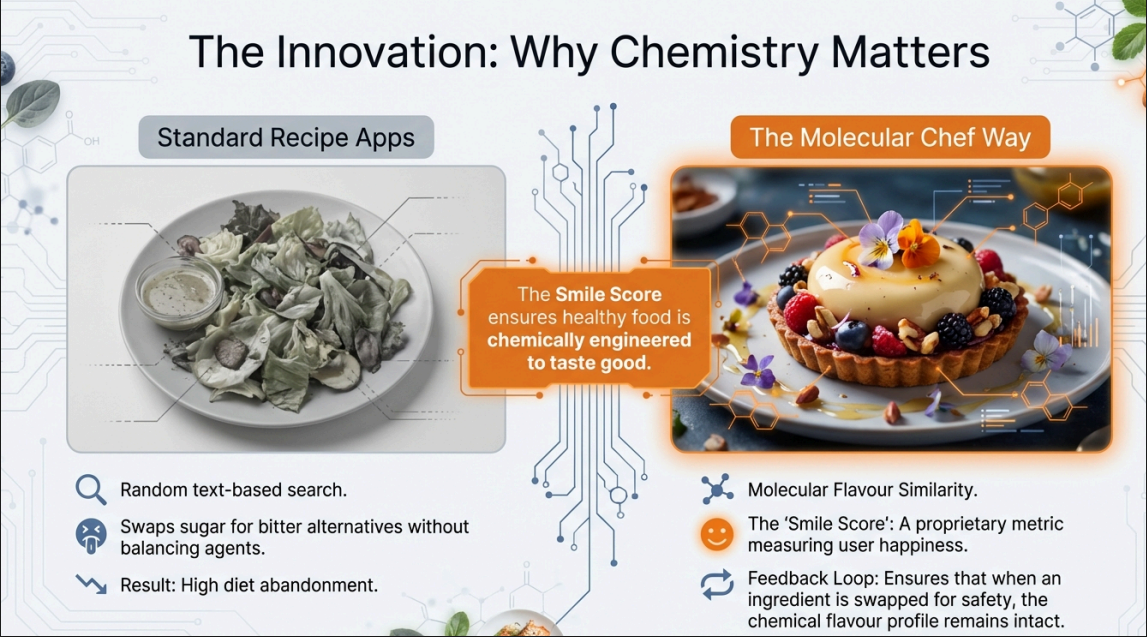
Designed a rule + similarity-based engine to map ingredient substitutions using flavor compounds and nutritional equivalence
Used Gemini API to:
Convert natural language user requests into structured constraints
Generate intelligent recipe explanations and cooking steps
Suggest creative molecular gastronomy techniques
Provide personalized recommendations based on user goals
Built backend logic to process constraints (allergies, diet, calories)
Designed a lightweight interface to demonstrate real-world usability
This hybrid approach combines deterministic optimization + generative AI, making the system both reliable and flexible.
Challenges we ran into
Messy and inconsistent API data that required cleaning and normalization
Balancing trade-offs between taste, nutrition, availability, and sustainability
Time constraints while building a meaningful MVP during the hackathon
Prompt engineering to ensure Gemini outputs stayed structured and reliable
Limited availability of molecular-level food data for some regional ingredients
Accomplishments that we're proud of
Built a working end-to-end prototype within hackathon time
Successfully integrated multiple real-world food APIs + Gemini API
Designed a practical ingredient replacement engine with health and allergy constraints
Created a solution that can be realistically adopted by normal restaurants and consumers
Combined AI creativity with rule-based reliability in one system
What we learned
How to combine LLM-based reasoning (Gemini) with traditional algorithms
Handling unreliable real-world datasets
Designing AI systems that are useful, not just impressive
Translating user intent into structured machine-readable constraints
The importance of UX and explainability in AI products
What’s next for MolecularChef
Use Gemini API for real-time conversational recipe guidance
Add personalized taste modeling using user feedback loops
Integrate carbon footprint and cost optimization for sustainability
Build a mobile/web app for restaurants and home users
Train a lightweight ML model using Gemini-assisted synthetic data generation
Expand ingredient mappings for regional Indian cuisine
Built With
- aws-ec2
- express.js
- flavor-compound-apis
- food-&-nutrition-apis
- gemini-api
- javascript-(node.js)
- json
- postman
- python

Log in or sign up for Devpost to join the conversation.