About the project
Inspiration
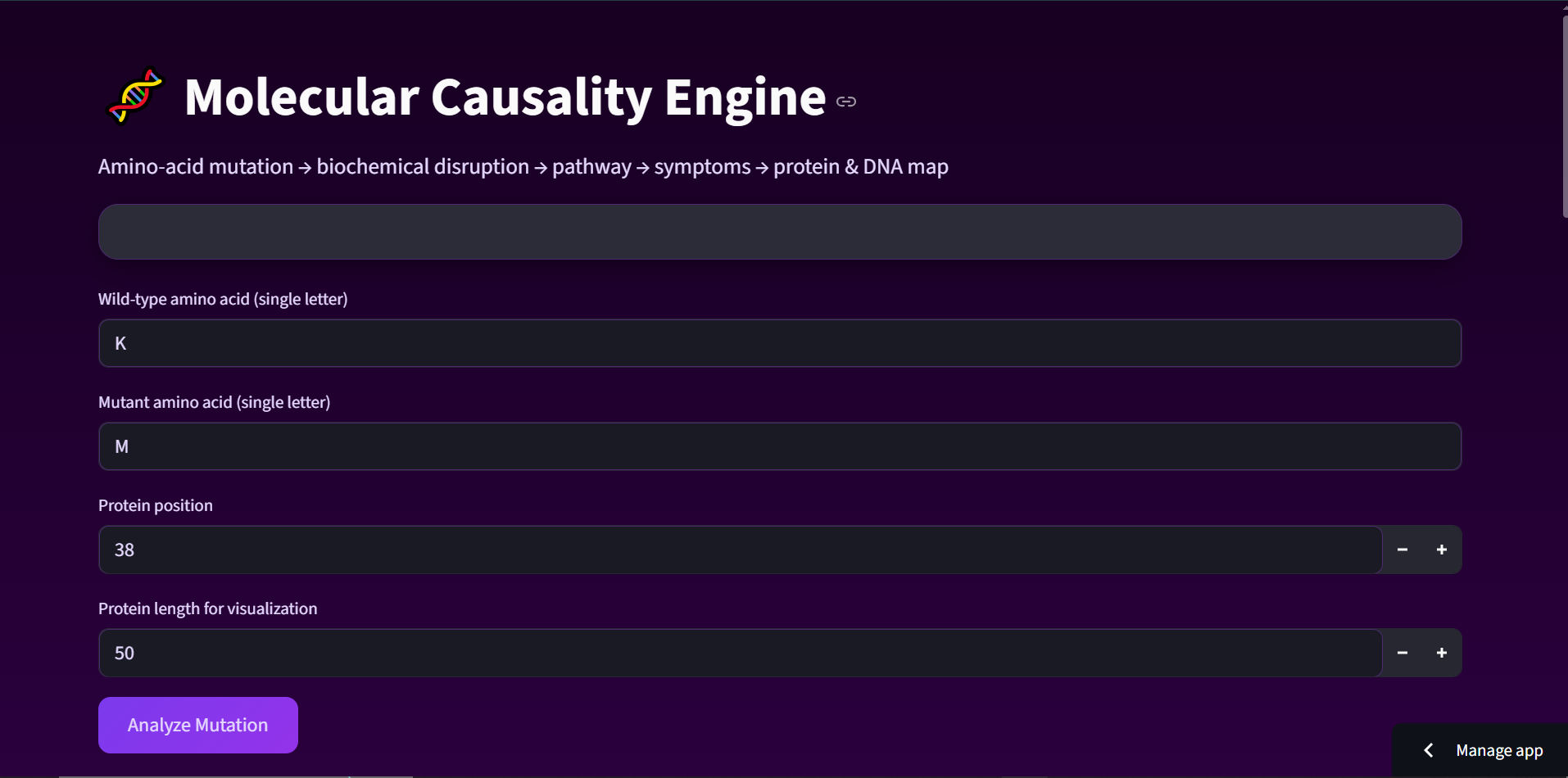
The idea for Molecular Causality Engine came from a desire to make complex bioinformatics concepts accessible and visually understandable. Amino-acid mutations are fundamental in biology, but connecting them to biochemical properties, affected pathways, and clinical symptoms is rarely presented in a single, interactive tool.
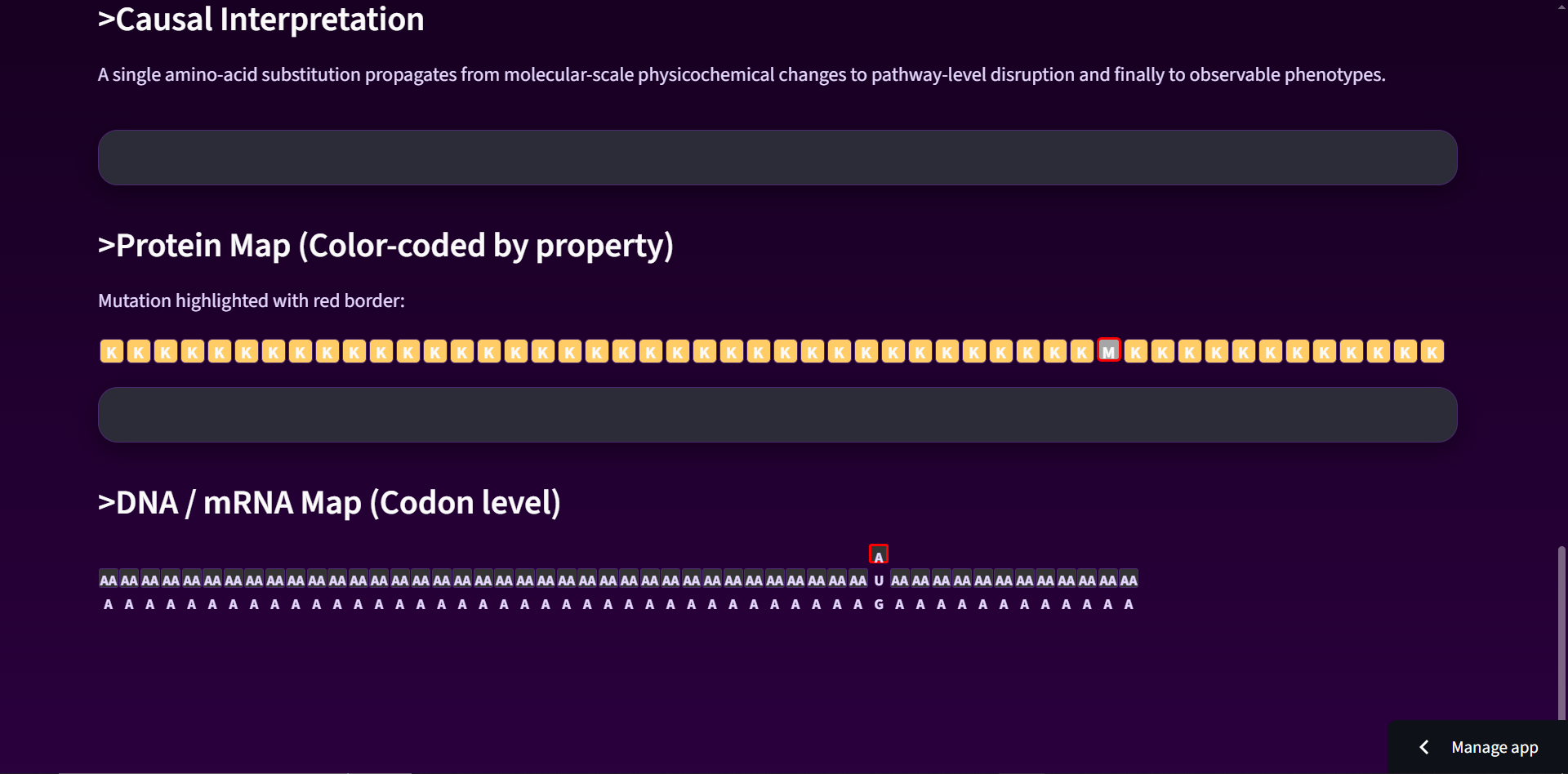
I wanted to build a hackathon-ready app that not only predicts the functional impact of a mutation but also visualizes it at both protein and DNA levels, making it intuitive for researchers, students, and judges to follow the causal chain.
What I learned
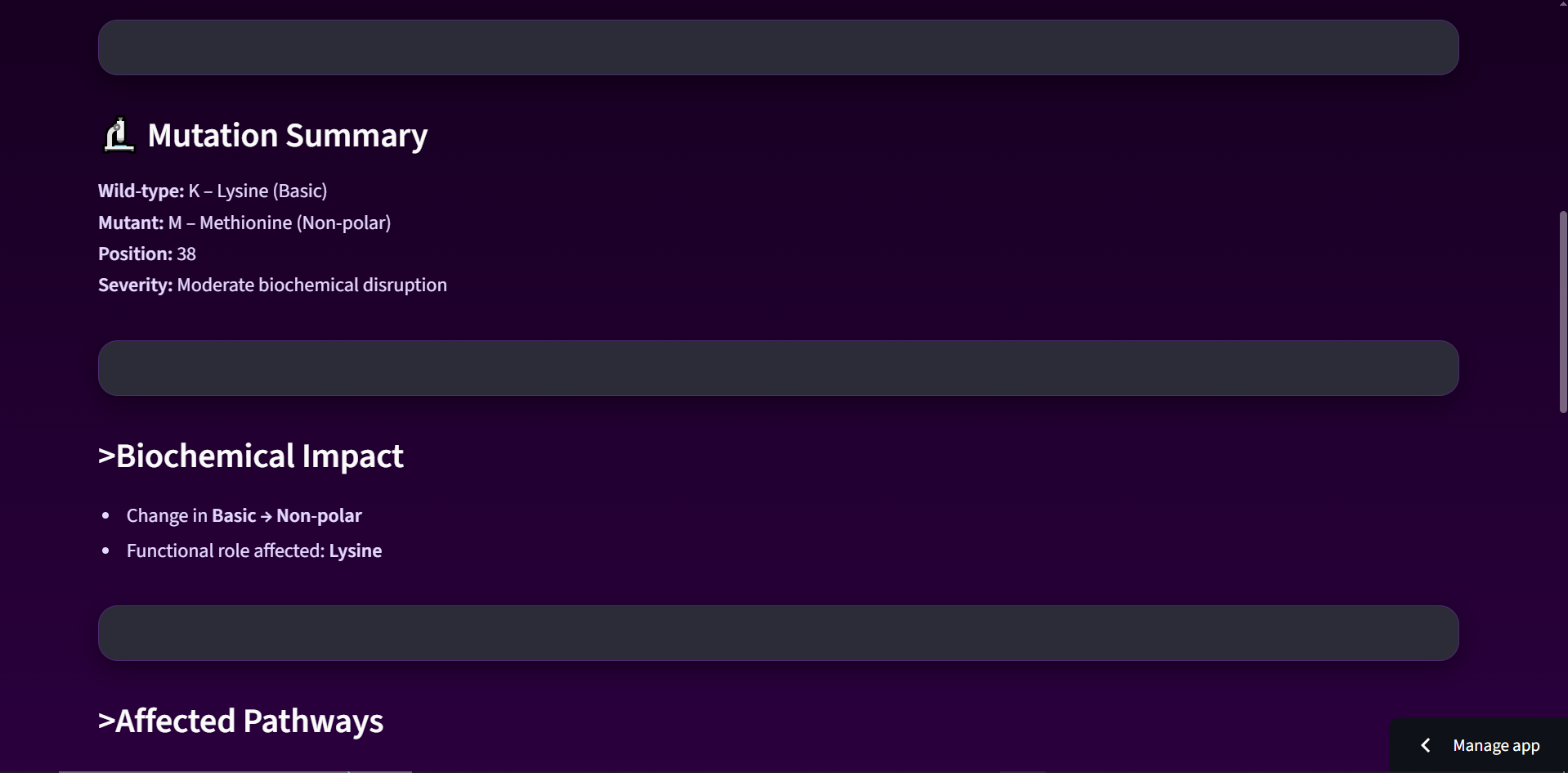
- Mapping amino acids to biochemical properties and predicting severity of mutation effects.
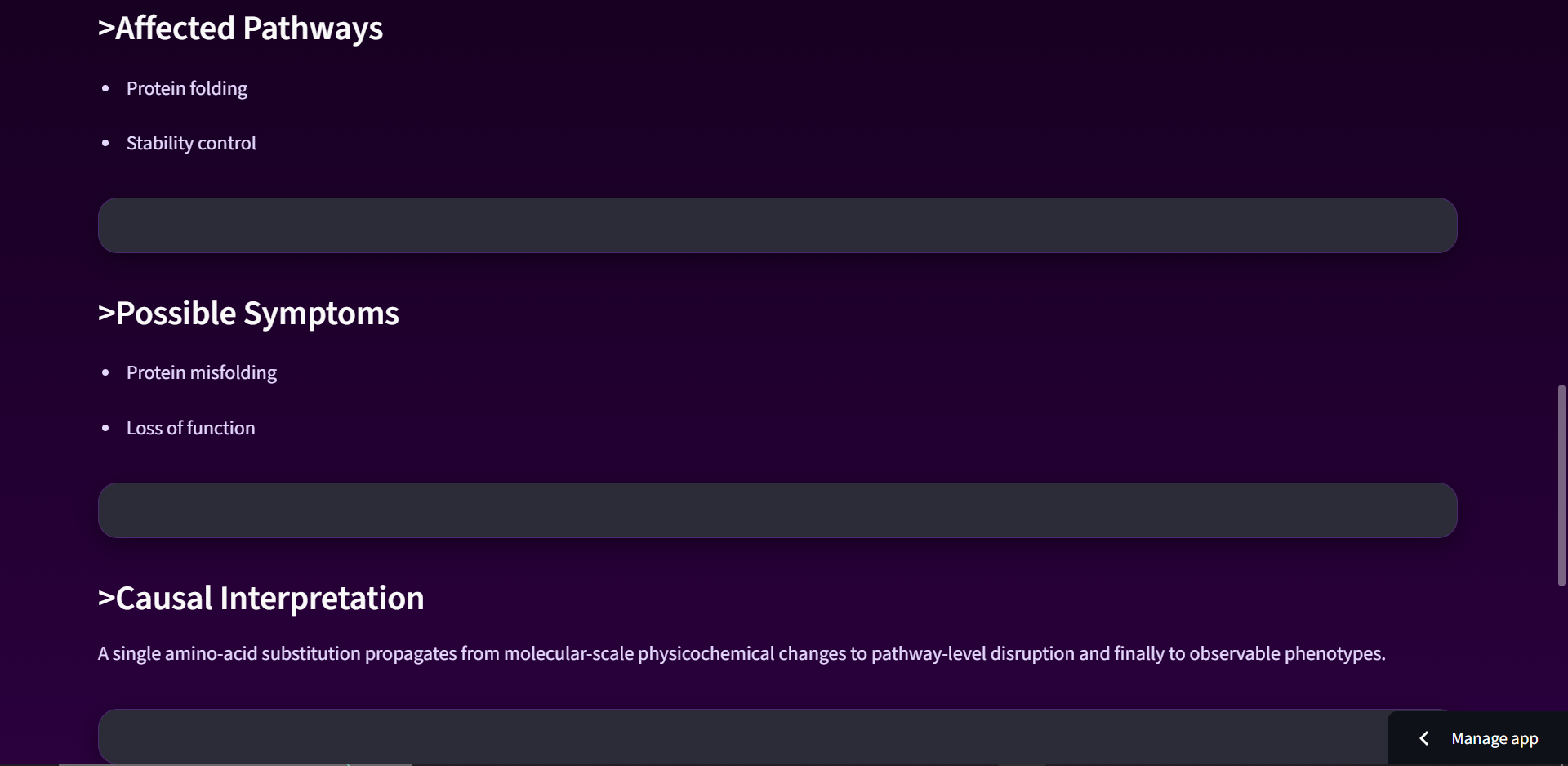
- Integrating pathway and symptom data for causal interpretation.
- Building dynamic visualizations in Streamlit, including color-coded protein sequences and codon-level DNA mapping.
- Handling user input, validating amino-acid codes, and making the tool interactive and hackathon-ready.
How I built it
- Developed in Python using Streamlit for interactive web app interface.
- Encoded all 20 amino acids, their properties, functional roles, and codons.
- Created protein and DNA visualizations using HTML + CSS in Streamlit cards.
- Implemented property shift severity mapping to predict mild → severe disruption.
- Integrated pathways and symptoms database to connect molecular change → cellular impact → phenotype.
Challenges
- Designing an intuitive visualization that shows both protein sequence and DNA codons while highlighting the mutation.
- Encoding all amino acids with multiple codons, biochemical properties, and functional roles.
- Ensuring the app was hackathon-ready, visually appealing, and fully explainable to judges.
Built with
- Languages/Frameworks: Python, Streamlit
- Technologies: HTML, CSS for interactive visualizations
- Bioinformatics Data: Amino-acid properties, codons, biochemical pathways, and symptom mapping


Log in or sign up for Devpost to join the conversation.