-
-
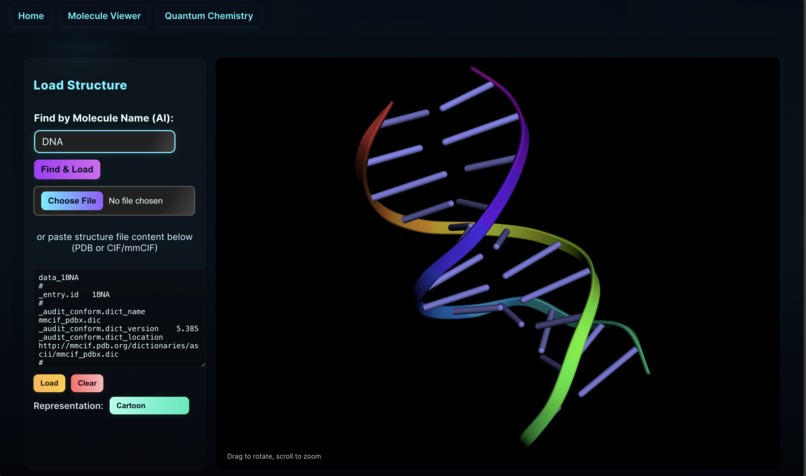
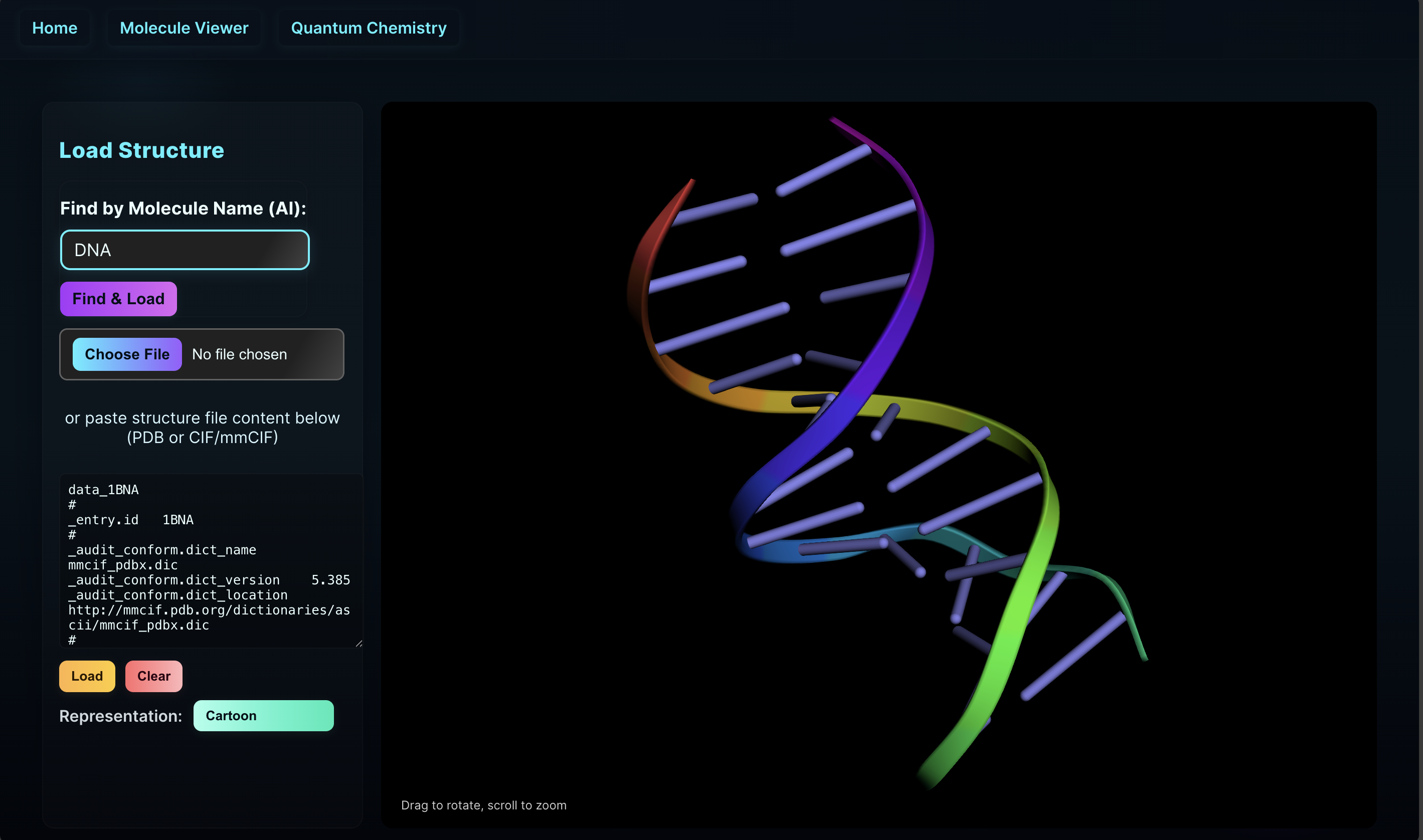
Molecule Viewer
-
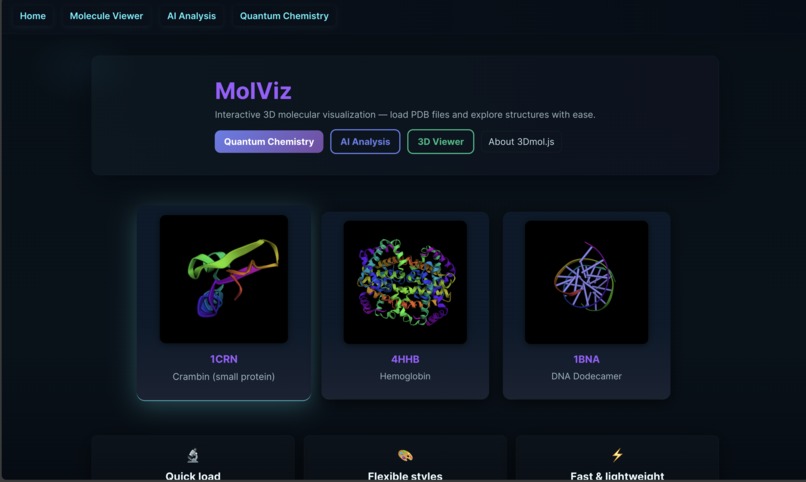
Home Page
-
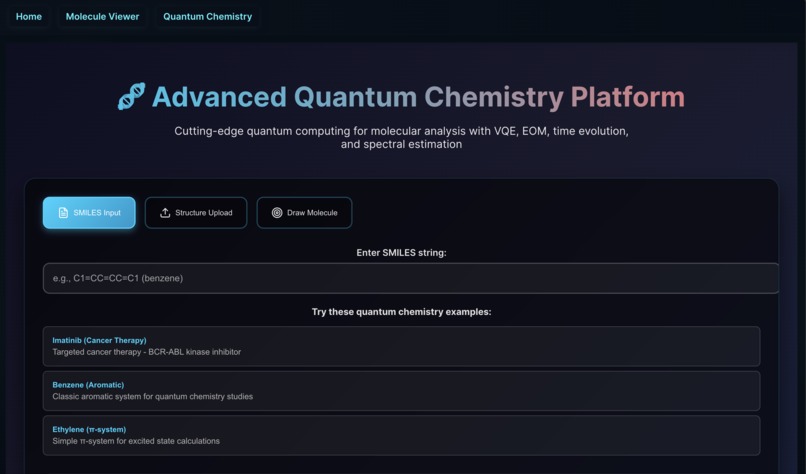
Quantum Chemistry
Inspiration
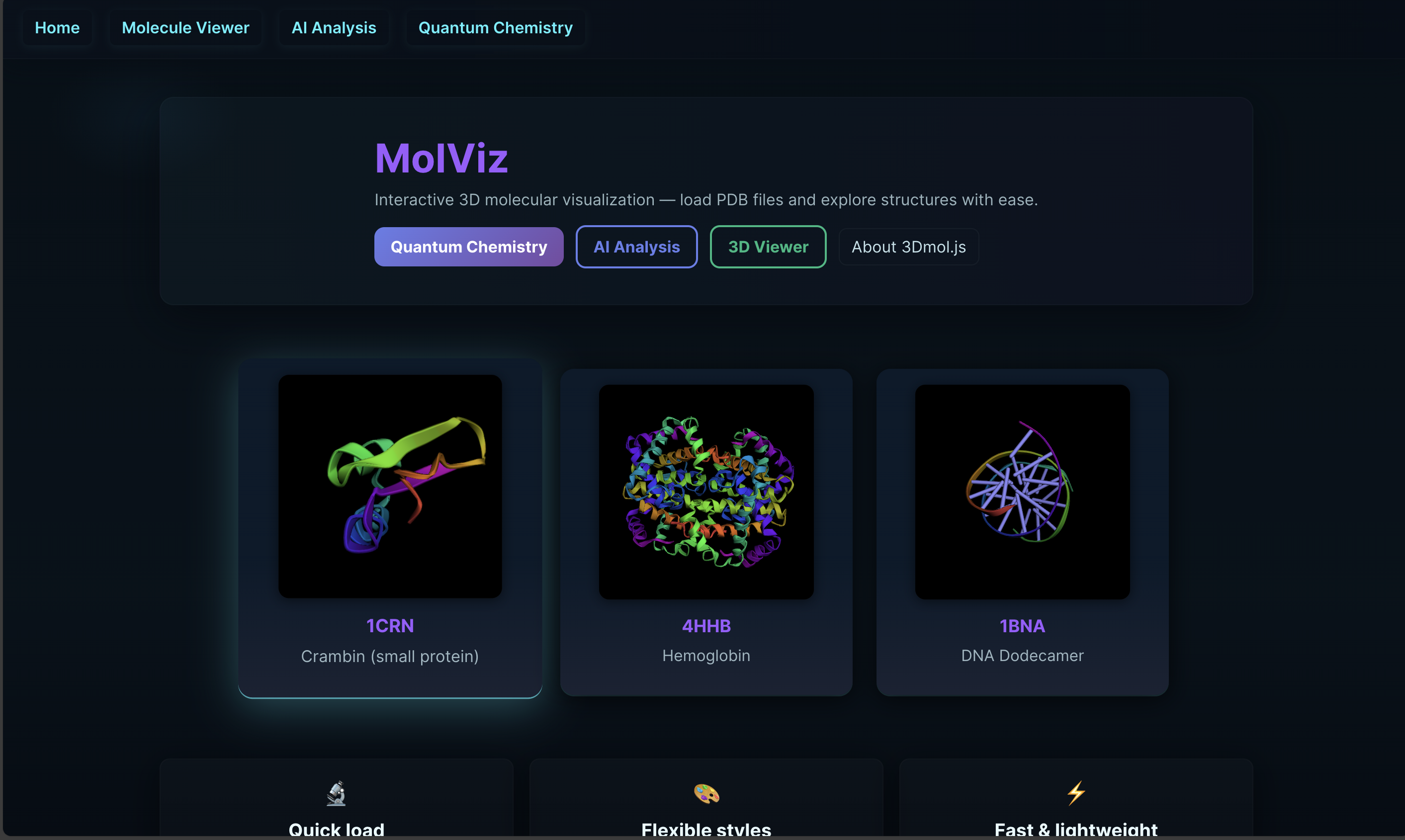
We wanted to make molecular modeling and drug resistance research more intuitive and accessible. Traditional molecular simulation requires high-performance hardware and specialized software. Our goal was to bring that power and complexity directly to both the browser and AR through an interactive platform.
What it does
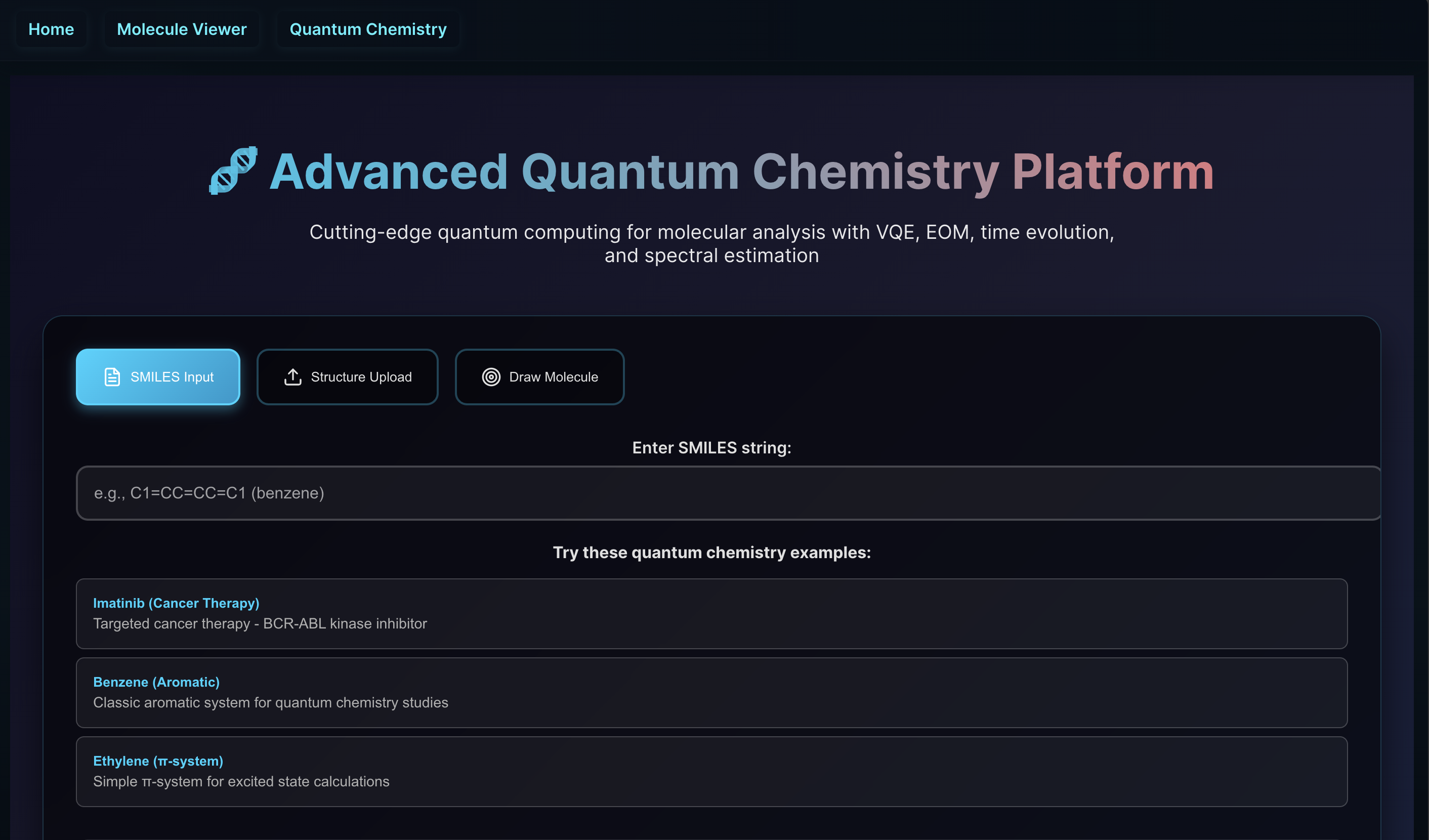
MoleculAR integrates quantum simulation and 3D molecular visualization to model interactions, identify potential variations, and display structural changes in real time. It enables researchers, educators, and students to explore molecular behavior dynamically at the atomic scale.
How we built it
We built MoleculAR using 3Dmol.js for web visualization and a Python quantum simulation backend for calculating molecular conformations. The React frontend handles interactive visualization, while Apple’s RealityKit integration allows 3D molecular models to be brought into the Vision Pro environment. The result is a synchronized AR experience where users can manipulate molecular structures generated by quantum computations in real space.
Challenges we ran into
Integrating real-time quantum simulation with both web and AR visualization was difficult. Translating heavy computational data into responsive 3D and spatial formats required optimizing rendering pipelines, syncing molecular data with the Vision Pro’s ARKit environment, and maintaining interactivity without latency.
Accomplishments that we're proud of
We built a complete quantum model and an AR pipeline that lets users explore molecules in both browser and AR environments. Seeing real molecular structures suspended in space through the Vision Pro was a major milestone in making scientific visualization more immersive.
What we learned
We learned how to merge scientific computing, web visualization, and AR design. Bridging quantum physics, chemistry, and mixed reality required balancing precision and performance while making advanced research tools accessible through intuitive interfaces.
What's next for MoleculAR
We plan to evolve MoleculAR into a full AR-based research and learning platform that supports protein-ligand docking, mutation tracking, and AI-assisted molecule design. Future updates will deepen Vision Pro integration with gesture-based molecular manipulation, collaborative 3D workspaces, and quantum-enhanced cloud simulation for real-time structural discovery.


Log in or sign up for Devpost to join the conversation.