
♻️ About the Project
Inspiration
Three days before building MOLE, our team visited the Pashupatinath Temple in Nepal. While walking around the temple, we noticed that there was no structured waste management system handling the large amount of waste generated by visitors. This simple observation sparked a question:
What happens to all this waste?
As we researched further, we found that only a small portion of waste is effectively recycled, while much of it ends up in landfills, open dumping sites, or rivers. Looking beyond Nepal, we discovered that this is a global problem. Industries generate millions of tonnes of reusable by-products every year, yet many companies continue paying to dispose of them while others spend heavily on purchasing virgin raw materials.
We realized the problem wasn't just waste generation—it was the lack of an efficient system to connect waste producers with businesses that could reuse those materials.
That's how MOLE was born.
What It Does
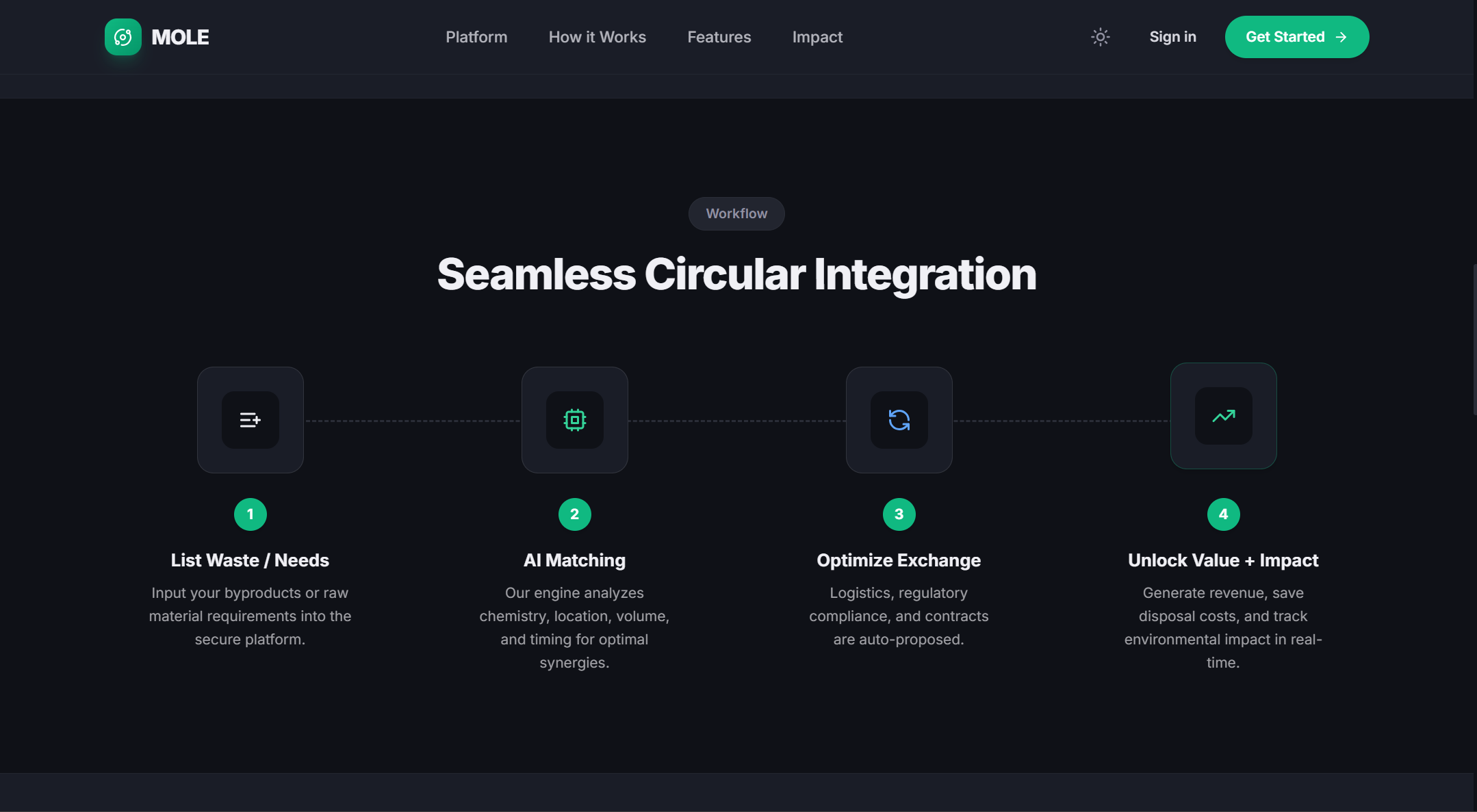
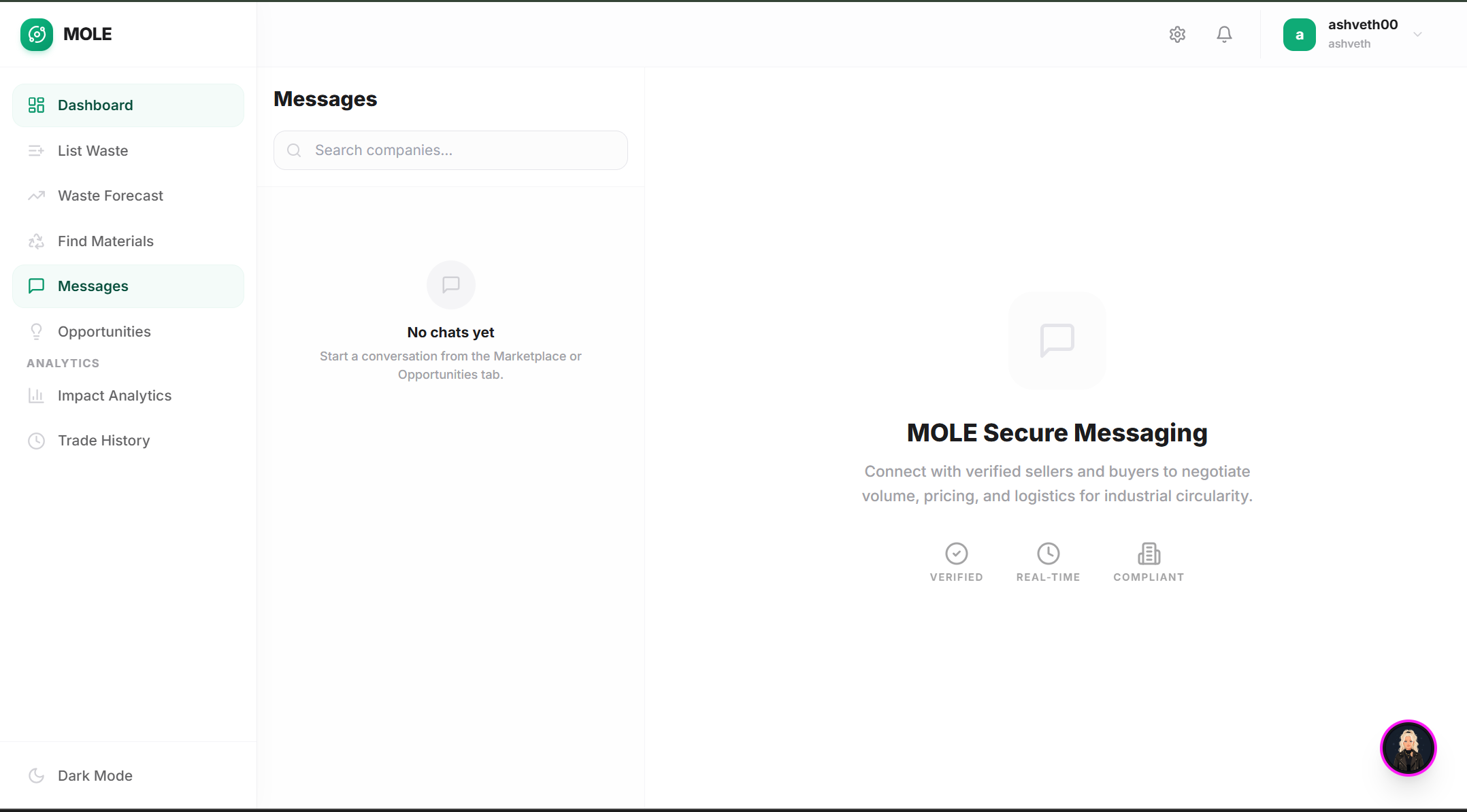
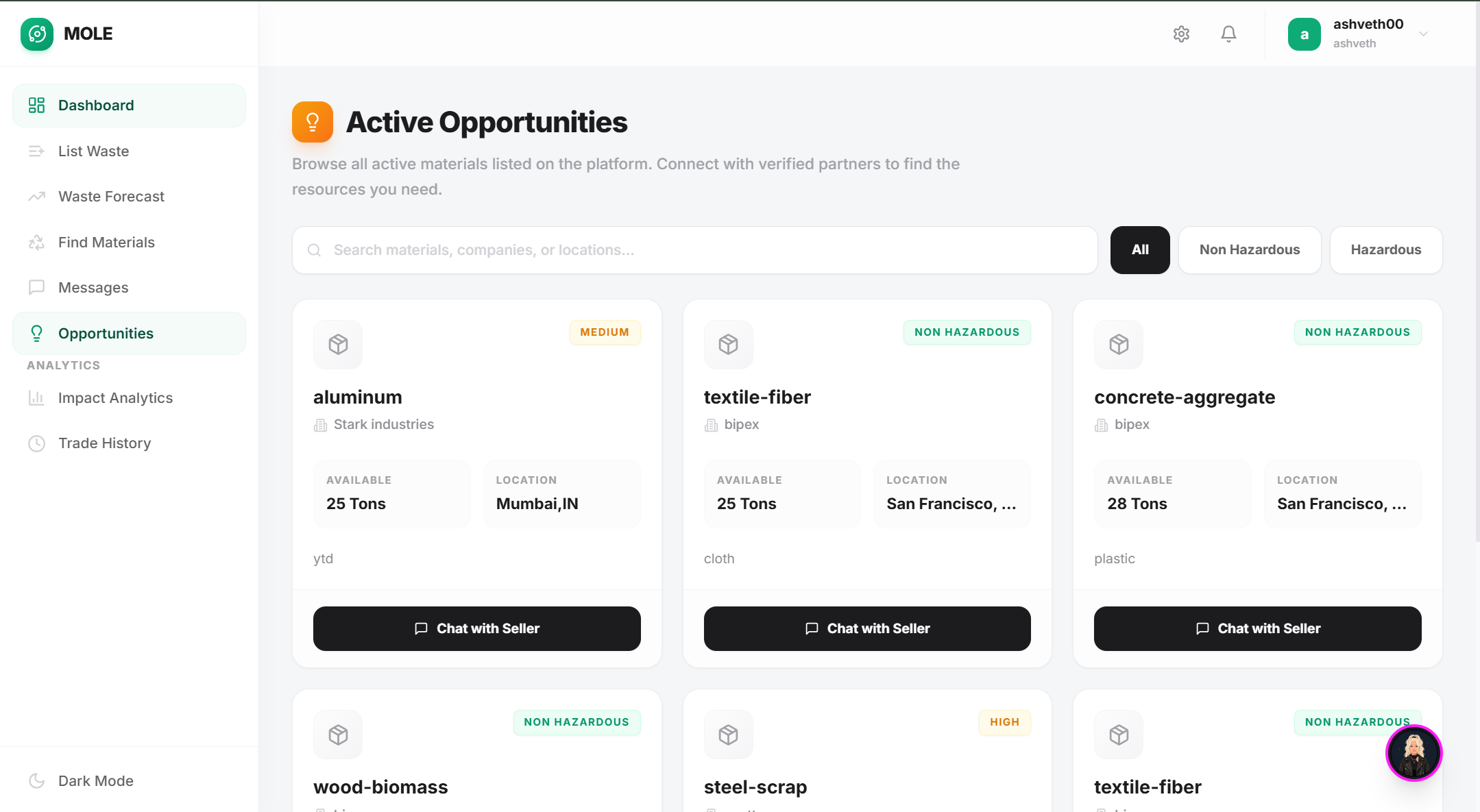
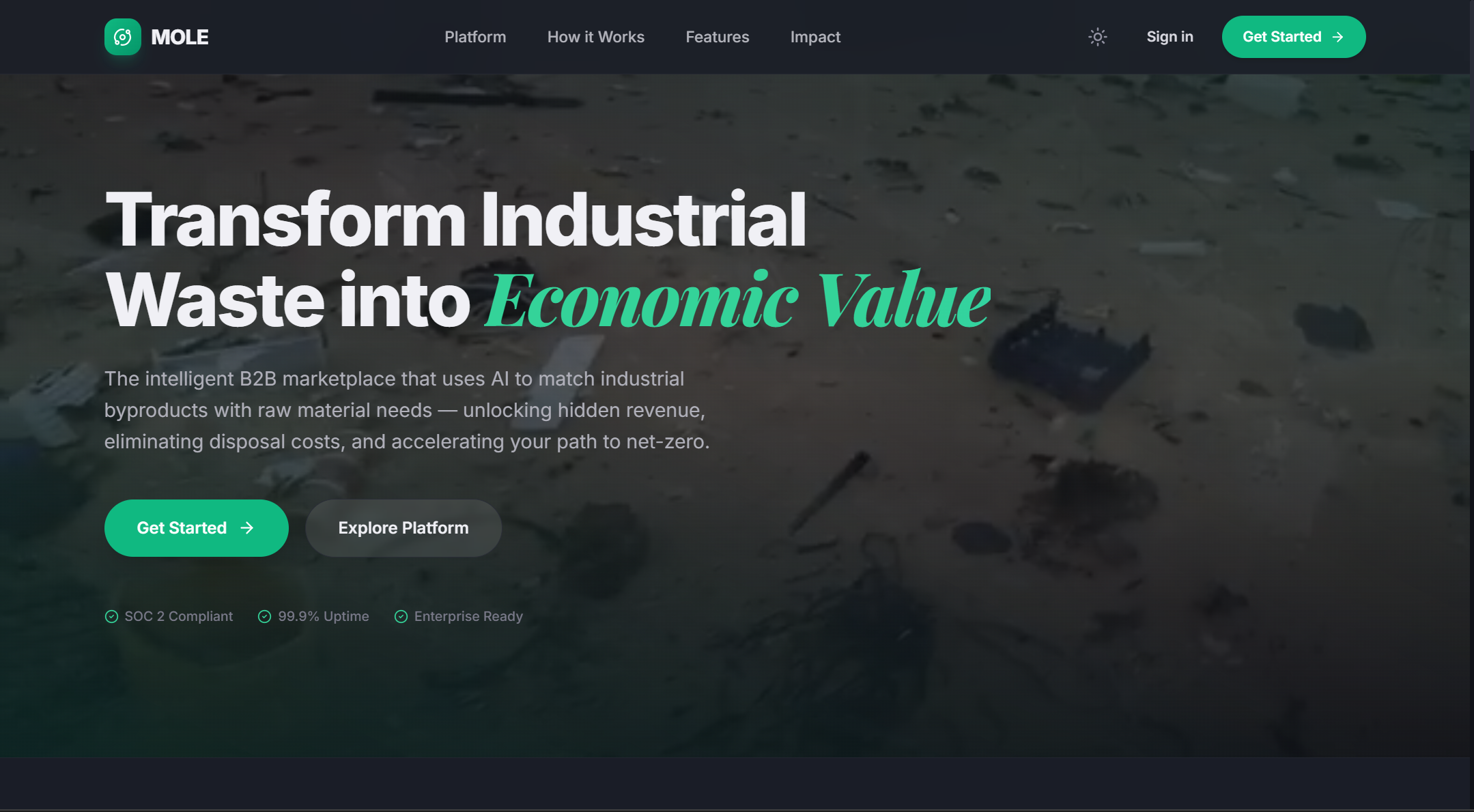
MOLE is an AI-powered B2B marketplace that enables industries to transform waste into valuable resources.
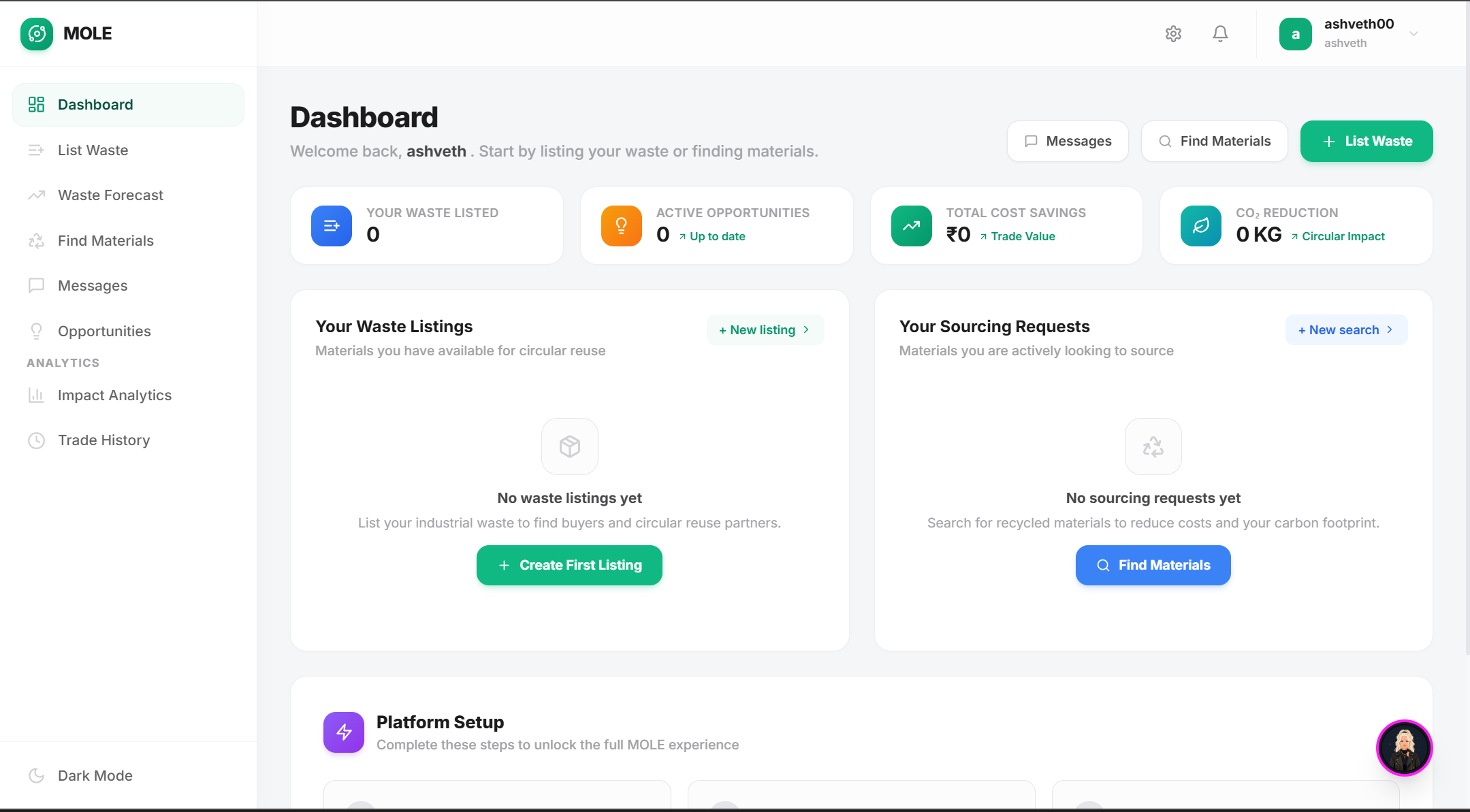
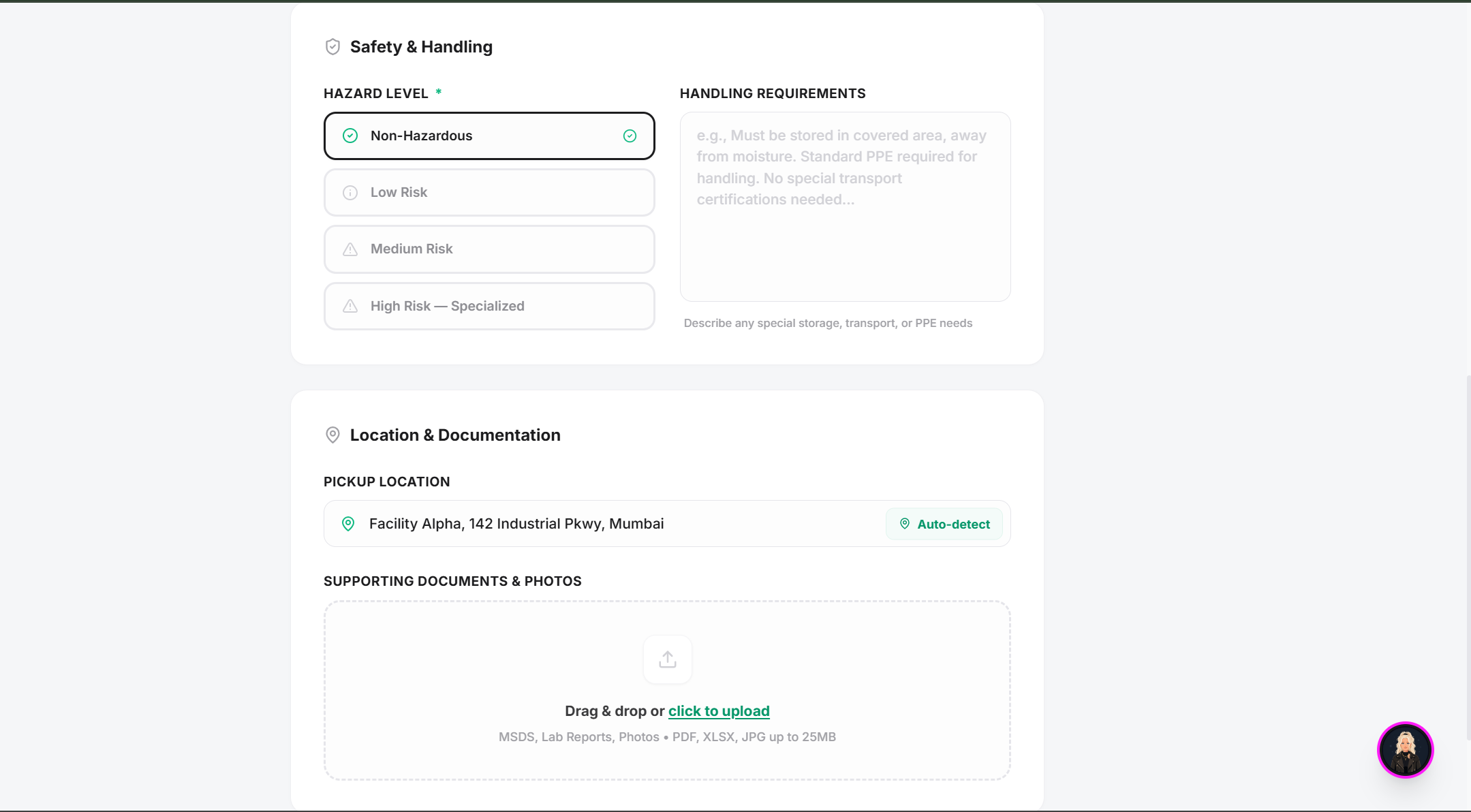
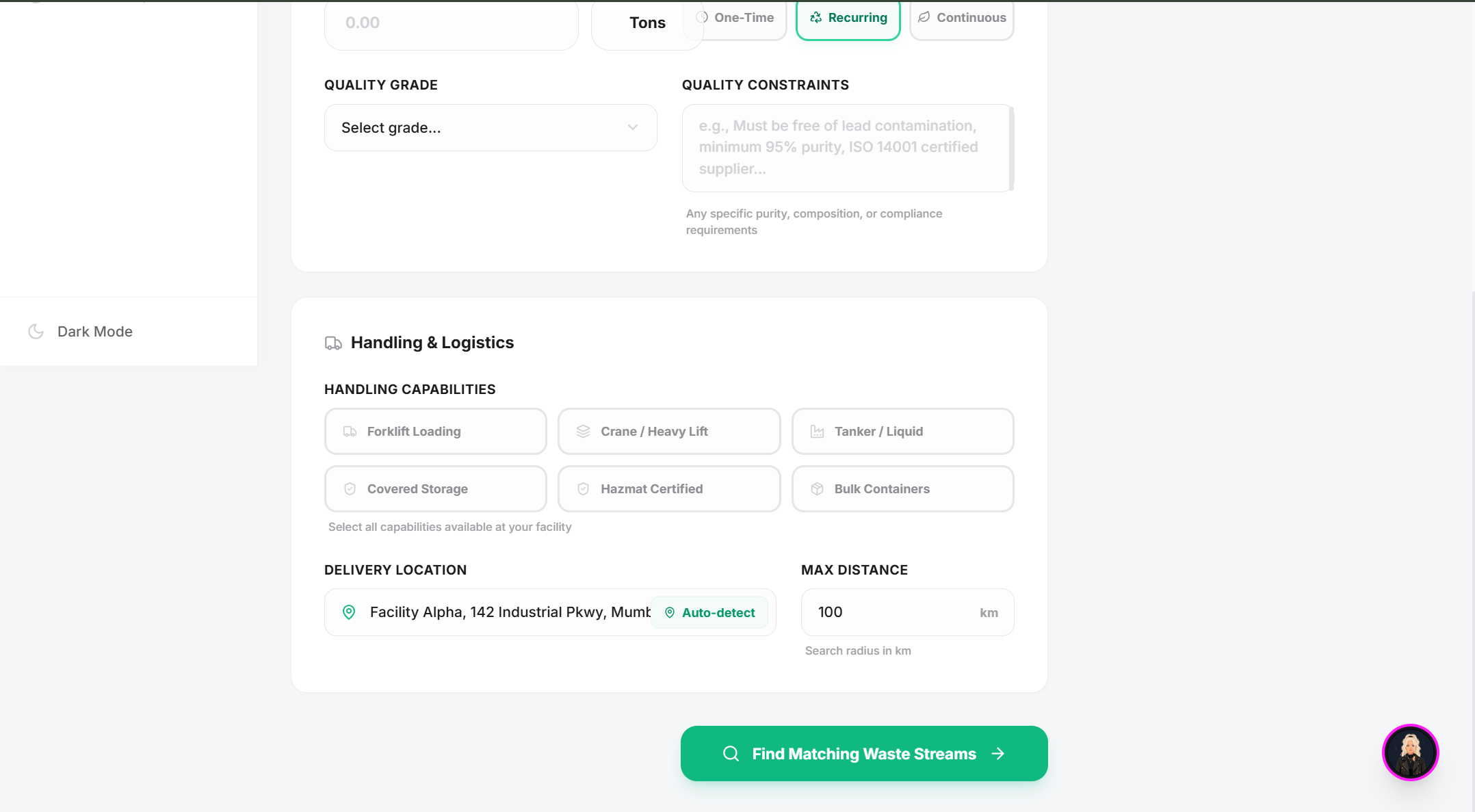
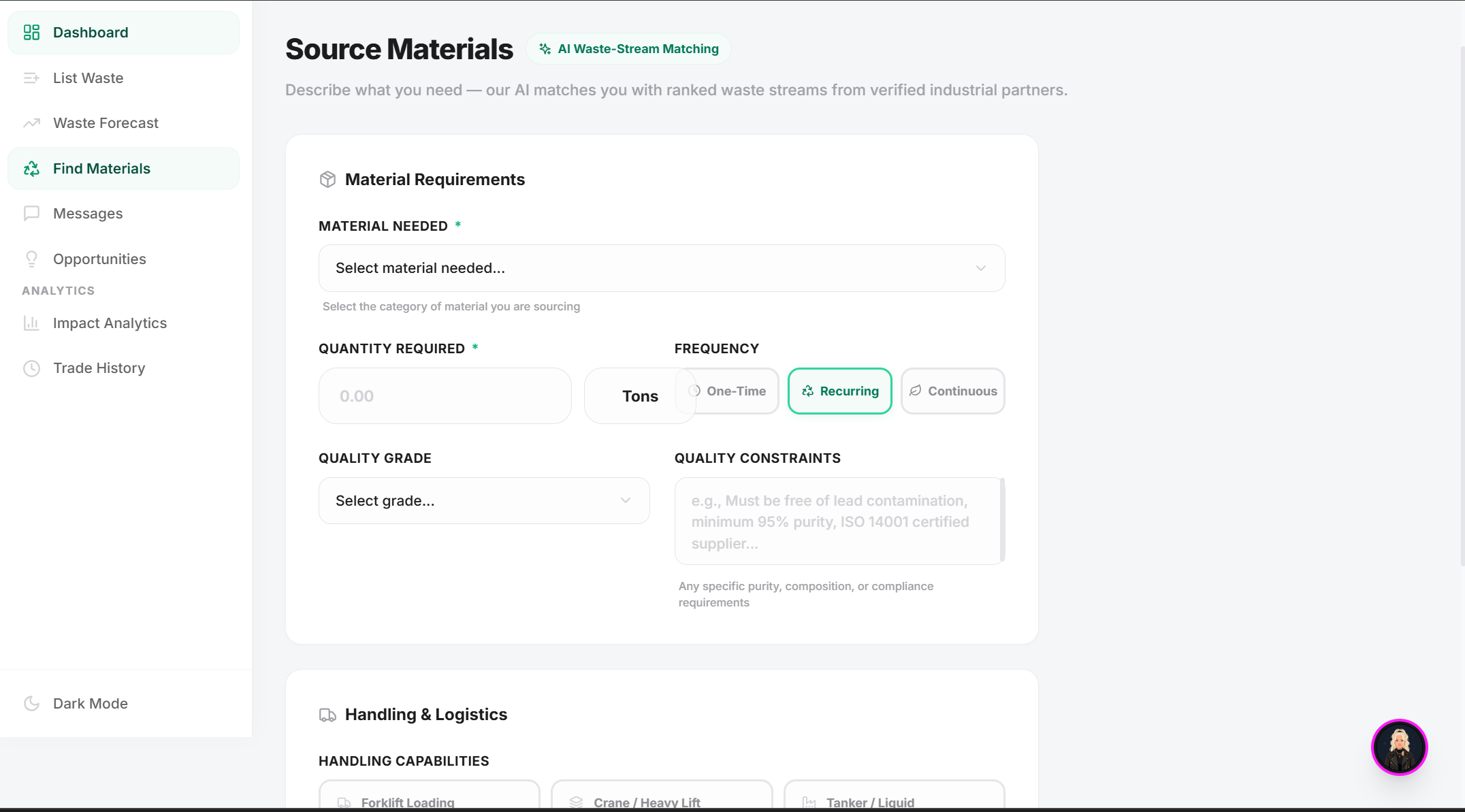
Companies can list industrial waste materials, while manufacturers and recyclers can search for raw materials that match their requirements. Our smart matching engine evaluates compatibility based on:
- Material type
- Quantity
- Distance
- Supply frequency
The platform also includes:
- AI-assisted material matching
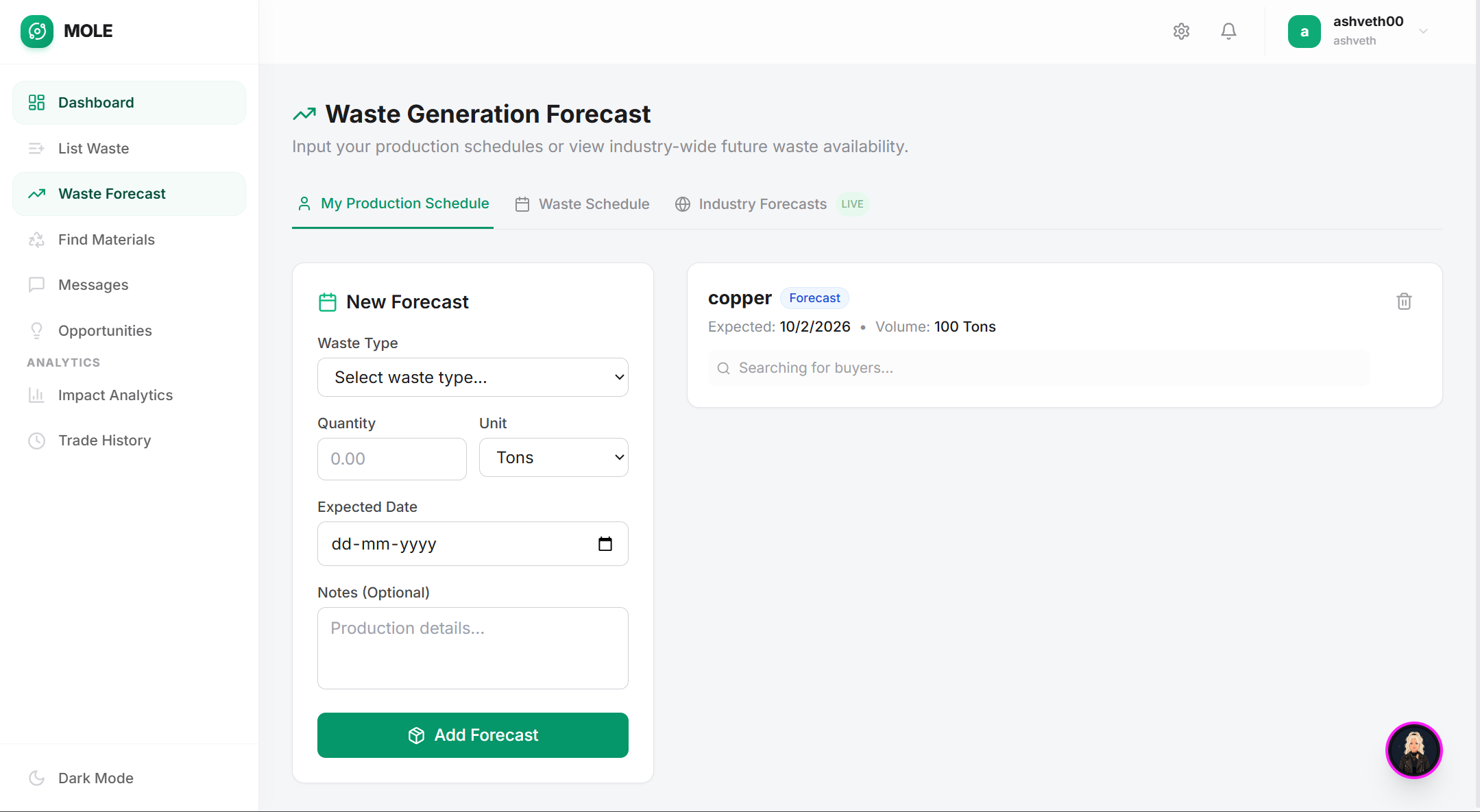
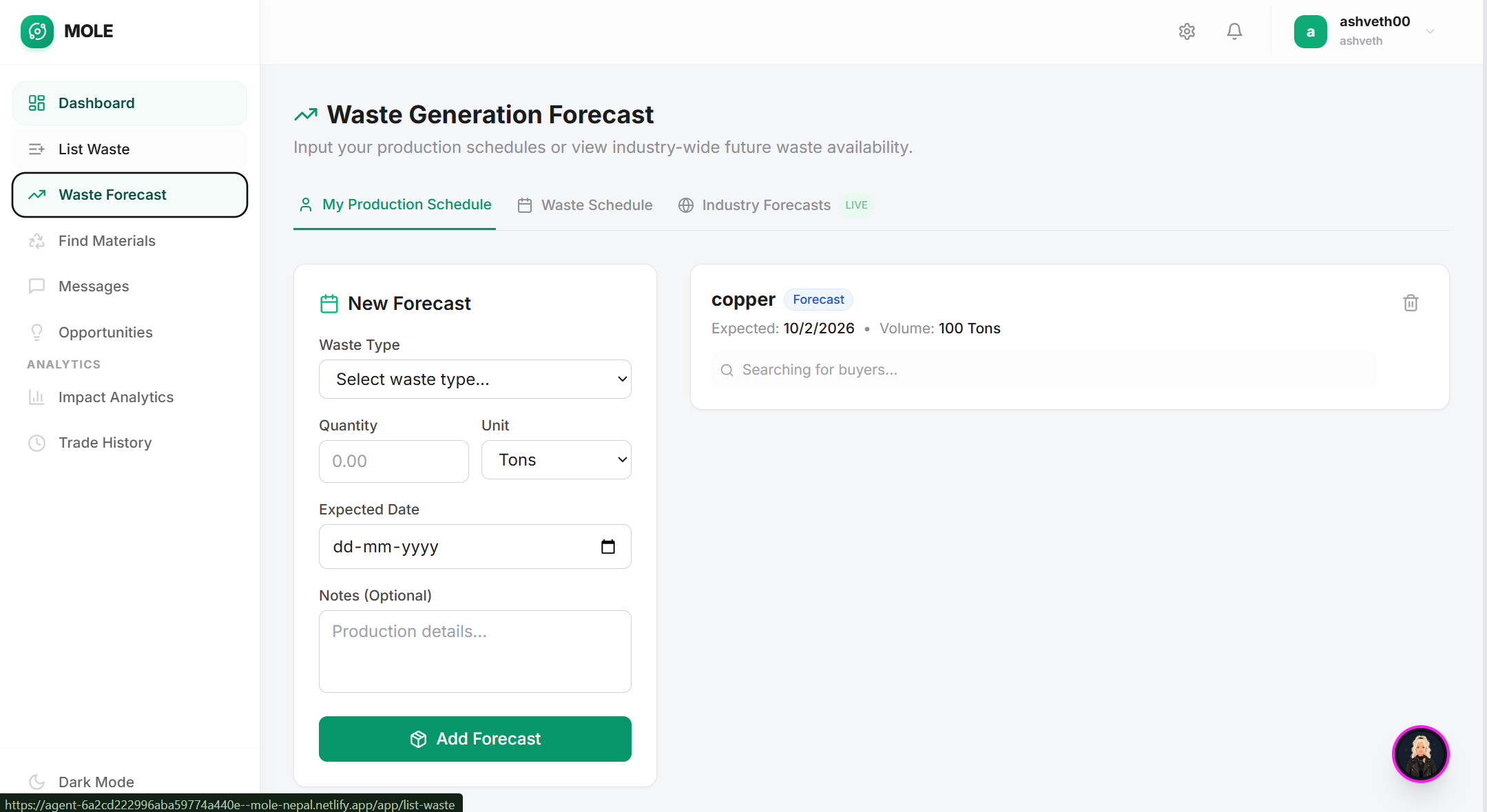
- Predictive waste forecasting
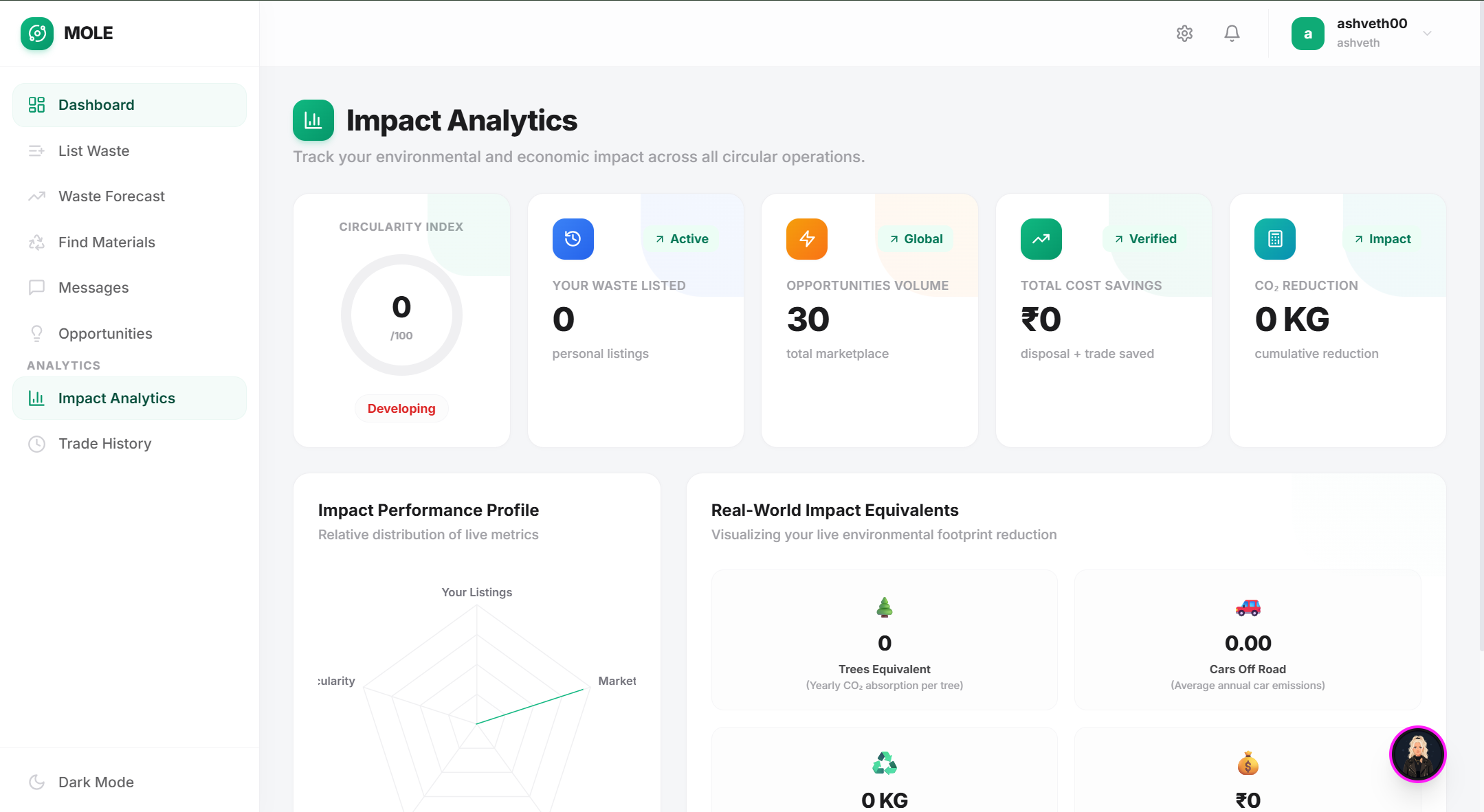
- Circularity and ESG analytics
- Carbon impact tracking
- B2B messaging for negotiations
Our vision is to create a digital ecosystem where one industry's waste becomes another industry's opportunity.
How We Built It
We built MOLE using a modern web technology stack:
- Frontend: React, TypeScript, Tailwind CSS
- Backend & Database: Supabase (Authentication, PostgreSQL, Storage)
- Deployment: Netlify
- Charts & Analytics: Recharts
- Matching Engine: A deterministic scoring algorithm that evaluates material compatibility, quantity alignment, proximity, and timing instead of relying on expensive machine learning models.
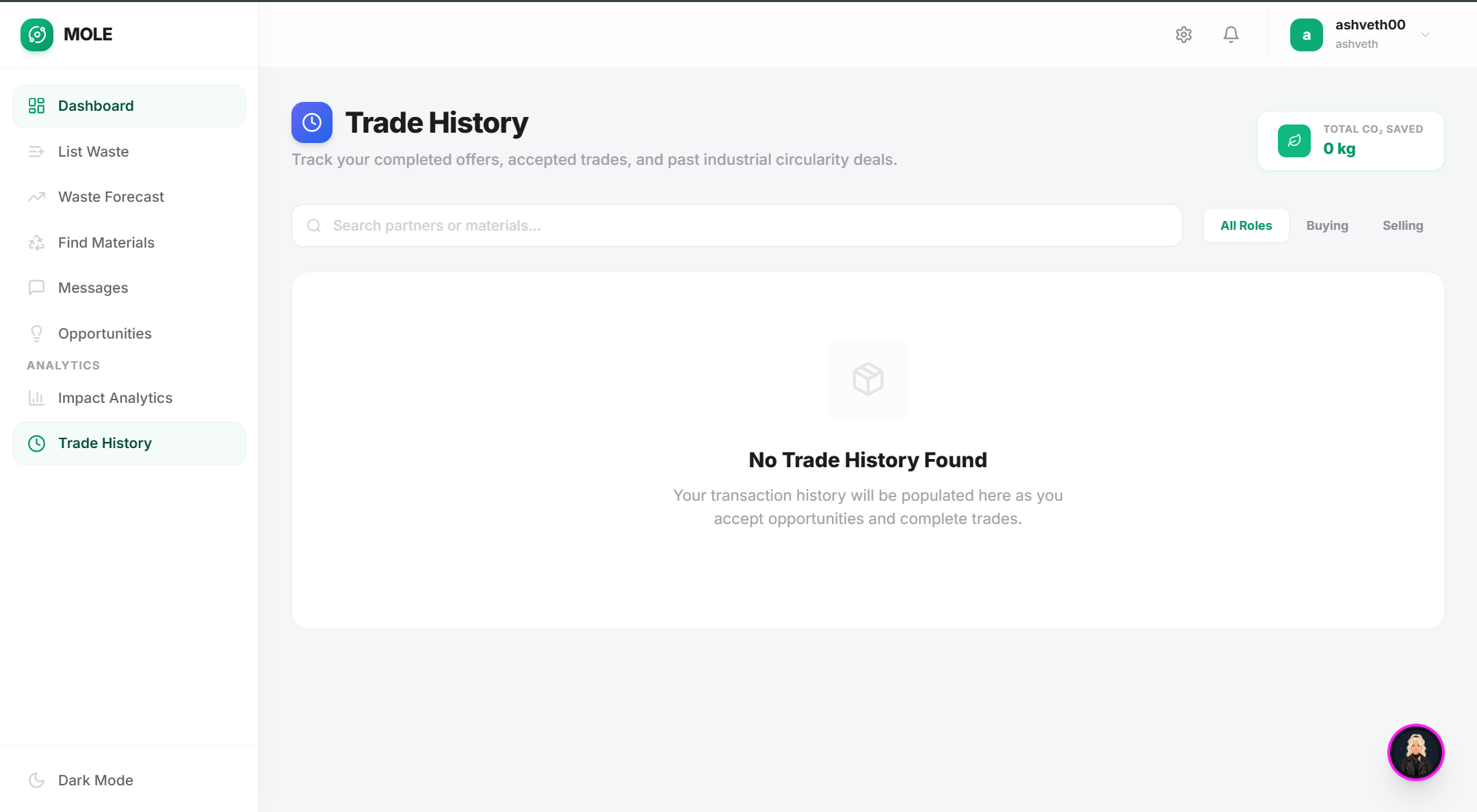
The platform stores industrial listings, buyer requests, opportunities, trade history, analytics, and messaging in a relational database secured with Row-Level Security.
Challenges We Faced
One of the biggest challenges was designing a marketplace that creates value for both buyers and sellers.
We spent significant time refining the matching algorithm so recommendations were meaningful rather than random. Another challenge was designing a scalable database capable of supporting listings, buyer requests, messaging, and sustainability analytics while maintaining a smooth user experience.
We also explored future challenges such as logistics, shipment reliability, and marketplace trust. These inspired roadmap features like IoT-enabled shipment tracking, transportation protection, supplier verification, and carbon credit integration.
What We Learned
Building MOLE taught us much more than software development.
We learned how circular economy systems operate, how industrial waste can become a valuable economic resource, and how sustainability and business can reinforce each other. We also gained experience in designing scalable architectures, building full-stack applications, integrating AI-assisted workflows, and thinking like startup founders by balancing environmental impact with a sustainable business model.
What's Next
Our roadmap includes:
- IoT-based shipment tracking
- Predictive procurement recommendations
- Carbon credit integration
- Advanced ESG reporting
- Logistics partner integrations
- Mobile applications
- Expansion to industrial clusters across multiple regions
Our long-term vision is to build the digital infrastructure that powers the global circular economy.
Because the future of sustainability is not just reducing waste—it's ensuring that waste becomes a resource.
Built With
- css3
- postgresql
- react
- supabase
- typescript


Log in or sign up for Devpost to join the conversation.