-
-
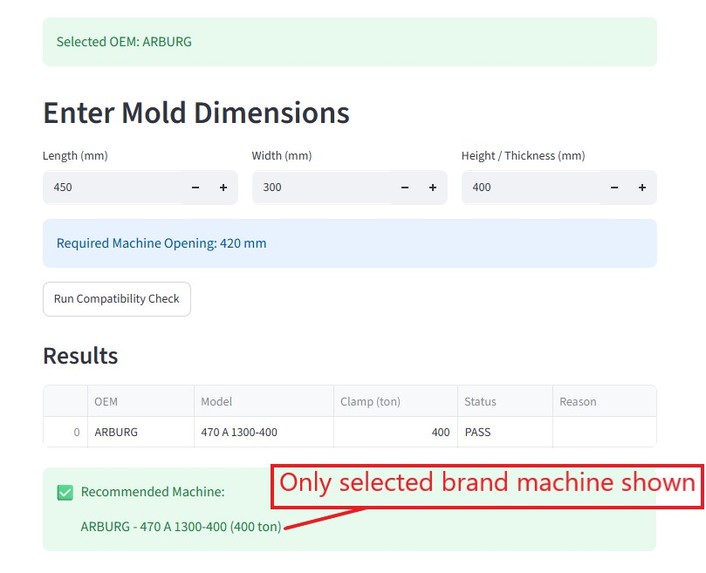
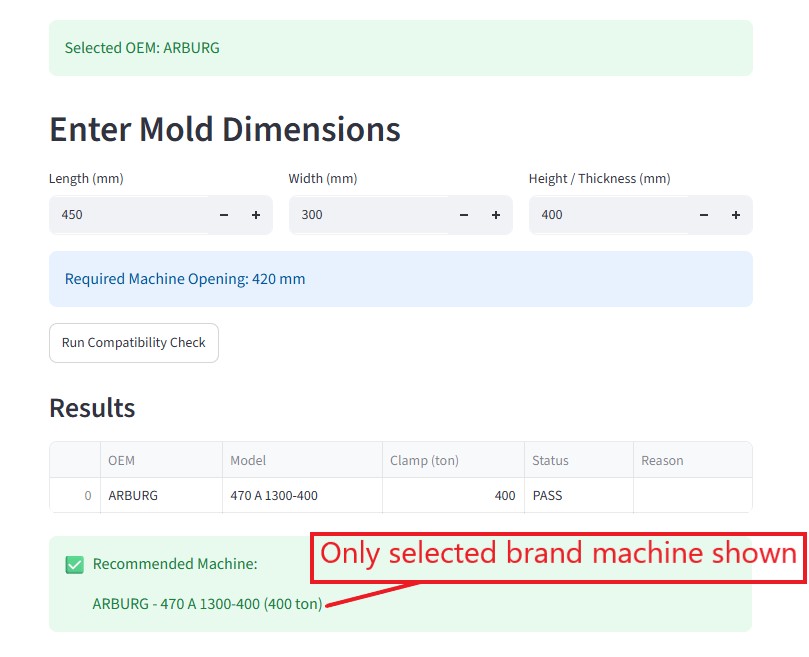
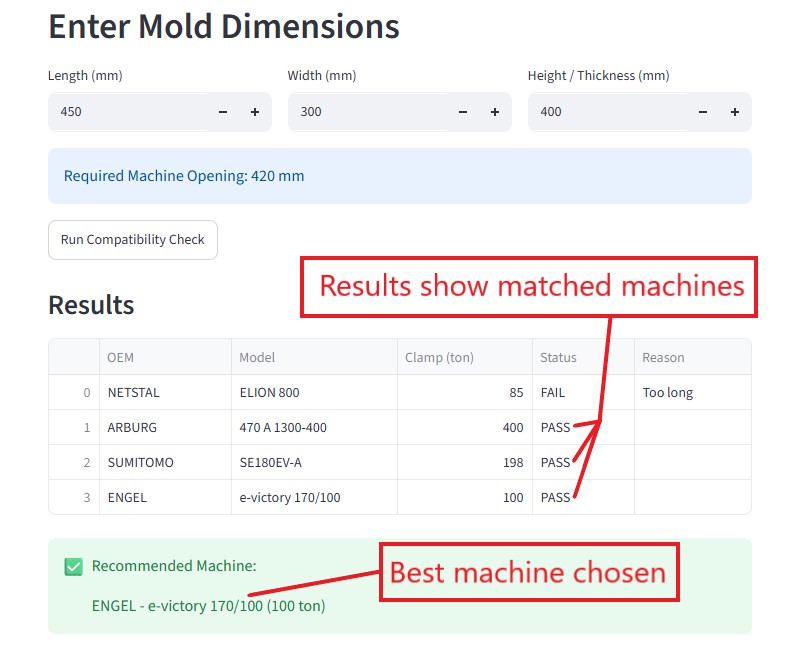
Result shows only selected OEM
-
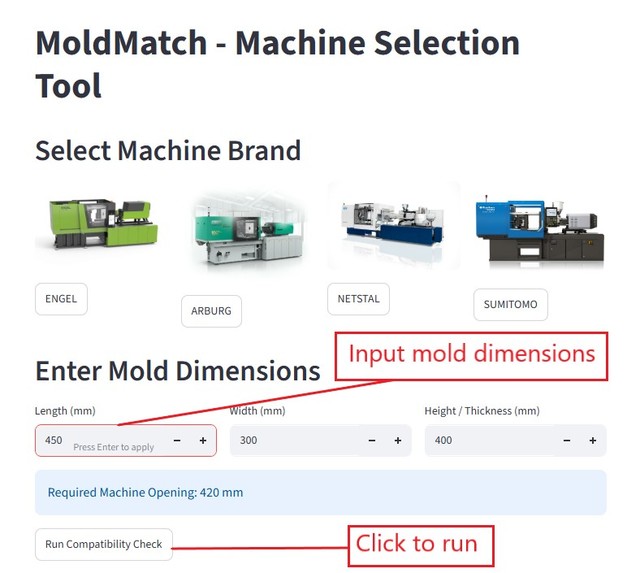
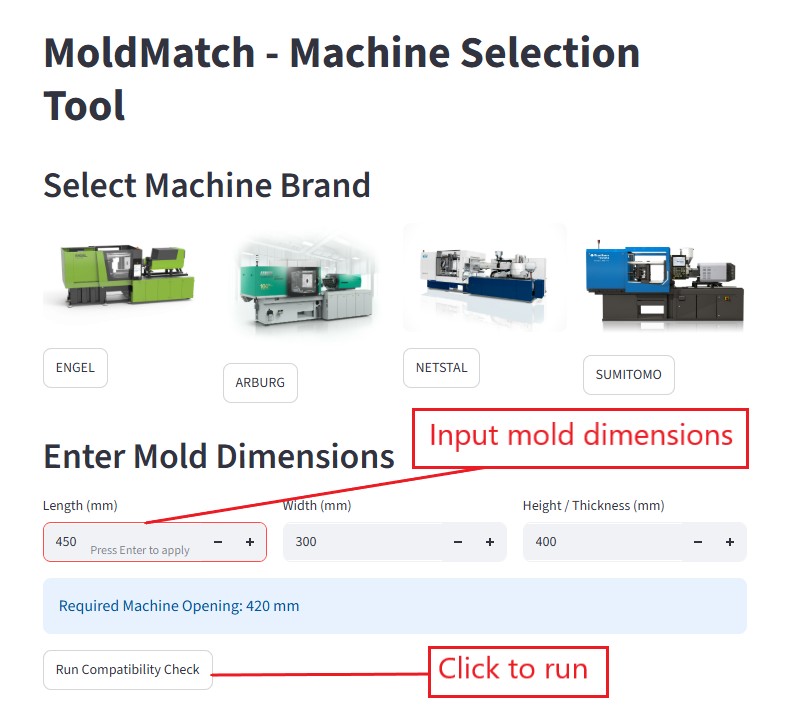
Input mold dimensions
-
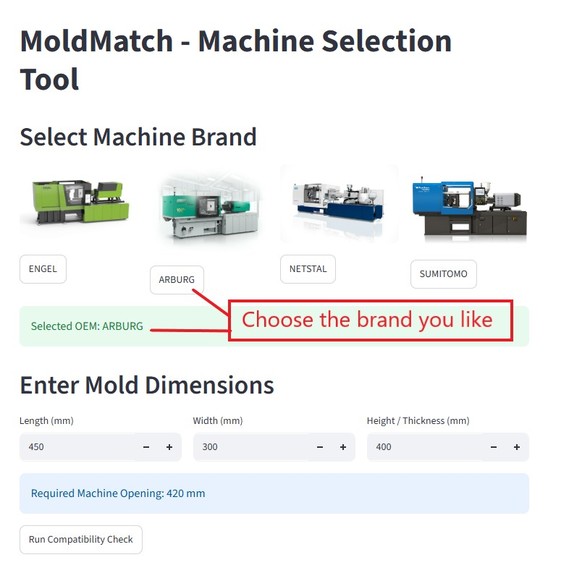
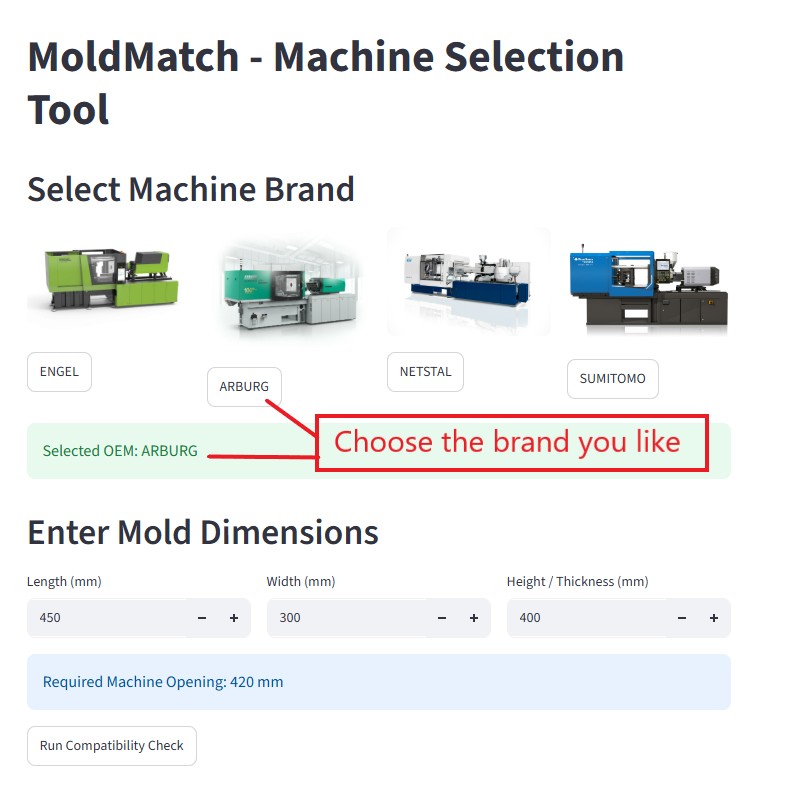
Select manufacturer
-
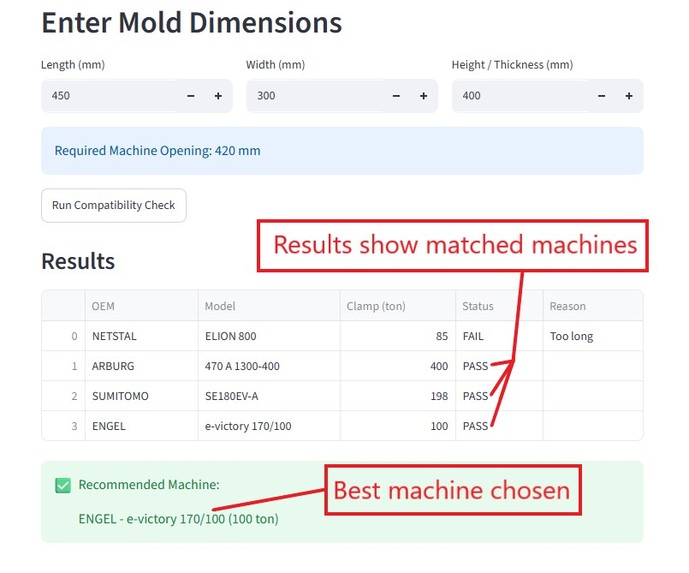
Show matching machines
-
As an aspiring computer science major at Duke University, I’ve grown interested in finding algorithms to make every day life more efficient. I gained exposure to manufacturing processes from my father, thanks to his job and experience in molding. Here and there, I’d heard snippets of challenges regarding injection molding, particularly in ensuring that a mold design is compatible with a specific molding machine. This process is often manual, relying on spreadsheets and experience passed between engineers. Small mistakes in evaluating machine constraints—such as tie-bar spacing, platen size, or daylight—can lead to production delays, extra costs, and even equipment damage.
This inspired me to build MoldMatch, a software tool that automates mold-to-machine compatibility checks and makes the process faster and more reliable. MoldMatch is an interactive web application that allows users to input mold dimensions and instantly determine whether a mold can be safely and efficiently run on a given injection molding machine.
The web application includes three main input mold dimensions: Length: L Width: W Height/Thickness: H
In addition to these inputs, there are also several outputs from the machine: Automatic compatibility evaluation across multiple OEMs Pass/Fail validation with clear explanations Best machine recommendation based on efficiency
How It Works: The system evaluates mold compatibility using core engineering constraints. Geometric Constraints
Width constraint: W≤TieBarX
Length constraint: L≤TieBarY
For tie-barless machines: W≤PlatenX, L≤PlatenY
Opening (Daylight) Constraint The required mold opening is: Required Opening=H+Safety Clearance
Where: H = mold thickness Safety clearance ≈ 10–25 mm
Constraint: Required Opening≤Machine Daylight
Machine Selection Logic Among all compatible machines, MoldMatch selects the most efficient option: Best Machine=min(Clamp Force)
This reflects real-world manufacturing practice: choose the smallest capable machine to minimize cost and maximize efficiency.
This project was developed as a full-stack prototype using Python and Streamlit:
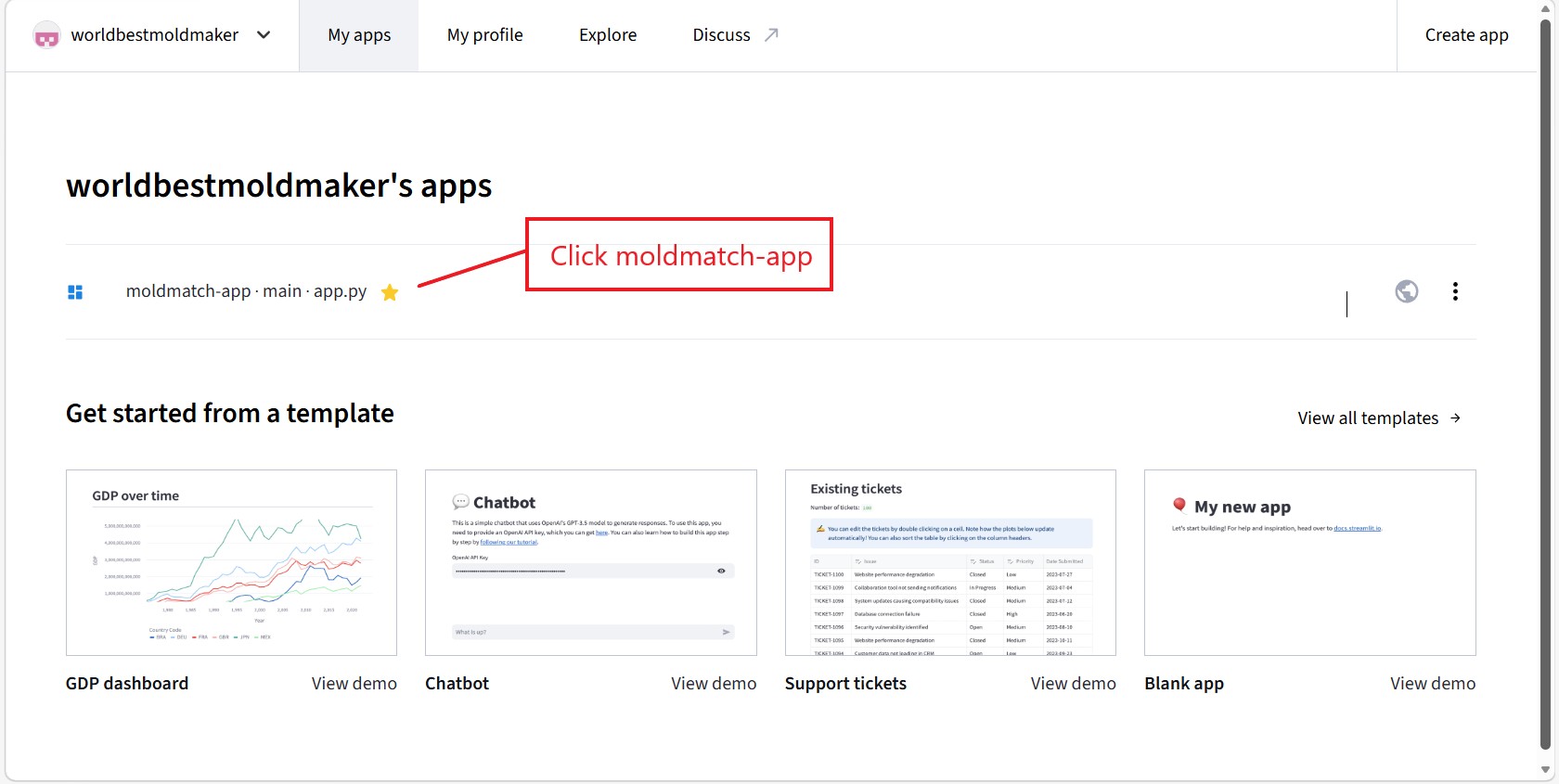
Frontend/UI: Streamlit Backend logic: Python Data structure: Machine datasets (ENGEL, ARBURG, Sumitomo, Haitian, Netstal) Deployment: Streamlit Cloud (public web app)
The app was designed as a single-page interactive interface:
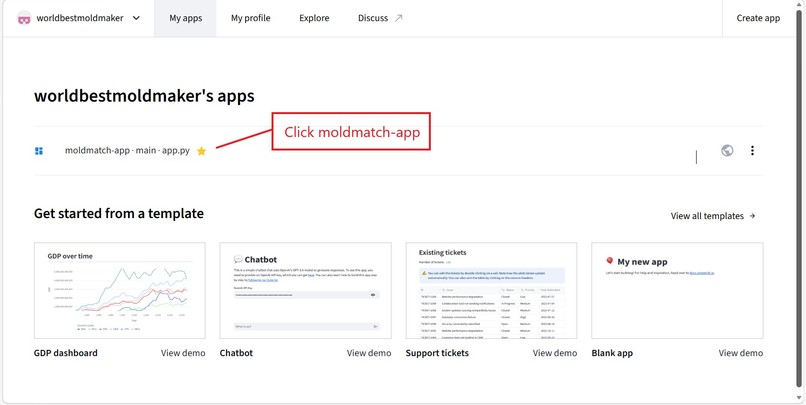
Users select a machine OEM via clickable images Input mold dimensions Click “Run Compatibility Check” View results and recommendations instantly
This project helped me bridge engineering domain knowledge with software development:
How to translate real manufacturing constraints into computational rules How to design logical validation systems for physical processes Rapid prototyping using Streamlit Structuring datasets across multiple equipment manufacturers Building a user-focused engineering tool
I also realized how much opportunity exists to digitize legacy engineering workflows.
Challenges
- Data Fragmentation Machine specifications are not standardized across OEMs. I had to normalize:
Platen dimensions Tie-bar spacing Daylight ranges
- Engineering Logic Ensuring correct mapping between:
Mold dimensions (L, W, H) Machine constraints (X, Y, opening)
Small mistakes in logic could lead to incorrect recommendations.
- UI Simplicity vs Functionality Balancing:
A clean, intuitive interface Robust engineering checks
- Error Handling Ensuring the system clearly explains failures: “Too wide for tie bars” “Insufficient daylight”
Future Improvements:
- Add clamp force calculation based on projected area F=A×P
- Enable Excel upload for machine databases
- Integrate AI-based optimization and prediction
- Expand into a full Design for Manufacturability (DFM) platform to include shot volume, injection pressure, water/hydraulic/air fittings
MoldMatch demonstrates how software can transform traditional manufacturing processes by replacing manual validation with automated, data-driven decisions. This project represents a step toward a future where engineering workflows are more efficient and reliable.

Log in or sign up for Devpost to join the conversation.