-
-
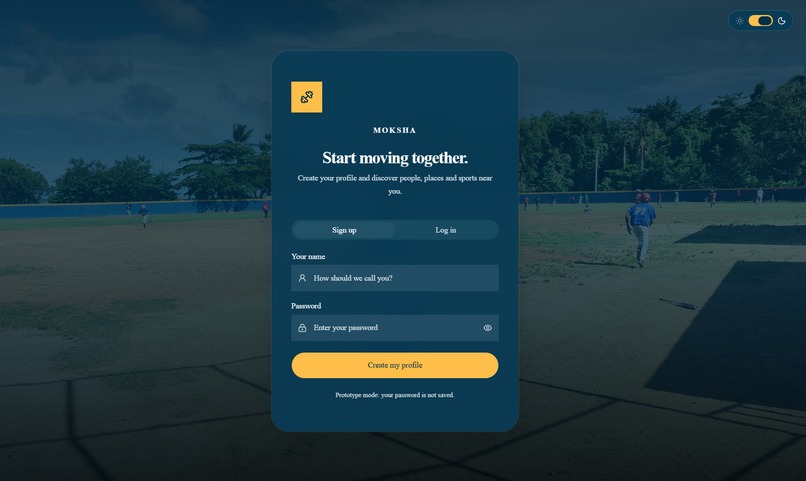
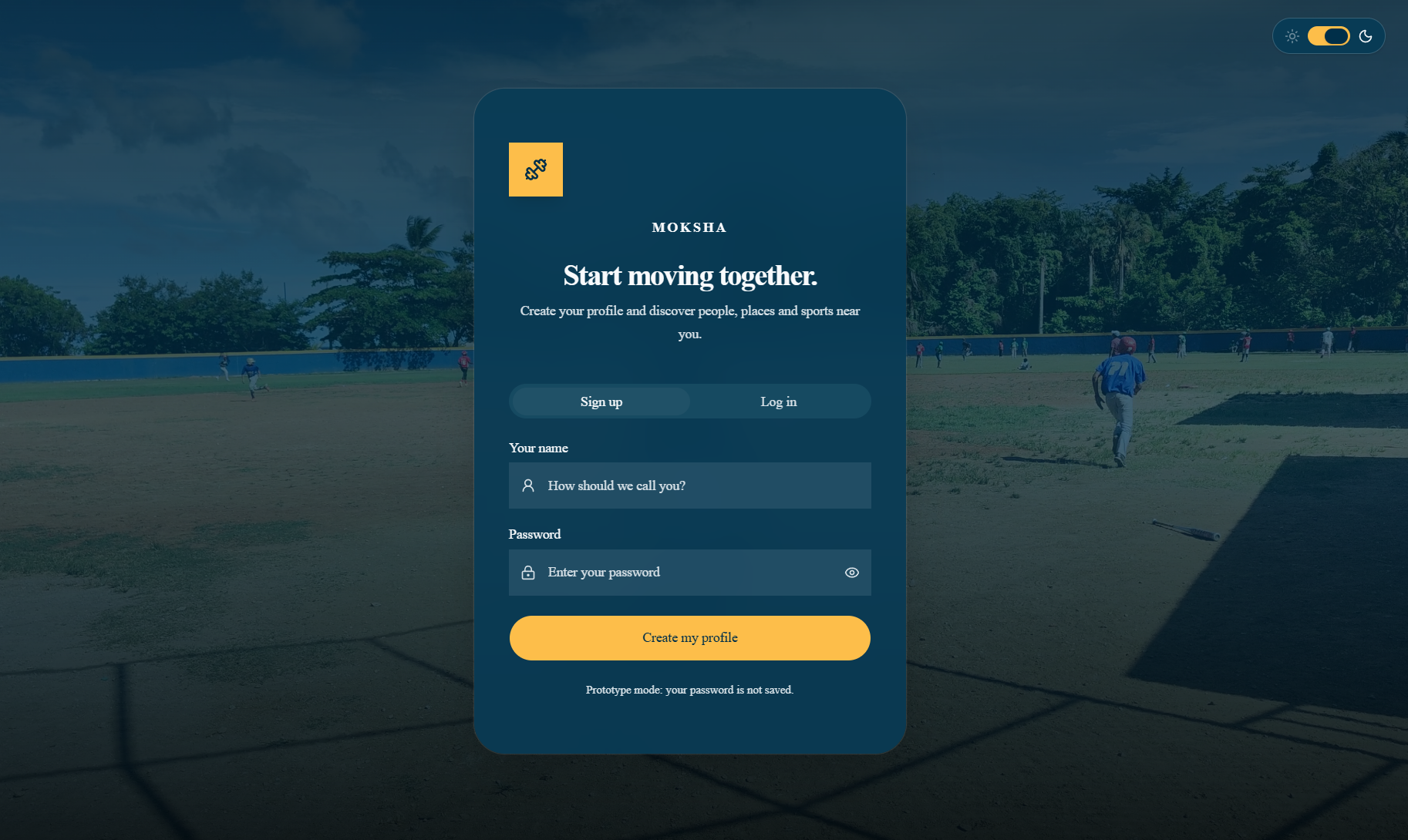
Log in | Sign up (dark mode)
-
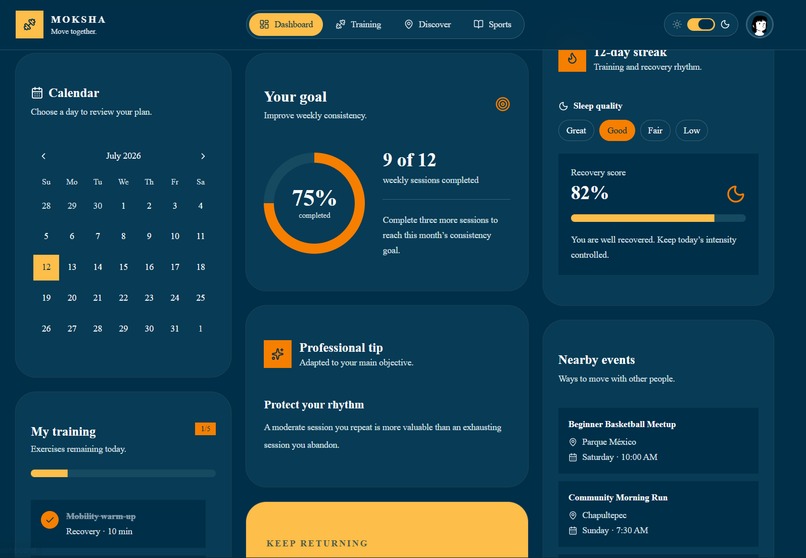
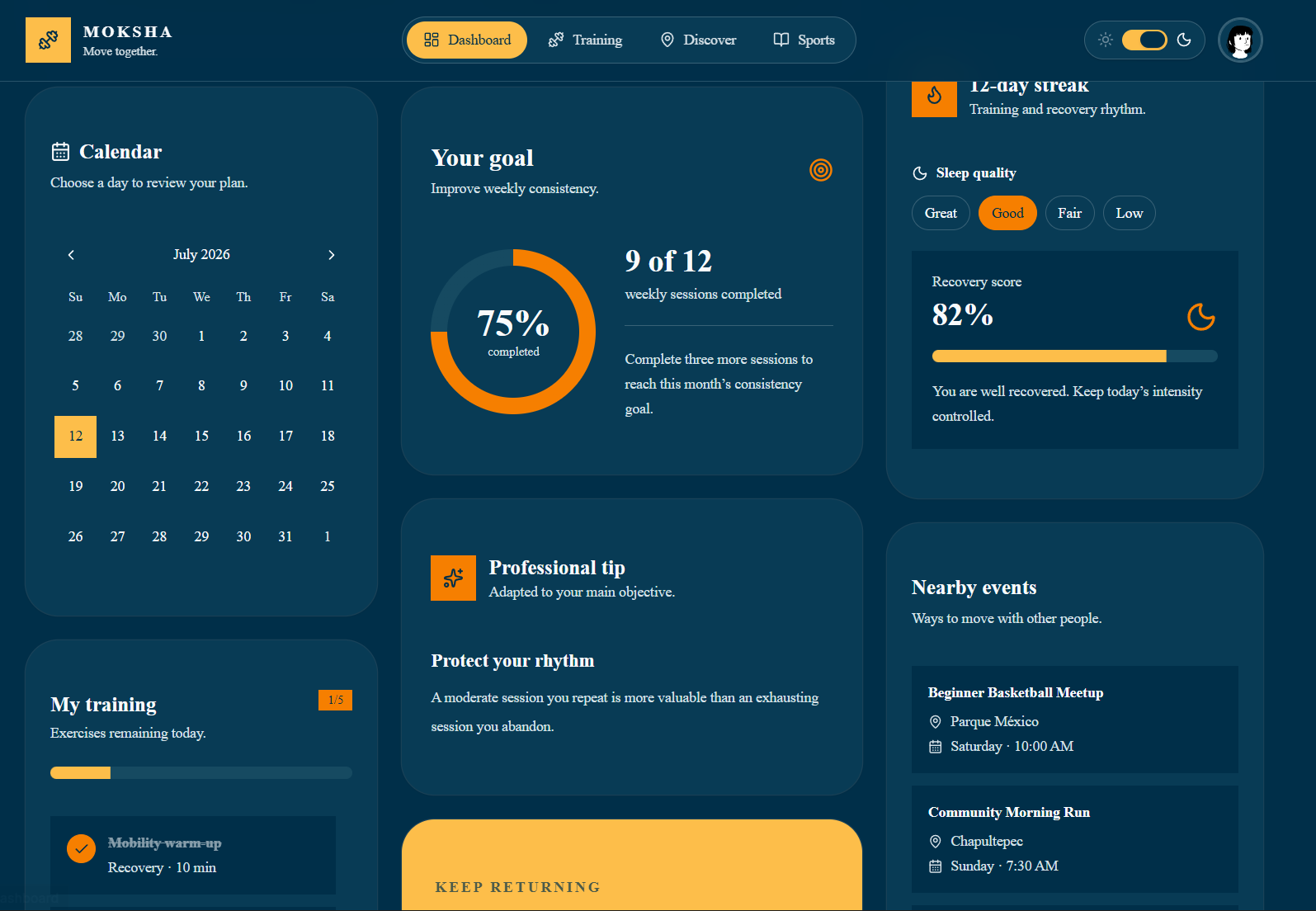
Main Dashboard (dark mode)
-
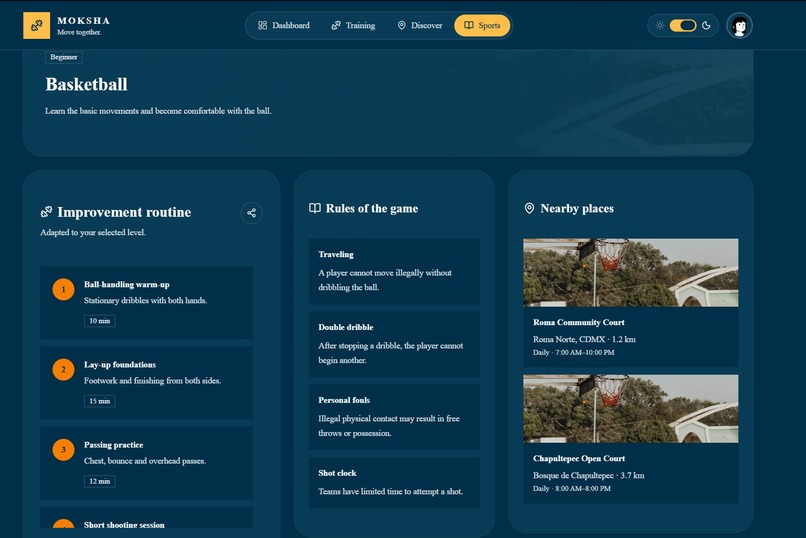
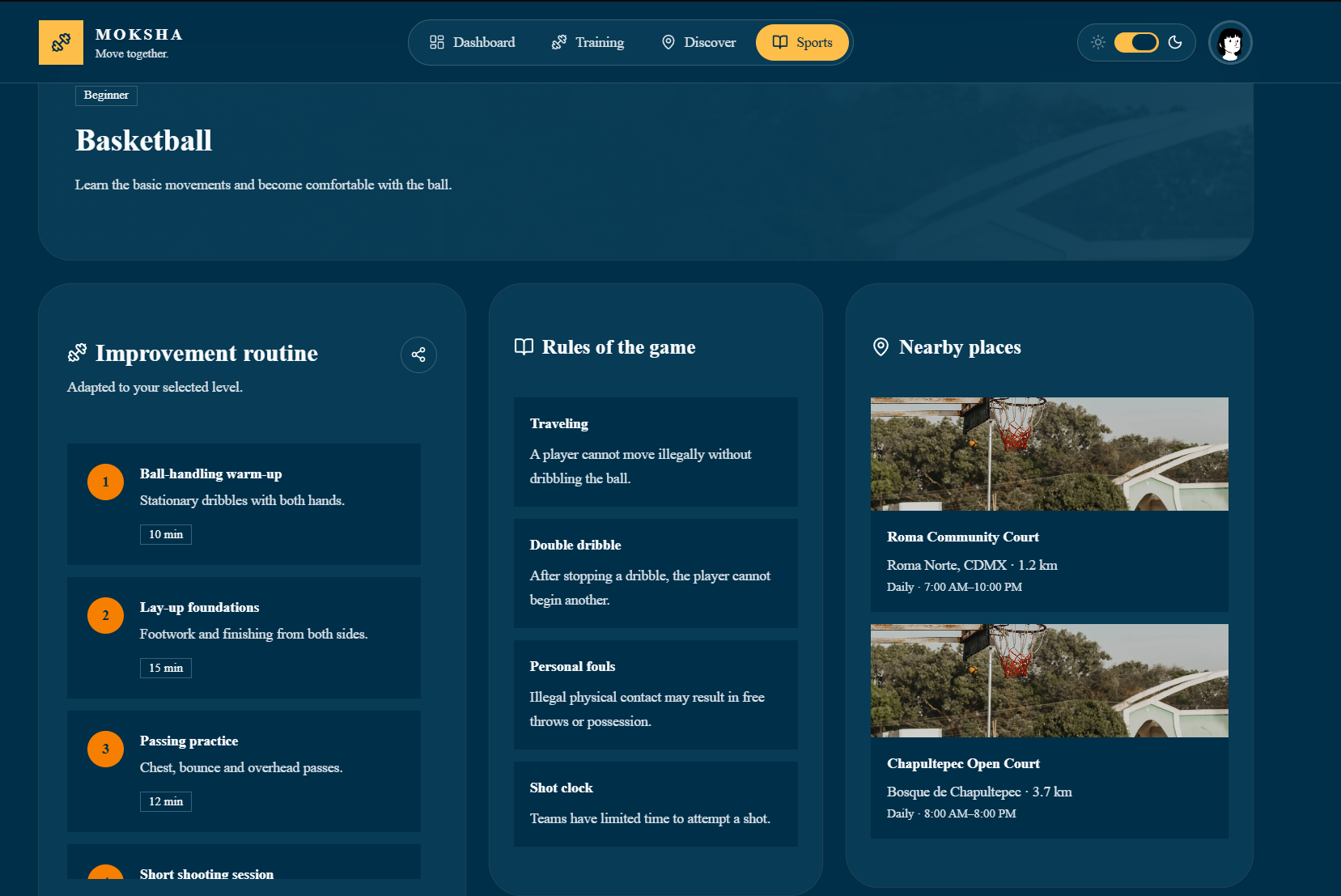
Sport Page part I (darkmode)
-
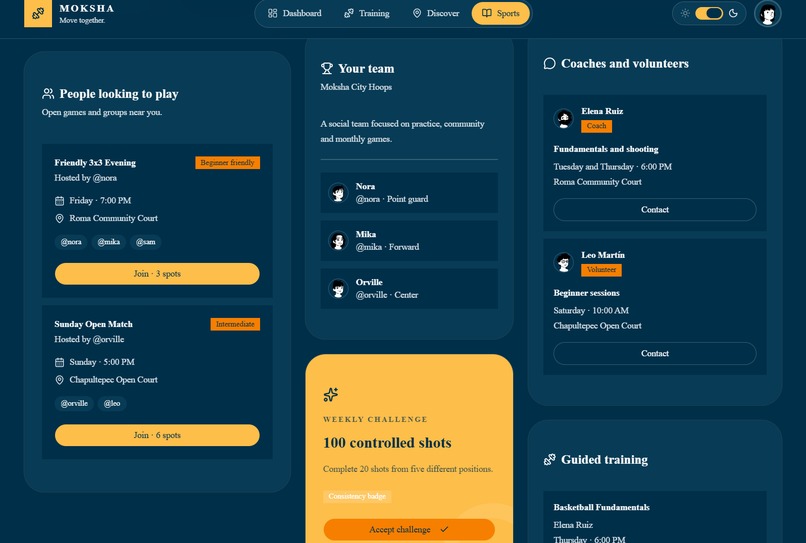
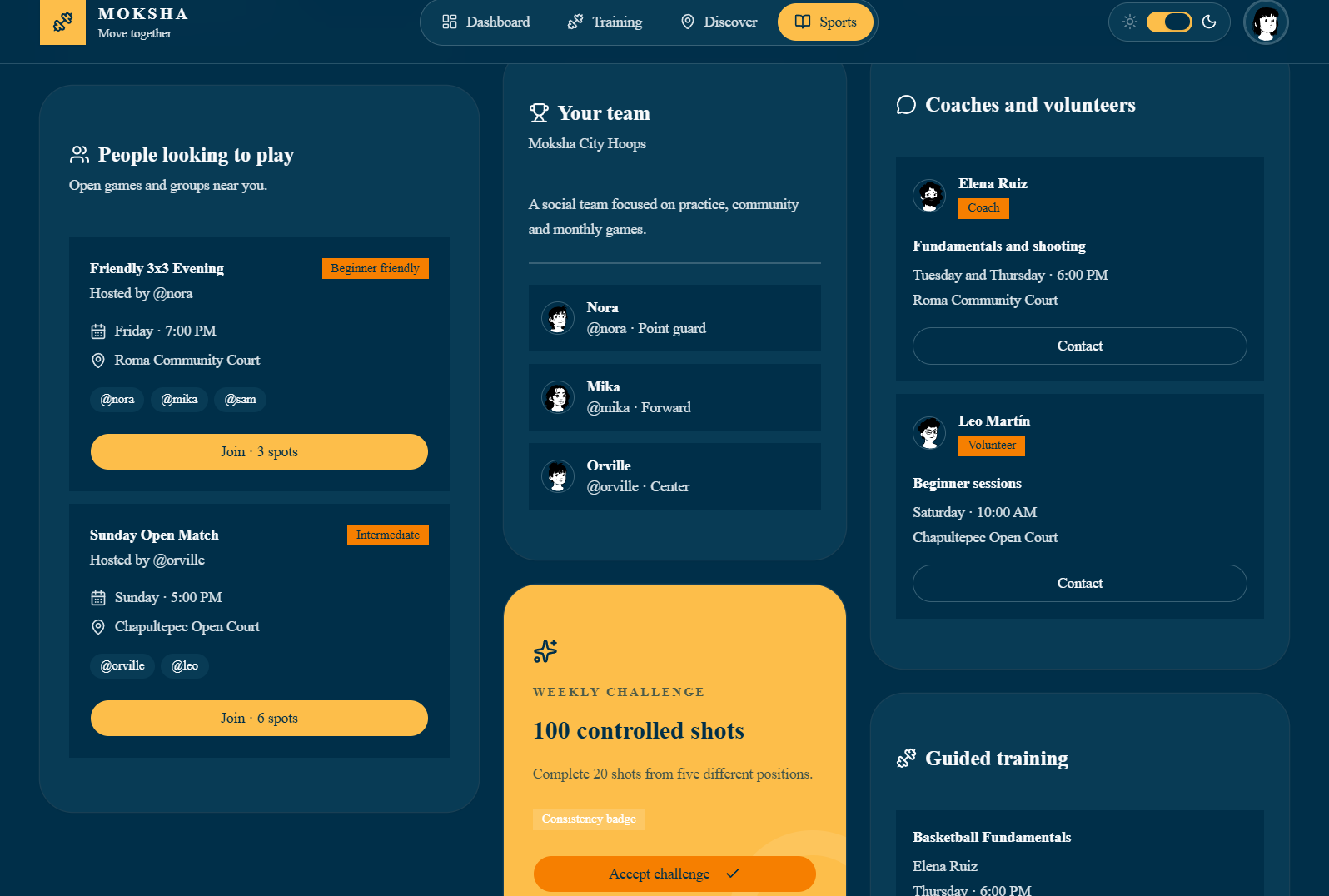
Sport Page part II(darkmode)
-
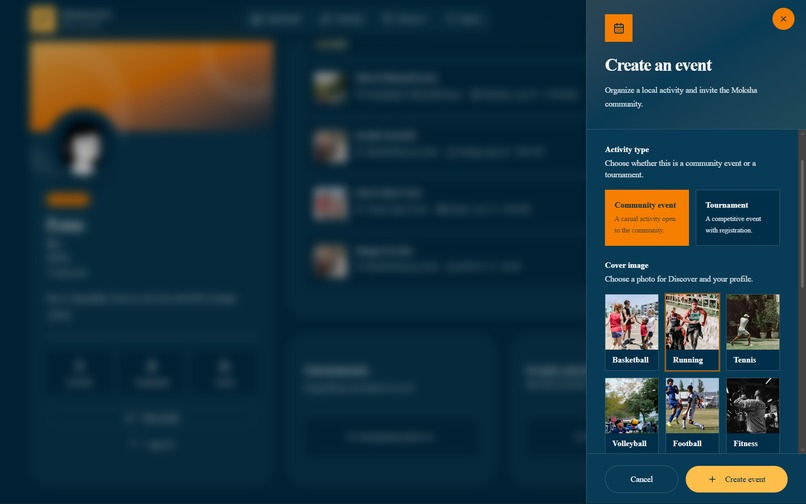
Host an event | tourment
-
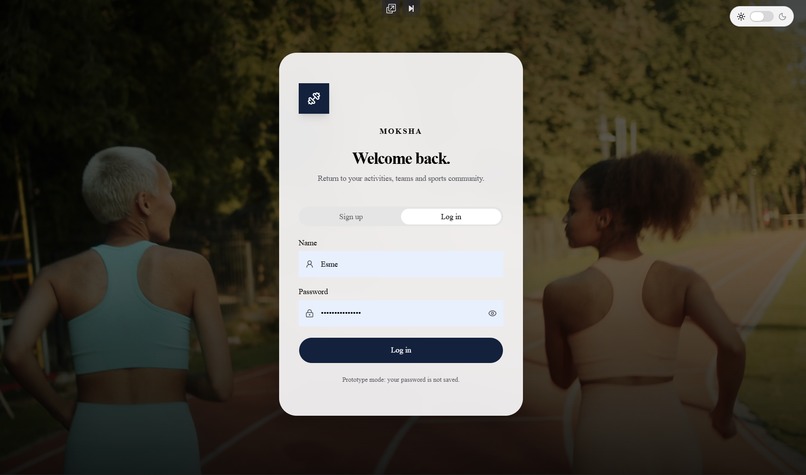
Log in | Sign up (light mode)
-
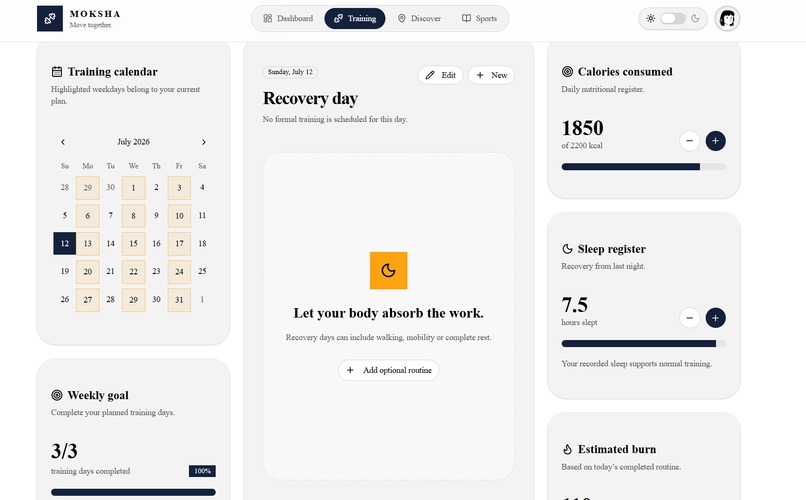
Training Page (light mode)
-
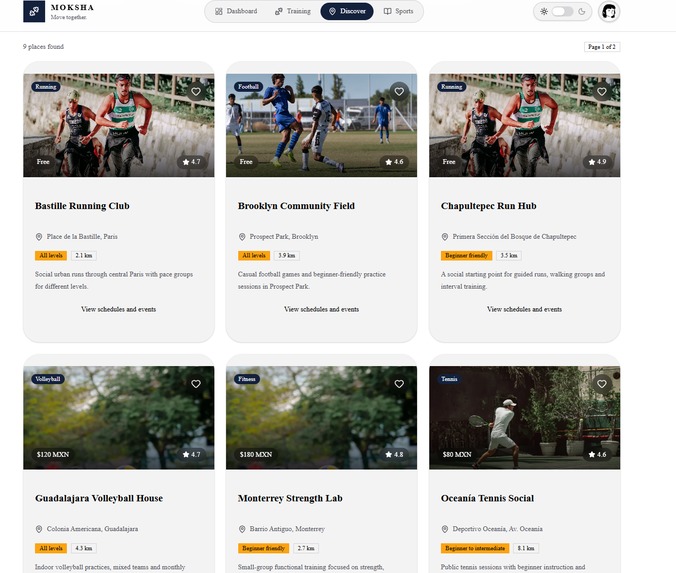
Discover Page (light mode)
Inspiration
My main inspiration came from a simple idea: helping people who want to meet others, stay active, and play sports close to home.
Sometimes there are hidden or overlooked places that could become recreational spaces, but people do not know they exist. At the same time, information on social media is often scattered, and Google results are not always clear or up to date. Some places may have changed, closed, or stopped offering certain activities.
I wanted to create a platform where people could discover nearby places to play sports, join a community, and feel motivated to improve or reconnect with the sport they love, regardless of their background or social class.
What it does
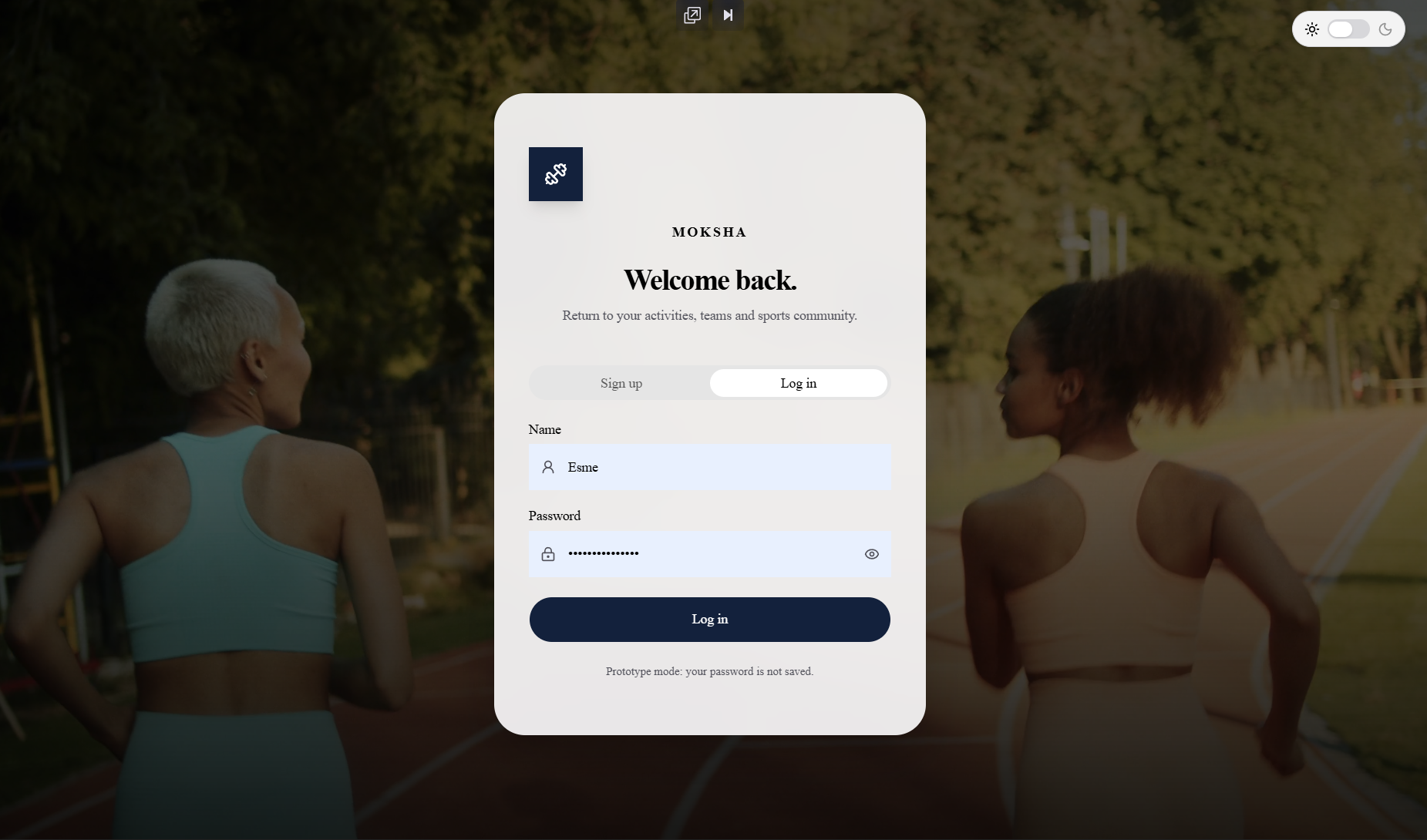
Moksha connects athletes and people who want to start playing a sport but do not know where to begin.
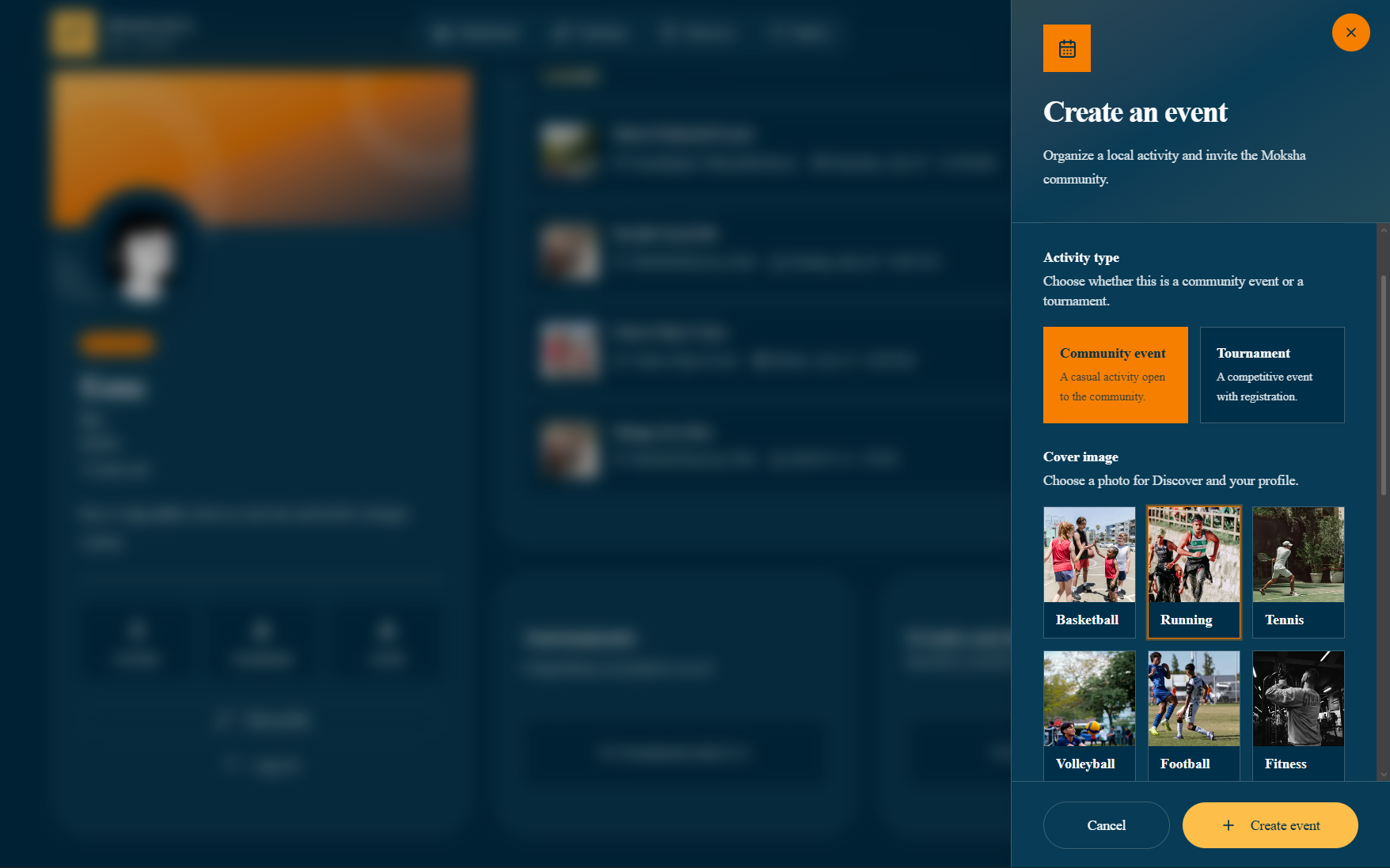
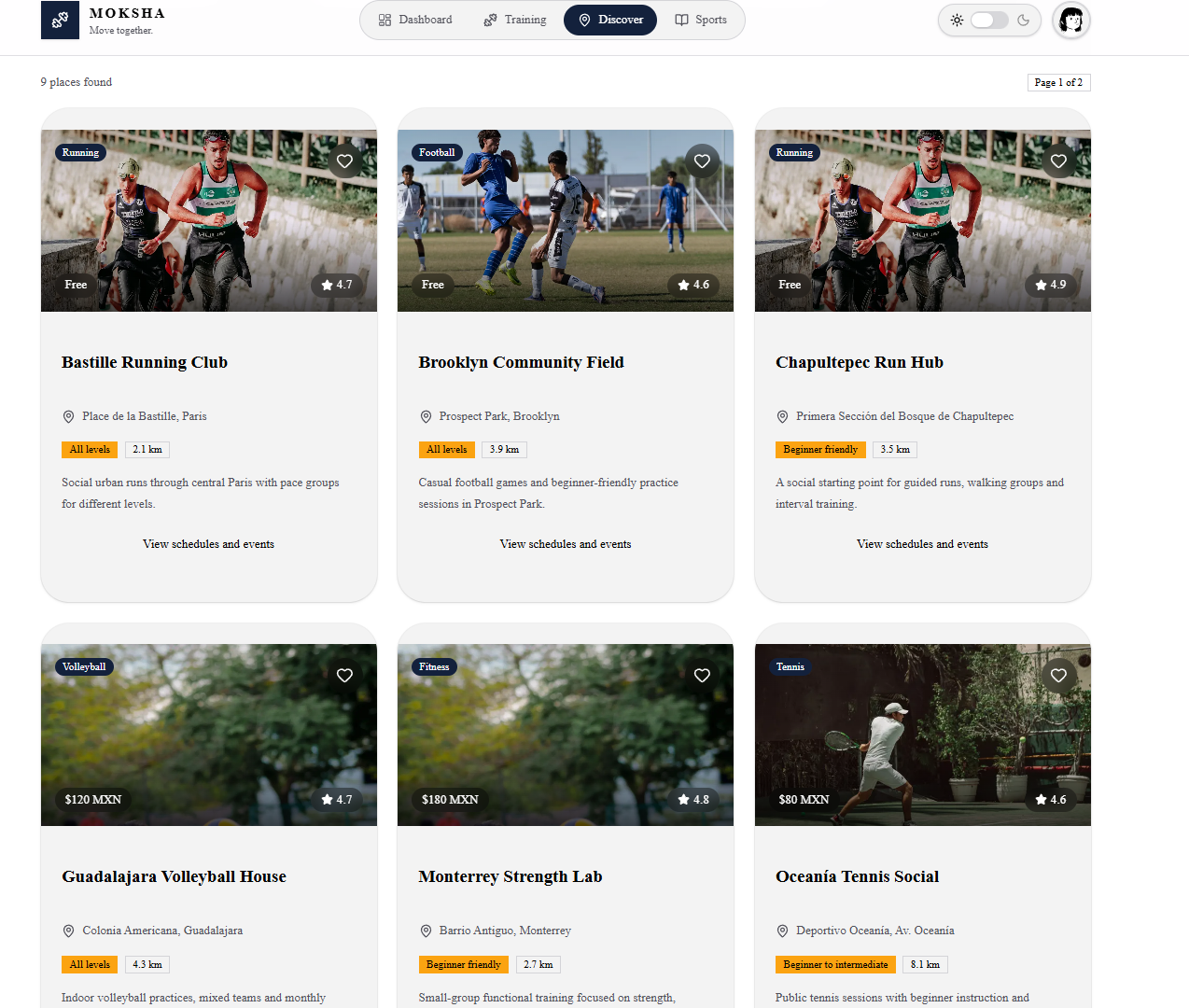
Users can discover nearby sports venues, explore activities, join community events, and create their own events or tournaments. The platform can also be useful while traveling, allowing users to continue practicing their favorite sport and meet new people in another city or country.
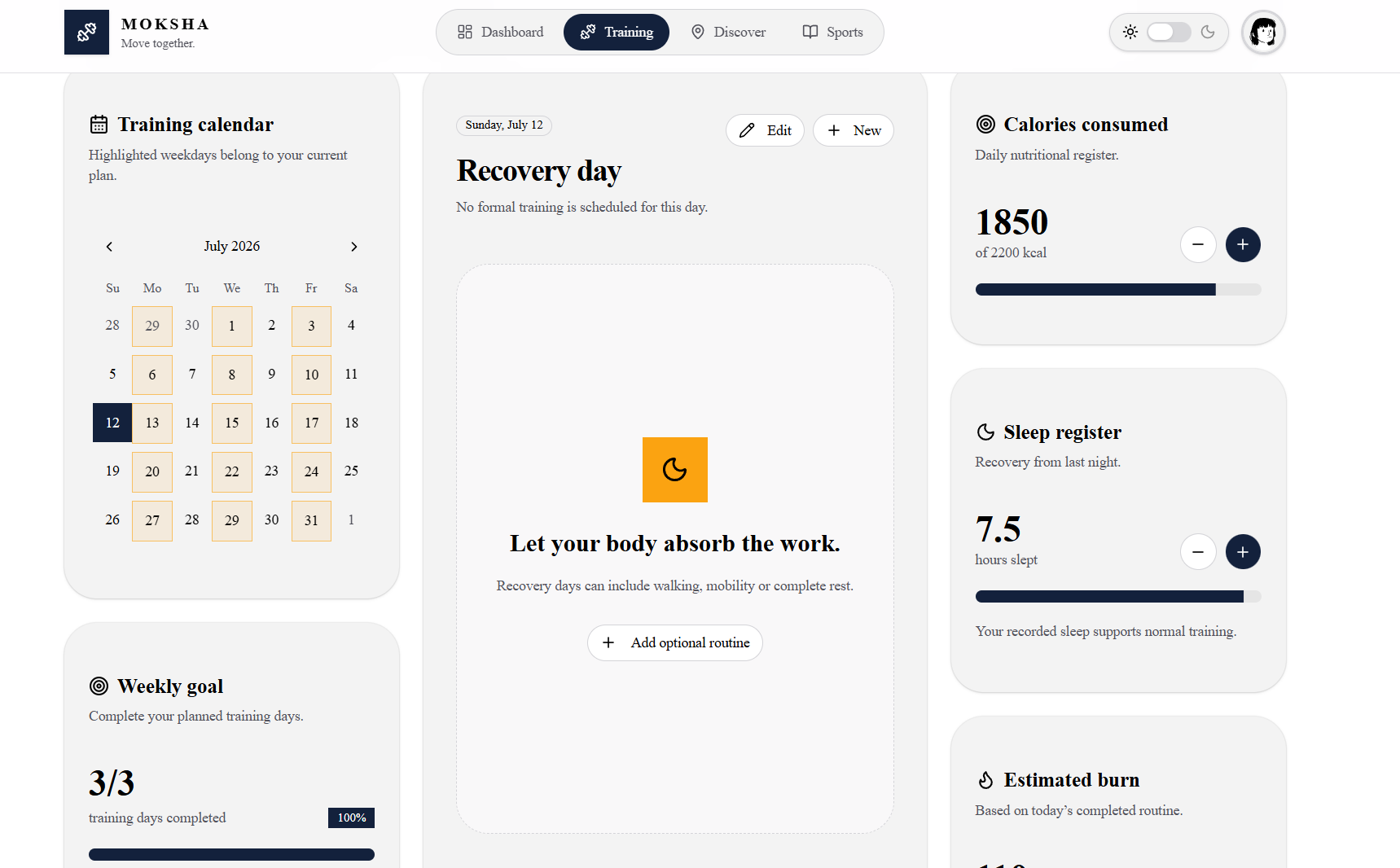
For users interested in fitness and training, Moksha also includes workout routines and progress tracking. The goal is to make the first step easier by giving users a clear place to begin.
How we built it
Moska was build using Next.js, React, TypeScript, Tailwind CSS, and shadcn/ui. Next.js was used to organize the different sections of the platform, for the backend I used API routes with Next.js and connected the application to MongoDB Atlas. Due this's a prototype, some training and progress features currently use demo data.
Challenges we ran into
My biggest challenge was I decided to build a project on my own(personally, I wanted to step out of my comfort zone). I do not have much experience yet, and I am still developing the technical skills needed to turn all my ideas into a complete product within a limited amount of time. However, the idea motivated me enough to take the risk and try.
The backend was especially challenging. This was my second time working with MongoDB, and I struggled to understand how the database connection, collections, API routes, and data updates worked together.
Another challenge was controlling the scope of the project. As I continued building, I kept discovering new problems, possible improvements, and additional features. I had to learn how to prioritize the most important parts of the prototype instead of trying to build everything at once.
Accomplishments that we're proud of
On a personal level, I’m proud to have completed a solo project for a hackathon and to have turned an idea into something tangible.
Although at first I felt I lacked experience and creativity, developing Moksha has shown me that I’m capable of creating an app with a clear purpose and a strong visual identity.
I’m also proud that I dared to work with technologies that forced me to learn. The project helped me understand my own idea more clearly and showed me just how much I can improve with practice.
And most importantly: I created a prototype that looks like a real product, rather than just a collection of disconnected screens. I wanted to step out of my comfort zone.
What we learned
I learned a lot about building applications with Next.js, especially how the App Router organizes pages, layouts, dynamic routes, and API endpoints.
I had worked with routing before, but this project helped me understand how newer frameworks change the way applications are structured for better organization and optimization.
I also learned how to use shadcn/ui to create reusable and consistent interface components.
MongoDB was one of the most difficult parts of the project. I still have a lot to learn about its features, database modeling, and deployment, but working with it made me curious enough to continue studying it through documentation and tutorials.
Personally, MongoDB was not my favorite technology during the hackathon, but that was exactly why I wanted to try it. I wanted to challenge myself with a different database and become more comfortable working outside my current skill set.
Finally, I learned that creating a good prototype is not about implementing every possible feature. It is about understanding the problem, choosing the most important experience, and building enough to communicate the vision clearly.
What's next for Moksha
The next step for Moksha would be improving the accuracy of venue information through community updates and verification.
I would also like to add real image uploads, interactive maps, location-based recommendations, user messaging, event notifications, tournament brackets, and more complete fitness progress tracking.
In the future, Moksha could work with local communities, schools, gyms, sports clubs, and public institutions to identify underused recreational spaces and make sports more accessible.
The long-term vision is for Moksha to become a global community where everyone can find a place to move, connect, and begin their own transformation.
Built With
- api
- css
- lucide
- mongodb
- next.js
- react
- shadcn/ui
- taildwind
- typescript

Log in or sign up for Devpost to join the conversation.