-
-
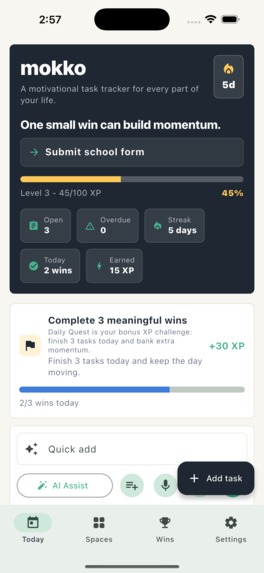
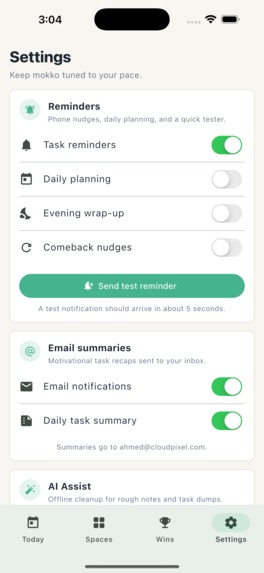
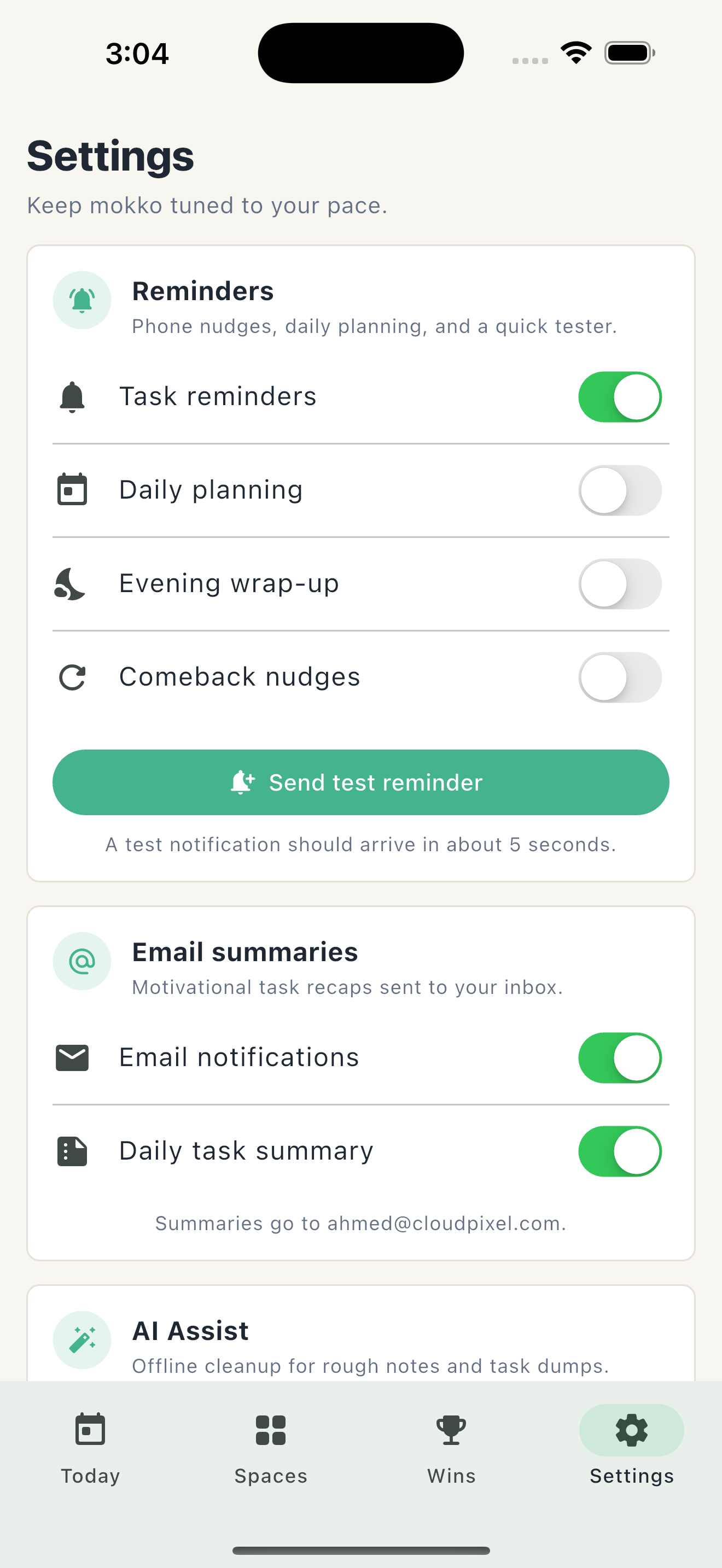
AI Assist, daily focus, XP, streaks, and quests
-
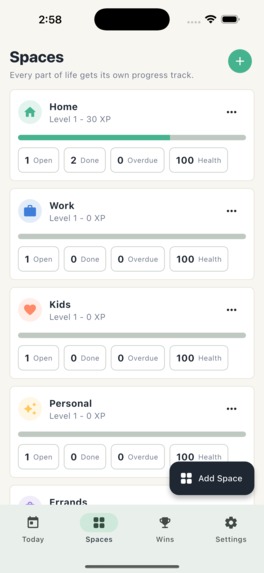
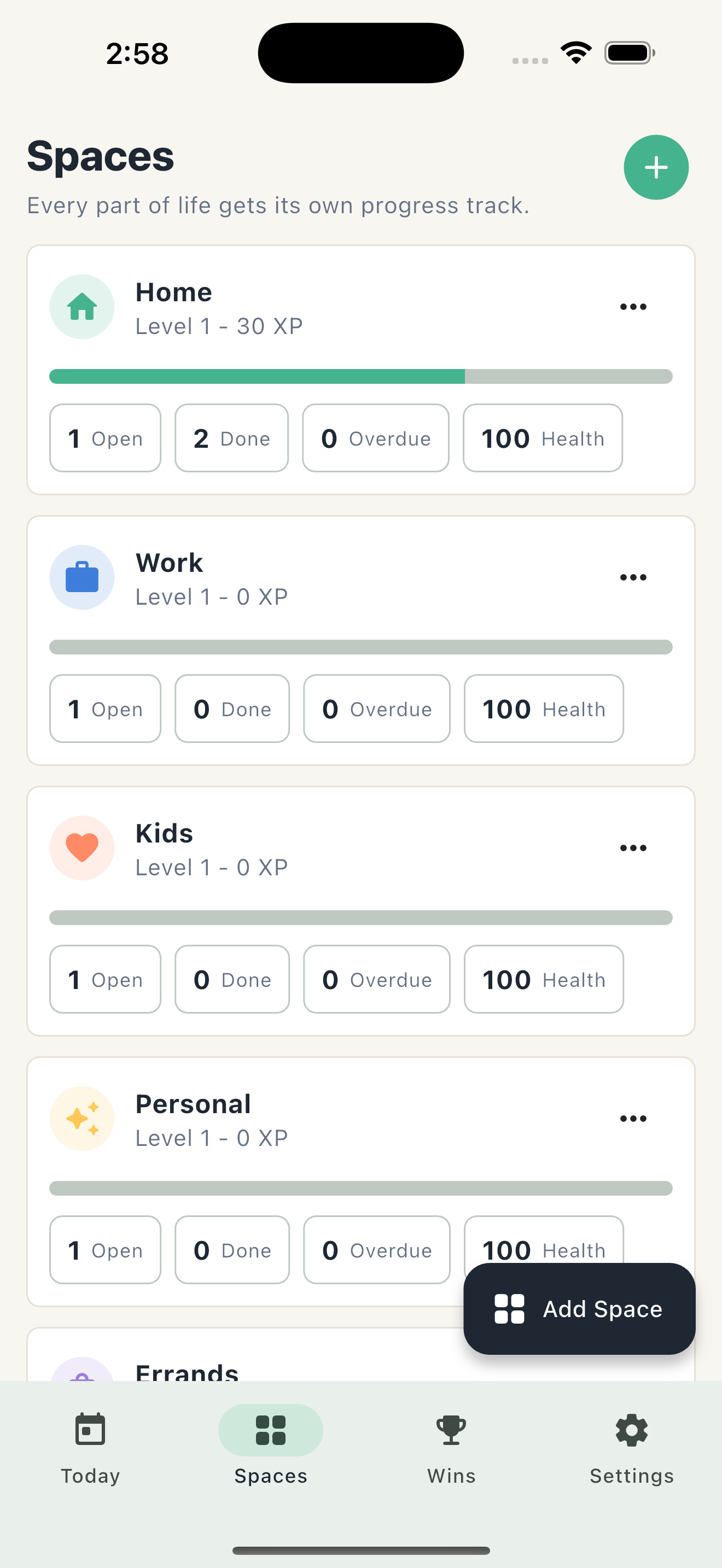
organization concept
-
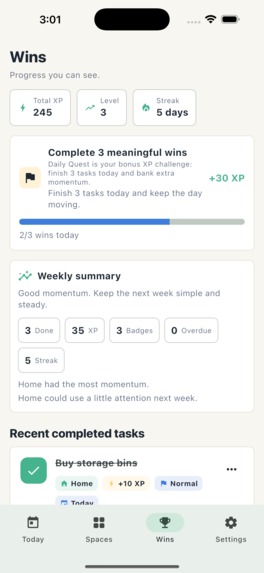
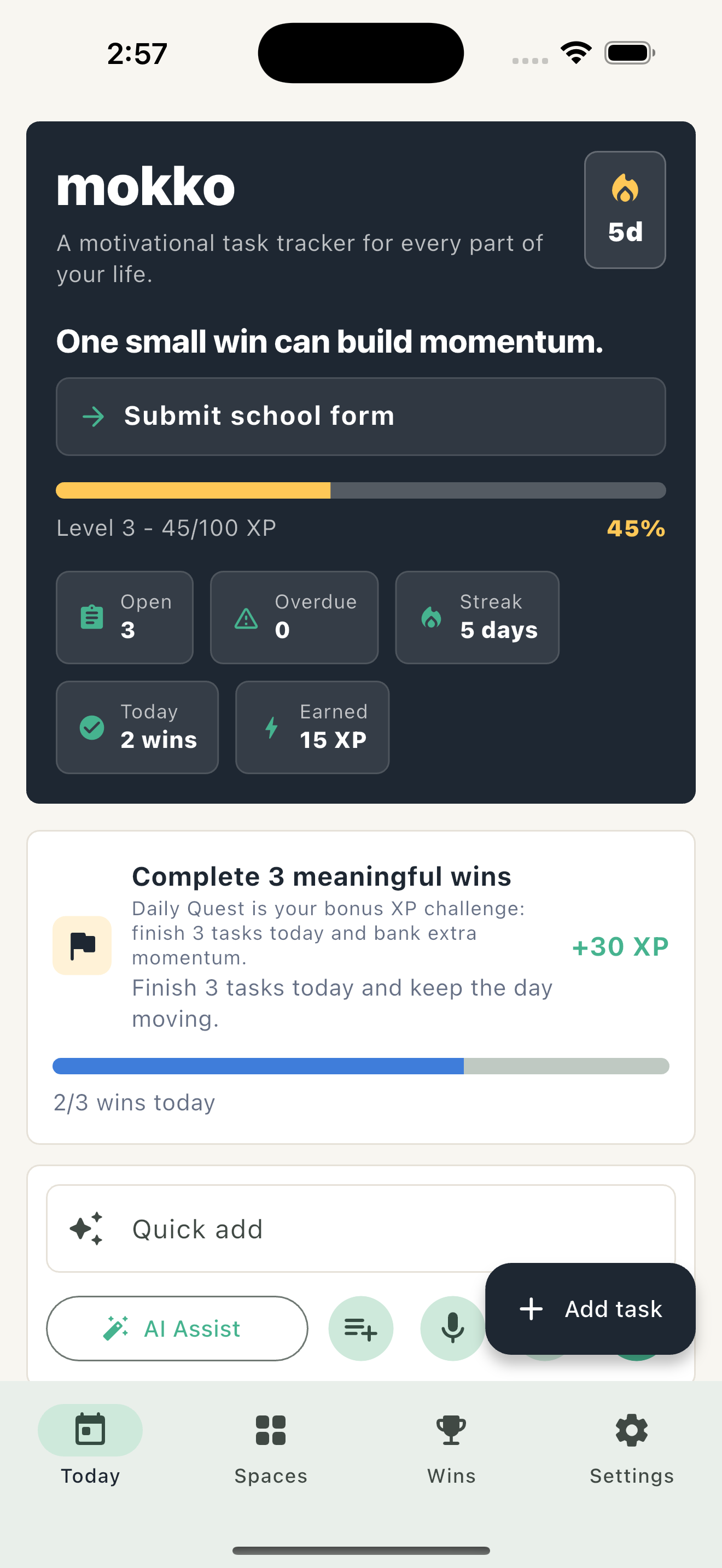
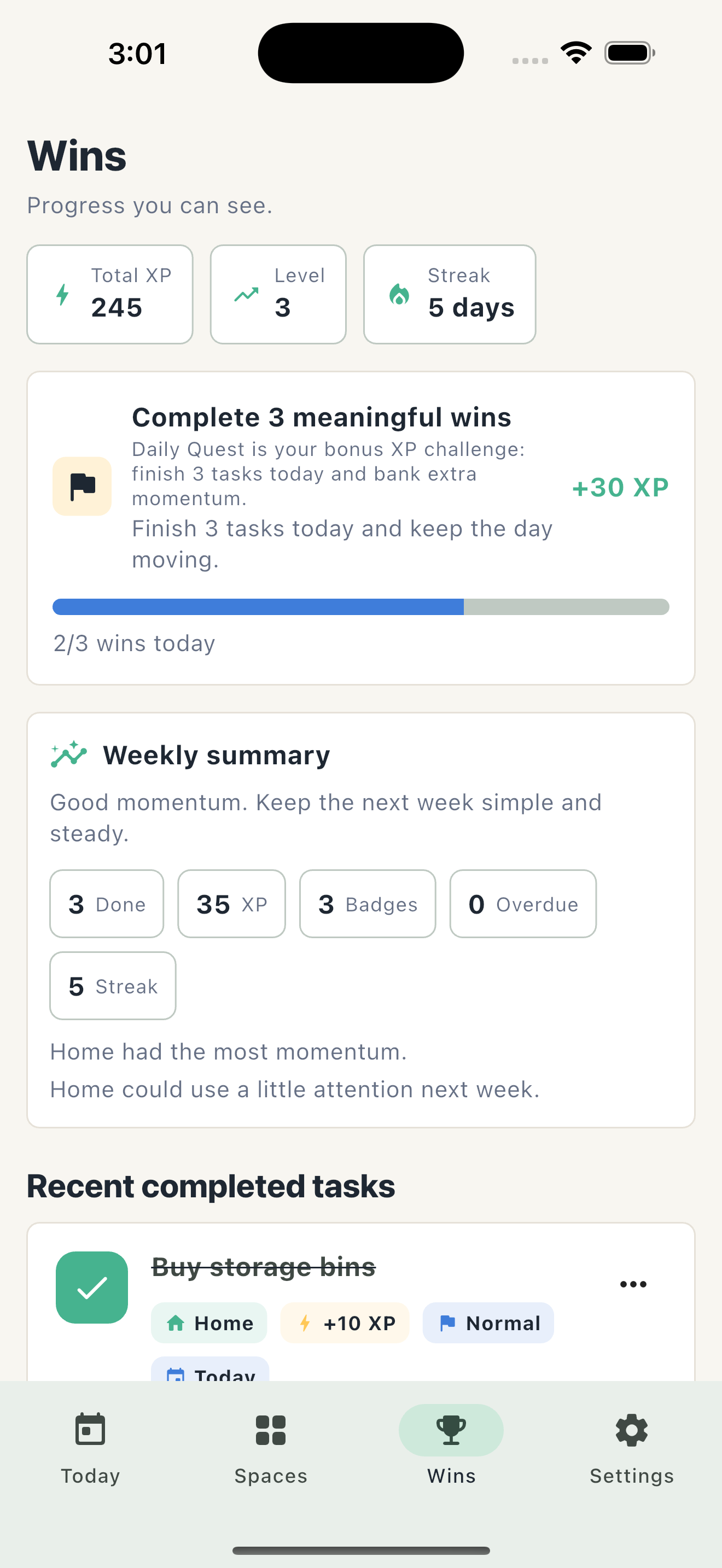
Shows gamification, progress, streaks, and weekly summaries
-
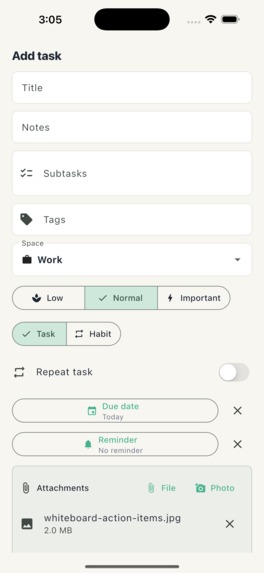
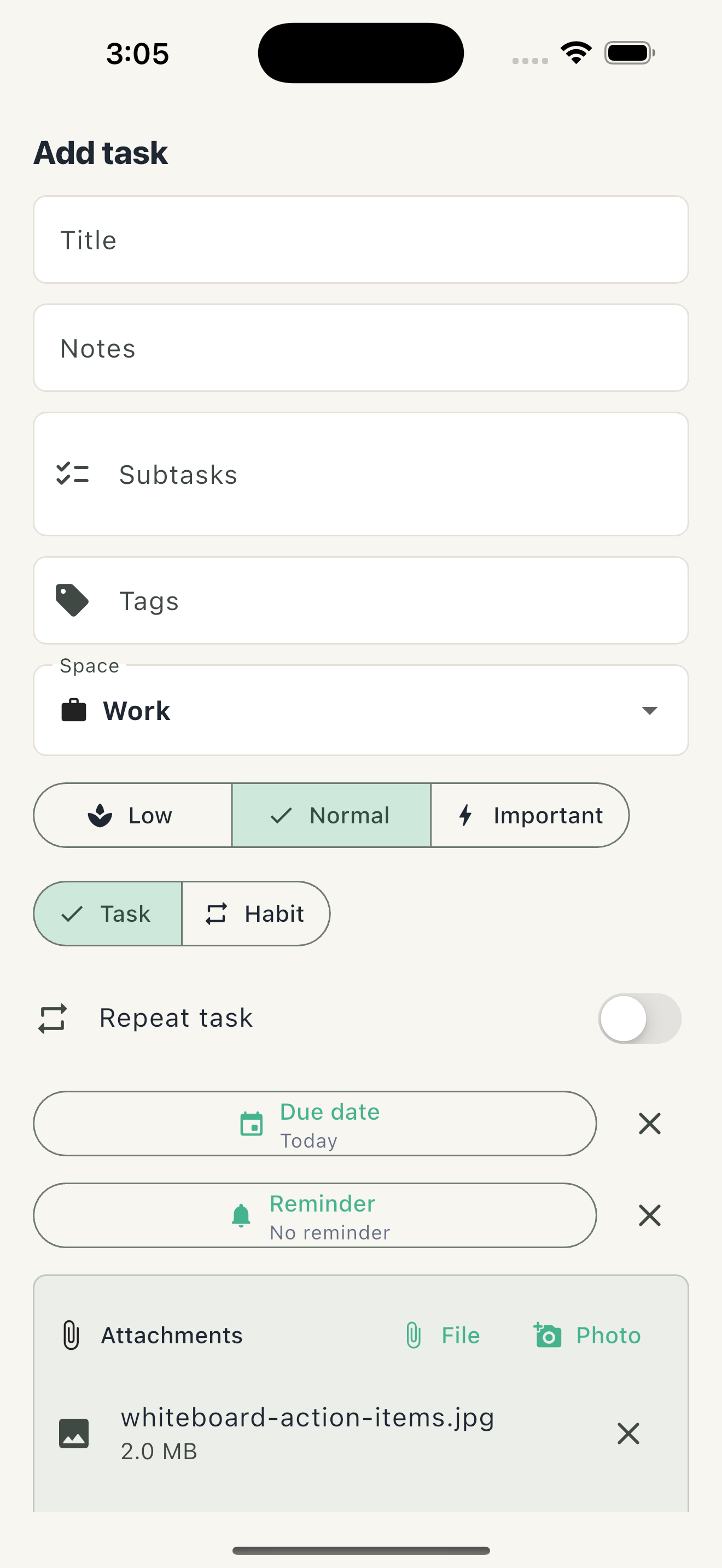
shows the depth of task creation.
-
Inspiration
Most task managers are good at storing work, but they often make an already overwhelmed person feel even more overwhelmed. Life does not arrive as one clean list—it arrives as work deadlines, errands, family responsibilities, personal goals, habits, and half-formed thoughts competing for attention.
I built mokko to make that chaos feel manageable. Instead of treating productivity as a spreadsheet, Mokko organizes life into Spaces such as Home, Work, Kids, Personal, and Errands. It then turns vague intentions into achievable next steps and makes progress feel rewarding.
The goal is simple: help people decide what to do next, follow through, and feel good about moving forward.
What it does
mokko is a motivational task manager for iOS and Android (Android not published yet). Its core experience combines practical planning with positive reinforcement:
- Organize responsibilities into separate life Spaces.
- Capture tasks quickly using natural language or voice input.
- Use AI Assist to clean up task notes, extract actionable tasks, suggest subtasks, and create a focused daily plan.
- Break intimidating goals into smaller, concrete actions.
- Track habits, recurring tasks, reminders, priorities, and deadlines.
- Group related work into Missions with visible progress.
- Earn XP, build streaks, unlock badges, and celebrate completed work.
- Share Spaces and collaborate through secure invitation links.
- Review weekly progress without being punished for unfinished work.
- Turns tasks into a cool game (gamification)
mokko’s AI is deliberately assistive. It proposes plans and task structures, while the user remains in control of what gets created or changed.
How I built it
mokko is a cross-platform Flutter application built with an MVVM-inspired architecture. The interface stays focused on presentation, while view models coordinate user actions and independent services handle task management, habits, recurring schedules, gamification, notifications, collaboration, and AI assistance.
Firebase provides authentication, cloud persistence, storage, serverless functions, messaging, and secure collaboration workflows. mokko supports Google and Apple sign-in, local notifications, deep links, hosted invitation fallbacks, subscriptions, and offline-friendly state handling.
The AI layer uses structured prompts and expects machine-readable JSON rather than unrestricted prose. It supports three main workflows:
- Turning informal text into structured tasks with titles, Spaces, dates, reminders, priorities, tags, and subtasks.
- Selecting a short daily focus list from open, overdue, important, and quick-win tasks.
- Breaking a large or ambiguous task into three to five practical next actions.
AI calls sit behind a dedicated service boundary with strict timeouts, output validation, confidence handling, and deterministic fallbacks. If the model is unavailable or returns unusable output, mokko can still parse common task language and generate useful plans locally. This keeps the app responsive and prevents AI from becoming a single point of failure.
Building with Codex and GPT-5.6
mokko existed before Build Week as a flutterflow app, so I focused on rebuilding it from scratch extending and hardening it into a complete, testable product during the submission period. Just pushed for Apple review on 7/20/2026
I collaborated with Codex and GPT-5.6 across the repository rather than using them only for isolated code generation. Codex helped me inspect the architecture, trace behavior across Flutter, Firebase, iOS, Android, and the hosted web fallback, and implement coordinated changes without losing sight of the overall product experience.
During Build Week, this collaboration helped me:
- Rebuild the entire app from scratch.
- Repair production Google and Apple authentication flows.
- Improve onboarding and first-run state behavior.
- Fix subscription and task-creation edge cases.
- Harden shared-Space invitation links and email delivery.
- Add App Store and Google Play fallbacks for mobile deep links.
- Prepare the Android release configuration and app-link verification.
- Add an in-app account-deletion workflow required for production readiness.
- Expand automated coverage around onboarding, gamification, identifiers, and critical user flows.
- Move the product to a review-ready
1.4.0build.
Codex accelerated investigation and implementation, but I retained responsibility for the key product and engineering decisions: keeping AI suggestions reversible, preserving user control, designing graceful fallbacks, separating business logic from UI code, and prioritizing a coherent mobile experience over a collection of disconnected features. A human in the loop model.
Challenges
The hardest challenge was coordinating behavior across multiple systems. A shared invitation, for example, involves Firebase security, serverless functions, email delivery, universal links, Android app links, authentication state, and a browser fallback. A failure in any one layer can make the entire experience appear broken.
Another challenge was making AI output dependable enough for a task manager. Generated text can be helpful but inconsistent, while task data requires predictable fields and valid dates. I addressed this by requesting structured JSON, validating every response, limiting latency, deduplicating suggestions, and falling back to deterministic logic whenever confidence was low.
Production readiness introduced its own challenges. Authentication behaves differently across local development, TestFlight, and release builds. Subscription state must remain consistent across platforms. Deep links must work whether the app is installed or not. Account deletion must remove both authentication and associated cloud data safely. Codex was especially useful for tracing these cross-cutting flows and identifying changes that needed to happen together.
What I learned
I learned that the best use of AI in a productivity product is not to make decisions for people—it is to reduce the effort required to reach a good decision.
I also learned that an AI feature becomes much more valuable when it is surrounded by strong product engineering: clear confirmation states, deterministic fallbacks, privacy-conscious boundaries, validation, and an interface that explains what will happen next.
Finally, building with Codex showed me how an agent can act as a repository-level collaborator. Its greatest value was not producing individual snippets; it was maintaining context across the mobile client, backend, tests, release configuration, and product requirements while helping me move from a working prototype toward a polished application.
What’s next
Next, I want to expand mokko’s AI assistance into weekly reflections, adaptive Mission planning, and more personalized daily guidance. I also plan to continue improving shared Spaces so families and small teams can build momentum together without turning productivity into surveillance or unhealthy competition.
mokko’s long-term vision is to become a calm, encouraging layer between everything a person needs to do and the next step they can realistically take.
Built With
- amazon-web-services
- codex
- firebase
- ses


Log in or sign up for Devpost to join the conversation.