Inspiration
Allergy labels are confusing, internet is unreliable, and privacy matters. I wanted a fast, offline, explainable way to see if a dish or product is safe—especially when traveling.
What it does
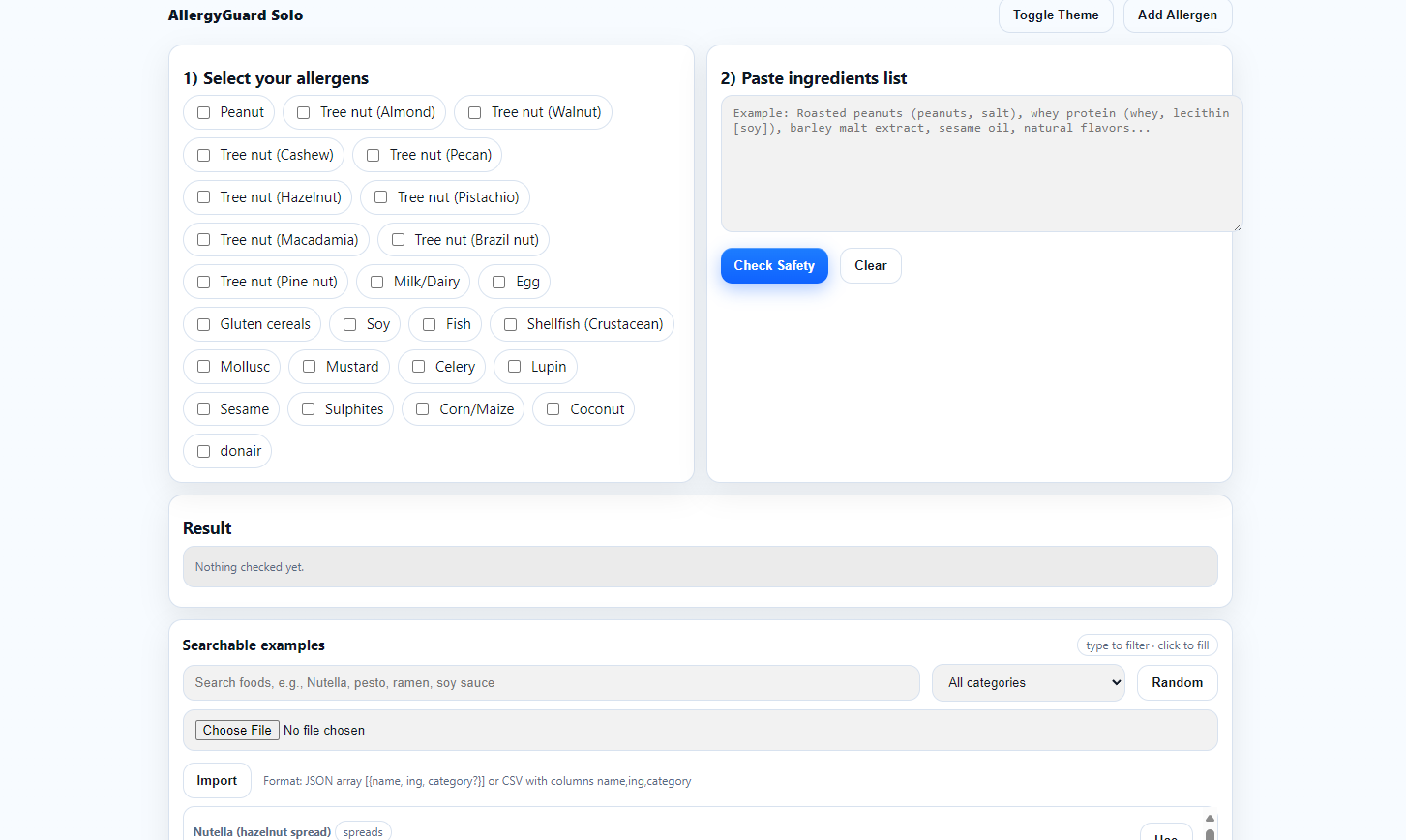
AllergyGuard Solo lets you pick your allergens, paste any ingredients list (or import large food lists), and get instant highlights plus a simple HIGH/MED/LOW risk hint—fully offline, no accounts.
How we built it
Vanilla HTML/CSS/JavaScript (no backend)
LocalStorage for preferences and example datasets (JSON/CSV import)
Allergen synonym maps + regex context windows (“contains/may contain/shared equipment”)
UI: light/dark mode, searchable examples, random pick, custom allergen creator
Example packs: 1,000 US/Canada foods + 1,000 Persian foods
Challenges we ran into
Balancing false positives vs. misses in messy label text
Designing explainable results (show the exact trigger terms)
Handling synonyms, regional terms, and E-numbers
Keeping everything fast and offline on mobile browsers
Accomplishments that we're proud of
Fully offline, privacy-first checker with clear, highlighted evidence
Context-aware risk scoring that judges can verify at a glance
Plug-and-play datasets (1000+ items) and custom allergen support
Simple, clean UX that works great on phones
What we learned
Explainability builds trust more than a black-box “safe/unsafe”
Small UX touches (search, examples, performance metric) speed up decisions
Language and regional ingredient variation matter a lot for coverage
What’s next for Mohammad Jowkari (AllergyGuard)
More language packs (FR-CA, ES), broader synonym libraries
Optional barcode lookup with an offline cache
Optional camera OCR module (still client-side)
Community-maintained allergen lists and sharable example packs
Accessibility polish (labels, keyboard nav) and performance tuning

Log in or sign up for Devpost to join the conversation.