-
-

Team Name, Project Name & Team Members
-
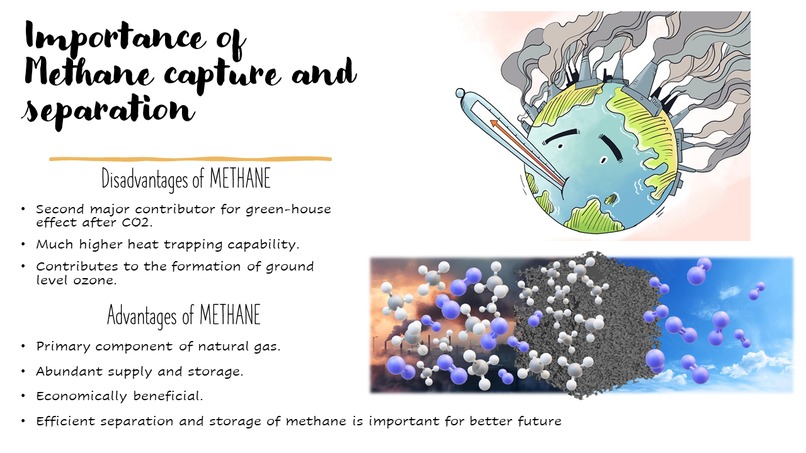
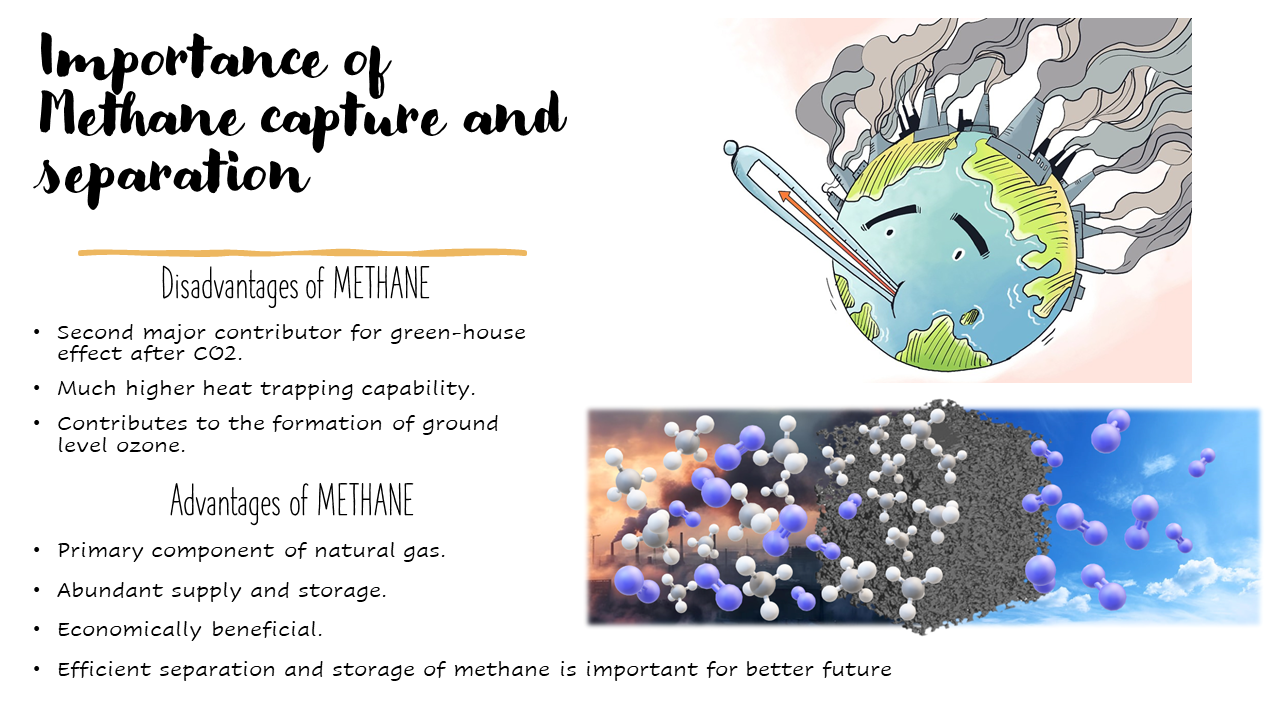
Methane - Bad & Good Impact on Earth
-
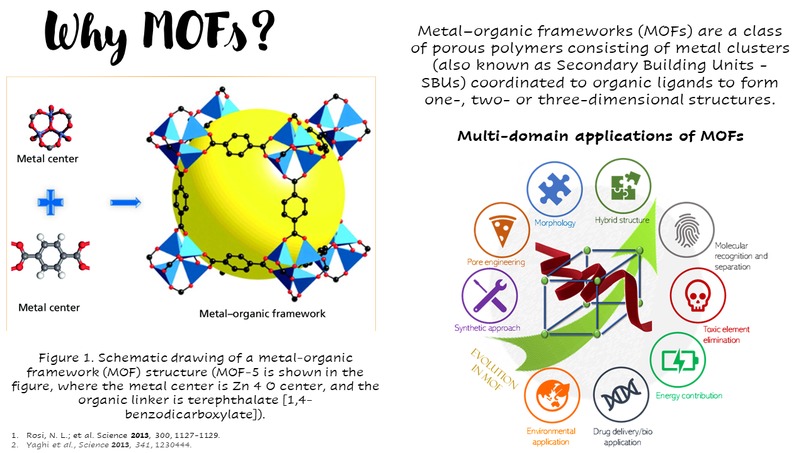
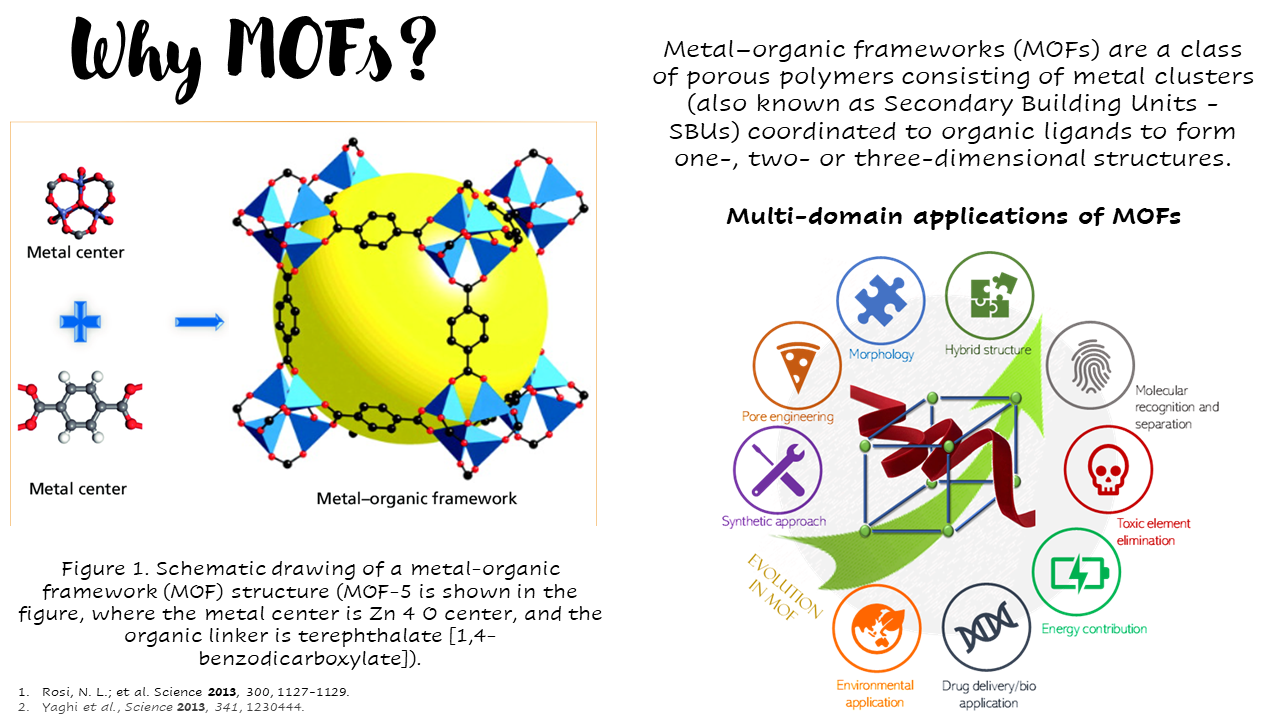
MOFs Can Be Used For Different Toxic Gas Separations
-
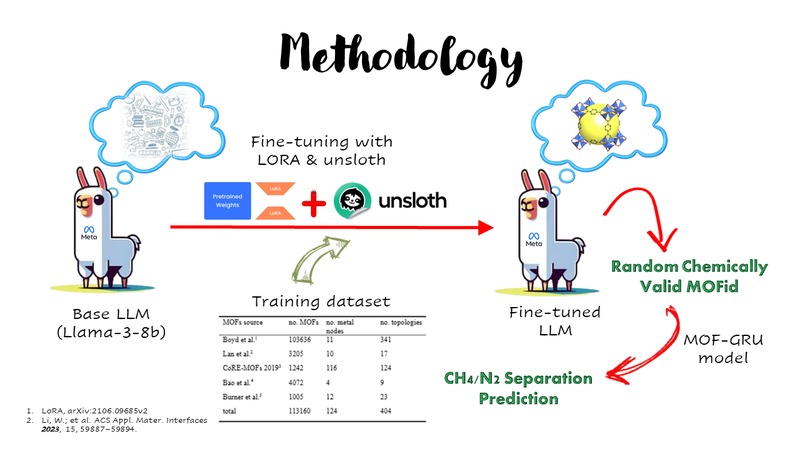
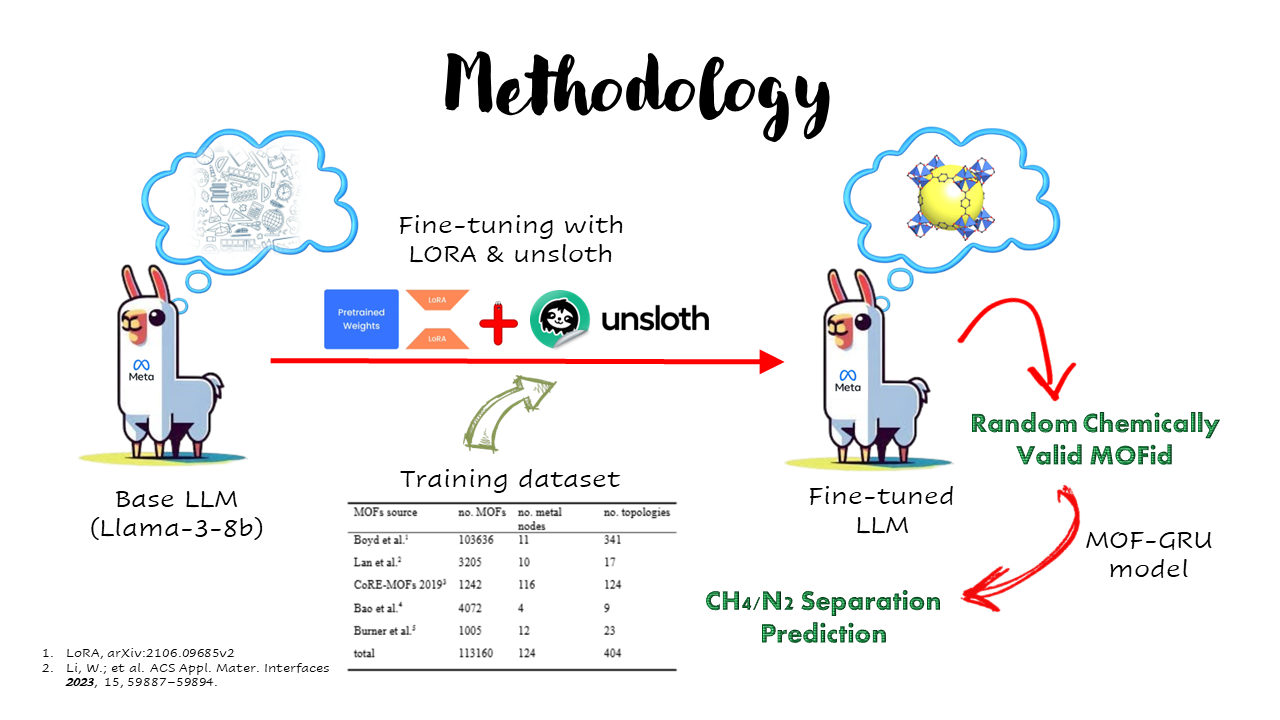
Methodology We Used While Fine-tuning Llama3
-
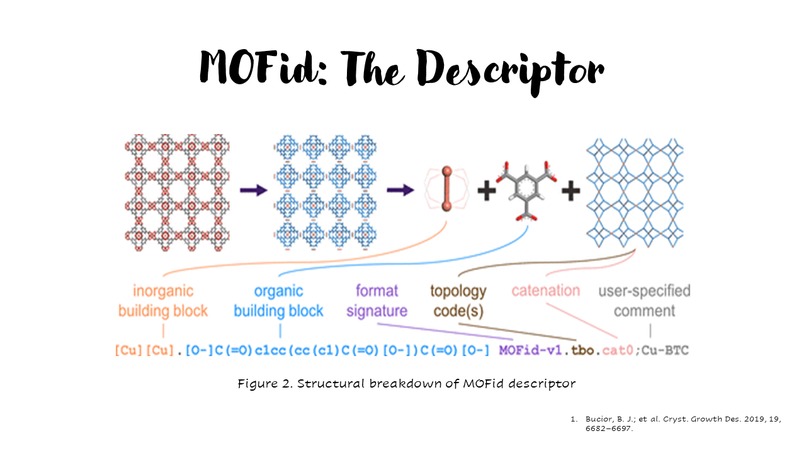
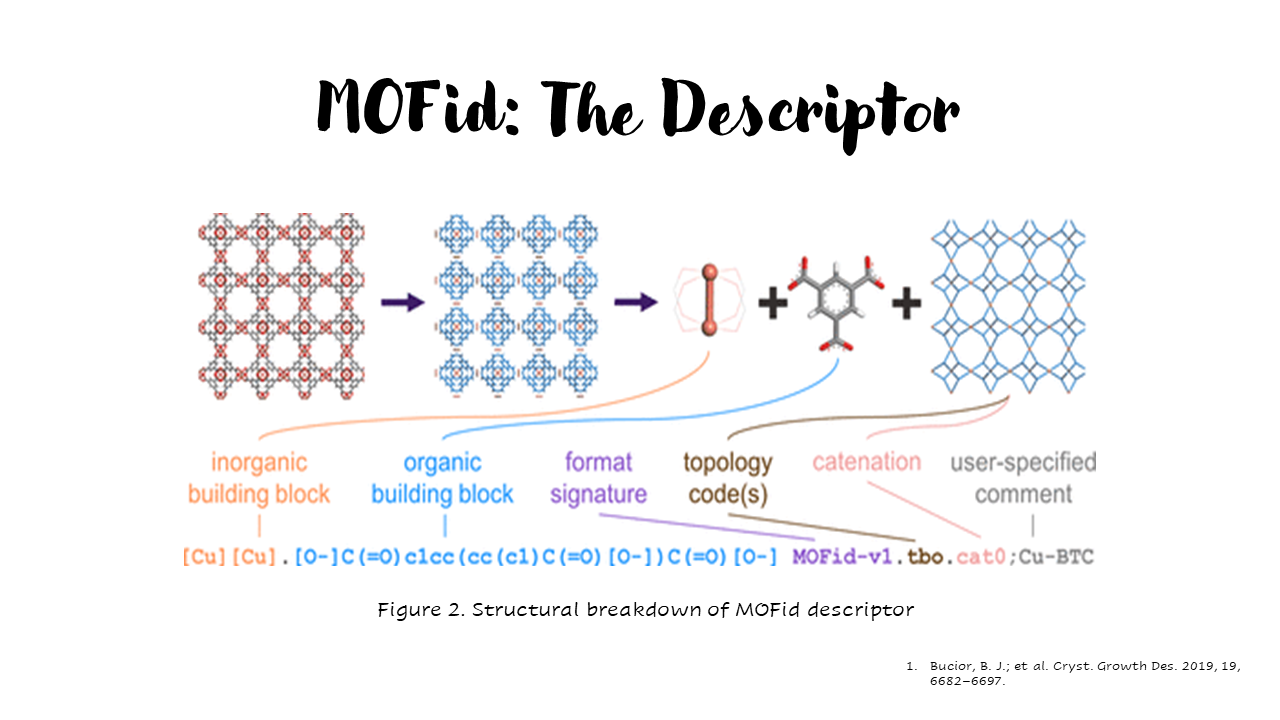
MOFid: Descriptor of a MOF
-
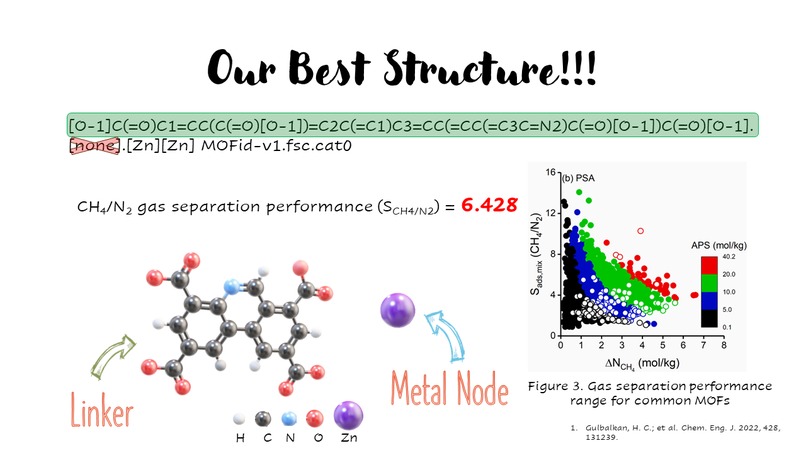
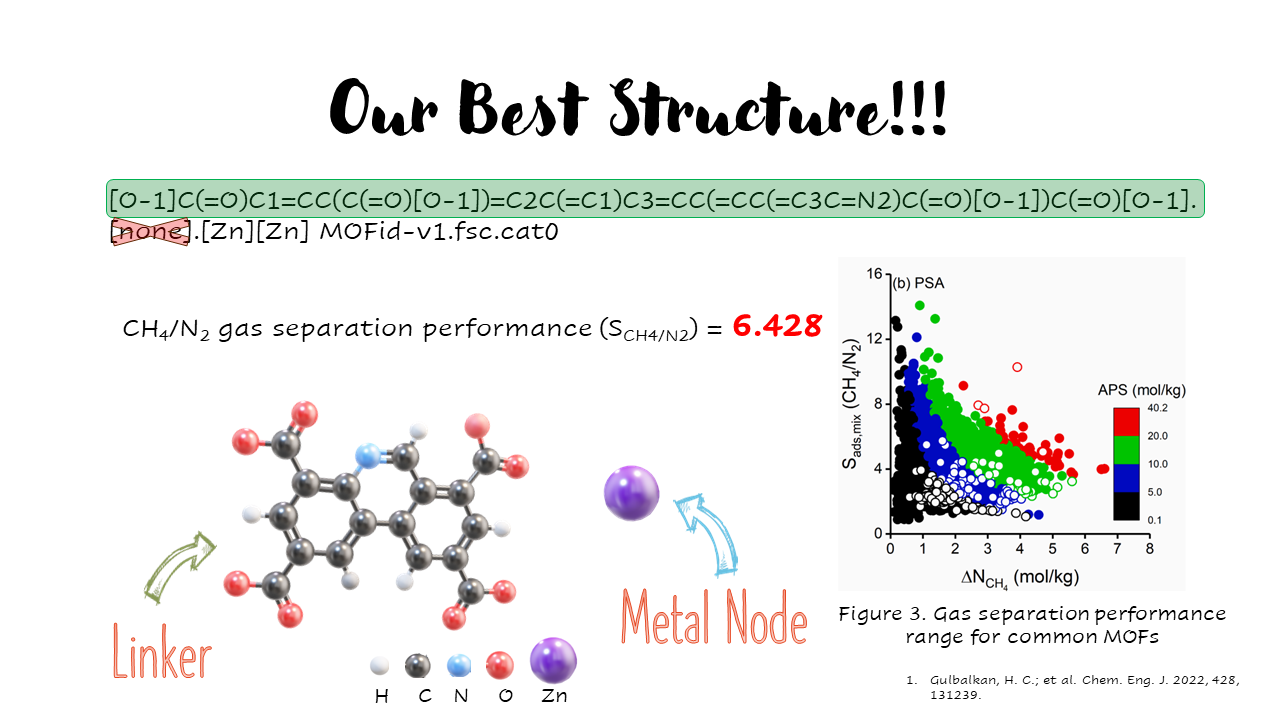
Best Structure of Our Predictions According to Methane/Nitrogen Gas Separation
-
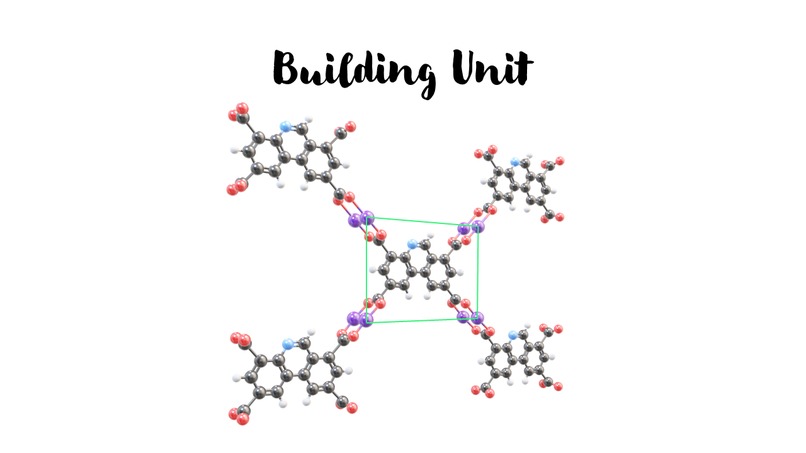
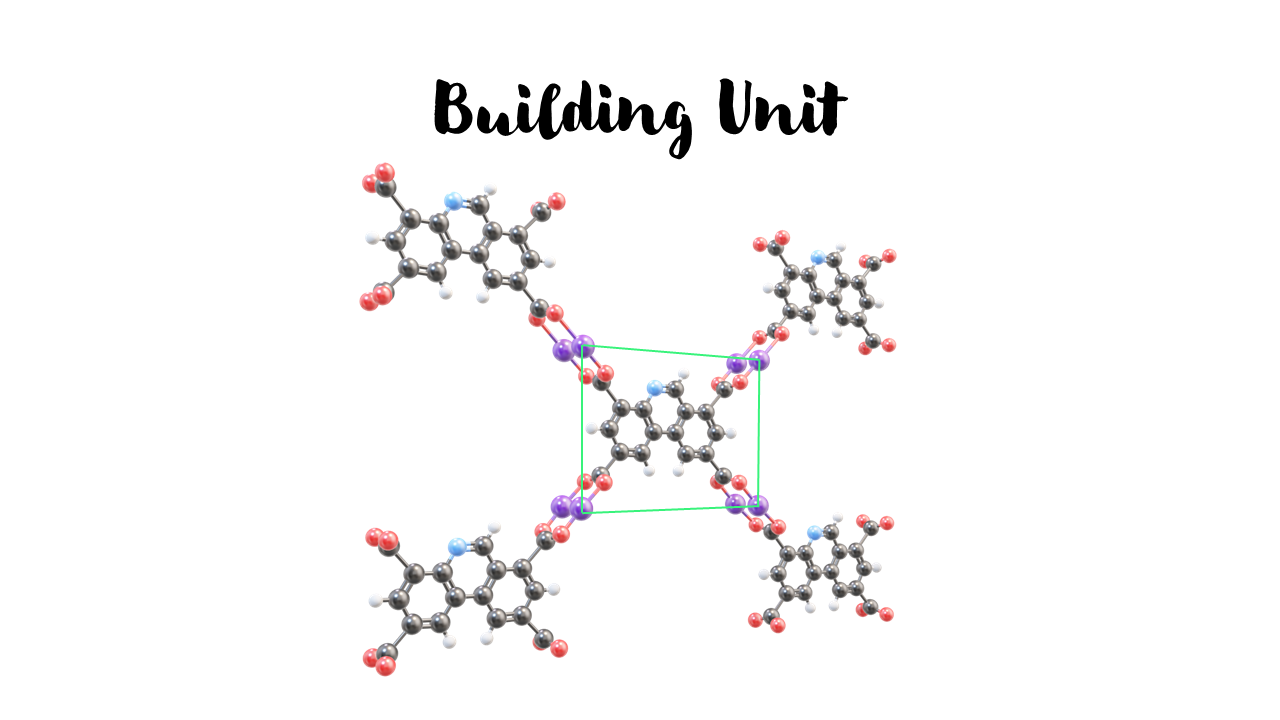
Unit Cell of Our Predicted Structure
-
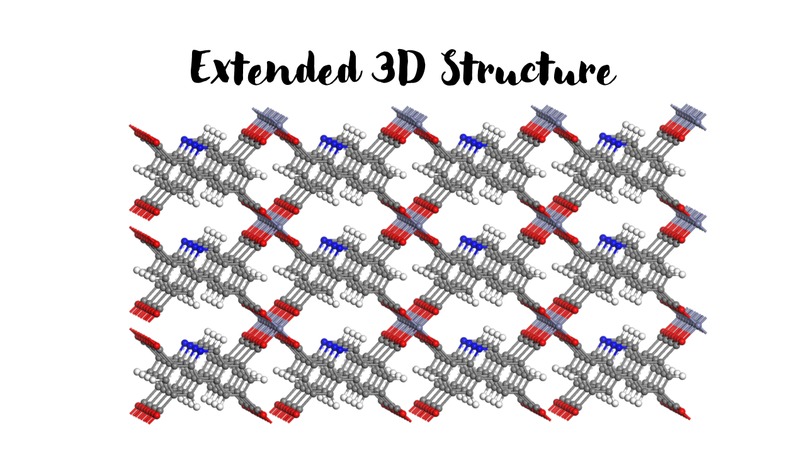
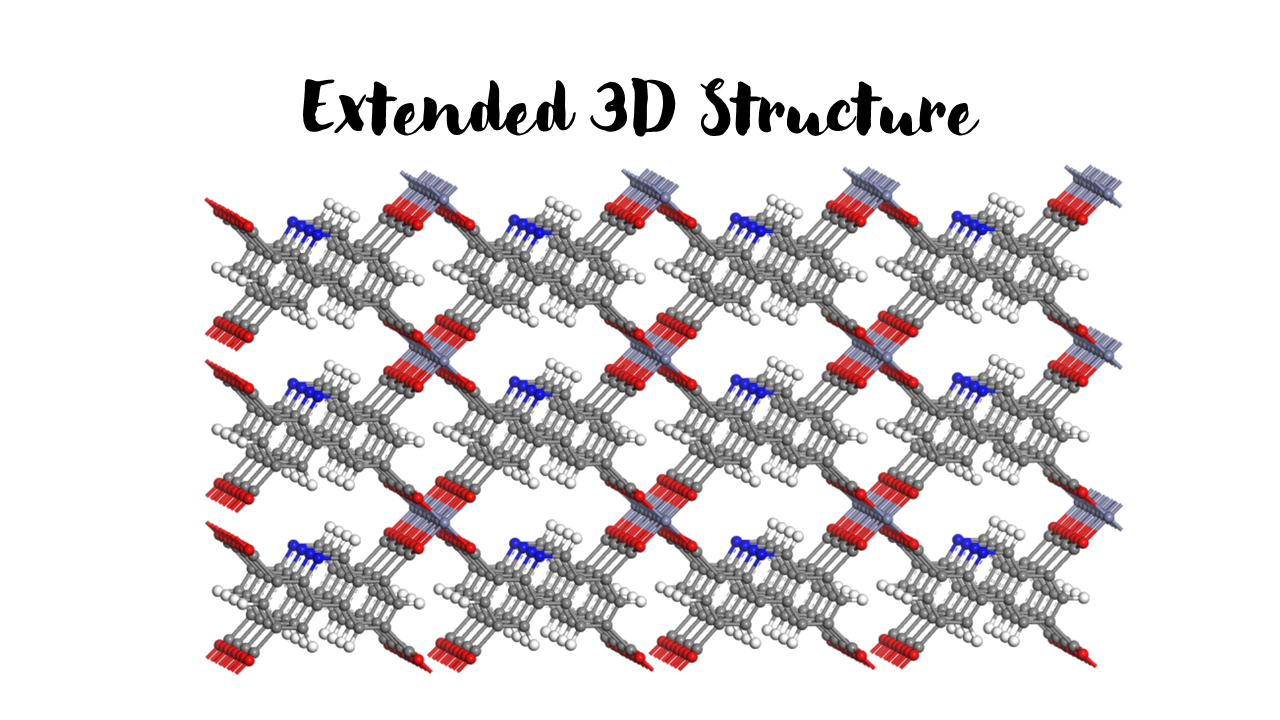
Extended 3D MOF Structure (Possibility 1)
-

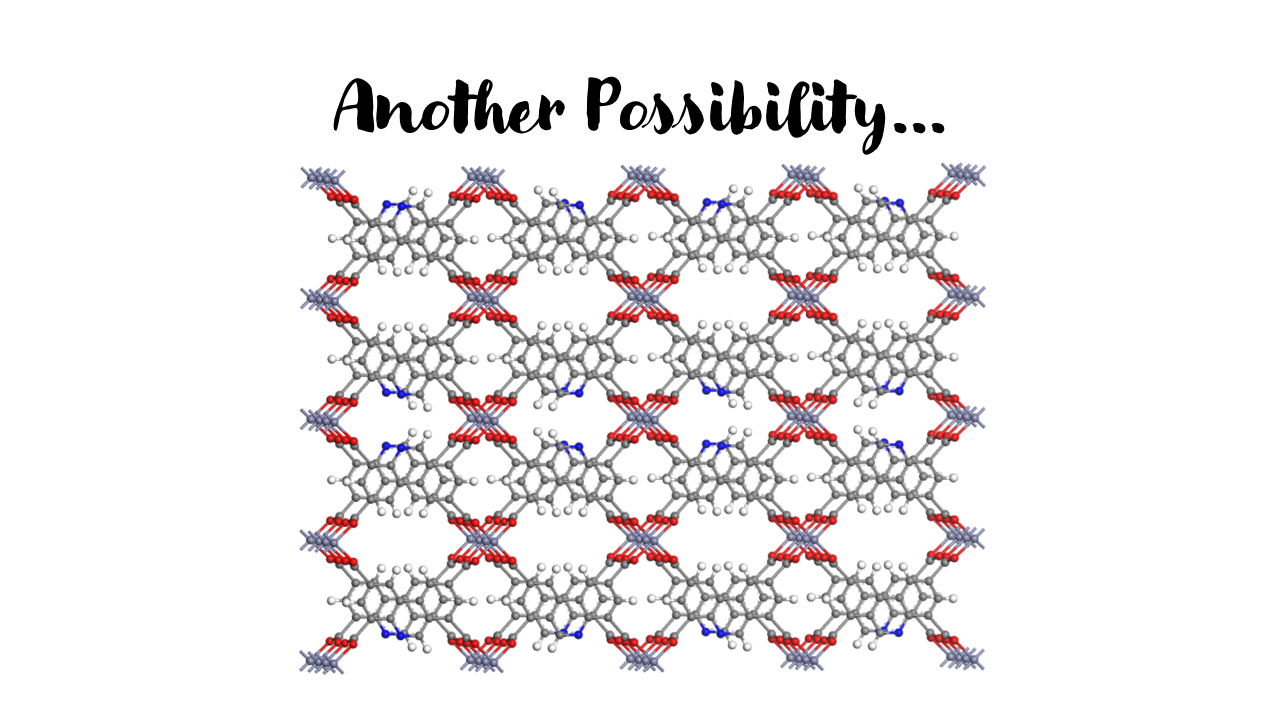
Extended 3D MOF Structure (Possibility 2)
-
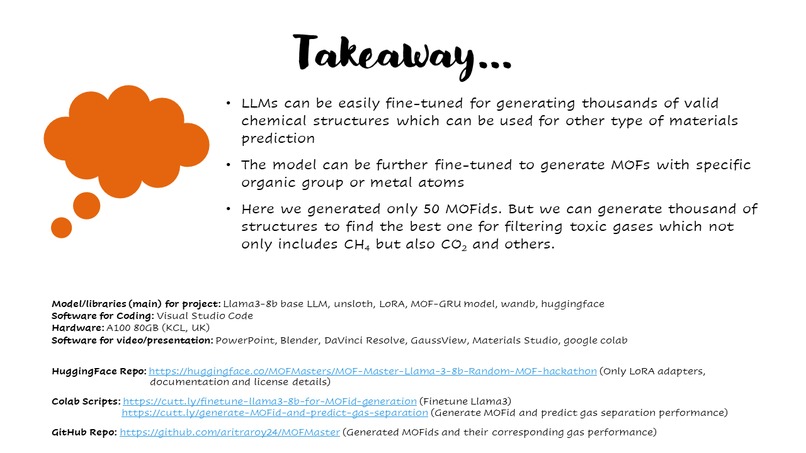
Takeaways & Useful Links

Inspiration
Methane (CH₄) is regarded as the second largest contributor to global warming after carbon dioxide. Although methane has a much shorter lifetime in the atmosphere as compared to carbon dioxide(on the order of decades as compared to CO₂’s centuries), it is still much potent as a greenhouse gas. It has contributed as much as 0.5°C of warming since pre-industrial times, second only to CO₂. Methane's heat-trapping power is 87-88 times greater than that of CO₂. The Intergovernmental Panel on Climate Change (IPCC) has indicated a GWP for methane means that one tonne of methane can be considered to be equivalent to 28 to 36 tonnes of CO₂ if looking at its impact over 100 years. Majority of human-driven methane emissions come from three main sectors: agriculture, fossil fuels and wastewater.
However, this gas has a potential towards mankind if we can store and use it carefully in its pure form. Methane can serve as a renewable energy source with several other benefits, including high energy content, abundant supply, versatility, high efficiency, and economic advantages. Therefore, it is crucial to separate and store methane from gas mixtures.
Metal Organic Frameworks (MOFs), having high surface area, tunability, porosity, selectivity, stability, and capacity make them highly effective and efficient for gas storage and separation, leading to advancements in energy storage, environmental protection, and industrial processes. MOFs present two sites for methane adsorption: open metal sites (OMS) in which metal binds directly with the metal ions and Van der Waals potential pockets, mainly related to the pore size. Therefore, it is essential to develop an efficient MOF with superior adsorption capacity for methane and the ability to effectively separate methane from gas mixtures such as CH₄/N₂, which are commonly found in natural atmospheric conditions.
What it does
Our tool MOFMaster randomly generates MOFid based on a wide range of nodes, linkers, topology and catenation which can be used for different application opportunities. For example, here we're focusing on predicting the CH₄/N₂ gas separation performance using the MOF-GRU paper.
How we built it
We used one of the leading open-source LLM, Llama-3 8B base model provided by Meta for fine tuning on a database containing more than 110,000 MOFids using LoRA. For fine-tuning we also used Unsloth library for its efficient memory usage and accuracy. The finetuned model is now able to generate new MOFids which are chemically aware. Finally, we can do the CH₄/N₂ gas separation prediction from the MOF-GRU model for the newly generated MOFids.
Challenges we ran into
The biggest challenge we had is the resources. We had to use A100 GPU (KCL, UK) for fine-tuning (Google colab’s free T4 gave an OOM [Out Of Memory] error). For inference, Google Colab works fine. Learned wandb to track the training process (solved using documentation) SafetensorError while giving demo from google colab (solved by saving the model in Google Drive, instead of session storage)
Accomplishments that we're proud of
We finally generated 50 unique chemically valid MOFids. Our best structure gives a CH₄/N₂ gas separation performance of 6.428 which is quite good if we compare the literature (average MOFs’ gas separation performance vary from 3-12).
Followings are the links associated with our project:
- HuggingFace repository (contains the LoRA adapters)
- Google colab fine-tuning script
- Google colab inference and prediction script
- GitHub repository (contains related scripts and generated MOFids list)
What we learned
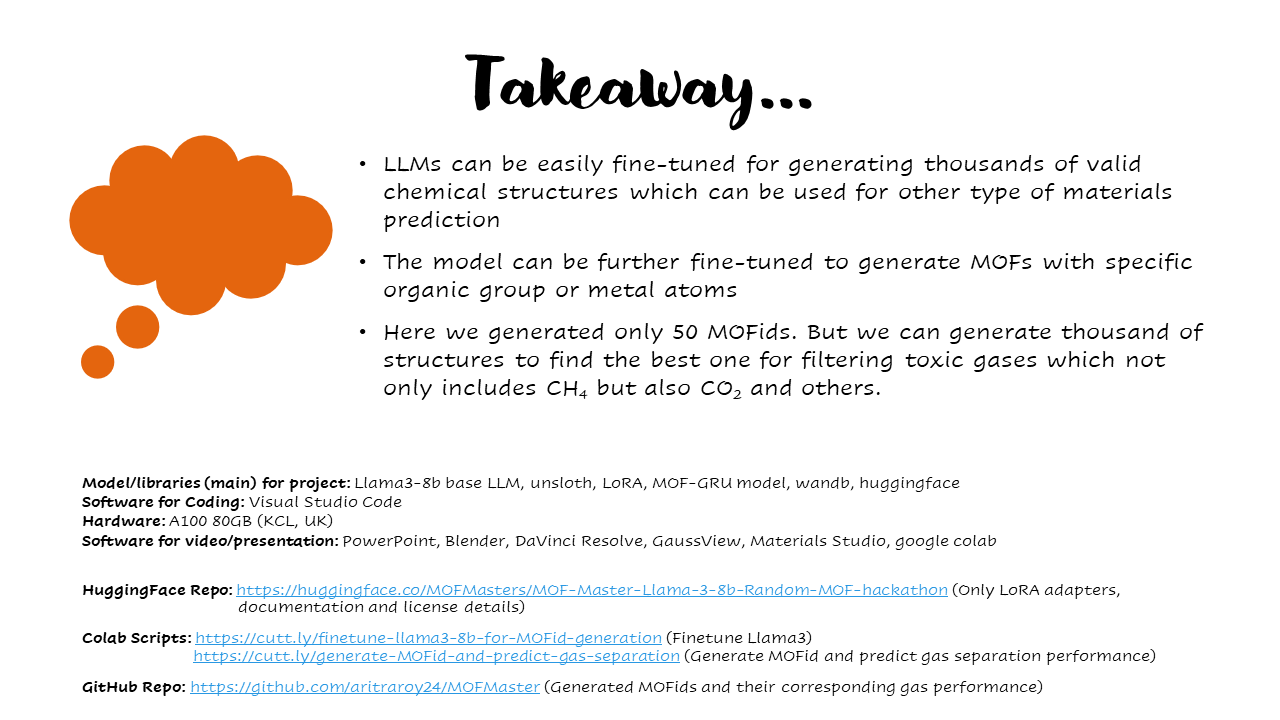
LLMs can be easily fine-tuned to generate thousands of chemically-aware structures within a very short range of time because of its pretraining on a vast amount of data which includes chemistry-based data.
What's next for MOFMaster
Due to time limit we ran the finetuned LLM to get only 50 MOFids. But, we can generate thousand of structures as we can run inference on the LLM for as many times as we want to come up with better structure. The LLM can also be finetuned for specific organic groups or metal atoms for more controls.
Also, this method is not only limited to MOFs or CH₄/N₂ gas separation prediction.
Team Members
- Aritra Roy, Doctoral Student, LSBU, UK (aritraroy.live)
- Focused on the fine-tuning of Llama3-8B model and using MOF-GRU model for prediction of gas separation performance
- Modelled the 3D structures of molecules and materials
- Prepared the demonstration video
- Piyush R. Maharana, CSIR NCL, India (github.com/catastropiyush)
- Helped in the fine-tuning of Llama3-8B model
- Did the literature survey
- Preapared the PDF documentation
- Tarak Nath Das, PhD Student, JNCASR, India (x.com/Das_Tarak_Nath)
- Helped with MOF related chemistry
- Primary 3D structure prediction from the MOFid
- Did the literature survey
Built With
- blender
- google-colab
- llama3
- lora
- powerpoint
- python
- unsloth


Log in or sign up for Devpost to join the conversation.