Microscopy is an important tool for monitoring and diagnosing diseases. Most work in this field has focused on bright-field microscopy (white light), which allows the user to examine the morphology of the specimen. However, this technique provides limited information on the specimen of interest. Fluorescence spectroscopy can be used to fill in these gaps in knowledge and quickly and accurately identify and separate many organisms. Fluorescence spectroscopy is based on the principle that molecules absorb certain wavelengths of light and emit characteristic light at a slightly longer wavelength. Fluorescent molecules can be attached to antigens that are highly selective to the organism of interest, which is useful in diagnostic applications. The ability to tag selected antigens with fluorescent molecules, however, is only half the battle.
Fluorescence microscopy can be used to quickly and reliably detect these fluorescent molecules. However, fluorescence microscopes are extremely expensive, large, and require a trained technician to operate. These restraints make such a system almost useless in the face of extreme or remote environments. This project aims to ameliorate these limitations and provide a device that can detect and differentiate fluorescent molecules cheaply, portably, and without trained personnel.
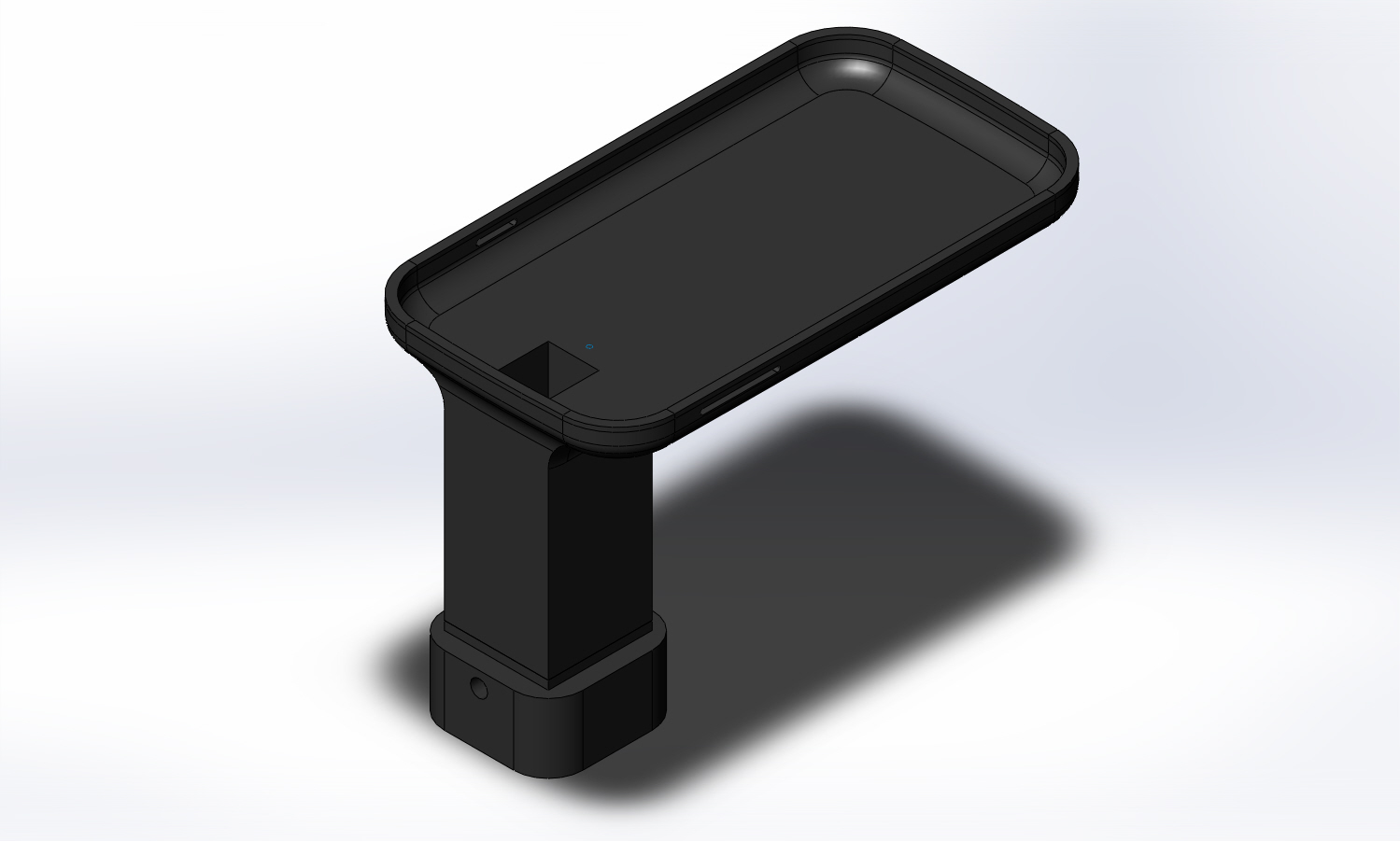
Our project consists of a 3D-printed modular device coupled with a smartphone application. The device itself has three major components: a phone attachment, lens holder, and chip house that aligns the optical system. The smartphone application sends a signal to our device’s Arduino Duemilanove via the Adafruit Bluefruit EZ-Link to expose the microfluidic chip to green and blue LEDs for fluorescence imaging. At each exposure, the application takes a picture for further image processing, analysis, and diagnosis.


Log in or sign up for Devpost to join the conversation.