-
-
MODORU Logo
-
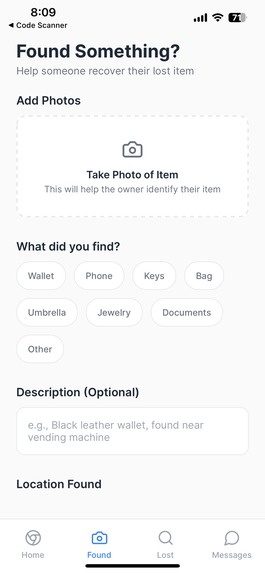
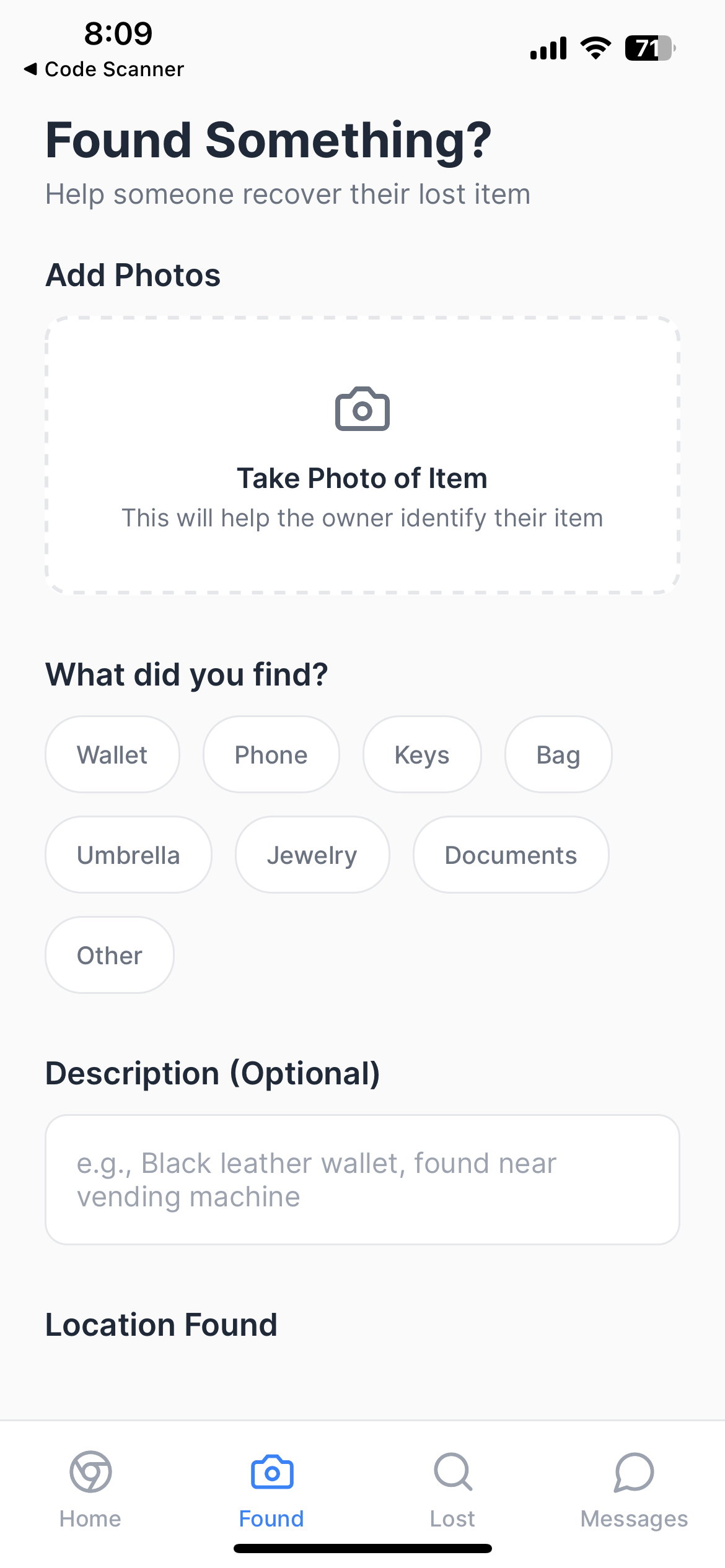
What did you find?
-
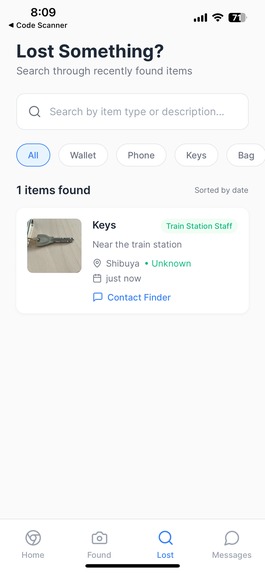
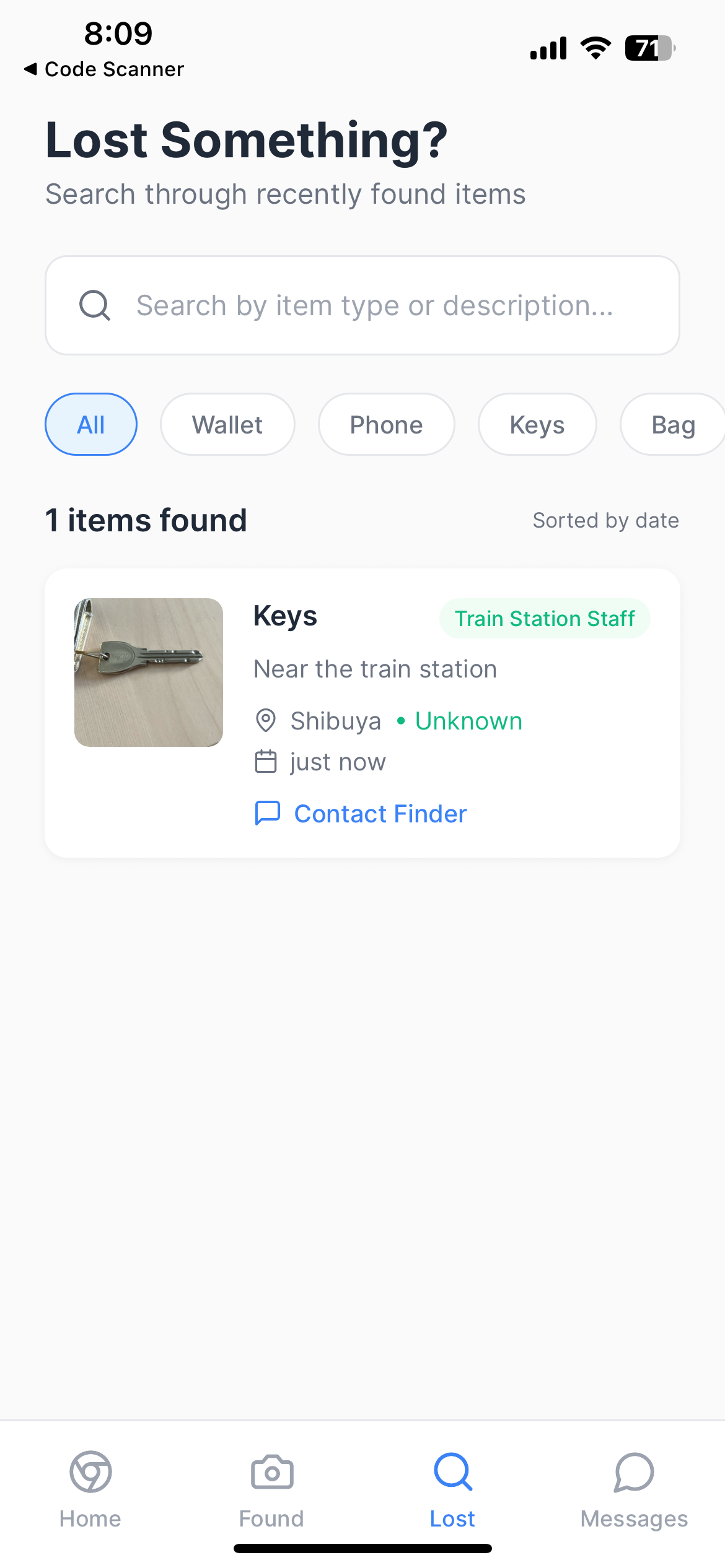
Keys near Shibuya Station
-
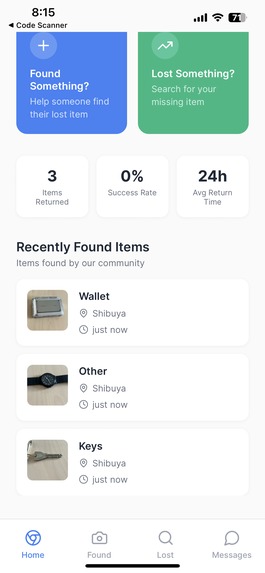
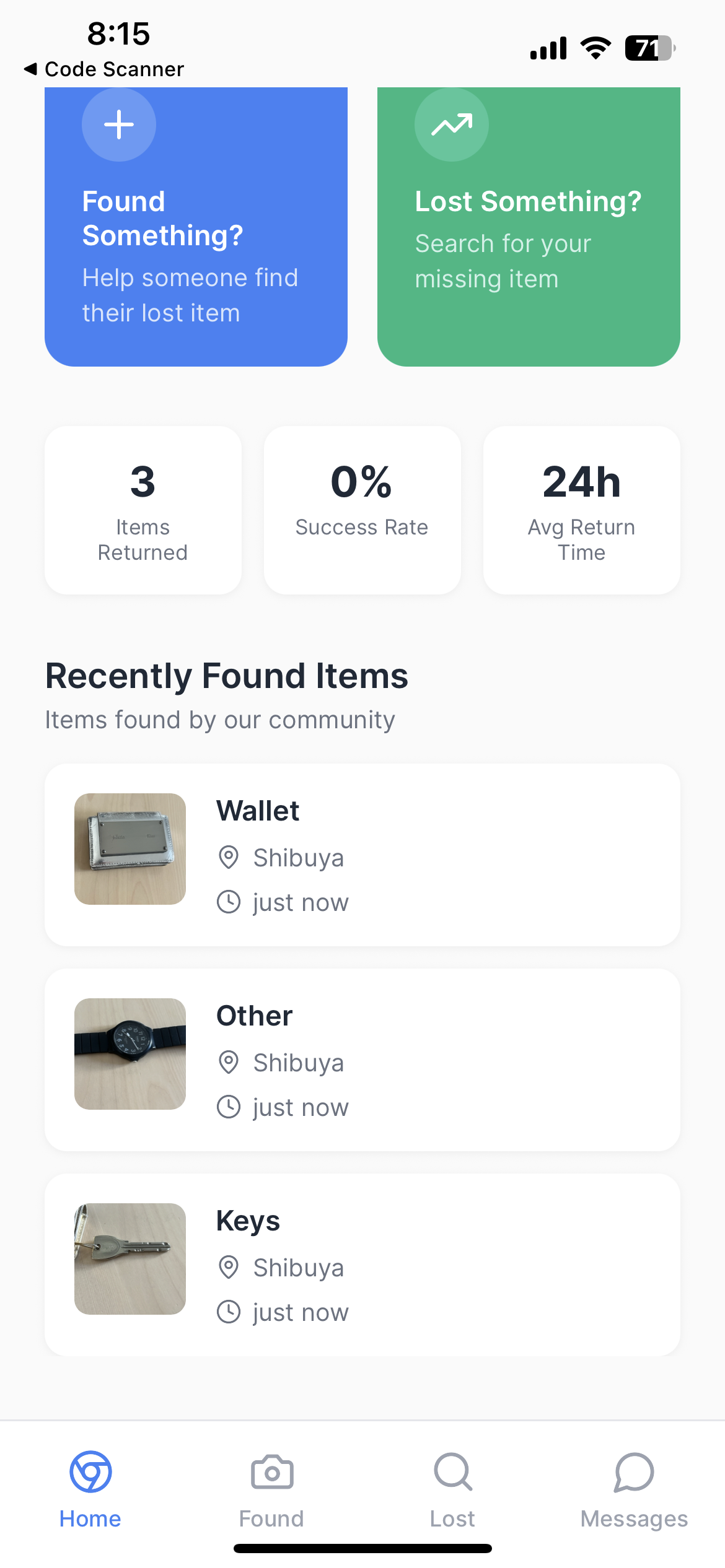
Recently Found Items
-
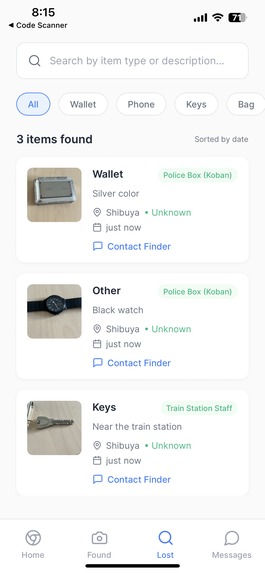
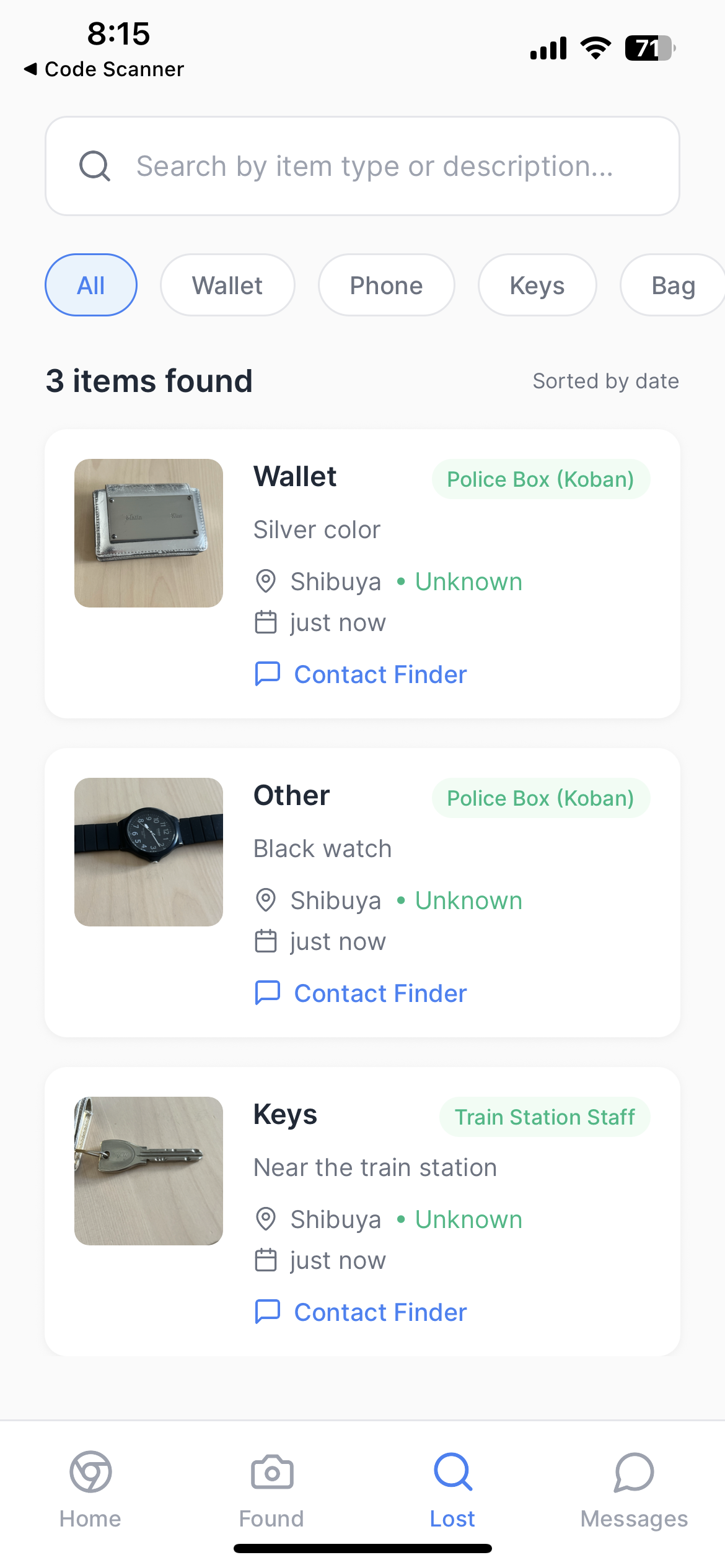
3 Items Found
-
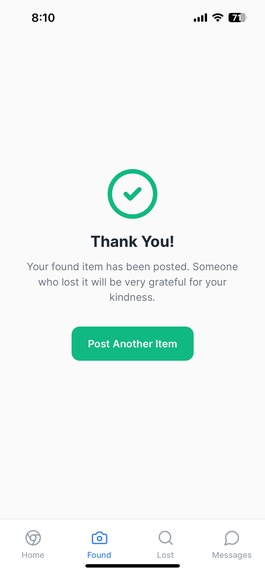
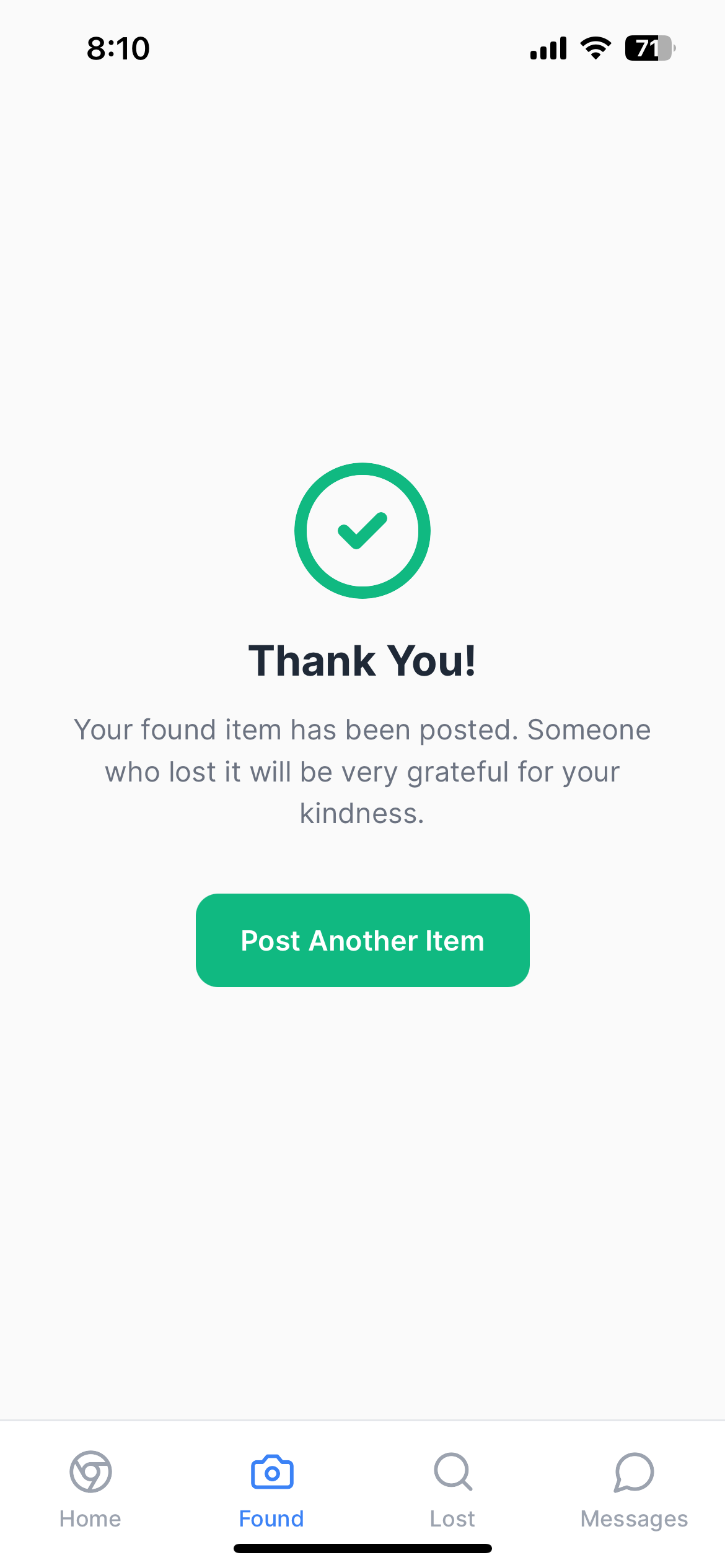
Thank You!
Inspiration - Please use Device Preview (Expo Go) for best viewing experience!
I was inspired by the kindness and honesty that Japanese have always shown me. I’ve lost my wallet and cash card more times than I can count during my 10+ years in Japan—and without fail, they’ve always been returned to me. And in some form, shape or manner, I have always wanted to give back to my community here in Japan, so I created the MODORU app.
What it does
MODORU (戻る - "to return") is a Japanese-inspired lost & found community app that transforms finding something into an act of kindness.
How It Works Find Something? → Take a photo, mark location, choose where it's stored Lost Something? → Search by location, type, and description Connect Safely → Anonymous messaging system protects privacy Return & Celebrate → Complete the circle of kindness
How I built it -
I built MODORU using React Native, Expo SDK, and TypeScript to create a cross-platform app for iOS, Android, and web from a single codebase. It features offline-first storage, smart location handling, and bilingual support for English and Japanese. I used custom hooks for state management, expo-camera for media capture, and designed the UI with cultural authenticity and accessibility in mind. The app was built, tested, and deployed using modern tools like Bolt.new and Expo EAS Build.
Challenges we ran into
One major challenge was updating the geolocation. I had it working early on in the hackathon—it was integrated with Google Maps. However, as I added more and more mock data, reintegrating Google Maps without breaking the existing code became impossible.
Accomplishments that I'm proud of
First and foremost, I'm proud that I was able to build MODORU entirely solo—from design to development—all the while maintaining cultural authenticity and cross-platform functionality.
I implemented real-time location services, offline-first storage, and type-safe routing using modern tools like React Native, Expo, and TypeScript. I also designed the app to reflect Japanese values of honesty and community while integrating bilingual support and accessible UI.
I feel that more than just a technical project, MODORU is a human-centered solution that I believe could truly HELP people and FOSTER trust in everyday life.
What I learned
Building MODORU taught me the power of Expo SDK 52.0.30 for creating truly universal applications. I learned how to: Architect for three platforms simultaneously (iOS, Android, Web) without compromising user experience. Leverage Expo Router 4.0.17 for type-safe navigation that scales beautifully. Implement platform-specific optimizations while maintaining a single codebase. Handle web compatibility gracefully with fallback strategies for native-only features. And most importantly, I learned how to implement the three Japanese values of honesty, community and compassion for others in my app.
What's next for MODORU - Lost and Found
For now, I’m just focusing on doing this in the next 3–6 months: Deploying to the iOS App Store and Google Play Store using Expo EAS Build Adding offline capabilities, push notifications, and home screen installation Desktop support via an Electron wrapper for community centers and police stations Adding enhanced security and trust features
Built With
- android
- asyncstorage
- deploying-it-with-expo-sdk-for-ios
- expo-camera
- expo-location
- expo-router
- expo-sdk
- gesture-handler
- ios
- jest
- native
- react
- react-native
- react-native-reanimated
- supabase
- testing
- typescript
- using-tools-like-react-native-reanimated-and-gesture-handler
- web

Log in or sign up for Devpost to join the conversation.