Inspiration
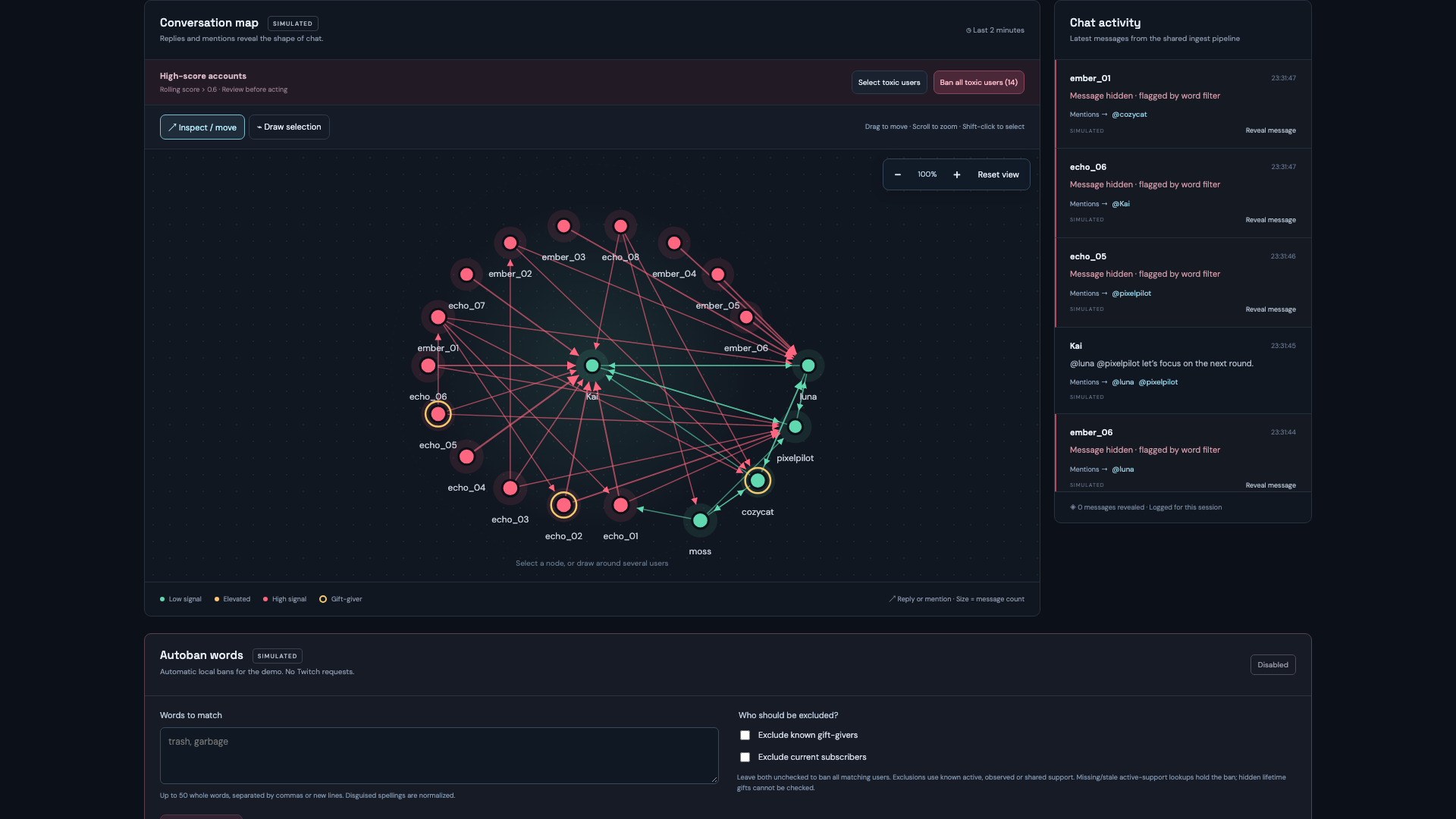
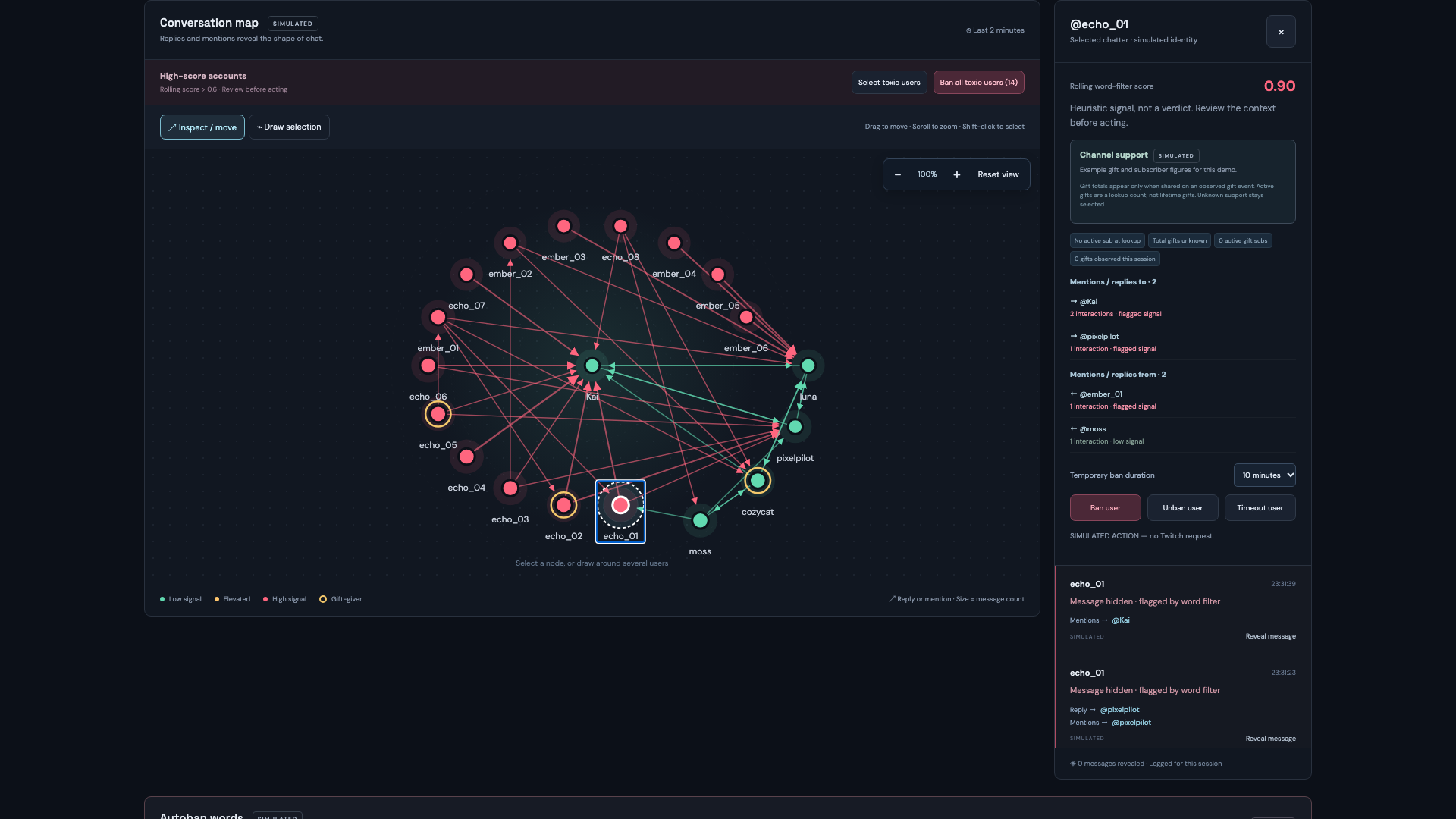
When a Twitch chat gets flooded, individual message filters miss the pattern of users targeting one person. We wanted to help moderators see the network behind the messages.
What it does
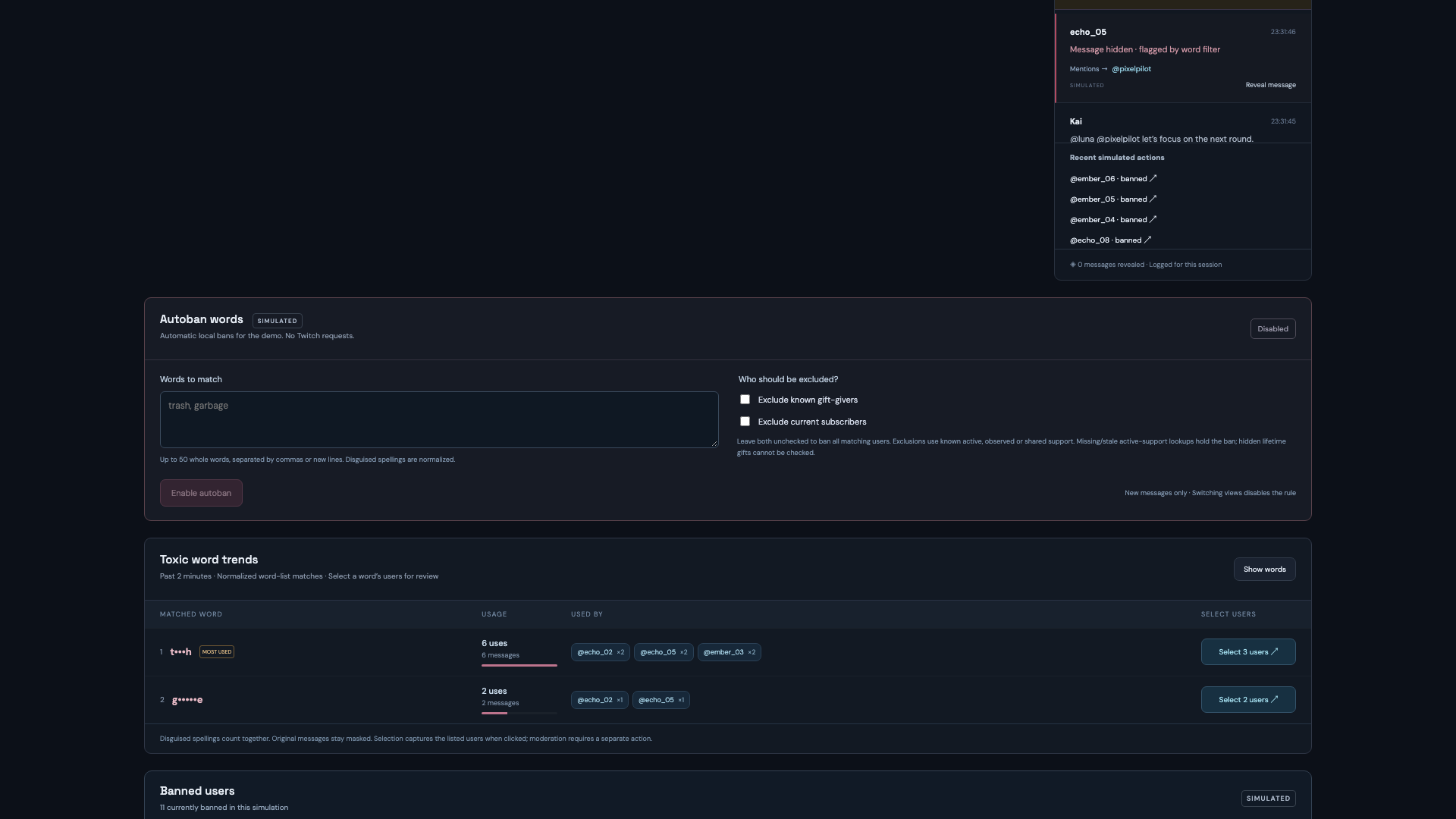
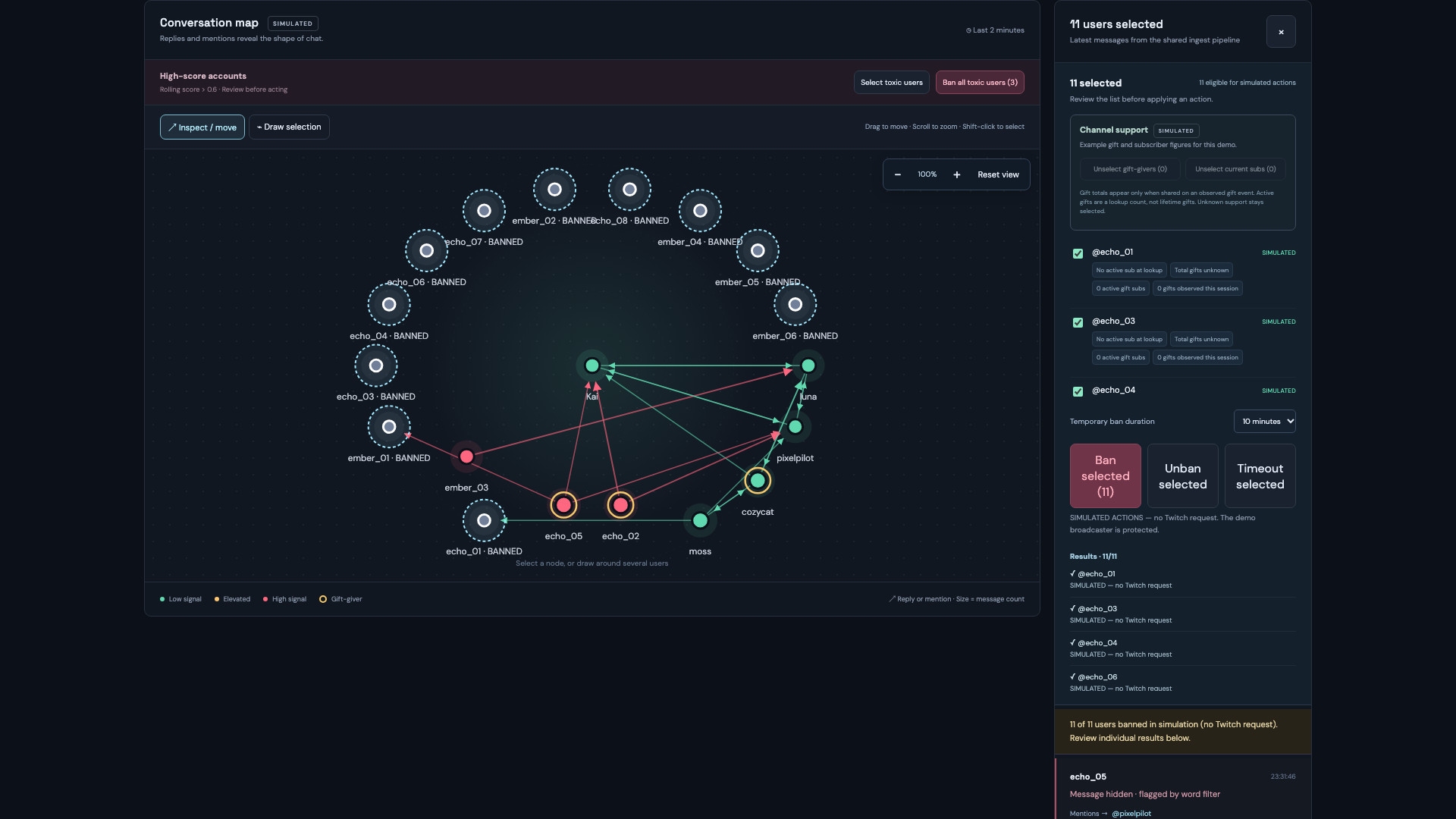
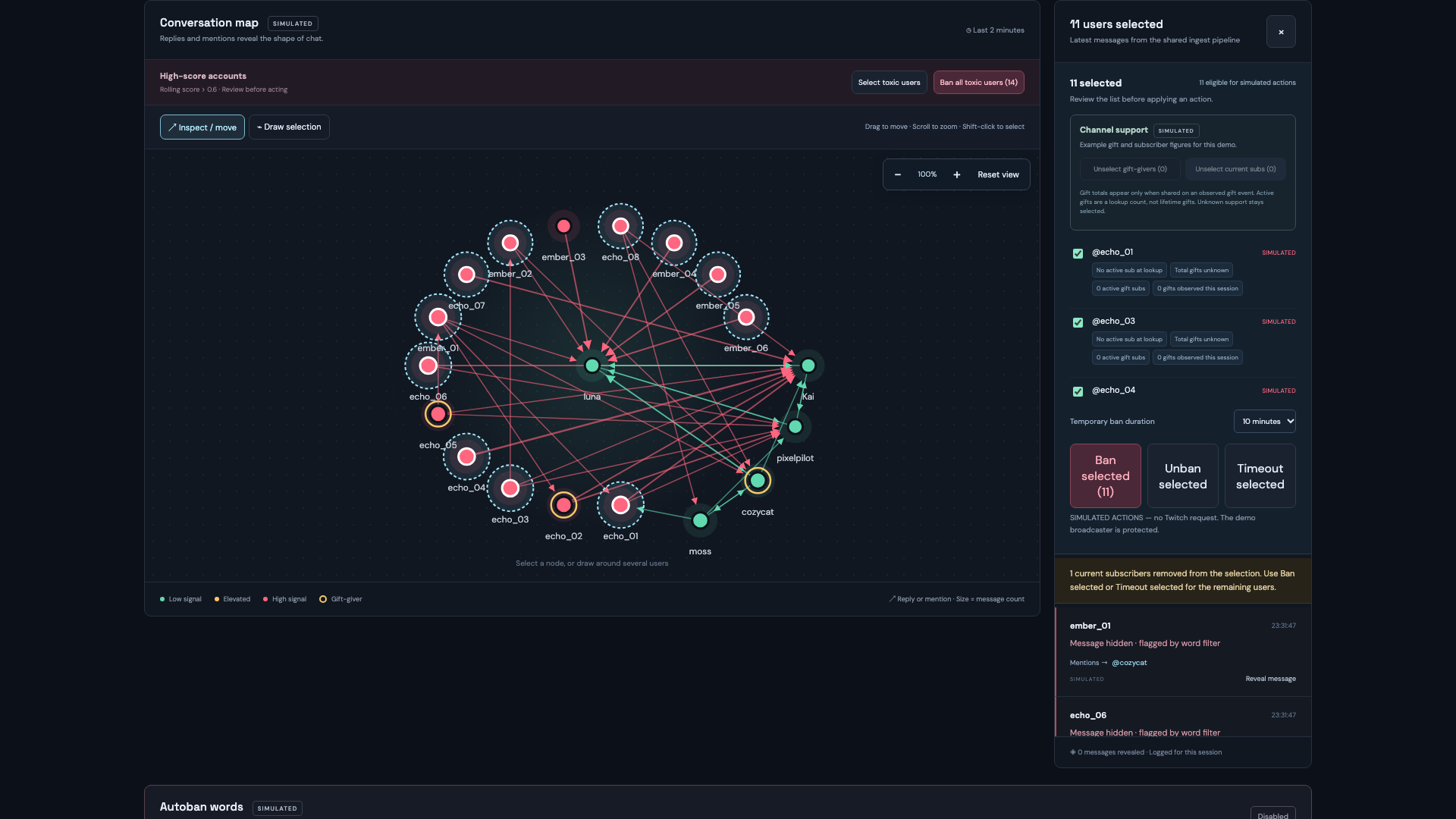
ModMap turns chatters into nodes and replies and mentions into directed links. It highlights toxic messages and coordinated targeting, lets moderators review groups and supporters, and supports bans, timeouts, unbans, and configurable autoban rules. A built-in simulation demonstrates raids without sending messages or moderation actions to Twitch.
How we built it
We built ModMap with TypeScript, React, and Vite on the frontend, with Node.js, Express, and Socket.IO on the backend. The graph uses SVG. Twitch chat and moderation connect through EventSub and the Helix API. We used Codex to develop the app and its tests, and HyperFrames to create the demo footage.
Challenges we ran into
Building a live graph that stays readable while chat changes was challenging. We also had to keep simulated users separate from real Twitch moderation, handle Twitch permissions and API errors, and make bulk actions clear and reviewable.
Accomplishments that we're proud of
We built an interactive network view that shows who is targeting whom, with graph selection, supporter context, and moderation controls. We’re also proud that the simulator exercises the same ingest path while keeping simulated actions local.
What we learned
We learned how to connect Twitch chat and moderation workflows, how to represent conversation as a changing network, and how to use Codex to build and refine a full-stack project under hackathon time pressure.
What's next for ModMap
Next, we’d improve brigade detection, add richer account context, and test the interface with more moderators. We’d also explore stronger abuse classification and deployment beyond a local demo.
Built With
- express.js
- hyperframes
- node.js
- react
- socket.io
- svg
- typescript
- vite
