Inspiration: Reigning in Distractions with a Physical Touch
We've all been there. You fire up a digital Pomodoro timer, ready to conquer your to-do list, only to find yourself one click away from the siren song of social media or that tempting YouTube rabbit hole. The very digital environment meant to boost our focus often becomes the source of our distraction. We realized that the ease with which digital timers can be skipped, snoozed, or outright ignored undermines their effectiveness for many. Our core inspiration stemmed from a desire to help individuals cultivate more mindful and efficient time management. We wanted to move beyond the screen and create a more tangible interaction with the Pomodoro Technique. By embodying the timer in a physical cube, we aimed to create a more present and hands-on experience, making it harder to mindlessly bypass dedicated work and rest intervals. Ultimately, our goal was to empower users to take control of their time and foster deeper focus, leading to increased productivity.
What it Does: A Cube of Focused Productivity
Our "Modified Pomodoro Timer" is a physical cube designed to guide users through focused work sessions and rejuvenating breaks. Its functionality is intuitive and engaging:
- Orientation-Based Control: The cube cleverly utilizes its orientation to manage the timer. Simply flipping the cube to a designated face initiates a work session, while another orientation pauses it. This tactile interaction provides a satisfying and immediate way to control the flow of work.
- Visual Time Tracking: An integrated LED ring light dynamically displays the progress of the current session. As time elapses, the light visually diminishes, offering a clear and at-a-glance understanding of the remaining work or rest period. The LED also indicates the current state – whether the timer is running, paused, or a session has ended.
- Reflective Post-Session Feedback: After each Pomodoro session (both work and rest), the user is prompted to reflect on the quality of their focus and productivity during that time. This simple yet powerful step encourages metacognition and self-awareness regarding study habits.
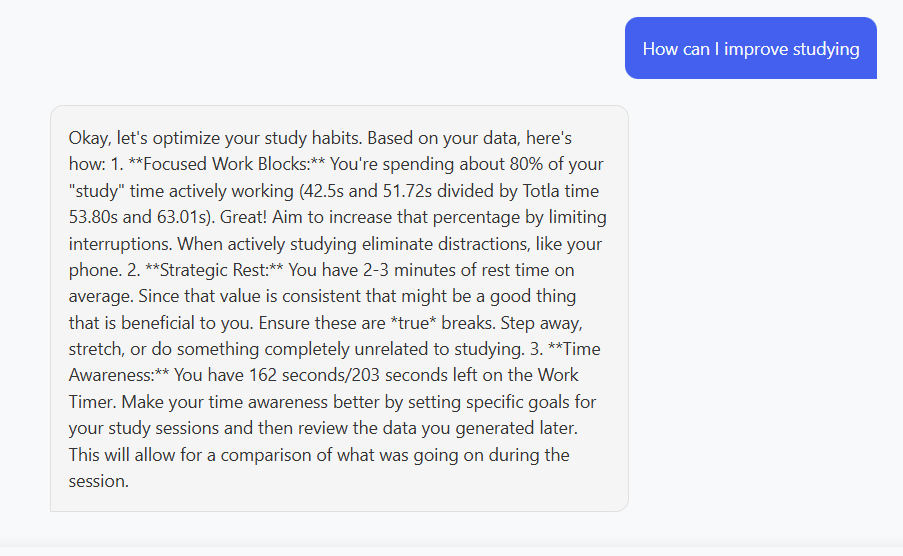
- AI-Powered Personalized Improvement: The data gathered from these post-session reflections, along with the duration of study and rest intervals, is transmitted to a Large Language Model (LLM). Leveraging its vast knowledge, the LLM analyzes this information and generates personalized feedback and actionable suggestions on how the user can optimize their study techniques for future sessions.
- Accessible Insights: These tailored recommendations are then presented to the user through a locally hosted website, providing a convenient and easily digestible way to understand their study patterns and implement improvements.
How We Built It: Hardware Meets AI Intelligence
The creation of our Modified Pomodoro Timer involved a synergy of hardware and software components:
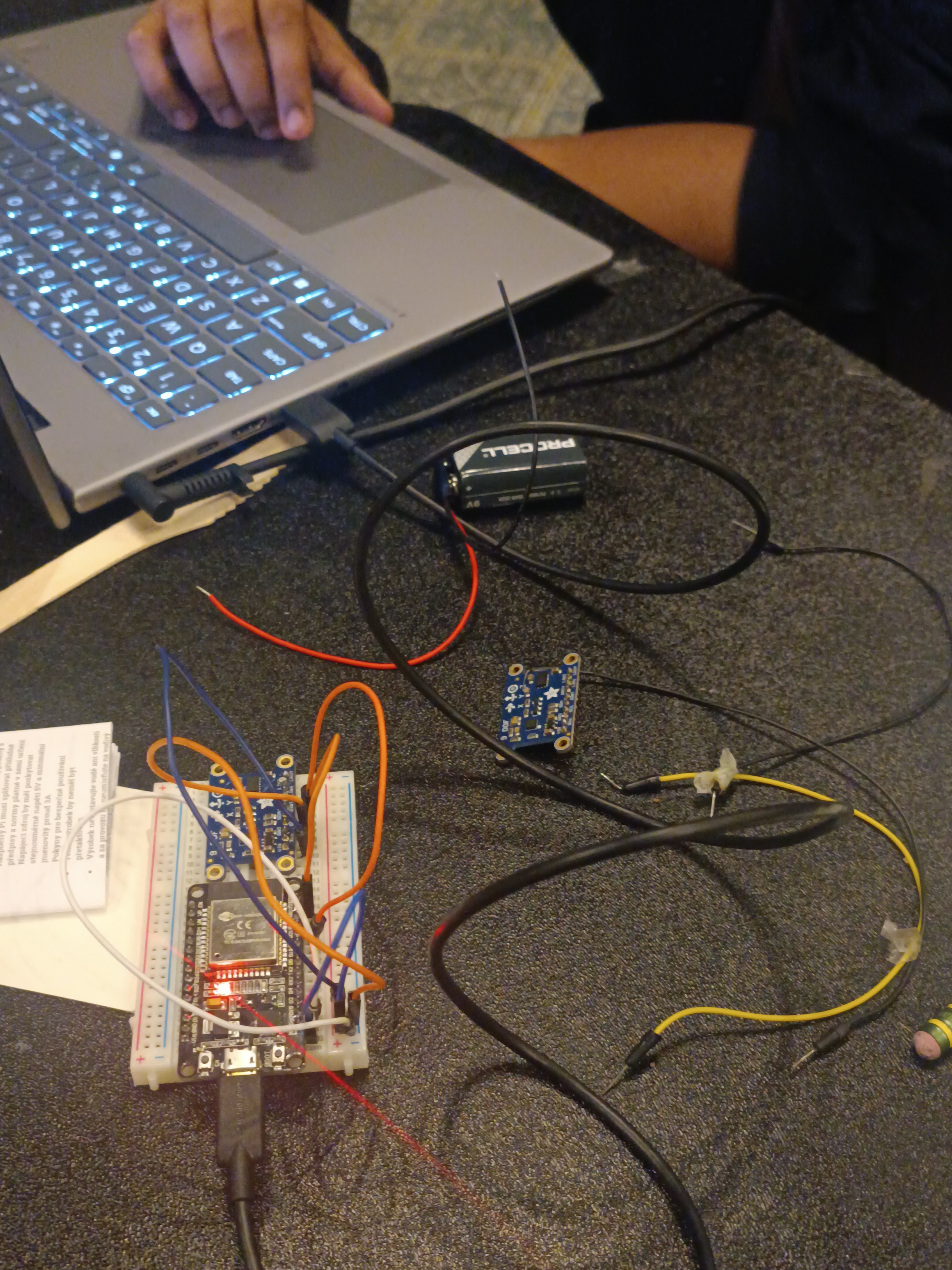
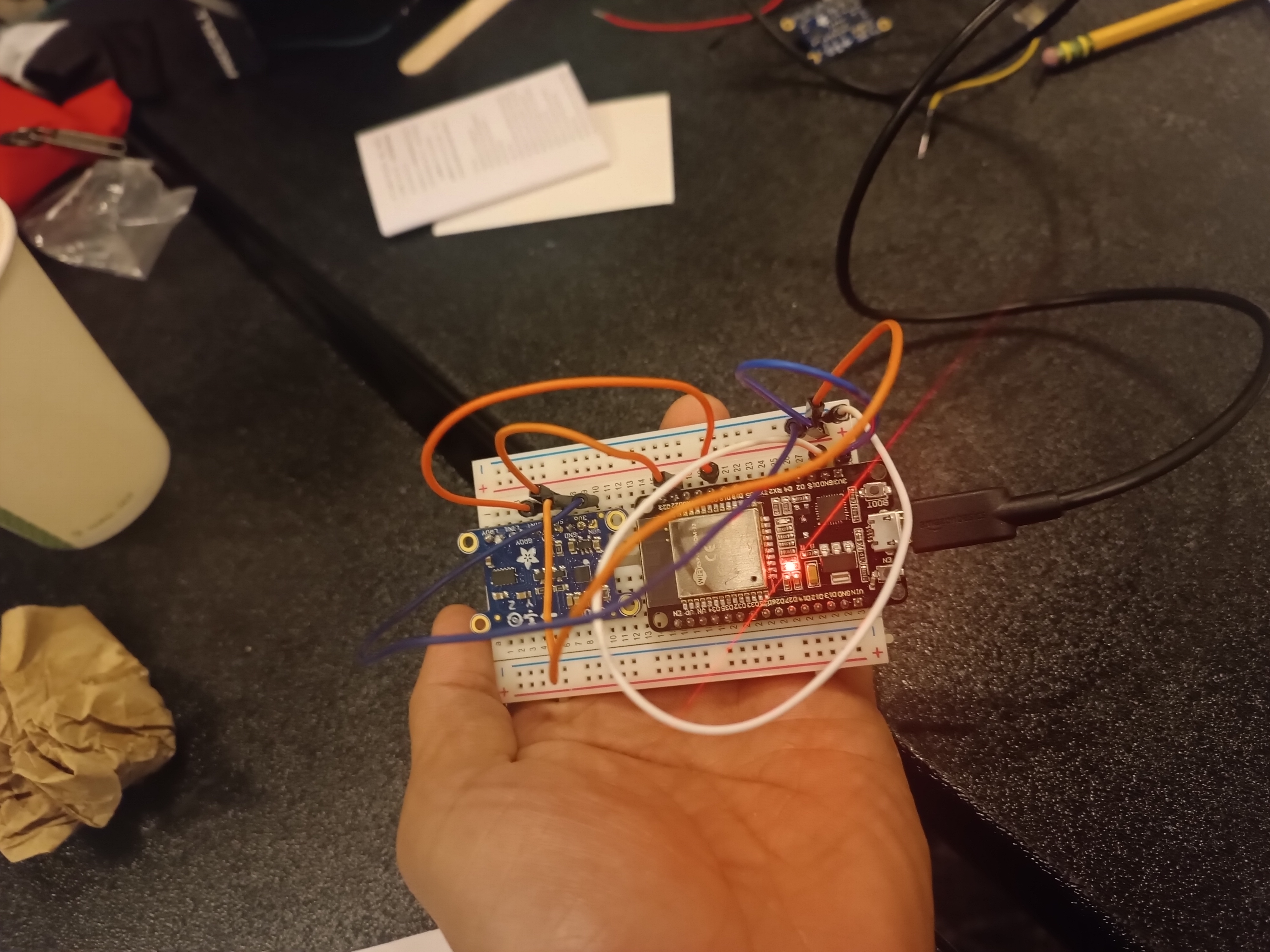
- The Brain and Body: At the heart of the cube lies an ESP32 microcontroller, powered by a 9V battery, ensuring untethered operation and enhancing the cube's portability. This ESP32 acts as the central nervous system, receiving orientation input, controlling the vibrant LED ring light for visual feedback, and managing communication via Bluetooth.
- Wireless Communication: The ESP32 seamlessly transmits the session data (study/rest duration and user feedback) wirelessly via Bluetooth to a nearby computer. This wireless approach was crucial for maintaining the cube's ergonomic design and ease of use.
- Intelligent Analysis: Once the data arrives on the computer, it's channeled through an API to a Large Language Model (LLM). This powerful AI analyzes the session information and the user's self-assessment to identify patterns and generate personalized advice for more effective studying.
- User Interface: The insightful suggestions from the LLM are then displayed on a locally hosted website. This provides a simple and accessible interface for the user to review their study sessions and understand how they can refine their approach.
Challenges We Ran Into: Navigating the Hurdles of Innovation
Our journey wasn't without its bumps:
- The Ergonomics Dilemma Our initial vision involved using a Raspberry Pi. However, we quickly realized the impracticality of constantly flipping a cube tethered by power cords. This led us to the crucial realization that wireless communication was essential for a truly user-friendly experience. The decision to utilize an ESP32 powered by an internal 9V battery proved to be a pivotal breakthrough in the project's design.
- Burning out Hardware The dreaded smell of burnt electronics became a temporary setback when our initial ESP32 succumbed to the demands of the project. This necessitated a scramble to procure and reconfigure a new ESP32, highlighting the unpredictable nature of hardware development.
- Bluetooth Connection Issues Establishing and maintaining reliable Bluetooth connections proved to be more temperamental than anticipated. We encountered intermittent connectivity issues that required careful debugging and troubleshooting to ensure consistent data transmission.
Accomplishments That We're Proud Of: Triumphs in Design and Integration
Despite the challenges, we achieved significant milestones:
- Embracing Modularity: We are particularly proud of successfully implementing a modular design by leveraging the ESP32 and Bluetooth communication. This elegant solution allowed us to create a truly portable and user-friendly physical timer, overcoming the ergonomic limitations of our initial concept.
- Streamlining the Architecture: Our initial plan involved an external Raspberry Pi to act as an intermediary for data processing and website hosting. However, through experimentation, we realized we could directly connect the Bluetooth to a computer, simplifying the architecture and demonstrating our ability to adapt and optimize our design based on our findings.
What We Learned: Lessons in Wireless Communication and Hardware-AI Integration
This hackathon provided invaluable learning experiences:
- Wireless Communication: We gained practical experience in establishing and managing wireless communication using Bluetooth, understanding its nuances and troubleshooting potential connectivity issues.
- Bridging Hardware and AI: This project provided a hands-on understanding of how to integrate hardware sensor feedback with the power of a Large Language Model through Bluetooth communication and API calls. We learned the intricacies of data transmission and the potential of combining physical interfaces with AI-driven insights.
- Debugging Between Software and Hardware: We honed our debugging skills, learning to systematically identify and resolve issues that spanned both hardware malfunctions and software connectivity problems. This experience emphasized the importance of separating physical connection issues from underlying software bugs.
What's Next for Modified Pomodoro Timer: Enhancing the User Experience
Our vision for the Modified Pomodoro Timer extends beyond its current capabilities:
- Auditory Feedback: We plan to incorporate a speaker to provide verbal cues and audio feedback, further enhancing the user's awareness of session starts, ends, and breaks without needing to constantly look at the LED ring.
- Comprehensive Stats Tracking: We aim to expand the functionality of the website to include visualizations of detailed statistics on the user's study patterns over time. This would provide valuable insights into their productivity trends and the effectiveness of the AI-driven suggestions.

Log in or sign up for Devpost to join the conversation.