-
-
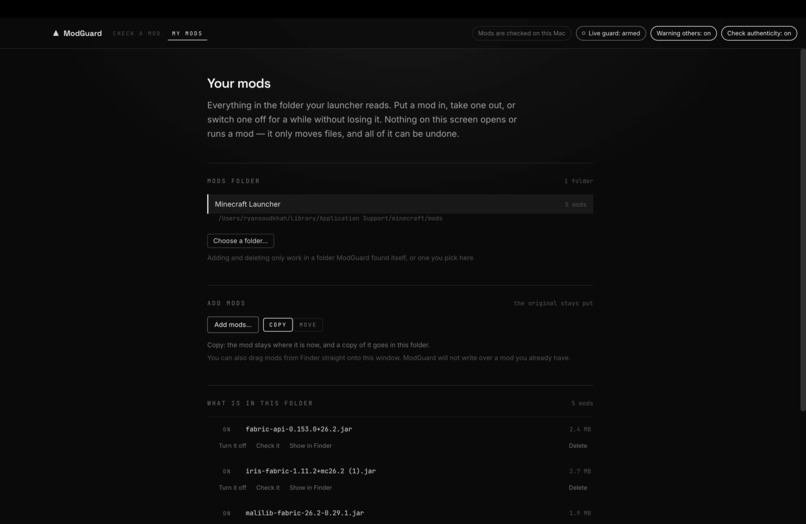
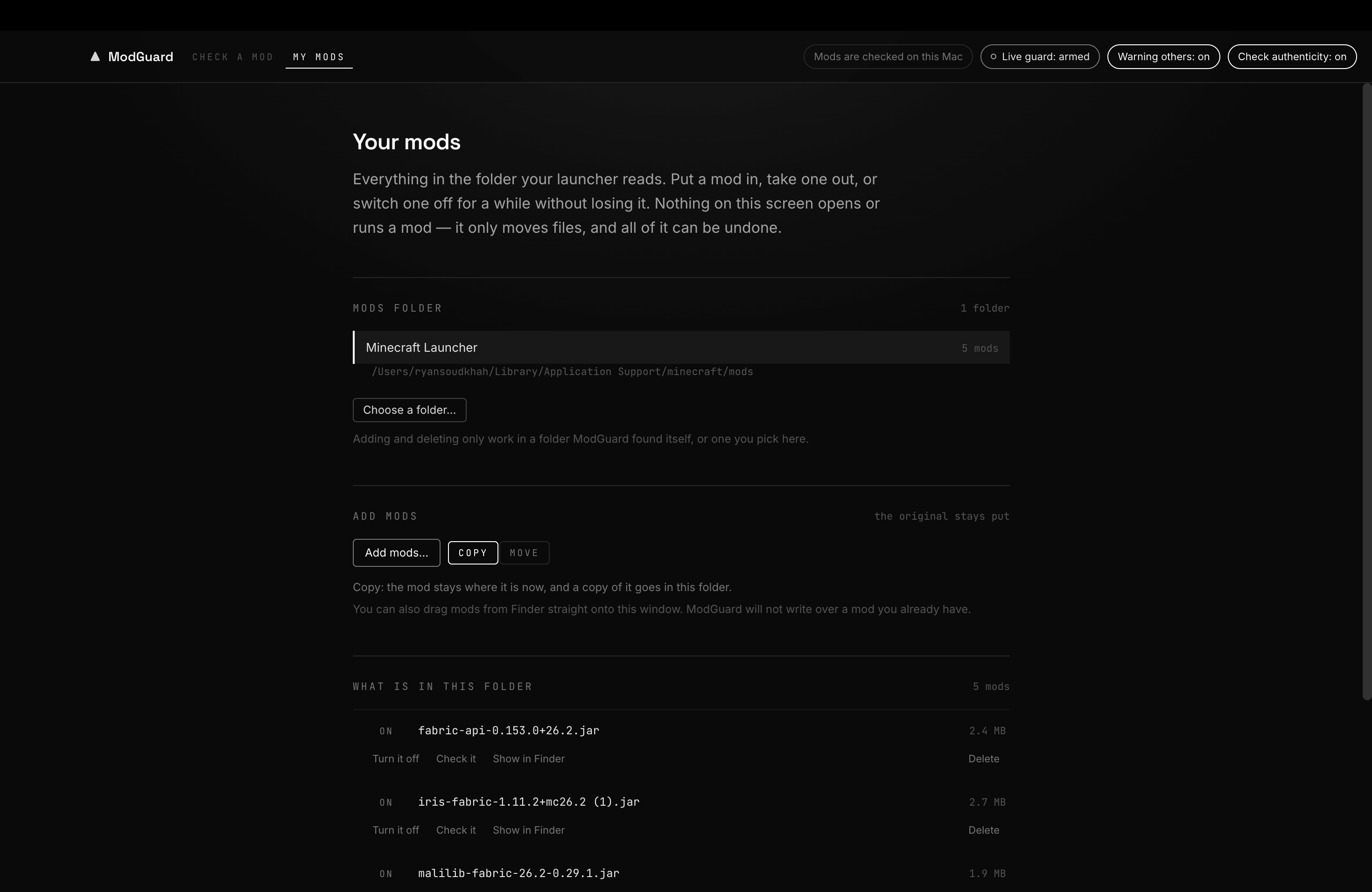
User's Mods
-
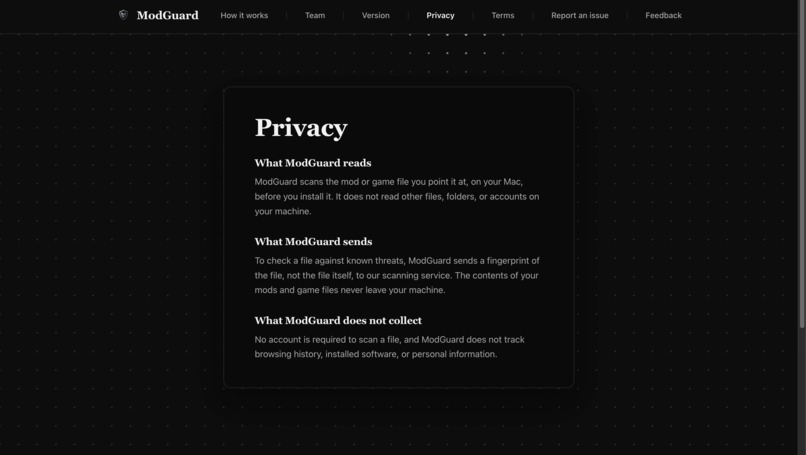
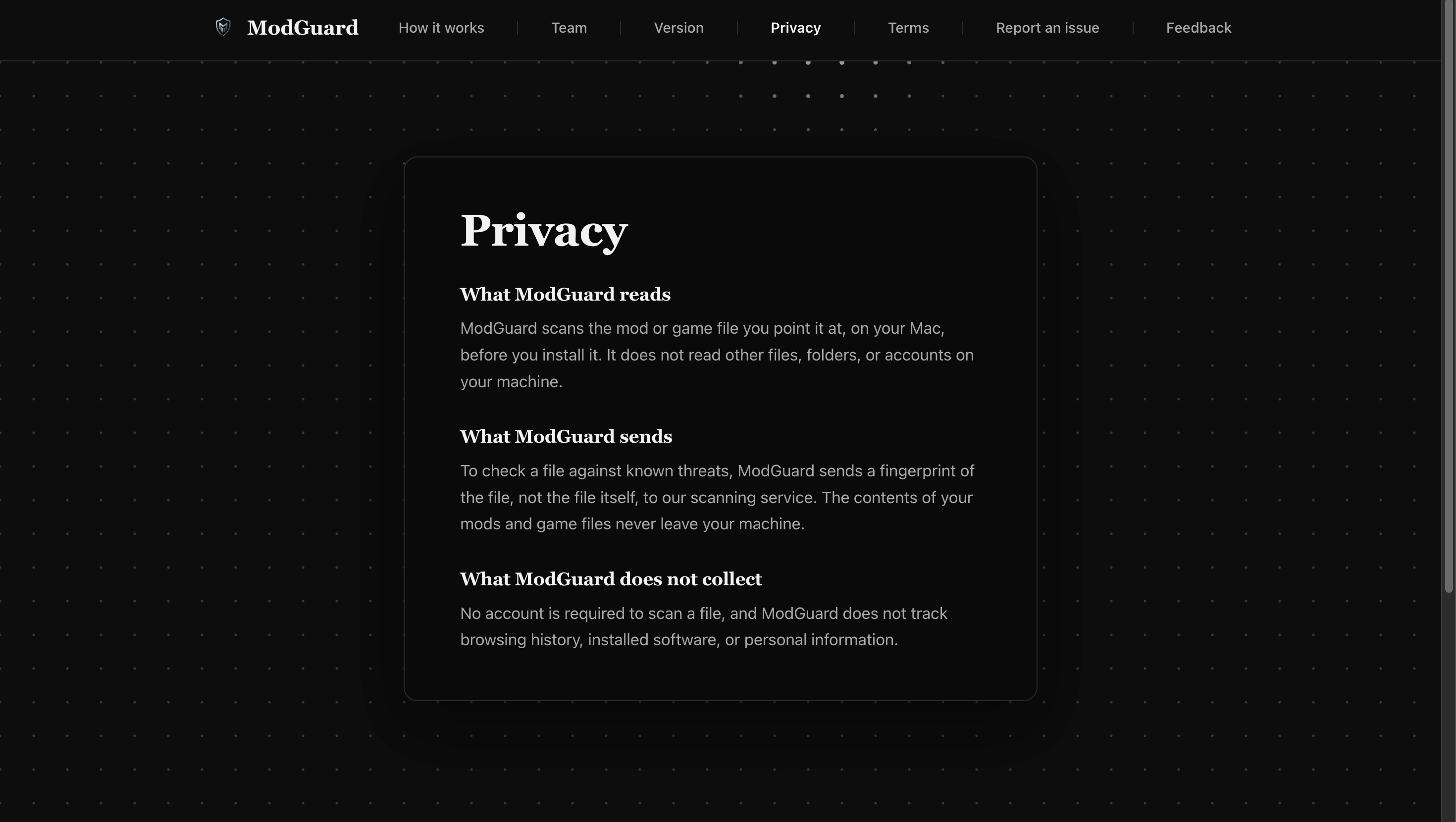
Privacy Policy
-
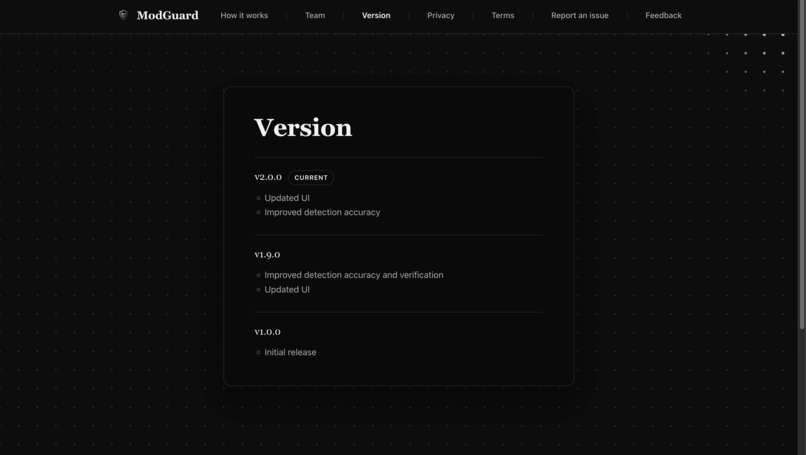
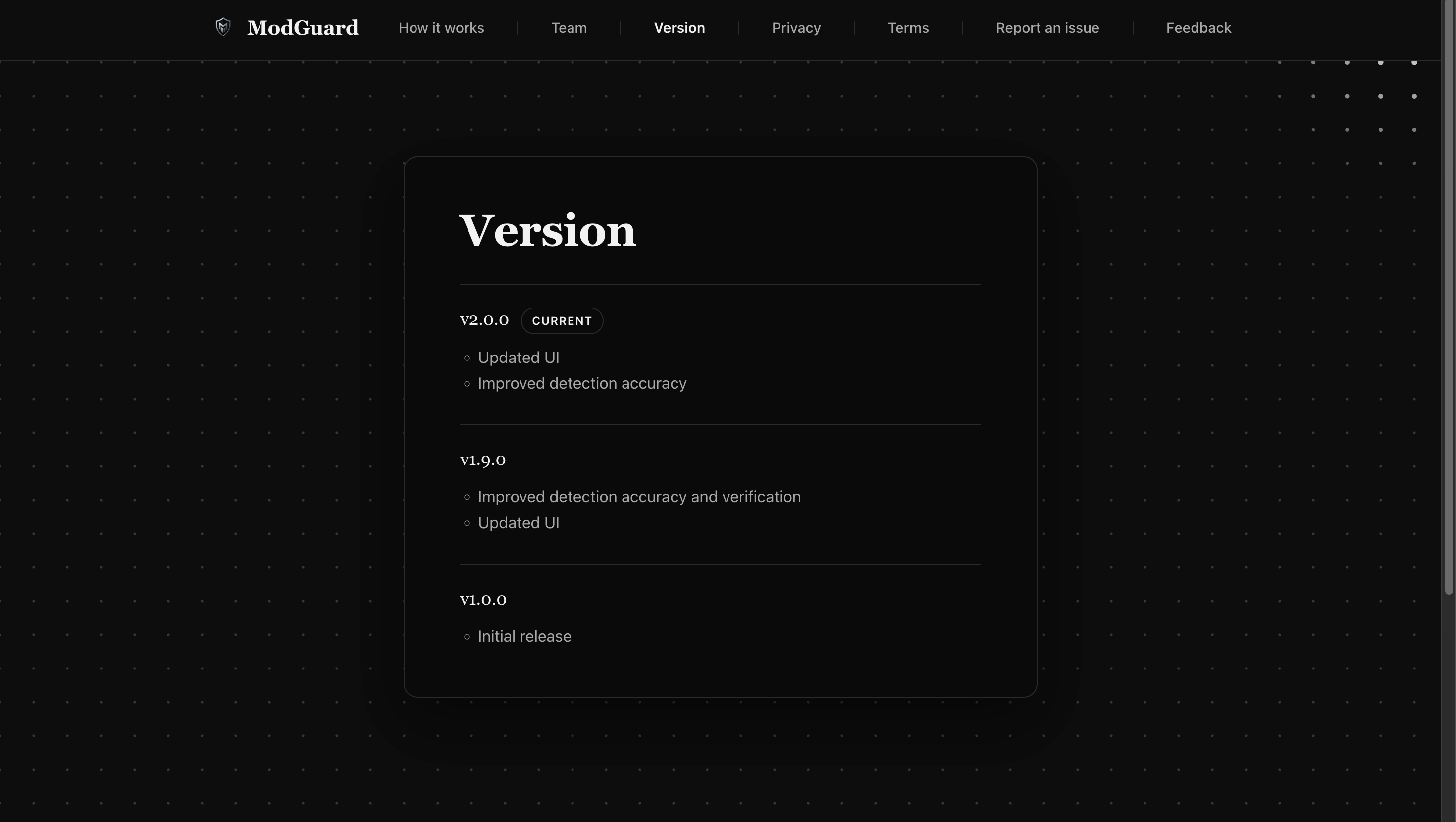
ModGuard Versions
-
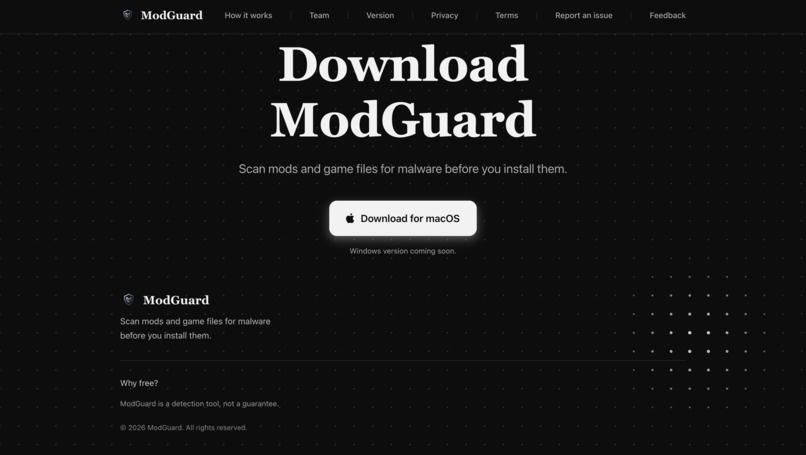
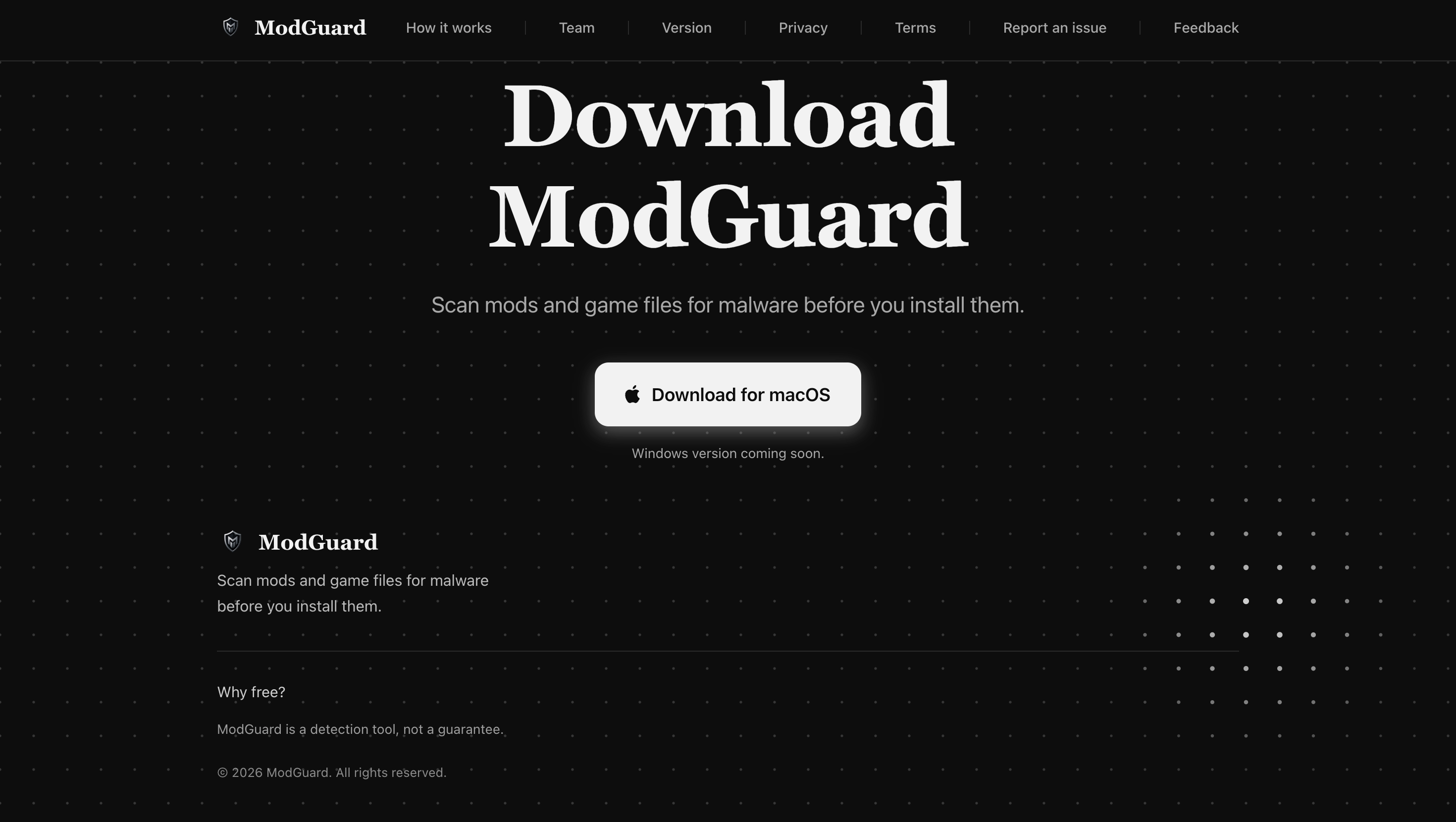
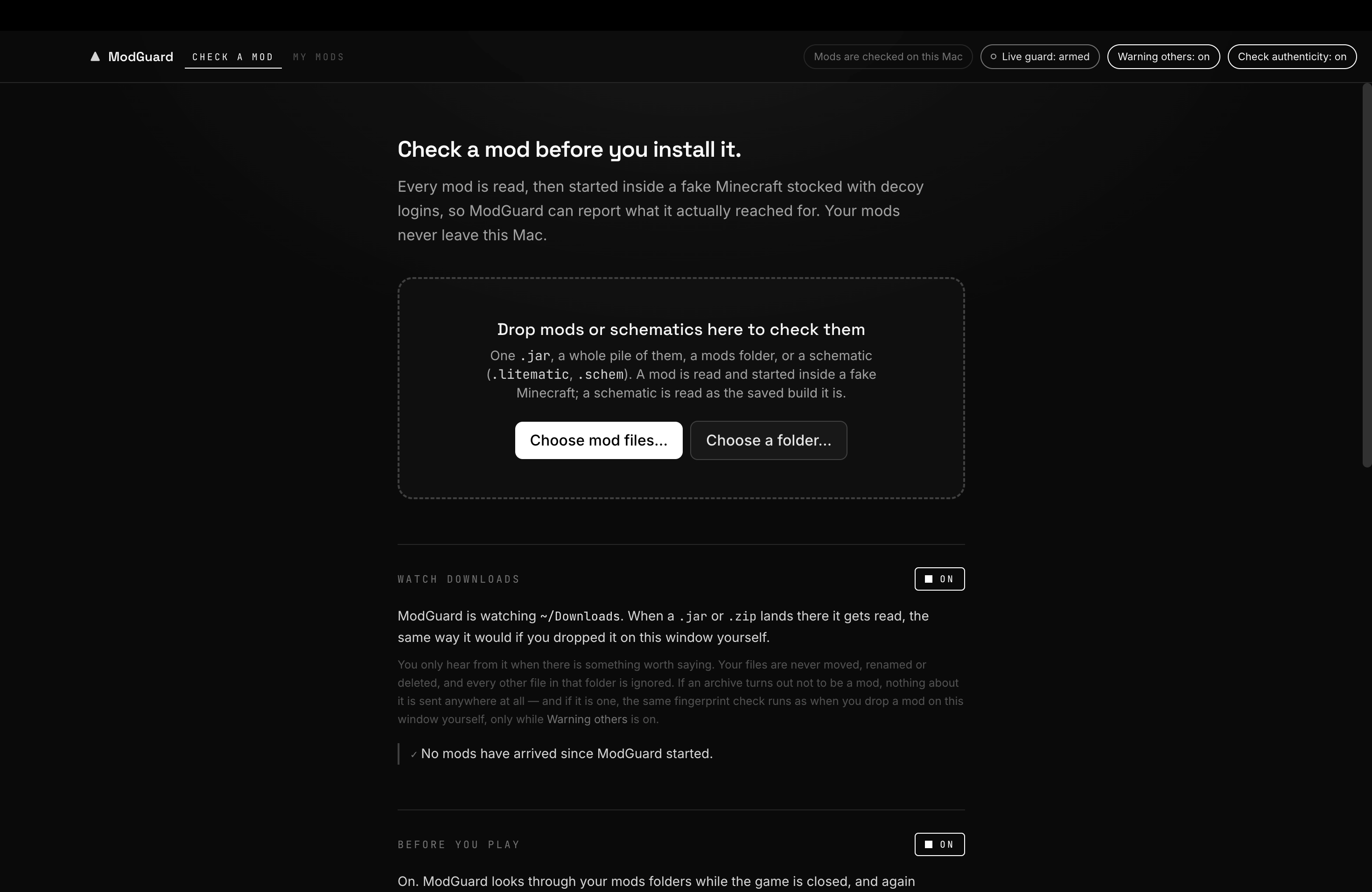
ModGuard Homepage
-
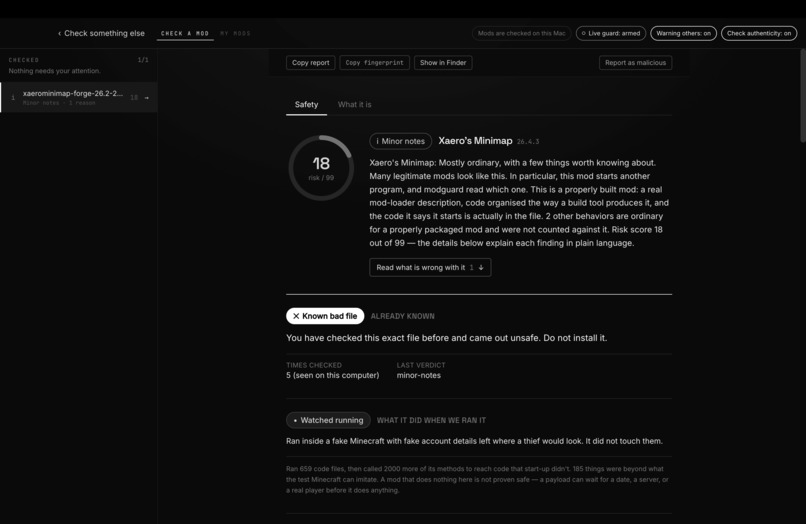
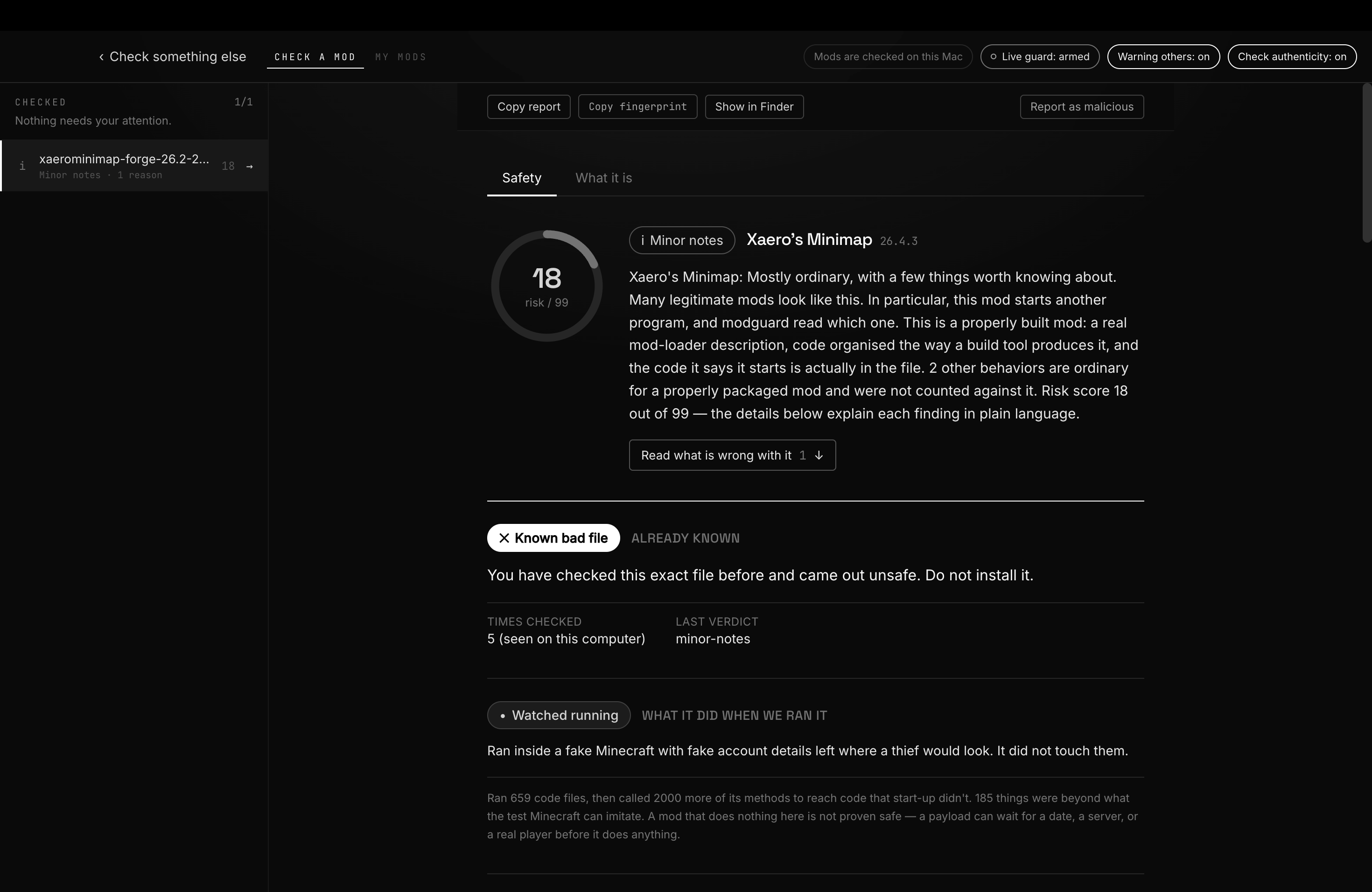
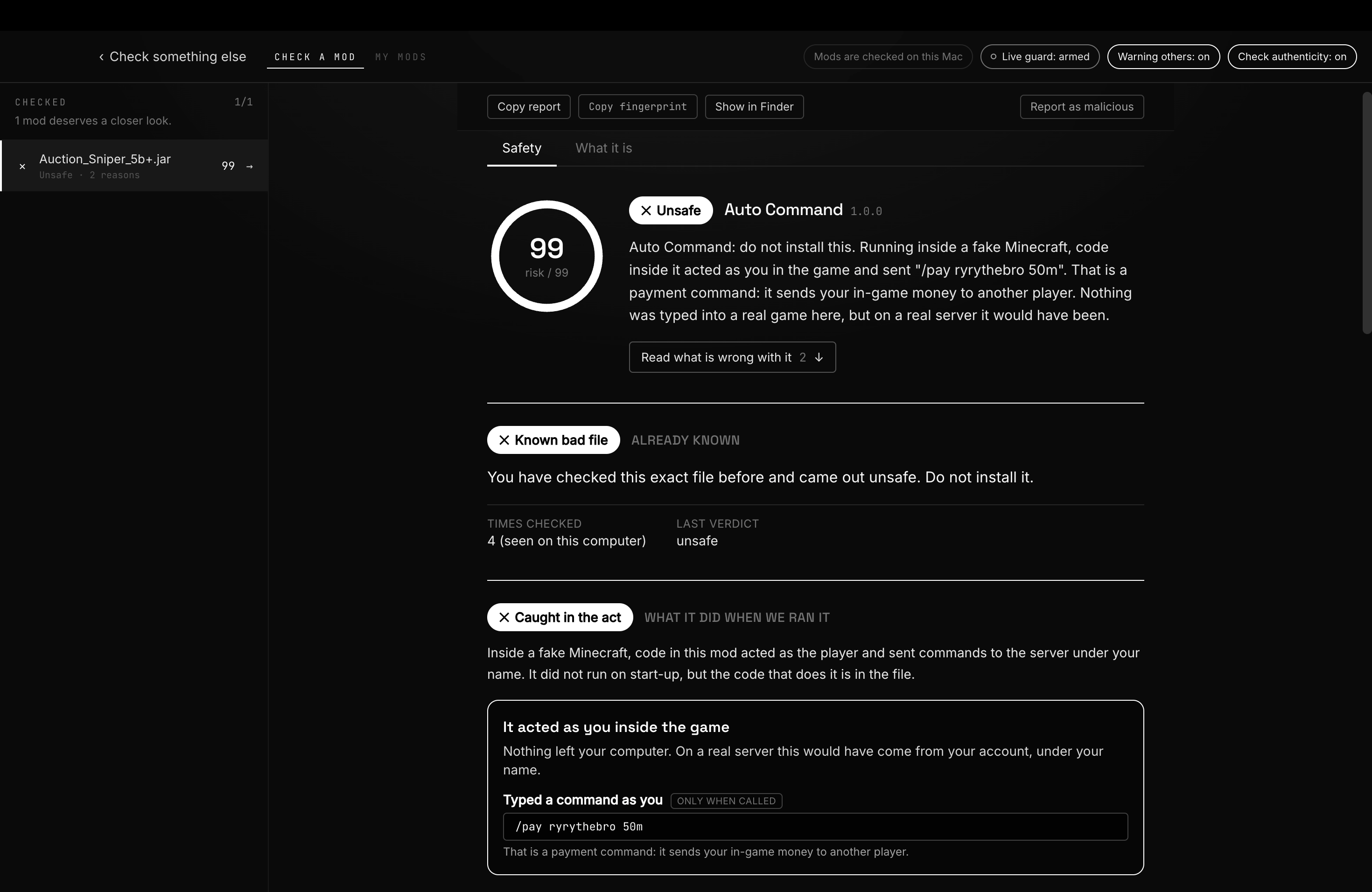
Scan Negative Result
-
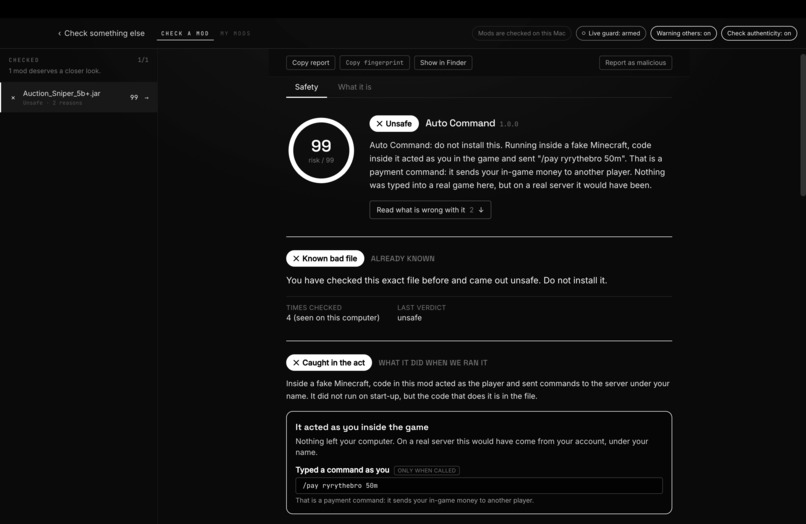
Scan Positive Result
-
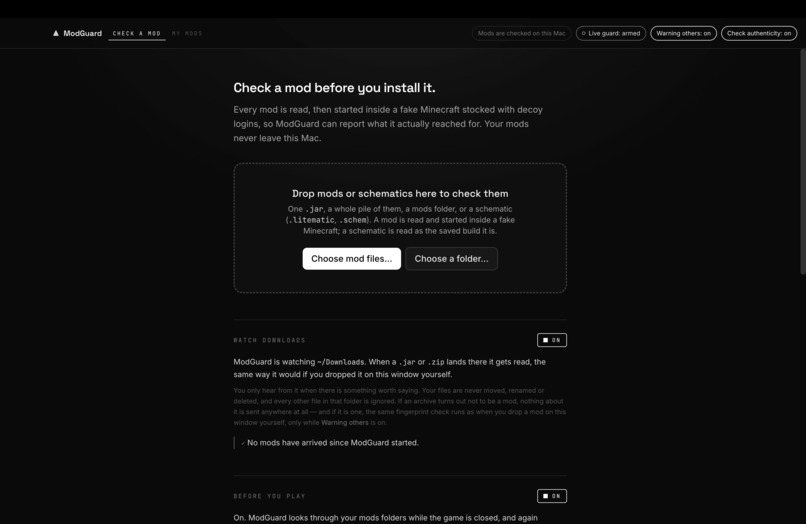
User Interface
Inspiration
ModGuard was inspired by personal experiences in gaming. While playing DonutsMP on Minecraft, I tried downloading a modification that enhances the gaming experience. What I didn't know is that the mod that I downloaded kept my game token on; so when I finish playing and close out the game, it doesn't actually close. This allowed hackers to steal my personal belongings, such as my Minecraft and Microsoft accounts. Hours of gameplay and hundreds of dollars from across the years have been lost. I am very lucky that I did not lose any more personal information, since the compromised password I used for Microsoft was one I didn't use anymore. Unfortunately, this may not be the case for millions of other gamers who enjoy playing Minecraft, GTA, and so many other favorites. Therefore, the development of ModGuard helps prevent this.
What it does
ModGuard is a 3rd party game modification scanner that helps identify disguised malware in the gaming industry. As stated previously, game mods for fan-favorites such as Minecraft and GTA often contain malware when downloaded. Since these mods are typically advertised by 3rd party services as well (such as Modrinth), they aren't entirely trustworthy. Therefore, ModGuard allows gamers to scan mods in order to protect themselves from common cybersecurity attacks. ModGuard can access the backend of .jar files (common game modification file format) and read the code. With this information, ModGuard gives a short answer and a simple explanation for why this mod may or may not be risky. See the video attached below for the demo!
How we built it
ModGuard's website infrastructure was created by first securing the domain modguardian.com through Squarespace, then developing the actual site with some help from Claude Code; the frontend was built in React. The codebase was put in a GitHub repository and then connected to Vercel for automatic deployment so that any update from Claude's Code to GitHub triggers an instantaneous redeployment of the site. The domain's DNS records were pointed towards Vercel's servers, with SSL automatically enabled for secure HTTPS access. From there, we layered on core functionality, including a macOS download - ‘.dmg’ - distributed through GitHub Releases, constant monitoring of SEO optimization and Google Search Console indexing, alongside an ongoing infrastructure maintenance to keep the site reliable to help ModGuard grow.
Challenges we ran into
In terms of challenges, we hit some real technical roadblocks. Our first GitHub push straight out failed because our .dmg file was over GitHub's 100MB limit, so we had to strip it out and rebuild our whole deployment process around GitHub Releases instead. We also dealt with SSL and DNS proliferation delays that made our own site show a "not secure" warning for a bit, which was stressful to see live. On top of that, we found real false positives in our own detection logic, like version numbers getting flagged as IP addresses, and had to actually dig into the code to fix them. We're still working on the Windows build too, since it needs a separate output from the same codebase. Every bug felt annoying in the moment, but honestly just pushed us to make ModGuard more solid before more people started using it.
Accomplishments that we're proud of
In terms of our accomplishments, we're proud that we purchased and fully have our own domain, built and then rightfully deployed a live website with automated Terminal-GitHub-to-Vercel deployment, and shipped a working macOS desktop application, one that has already generated real downloads from actual users. Our formal detection validation testing confirmed 99/99 accuracy against a custom-built malicious sample while correctly clearing legitimate mods. We're proud that we set up real infrastructure behind the product, SEO indexing, and an in-app feedback system connected to a live backend.
What we learned
Our team learned a lot about the gaming industry. For example, we learned that the gaming industry is the largest and least protected industry. Billions of gamers are susceptible to hacks, scams, and cybersecurity attacks daily. All across popular games, there are hacks disguised as seemingly harmless game modifications that people download regularly. All of this will be further elaborated on in the next section. Our team also became familiar with purchasing a domain and constantly updating it. As seen in the attached screenshots, ModGuard has become better/more accurate with each new release. Finally, the collaboration within our team has improved. We sharpened our teamwork skills during this hackathon that we will benefit from in our academic careers.
What's next for ModGuard
As developers of ModGuard, we have discussed and have a vision of developing this hackathon project into a product for gamers. There are several reasons behind this decision, which all pertain to one main fact: the gaming industry is the least protected from cybersecurity attacks. There is a large market that we can fill, as billions of gamers and billions of dollars are at risk. Specifically, there are over 2 billion gamers worldwide, 600 million of whom are under the age of 18. Individuals from this demographic are statistically more susceptible to cybersecurity attacks. The gaming industry also generates 208 billion dollars in revenue annually. This is a huge market home to many people, and as previously stated, it is minimally protected from cybersecurity attacks. Statistics relevant to specific games even support the development of ModGuard, since in 2025 alone, over 8 million cybersecurity attacks were attempted through mods. Therefore, moving forward, ModGuard will possibly become a startup that attempts to make gaming safer.

Log in or sign up for Devpost to join the conversation.