-
-
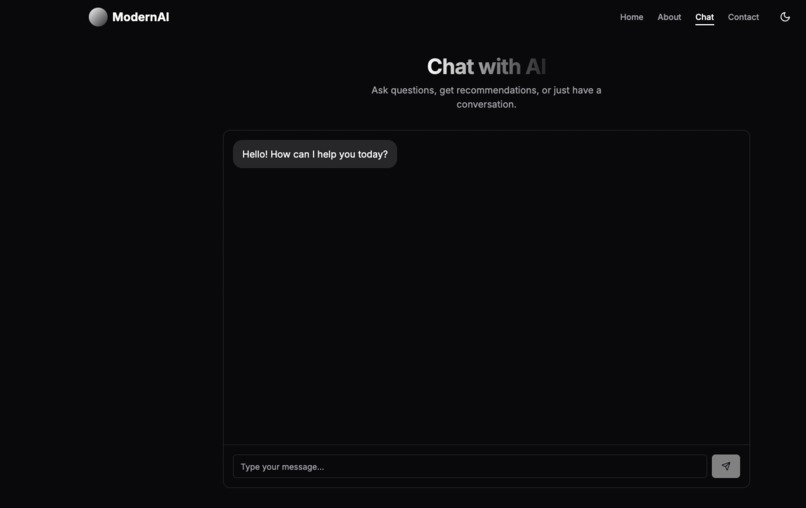
Chat Screen
-

Home Screen
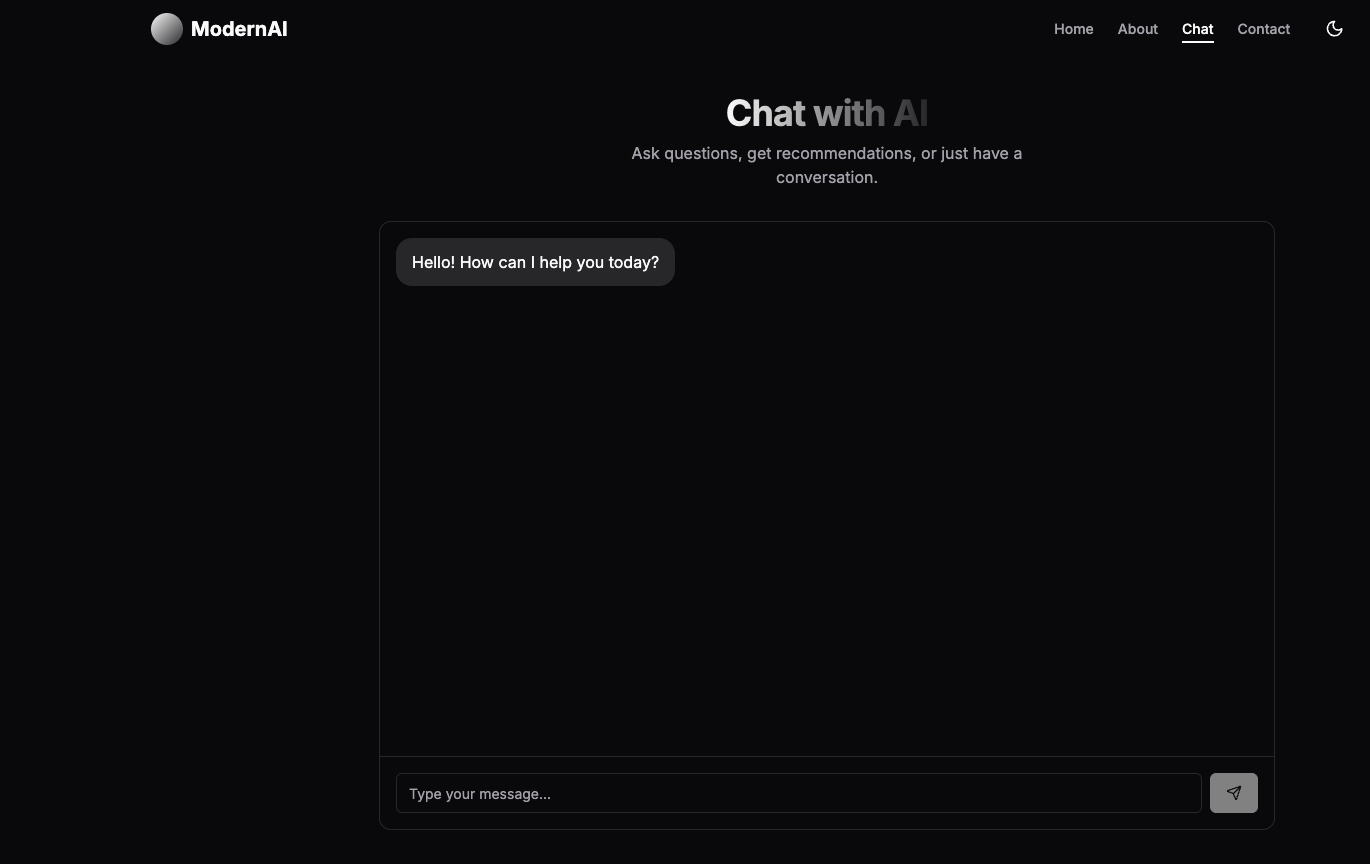

Modern AI – Next-Gen Cyber Threat Intelligence System
Inspiration 🚀
With the increasing complexity of cyber threats and vulnerabilities, traditional security tools struggle to provide real-time, actionable intelligence. We wanted to create Modern AI, a system that ingests, analyzes, and visualizes cybersecurity data efficiently, leveraging graph-based AI, GPU acceleration, and natural language processing to make cybersecurity analytics more accessible.
What We Learned 📚
- Graph databases unlock hidden insights – Mapping cybersecurity data with ArangoDB improved our ability to detect attack patterns.
- GPU acceleration is game-changing – cuGraph significantly improved large-scale graph analysis, making our system real-time.
- Bridging AI with security intelligence – Using LangChain, we enabled natural language interactions, reducing the complexity of querying cybersecurity datasets.
How We Built It 🛠️
- Tech Stack: Python (Flask), ArangoDB (Graph Database).
- Data Sources: CVE vulnerability databases.
- Core Features:
- End-to-End Cybersecurity Data Analysis – Integrates ArangoDB for CVE storage, NetworkX for in-memory graph representation, and cuGraph for GPU-accelerated analytics.
- Natural Language Querying with AI – Leverages LangChain to translate plain English into optimized AQL or hybrid graph queries, enabling non-technical users to retrieve insights effortlessly.
- Scalable & High-Performance Architecture – Built for horizontal scaling with ArangoDB’s distributed nature and cuGraph’s accelerated computations, ensuring performance remains optimal even with growing datasets.
- Graph-Based Attack Path Mapping – Analyzes system logs and network flows to detect possible attack paths before they happen.
- Real-Time Threat Intelligence – Uses AI to correlate vulnerabilities, logs, and security alerts for early detection of threats.
- End-to-End Cybersecurity Data Analysis – Integrates ArangoDB for CVE storage, NetworkX for in-memory graph representation, and cuGraph for GPU-accelerated analytics.
Challenges We Faced 😵💫
- Query Optimization: Translating natural language to AQL efficiently required fine-tuning LangChain’s processing pipeline.
- Handling Large Graphs: Processing millions of nodes & relationships required cuGraph optimizations to reduce memory overhead.
- Balancing AI & Security Accuracy: Ensuring relevant and explainable results from AI-generated queries while minimizing false positives.
- False Positives in AI Detection: Early versions flagged too many irrelevant alerts, requiring better filtering mechanisms.
- Balancing Performance & Accuracy: Ensuring real-time processing while keeping detection rates high was a tough challenge.
Final Outcome 🎉
We built Modern AI, an AI-powered cybersecurity analytics system that enables fast, scalable, and user-friendly threat intelligence. The graph-based approach, GPU acceleration, and natural language processing make cybersecurity insights more accessible than ever.
🔗 Next Steps: Expanding graph analytics capabilities (community detection, predictive modeling) and refining NLP for more complex queries. Planning cloud deployment & benchmarking performance on Google Colab/Kaggle. Stay tuned! 🚀
Built With
- colab
- cugraph
- graphrag
- networkx
- next.js
- python
- react
- tailwind
- typescript


Log in or sign up for Devpost to join the conversation.