-
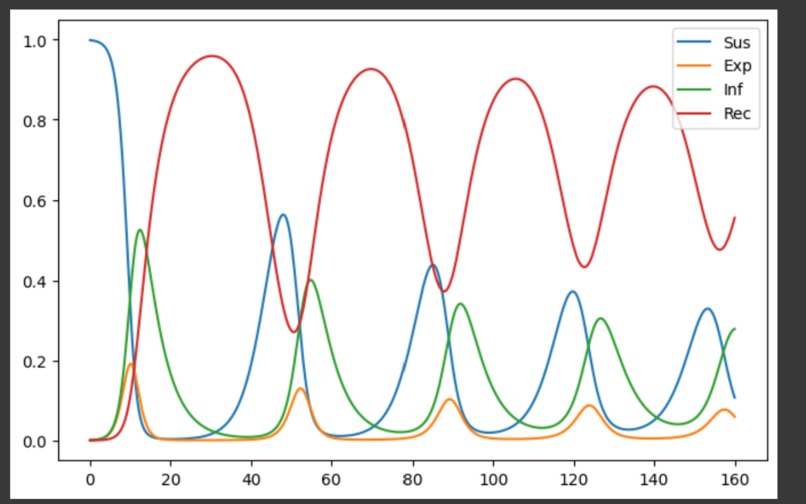
model implementation in python
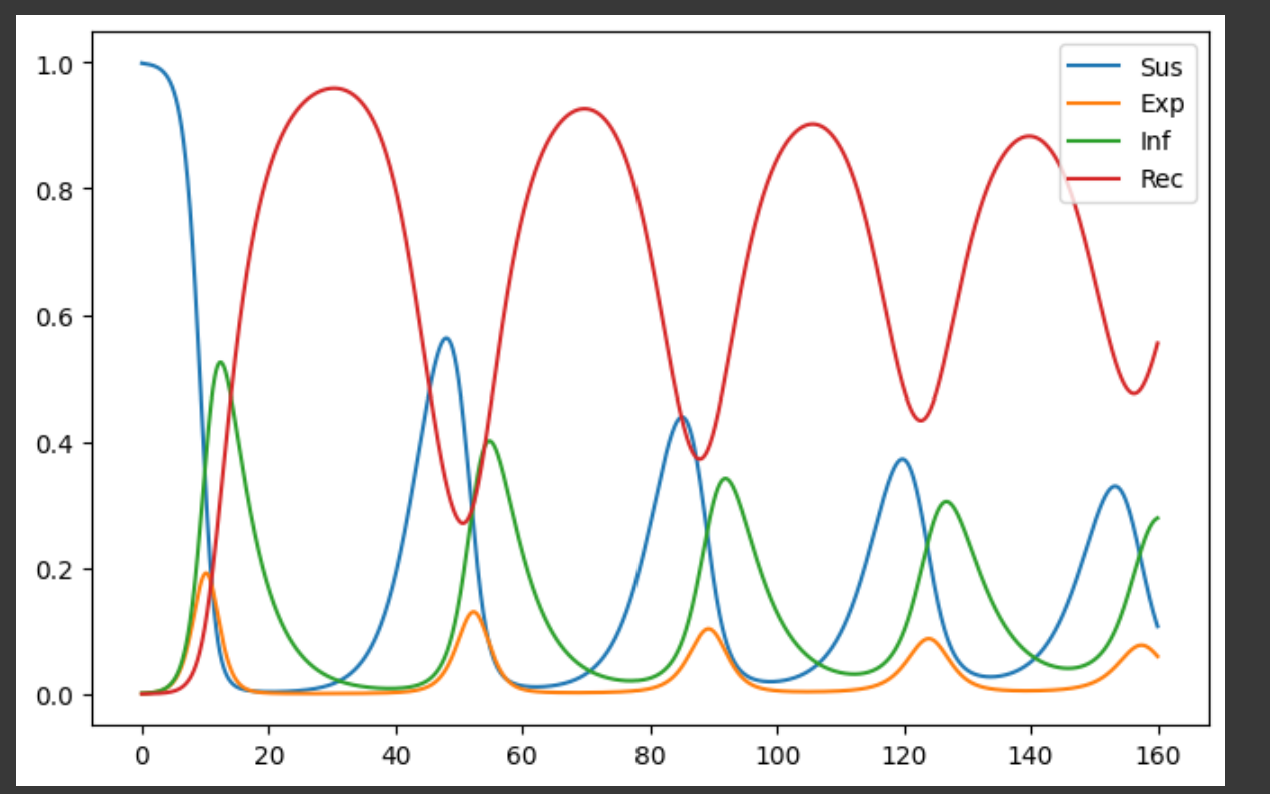
Inspiration
In epidemeology, there are certain mathematical models to predict disease spread. These models are compartmental, meaning they divide a model population into different groups (usually Susceptible, Infected, and Recovered). No library or tool exists which lets users to add nodes/compartments to account for variables they might want to study.
What it does
Provides an accessible UI/UX to implement compartmentalized models and corresponding flow differential equations.
How we built it
We did research into how the basic mathematical model works. Then, we built a Blocks class which allows users to input compartments and route their inputs and outputs to other compartments and define relationships (linear or non-linear). The Blocks are then parsed by a Model class which also creates the differential equations and solves them using Euler's Step method (numerical integration).
Challenges we ran into
- Finding relevant packages to implement frontend and backend apps
- Parsing and cleaning data
- Finding relevant data for model
- Implementing ML techniques ## Accomplishments that we're proud of
- Functional Differentiation Equation Solver ## What we learned
- How to manage time efficiently to merge together parallel workflows ## What's next for Models to Predict Pandemic Spread
- Polishing the backend model to include more non-linear relationships
- Polishing the front end
- Incorporating ML techniques to better fit real world data and to make a generative disease spread model.

Log in or sign up for Devpost to join the conversation.