Inspiration
The fashion industry still relies heavily on expensive, time-consuming photoshoots that require models, studios, photographers, and post-production. For small brands and independent designers, this creates a massive barrier to entry.
Modelfy was inspired by a simple idea: what if anyone could generate a complete, high-quality fashion photoshoot in seconds, without needing any technical skills or manual setup? The goal was to remove friction and make professional visual content instantly accessible.
What it does
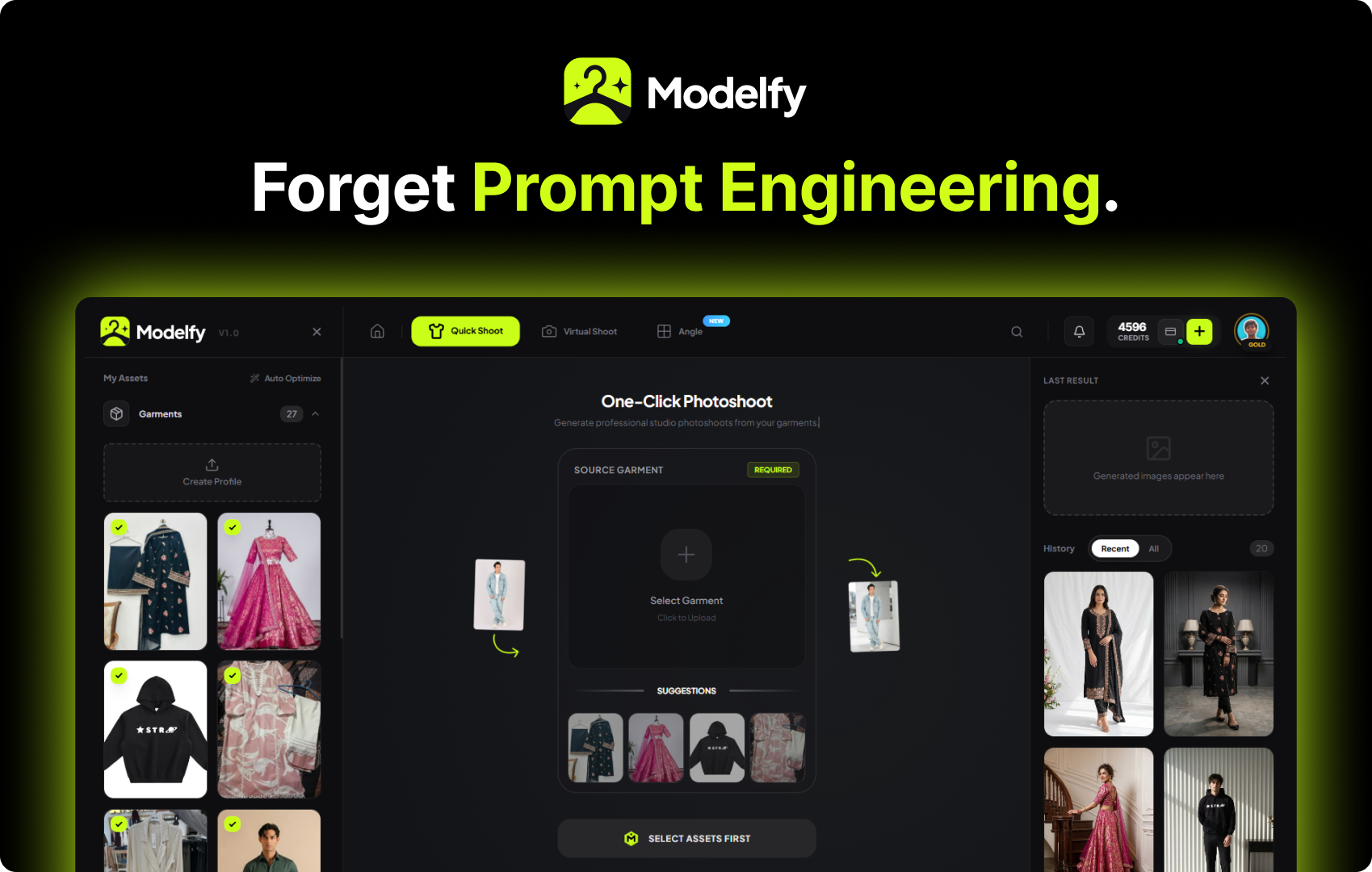
Modelfy is an AI-powered virtual fashion photoshoot platform that transforms a single garment image into a fully styled, production-ready photoshoot.
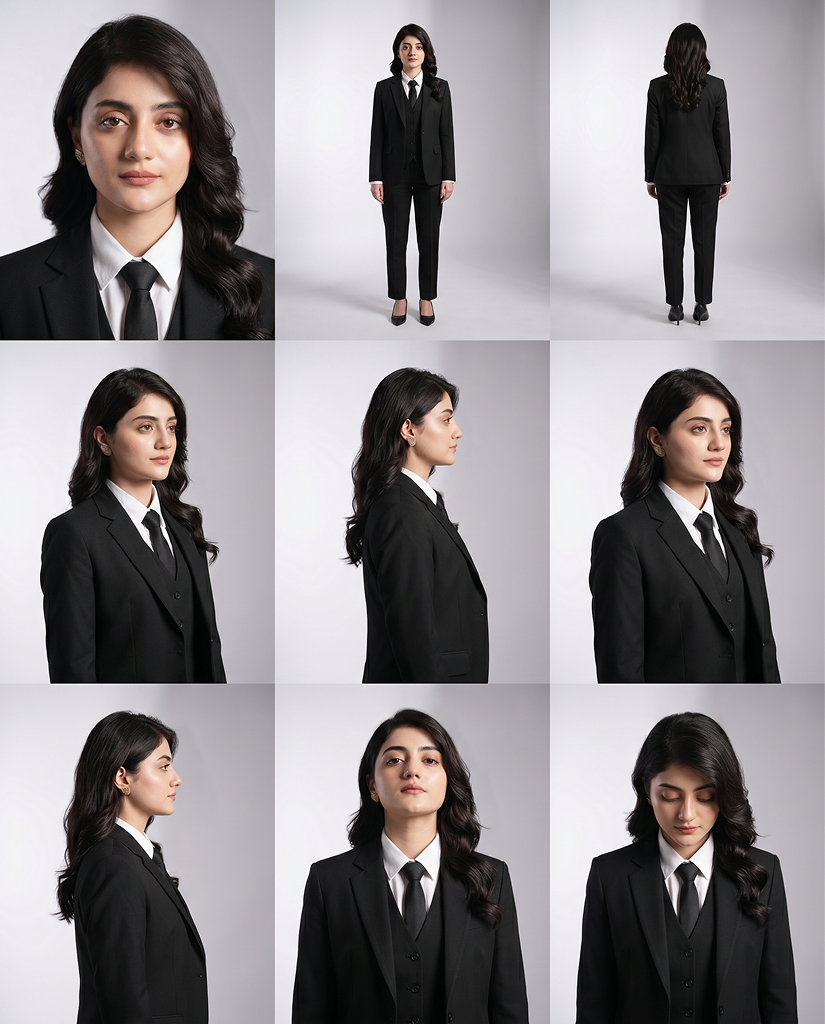
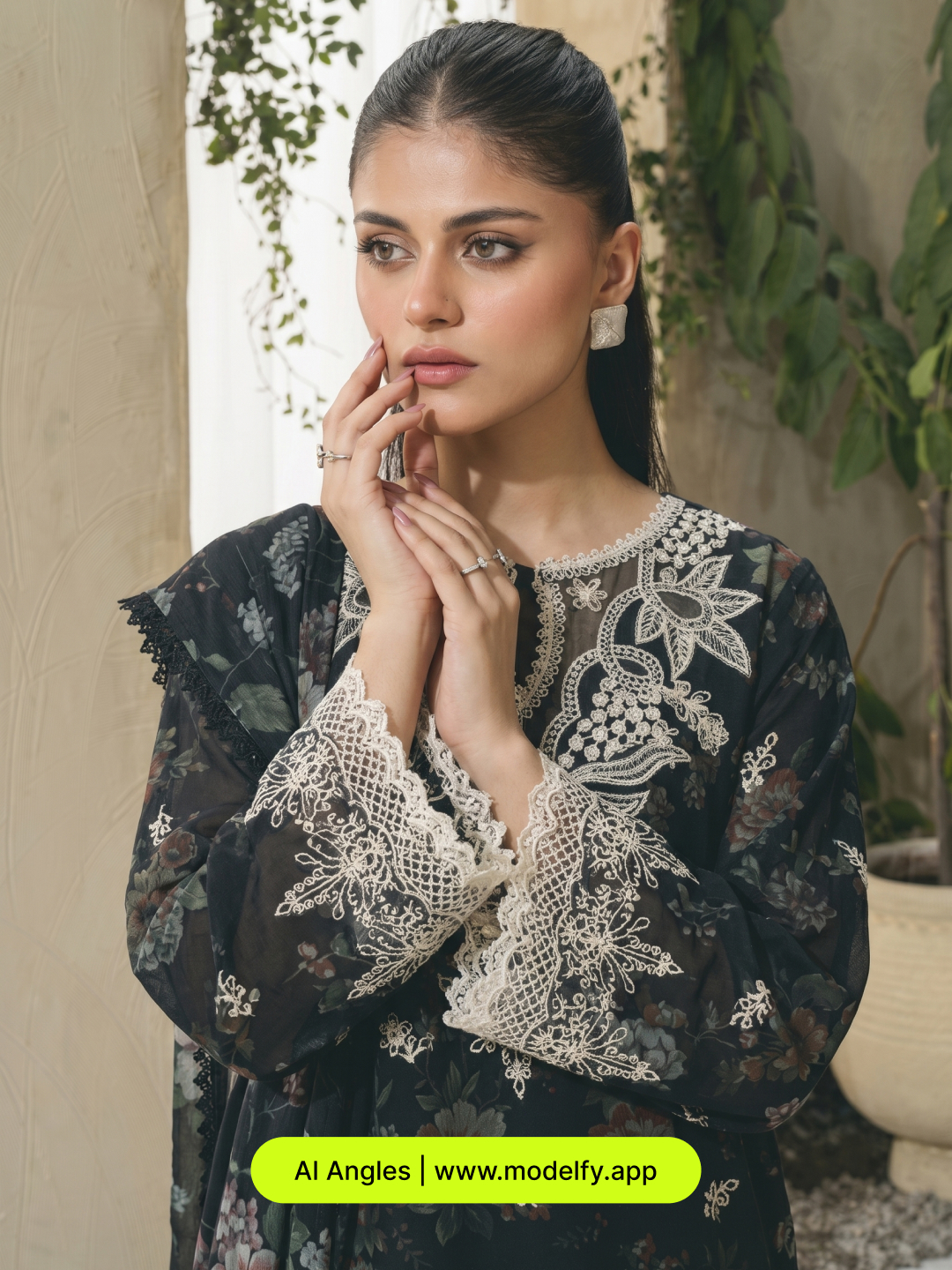
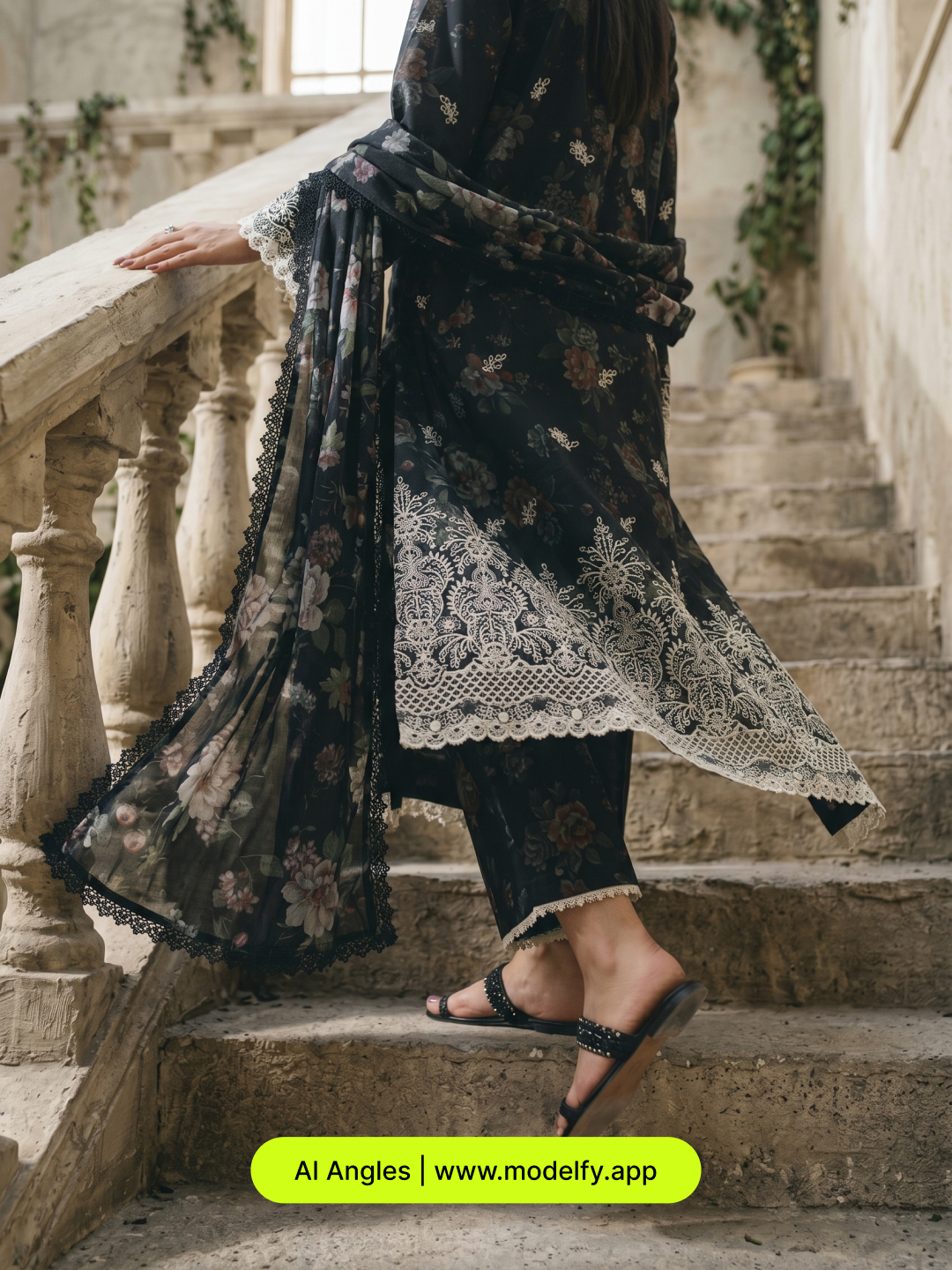
Unlike traditional AI tools that require prompts, manual configuration, or multiple steps, Modelfy works in one click. It automatically generates the model, pose, lighting, and background, producing realistic, brand-ready visuals optimized for e-commerce, social media, and marketing.
It’s designed for fashion brands, dropshippers, designers, and content creators who need fast, scalable, and consistent product imagery without the cost of traditional production.
How I built it
Modelfy combines multiple AI systems into a single seamless pipeline.
The core system analyzes garment inputs to extract structural, material, and stylistic attributes. This data is then used to intelligently generate a matching model, pose, and environment that fits the garment context.
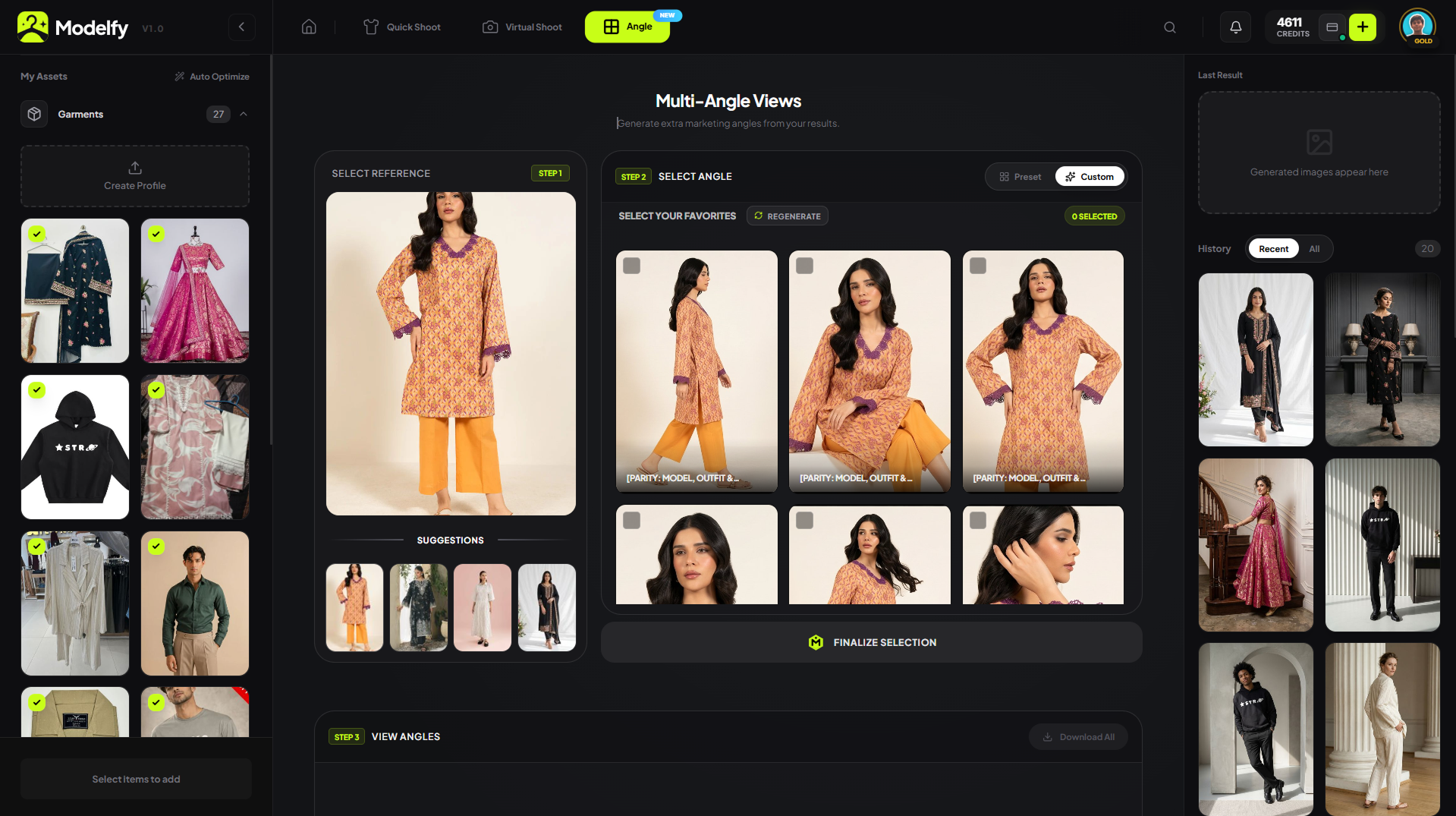
On top of that, I focused heavily on UX, removing all unnecessary steps. Instead of prompt engineering or manual selection, the system makes decisions automatically, delivering a true one-click experience.
The frontend is built for simplicity and speed, while the backend orchestrates image processing, generation models, and optimization layers to ensure consistent output quality.
Challenges I ran into
The biggest challenge was consistency. Generating a good image is easy. Generating the right image every time is hard.
Ensuring that garments remain accurate while being realistically fitted onto AI-generated models required careful tuning and iteration. Small errors like distortion, incorrect proportions, or lighting mismatch can instantly break realism.
Another major challenge was simplifying the user experience. Most AI tools push complexity onto the user through prompts. Removing that complexity while still maintaining control and quality took a lot of refinement.
Accomplishments that I'm proud of
The biggest win is achieving a true one-click workflow that actually works. No prompts, no manual tweaking, no guesswork.
Modelfy can automatically generate complete fashion visuals that look like real photoshoots, which puts it ahead of most tools that still rely on user input or templates.
I’m also proud of how practical it is. This isn’t a gimmick tool, it solves a real business problem by reducing cost, time, and effort for fashion content creation.
What I learned
Building Modelfy made one thing clear: users don’t want more control, they want better results with less effort.
I also learned that AI products aren’t just about the model quality, they’re about system design. The way different components connect and how the experience is structured matters more than any single model.
Another key lesson was that simplicity is harder than complexity. Removing friction takes more work than adding features.
What's next for Modelfy
The next step is expanding control without sacrificing simplicity.
This includes allowing optional fine-tuning like selecting styles, brand aesthetics, or campaign types, while still keeping the core one-click experience intact.
There are also plans to improve garment understanding, support more complex clothing types, and introduce batch generation for scaling large catalogs.
Long term, the goal is to turn Modelfy into a complete AI fashion content engine that can handle everything from product images to full marketing campaigns.
