-
-
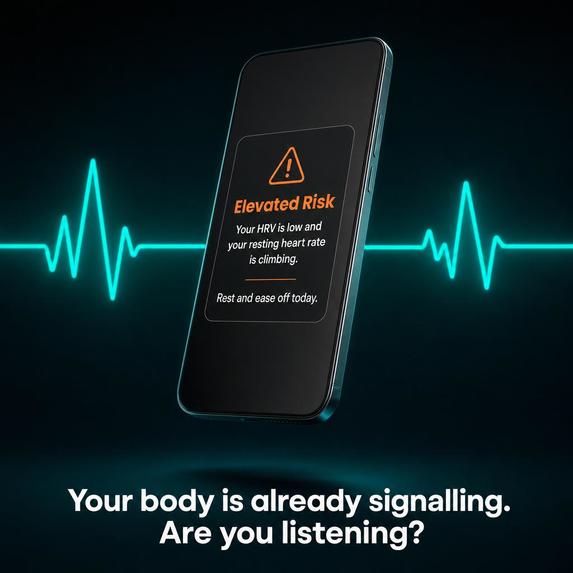
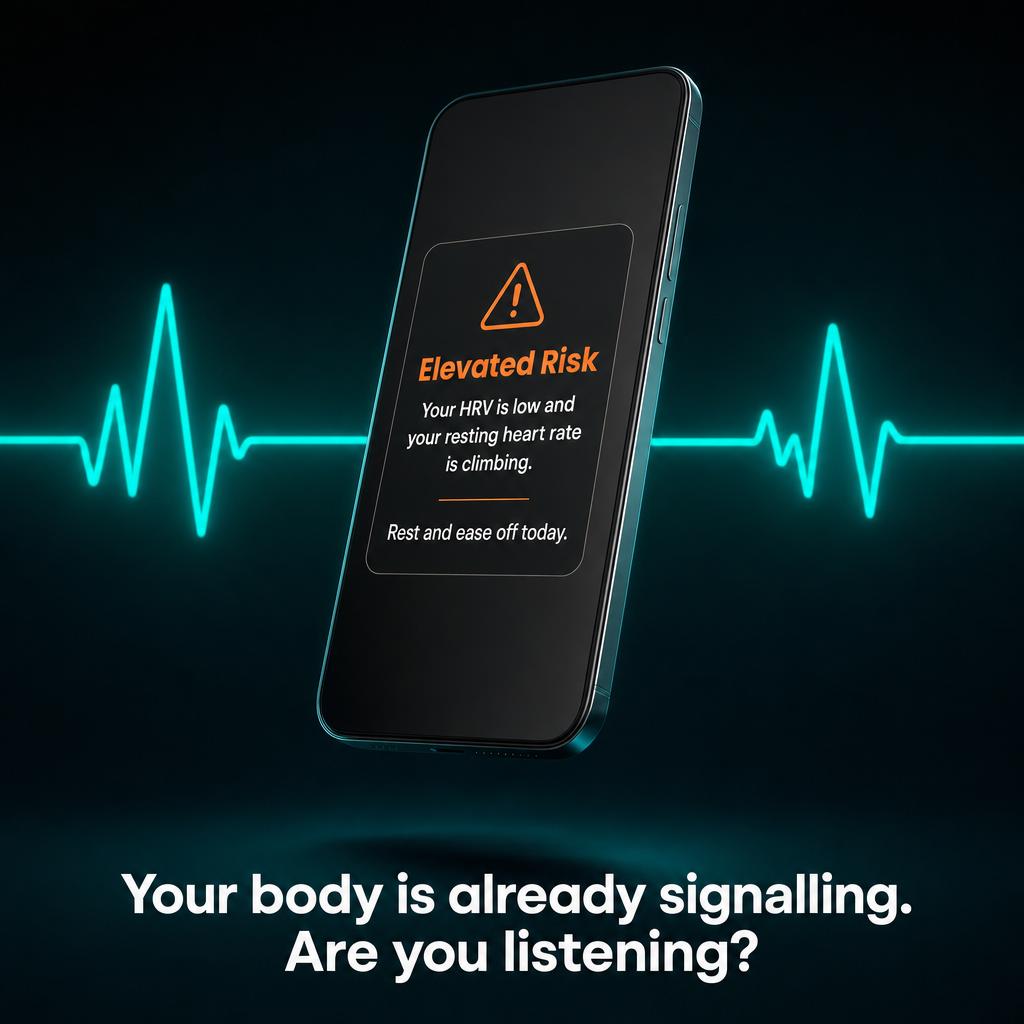
Your body is signalling. BodyCheck helps you act earlier.
-
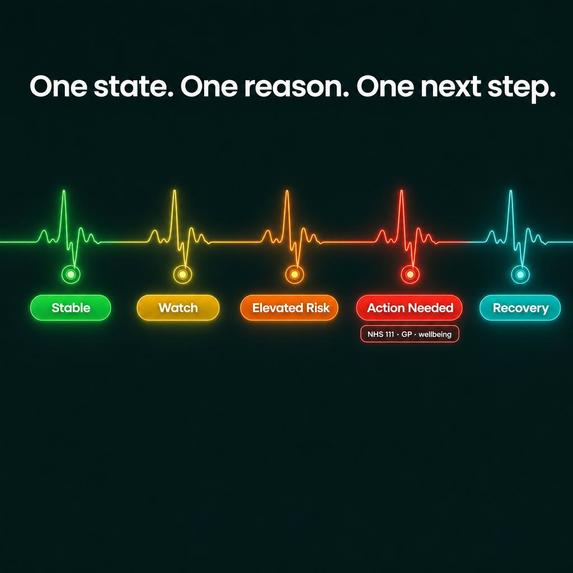
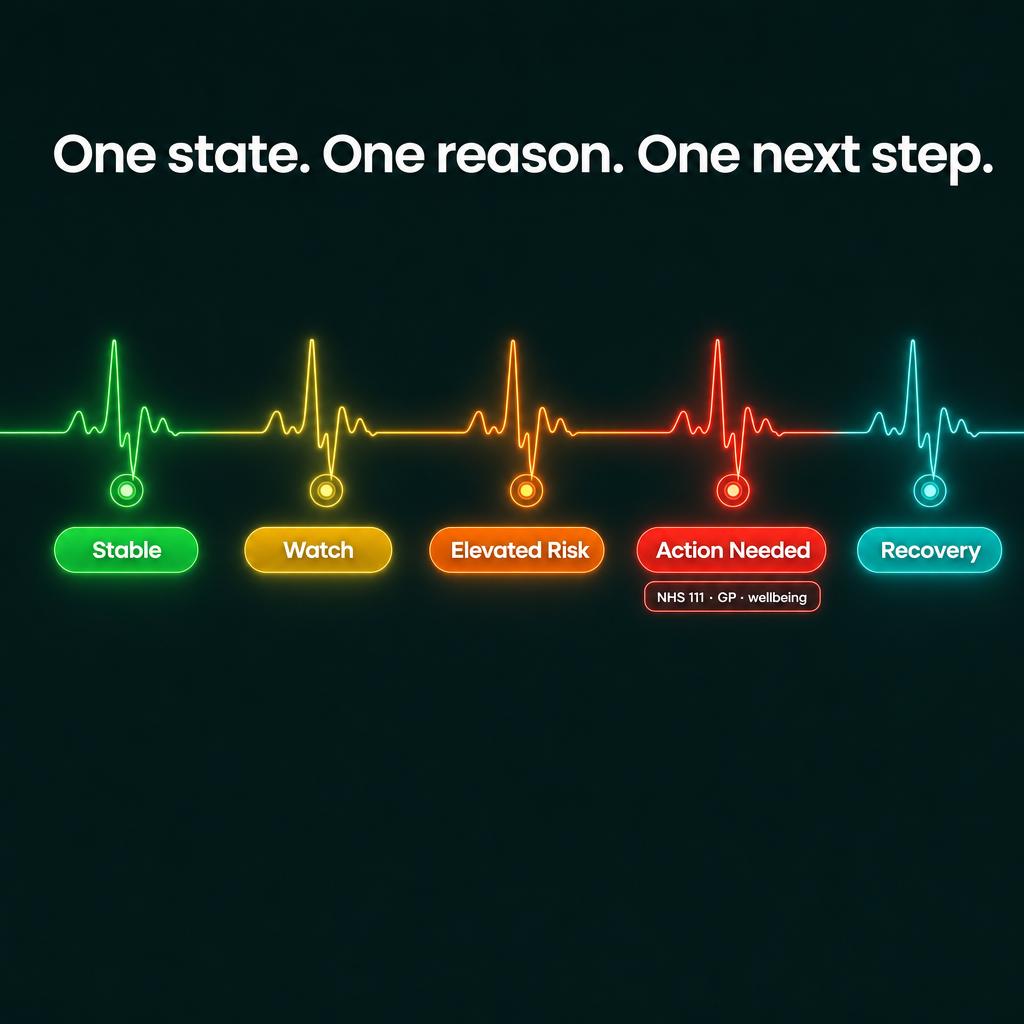
One body state. One reason. One safe next step.
-
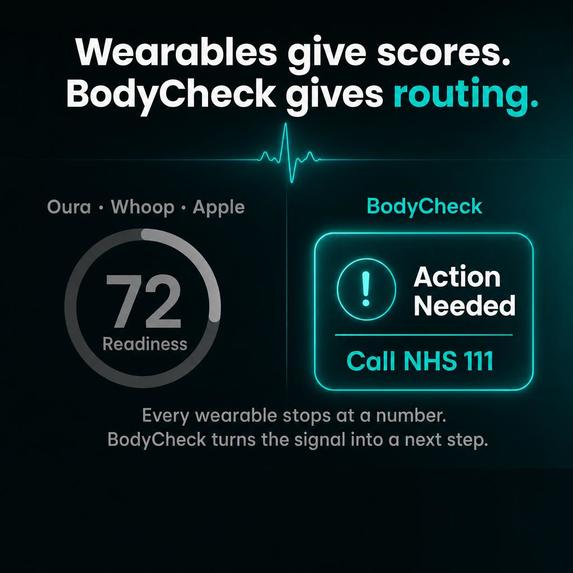
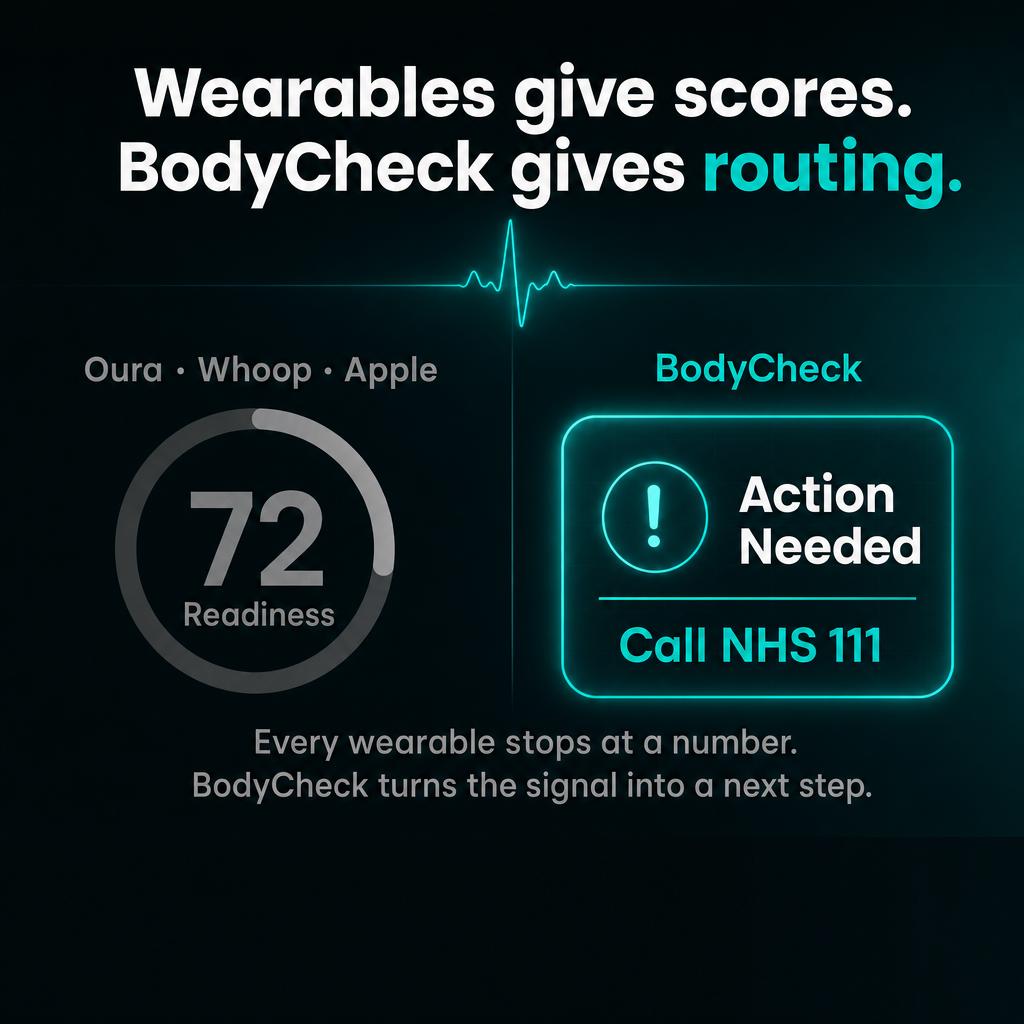
Wearables give scores. BodyCheck gives care routing.
Inspiration
Many people wear smartwatches, but they still do not know when their body is moving from normal tiredness into a riskier pattern. A user might feel tired, stressed, or slightly unwell, while their wearable shows poor sleep, lower HRV, higher resting heart rate, raised skin temperature, increased breathing rate, or reduced activity.
The problem is not lack of data. The problem is interpretation. Wearables collect useful signals, but users are often left asking: “Is this normal, should I rest, should I monitor it, or should I seek help?”
We built ModelAI BodyCheck to help people act earlier on their health. It is not a disease diagnosis tool. It is an early-warning and next-step navigator that turns wearable signals into one clear body state and one safe action.
Our goal is simple: help users notice meaningful health patterns earlier, understand why their body state changed, and take proportionate action before problems escalate.
What it does
ModelAI BodyCheck is a prevention-first health companion powered by wearable data, symptom check-ins, and a governed finite-state risk engine.
It turns fragmented health signals into simple, explainable body states:
Stable → Watch → Elevated Risk → Action Needed → Recovery
The app helps the user understand three things immediately:
- What state am I in today?
- Why did my state change?
- What should I do next?
The system uses signals such as:
- Sleep efficiency and sleep duration
- HRV / RMSSD
- Resting heart rate
- Steps and activity balance
- Skin temperature deviation
- Respiratory rate deviation
- Simple symptom check-ins
BodyCheck calculates transparent ModelAI indicators such as Readiness Index and Stress Load Index. These are not used to diagnose disease. They are used to understand whether the user appears stable, under strain, recovering, or in need of further support.
Example guidance may include rest, hydration, reducing exertion, monitoring for another day, contacting a GP, calling NHS 111, or seeking urgent help if red-flag symptoms appear.
The key difference is safety: the AI does not invent a diagnosis. The finite-state engine determines the body state, and the AI explains it in clear, user-friendly language.
How we built it
We built ModelAI BodyCheck around a governed finite-state machine architecture.
At the centre of the system is the formal model:
$$ M = (Q, \Sigma, \delta, q_0, F) $$
Where:
- (Q) is the set of health states
- (\Sigma) is the set of alerts generated from wearable and symptom data
- (\delta) is the transition function
- (q_0) is the initial baseline state
- (F) is the final recovery or long-term stability state
Instead of letting a chatbot directly decide the user’s health status, we first process the data through ModelAI’s finite-state logic. The state engine evaluates whether signals are normal, mildly abnormal, persistent, or compounding.
For example:
- One poor night of sleep may only create a low-level warning.
- Low HRV plus rising resting heart rate may indicate physiological strain.
- Raised skin temperature plus respiratory deviation plus low readiness may move the user into Watch or Elevated Risk.
- Stable signals over several days may move the user into Recovery.
The language model is then used as an explanation layer. It translates the state-machine result into simple guidance that users can understand and act on.
This gives us a hybrid architecture:
- Wearable signal processing for real-world monitoring
- Deterministic FSM logic for safety and traceability
- AI explanation for clear user communication
- Conservative escalation rules for health safety
- Recovery tracking so the product supports reassurance, not just alerts
Challenges we ran into
The biggest challenge was balancing usefulness with safety.
We wanted BodyCheck to help users act earlier, but we did not want the product to make unsupported medical claims. Wearable signals can show strain, but they cannot diagnose disease by themselves. That meant we had to design BodyCheck as a prevention and early-intervention assistant, not a diagnostic tool.
Another challenge was avoiding false alarms. A single poor night of sleep, one high heart-rate reading, or one stressful day should not panic the user. We therefore used state transitions, duration rules, and multi-signal patterns rather than one-off thresholds.
We also had to simplify complex physiology into something understandable. Users should not need to interpret HRV, respiratory deviation, skin temperature, sleep stages, or stress-load calculations manually. The product needed to answer the practical question:
“What is happening, why does it matter, and what should I do next?”
Accomplishments that we're proud of
We are proud that ModelAI BodyCheck is not just another health chatbot or another wearable dashboard.
It has a clear safety architecture. The AI does not make a diagnosis. It explains the result of a transparent state engine.
We are also proud of the explainability layer. Users can see why their body state changed, which signals contributed, and what action is recommended. This makes the system more trustworthy than a black-box health score.
Another accomplishment is the recovery logic. Many health apps focus only on warnings. BodyCheck also tracks whether the user is returning to stability. That makes the experience less frightening and more supportive.
Most importantly, we built the product around a prevention-first principle: help people notice meaningful patterns earlier and take proportionate action.
What we learned
We learned that preventive health AI is not mainly about predicting disease names. It is about helping people make better decisions at the right time.
We also learned that explainability matters as much as prediction. A user does not only need a score. They need to know why the score changed and what they can safely do about it.
We learned that finite-state machines are powerful for health use cases because they provide memory, structure, and escalation logic. They allow the system to distinguish between a temporary fluctuation, a persistent pattern, and a worsening state.
Finally, we learned that LLMs are most useful when they are governed. In BodyCheck, the LLM does not replace the risk engine. It makes the risk engine understandable.
What's next for ModelAI BodyCheck
Next, we want to connect BodyCheck to live wearable APIs and expand the prototype into a real longitudinal monitoring system.
Our next steps include:
- Live Fitbit integration
- More personalized baselines
- Better symptom check-ins
- Safer escalation pathways
- Clinician-review mode
- Family or caregiver support mode
- Long-term recovery tracking
- Privacy-preserving health state logs
- Integration with ModelAI’s broader ScenarioStateEngine
In the future, ModelAI BodyCheck could support students, busy professionals, families, and people managing chronic stress or recovery. The long-term vision is a trusted early-warning layer that helps people act sooner, understand their body better, and seek help at the right time.
ModelAI BodyCheck is not designed to replace clinicians. It is designed to help users reach the right support earlier, with clearer context and safer guidance.
Built With
- api
- css
- cursor
- explanation
- finite
- fitbit
- github
- health
- index
- javascript
- json
- layer
- llm
- load
- logic
- machine
- modelai
- mongodb
- next.js
- node.js
- openai
- postgresql
- processing
- python
- react
- readiness
- rest
- scenariostateengine
- search
- signal
- state
- stress
- supabase
- tailwind
- typescript
- vector
- vercel
- wearable
- web


Log in or sign up for Devpost to join the conversation.