-
-
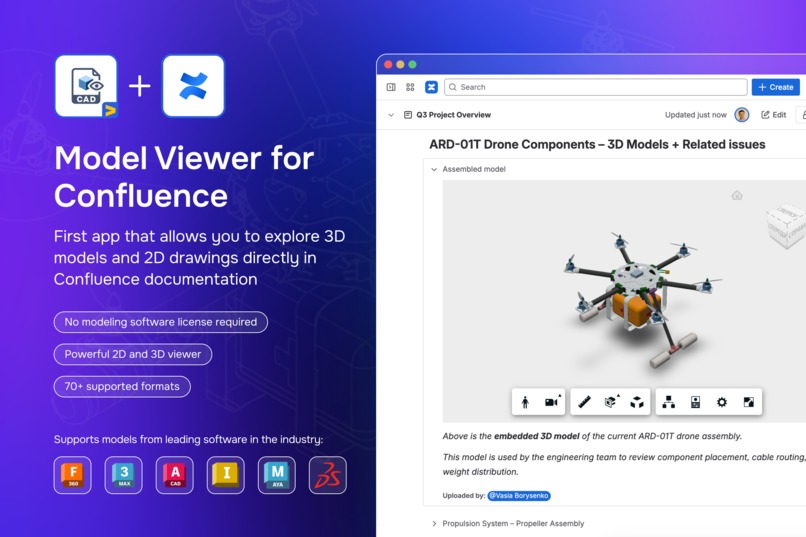
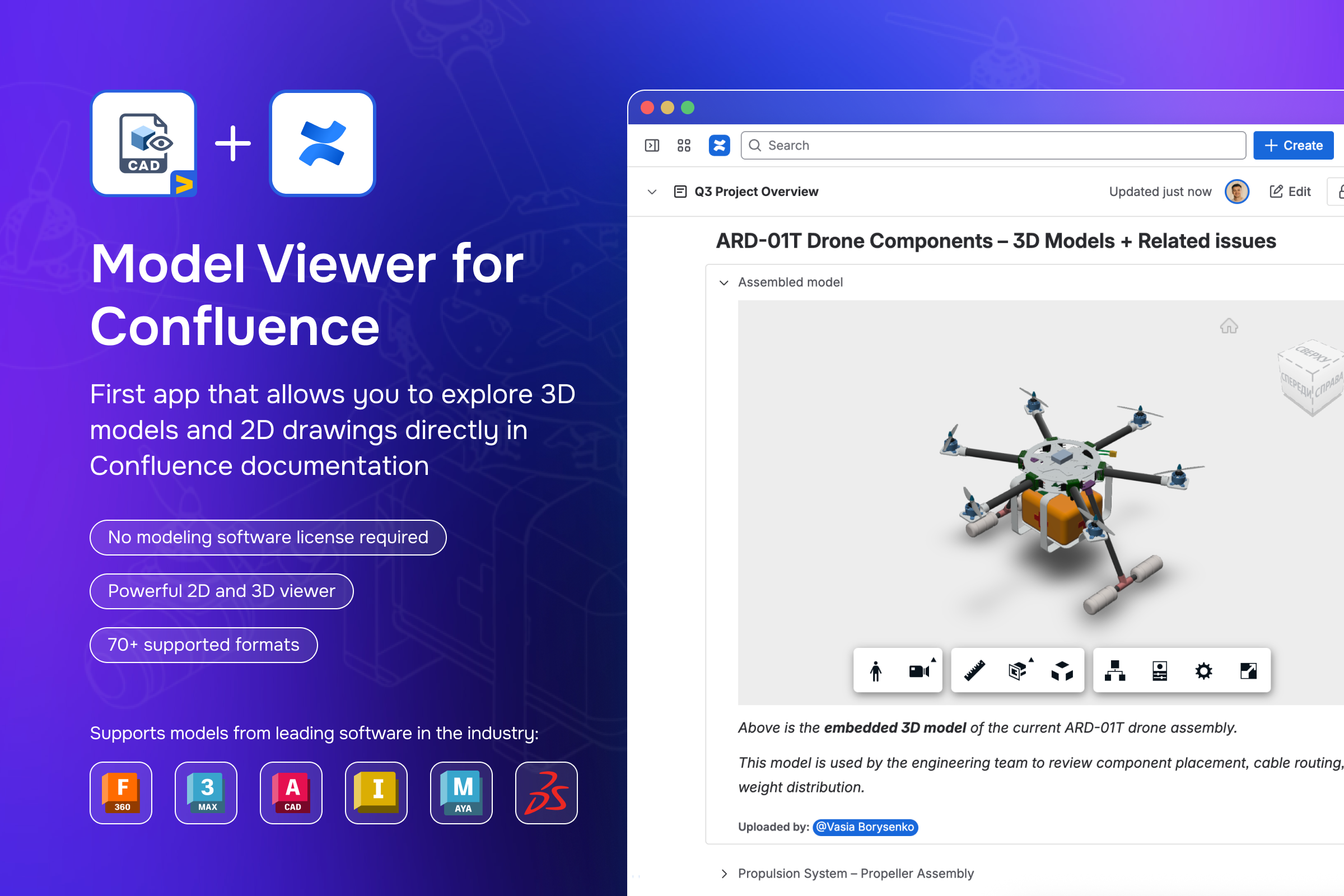
Model Viewer for Confluence
-
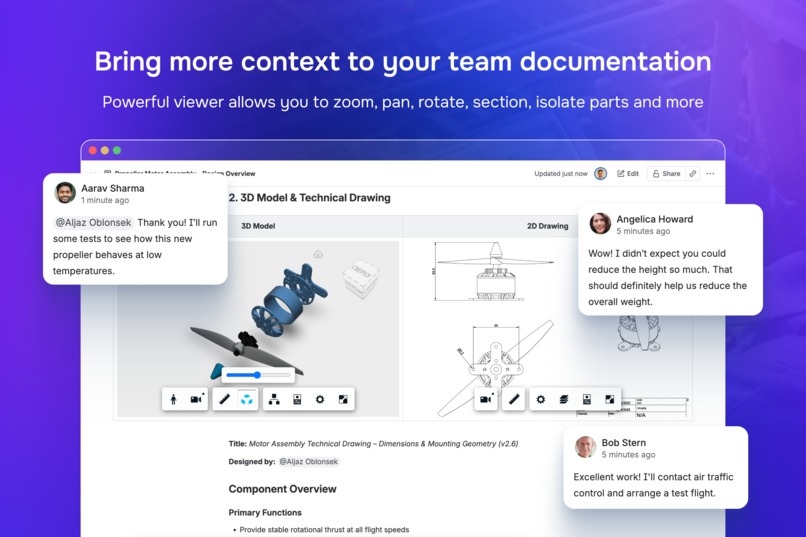
70+ model formats
-
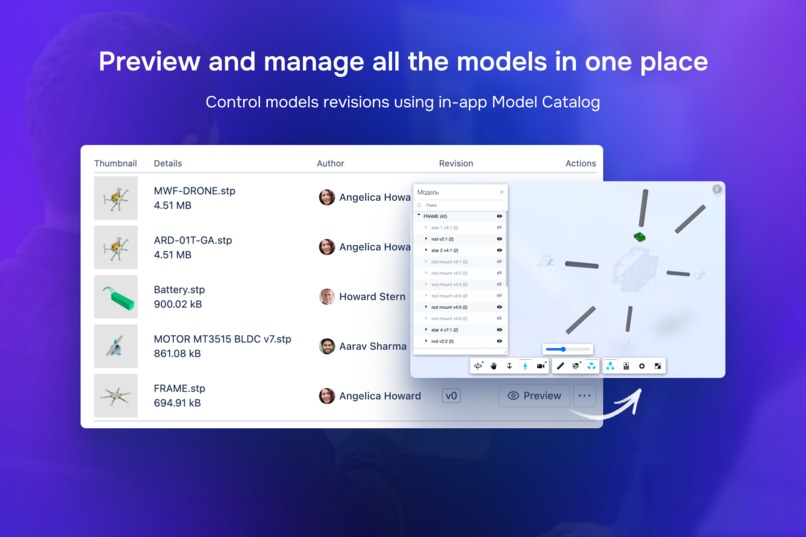
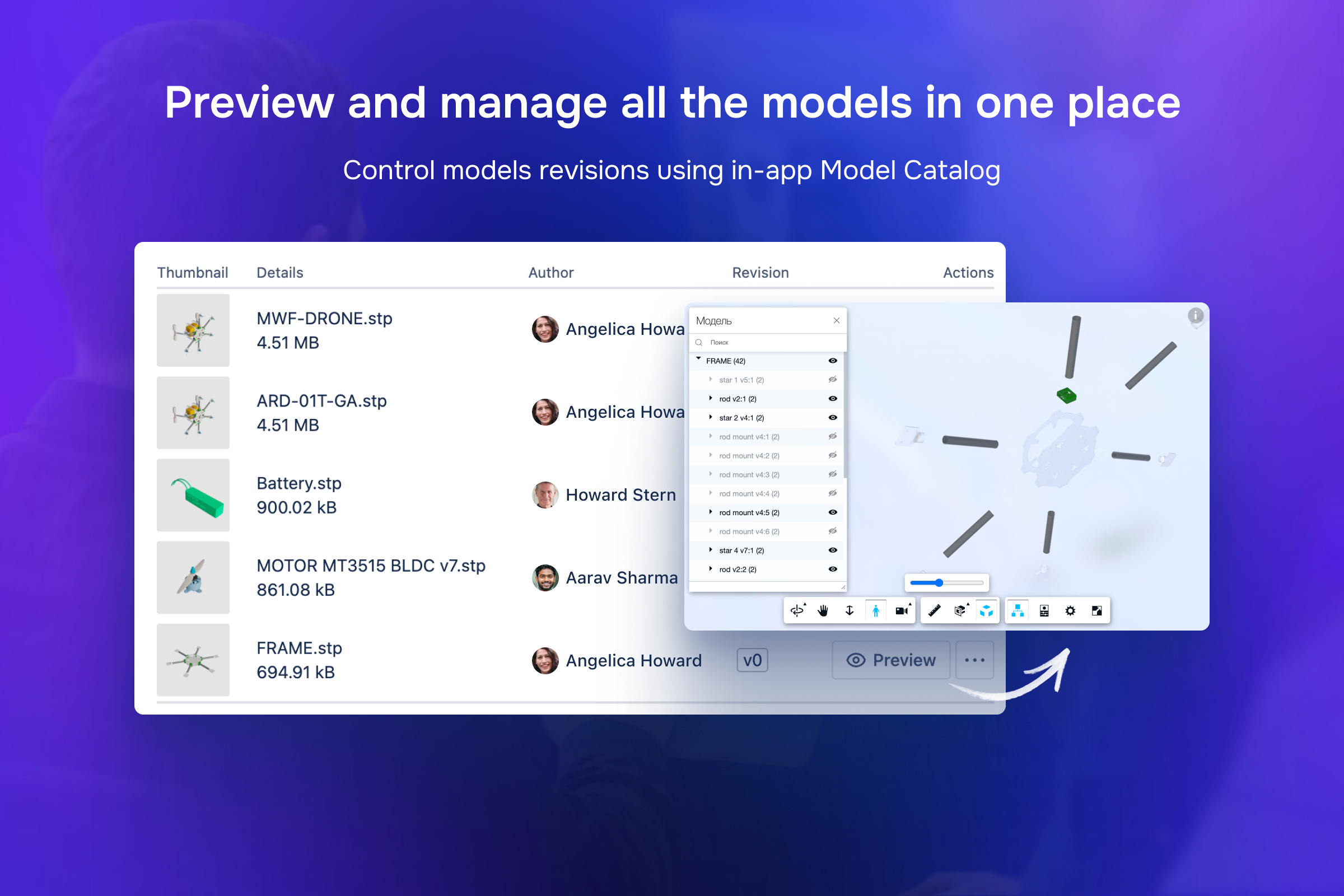
Embedded Model Catalogue
-
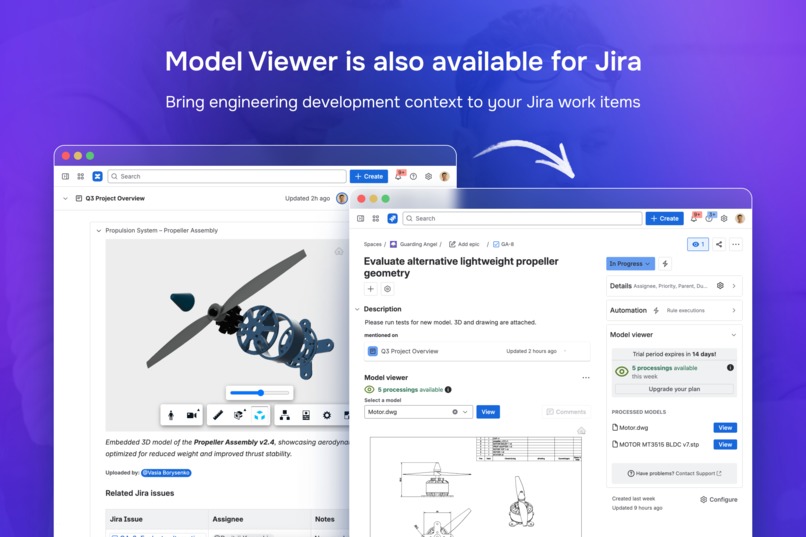
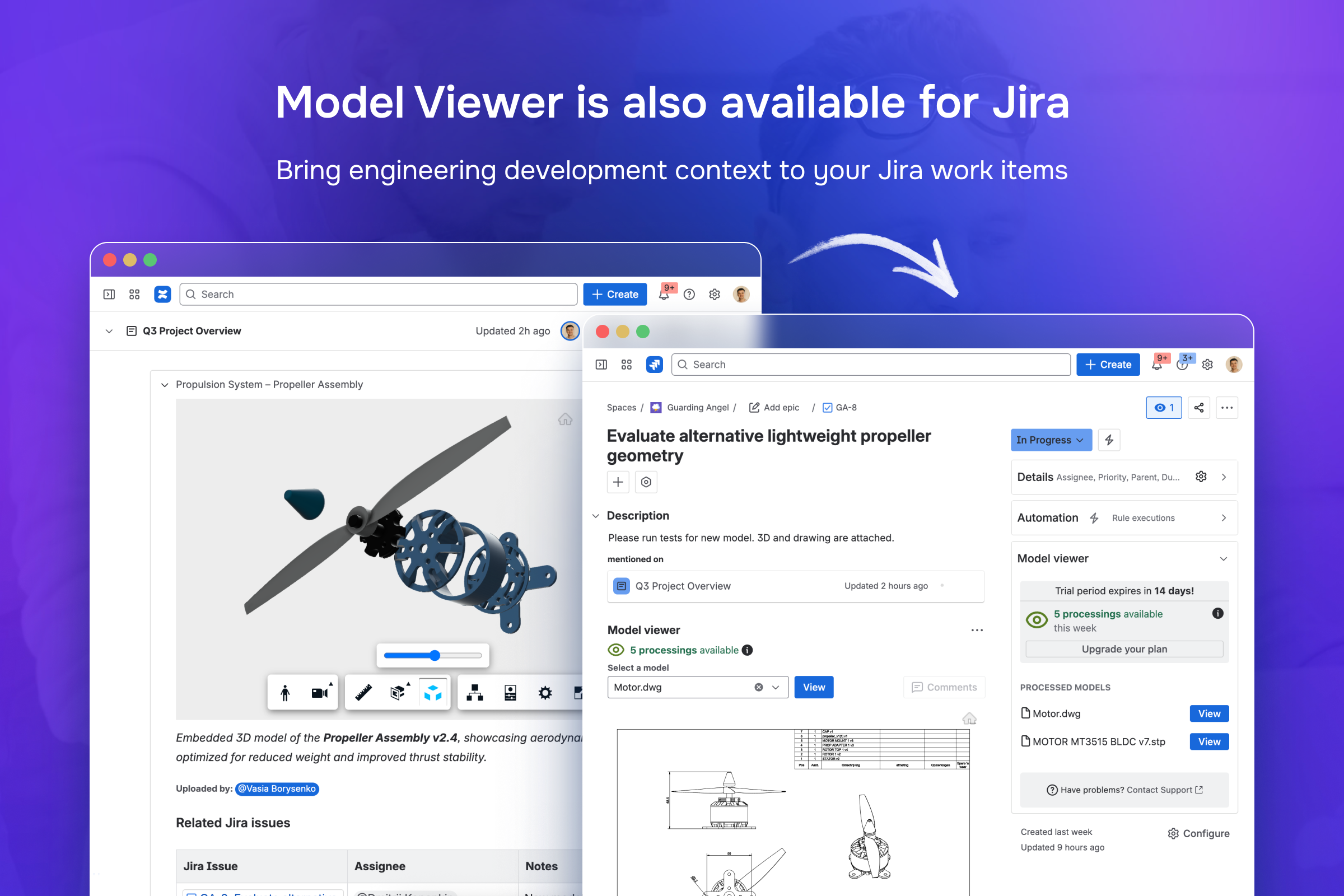
Work with Jira
Inspiration
Design and engineering teams often rely on a small number of experts who hold CAD licenses and can open proprietary files. Everyone else - project managers, software developers, QA, leadership - is effectively blind without screenshots or long explanations. We saw this firsthand with teams like Robert’s, who build life-saving airborne drones. Only three mechanical engineers had CAD access, leaving dozens of collaborators dependent on them for every preview, every change, every decision. This slowed progress and created unnecessary bottlenecks.
We believed product design collaboration shouldn’t work this way. Visual information should flow freely, not be locked behind expensive software or specialist skills. That insight became the foundation for Model Viewer for Jira and Confluence.
What it does
Model Viewer brings fast, secure, in-browser 2D/3D model visualization directly into Atlassian Cloud - no downloads, no plugins, and no CAD licenses required.
Key capabilities:
- Supports 70+ CAD/CAM formats, including assemblies and complex multi-part models
- Works natively inside Jira issues and Confluence pages
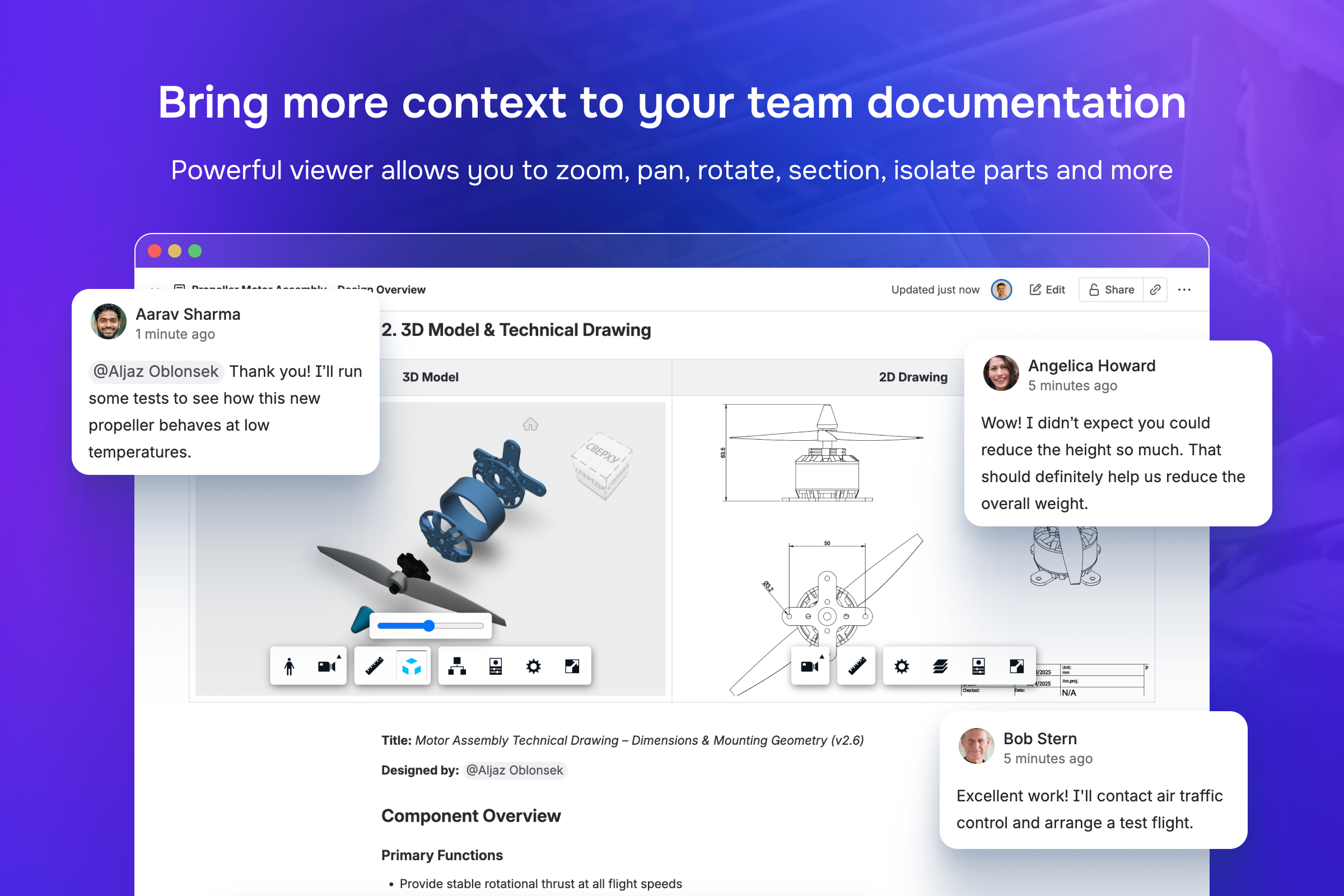
- Allows teams to inspect geometry, structure, and version differences
- Enables real visual collaboration: discussions, reviews, planning, risk assessment
- Keeps all engineering context attached to the work, not lost in screenshots or chats
- It turns static documentation into interactive, visual engineering understanding for the entire team.
How we built it
We built Model Viewer on a foundation of secure cloud rendering and high-performance model processing. Key architectural decisions included:
- A scalable backend pipeline that converts proprietary CAD formats into web-friendly visual data
- Browser-based rendering optimized for both lightweight parts and large assemblies
- Deep integration with Jira and Confluence to embed models exactly where teams collaborate
- Strict security principles: files are processed ephemerally and never stored long-term
- Strict tenant isolation.
- UI components designed to feel native in Atlassian Cloud, not bolted on
The result is a seamless "it just works" experience, even for users who have never touched CAD software before.
Challenges we ran into
Building a universal viewer for dozens of highly inconsistent CAD formats was no small feat. We faced challenges such as:
- Enormous variation in file structures across formats and vendors
- Rendering very large assemblies while keeping the browser responsive
- Ensuring security and privacy without sacrificing performance
- Integrating smoothly into the constrained Atlassian iframe environment
- Designing a UX that makes technical models intuitive for non-technical users
- Every challenge forced us to simplify complexity - and that became a core design philosophy.
Accomplishments that we're proud of
- Building a viewer that works for 70+ formats with a single, elegant user experience
- Making technical CAD models accessible to every role in the company, not just engineers
- Enabling teams to collaborate visually and catch issues earlier in the development cycle
- Supporting real-world use cases like Guardian Angel - a drone designed to deliver emergency supplies to unreachable disaster zones
Most importantly: We removed a major collaboration barrier that previously slowed teams building critical products.
What we learned
Throughout development, we learned that:
- Most teams don’t need advanced CAD manipulation - they just need clarity and access
- Technical files are powerful communication tools when made universally available
- Atlassian users value context above all, and embedding models inside actual work items was transformative
- Speed matters: if a model opens instantly, people actually use it; if it takes 20 seconds, they don’t
We learned that when visuals become a shared language, teams align faster and build better products.
What's next for Model Viewer for Confluence
We’re just getting started. Our roadmap includes:
- Annotations and markups directly on the model
- Rovo that explain model structure, differences, and risks
- Support for Jira Automation and more integration points across Atlassian
- Enhanced enterprise controls for large engineering organizations
- Atlassian Government Cloud support
Our goal is simple: Bring the future of engineering collaboration into Atlassian Cloud and make it - accessible to everyone.


Log in or sign up for Devpost to join the conversation.