-
-
-
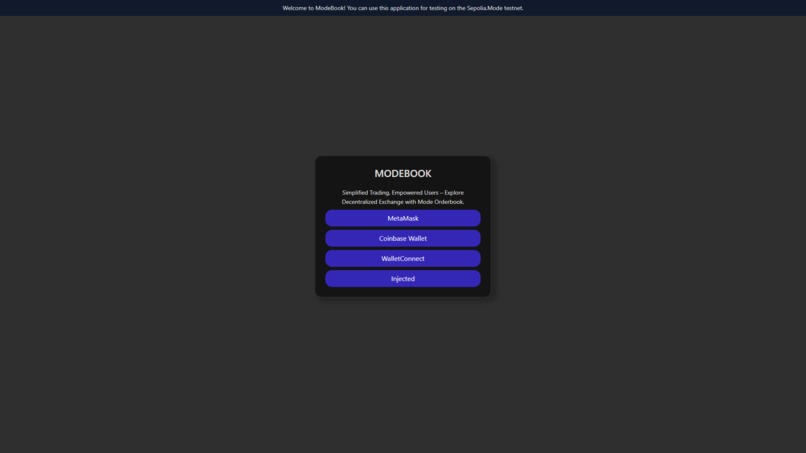
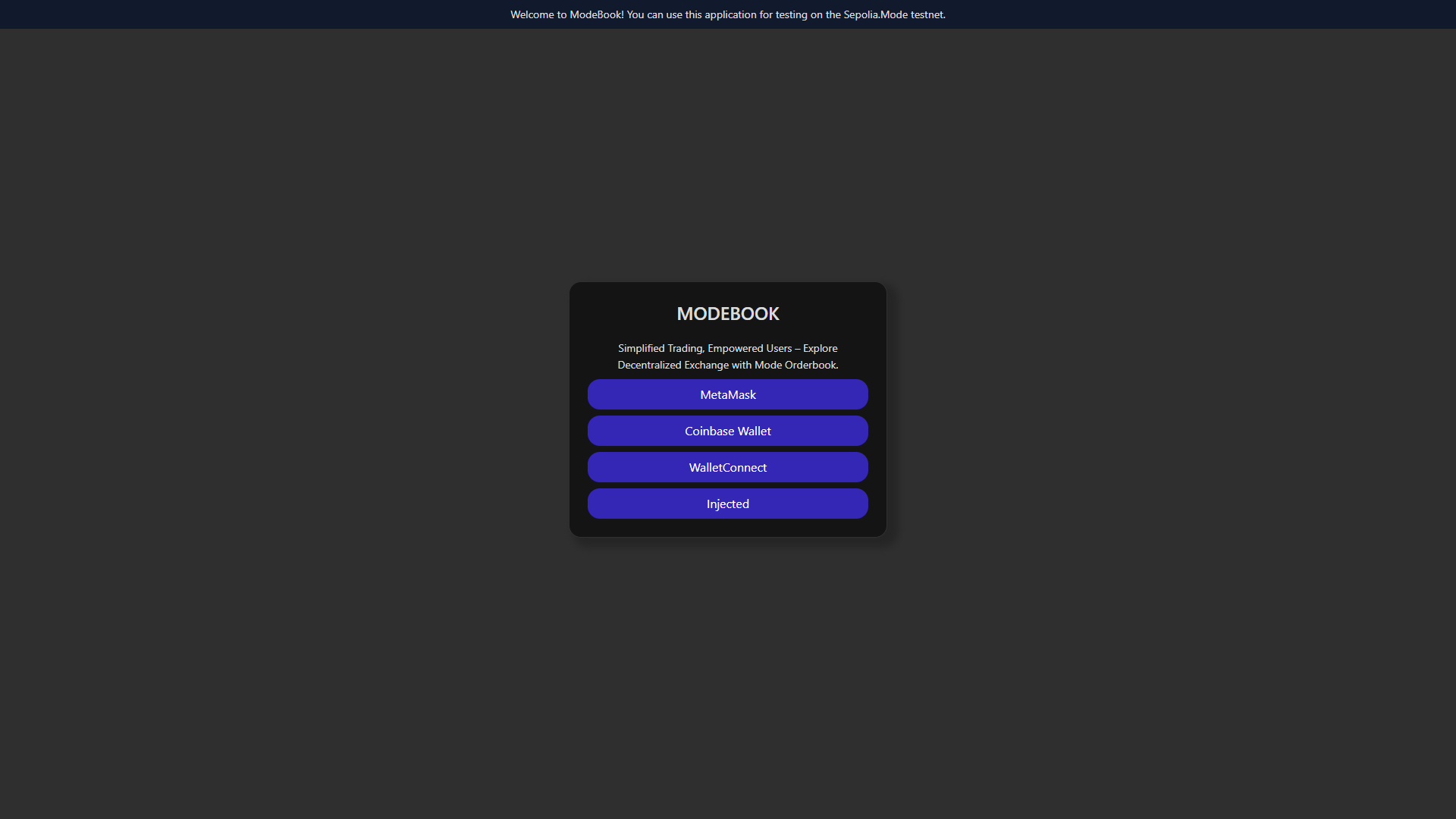
Wallet Connect
-
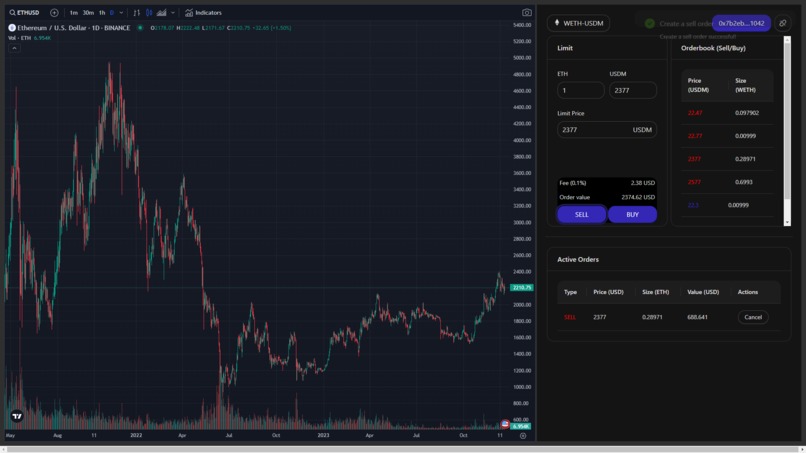
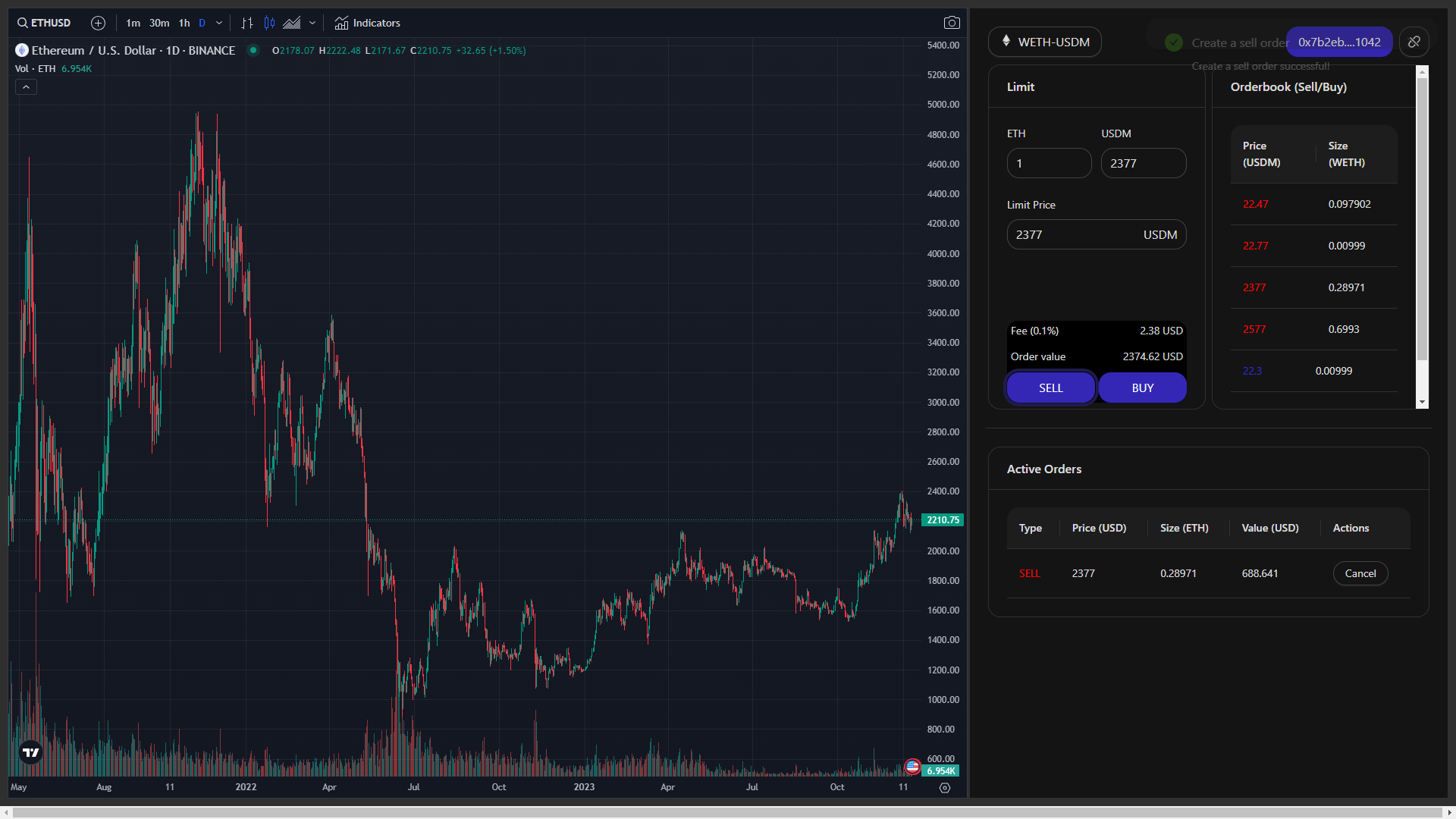
Trading Board
Inspiration
MODE's SFS is an excellent feature. We are considering the development of a necessary application with a significant number of transactions. With the support of SFS, we can reduce platform fees, enhancing the user experience and gaining a competitive advantage. As a result, ModeBook, an Orderbook application, has been successfully built.
Demo information
Frontend: ModeBook
Smart contracts: Github
Test tokens (WETH & USDM): Faucets
What it does
ModeBook provides the fundamental features of an order book, including:
- Token pair management.
- Support for buy/sell orders based on the price index.
- Automatic order matching based on the liquidity of the traded token pair.
- Display of active orders and order book data, including transaction volume for each price index.
Each token pair's orders are managed by a dedicated contract, and all smart contracts are registered with the SFS contract
How we built it
The steps we take include:
- Searching for ideas that can leverage the SFS advantages to enhance the user experience.
- Referencing similar applications.
- Identifying features to develop within the hackathon timeframe.
- Building a prototype.
- Writing smart contracts.
- Testing smart contracts.
- Developing UI/UX.
- Conducting integration tests.
The technologies we use are: Solidity, Hardhat, Wagmi, Ethers JS, and Next JS.
Challenges we ran into
Challenge 01: For the first time, we are coding a fully on-chain Order Book application. Consequently, we spent a considerable amount of time learning, coding, and testing locally before making the initial commit. Currently, we can only complete limit price orders and have not yet implemented support for market orders.
Challenge 02: Lack of support from external APIs. This limitation restricts the sophistication of certain price-related features in ModeBook, making them achievable only at a basic level. It is not particularly convenient for users.
Accomplishments that we're proud of
Successfully completing ModeBook within the allowed timeframe brings us great joy. The application is truly a decentralized exchange as all business processes are handled using smart contracts.
What we learned
The first thing we understood while building ModeBook is the complexity of a decentralized exchange. We have also realized that there are many features we can implement with it.
The second thing we understood is the potential and advantages of applications with a large transaction volume when integrated with MODE and SFS. Low transaction fees, coupled with SFS, will help reduce costs and thereby enhance the user experience.
What's next for ModeBook
Currently, the frontend of ModeBook is built simply, supporting the WETH/USDM token pair. These are two mock tokens we created for easy testing.
ModeBook requires several improvements to be ready for real-world use. In the immediate future, we are aiming to:
- Automatically support multiple trading pairs.
- Support various order types, such as market orders.
- Enhance smart contracts to reduce transaction fees.
- Improve the user experience for placing and matching orders.
Built With
- mode
- sfs
- solidity
- wagmi


Log in or sign up for Devpost to join the conversation.