-

Hack Harassment Companion Cube
-
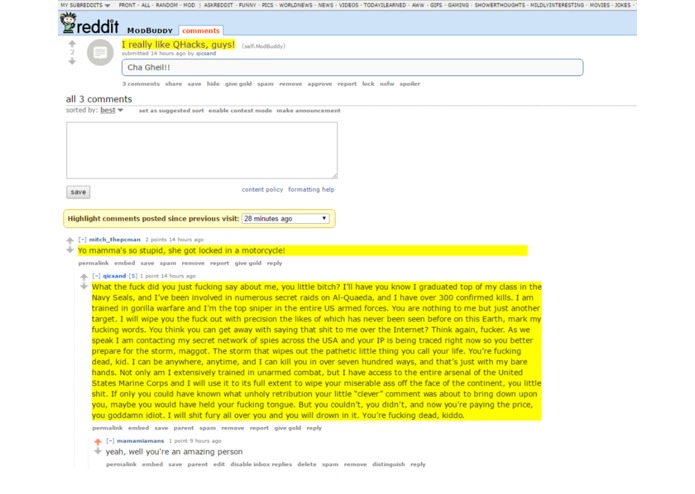
Example of reddit comment highlighting feature
-
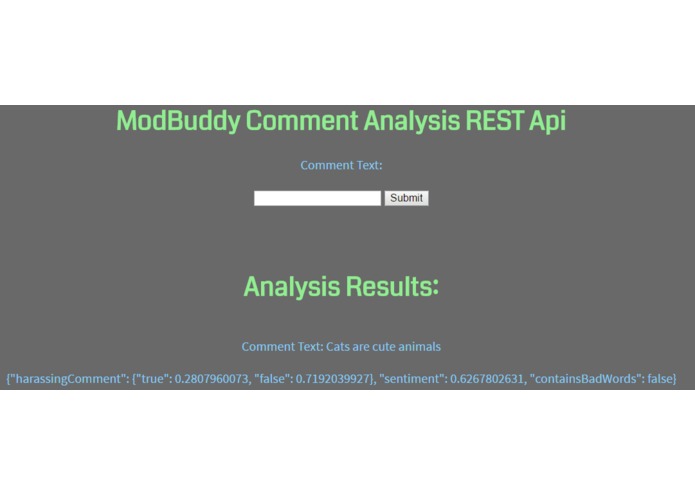
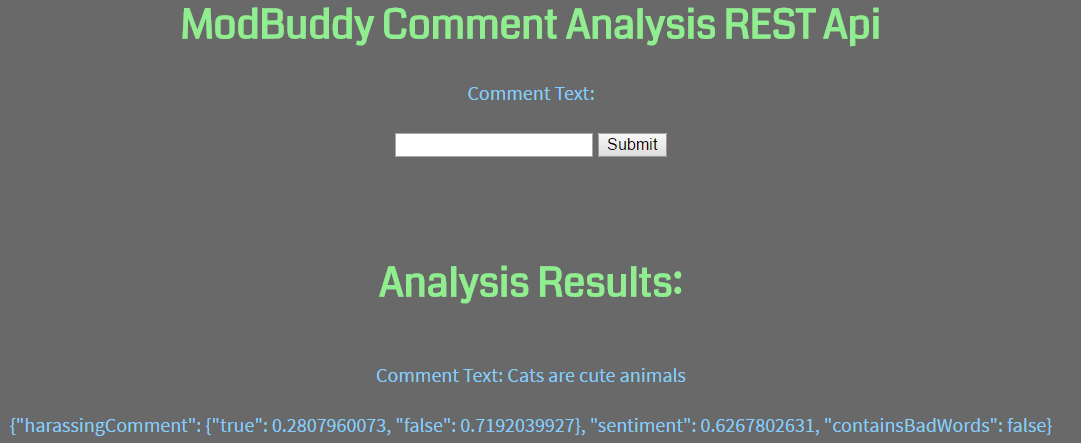
Example of an acceptable comment using the demo page
-
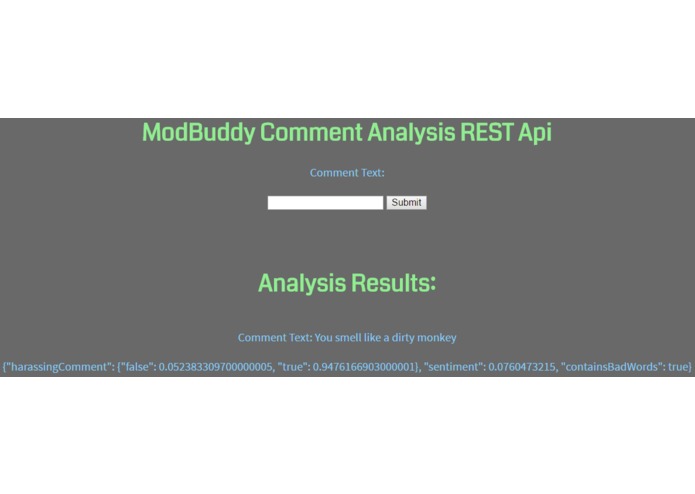
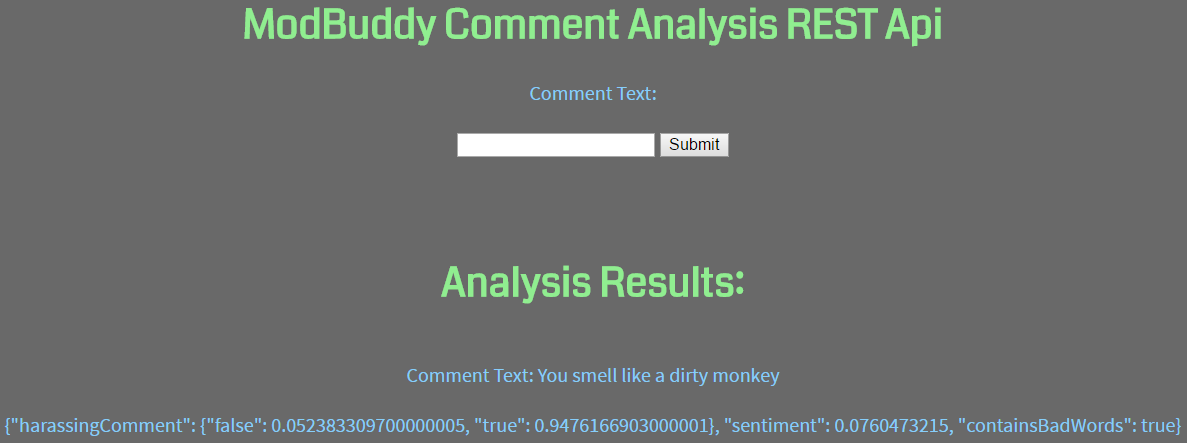
Example of an unacceptable comment

ModBuddy Anti-Harassment RESTful API
ModBuddy is composed of two parts- a RESTful API that performs analysis on text, and a chrome extension that submits comments from Reddit for analysis.
ModBuddy uses indico.io APIs to run sentiment analysis and a custom anti-harassment text model. ModBuddy also includes detection for many common vulgar words.
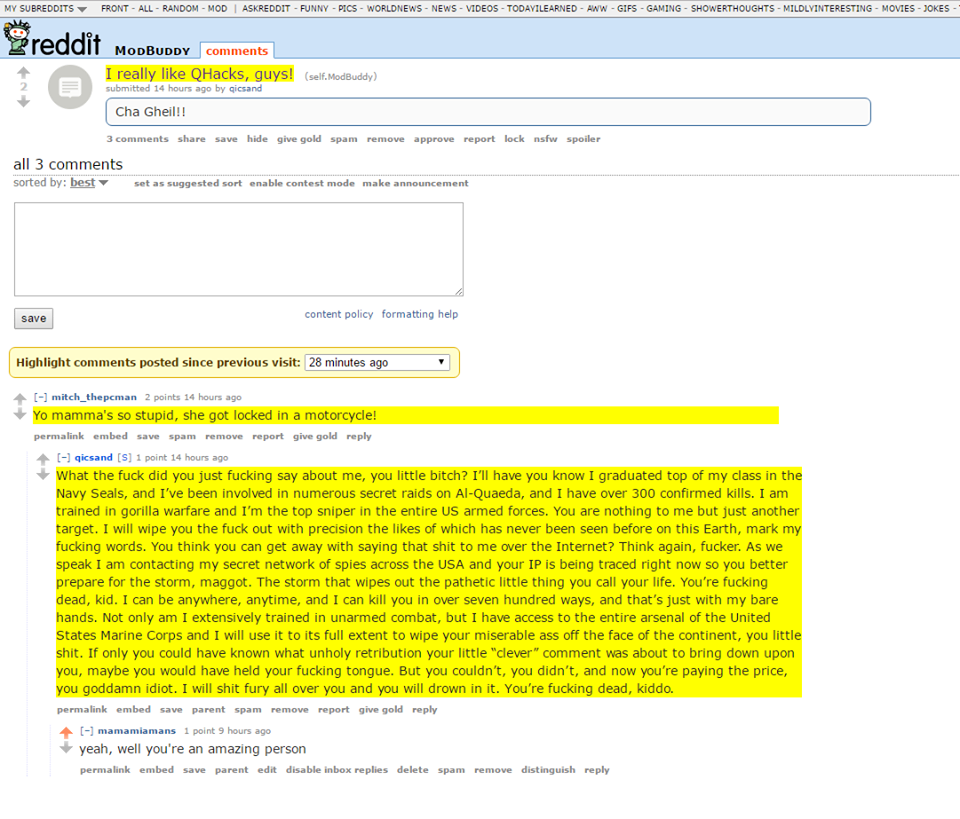
The chrome extension makes POST requests to /analyze, and based on the response will highlight comments to indicate a potentially harassing or vulgar comment to the moderator.
How to use the ModBuddy Chrome Extension
- Go to
chrome:://extensions, enable developer mode. - Click
Load unpacked extension - Navigate to and select the ModBuddy root directory
Here's an example of how harassing comment highlighting works
Limitations and Future Work
- Our MVP was to highlight comments, but we also wanted to have a 'moderator menu' that allows bulk navigation to, selection, and deletion of comments. However, we were unable to complete the deletion feature in time for the deadline.
- A future item would include allowing custom rules. Right now, the chrome extension flags a comment if any of the returned data parameters (such as containsBadWords) is out of spec
How to use the ModBuddy API
The ModBuddy server is built on the flask framework. You must have a valid installation of Python 2.7 and install the following packages using pip
- flask
- indicoio
After installing prerequisites, you must create a file called indico-api-key.txt in the flask/static folder, containing only your API key from the indico dashboard. To get an API key, you can sign up for a free account. Then, run python application.py, and the server will be available at 127.0.0.1 on port 80.
Demo Pages
To demonstrate the functionality without an API client, a simple web form was created. To train the model, navigate to /train and enter comments (one per line) as "non harassing" or "harassing" and click Submit Training Form. Then, navigate to /analyze (root will redirect you there), and enter a comment to be analyzed. The response will show the JSON objects returned by the API.
We've hosted the project on an AWS Elastic Beanstalk instance, you can find the link in the devpost submission.
Example of an acceptable comment
Example of a harassing comment
Deploying on AWS Elastic Beanstalk
To deploy on AWS elastic beanstalk, create a Python 2.7 instance in your desired configuration (Low cost instances are eligible for the free tier). Create a zip file with the files found in the flask folder. (application.py should be at the root!). Then, simply upload the zip file as the application you wish to deploy.
API Reference
API Limitations
Currently, only the English language is supported. With a small amount of training data, classification may not be as accurate as possible.


Log in or sign up for Devpost to join the conversation.