-
-
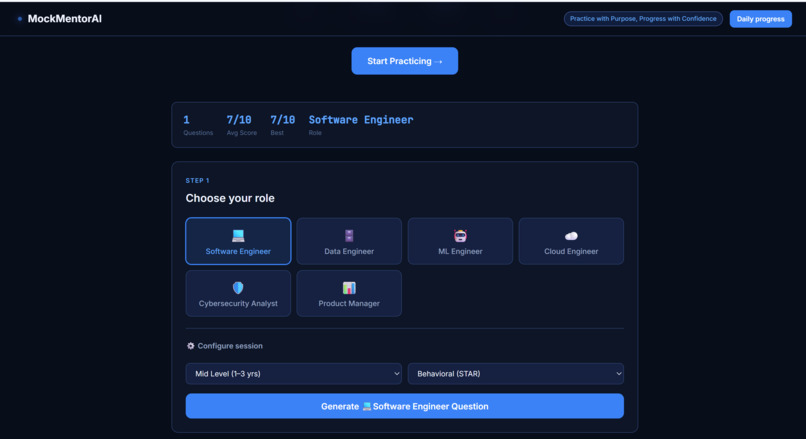
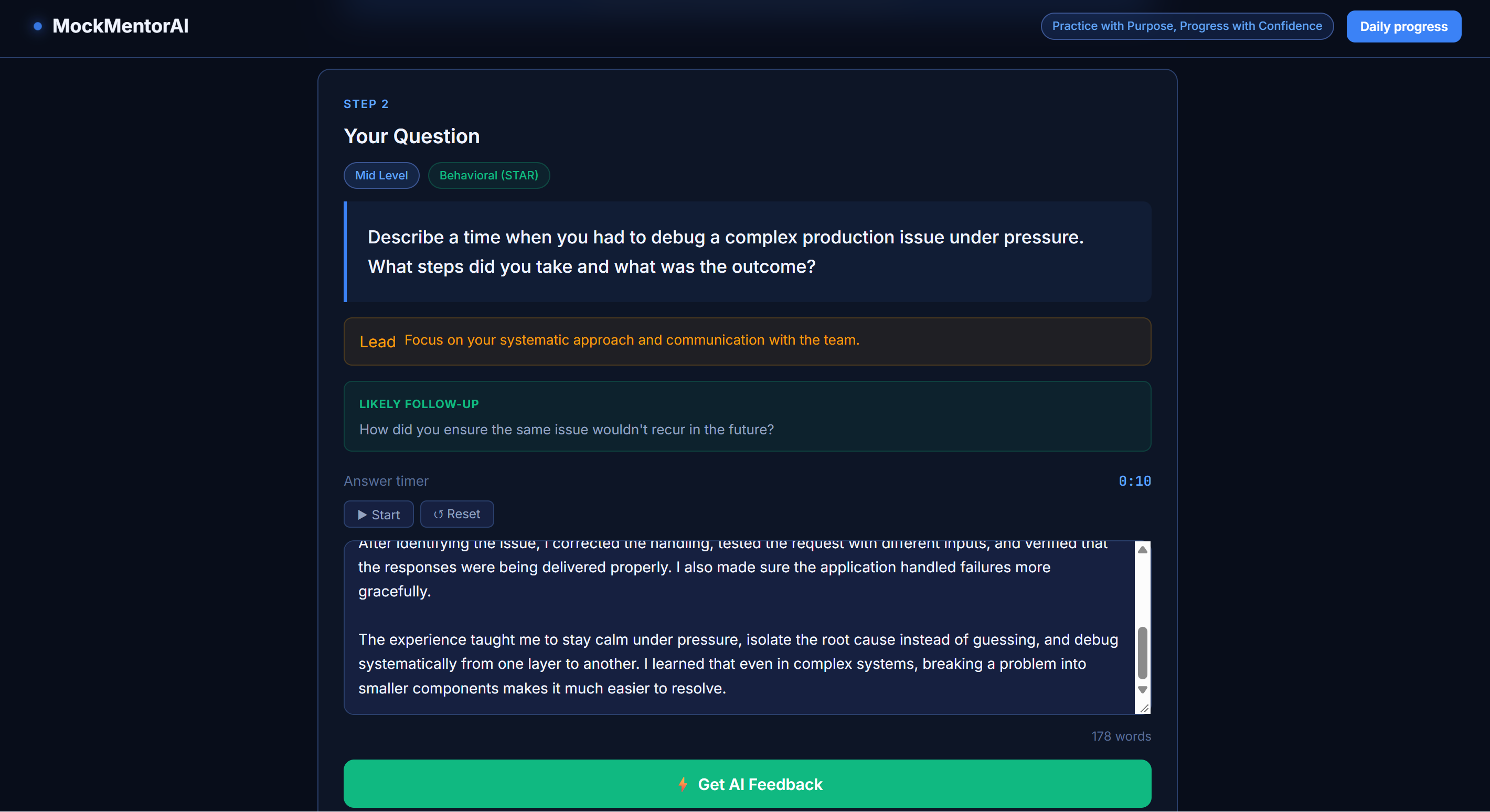
Role specific question generation
-
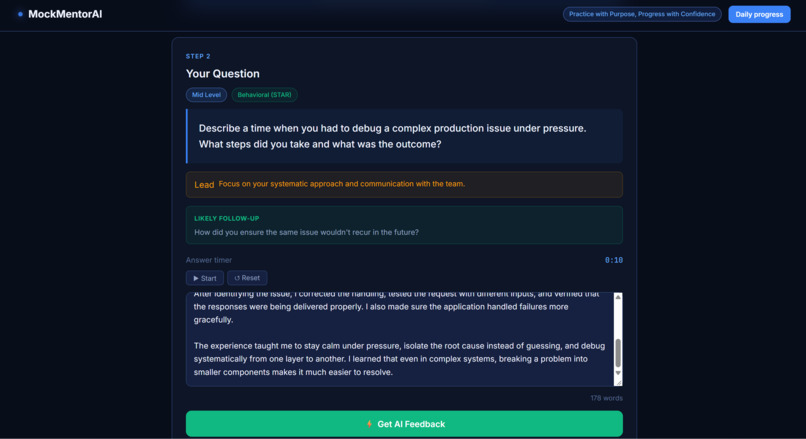
question answering
-
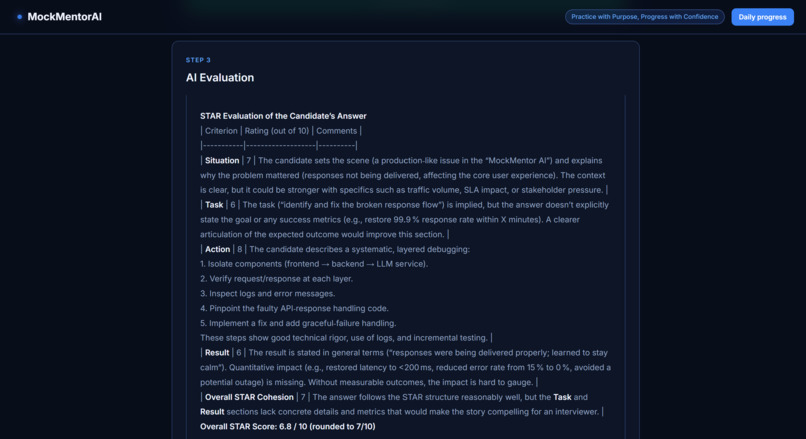
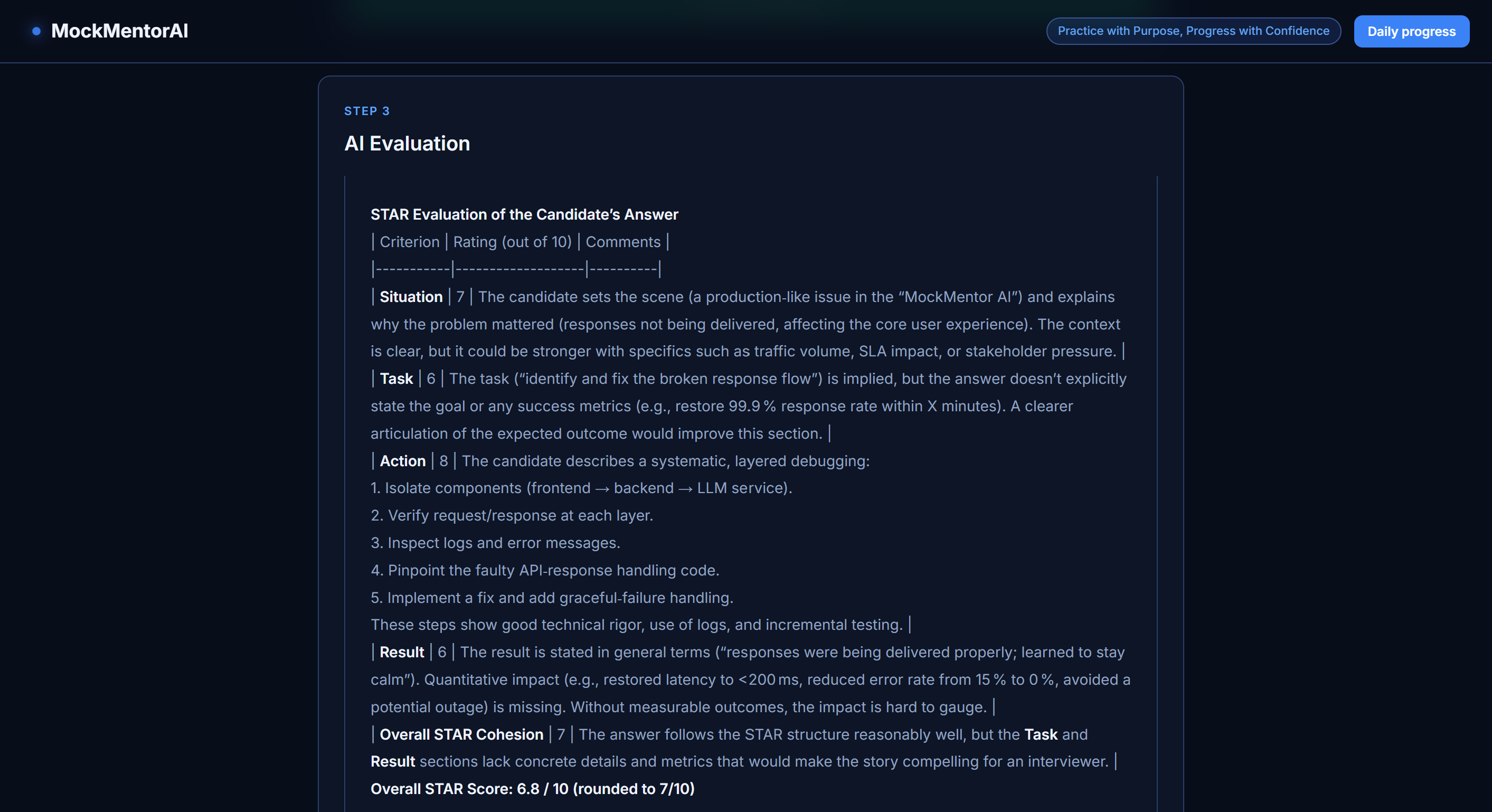
AI feedback and evaluation based on STAR method
Inspiration
Technical and behavioral interview preparation often requires access to experienced interviewers, realistic practice questions, and personalized feedback. Many candidates struggle to identify weaknesses in their answers and improve their interview performance through self-practice alone.
We built MockMentor to make structured, AI-powered interview preparation accessible, interactive, and available on demand.
What it does
MockMentor is an AI-powered mock interview platform that simulates role-specific technical and behavioral interviews.
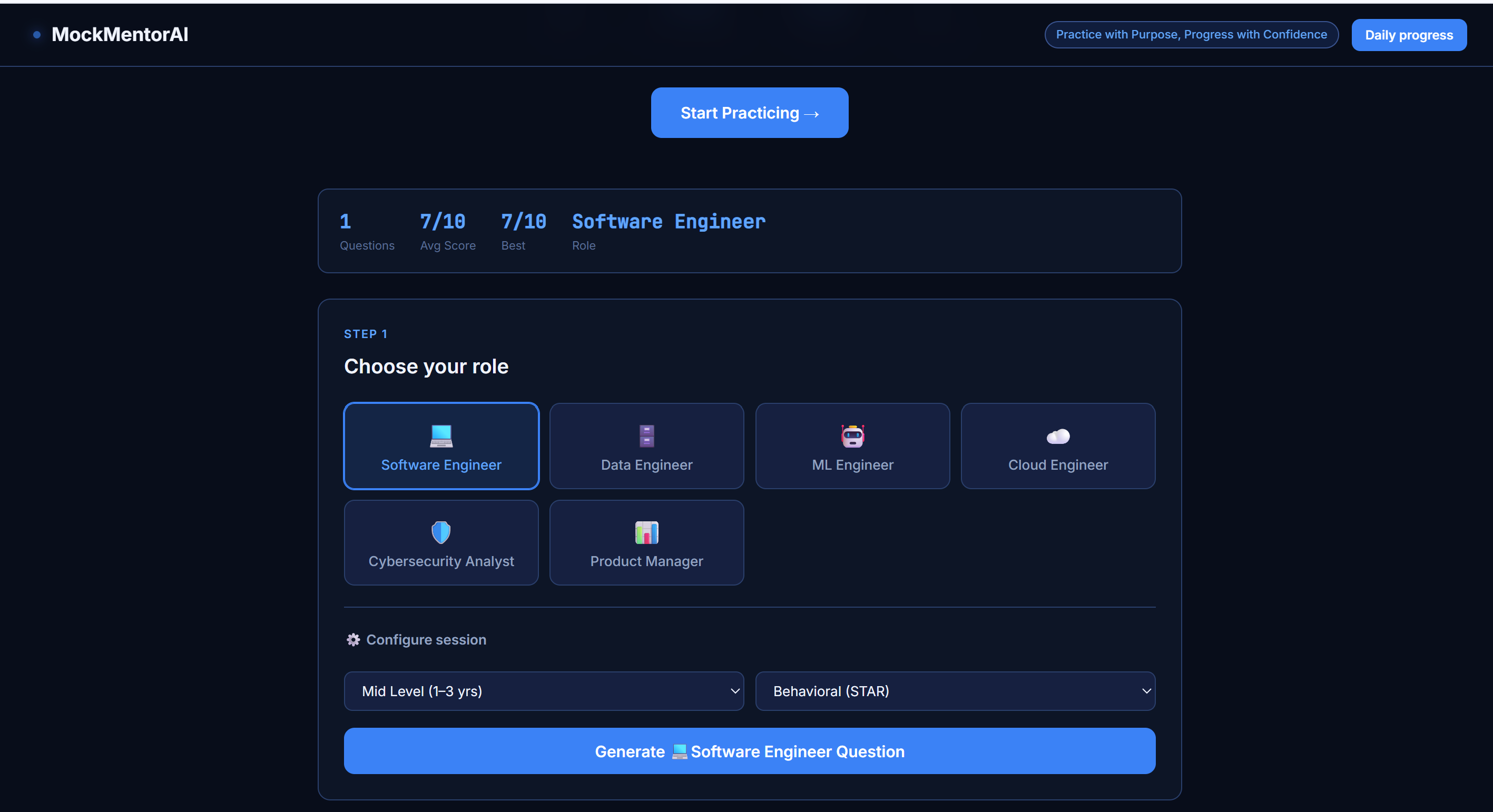
Role-Based Practice: Supports six professional roles: Software Engineer, Data Engineer, ML Engineer, Cloud Engineer, Cybersecurity Analyst, and Product Manager.
AI Question Generation: Generates interview questions based on the selected role, difficulty level, and interview type.
Contextual Guidance: Provides hints and likely follow-up questions to encourage deeper thinking.
Intelligent Answer Evaluation: Evaluates behavioral responses using the STAR framework and technical answers based on accuracy and knowledge gaps.
Real-Time Feedback: Streams evaluation results, scores, strengths, areas for improvement, and suggested answers.
Progress Tracking: Maintains practice history, score trends, strengths, and improvement areas through browser-based storage.
How we built it
We developed MockMentor using a lightweight full-stack architecture:
Frontend: HTML5, CSS3, and JavaScript for a responsive, interactive interview interface.
Backend: Python and FastAPI to manage application logic, request validation, and REST API endpoints.
AI Integration: Integrated Groq's API with configurable LLM models for role-specific question generation and intelligent answer evaluation.
Prompt Engineering: Designed separate evaluation prompts for behavioral STAR assessment and technical interview evaluation.
Real-Time Communication: Implemented Server-Sent Events (SSE) to stream AI-generated feedback to the frontend.
Progress Tracking: Used browser LocalStorage to maintain daily practice records and score history.
Deployment: Containerized the application using Docker and configured Uvicorn as the ASGI server.
Challenges we ran into
Structured AI Responses: LLMs can return inconsistent response formats. We implemented JSON extraction and response validation to handle question-generation outputs more reliably.
Real-Time Streaming: Delivering feedback progressively required handling streamed API responses, parsing incoming chunks, and updating the frontend as content arrived.
Model Reliability: Model availability, API rate limits, and network failures can interrupt AI workflows. We implemented error handling, configurable model selection, and fallback model support.
Evaluation Consistency: Designing separate prompts for technical and behavioral interviews was important to ensure feedback addressed the appropriate evaluation criteria.
Accomplishments that we're proud of
Developed a complete AI-powered interview preparation workflow from question generation to answer evaluation.
Implemented six professional role categories with multiple difficulty levels and technical and behavioral interview modes.
Built contextual follow-up question generation and structured STAR-based evaluation.
Enabled real-time AI feedback streaming using Server-Sent Events.
Added timed interview practice, performance scores, question history, and daily progress tracking.
Containerized the application with Docker for consistent execution across environments.
What we learned
Integrating LLMs into practical applications requires thoughtful prompt engineering, response validation, and error handling.
Server-Sent Events provide an effective way to deliver progressively generated AI responses.
Separating frontend, backend, and AI processing responsibilities makes an application easier to maintain.
Interview evaluation requires different assessment criteria for technical knowledge and behavioral communication.
Building a useful AI product involves more than model integration; usability, reliability, and meaningful user feedback are equally important.
What's next for MockMentor
Resume-Based Personalization: Generate interview questions based on uploaded resumes, skills, and target job descriptions.
Persistent User Profiles: Introduce authentication and database integration to maintain interview history and progress across devices.
Semantic Question Retrieval: Use embeddings and vector search to retrieve relevant questions based on candidate skills and job requirements.
Voice-Based Interviews: Introduce speech recognition and voice interaction to simulate real interview environments.
Advanced Performance Analytics: Identify recurring skill gaps and recommend personalized practice paths.
Scalable Deployment: Strengthen automated testing, application security, monitoring, and production deployment.
Built With
- amazon-web-services
- axios
- docker
- fastapi
- groqapi
- postgresql
- python
- react
