-
-
-
-
-
-
Dashboard
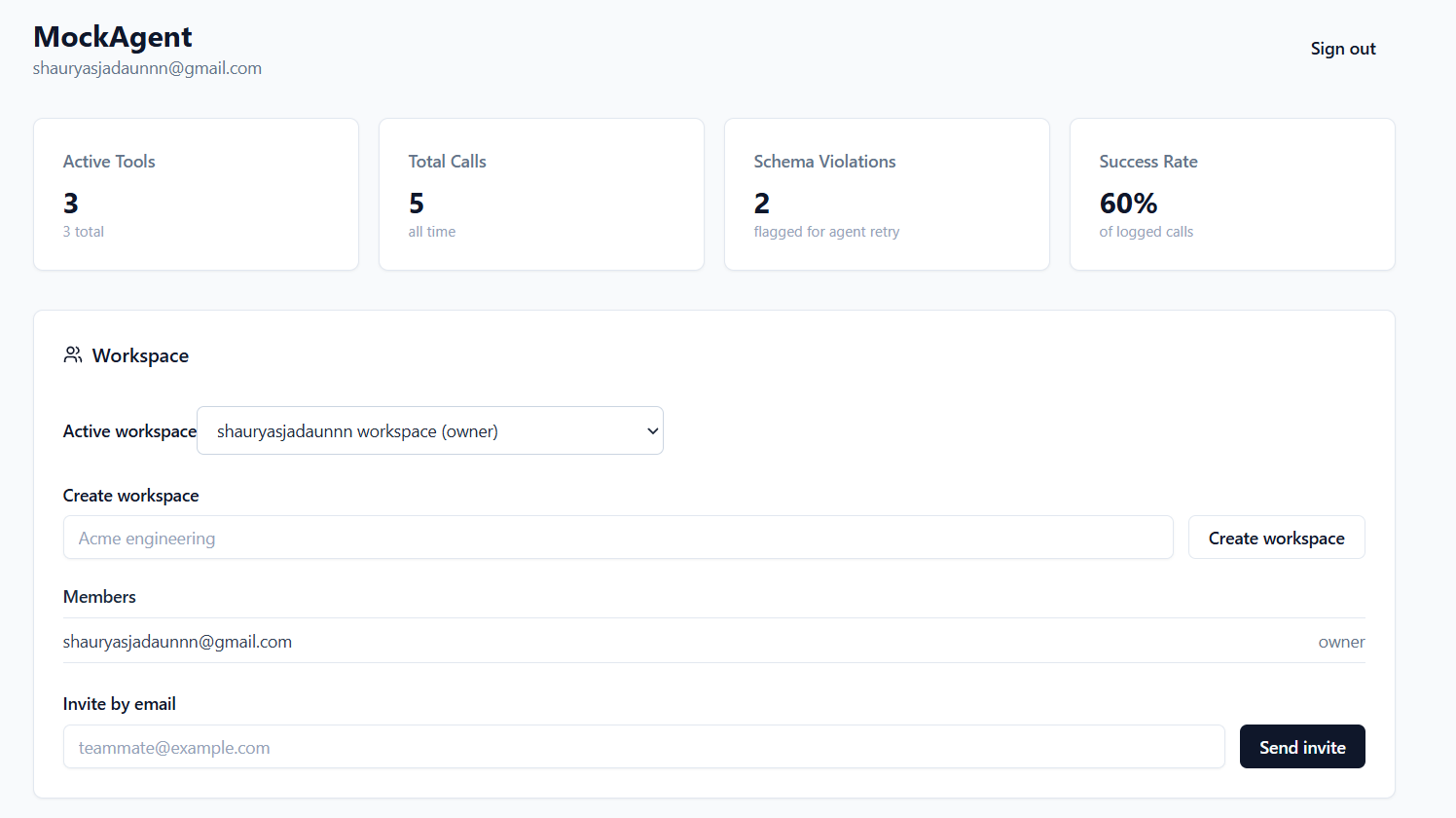
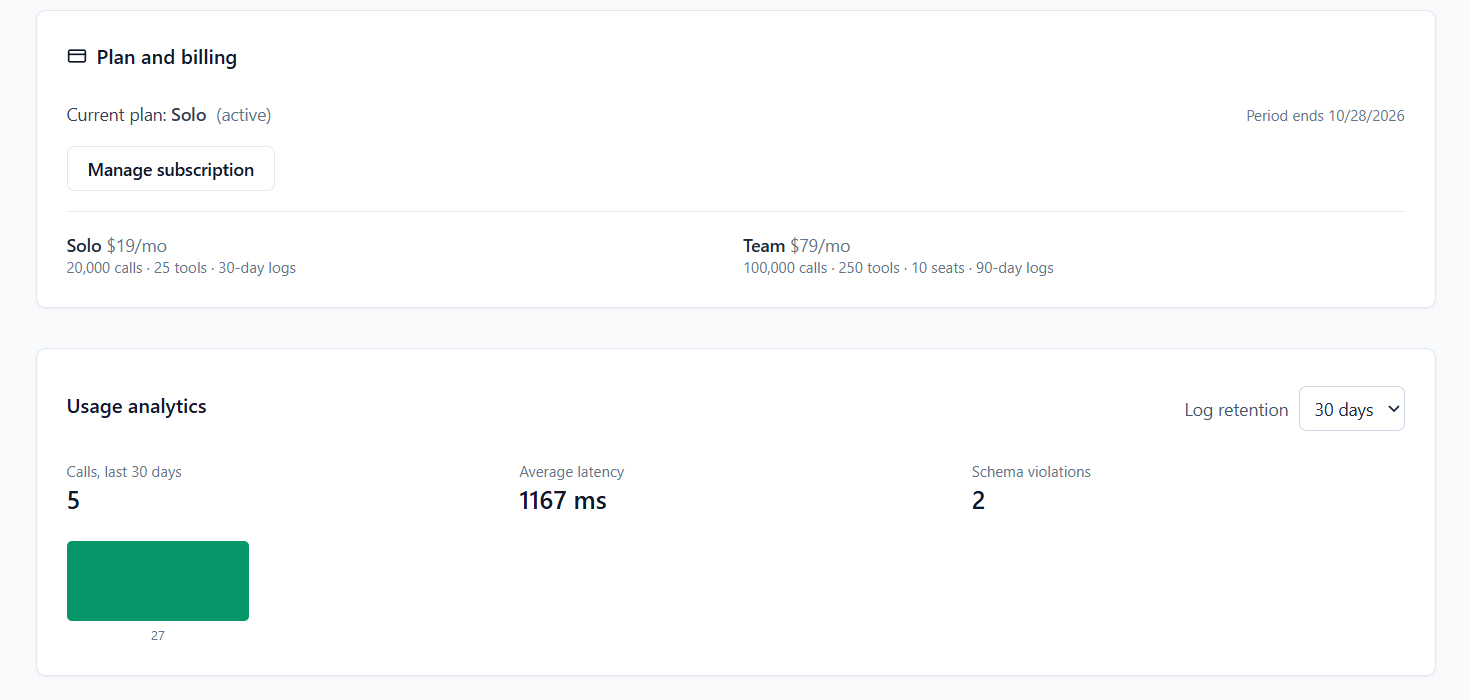
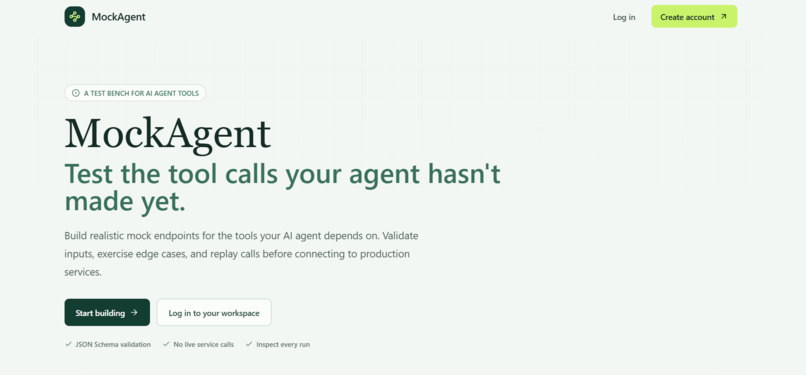
MockAgent — A Test Bench for AI Agent Tools
Inspiration
AI agents are becoming increasingly capable of interacting with external tools, APIs, and services. However, testing these interactions reliably can be challenging. An agent might call a refund API, check an order status, or retrieve customer information, but testing these workflows against real services can be slow, expensive, unpredictable, or risky.
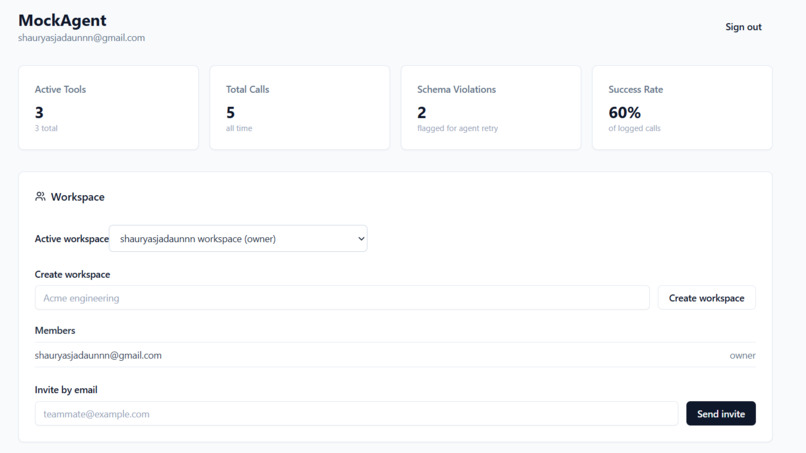
I built MockAgent to make AI agent tool testing easier, more controlled, and reproducible. Instead of depending entirely on live external services, developers can configure mock tools with real HTTP endpoints, validate incoming arguments, return predictable responses, and inspect tool-call activity.
What It Does
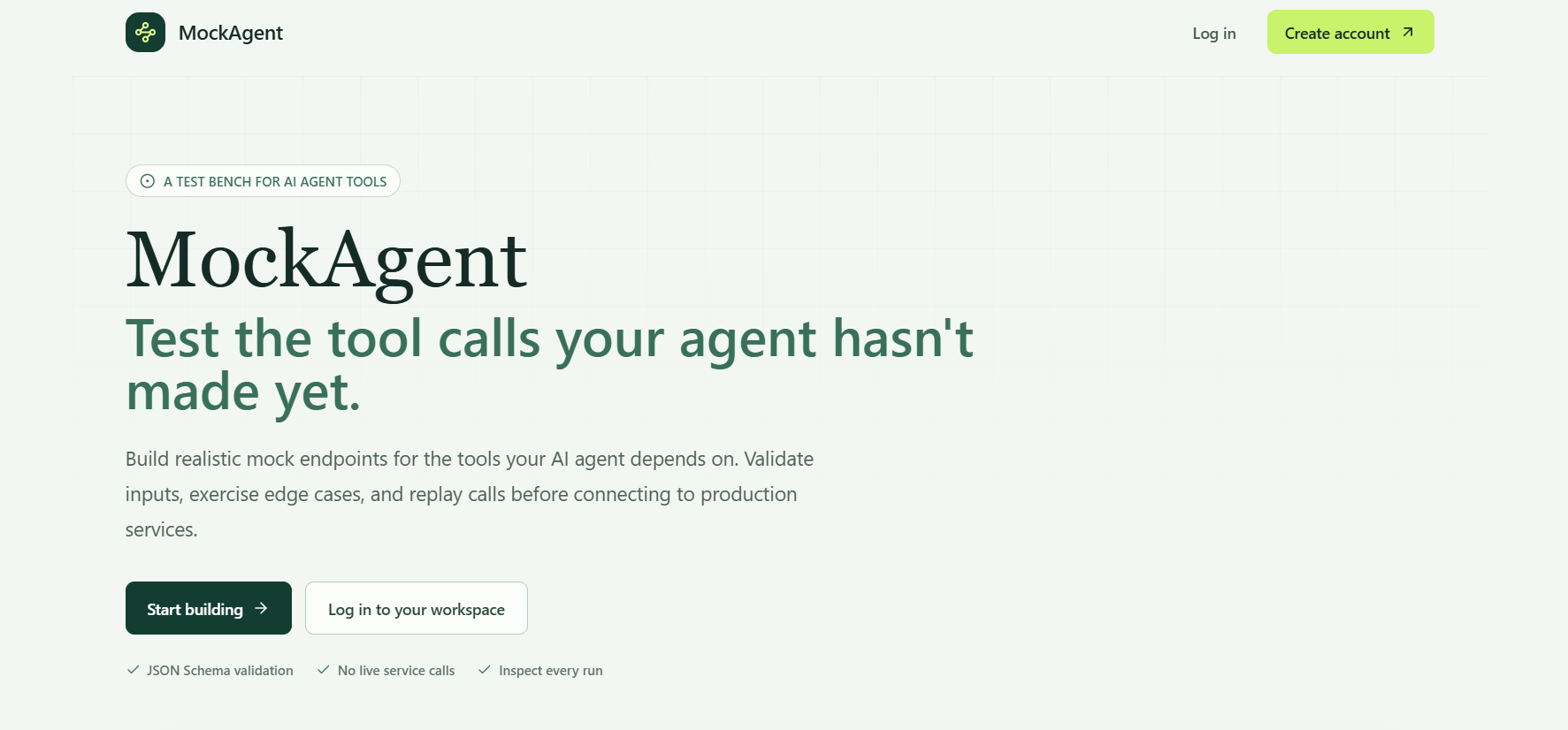
MockAgent helps developers test how their AI agents interact with tools without relying entirely on production APIs.
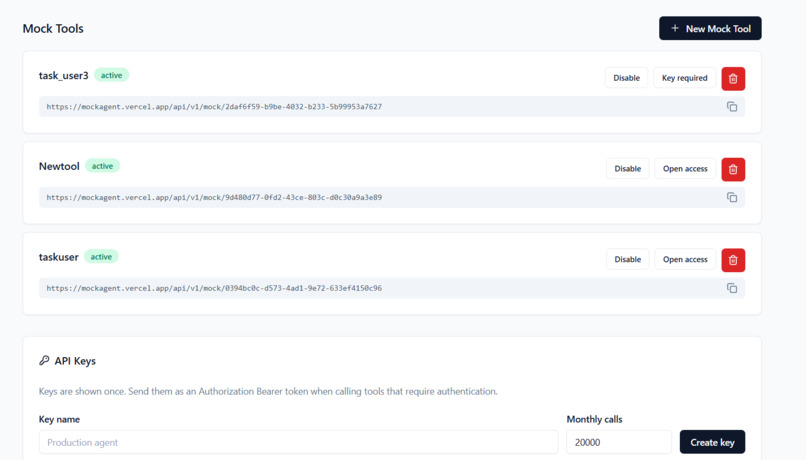
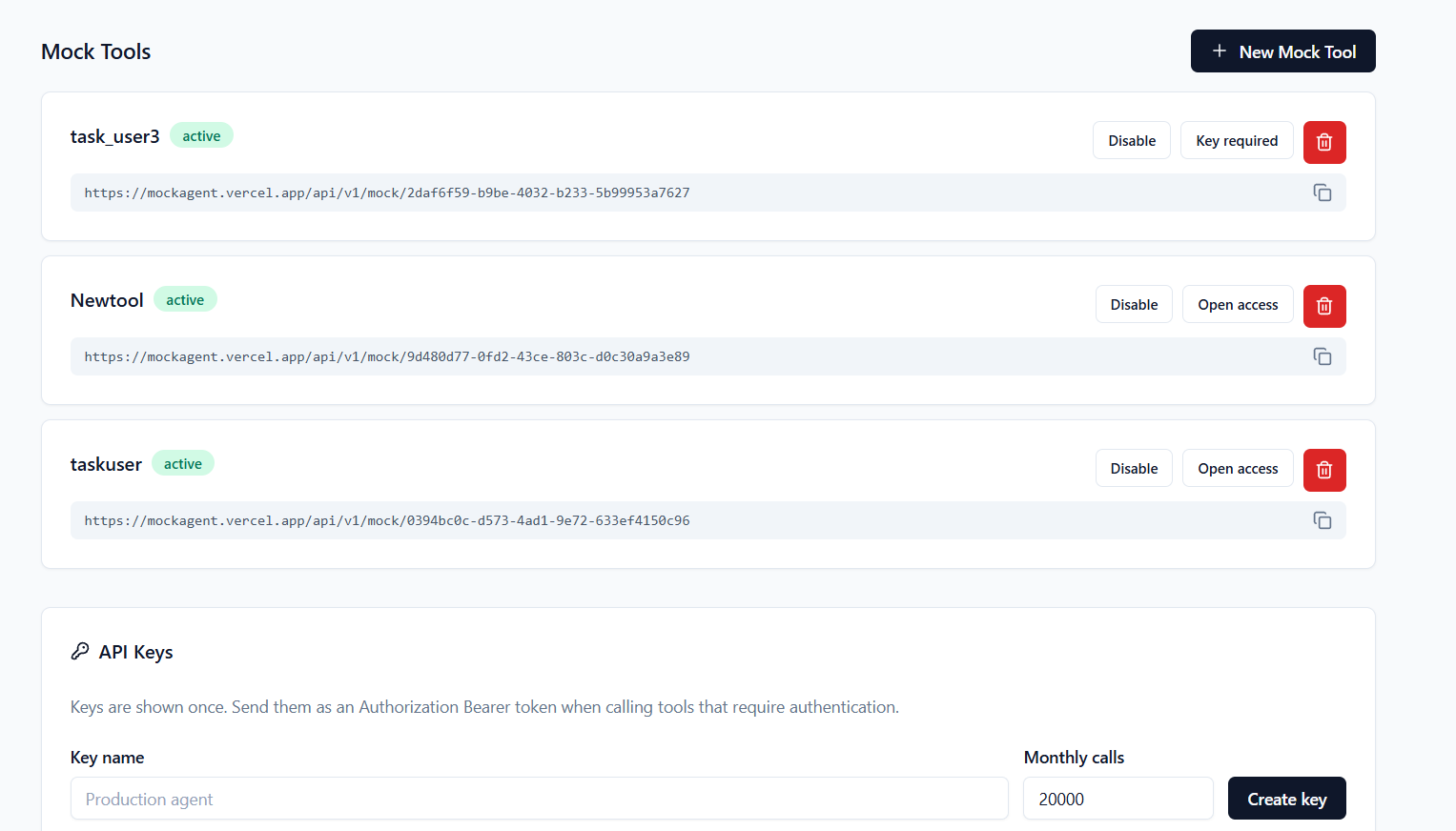
- Mock Tools: Configure tools that simulate operations such as
check_refundandget_order_status. - Real HTTP Endpoints: Give configured mock tools callable endpoints that AI agents and applications can interact with.
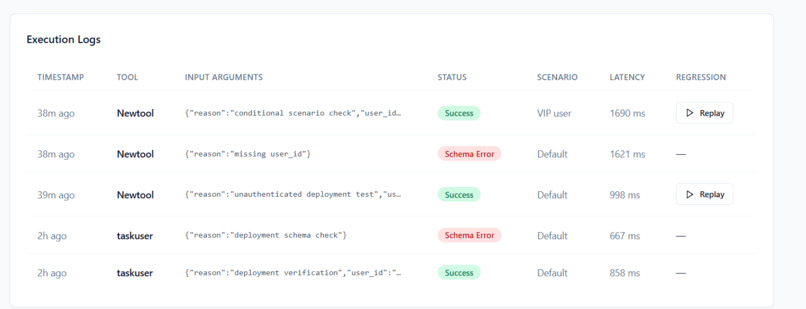
- JSON Schema Validation: Validate incoming tool arguments against defined schemas.
- Controlled Responses: Simulate predictable responses for testing different execution paths.
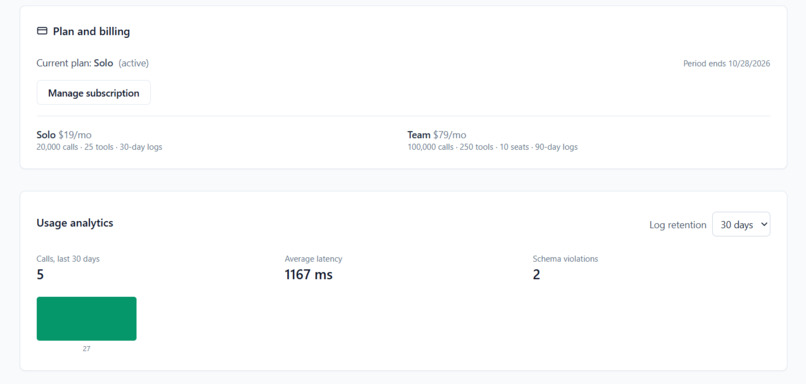
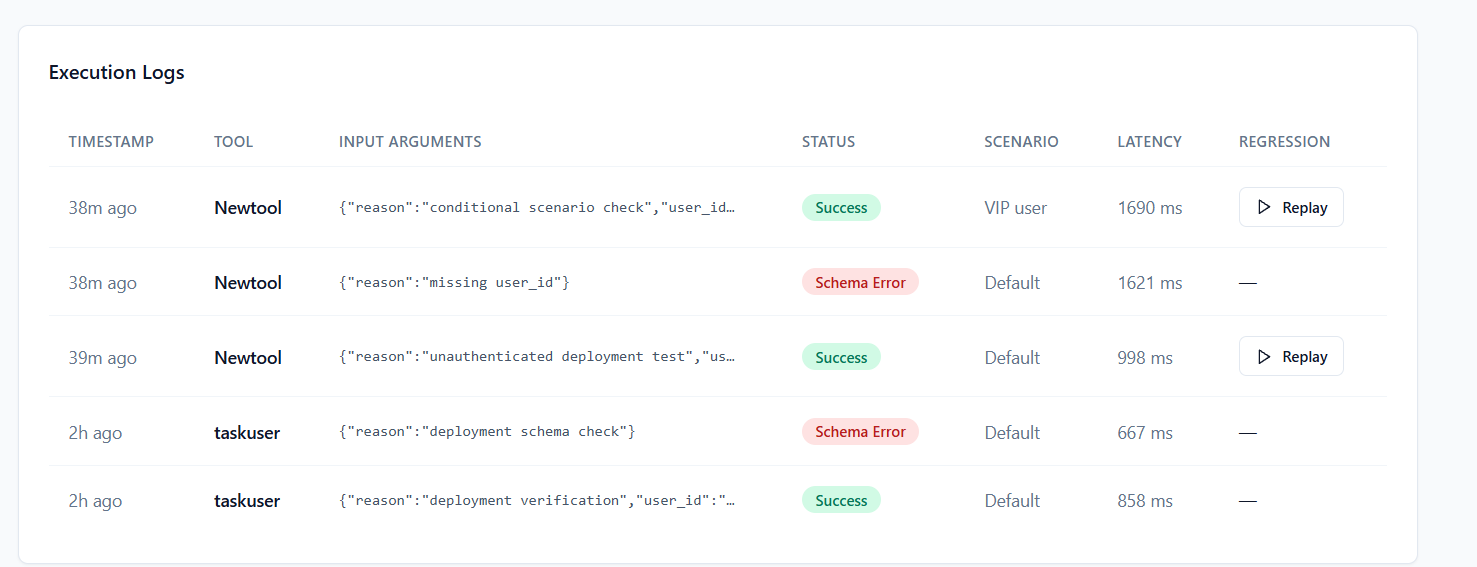
- Execution Records: Record tool interactions to help developers inspect requests and responses.
- Developer SDK: Integrate MockAgent into JavaScript and TypeScript projects using the
trymockagentnpm package.
How I Built It
I designed MockAgent around a simple workflow that fits into existing AI agent development processes.
- Configure a mock tool and define its expected arguments.
- Expose the tool through an HTTP endpoint.
- Connect the endpoint to an AI agent or application.
- Send tool calls with the arguments generated by the agent.
- Validate the arguments and return the configured response.
- Inspect recorded interactions to understand how the tool was used.
The project includes a JavaScript/TypeScript client package, trymockagent, published on npm to make integration easier for developers.
Technical Implementation
The main technical components include:
- HTTP-based mock tool interactions.
- JSON Schema-based input validation.
- Configurable mock responses.
- Tool-call execution records.
- A JavaScript/TypeScript SDK for integration with applications and AI agents.
The focus is on providing a predictable testing layer between AI agents and the tools they use.
Challenges I Faced
One of the biggest challenges was thinking beyond simple mocked functions. AI agents interact with tools through structured interfaces, so a useful testing system needs to handle requests consistently and provide predictable results.
Another challenge was making tool interactions easier to debug. When an agent produces an unexpected result, developers need to understand what tool was called, which arguments were supplied, and what response came back.
I focused on three principles:
- Predictability: Make test scenarios repeatable.
- Validation: Check tool arguments against explicit schemas.
- Observability: Preserve interaction records that help developers investigate unexpected behavior.
Designing the SDK was also an important part of making the project accessible to developers working with JavaScript and TypeScript.
What I Learned
Building MockAgent taught me that reliable AI systems require more than capable language models. The way an agent interacts with external tools, handles unexpected responses, and executes multi-step workflows is equally important.
I learned the importance of structured tool interfaces, schema validation, reproducible testing, and developer-friendly SDK design. I also gained practical experience in turning a developer infrastructure problem into a product with a focused use case.
What's Next
I want to expand MockAgent into a more comprehensive testing environment for AI agents, with potential improvements such as:
- More configurable error and failure scenarios.
- Detailed execution traces.
- Automated test cases for tool calls.
- Evaluation of agent outputs against expected results.
- Better support for testing complex, multi-step agent workflows.
The Vision
MockAgent aims to make AI agent tool interactions easier to test, debug, and trust before they reach production.
By giving developers a controlled environment to simulate tool calls, MockAgent can help make the development of AI-powered applications more predictable and reliable.

Log in or sign up for Devpost to join the conversation.